锋兰达

Search documents
广汽集团(02238) - 海外监管公告
2026-03-29 10:46
香港交易及結算所有限公司及香港聯合交易所有限公司對本公告的內容概不負責,對其準確性或完整 性亦不發表任何聲明,並明確表示,概不對因本公告全部或任何部分內容而產生或因依賴該等內容而 引致的任何損失承擔任何責任。 GUANGZHOU AUTOMOBILE GROUP CO., LTD. 廣州汽車集團股份有限公司 ( 於中華人民共和國註冊成立的股份有限公司 ) (股份編號: 2238) 海外監管公告 本公告乃廣州汽車集團股份有限公司(「本公司」)按香港聯合交易所有限公司證券上市規 則第 13.10B 條發出。 以下文件乃本公司於二零二六年三月二十七日在中華人民共和國上海證券交易所網頁登載, 僅供參閱。 承董事會命 廣州汽車集團股份有限公司 馮興亞 董事長 中國廣州,二零二六年三月二十七日 於本公告日期,本公司的執行董事為馮興亞及閤先慶,本公司的非執行董事為陳小沐、鄧蕾、 周開荃、王亦偉及洪素麗,以及本公司的獨立非執行董事為趙福全、肖勝方、王克勤及宋鐵波。 1. 《廣州汽車集團股份有限公司 2025 年年度報告摘要》 2. 《廣州汽車集團股份有限公司 2025 年年度報告》 3. 《廣州汽車集團股份有限公司 2025 ...
1月SUV排行:博越L空降第二,神车排名暴跌,小米成传奇耐黑王!
Xin Lang Cai Jing· 2026-02-27 10:37
Core Insights - The January 2026 automotive market did not meet expectations due to reduced subsidies, leading to a significant reshuffling in the SUV rankings [1][20] - The emergence of new models like Xiaomi YU7 and Geely's Boyue L indicates a shift in consumer preferences as traditional "hero cars" decline [1][20] SUV Rankings - Xiaomi YU7 topped the January SUV sales with 37,869 units, marking a notable success despite negative online sentiment [3][12] - Geely's Boyue L followed closely with 34,176 units, making a strong debut after previously being outside the top ten [3][12] - The AITO M7 secured third place with 26,454 units, benefiting from brand strength and competitive pricing [3][13] Market Dynamics - The Tesla Model Y, a long-time best-seller, fell to 12th place with 16,845 units, attributed to pre-ordered sales in December and prioritization of exports [5][15] - Other popular models from BYD, such as Yuan and Song, did not appear in the top twenty, indicating a potential decline in their market presence [7][17] - The overall trend shows a resurgence of traditional gasoline vehicles, with more models entering the top ten compared to December, suggesting a return to familiar market dynamics [10][20]

合资品牌做不好智能化?2026年广汽丰田亮出新牌
Di Yi Cai Jing· 2026-02-06 12:35
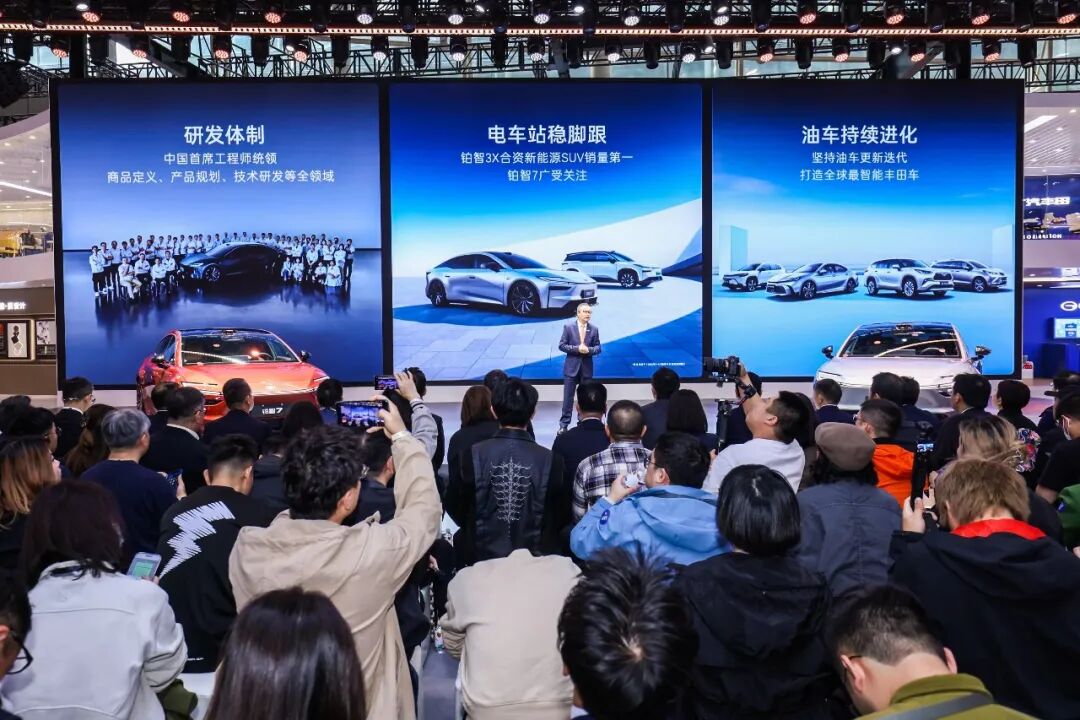
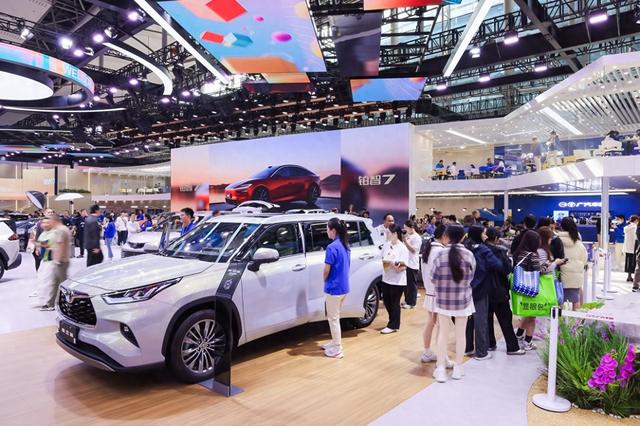
Core Insights - The automotive market in China is expected to undergo significant changes by 2025, with a focus on "intelligentization," where the penetration rate of smart features is projected to exceed 64% [1] - GAC Toyota is adopting a "practicality" approach to intelligent features, emphasizing usability and reliability over unique functionalities, setting a benchmark for joint venture brands in their smart transformation [3] Industry Trends - By 2026, the market for smart cockpits in China is forecasted to reach 212.7 billion yuan, with a compound annual growth rate of over 17% [1] - The penetration rates for L2 and L3 autonomous driving features are expected to reach 21% and 22% respectively, as major companies implement "smart driving equality" strategies [1] - A shift in consumer preferences is noted, with 40.08% of respondents unwilling to pay extra for smart driving systems, indicating a need for practical and reliable features rather than just a plethora of options [4] GAC Toyota's Strategy - GAC Toyota's "Fusion 2030" strategy aims to achieve intelligent breakthroughs in both fuel and new energy vehicles, with the 2026 global models featuring high-performance Qualcomm Snapdragon 8155 chips and advanced smart driving systems [1][5] - The company is focusing on a comprehensive smart product matrix that includes both fuel and electric vehicles, ensuring that all models meet user demands for intelligent features [4][5] - GAC Toyota's approach includes a commitment to stability over rapid iteration, with a focus on long-term reliability and user-friendly experiences [5][8] Product Innovations - The upcoming Platinum series, including the Platinum 7, is positioned as a luxury electric vehicle with advanced smart features, targeting a market segment that combines affordability with high-end specifications [6][11] - The Platinum 7 will utilize the Momenta R6 intelligent driving solution, backed by extensive training data, ensuring a high level of reliability and safety [8][9] - GAC Toyota emphasizes the importance of practical features, such as wireless charging and multi-device connectivity, addressing common consumer pain points [5][9] Market Positioning - GAC Toyota aims to capture over 20% of its sales from new energy vehicles by 2026, with a strategic focus on the mainstream and high-end electric vehicle markets [6][11] - The company is leveraging its engineering capabilities and partnerships to enhance its product offerings, ensuring that they meet both local and global standards [11][12] - GAC Toyota's commitment to user-centered design and practical solutions positions it favorably in the competitive landscape of automotive intelligentization [12]
以“求变”应“万变”,广汽丰田已经看懂全新竞争逻辑!
财联社· 2026-01-31 13:25
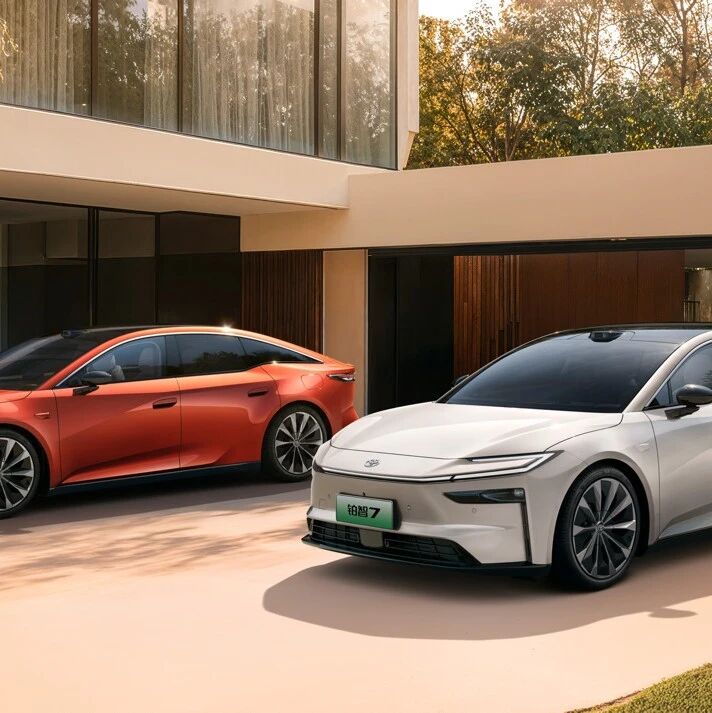
Core Viewpoint - The article emphasizes the shift in the Chinese automotive market towards a "value war" as the industry moves away from price wars, with a focus on high-value, low-energy consumption models in response to subsidy reductions and changing consumer preferences [1][7][19]. Group 1: Market Trends and Changes - By 2025, the penetration rate of new energy vehicles in China's car market is expected to exceed 50%, indicating a positive trend in new energy development [1]. - The reduction of purchase tax subsidies is anticipated to lead to a cooling market at the beginning of 2026, causing a decline in sales for some new energy models that rely heavily on subsidies [1][7]. - The competition is shifting from price-based strategies to value and trust-based strategies, marking a new competitive logic in the industry [1][7]. Group 2: GAC Toyota's Performance - GAC Toyota has proactively initiated reforms since 2024, focusing on both fuel and electric vehicles, and has become one of the few joint ventures to achieve year-on-year growth, showcasing resilience [1][2]. - In the fuel vehicle segment, GAC Toyota's three flagship models—Camry, Highlander, and Sienna—achieved a total sales volume of 378,100 units, accounting for 49% of total sales, with Camry alone seeing a 19.5% year-on-year increase [2]. - GAC Toyota's hybrid models sold 390,400 units, capturing 50.5% of the domestic HEV market, while its pure electric model, the Platinum Zhi 3X, sold 70,000 units, becoming the top-selling joint venture new energy vehicle [4]. Group 3: Strategic Initiatives for 2026 - GAC Toyota plans to launch the D-class luxury pure electric flagship model, the Platinum Zhi 7, in March 2026, aiming to strengthen its position in the new energy market and achieve a target of over 160,000 pure electric vehicle sales [9][11]. - The company is enhancing its product lineup by introducing high-value features in its fuel vehicles, such as standard high-end configurations in entry models, to meet consumer demands for better value [9][11]. - GAC Toyota is implementing a "China Chief Engineer System" to better understand local consumer needs, which will lead to more targeted product development [6]. Group 4: Consumer Trust and Brand Positioning - The article highlights a shift in consumer purchasing decisions towards quality and reliability, with a growing demand for products that demonstrate visible quality and dependable service [18]. - GAC Toyota's commitment to quality and responsibility, including a lifetime warranty on key components, is expected to strengthen consumer trust and support its sales goals for 2026 [15][18]. - The company's established reputation and nearly a million loyal customers provide a strong foundation for its market presence, which is crucial for navigating the upcoming value competition [15][18].
以“求变”应“万变”,广汽丰田已经看懂全新竞争逻辑!
Xin Lang Cai Jing· 2026-01-31 12:16
Core Insights - The Chinese automotive market is witnessing a significant shift towards new energy vehicles (NEVs), with penetration rates expected to exceed 50% by 2025, indicating a positive trend in NEV development [1] - The market is transitioning from a "price war" to a "value war" and "trust war," driven by the reduction of purchase tax subsidies and changing consumer preferences towards high-value, low-energy consumption models [1][5] - GAC Toyota has proactively initiated reforms since 2024, positioning itself as one of the few joint venture brands to achieve year-on-year growth, demonstrating resilience in a challenging market [1][5] Market Dynamics - The competition in the automotive industry is evolving, with a focus on value rather than price, as consumers increasingly prioritize product quality, technological reliability, and service quality [5][13] - GAC Toyota's fuel vehicle lineup remains strong, with flagship models like Camry, Highlander, and Sienna achieving significant sales, indicating a solid foundation in the fuel vehicle market [1][3] - The company has successfully launched hybrid models, leading the domestic HEV market with sales of 390,400 units, which constitutes 50.5% of its total sales [3] Strategic Initiatives - GAC Toyota is enhancing its product matrix by introducing new models and upgrading existing ones, including the launch of the D-class luxury electric flagship model, which is expected to boost its market presence in the NEV sector [7][9] - The company is implementing a "China Chief Engineer System" to better cater to local consumer needs, ensuring that new models are developed with a deep understanding of the Chinese market [5][11] - GAC Toyota is also focusing on service improvements, planning to expand its service network into county-level markets and adopting a more proactive service model to enhance customer experience [11][13] Competitive Advantages - The company's commitment to quality and reliability, backed by nearly a century of automotive experience, positions it favorably against competitors in the evolving market landscape [9][13] - GAC Toyota's innovative approach to technology, including collaborations with leading tech firms, aims to integrate advanced features into its vehicles, enhancing its competitive edge [9][11] - The establishment of a robust trust relationship with consumers through quality guarantees and service commitments is expected to strengthen GAC Toyota's market position in the upcoming "value war" [13][14]
“传奇耐用王”丰田,不靠谱了?
凤凰网财经· 2026-01-25 12:01
Group 1 - Toyota has recently recalled nearly 16,000 vehicles in China due to issues with the multimedia screen system, following a previous recall of approximately 100,000 vehicles for a panoramic monitoring system defect [1][2][5][6] - The recalls involve specific models produced between December 5, 2025, and January 13, 2026, with 10,922 units of the RAV4 and 5,056 units of the Venza affected [5][6] - The recalls have raised concerns among consumers about Toyota's reliability, with some expressing skepticism about the frequency of defects [3][7] Group 2 - Toyota's sales in China peaked at 1.944 million units in 2021 but have since declined, reflecting a broader trend of consumers shifting towards domestic brands and new energy vehicles [11] - Despite the challenges, Toyota aims to sell over 1.78 million vehicles in China in 2025, marking a slight increase from 2024 [11][12] - The company is focusing on upgrading its fuel vehicle lineup while also attempting to transition to electric vehicles, although its electric models have not gained significant traction in the competitive market [12][13][17] Group 3 - Complaints against Toyota vehicles have surged, with 1,469 complaints reported in the last three months, highlighting issues such as steering system noise and lighting module failures [10] - The sales performance of Toyota's electric models, such as the bZ3 and bZ5, has been disappointing, with low monthly sales figures compared to competitors like Leap Motor and BYD [14][15] - The ongoing recalls and consumer complaints indicate a potential crisis in consumer trust, as the market increasingly prioritizes innovation and reliability in the automotive sector [17][18]

丰田在中国再召回近1.6万辆汽车,此前刚召回近10万辆
Xin Lang Cai Jing· 2026-01-23 12:19
Core Viewpoint - Toyota has initiated a large-scale recall due to improper settings in the multimedia screen system control program, affecting multiple vehicle models and raising safety concerns [1][2]. Group 1: Recall Details - The recall plan includes 10,922 units of the RAV4 produced between December 5, 2025, and January 13, 2026, by FAW Toyota [1]. - GAC Toyota will recall 5,056 units of the Wildlander produced between December 11, 2025, and January 12, 2026 [1]. - The vehicles may experience a black screen upon startup, which could hinder the defrosting and defogging functions, potentially affecting driving visibility [1]. Group 2: Previous Recalls - This is Toyota's second large-scale recall in just over a month, with nearly 100,000 vehicles recalled in December due to issues with the panoramic monitoring system [2][5]. - The previous recall involved 93,882 vehicles, where the panoramic image display could malfunction, impacting the driver's judgment of the surrounding environment [5]. Group 3: Market Performance - According to data released by Toyota China, the company expects to sell over 1.78 million vehicles in the Chinese market in 2025, showing a slight increase from 1.776 million in 2024 [6]. - Toyota is the only foreign multinational automotive group in China to achieve sales growth, while other Japanese automakers like Nissan and Honda have reported declines in sales [6].
丰田中国销量止跌:油车稳住战线,一汽丰田电车掉队
Jing Ji Guan Cha Wang· 2026-01-20 10:14
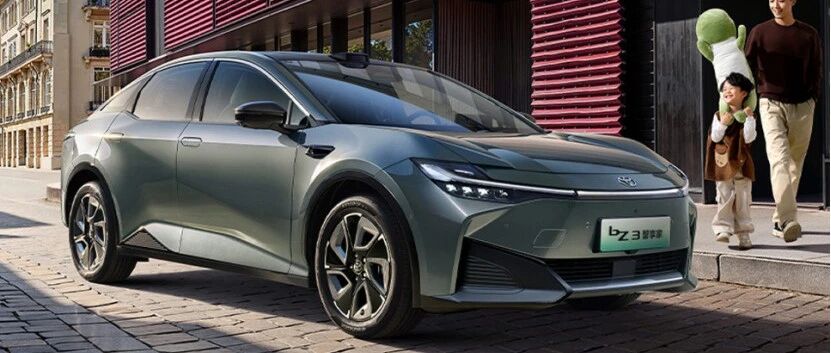
Group 1 - Toyota China announced a sales target of over 1.78 million vehicles for 2025, achieving positive growth compared to 1.776 million in 2024, making it the only foreign multinational automotive group in China to achieve growth in 2025 [2] - Japanese automakers, excluding Toyota, are expected to perform poorly in the Chinese market in 2025, with Nissan's sales at 653,000 units (down 6%) and Honda's at 645,300 units (down 24%), marking five consecutive years of decline [2] - Toyota's sales in China are primarily driven by its joint ventures: FAW Toyota, GAC Toyota, and Lexus China, with both joint ventures showing signs of recovery in 2025, which is crucial for halting the decline in Toyota's sales [2] Group 2 - FAW Toyota reported sales of 805,500 vehicles in 2025, with key fuel models maintaining stable sales, including the Crown Land, which sold 59,900 units (up 14%), RAV4 which sold 204,200 units (up 6%), and Avalon which sold 126,700 units (up 39%) [2] - Despite a previous announcement of a significant increase in sales for the pure electric model bZ3 (50,900 units, up 96% in 2024), FAW Toyota did not disclose specific performance figures for its electric models in the 2025 sales report [2] Group 3 - GAC Toyota highlighted the growth of its electric models in its 2025 sales report, achieving total sales of 772,000 units, with the Platinum 3X electric model selling 70,000 units, accounting for over 9% of total sales [3] - The bZ series, launched by Toyota in 2021, initially struggled in the Chinese market due to high prices, but the company has begun to strengthen its local presence and adapt its development processes since 2023 [3] Group 4 - Toyota plans to increase its self-developed electric vehicle models to 15 by 2027 and establish production bases globally, including in Japan, China, the Americas, and Southeast Asia [4] - While accelerating its electrification transition in China, Toyota continues to update its fuel models, with GAC Toyota set to upgrade four key fuel models in September 2025, including the Sienna, Highlander, Camry, and Crown Land, covering a product line from entry-level SUVs to high-end MPVs [4]
广汽丰田转型进行时: 油电双驱稳基盘 自研破局待提速
Zhong Guo Zheng Quan Bao· 2025-12-11 22:24
Core Insights - The Chinese automotive market has entered a phase of "hybrid and pure electric dual-line competition," with new energy vehicles (NEVs) accounting for 51.6% of total new car sales in October 2023, marking a significant milestone for the industry [1] - GAC Toyota has adopted a strategy of "hybrid first, pure electric follow-up," achieving cumulative sales of 704,000 units in the first 11 months of the year, but faces challenges related to sales structure imbalance and the path of new energy transformation [1] Group 1: Market Dynamics - GAC Toyota's hybrid models, particularly the Camry Hybrid, have seen an increase in sales, supported by Toyota's fifth-generation hybrid technology, but face competition from rapidly evolving domestic plug-in hybrid technologies [2] - The Camry's fuel consumption of 4.1L/100km is competitive but lacks advantages in "green plate" policies and does not meet consumer demands for pure electric driving scenarios [2] - GAC Toyota has initiated a comprehensive renewal plan to enhance the intelligence of its models, including price reductions for the Highlander and Sienna, to maintain market share amid rising competition [2] Group 2: Challenges in Fuel Vehicle Segment - The fuel vehicle segment is experiencing a passive situation of "price for volume," with significant price reductions for models like the锋兰达 and 威兰达, yet sales remain stagnant [3] - Dealers report minimal profit margins on fuel vehicles, relying on after-sales services for revenue, which undermines the brand's reputation for durability and reliability [3] Group 3: Electric Vehicle Strategy - GAC Toyota has achieved rapid breakthroughs in the pure electric segment, with the launch of the铂智3X, which sold over 10,000 units in November 2023, leveraging a combination of GAC Aion's powertrain and Huawei's smart cockpit [4] - However, the self-developed pure electric platform model, the铂智4X, lacks competitive advantages in the market, and the upcoming high-end pure electric sedan, the铂智7, has not met market expectations due to the absence of mature domestic powertrain technology [4] Group 4: Future Development Plans - In response to market challenges, GAC Toyota plans to launch a "China Self-Research 2.0 Era" in 2025, focusing on developing new energy platforms compatible with multiple powertrain types and enhancing hybrid technology [5] - The speed of implementing this strategy needs to be accelerated, as only two models have been launched so far, and the sixth-generation hybrid technology is still under development [5] Group 5: Industry Perspective - Industry experts highlight GAC Toyota's advantage in combining Toyota's century-long manufacturing experience with local R&D capabilities, but emphasize the need to shorten technology iteration cycles to enhance product competitiveness [6] - The automotive market competition has shifted from price wars to value wars, and GAC Toyota's hybrid foundation, channel advantages, and quality reputation are seen as core assets that need to be leveraged for faster development of plug-in hybrid models and upgrades to its pure electric platform [6]
从年销超17万辆到月销不到500辆 本田缤智怎么了?
Xi Niu Cai Jing· 2025-12-01 11:32
Core Insights - GAC Honda's HR-V, once a leader in the small SUV market, is experiencing a significant decline in sales, with only 256 units sold in October 2023, a 62.9% year-on-year drop, and a total of 4,573 units sold in the first ten months of the year [2] - The HR-V peaked in 2021 with annual sales of 173,899 units, but sales fell to 108,961 units in 2022 and are projected to drop further to 39,371 units in 2023 and 16,033 units in 2024 [2][3] - The decline is attributed to multiple factors, including a reduction in product competitiveness and the rise of electric vehicles, which have significantly impacted the fuel vehicle market [3] Sales Performance - The HR-V's sales reached a peak of over 170,000 units in 2021, averaging 14,000 units per month, but have since plummeted to an average of less than 500 units per month by 2025 [2][3] - In 2022, the HR-V's sales dropped to 108,961 units, with an average monthly sales of less than 10,000 units [2] - Projections indicate that by 2025, the HR-V's total sales could fall to 16,033 units, marking a stark contrast to its previous performance [2] Product Competitiveness - The 2023 model of the HR-V has been criticized for its "self-harming" changes, including the removal of the 1.5T turbo engine and a decrease in maximum power from 131 hp to 124 hp, leading to diminished consumer interest [3] - Competitors like Toyota's Corolla Cross and BYD's Yuan PLUS are offering more powerful and efficient alternatives, with the Corolla Cross featuring a 2.0L hybrid system with a total power of 196 hp and the Yuan PLUS providing over 500 km of electric range [3] Market Trends - The rise of electric vehicles has been a significant factor in the HR-V's declining sales, with the penetration rate of new energy vehicles in China increasing from 15% to 27.6% in 2022 [3] - The HR-V's focus on a 1.5L fuel engine in 2025 is seen as lacking competitiveness against hybrid models, which are becoming increasingly popular among consumers [3] Strategic Responses - GAC Honda has attempted to address the HR-V's challenges by launching the 2026 model at a starting price of 89,800 yuan, but the vehicle still lacks in power performance [4] - The introduction of a 1.5L hybrid system, similar to offerings in the Japanese market, could potentially revitalize the HR-V's sales [4] - The company must upgrade its product offerings and accelerate its transition into the new energy sector to adapt to market changes and consumer demands [4]