
绿色化

Search documents
中国船舶(600150):联合研究|公司点评|中国船舶(600150.SH):中国船舶(600150):中国船舶:订单交付结构持续优化,并表中国重工助力业绩加速释放
Changjiang Securities· 2025-11-16 07:44
Investment Rating - The investment rating for the company is "Buy" and is maintained [7]. Core Views - The company has shown a steady growth in revenue and accelerated performance release due to an increase in the number and price of ship deliveries in the third quarter, with a year-on-year revenue growth of 17.96% for the first three quarters [2][4]. - The gross profit margin for the first three quarters reached 12.56%, an increase of 1.94 percentage points year-on-year, supported by effective cost control measures [2][10]. - The company has a robust order backlog, with orders scheduled until 2029, indicating strong future performance support [2][10]. - The merger with China Shipbuilding Industry Corporation (CSIC) has improved shipbuilding efficiency and is expected to enhance profitability further [2][10]. - The global shipbuilding market is anticipated to recover, with new orders likely to flow back to China, benefiting the company as a leading shipbuilder [2][10]. Summary by Sections Financial Performance - For the first three quarters of 2025, the company achieved a revenue of 107.403 billion, a year-on-year increase of 17.96%, and a net profit attributable to shareholders of 5.852 billion, up 115.41% year-on-year [4]. - In Q3 alone, the company reported a revenue of 34.763 billion, with a year-on-year growth of 4.76%, and a net profit of 2.074 billion, reflecting a 97.56% increase year-on-year [4]. Order and Delivery Structure - The company has optimized its order structure, focusing on high-value and new energy ship types, leading to a steady increase in deliveries [2][10]. - The order backlog is full, with some orders scheduled as far out as 2029, providing a solid foundation for future revenue [2][10]. Cost Control and Profitability - The company has effectively controlled costs, with a decrease in various expense ratios, contributing to improved profitability [10]. - The gross profit margin has improved due to a higher proportion of high-value orders being delivered [10]. Market Outlook - The merger with CSIC is expected to enhance the company's competitive position in the global shipbuilding market, particularly in high-end and green ship types [10]. - The lifting of certain trade restrictions is anticipated to lead to a recovery in new ship orders, further benefiting the company [10].

邵阳电缆夹市场趋势报告2025:技术演进与选型参考
Sou Hu Cai Jing· 2025-11-15 03:43
在电力传输与通信工程的产业链中,电缆夹作为保障线缆安全稳定运行的关键零部件,其产品性能与应用适配性直接影响工程质量与运维成本。邵阳作为湖 南省重要的装备制造基地,近年来依托电力产业升级与基础设施建设热潮,电缆夹市场呈现出稳步增长的发展态势。本文将结合权威行业数据、核心技术分 析、主流品牌表现及实用选购指南,为相关从业者提供全面的参考依据。 一、行业发展现状与数据洞察 根据中国电力企业联合会发布的《2024年电力装备产业发展白皮书》数据显示,2023年我国电力工程建设投资规模达1.2万亿元,同比增长8.3%,其中配电 网建设投资占比提升至42%。电缆夹作为配电网建设的基础耗材,市场需求随投资增长同步攀升,全年市场规模突破68亿元,同比增长11.5%。 从区域市场特征来看,邵阳所在的华中地区因承接东部产业转移及本地新能源项目落地,成为电缆夹需求增长的核心区域之一。邵阳市工信局统计数据显 示,2023年本地规模以上电力装备企业实现电缆夹及相关产品产值3.2亿元,较上年增长14.2%,其中近三成产品供应湖南、湖北、江西三省的新能源光伏电 站及特高压配套工程。 当前市场供给端呈现多元化特征,金属材质电缆固定夹占比达58 ...

2025年中国电力运行维护行业政策、产业链、市场规模、重点企业及未来前景展望:电源电网投资强劲,拉动电力运行维护规模达488.33亿元[图]
Chan Ye Xin Xi Wang· 2025-11-15 02:31
Core Insights - The electric power operation and maintenance (O&M) market in China is experiencing rapid growth, with the market size projected to increase from 5.42 billion yuan in 2017 to 48.83 billion yuan in 2024, representing a compound annual growth rate (CAGR) of 27.67% [1][9] - The industry is transitioning towards intelligent, automated, and visualized operation and maintenance practices, driven by advancements in big data, cloud computing, IoT, and artificial intelligence [1][9] - The increasing complexity of power systems and the need for high reliability and efficiency are pushing the industry to adopt new technologies and improve operational standards [1][9] Industry Overview - Electric power operation and maintenance (O&M) involves systematic management of power lines, equipment, and supply systems to ensure safe and stable operation [3] - Key activities include equipment inspection, maintenance, fault handling, data monitoring, safety management, and user support [3] Market Growth - The market size for electric power O&M in China is expected to grow significantly, from 5.42 billion yuan in 2017 to 48.83 billion yuan in 2024, with a CAGR of 27.67% [1][9] - The investment in power construction has also increased, with the total investment in power construction rising from 270 billion yuan in 2017 to 1,168.7 billion yuan in 2024, a CAGR of 23.28% [6][7] Policy Support - The electric power O&M sector has received increased attention from the government, with various regulations and guidelines aimed at promoting standardization, professionalism, and intelligence in the industry [5] - Recent policies include the establishment of a database for major accident hazards and the promotion of intelligent inspection systems [5][6] Industry Chain - The electric power O&M industry chain consists of three main segments: upstream equipment manufacturing, midstream O&M service integration, and downstream application by power generation companies [6] - Collaboration between equipment manufacturers and power generation companies is deepening, driving the evolution of O&M systems towards greater intelligence and efficiency [6] Key Companies - Notable companies in the electric power O&M sector include Zhiguang Electric, Guodian NARI, and Siyuan Electric, among others [2][10] - These companies are leveraging innovative technologies in intelligent monitoring and data analysis to enhance their market competitiveness [10] Future Trends - The industry is expected to evolve towards greater intelligence, with the integration of big data, AI, and digital twin technologies to create smart O&M platforms [13] - Automation will reshape operational models, with drones and robots gradually replacing traditional manual operations [14] - Green development will become a core focus, emphasizing low-carbon practices and the integration of renewable energy sources [15][16]




趋势研判!2025年中国加氢树脂行业产业链图谱、行业产能、产量、细分市场及未来发展趋势分析:绿色需求打开成长空间,DCPD树脂引领行业发展[图]
Chan Ye Xin Xi Wang· 2025-11-15 02:24
Core Insights - Hydrogenated resins, known for their enhanced chemical stability, heat resistance, and reduced odor, are increasingly used in high-end adhesives, specialty coatings, and electronic packaging [1][2] - By the end of 2024, China's hydrogenated resin production capacity is expected to reach 578,000 tons per year, accounting for over 50% of global capacity, with production increasing from 220,000 tons in 2020 to 420,000 tons [1][9] - The industry is projected to grow to approximately 4.83 billion yuan in 2024 and is expected to reach 5.27 billion yuan in 2025, driven by demand from sectors like new energy vehicles [1][11] Overview of the Hydrogenated Resin Industry - Hydrogenated resins are modified resin materials produced through hydrogenation of petroleum resins, resulting in improved chemical stability and reduced reactivity [2][3] - The production process involves multiple steps, including pre-treatment, polymerization, and hydrogenation refining, typically conducted in high-pressure fixed-bed reactors [3] Current Development Status of China's Hydrogenated Resin Industry - China's hydrogenated resin industry is experiencing significant growth, with production capacity expected to reach 578,000 tons per year by the end of 2024, driven by enhanced raw material supply and downstream demand [8][9] - The production volume is anticipated to double from 220,000 tons in 2020 to 420,000 tons in 2024, with a notable increase in exports due to supply constraints in Europe [8][9] Market Size and Forecast - The market size for hydrogenated resins in China is projected to grow from approximately 4.83 billion yuan in 2024 to 5.27 billion yuan in 2025, reflecting a steady growth trend [11] Industry Chain of China's Hydrogenated Resin Industry - The industry has established a complete value chain, from upstream raw material supply to downstream applications in adhesives, coatings, and high-performance rubber products [12] Competitive Landscape of China's Hydrogenated Resin Industry - The industry is characterized by competition between international giants and domestic leaders, with companies like ExxonMobil and Eastman holding significant market shares in high-end segments [13] - Domestic companies such as Henghe Materials and Puyang Shenghong Chemical are rapidly expanding their production capacity, indicating an intensifying competitive environment [13] Development Trends in China's Hydrogenated Resin Industry - The industry is moving towards high-end, green, and globalized development, with a focus on technological innovation and the expansion of applications in new energy vehicles and other emerging markets [15][16] - The shift towards lower VOC and higher bio-based content materials is driven by stringent environmental regulations and growing demand for sustainable products [16] - The competitive landscape is expected to evolve, with leading companies consolidating their market positions through mergers, capacity integration, and strategic collaborations [17]

十月份国民经济运行总体平稳,发展新动能继续壮大——实现全年预期目标具备有利条件
Ren Min Ri Bao Hai Wai Ban· 2025-11-15 02:09
Economic Overview - The national economy has maintained a steady and progressive development despite facing various risks and challenges, with favorable conditions for achieving annual targets [1] - The macroeconomic policies continue to exert positive effects, with recent measures including a 500 billion yuan new policy financial tool to enhance local government financial capacity and stimulate effective investment [8] Consumer Market - The consumer market has shown significant potential, with a 4.3% year-on-year increase in total retail sales of consumer goods from January to October, and a 5.3% increase in service retail sales [2] - In October, retail sales of food and daily necessities grew by 9.1% and 7.4% respectively, outpacing overall retail growth [2] - Online retail sales increased by 9.6% year-on-year, with physical goods retail growing by 6.3%, indicating a robust trend in e-commerce [3] Industrial Production - Industrial production has expanded, with a 4.9% year-on-year growth in the value added of industrial enterprises above designated size in October, supported by 29 out of 41 major industries showing growth [4] - The equipment manufacturing sector saw an 8% increase in value added, contributing significantly to overall industrial growth [4] - High-tech manufacturing and digital product manufacturing also experienced growth, with increases of 7.2% and 6.7% respectively [4] Corporate Profitability - Industrial enterprises above designated size reported a 3.2% year-on-year increase in profits from January to September, with notable growth in the equipment manufacturing and high-tech sectors at 9.4% and 8.7% respectively [5] Emerging Consumption Trends - The growth of new consumption patterns is evident, with significant increases in the retail of upgraded products, such as a 23.2% rise in communication equipment and a 13.5% rise in cultural and office supplies [2] - The service sector has also shown resilience, with retail sales in tourism, transportation, and cultural services maintaining over 10% growth [2]
同星科技(301252) - 2025年11月14日投资者关系活动记录表
2025-11-14 11:14
Group 1: Product Overview - The company's main products in refrigeration components include heat exchangers, refrigeration system pipe components, and refrigeration unit modules, primarily focusing on heat exchanger production [1] - The downstream application areas for these products cover light commercial refrigeration equipment, new energy vehicle air conditioning systems, heat pump dryers, cold chain logistics, and liquid cooling in data centers [1] Group 2: Market Trends - The future of commercial refrigeration is expected to accelerate towards green, intelligent, and global development, driven by strong demand in global cold chain logistics and emerging applications like data center liquid cooling [1] - Infrastructure growth in regions such as Southeast Asia and the Middle East is providing ongoing momentum for industry development [1] Group 3: Client Base and Expansion - Current major clients for automotive air conditioning system components include Changan Automobile, Chery Automobile, and JAC Motors, covering multiple new energy and traditional vehicle models [2] - The company plans to deepen existing collaborations and actively expand projects with other mainstream automakers, leveraging its production base in Thailand to enhance global market reach [2] Group 4: Future Directions - The company aims to continue focusing on core businesses such as heat exchangers and automotive air conditioning system components while deepening strategic cooperation with clients [2] - There is an active effort to expand into the data center liquid cooling market by developing efficient liquid cooling heat exchange equipment and investing in intelligent robotics for thermal management [2] - The production capacity release from the Qingdao and Thailand bases is expected to provide significant support for the company's growth [2]
落子上海!恒力重工打造国际化船舶研发设计中心
Sou Hu Cai Jing· 2025-11-14 07:08
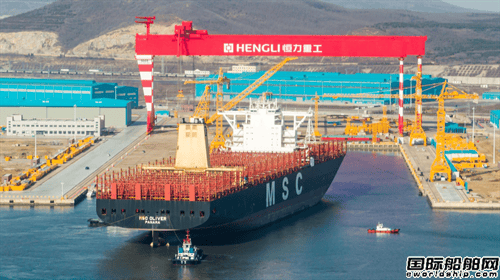
Core Viewpoint - Hengli Heavy Industry announced the establishment of an international ship research and design center in Shanghai, enhancing its capabilities in high-end shipbuilding and attracting top talent in the industry [2][4]. Fundraising and Investment Projects - Guangdong Songfa Ceramics Co., Ltd. approved a proposal to increase the implementation subject and location of fundraising projects, designating Hengli Shipbuilding and its subsidiaries as the implementation body for the "Hengli Heavy Industry Group Co., Ltd. International Ship Research and Design Center Project (Phase I)" [2][3]. - The total amount raised through the issuance of shares was approximately RMB 3.99 billion, with a net amount of approximately RMB 3.93 billion after deducting issuance costs [2]. Project Details - The Hengli Shipbuilding (Dalian) green high-end equipment manufacturing project has a total investment of approximately RMB 8 billion, with planned fundraising of RMB 3.5 billion [3]. - The Hengli Heavy Industry International Ship Research and Design Center (Phase I) project has a total investment of approximately RMB 740 million, with planned fundraising of about RMB 430 million [3]. Strategic Importance - Hengli Shipbuilding, as a wholly-owned subsidiary of Hengli Heavy Industry, plays a crucial role in the shipbuilding sector, leveraging its strong R&D team to enhance operational efficiency and expedite project implementation [4]. - Shanghai's status as a leading international shipping center provides access to top-tier shipping resources and talent, which is expected to strengthen the company's R&D capabilities in green, high-end, and intelligent shipbuilding [4]. Company Background - Hengli Heavy Industry was established in response to national initiatives, acquiring the former STX Dalian assets for RMB 2.11 billion to create a world-class high-end shipbuilding base [5]. - The company has commenced construction on over 60 vessels, with a backlog of approximately 170 orders scheduled for delivery until 2029 [5]. - Once fully operational, Hengli Heavy Industry's projects are expected to produce over 150 large vessels annually and cover four types of dual-fuel systems, positioning it as the largest and most comprehensive shipbuilding base globally [5].

中央财经委员会办公室原副主任尹艳林:“十五五”上市公司高质量发展要从六个方面着力
Zheng Quan Ri Bao· 2025-11-14 05:32
Core Points - The meeting emphasizes the importance of technology empowering listed companies and returning value to patient capital, aligning with the current state of the Chinese economy [1] - The 20th Central Committee's Fourth Plenary Session has significant implications for the next five years, particularly regarding the 15th Five-Year Plan [1][2] Group 1: Achievements of Listed Companies - Listed companies have made significant achievements during the 14th Five-Year Plan, with a notable shift towards new and practical characteristics [2] - The number of listed companies in strategic emerging industries has increased, with their proportion rising from 42.6% to 52.3%, a 10 percentage point increase [2] - The profit share of listed companies in the real economy has reached 52%, surpassing the financial sector for the first time [2] - The market capitalization of the electronics sector has exceeded that of banking, with electronics at 12.7% compared to banking's 9.9% [2] Group 2: Innovation and R&D Investment - Innovation capabilities have significantly improved, with R&D investment by listed companies reaching 6.5 trillion yuan, a 189.3% increase compared to previous periods [3] - R&D investment accounted for 21.1% of revenue for listed companies in the first half of the year, reflecting a growing commitment to innovation [3] Group 3: Mergers and Acquisitions - The pace of mergers and acquisitions has accelerated, with over 14,000 cases and a transaction value of 7.6 trillion yuan during the 14th Five-Year Plan [4] - Mergers and acquisitions are seen as a means to optimize resource allocation and achieve technological upgrades [4] Group 4: Dividend Policies and Shareholder Returns - The regulatory framework has strengthened, with a focus on enhancing dividend policies, leading to a cumulative dividend payout of 10.4 trillion yuan, an 85.7% increase [5] - Share buybacks have also increased significantly, from over 200 billion yuan during the 13th Five-Year Plan to over 500 billion yuan [5] Group 5: Corporate Governance and Internationalization - Corporate governance standards have improved, with a focus on independent functioning and regulatory compliance [6] - The international competitiveness of listed companies has increased, with 14% of their business coming from overseas markets [6] Group 6: Future Directions and Strategic Goals - The 15th Five-Year Plan emphasizes high-quality development, with specific goals for nurturing new growth drivers and optimizing industrial structures [7][8] - The plan highlights the importance of deepening the real economy and integrating smart, green, and fusion development strategies [8][9] - There is a strong emphasis on enhancing technological empowerment and increasing R&D capabilities to support high-quality development [9][10]
一座陶瓷智能工厂背后的“三化”变革丨品牌新事
吴晓波频道· 2025-11-14 00:29
Core Viewpoint - The article highlights the transformation of traditional manufacturing into smart factories, focusing on the case of a large intelligent tile factory in Dongguan, showcasing advancements in automation, efficiency, and sustainability in the ceramics industry [4][18]. Group 1: Smart Factory Features - The factory covers an area of 348 acres with a total building area of approximately 350,000 square meters, exceeding the size of the National Stadium "Bird's Nest" by 100,000 square meters [5]. - The workforce has been reduced from 120-150 workers per production line to about 35, achieving a labor reduction of 70-80% [6]. - The factory employs an integrated production line that automates the entire process from raw material to finished product, producing large high-end ceramic slabs [7]. Group 2: Automation and Technology - Automation is evident throughout the production process, with a central control room managing operations via precise electronic scales for raw material mixing and intelligent cloud control systems for temperature monitoring [8][10]. - The factory utilizes AI detection machines for quality control, which can identify surface defects and automatically sort products for packaging [10]. - Data collection points total approximately 20,000, allowing for comprehensive monitoring and optimization of production processes [15]. Group 3: Sustainability Initiatives - The factory operates during off-peak hours to take advantage of lower electricity rates, reducing operational costs significantly [12]. - It has implemented a biomass fuel system that lowers costs to one-third of natural gas prices, replacing 50% of natural gas usage [12]. - Rainwater collection systems can store about 3,000 tons of water for production use, achieving a 100% recycling rate [12]. Group 4: Performance Metrics - The factory has achieved a 20-30% increase in production while reducing labor costs by 70-80% [18]. - The quality of products has improved, with the firing rate of superior products increasing from 97.5% to 99.8% and flatness standards improving from 0.18 mm to 0.1 mm [18]. - The company has seen a doubling of per capita output compared to five years ago, with a product quality rate of 99.5% and an annual production capacity exceeding 200 million square meters [32]. Group 5: Future Outlook - The successful listing of the company on the Shenzhen Stock Exchange marks a new phase for the industry leader, positioning it as a benchmark for smart manufacturing practices [34]. - The company aims to leverage its intelligent manufacturing advantages to enhance product competitiveness and operational efficiency [37].

新型工业化调研行|“老三样”变“新三样” 湘潭制造业转型升级迈大步
Zhong Guo Jing Ying Bao· 2025-11-13 08:31
Group 1: Economic Development and Industry Transformation - Xiangtan City is driving high-quality economic development through model innovation, transitioning from traditional industries like ordinary steel, fuel vehicles, and real estate to advanced manufacturing sectors such as special steel, electric vehicles, and advanced batteries [1] - Since the 14th Five-Year Plan, Xiangtan has focused on strengthening its leading advantages in advanced steel materials, new energy vehicles, and advanced energy materials and batteries, achieving over 100 billion in revenue scale [1] - The production of new energy vehicles has significantly increased from 170,000 units in 2020 to nearly 600,000 units this year, with new energy vehicles accounting for over 50% of total production [1] Group 2: Company Strengths and Innovations - Xiangtan Steel Group (Xianggang) has become the strongest domestic producer in the medium and thick plate sector, capitalizing on the demand for raw materials as China became the "world factory" [2] - Xianggang has successfully replaced imports in several technical products, achieving global firsts in certain niche areas, such as the development of high toughness steel plates and core production technologies previously monopolized by foreign companies [3] - The company aims to accelerate its development towards high-end, intelligent, and green manufacturing, aspiring to become a national-level intelligent factory during the 15th Five-Year Plan [3]