一级市场投资

Search documents
腾讯又做LP了
阿尔法工场研究院· 2025-08-22 00:00
Core Viewpoint - Tencent has invested in Meituan Longzhu, marking its continued active participation in the venture capital space, especially during a challenging fundraising environment for RMB funds [4][5][6]. Group 1: Investment Details - Chengdu Longzhu Equity Investment Fund was established in 2022 with a capital contribution of 2.303 billion yuan, focusing on private equity investments and asset management [6]. - The largest contributor to Chengdu Longzhu is Tianjin San快科技 Co., Ltd. (Meituan), indicating that this fund is a RMB fund based in Chengdu [6]. - Recently, Chengdu Longzhu added four new partners, including Tencent's Shenzhen Industrial Investment Fund, marking Tencent as the fifth largest shareholder with a contribution of 100 million yuan [7]. Group 2: Recent Investments - Chengdu Longzhu's latest investment was in Xinghaitu (Beijing) Artificial Intelligence Technology Co., Ltd., a humanoid robot startup with a Tsinghua University background, which has completed four rounds of financing this year [8]. - Tencent's involvement as a limited partner (LP) signifies a collaboration between two major internet giants in the venture capital field [9]. Group 3: Market Activity - Tencent has been particularly active in the primary market this year, with notable investments in various funds and companies, including a significant investment in the healthcare sector through Anze Capital [11]. - The company has also participated in other funds, such as Shanghai Lilan Private Investment Fund, further expanding its investment footprint [12]. - The current fundraising difficulties in the primary market highlight the importance of market-oriented LPs like Tencent, which can provide much-needed liquidity to VC/PE firms [13].


某固态电池项目破产的背后 来自老股东独家访谈
叫小宋 别叫总· 2025-08-18 03:47
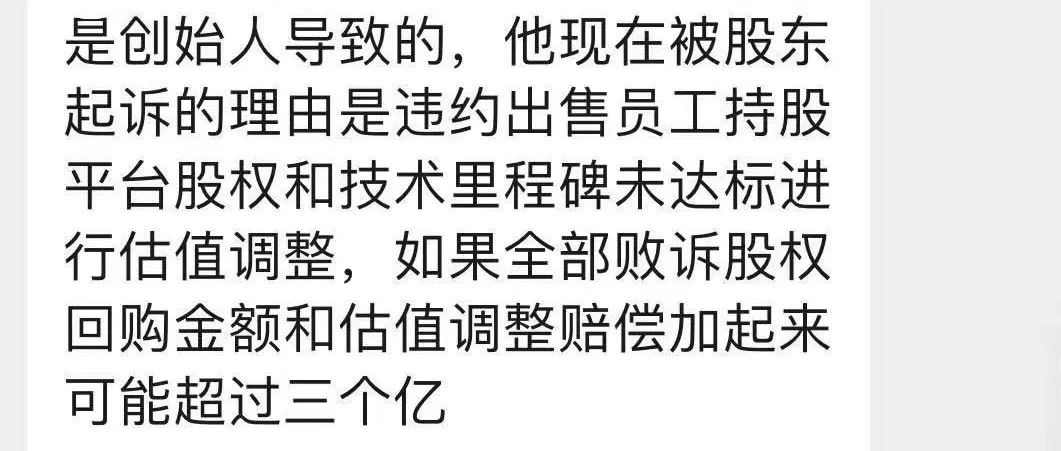
Core Viewpoint - The article discusses the journey of a solid-state battery company that ultimately faced substantial bankruptcy, highlighting the mismanagement and internal conflicts within the company [2][4]. Group 1: Company Background - The company was established in 2021, with a founding team that has a background in Japanese enterprises [6]. - The founder spent a significant amount of time in Japan during the pandemic, claiming to build a research and development team there [7][8]. - After raising several million yuan in funding in 2023, the founder returned to China [9]. Group 2: Internal Conflicts - The company experienced internal discord among the core team, leading to multiple operational locations in two adjacent cities in South China [14]. - The absence of the founder led to increased demands for salary raises from co-founders and the core team, resulting in higher management costs due to the establishment of multiple teams [17]. Group 3: Shareholder Discontent - In the second half of 2024, the founder sold shares of the employee stock ownership plan without convening a shareholders' meeting, which triggered backlash from existing shareholders [19]. - Shareholders were expecting a product testing report by the end of 2024, which was not delivered, leading to collective actions against the founder [19]. Group 4: Missed Opportunities - In early 2025, a leading company in the field expressed interest in acquiring the company, offering a deal that would allow investors to exit at cost, but the founder rejected the proposal [21]. - Shareholders proposed to reclaim the founder's shares due to breaches of contract, but the founder continued to refuse [22]. Group 5: Current Status - The company's domestic operations and management were reported to be relatively normal, with clear financial records [24]. - Shareholders hoped to gather evidence of the founder's mismanagement from the now-dissolved Japanese team, but the dissolution hindered this effort [25][26]. Group 6: Final Reflections - The overall assessment from the interviewee indicated that the founder lacked the capability and willingness to manage the company, while investors failed to exercise adequate oversight [30]. - Some state-owned investors managed to exit the company in time, while others were not as fortunate [30].
我,42岁,在一级市场轮回
Hu Xiu· 2025-08-05 06:05
Core Insights - The article discusses the career journey of a former investment professional who transitioned from a large investment firm to a full-time financial advisor (FA) after experiencing challenges in the investment landscape [1][2][3]. Group 1: Career Transition - The individual has over ten years of experience in various roles, including research and development, marketing, and investment, which culminated in a shift to a full-time FA role due to a lack of suitable opportunities in traditional investment firms [2][4]. - The decision to become an FA was influenced by the current contraction in the investment sector, making it difficult to find appropriate positions that matched the individual's experience and expectations [3][4]. Group 2: Investment Philosophy - The individual expresses a strong preference for engaging with founders and leveraging industry knowledge to support startups, emphasizing the importance of meaningful work over mere financial gain [5][6]. - Despite the challenges faced in the investment market, the individual believes that opportunities still exist, and the key is to be prepared to seize them when they arise [6][11]. Group 3: Current Activities and Success - In the current FA role, the individual has successfully completed one project and anticipates two more deals by the end of the year, indicating a positive start in this new phase of their career [8]. - The individual has built a proprietary database of information from industry contacts, which aids in identifying investment opportunities that align with current market demands [9][10]. Group 4: Advice for Industry Peers - The individual advises others in the investment sector to maintain a broader perspective and continuously seek knowledge and insights, as the market operates in cycles and opportunities will eventually present themselves [11].
对话金浦智能田华峰:一级市场面临四大挑战,期望退出渠道畅通|科创资本论
Di Yi Cai Jing· 2025-07-20 04:40
Group 1 - The core viewpoint emphasizes the need for a smooth exit channel for equity investment institutions, suggesting that if A-shares can return to around 200 IPOs annually, along with over 100 overseas IPOs, it would improve the expectations of all types of investors and accelerate the return of invested capital to the primary market [1][2][12] - The establishment of the Sci-Tech Innovation Board has led to significant improvements in the technology innovation ecosystem in China, enhancing the efficiency of research results transformation and driving the growth of the hard technology industry [1][2] - The primary market has undergone substantial changes, with RMB funds and state-owned capital becoming the main players, and a trend towards early, small, and new investments in hard technology [1][2][6] Group 2 - Current challenges in the primary market include the nationalization of fundraising, scarcity of quality investment targets, increased exit pressure due to reduced IPO numbers, and unfair taxation methods [2][7][8] - Recommendations to address these challenges include ensuring smooth exit channels and standardizing personal income tax rates to 20%, calculated based on the entire fund rather than individual projects [2][8] - The dominance of state-owned capital in fundraising is attributed to a complex external environment, market fluctuations, and a decline in IPO numbers, which has diminished the willingness of private enterprises and high-net-worth individuals to participate in equity investment [6][7] Group 3 - The recent regulatory support for quality technology companies to go public includes the introduction of new policies aimed at facilitating the listing of unprofitable tech firms [9][10] - Investment institutions are encouraged to develop systematic industry research capabilities and enhance their ability to empower industries, focusing on clear investment logic and strategies [10][11] - Characteristics of quality investment targets include reasonable valuations, mastery of key technologies, experienced management teams, and the potential to grow into platform companies [10][11] Group 4 - The pressure on exit channels remains, with IPOs being the primary exit route for equity investment institutions, alongside active mergers and acquisitions [12][14] - Recent data indicates a significant increase in IPO applications, with 150 applications received in June alone, suggesting a potential recovery in the IPO market [13] - The North Exchange is expected to become a major listing venue, with anticipated improvements in liquidity and trading volume [13][14] Group 5 - The establishment of S funds has opened new exit channels for investors, although challenges such as the scarcity of quality underlying assets and pricing difficulties remain [15][16] - Recommendations for improving the S fund market include creating a valuation evaluation system and simplifying approval processes for state-owned capital [15][16]
有GP用自有资金炒股,一个季度就挣了60%
母基金研究中心· 2025-06-27 09:32
Core Viewpoint - Increasing attention from primary market institutions towards the secondary market due to challenges in fundraising and investment exits [1][4][10] Group 1: Market Trends - Many primary market investors are now actively participating in the secondary market, with a notable increase in the number of General Partners (GPs) engaging in this strategy [3][11] - The liquidity of the secondary market and the potential for higher short-term returns are key reasons for this shift, especially as fundraising in the primary market becomes increasingly difficult [4][5] Group 2: Fundraising Challenges - In 2024, the number of newly established private equity and venture capital funds dropped by 44.1% year-on-year, with total fundraising amounting to 412.14 billion yuan, a decrease of nearly 40% compared to 2023 [5] - The average size of individual funds has fallen to 133.8 million yuan, marking a ten-year low, indicating significant challenges in the fundraising environment [5] Group 3: Management and Regulatory Landscape - In 2024, only 116 private equity fund managers completed registration, while 928 institutions were deregistered, highlighting a significant contraction in the number of active fund managers [6][7] - Over 100 private equity and venture capital fund managers have been deregistered due to not having any managed funds for 12 months, emphasizing the critical nature of fundraising for survival in the industry [7][8] Group 4: Investment Environment - The investment landscape has shifted away from the rapid valuation increases seen in the internet and model innovation era, with a focus now on hard technology requiring patience for longer-term returns [9][10] - Many investment institutions are currently facing a "zero investment" scenario, not due to a lack of desire to invest, but because of fierce competition and high valuations in strategic emerging industries [10]

【RimeData周报06.14-06.20】氢能汽车领域现大额融资
Wind万得· 2025-06-21 22:12
Core Insights - The article highlights a significant increase in financing events and amounts in the primary market, indicating a growing interest from investors in various sectors [4][11]. Financing Overview - As of June 20, 2025, there were 118 financing events this week, an increase of 31 from the previous week, with a total financing amount of approximately 5.627 billion yuan, up by 2.959 billion yuan [4]. - Among these events, 23 had financing amounts of 100 million yuan or more, an increase of 10 from last week [4]. - There were 35 public exit cases this week, an increase of 9 from the previous week [4]. Financing Amount Distribution - A total of 69 financing events disclosed amounts this week, with the distribution as follows: - 4 events under 5 million yuan - 35 events between 5 million and 10 million yuan - 6 events between 10 million and 50 million yuan - 15 events between 50 million and 100 million yuan - 2 events between 100 million and 500 million yuan - 2 events between 500 million and 1 billion yuan - 1 event over 1 billion yuan [5]. Notable Investment Events - **New Energy Vehicles**: Kavin Automotive raised 1.209 billion yuan through a capital increase agreement, focusing on low-carbon and zero-carbon industrial ecosystems [7]. - **Quadruped Robots**: Yushu Technology completed nearly 700 million yuan in Series C financing, led by major investors including Tencent and Alibaba [7]. - **Display Panels**: Shenzhen Xinshi Technology secured approximately 600 million yuan in Pre-A round financing, focusing on silicon-based OLED micro-display technology [8]. - **Logistics**: Zhejiang China Light Textile City Group announced a 500 million yuan capital increase from ICBC Financial Asset Investment [8]. Industry Distribution - The financing events spanned 14 industries, with the top five being: - Equipment Manufacturing: 24 events - Electronics: 23 events - Healthcare: 19 events - Information Technology: 18 events - Consumer Goods and Services: 8 events - These five industries accounted for 77.97% of all financing events [11][12]. Regional Distribution - The top five regions for financing events were Guangdong, Jiangsu, Beijing, Shanghai, and Zhejiang, totaling 84 events, which is 71.19% of all events [16]. Financing Rounds - Angel and A rounds were the most active, totaling 78 events, with early-stage financing (A round and earlier) accounting for 67.80% of the total [20]. Exit Situation - There were 35 public exit cases this week, with the electronics sector leading in exit cases, followed by materials and energy-saving industries [27][29].


家办应该投什么样的GP?
FOFWEEKLY· 2025-06-12 09:59
Core Viewpoint - The article discusses a framework for selecting General Partners (GPs) based on three dimensions: scale, focus, and people [2][4]. Group 1: Scale - Scale can be evaluated from two aspects: the management scale of the institution and the target fund size [6]. - The management scale is crucial as family offices typically invest between 10-30 million. Larger institutions with hundreds of millions in assets may not prioritize smaller investments, making smaller institutions (under 1 billion) more appealing for family offices [6]. - The target fund size is important for performance and influence. Many family offices avoid funds larger than 1 billion, as smaller funds allow for greater interaction and potential for follow-on investments [7]. Group 2: Focus - Focus can be assessed through sector specialization and product specialization [8]. - Sector focus is vital for generating alpha, as GPs with long-term experience in a specific sector are more likely to succeed [8]. - Product focus refers to the clarity and simplicity of fund offerings. GPs managing multiple funds may face conflicts of interest and diluted attention [8]. Group 3: People - The human factor is critical in investment, and evaluation can be based on ten aspects [10]. - Integrity is essential, as GPs must treat LPs' money with care, akin to managing their own family's savings [10]. - Passion for investment is necessary for sustained success, as genuine interest drives perseverance through challenges [10]. - Accumulation of wealth, resources, and knowledge is important for GPs to make informed decisions and recognize opportunities [11]. - A clear investment philosophy helps GPs navigate market cycles and maintain focus [12]. - A coherent career trajectory indicates a logical progression and depth of experience [12]. - Humility is crucial in a rapidly changing market, as overconfidence can lead to poor decision-making [13]. - Intelligence, both cognitive and emotional, is vital for managing relationships with LPs and project founders [13]. - High success rates in niche areas reflect a GP's expertise and ability to generate returns [13]. - Established investment principles guide decision-making and reflect a GP's self-awareness [14]. - Organizational structure and culture are important for long-term adaptability and success in the VC industry [14].

家办应该投什么样的GP?
FOFWEEKLY· 2025-06-12 09:58
Core Viewpoint - The article discusses a framework for selecting General Partners (GPs) for family offices, focusing on three dimensions: scale, specialization, and people [2][4]. Group 1: Scale - Scale can be evaluated from two aspects: the management scale of the institution and the target fund size [6]. - The management scale is crucial as family offices typically invest between 10-30 million. Larger institutions with hundreds of millions in assets may not provide the same level of interaction and opportunities for co-investment [6]. - Smaller institutions, with management scales below 1 billion, are often more appealing as they allow for closer relationships and shared growth opportunities [6]. - The size of the target fund is also important for performance and influence. Many family offices avoid funds larger than 1 billion, as smaller funds allow for greater engagement and quicker returns on investment [7]. Group 2: Specialization - Specialization is considered in terms of sector focus and product focus [8]. - A GP that has long-term experience in a specific sector is more likely to generate alpha returns, as they develop intuition and insights over time [8]. - Product focus refers to the GP's commitment to a single fund at a time, which can reduce conflicts of interest and enhance team focus [8]. Group 3: People - The human factor is critical in investment, and the article outlines ten key attributes to evaluate GPs [9]. - Integrity is essential, as GPs must treat LPs' money with care and responsibility [9]. - Passion for investment is vital; GPs should genuinely love what they do rather than treating it as just a job [10]. - Accumulation of wealth, resources, and knowledge is necessary for GPs to make informed decisions and avoid conflicts of interest [10]. - A clear investment philosophy helps GPs navigate market cycles and maintain focus [11]. - A coherent career trajectory indicates a GP's decision-making process and adaptability [11]. - Humility is important in a rapidly changing market, as it allows GPs to remain open to new ideas and changes [12]. - Intelligence, both emotional and intellectual, is crucial for managing relationships with LPs and project founders [12]. - High success rates in specific niches are a strong indicator of a GP's capability [12]. - Established investment principles reflect a GP's experience and ability to learn from past mistakes [13]. - Organizational structure and culture are key to a GP's long-term success and adaptability [13].

投资人的中年危机
母基金研究中心· 2025-06-09 09:26
Core Viewpoint - The article discusses the challenges faced by mid-career investors in the primary market, highlighting a sense of confusion and anxiety among them due to the current market conditions and their career progression [1][2]. Group 1: Mid-Career Challenges - Many mid-career investors feel stuck, unable to advance to partner levels or secure core resources, leading to a sense of being "stuck in the middle" [2][3]. - The competitive advantage of younger employees in terms of energy and cost is noted, with mid-level investors facing pressure to either achieve results or risk being optimized out of their positions [2][3]. - The trend of mid-career investors exploring side jobs, such as selling insurance, has emerged as a response to financial pressures and job insecurity [2][3]. Group 2: Career Transitions - There is an increasing trend of investors transitioning to roles within the companies they previously invested in, which is seen as a smoother career shift due to existing relationships and familiarity with the business [4][5]. - Some investors are diversifying into completely different fields, such as becoming fitness or ski instructors, reflecting a broader search for new opportunities [5][6]. - The shift to roles in financial advisory (FA) or consulting is also noted, as some investors seek more stable opportunities amid a challenging investment environment [5][6]. Group 3: Embracing New Opportunities - A growing number of investors are turning to self-media and content creation as a side venture, leveraging their expertise to generate income through knowledge sharing and online courses [6][7]. - The rise of self-media among investors is seen as a way to expand their networks and share resources, with various monetization strategies being employed, including knowledge payment and advertising [6][7]. - The article emphasizes the importance of adaptability and continuous self-improvement for mid-career investors to remain relevant in a changing market landscape [7].

对话:传承170年不衰,家办如何助力家族跨越周期?
3 6 Ke· 2025-05-21 09:22
Group 1: Family Office Overview - Family offices in Europe and the US have become a common wealth management vehicle for ultra-high-net-worth individuals, aiding families in wealth preservation and transfer [1] - The Hermansen family office, represented by Michael Zhang, utilizes global asset allocation strategies and robust risk management systems to navigate economic cycles [1] Group 2: Hermansen Family Business - The Hermansen family business has a history of over 170 years, with its largest company, DSD Group, founded in 1855, making it one of Norway's oldest private enterprises [2] - DSD Group was transformed from a regional ferry service into an international company with diverse operations under the leadership of Folke Hermansen [4] - DSD currently employs over 5,600 people, equating to one employee for every 1,000 Norwegians [4] Group 3: Investment Structure - The Hermansen family operates two main investment entities: DSD Group's strategic investment department and the family fund Herfo, both led by Yuhong Jin Hermansen [5] - The strategic investment department focuses on capturing emerging business trends and primarily invests in growth-stage companies, while also seeking acquisition opportunities [7] - Herfo, established in 2005, aims to assist the family in professional global asset allocation, leveraging the advantages of long-term investments [9] Group 4: Global Asset Allocation Strategy - Herfo allocates approximately 50% of its investments to global secondary markets, with the remainder in primary markets and real estate [10] - The family office has increased its investment in primary markets, particularly direct investments, to enhance team capabilities and experience [11][13] - The focus is on identifying quality projects based on the family's resources and advantages, with a keen interest in technology and niche traditional sectors [13] Group 5: Risk Management Strategies - The Hermansen family employs four core risk management strategies: maintaining legal and operational independence between the family business and the family fund, global diversification in asset allocation, liquidity management, and team collaboration [15][16][18][19] - The family office emphasizes the importance of team experience and diverse perspectives to avoid groupthink [19] Group 6: Advantages and Challenges of Overseas Branches - The Hermansen family office is unique in having a branch in China, allowing for long-term engagement in both Chinese and Norwegian markets [21] - The family office aims to leverage its experience in the complex Chinese market to identify and seize investment opportunities quickly [22] - The changing global economic and political landscape presents both opportunities and challenges for the family office in achieving global asset allocation [22] Group 7: Opportunities in Sino-Norwegian Cooperation - There are significant collaboration opportunities between China and Norway in the fields of renewable energy, technology co-creation, and capital co-creation [23][24] - The Hermansen family office has expanded its services to include consulting for Nordic companies entering the Chinese market and vice versa, enhancing its role as a bridge between the two markets [24]