主动投资

Search documents
选股专家”的指数进阶:在“微笑曲线”的两端做主动选择
2 1 Shi Ji Jing Ji Bao Dao· 2025-11-04 10:49
Core Insights - The Chinese ETF market has experienced explosive growth, becoming the largest ETF market in Asia, surpassing Japan, with an asset management scale of $640.6 billion as of July 2025 [1] - The total domestic ETF scale has exceeded 5.6 trillion yuan, with an increase of over 180 billion yuan within the year, indicating a rapid development phase [1] - Huatai-PineBridge Fund has transitioned from being known as a "stock-picking expert" to positioning itself as an "active chooser in the index investment space" [3][4] Group 1: Market Growth and Trends - As of October 21, 2025, the domestic ETF total scale has surpassed 5.6 trillion yuan, with a year-on-year increase of over 1.8 trillion yuan [1] - The rapid growth of ETFs is part of a broader trend towards index-based investment strategies, with Huatai-PineBridge Fund's innovative products gaining significant traction [1][3] Group 2: Strategic Positioning and Philosophy - The fund's strategy emphasizes the importance of product design and operation, adhering to a "smile curve" model where true competitiveness lies in the ends of the curve [2][5] - The company aims to provide tailored solutions for various investors by leveraging its active research capabilities and strategic judgment [2][4] Group 3: Product Development and Innovation - Huatai-PineBridge Fund's index business is built on long-term accumulation and deep observation, recognizing the blurring lines between active and passive investment [3][4] - The fund has successfully launched products like the Hong Kong Stock Connect Innovative Drug ETF, which grew from under 1 billion yuan to over 20 billion yuan [1][3] Group 4: Client Service and Differentiation - The fund is transitioning from merely selling products to providing comprehensive investment solutions tailored to different client needs [9][10] - For institutional clients, the focus is on deep research and customized services, while retail clients benefit from high responsiveness and product flexibility [10][11] Group 5: Future Outlook and Innovation - The company is optimistic about the future of the ETF market in China, highlighting significant potential for growth in ETF penetration rates [12][14] - Key areas of focus for future product innovation include Active ETFs and Covered Call ETFs, which align with the company's strengths and market demands [12][14]
选股专家”的指数进阶:在“微笑曲线”的两端做主动选择
21世纪经济报道· 2025-11-04 10:44
Core Viewpoint - The article highlights the rapid growth of China's ETF market, which has become the largest in Asia, surpassing Japan, with a total asset management scale reaching $640.6 billion by July 2025, and a significant increase of over $180 billion within the year [1][3]. Group 1: Strategic Transformation - The strategic shift of the company from a stock-picking expert to an active choice maker in index investment is based on long-term accumulation and deep observation [3][4]. - The company recognizes the blurring lines between active and passive investment, with leading overseas asset management institutions using indices as management tools [3][4]. - The launch of the index brand in November 2022 marked a critical strategic turning point, emphasizing the importance of "rule-based investment" in a high-quality development era [3][4]. Group 2: Product Design and Operation - The company focuses on the "smile curve" model, where the real competitive advantage lies in proactive product design and refined product operation [5][6]. - The company integrates deep fundamental research into index compilation, ensuring that products are not mere copies of existing indices but are optimized based on thorough analysis [5][7]. - The proactive strategy in product operation allows the company to dynamically allocate resources based on market trends, enhancing its competitive edge [8][10]. Group 3: Customer Service Strategy - The company aims to provide comprehensive index investment solutions rather than just individual products, tailoring services to meet diverse client needs [9][10]. - For institutional clients, the focus is on in-depth research and customized services, while retail clients benefit from high-efficiency responses and product flexibility [9][10]. - The exploration of an OCIO service model for smaller institutions represents an extension of the company's capabilities in institutional services [9][10]. Group 4: Future Outlook - The company is confident in the growth potential of the index investment market in China, emphasizing the need for proactive product layout and precise market positioning [12][13]. - Key areas of focus for future product innovation include Active ETFs and Covered Call ETFs, which align with the company's strengths and current market demands [12][13]. - The company aims to enhance its product matrix and service system to create sustainable long-term value for investors [12][13].


全世界都在炒科技股!AI狂潮同样重塑了亚洲股市
Hua Er Jie Jian Wen· 2025-10-31 00:22
Core Insights - Asian stock markets have outperformed global markets this year, with the MSCI Asia Pacific Index rising by 26%, marking the largest lead over the S&P 500 in eight years [1] - The concentration of technology stocks in indices is creating significant risks, potentially leading to market corrections if the AI momentum halts [1][2] - Despite high concentration in certain markets, countries like China, Japan, and India offer more diversification, which may mitigate the impact of AI or tech cycle fluctuations [1] Group 1: Market Performance and Risks - The MSCI Asia Pacific Index has shown a 26% increase this year, significantly outperforming global markets [1] - Concerns are raised about the high concentration of technology stocks in indices, which could lead to inflated valuations and market corrections [2][3] - The top five stocks in the MSCI Asia Pacific (excluding Japan) index account for 29% of the total weight, nearing the highest level since 2019 [4] Group 2: Investment Strategies and Challenges - Fund managers are facing challenges due to the overwhelming weight of technology stocks, which is creating a "vicious cycle" of rising valuations [3] - Active fund managers are seeking alternative strategies to navigate concentration risks, including setting individual stock weight limits [5] - In Taiwan, TSMC's weight in the weighted index has approached 45%, tripling over the past decade, while in Korea, Samsung and SK Hynix together account for 30% of the index [6] Group 3: Future Outlook and AI Investment Theme - Despite the challenges posed by market concentration, the absolute returns from stocks have been significant, with TSMC's stock price rising by 40% and SK Hynix's by over 220% this year [11] - Major tech companies like Meta and Amazon are expected to continue investing heavily in technology hardware, which may sustain the current upward trend [11] - AI remains a long-term investment theme, with investors generally optimistic despite potential short-term corrections [12]
专访汇添富韩贤旺:“选股专家”的“指能添富”之路
点拾投资· 2025-10-26 23:33
Core Viewpoint - The article discusses the significant shift towards index investing in the asset management industry over the past decade, highlighting how companies like Huatai Fund have adapted their strategies to thrive in this environment, positioning themselves as "active selectors" in the index investment space [1][2]. Group 1: Strategic Insights - Huatai Fund's strategy is driven by product development and strategic services, leveraging strong research capabilities to create forward-looking product systems that meet client needs [7]. - The firm emphasizes the importance of rule-based investment, where the lines between active and passive investing are increasingly blurred, necessitating a structured approach to investment [6][8]. - The "Zhineng Tianfu" brand represents Huatai's commitment to enhancing index investment through active research methodologies, aiming to provide long-term value to investors [7][8]. Group 2: Market Trends and Adaptation - The firm identifies three major shifts in ETF user demand: retail investors transitioning to index funds, increased institutional allocation to equity assets, and the rise of third-party platforms as key distribution channels [15]. - Huatai Fund has observed that the market's volatility and structural changes have made it more challenging to achieve excess returns through traditional active strategies, prompting a strategic pivot towards index products [4][5]. Group 3: Product Development and Innovation - The design and operation of ETF products are crucial, with Huatai Fund focusing on innovative product design and efficient operations to enhance investor experience and drive organic growth [11][12]. - The firm has successfully launched targeted ETFs, such as the Hong Kong Stock Connect Technology 30 ETF, which strategically excludes certain sectors to better meet investor needs [11][12]. - Continuous innovation in index products is a priority, with plans to explore new ETF types that align with domestic market trends and investor preferences [16]. Group 4: Client Engagement and Service - Huatai Fund emphasizes the importance of understanding client needs and providing tailored asset allocation solutions, ensuring high-quality service and engagement [9][15]. - The firm actively educates investors and maintains communication during market fluctuations to build confidence and support informed decision-making [18]. - A comprehensive approach to product lifecycle management is adopted, focusing on pre-launch precision, post-launch support, and maintaining product liquidity and efficiency [17].

超50只基金翻倍!这两大赛道成最大赢家
Guo Ji Jin Rong Bao· 2025-10-09 15:00
Core Insights - The performance of public funds in the first three quarters of 2025 shows significant differentiation, with over 50 funds doubling their net value, particularly in technology and pharmaceutical themes, while funds heavily invested in traditional finance and cyclical sectors performed poorly [1][2]. Fund Performance - Active equity funds achieved an average return of 34.54% year-to-date, outperforming passive index funds which averaged 27.56% [2]. - A total of 53 funds recorded returns exceeding 100%, with 48 being active equity funds, highlighting the success of active management in a structural market [2]. - The top-performing fund, Yongying Technology Smart A, had a return of 194.49%, followed by Huatai-PB Hong Kong Advantage Selection A at 161.1%, both focusing on technology and innovative pharmaceuticals [2]. Traditional Sector Performance - In contrast, 41 funds reported returns below -5%, with 27 being active equity funds, primarily invested in traditional sectors like banking, real estate, and consumer goods [3]. - The performance gap between the best and worst active equity funds exceeded 200 percentage points, indicating a high level of market differentiation [3]. Gold ETFs - Gold ETFs have seen significant inflows due to their strong safe-haven appeal, with an average return of 41.04% year-to-date, outperforming the broader market [4]. - All 14 gold ETFs recorded positive growth in shares, with the largest ETF increasing by over 3.3 billion shares, and total market shares surpassing 20 billion [4]. Market Outlook - The market is expected to continue its differentiation, with technology and innovative pharmaceuticals likely to remain the main themes in Q4 [5][6]. - Investment strategies should focus on "high-cut low" approaches, shifting from high-performing sectors to undervalued areas [6][7]. - The innovation drug sector may see reduced overall beta in Q4, suggesting a focus on individual stock opportunities rather than broad sector plays [7].
研究框架培训:主动投资的中美对比、基准选择、未来展望
2025-09-26 02:28
Summary of Conference Call Records Industry or Company Involved - The discussion primarily revolves around the **Chinese active investment fund industry** and its comparison with the **U.S. active investment fund industry**. Core Points and Arguments 1. **Alpha Generation in China**: Chinese active fund managers demonstrate stronger alpha generation capabilities over the long term, especially in volatile market conditions, achieving significant excess returns. This year, the median return of many public sector active funds exceeded 30 percentage points [1][5][11]. 2. **Market Opportunities**: The Chinese market offers more opportunities for excess returns compared to the U.S. market, attributed to differences in index composition and the emergence of new industries such as robotics, innovative pharmaceuticals, new energy, and AI during China's economic transition [1][4][9]. 3. **Benchmark Selection**: Under the new regulatory framework, it is essential to choose a representative broad-based index that aligns with the investment style, and to regularly compare performance against this benchmark to ensure transparency and accuracy [1][6][18]. 4. **Performance of Chinese Active Funds**: Chinese active public funds have performed exceptionally well this year, with stock-type public funds rising over 20% since the peak on October 8 of the previous year. The proportion of equity public funds outperforming the CSI 300 index reached 70%, a historical high [1][13][14]. 5. **Comparison with U.S. Active Funds**: U.S. active funds are increasingly moving towards passive strategies due to the difficulty of beating indices, with only 27% of active funds outperforming the S&P 500. In contrast, over 90% of Chinese products have historically outperformed their passive counterparts [2][4][18]. 6. **Investment Environment**: Active investment thrives in volatile market environments, where selective stock picking and industry allocation can yield significant excess returns. The outlook for Chinese active investment remains positive as skilled fund managers are expected to continue outperforming market benchmarks [5][17]. 7. **Sector Performance**: Key sectors that have shown strong performance this year include electronics, new energy, communications, and pharmaceuticals, indicating a recovery in the active investment landscape [15][14]. 8. **Investment Strategy Recommendations**: Different investment styles should adopt specific strategies: - **Balanced**: Prefer broad-based indices like CSI 300 or A500. - **Growth**: Opt for growth-oriented indices such as CSI 300 Growth. - **Value and Dividend**: Choose broad-based indices rather than specialized value indices. - **Industry-Specific**: Match benchmarks to specific sectors of interest [29]. Other Important but Possibly Overlooked Content 1. **Impact of Economic Cycles**: The past few years saw a "barbell" investment strategy due to macroeconomic downturns, but the current environment is different, with many industries entering a harvest phase, leading to clearer investment signals [16]. 2. **Benchmark Performance**: The performance of benchmarks like the CSI 300 has been relatively weak compared to the S&P 500, but Chinese fund managers have shown a greater ability to generate alpha over the long term [8][20]. 3. **Investor Behavior**: The shift towards passive investment in the U.S. is influenced by historical financial crises that made investors wary of high volatility risks, leading to a preference for more stable investment strategies [2][10].
When Market Vol Turns Things Upside Down, Trust Active Investing
Etftrends· 2025-09-19 17:06
Core Insights - The Federal Reserve has implemented a significant rate cut, which has positively impacted market performance and improved economic outlooks for investors [1] - There is potential for additional rate cuts in the future, further enhancing investor optimism [1] Market Performance - The recent rate cut by the Fed has led to a boost in market performance, indicating a favorable response from investors [1] - The overall sentiment in the market has brightened as a result of the Fed's actions [1] Investor Outlook - Investors are encouraged by the possibility of more rate cuts, which could lead to further market gains [1] - The current economic environment is perceived as more favorable for investment opportunities due to the Fed's monetary policy adjustments [1]

【有本好书送给你】市场波动时,更要记住“投资者十诫”
重阳投资· 2025-09-18 07:33
Core Viewpoint - The article emphasizes the importance of reading and continuous learning as a pathway to personal and financial growth, encouraging readers to engage with literature that enhances their investment knowledge and decision-making skills [2][3][6]. Summary by Sections Book Recommendation - The featured book is "Winning the Loser's Game, 8th Edition" by Charles D. Ellis, which is described as a trusted guide for long-term investors, highlighting strategies to achieve success with lower costs and risks [8][25][26]. Investment Strategies - The book discusses the significance of starting with savings as a prerequisite for investment, emphasizing that without savings, investment is not possible [12]. - It outlines the necessity of setting clear savings goals and creating a savings plan to achieve those goals, which can range from saving for a bicycle to a house [13]. - The text advocates for minimizing investment costs by opting for index funds, which help avoid high management fees and other costs associated with active fund management [14]. Maintaining Rationality - A key challenge for investors is to understand themselves and maintain rational thinking to control emotions during market fluctuations [15]. - The article presents a thought experiment to illustrate that investors should prefer buying stocks when prices are low, as this aligns with their long-term interests [17][18]. - It stresses that market downturns can present opportunities for buying more shares at lower prices, ultimately benefiting long-term returns [19][20]. Investment Ten Commandments - The article summarizes ten commandments for personal investors, including the importance of saving, avoiding speculative trading, and being cautious of financial advisors who may prioritize their commissions over clients' interests [21][22][23]. - It advises against viewing a home as an investment and cautions against the risks associated with commodity futures trading [21][22]. - The commandments emphasize the need for written long-term investment goals and the importance of sticking to a disciplined investment strategy [23]. Conclusion - The article concludes that while markets and companies may change, the core principles of successful investing remain constant, encouraging readers to adopt a long-term perspective and focus on index fund investments for better performance [24].

长跑型投资老将的胜利:“时间的玫瑰”开在公募基金里
3 6 Ke· 2025-09-04 04:28
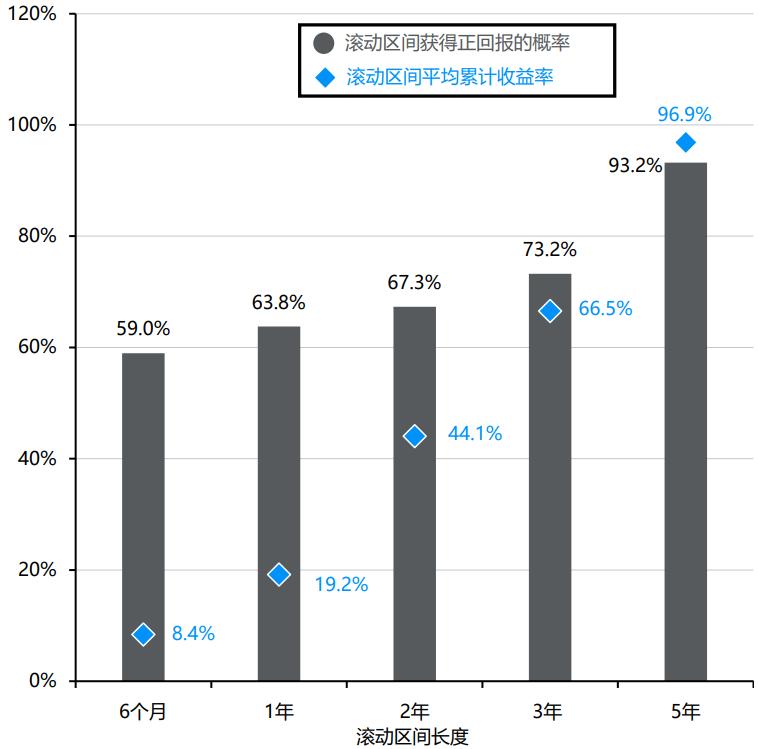
Group 1 - The core viewpoint of the article emphasizes the transition of the public fund industry from a "star model" to a "platform model," focusing on building a "platform-based, integrated, multi-strategy" investment research system [1] - Experienced fund managers with over ten years of management experience are showcasing unique value during this transition, as they have navigated multiple market cycles [1][2] - As of August 31, 2025, there are fewer than 100 fund managers in the public fund industry who have continuously managed the same active equity fund for over ten years, representing only about 5% of equity and mixed product fund managers [1][2] Group 2 - Fund managers with over 14 years of experience have demonstrated impressive performance, with annualized returns exceeding 10% for their representative funds [2] - Notable fund managers include Du Meng from Morgan Asset Management, with an annualized return of 15.7%, and others like Zhu Shaoxing and Li Wei, with returns of 15.4% and 14.8%, respectively [2] - The annualized return of the Shanghai Composite Index over the past 14 years is only 2%, indicating that experienced fund managers can generate substantial performance through long-term investment [2] Group 3 - Active investment has seen a significant performance rebound, with 30% of active stock and mixed funds achieving returns over 50% in the past year [3] - Fund managers with over ten years of experience have shown more stable performance, with Du Meng's managed funds yielding returns between 83% and 96% in the past year [3] Group 4 - Historical data indicates that longer holding periods lead to better investor returns, with a 93.2% positive return rate for holding equity funds for five years [4] Group 5 - The article highlights the importance of a supportive platform and culture for fund managers, with companies that have a deep understanding of equity investment fostering long-term management [8] - Morgan Asset Management has maintained a "long-distance" investment culture, with 80% of its global long-term funds outperforming the industry median over the past decade [8][9] Group 6 - The article concludes that the public fund industry is likely to see more fund managers who adhere to long-termism and leverage team intelligence and systematic methods, which is essential for high-quality development in the industry [9]
解密中欧「工业化」:打造公募基金的超级工厂
远川研究所· 2025-08-26 13:04
Core Viewpoint - The article discusses the transformation of the public fund industry towards an industrialized model, drawing parallels with the automotive industry's production efficiency, particularly highlighting the practices of Zhongou Fund in creating a systematic and standardized investment research process [6][7][12]. Group 1: Industrialization in Fund Management - Zhongou Fund is adopting an industrialized approach to enhance production efficiency and product quality, similar to the production lines in modern automotive factories [7][9]. - The industrialization process emphasizes the importance of standardized procedures and methodologies, aiming to convert individual successes into replicable systems [7][9][10]. - The fund's investment research team operates under a decentralized model, allowing for collaborative input and reducing the dependency on individual fund managers [10][11]. Group 2: Team Dynamics and Knowledge Sharing - The departure of individual team members has a more significant impact in an industrialized system, as each researcher's contribution is interconnected and critical to overall performance [8][9]. - Zhongou Fund encourages specialization and professional development among its researchers, aiming for each to produce valuable insights regularly [9][10]. - The fund's investment process is structured into distinct phases, including design, production, assembly, and testing, to ensure a systematic approach to fund management [16]. Group 3: MARS Factory and Multi-Asset Solutions - The MARS factory concept is introduced as a framework for multi-asset investment strategies, focusing on predictable returns and reproducible processes [12][16]. - The team behind MARS includes diverse talents from various financial backgrounds, enhancing the fund's ability to innovate and respond to market demands [13][14]. - The MARS factory aims to address common investment challenges, such as style drift and excessive volatility, by implementing a structured investment process [16][18]. Group 4: Insights and Market Adaptation - The article highlights the importance of sharing insights among fund managers to enhance collective performance and capitalize on market opportunities [18][19]. - Zhongou Fund's approach includes utilizing AI tools to analyze market data and improve investment strategies, reflecting a commitment to integrating technology into the investment process [20]. - The fund's focus on active management over passive strategies is emphasized, with a clear strategy to excel in active investment while navigating the complexities of the market [22][23].