主动管理

Search documents
深耕主动权益与特色“固收+”,打造差异化公募 | 一图看懂恒越基金
私募排排网· 2025-12-03 03:44
Core Viewpoint - Hengyue Fund, established in 2017 in Shanghai with a registered capital of 230 million yuan, aims to become a differentiated and boutique public fund manager focusing on active management and stable long-term returns for investors [4][7]. Company Overview - Hengyue Fund was founded in 2017 and has a registered capital of 230 million yuan [4][7]. - The major shareholder, Li Shujun, has extensive experience in private equity, with his firm, Zhixin Capital, being a well-known private equity investment institution in the Asia-Pacific region [4]. - The company emphasizes active management, balancing active equity and unique "fixed income+" strategies [4]. Product Line - Hengyue Fund offers a variety of products, including: - Active equity funds such as Hengyue Advantage Select, Hengyue Growth Select, and Hengyue Blue Chip Select [11]. - Fixed income products like Hengyue Seasonal Joy and Hengyue Pure Bond [11]. - Thematic and value-oriented funds focusing on domestic demand and technology [11]. Performance - Over the past five years, Hengyue Fund's equity funds have performed well, ranking 10th out of 137 public fund companies in terms of absolute returns from July 1, 2020, to June 30, 2025 [12]. Investment Team - The investment team at Hengyue Fund is robust, with an average of nearly 9 years of experience in the securities industry among the 10 fund managers [16]. - The research team covers a wide range of industries, including essential and discretionary consumption, pharmaceuticals, technology, and finance [17]. Recognition - Hengyue Fund received the "Most Growing Fund Company Award" at the 19th Shanghai Securities Awards in 2022, highlighting its growth and performance in the industry [7].


转型不是“急就章” 十年挥就“时晴帖” 财通资管以多资产策略破局低利率时代
Shang Hai Zheng Quan Bao· 2025-11-25 18:14
Core Viewpoint - The asset management industry is undergoing a profound restructuring of its return logic due to the continuous decline in global interest rates, prompting a shift from "single asset allocation" to "multi-asset allocation" strategies [2][3] Group 1: Business Strategy - The company adopts a dual-driven approach of "active management + risk control" to navigate the low interest rate environment, establishing a robust business structure with a focus on traditional investment research and development (R&D) alongside innovative financing services [2][3] - The business architecture consists of a main body focusing on fixed income, equity, quantitative, fund of funds (FOF), and derivatives, with two wings represented by asset-backed securities (ABS) and real estate investment trusts (REITs) [2][3] Group 2: Investment Strategy - The traditional bond coupon strategy is no longer sufficient to meet investor return demands, with the 10-year government bond yield stabilizing around 1.7%, necessitating a reconstruction of return logic [3] - The company has been systematically developing a multi-strategy product line since 2016, focusing on flexible private equity products to complement its multi-asset strategy [3][4] - The fixed income team is continuously iterating its capabilities and structure, expanding its focus to include innovative investments and international business [3][4] Group 3: Product Development - The company has designed a multi-strategy product system based on investor risk preferences, creating a gradient layout of low, medium, and high volatility products [4] - The fixed income multi-strategy toolbox has expanded from traditional investments to include quantitative strategies, derivatives, and cross-border assets [4] Group 4: Equity Investment - The company's public equity scale grew over 80% by the end of Q3 2025 compared to the beginning of the year, with significant institutional capital inflow [5] - The company focuses on investment themes aligned with national industrial upgrades, achieving top performance in technology, consumer, and healthcare sectors [5] Group 5: Transition to Asset Management - The company is transitioning from traditional investment banking services to asset management, emphasizing deep operational engagement to enhance asset value [6][7] - The company has issued approximately 180 billion in ABS, focusing on high-quality enterprises in Zhejiang province and sectors like green technology [6][8] Group 6: Competitive Advantage - The company emphasizes the importance of active management and risk control as core competitive strategies, with total assets under management exceeding 300 billion by Q3 2025 [8][9] - The company aims to build a sustainable investment culture, focusing on long-term trends and the necessary professional capabilities to navigate market fluctuations [9]

“尴尬”的通道业务
Shang Hai Zheng Quan Bao· 2025-11-25 18:14
Core Viewpoint - The release of the "Asset Management Trust Management Measures (Draft for Comments)" is significantly impacting the trust and private equity industries, pushing them towards active management and away from passive channel business models [2][3][5]. Group 1: Impact on Trust Industry - The new regulations require trust companies to take on active management responsibilities, limiting their ability to facilitate illegal activities through trust products [3][4]. - Trust companies that heavily rely on channel business will face challenges due to reduced management capabilities and income from these activities [3][4]. - Specific restrictions include limiting the investment amount from a single institutional investor and their affiliates to 80% of the trust product's actual scale, and capping investments in the same asset to 25% of the trust scale [4]. Group 2: Challenges in Private Equity - The private equity sector is also experiencing a contraction in channel business, with several firms being penalized for regulatory violations related to channel activities [6][8]. - Regulatory bodies have issued warnings to multiple private equity firms for improper delegation of investment management responsibilities [6][7]. - The tightening of regulations has led to a significant reduction in the viability of channel business within private equity, with firms now hesitant to engage in such activities [8]. Group 3: Shift Towards Active Management - The industry is witnessing a clear trend towards enhancing active management capabilities, with over 80% of trust companies mentioning active management in their 2024 annual reports [10]. - Recruitment efforts in the trust sector are increasingly focused on specialized talent, reflecting the industry's shift towards professionalization and active management [10][11]. - The competitive landscape is expected to intensify as firms prioritize professional skills and capabilities, marking a departure from the previous "easy profit" model [11].

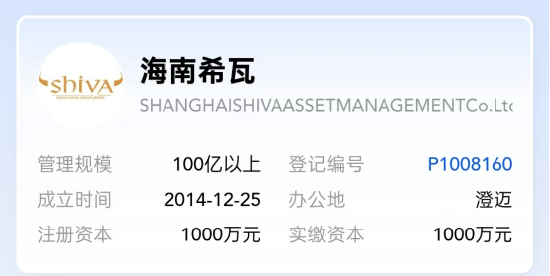
百亿私募希瓦资产创始人梁宏发布道歉长文,反思三大投资错误:创新药、硬件龙头与稳定币
Xin Lang Ji Jin· 2025-11-25 09:17
Core Viewpoint - The recent performance of Hainan Shiva Asset Management has raised concerns as the majority of its funds experienced an estimated net value decline of approximately 7%, with a cumulative drawdown of about 20% from their peak, significantly underperforming major indices [1][3]. Group 1: Performance Analysis - The founder and chief investment officer, Liang Hong, publicly apologized in the weekly report, acknowledging that the recent drawdown has deeply disappointed many investors [1][4]. - The cumulative drawdown of approximately 18% was attributed to three main investment mistakes, which were compounded by market index corrections, leading to a total loss of 20% [3][9]. - The report highlighted that the decline was primarily due to individual stock issues rather than broader market factors, with specific reference to the technology and internet sectors [6]. Group 2: Investment Mistakes - The first major mistake involved heavy investment in innovative pharmaceutical stocks without timely profit-taking at high valuations, resulting in a significant loss [7][9]. - The second mistake was maintaining a high position in a leading hardware company, which saw a decline of over 37%, despite the stock being in a reasonable valuation range [7][9]. - The third mistake was a substantial investment in U.S. stablecoin stocks, where the firm overlooked the risks associated with the cryptocurrency market, leading to significant losses [8][9]. Group 3: Future Outlook - Liang expressed a commitment to making adjustments by the end of the year and aims for a "good change" in the following year, indicating a shift in strategy to reduce drawdowns while maintaining value investment principles [5][9]. - The firm has a management scale exceeding 10 billion, and Liang has a substantial following, positioning him as a prominent figure in the private equity sector [5].
国泰海通|非银:资产配置“股升债降”,主动管理将更为重要——2025年三季度保险公司资金运用点评
国泰海通证券研究· 2025-11-17 14:27
Core Viewpoint - The insurance industry's fund utilization balance has steadily increased, with a further rise in equity asset allocation and a decrease in bond asset allocation, indicating the growing importance of active management capabilities in investment [1][4]. Group 1: Fund Utilization Overview - As of Q3 2025, the insurance industry's fund utilization balance reached 37.5 trillion yuan, a year-to-date increase of 12.6%, driven by stable growth in new and renewal premiums, with a year-on-year premium growth of 8.8% [2]. - The life insurance sector accounted for 33.7 trillion yuan, also up 12.6% year-to-date, while the property insurance sector reached 2.4 trillion yuan, increasing by 7.5% [2]. Group 2: Asset Allocation Changes - By the end of Q3 2025, the insurance industry allocated 3.62 trillion yuan to equity assets, an increase of 1.19 trillion yuan year-to-date, with an allocation percentage of 10.0%, up 2.5 percentage points from the beginning of the year [3]. - The allocation to equity funds rose to 5.5%, up 0.2 percentage points year-to-date, while bond asset allocation was 50.3%, up 0.8 percentage points year-to-date but down 0.8 percentage points from Q2 [3]. - Bank deposits accounted for 7.9% of the allocation, down 1.1 percentage points year-to-date, and other assets (primarily non-standard) accounted for 18.4%, down 2.7 percentage points year-to-date [3]. Group 3: Investment Management Strategy - The net investment yield is trending downward due to a low interest rate environment and narrowing credit spreads, indicating a need for insurance companies to shift from passive to active management strategies [4]. - The focus should be on flexibly seizing market opportunities and continuously optimizing asset allocation structures to achieve stable investment returns [4]. Group 4: Investment Recommendations - The expectation is that insurance companies will continue to optimize their asset allocation strategies, leading to improved profitability, maintaining an "overweight" rating for the industry [5].

发行,同比增长132%!
Zhong Guo Ji Jin Bao· 2025-11-16 12:00
Core Insights - The issuance of equity funds in China has significantly increased this year, with 276 active equity funds established and a total issuance scale of 141.068 billion yuan, representing a year-on-year growth of 132.25% [1][3][4] Fund Issuance Trends - A total of 276 active equity funds were established by November 14, with a combined issuance scale of 141.068 billion yuan, marking a 132.25% increase compared to the previous year [3][4] - Notably, 11 funds raised over 2 billion yuan, with the highest approaching 5 billion yuan, while the highest fundraising amount in the same period last year was less than 1.4 billion yuan [3][4] Early Closure of Fundraising - The early closure of fundraising for many active equity funds indicates a recovery in the market, with 73 funds closing early this year, including several "sunshine funds" [4] - Examples include the E Fund Technology Pioneer, which announced early closure with a fundraising cap of 2 billion yuan, and the China Universal XinYue Return fund, which sold out in one day with a cap of 1.5 billion yuan [4] Market Recovery Factors - The recovery in active equity fund issuance is attributed to the rebound of the A-share market since the fourth quarter of last year, driven by breakthroughs in sectors like AI, robotics, and innovative pharmaceuticals, leading to improved corporate earnings and market sentiment [4] - Policy initiatives such as the "Implementation Plan for Promoting Long-term Capital into the Market" and "Action Plan for Promoting High-Quality Development of Public Funds" have encouraged long-term investment in equity markets [4] Growth of Index Products - The issuance of passive index products has also surged, with over 760 new index funds established this year, totaling over 550 billion yuan, reflecting year-on-year growth of 89.36% in number and 24% in scale [6] - The market is entering a phase where both active equity and passive index products are growing together, with a wider variety of investment tools available [6] Future Outlook - The future performance of active equity funds will depend on their ability to consistently generate returns that exceed market performance and their differentiation from passive products [6] - Active equity products have shown good excess returns this year, particularly in a market environment favoring growth styles and emerging industries, suggesting a potential for continued strong performance in active management [6]
创价值·塑生态·启新程——上海公募基金高质量发展在行动 | 摩根资产管理:百年资管机构打造中国“长跑”样本
Zhong Guo Zheng Quan Bao· 2025-11-12 22:46
Core Insights - The article highlights the significant reforms in China's public fund industry, driven by the China Securities Regulatory Commission's action plan aimed at high-quality development, focusing on fiduciary responsibility and encompassing governance, product innovation, investment operations, and assessment mechanisms [1] - Morgan Asset Management (China) has successfully localized its operations, achieving a non-monetary public fund management scale of 133 billion yuan by Q3 2025, doubling its size in two years and improving its industry ranking by 20 positions, reflecting strong market recognition of its investment management capabilities [1] - The company emphasizes a long-term investment philosophy and has established a robust research-driven culture, which is crucial for generating sustainable alpha for clients [2][6] Company Strategy - Morgan Asset Management (China) has adopted a clear investment research structure, focusing on active management as its core competency, with teams dedicated to growth, balanced growth, and value investments, targeting various risk-return profiles [3] - The firm has identified key investment opportunities in artificial intelligence, leading Chinese manufacturers, and dividend assets, leveraging a dual driver of valuation recovery and earnings growth for structural market opportunities in 2025 [4] - The company has built a systematic talent development mechanism, nurturing fund managers with long-term commitment, evidenced by managers like Du Meng and Li Bo, who have delivered substantial returns over extended periods [4][5] Research and Analysis - Morgan Asset Management promotes a "research compounding" approach, emphasizing the importance of continuous research investment to enhance decision-making quality [6] - The firm has a global research team of 500 analysts, conducting extensive field research and maintaining high-frequency interactions with global teams to integrate local insights with global perspectives [6][7] - A unified research language and framework have been established to facilitate efficient resource sharing and collaboration across regions, enhancing the overall research quality [7] ETF Business Development - Morgan Asset Management has differentiated its ETF offerings by combining active management advantages, becoming the second-largest active ETF issuer globally and leading in net inflows since 2025 [8] - The company has launched 11 ETFs in China, focusing on investor experience and innovative features like quarterly mandatory dividends, catering to various investment strategies [8] - The firm continues to enhance its ETF business by providing localized market insights and strategies through reports and seminars, aiming to support index investors effectively [9] Future Outlook - The asset management industry is expected to increasingly favor long-termism, professional capabilities, and ecosystem collaboration, with Morgan Asset Management committed to refining its practices in investment management, product innovation, and client service [10]
摩根资产管理:百年资管机构打造中国“长跑”样本
Zhong Guo Zheng Quan Bao· 2025-11-12 20:18
Core Insights - The article discusses the significant reforms in China's public fund industry, emphasizing the importance of fiduciary responsibility and a long-term approach to achieve high-quality development [1] - Morgan Asset Management (China) has successfully localized its operations, achieving a management scale of 133 billion yuan in non-monetary public funds by Q3 2025, doubling its size in two years and improving its industry ranking by 20 positions [1][2] Group 1: Company Strategy and Performance - Morgan Asset Management (China) has maintained a strong focus on active management, achieving an annualized return of 13.50% in active equity investment management over the past 20 years, ranking in the top ten of the industry [2] - The company has structured its active equity investment teams into three groups: Growth, Balanced Growth, and Value, targeting different risk-return profiles [2][3] - The firm has introduced a clear investment guideline for each fund, ensuring that fund managers pursue excess returns while maintaining style stability, enhancing transparency for investors [3] Group 2: Research and Talent Development - Morgan Asset Management (China) emphasizes a "research-driven" investment culture, focusing on long-term research investments to enhance decision-making quality [4][5] - The company has established a "career analyst" mechanism, encouraging analysts to deepen their research rather than transitioning to fund management roles [5][6] - The global research team has conducted approximately 11,000 company visits and interactions over the past year, providing unique market insights for investment decisions [6] Group 3: ETF Business Development - Morgan Asset Management (China) has adopted a differentiated approach in the ETF market, becoming the second-largest issuer of active ETFs globally since establishing its platform in 2014 [6][7] - The company has launched 11 ETFs by October 2025, focusing on various strategies and themes, and has introduced innovative features like a "quarterly mandatory dividend" mechanism [7] - The firm has also localized its global flagship report for Chinese investors, enhancing its service offerings and market insights [7][8] Group 4: Future Outlook - The company aims to continue exploring best practices in the public fund sector in China, focusing on investment management, product innovation, customer service, risk control, and technology application [8] - Morgan Asset Management (China) is committed to contributing to the healthy development of the asset management industry by pursuing sustainable value creation alongside investors [8]
美国资管巨头最新发声:一直高配中国
Zhong Guo Ji Jin Bao· 2025-11-10 22:55
Group 1: Company Overview - Neuberger Berman, founded in 1939, has assets under management totaling $558 billion, approximately 3.97 trillion RMB, operating in 26 countries and 39 cities globally [2] - The company has a strong presence in both public and private markets, with $358 billion in public market assets and $150 billion in private market assets as of the end of 2024 [2] - Neuberger Berman leads in the Qualified Domestic Limited Partner (QDLP) business in mainland China [2] Group 2: Investment Strategy and Market Outlook - The company has been overweight in China compared to benchmarks, but significant increases in foreign investment in Chinese assets will take time [10] - Global economic growth is expected to be below expectations, and the macro environment remains complex, emphasizing the importance of diversified investment strategies [1][12] - The valuation of U.S. tech stocks is considered high, with the focus shifting from whether to invest to how to invest, similar to historical investments in railroads [11] Group 3: ETF and Active Management Trends - The rise of global active managers entering the active ETF space is noted, with Neuberger Berman's active ETF business growing to approximately $2.5 billion [5][7] - Active ETFs are experiencing growth at a rate surpassing passive ETFs, indicating significant potential for future development [7] - The popularity of Separately Managed Accounts (SMA) is increasing due to their tax efficiency, which may compete with active ETFs [6] Group 4: Risk Management and Client Focus - The company emphasizes the importance of decision-making prior to a crisis, focusing on risk awareness and maintaining robust operational structures [4] - Neuberger Berman aligns its compensation structure with client interests, ensuring that deferred compensation is tied to client performance rather than company stock prices [8] - The firm aims to help clients navigate market volatility by encouraging disciplined, long-term investment strategies [12]

专访!美国资管巨头最新发声:一直高配中国!
Zhong Guo Ji Jin Bao· 2025-11-10 14:56
Group 1: Company Overview - Neuberger Berman, founded in 1939, has assets under management totaling $558 billion, approximately 3.97 trillion RMB, operating in 26 countries and 39 cities globally [2] - The company has a strong presence in both public and private markets, with $358 billion in public market assets and $150 billion in private market assets as of the end of 2024 [2] - Neuberger Berman leads in the Qualified Domestic Limited Partner (QDLP) business in mainland China [2] Group 2: Investment Strategy and Market Outlook - The company has consistently overweighted its investment in China compared to benchmarks, although significant increases in foreign investment in China will take time [1][12] - The global economic growth is expected to be below expectations, and the macro environment remains complex, emphasizing the importance of diversified investment strategies [1] - The valuation of U.S. tech stocks is considered expensive, and the focus should be on "how to invest" rather than "whether to invest" [1][13] Group 3: ETF and Active Management - The rise of ETFs is driven by various factors, including tax efficiency, with active ETFs growing at a rate that outpaces passive ETFs [6][8] - Neuberger Berman's active ETF business has grown to approximately $2.5 billion, with a positive trend in fund inflows primarily from new clients [6] - The popularity of Separately Managed Accounts (SMA) is increasing, as they can enhance tax efficiency and may compete with active ETFs in the future [7][8] Group 4: Risk Management and Client Focus - The company emphasizes the importance of risk management and maintaining a disciplined investment approach, especially during market downturns [14] - Neuberger Berman aligns its compensation structure with client interests, ensuring that deferred compensation is tied to client performance rather than company stock prices [9] - The firm aims to help clients navigate market challenges and maintain long-term investment strategies, avoiding the pitfalls of market timing [14]