
国产芯片替代

Search documents
AI算力又爆单了!年内份额狂翻7倍的科创人工智能ETF(588730)涨超2%,冲击三连阳
Ge Long Hui A P P· 2025-09-12 03:34
Core Viewpoint - The chip sector is experiencing a significant rally, driven by domestic companies like Chipone and the increasing investment in AI infrastructure and local chip production by major tech firms such as Alibaba and Baidu [1][2] Group 1: Market Performance - The chip sector saw a broad increase, with Chipone's stock hitting a 20% limit up, marking a new high, while Yuntian Lifei and Cambricon rose by 3.65% and 1.75% respectively [1] - The Science and Technology Innovation Artificial Intelligence ETF (588730) rose by 2.23%, achieving a cumulative increase of 51% this year [1] Group 2: Company Developments - Alibaba and Baidu have begun using self-designed chips for training their AI models, partially replacing chips produced by NVIDIA [1] - Chipone announced that from July 1 to September 11, it signed new orders worth 1.205 billion yuan, a historical high, with approximately 64% of these orders related to AI computing power [1] Group 3: Investment Trends - In Q2 2025, Alibaba, Baidu, and Tencent are projected to invest a total of 61.6 billion yuan in capital expenditures, a year-on-year increase of 168%, primarily for AI infrastructure and domestic chip procurement [1] - China aims to triple its AI chip production by 2026 to reduce reliance on overseas GPUs [1] Group 4: ETF Growth - The Science and Technology Innovation Artificial Intelligence ETF has seen a significant inflow of funds, with its share increasing by 1.014 billion units this year, a staggering 738% year-on-year growth, bringing its total size to 1.703 billion yuan [2]


A股不止情绪火热 还有庞大增量资金在路上! 桥水在华募资火热 直指中国股市
Zhi Tong Cai Jing· 2025-09-04 05:52
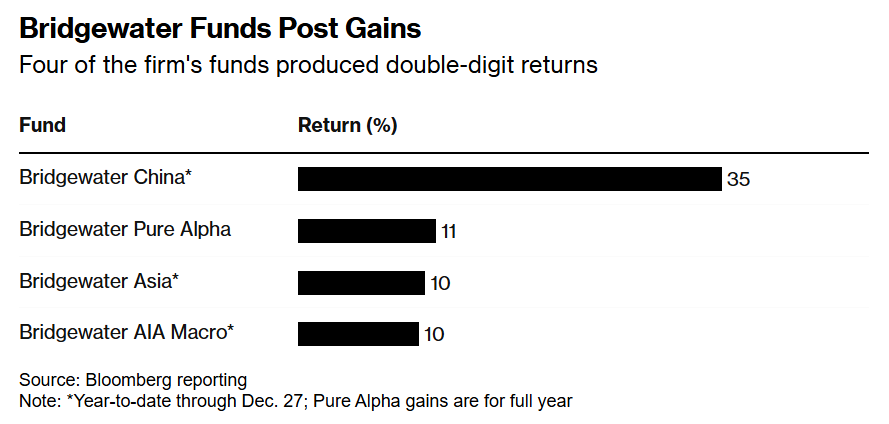
Group 1 - Bridgewater Associates, known as the "king of hedge funds," is experiencing significant demand in the Chinese market, with wealthy investors injecting billions into domestic private banks to gain access to its products [1][2][3] - The hedge fund's investment strategy combines Ray Dalio's risk parity approach with active management, achieving over 35% returns in 2024, significantly outperforming competitors [2][6] - Bridgewater's assets under management in China grew approximately 40% to over 55 billion RMB, highlighting its strong market position compared to other international hedge funds [2][3][6] Group 2 - The scarcity of Bridgewater's products has led to a situation where wealthy clients are often unable to purchase desired fund shares, likening the fund to the luxury brand Hermès in terms of exclusivity [3][6] - In contrast to Bridgewater's success, other major hedge funds like D.E. Shaw and Two Sigma have only managed assets between 5 billion to 10 billion RMB in China, indicating Bridgewater's unique position in the market [3][6] - Bridgewater's strong performance is attributed to its diversified investment across stocks, bonds, and commodities, with significant contributions from gold and active management strategies [7][9] Group 3 - The hedge fund's recent fundraising efforts targeted 2.5 billion RMB, with strong demand leading to oversubscription, particularly from institutions like China Merchants Bank [8] - The ongoing AI and innovative pharmaceutical trends are driving the Chinese stock market's growth, with Bridgewater's strategies aligning well with these market dynamics [9][10] - Morgan Stanley reports that hedge funds, including Bridgewater, are increasing their bullish bets on Chinese stocks, with expectations of continued policy support and low valuations compared to developed markets [10][11] Group 4 - The Shanghai-based fund platform of Bridgewater has seen its onshore asset scale rise to over 60 billion RMB, positioning it alongside major domestic quantitative hedge funds [7][8] - High-net-worth clients are facing increasing competition for Bridgewater's products, with limited allocations being offered even to those with substantial assets [7][8] - The overall market sentiment is positive, with expectations of further gains in the A-share market driven by liquidity improvements and a shift of funds from deposits to equities [11][14]

英伟达的“最佳时期”似已远去 现在是属于亚洲科技股的“AI狂欢时刻”
智通财经网· 2025-09-02 04:00
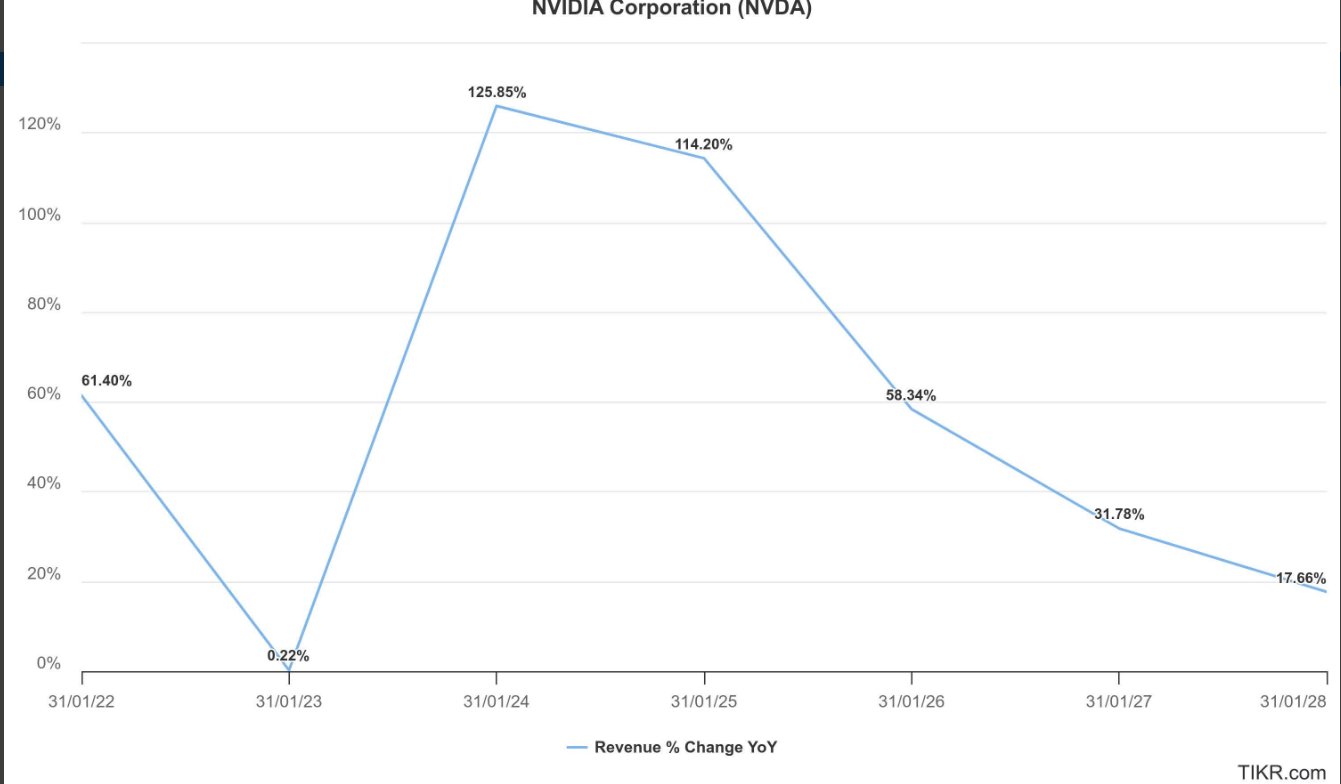
Core Insights - Nvidia's data center business, which has been a key growth driver, is experiencing a significant slowdown in revenue growth, impacted by geopolitical tensions and regulatory risks in the Chinese market [1][3][4] - Despite the challenges faced by Nvidia, Chinese tech stocks, particularly in AI and semiconductor sectors, are witnessing a bullish market trend, driven by strong performances from companies like Alibaba and Cambricon [1][10][13] Nvidia's Business Performance - Nvidia's core data center business, which relies heavily on H100/H200 and Blackwell architecture AI GPUs, is seeing a deceleration in growth, raising concerns about its future expansion prospects [1][3] - Analysts express skepticism regarding Nvidia's ability to maintain its previous growth trajectory, as the stock market reflects a normalization in Nvidia's performance [2][5][7] Geopolitical and Regulatory Challenges - The easing of US-China geopolitical tensions is viewed cautiously, particularly regarding Nvidia's re-entry into the Chinese market with its H20 AI chip, which faces significant barriers due to national security concerns [4][6] - Analysts do not expect Nvidia to fully recover its revenue from the Chinese AI chip market, potentially allowing local competitors to gain ground [4][6] Market Dynamics and Competitor Landscape - The AI infrastructure and high-performance networking hardware markets are highly competitive, with no clear market leader, contrasting with Nvidia's dominant position in AI chips [2][7] - Asian semiconductor giants, including TSMC and SK Hynix, are benefiting from the AI infrastructure boom and are positioned to capitalize on the upcoming chip industry cycle [17][18] Chinese Market Developments - Alibaba's cloud computing business reported a 26% year-over-year revenue increase, with AI-related revenues maintaining triple-digit growth for eight consecutive quarters, indicating strong demand for AI capabilities [13][14] - Cambricon, as a leading player in the domestic AI chip market, is experiencing significant revenue growth, with a reported 4347.82% increase in revenue year-over-year for the first half of 2025 [13][14] Investment Sentiment - Wall Street analysts are adjusting their target prices for Nvidia, reflecting a more cautious outlook on its growth potential, while simultaneously showing optimism towards Chinese tech stocks [5][14] - The semiconductor equipment sector is poised for growth as domestic demand for AI chips increases, driven by government support and the ongoing "domestic chip replacement" trend [15][16]
调研速递|武汉光庭信息接受交银施罗德等25家机构调研 上半年净利润4291.52万元等要点披露
Xin Lang Cai Jing· 2025-08-29 09:28
Core Viewpoint - Wuhan Guangting Information Technology Co., Ltd. has shown significant growth in its financial performance for the first half of 2025, driven by optimized marketing strategies and an increase in gross margin, leading to a net profit of 42.92 million yuan [1][2]. Group 1: Performance Analysis - The company achieved a net profit of 42.92 million yuan in the first half of 2025, marking a substantial increase due to optimized marketing strategies and growth in overseas business [1]. - The gross margin improved from 34.88% to 38.99%, an increase of 4.11 percentage points, contributing significantly to the net profit growth [1][3]. Group 2: Revenue Structure and Growth - The revenue structure indicates that the intelligent cockpit business is a key pillar, accounting for 46% of total revenue, while the intelligent connected vehicle testing business grew to 34%, an increase of 9 percentage points year-on-year [2]. - The intelligent connected vehicle testing business generated 94 million yuan in revenue, reflecting a 70.77% increase compared to the previous year, driven by rapid growth in overseas client business [2]. Group 3: Margin Improvement and Software Development - The improvement in gross margin is attributed to the company's strategic focus on "AI +" and internationalization, leveraging AI technology to enhance development efficiency and reduce costs [3]. - The company showcased the updated version of its Super Software Workshop (SDW) at the 2025 Shanghai Auto Show, which significantly enhances development efficiency [3]. Group 4: Acquisition and Industry Strategy - The company plans to acquire 100% of Kaima Technology, a comprehensive software and IT service provider, to accelerate business development in Japan and apply AI research and development experience across multiple industries [4]. - The industry strategy highlights trends such as the emergence of generative AI as a new productive force, the increasing value of AI cockpits, and the rising demands for intelligent driving, prompting the company to innovate with AI technology and develop domestic chip replacement solutions [4].
资讯日报:国务院公布《关于推动城市高质量发展的意见-20250829
Guoxin Securities Hongkong· 2025-08-29 05:32
Market Overview - The Hong Kong stock market saw all three major indices decline, with net selling by southbound funds exceeding HKD 20 billion[9] - Major tech stocks underperformed, with Meituan dropping 12.55%, JD down 5%, Alibaba down 4.69%, and Tencent and Xiaomi also declining[9] - Semiconductor stocks surged, with InnoCare rising over 15% and SMIC increasing nearly 11% to reach a new listing high[9] U.S. Market Performance - On August 28, U.S. markets opened high and closed with all three major indices rising, with the Dow and S&P 500 reaching new closing highs[9] - Nvidia's Q2 revenue grew 56% year-on-year, exceeding expectations, and the company approved an additional USD 60 billion for stock buybacks[9] - Quantum computing stocks led gains, with Quantum Computing up over 8% and Rigetti Computing up over 7%[9] Japanese Market Insights - The Nikkei 225 index rose 0.73%, driven by strong performance in metal and energy stocks[12] - Berkshire Hathaway increased its stake in Mitsubishi Corporation to 10.23%, pushing the stock prices of Japan's five major trading companies higher[12] - Foreign investment in Japanese stocks showed signs of slowing, with a net decrease of JPY 496.8 billion in the week ending August 22[12] Key Economic Indicators - U.S. initial jobless claims for the week ending August 23 were 229,000, lower than the expected 230,000[12] - The U.S. Q2 GDP annualized growth rate was revised to 3.3%, above the expected 3.1%[12] - The Chinese government released guidelines to promote high-quality urban development, focusing on city cluster integration and innovation[12]
港股收盘(08.28) | 恒指收跌0.81%失守两万五 芯片股逆市走强 中芯国际(00981)股价创历史新高
Zhi Tong Cai Jing· 2025-08-28 08:53
Market Overview - The Hong Kong stock market indices have declined for three consecutive days, with the Hang Seng Index falling 0.81% to close at 24,998.82 points, and a total trading volume of 391.49 billion HKD [1] - Southbound capital recorded a net outflow exceeding 20 billion HKD [1] - Analysts from Guotai Junan Securities suggest that the anticipated interest rate cut in September may lead to a convergence of A-H market performance, with corporate earnings becoming a key driver of market differences [1] Blue Chip Performance - Semiconductor company SMIC (00981) reached a historical high, closing up 10.76% at 62.3 HKD, contributing 42.83 points to the Hang Seng Index [2] - Other notable blue chips include Trip.com Group (09961) up 7.71%, CNOOC (00883) up 4.08%, while Alibaba (09988) and Li Auto (02015) saw declines of 4.69% and 3.56% respectively [2] Sector Performance - Major technology stocks mostly declined, with Alibaba down 4.69% and Tencent down 0.83% [3] - The semiconductor sector showed strength, with SMIC up 10.76%, Huahong Semiconductor (01347) up 8.44%, and Shanghai Fudan (01385) up 8.25% [3] - The domestic chip supply is expected to increase as the market shifts towards local suppliers, with predictions indicating a rise in domestic chip usage in AI server markets [3][4] Earnings Reports - Bio-pharmaceutical company BGI (06955) reported a significant drop of 13.99% in stock price post-earnings, despite a revenue increase of 8.4% to 393 million HKD [5] - Television Broadcasts (00511) saw a revenue decline of 1% and a net loss of 108 million HKD, although this was an improvement from the previous year [5] - The overall earnings outlook for the Hang Seng Index has been downgraded, with a consensus predicting a negative growth of -1.4% for 2025 [6] Notable Stock Movements - Jiaxin International Resources (03858) surged 177.84% on its debut, closing at 30.34 HKD [6] - Horizon Robotics (09660) rose 14.74% after reporting a 67.6% increase in revenue to 1.567 billion HKD [7] - Trip.com Group (09961) reported a 16.22% increase in net revenue, reaching 14.843 billion RMB, with significant growth in international bookings [8] - China Pacific Insurance (01339) saw a 5.82% increase, reporting a 10.87% rise in total revenue to 324.122 billion RMB [9] - XPeng Motors (09868) experienced a decline of 8.22% despite launching its new P7 model, which received over 10,000 pre-orders shortly after its release [10]

港股收评:三大指数齐跌,科技股低迷半导体股大肆走高!中芯国际涨10%创新高,华虹半导体涨8%,英诺赛科涨15%创新高
Ge Long Hui· 2025-08-28 08:45
Market Performance - The Hong Kong stock market indices collectively declined, marking a three-day losing streak, with the Hang Seng Index falling by 0.81% and closing below the 25,000-point mark [2] - The Hang Seng China Enterprises Index and the Hang Seng Tech Index dropped by 1.15% and 0.94%, respectively [2] - Notably, southbound funds recorded a net sell-off exceeding 20 billion HKD [2] Stock Highlights - Significant gainers included InnoCare Pharma, which surged by over 15.43%, and SMIC, which rose by 10.76% [3] - Other notable performers were Shun Tai Holdings (+14.50%), ChipMOS Technologies (+9.50%), and Hua Hong Semiconductor (+8.44%) [3] Sector Performance - Major technology stocks underperformed, with Meituan experiencing the largest drop of 12.55% post-earnings, followed by JD.com (-5%) and Alibaba (-4.69%) [4] - Infrastructure-related stocks, including heavy machinery, high-speed rail, steel, and building materials, also saw significant declines [4] - Conversely, semiconductor stocks gained traction, driven by optimism around domestic chip replacement, with InnoCare leading the charge [4] - Other active sectors included robotics, brain-computer interface stocks, insurance, oil, and military-related stocks [4]

港股收评:三大指数齐跌 科技股、基建股低迷 半导体股大肆走高
Ge Long Hui· 2025-08-28 08:26
Group 1 - The Hong Kong stock market indices collectively declined, marking a three-day losing streak, with the Hang Seng Index falling by 0.81% and closing below the 25,000-point mark [1] - The net selling of Hong Kong stocks by southbound funds exceeded 20 billion HKD [1] - Major technology stocks performed poorly, with Meituan experiencing the largest drop of 12.55%, followed by JD.com down 5%, Alibaba down 4.69%, and Baidu down over 1% [1] Group 2 - Infrastructure-related stocks such as heavy machinery, high-speed rail, steel, and building materials saw significant declines, while popular sectors like stablecoin concepts, automotive stocks, innovative pharmaceuticals, and new consumption concepts also fell [1] - Conversely, semiconductor stocks surged due to optimism regarding domestic chip replacement, with InnoCare Technologies rising over 15% and SMIC increasing nearly 11%, reaching a new high since its listing [1] - Other active sectors included robotics, brain-computer interface concepts, insurance, oil, and military stocks [1]
港股午评:恒指跌0.66%险守25000点,科技股弱势,创新药股走低,半导体股大涨
Ge Long Hui· 2025-08-28 04:08
Market Overview - The Hong Kong stock market experienced a collective decline in the morning session, with the Hang Seng Index falling by 0.66% and struggling to maintain the 25,000-point level [1] - The Hang Seng China Enterprises Index dropped by 0.86%, while the Hang Seng Tech Index decreased by 1.04%, marking a three-day losing streak for all three indices [1] - Net selling from southbound funds exceeded 10 billion HKD [1] Sector Performance - Major technology stocks, which serve as market indicators, showed collective weakness, with Meituan experiencing a significant drop of over 10% post-earnings [1] - Alibaba and JD.com fell nearly 4%, while Baidu declined by over 1%, and Xiaomi and Tencent also saw losses [1] - The biopharmaceutical sector continued to decline due to impending drug tariffs, with notable drops in innovative drug companies such as BGI Genomics, which fell over 12% [1] - Other sectors, including new energy vehicles, consumer goods, steel, construction materials, beer, heavy machinery, dining, and gambling, also faced declines [1] Positive Trends - Institutional investors are optimistic about the accelerated replacement of domestic chips, leading to a significant rise in semiconductor stocks [1] - Semiconductor company SMIC surged by over 8%, approaching historical highs [1] - Financial stocks, including domestic banks, securities firms, and insurance companies, showed active performance [1] - Oil and rare earth concept stocks generally experienced increases [1]
芯片股早盘走高 中芯国际涨超5% 机构看好国产芯片替代加速
Zhi Tong Cai Jing· 2025-08-28 02:23
Group 1 - Semiconductor stocks experienced a rise in early trading, with Shanghai Fudan up 6.88% at HKD 37.3, SMIC up 5.6% at HKD 59.4, Jingmen Semiconductor up 4% at HKD 0.52, and Huahong Semiconductor up 2.56% at HKD 54.1 [1] - According to TrendForce, the proportion of foreign-sourced chips from companies like Nvidia and AMD in China's AI server market is expected to decrease from 63% in 2024 to 42% by 2025, while domestic chip suppliers' share is projected to rise to 40% [1] - Tianfeng Securities believes that the semiconductor, domestic computing power, and self-controllable sectors will remain long-term trends, especially amid ongoing uncertainties in US-China trade policies regarding AI computing power chips [1] Group 2 - Domestic large model development companies and internet platforms are expected to gradually increase their procurement and usage of domestic chips, creating growth opportunities for domestic chip suppliers and their supporting industry chain [1]