
文化强国建设

Search documents
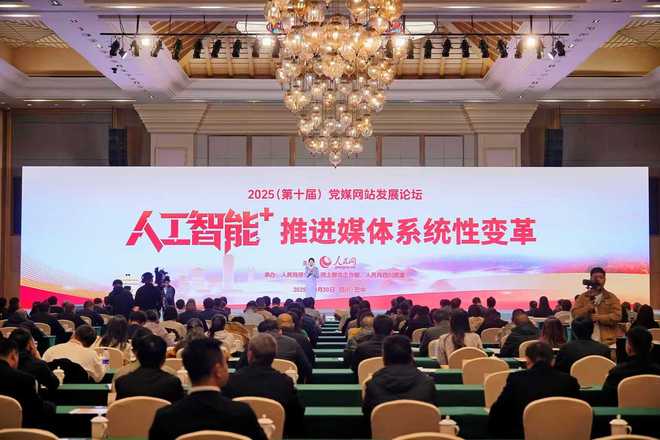
2025(第十届)党媒网站发展论坛在四川巴中举行
Zhong Guo Fa Zhan Wang· 2025-10-31 07:06
Core Insights - The forum held in Sichuan focused on "Artificial Intelligence +, Promoting Systematic Reform in Media" and highlighted the importance of AI in transforming media operations [1][2][3] Group 1: Government and Institutional Initiatives - Sichuan Province aims to become the fourth major hub for AI development in China, leveraging a "technology + management" dual-engine approach to enhance media production efficiency and user experience [1] - The forum emphasized the need for party media to evolve into digital public platforms that can lead social governance and cultural dialogue, aligning with the cultural power blueprint outlined in the 20th National Congress [2] Group 2: Media Transformation Strategies - The report released by the People's Daily Research Institute analyzed trends in new media development by mainstream media, emphasizing the need for a coordinated and efficient all-media communication system [3] - Discussions highlighted the necessity for mainstream media to transition from mere information providers to comprehensive service providers, focusing on user engagement and innovative production processes [4] Group 3: Technological Integration and Cultural Promotion - Various speakers presented on the application of AI in media, showcasing how digital technology can merge with cultural values to enhance the dissemination of Chinese culture [5] - The forum served as a high-end platform for enhancing the influence and credibility of party media websites, marking its significance in the media landscape over the past decade [5]
2025(第十届)党媒网站发展论坛在巴中举行
Ren Min Wang· 2025-10-30 13:29
Core Insights - The 2025 (10th) Party Media Website Development Forum was held in Bazhong, Sichuan, focusing on "Artificial Intelligence +, Promoting Systemic Change in Media" [1][3] - Sichuan aims to become the fourth major hub for artificial intelligence development in China, leveraging a "technology + management" dual-engine approach to enhance media production processes [2] - The forum emphasized the necessity for party media to undergo high-quality development and systemic transformation to fulfill their historical mission and adapt to the digital age [6][9] Group 1: Key Remarks from Officials - Wang Fei highlighted that Sichuan is prioritizing artificial intelligence as its top innovation project, achieving significant improvements in editorial efficiency and user experience [2] - Ma Li discussed the cultural vision outlined in the 20th Party Congress, stressing the importance of party media evolving into a digital public platform that leads societal governance and cultural dialogue [6][8] - Sun Aiping emphasized the need to convert AI's technological advantages into a driving force for mainstream media transformation, focusing on political guidance and innovation [9][11] Group 2: Media Transformation Strategies - Fresh insights from the forum included a report by Tang Weihong on the development trends of new media operated by mainstream media, analyzing various aspects such as content production and technological innovation [15][17] - Discussions highlighted the importance of consensus-building and clear pathways in the systemic transformation of media, with a focus on enhancing user connections and service offerings [19][20] - Various speakers presented their experiences in applying AI and technology to cultural dissemination, showcasing innovative practices that align with the goals of systemic change [21][23] Group 3: Future Directions - The forum underscored the need for a balanced approach between content, technology, and social responsibility to achieve a new pinnacle for Chinese culture [23] - The event also marked the launch of the "China Red Leaf Golden Corridor Joint Promotion Activity," indicating ongoing efforts to enhance cultural promotion through media [25] - The Party Media Website Development Forum has become a significant platform for promoting the implementation of Xi Jinping's thoughts and enhancing the influence of party media [25]

不断开创以中国式现代化全面推进强国建设、民族复兴伟业新局面
Ren Min Ri Bao· 2025-10-24 00:44
Core Points - The article emphasizes the importance of uniting under the leadership of Xi Jinping to achieve socialist modernization and national rejuvenation [1][2] - It highlights the significant achievements during the "14th Five-Year Plan" period, noting the resilience against challenges such as the pandemic and international risks [2] - The "15th Five-Year Plan" is identified as a crucial period for solidifying the foundation for socialist modernization, with a focus on high-quality development and technological self-reliance [2][3] Economic Development - The focus is on building a modern industrial system that strengthens the foundation of the real economy, emphasizing smart, green, and integrated development [3][4] - There is a call to enhance domestic markets and create a new development pattern that promotes consumption and investment, ensuring a positive interaction between supply and demand [4][5] Technological Advancement - The article stresses the need for high-level technological self-reliance and innovation, aiming to enhance the national innovation system and foster new productive forces [4][5] - It advocates for strengthening original innovation and tackling key core technologies to integrate technological and industrial innovation [4] Social and Cultural Development - There is a commitment to enhancing cultural innovation and development, promoting socialist core values, and increasing the international influence of Chinese culture [5] - The article emphasizes the importance of improving people's livelihoods and promoting common prosperity through effective social policies [5] Environmental Sustainability - The article underscores the necessity of a comprehensive green transformation in economic and social development, aiming for carbon neutrality and ecological safety [5] - It promotes the idea of sustainable development, integrating environmental protection with economic growth [5] National Security and Defense - The article highlights the modernization of the national security system and capabilities, ensuring a stable and orderly society [5] - It outlines the goals for military modernization, emphasizing the importance of leadership and strategic development in defense [5]
“十五五”时期,中国将着重办好这些事
Yang Shi Xin Wen· 2025-10-23 12:13
Core Points - The Fourth Plenary Session of the 20th Central Committee of the Communist Party of China was held from October 20 to 23, 2025, in Beijing, where a work report by Xi Jinping was discussed and the proposal for the 15th Five-Year Plan was approved [1] Economic Development - The focus during the 15th Five-Year Plan period will be on building a modern industrial system and strengthening the foundation of the real economy, emphasizing intelligent, green, and integrated development [2] - There will be an emphasis on optimizing traditional industries while nurturing emerging and future industries, alongside promoting high-quality development in the service sector [2] Technological Advancement - The plan aims to accelerate high-level self-reliance in technology, enhancing the national innovation system and boosting independent innovation capabilities [3] - Key areas include original innovation and tackling core technologies, integrating technological and industrial innovation, and advancing digital China initiatives [3] Domestic Market - The strategy will focus on expanding domestic demand, linking consumer and investment needs, and fostering a positive interaction between supply and demand [4][5] - Efforts will be made to stimulate consumption and increase effective investment while removing barriers to a unified national market [5] Economic System - The establishment of a high-level socialist market economy will be prioritized, enhancing the driving force for high-quality development [6][7] - The plan includes activating various business entities and improving the market-oriented allocation of resources [7] International Cooperation - The strategy includes expanding high-level opening-up and creating a win-win cooperation landscape, maintaining a multilateral trade system, and promoting international circulation [8][9] Agricultural Development - The modernization of agriculture and rural areas will be a key focus, addressing rural issues and promoting urban-rural integration [10] - Enhancements in agricultural production capacity and quality, along with rural development, will be prioritized [11] Regional Development - The plan aims to optimize regional economic layouts and promote coordinated regional development, enhancing the effectiveness of major productivity layouts [12][13] Cultural Development - There will be a push to invigorate cultural innovation and development, promoting socialist culture with strong ideological and international influence [14] Social Welfare - The strategy emphasizes improving people's livelihoods and promoting common prosperity, focusing on employment, income distribution, education, and social security [15] Environmental Sustainability - The plan aims for a comprehensive green transformation of economic and social development, focusing on carbon neutrality and ecological safety [16] National Security - The modernization of the national security system and capabilities will be prioritized to ensure social order and vitality [17][18] Military Modernization - The strategy includes achieving the centenary goals of the military and advancing the modernization of national defense and armed forces [19][20]
中国共产党第二十届中央委员会第四次全体会议公报
国家能源局· 2025-10-23 09:37
Core Viewpoint - The Fourth Plenary Session of the 20th Central Committee of the Communist Party of China emphasizes the importance of achieving socialist modernization and outlines the strategic goals and principles for the upcoming "15th Five-Year Plan" period, focusing on high-quality development, technological self-reliance, and comprehensive reforms [4][6][8]. Summary by Sections Achievements and Challenges - The session acknowledges significant achievements during the "14th Five-Year Plan" period, highlighting resilience against international challenges and the COVID-19 pandemic, leading to new major accomplishments in national development [5]. - It recognizes the complex and changing environment for development, balancing strategic opportunities with risks and uncertainties [6]. Strategic Goals for the "15th Five-Year Plan" - The main goals include achieving high-quality development, enhancing technological independence, and improving social civilization and living standards by 2035 [8]. - The plan aims for a significant increase in economic, technological, and national defense strength, with a target of reaching the income levels of moderately developed countries [8]. Economic Development Principles - The session emphasizes principles such as the Party's leadership, prioritizing people, high-quality development, comprehensive reforms, and balancing development with security [7]. - It stresses the importance of a modern industrial system, focusing on the real economy and promoting intelligent, green, and integrated development [8][9]. Technological and Market Development - Accelerating technological self-reliance is highlighted as crucial for leading new productive forces, with a focus on innovation and integration of education, technology, and talent [9]. - The session calls for building a strong domestic market and enhancing the socialist market economy to support high-quality development [9][10]. Rural and Regional Development - The importance of modernizing agriculture and rural areas is emphasized, with a focus on urban-rural integration and improving living conditions in rural areas [10]. - The session advocates for optimizing regional economic layouts to promote coordinated development across regions [10]. Cultural and Social Development - The need to stimulate cultural innovation and improve the quality of life for citizens is stressed, with a commitment to common prosperity and enhancing public services [11][12]. - Environmental sustainability is prioritized, with goals for green transformation and ecological safety [12]. National Security and Governance - The session underscores the modernization of the national security system and the importance of maintaining social stability and public safety [12][15]. - It emphasizes the need for effective governance and the Party's self-reform to ensure robust economic and social development [14]. Conclusion - The session concludes with a call for unity among the Party and the people to achieve the goals set forth in the "15th Five-Year Plan," reinforcing the commitment to socialist modernization and national rejuvenation [16].
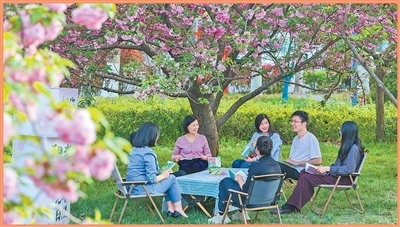
城市书房点亮美好生活(新时代画卷)
Ren Min Ri Bao· 2025-10-20 22:42
Core Viewpoint - The article highlights the rapid emergence and integration of urban reading spaces, known as "city reading rooms," across various regions in China, emphasizing their role in enhancing public cultural services and promoting reading habits among the populace [15][16]. Summary by Sections Cultural Spaces - Urban reading rooms are being established in various cities, combining elements of reading, exhibitions, and social interaction, creating a unique cultural atmosphere [13][15]. - Examples include the "Flower City Book Room" in Guangzhou, which integrates reading with floral and tea experiences, and the "Forest Book House" in Hefei, offering diverse services like reading and tea tasting [3][15]. Community Integration - City reading rooms are designed to be accessible and integrated into urban communities, shopping areas, and tourist attractions, providing convenient reading and leisure spaces for residents [15][16]. - The "Hongyan Book Room" in Hohhot has become a distinctive public cultural service brand, with 23 locations established [11]. Development and Growth - Thousands of city reading rooms have been built nationwide, contributing to the formation of a "15-minute reading circle," which facilitates easy access to reading resources [16]. - These spaces often collaborate with public libraries for resource sharing, enhancing the reading experience through well-designed layouts and extended hours [16]. Future Directions - There is a call for improved construction standards and operational mechanisms for city reading rooms to optimize their layout and service offerings [16]. - The article emphasizes the importance of fostering a reading culture and cultural confidence in society, aligning with national goals for cultural development [16].
第十届中国国际版权博览会暨2025国际版权论坛开幕
Ren Min Ri Bao· 2025-10-16 22:05
Core Points - The 10th China International Copyright Expo and 2025 International Copyright Forum opened in Qingdao, focusing on the theme "Reimagining Development of Creative Industries through Copyright in the Digital Age" [1] - The event gathered over 400 guests from the copyright field, highlighting the collaboration between the National Copyright Administration of China and the World Intellectual Property Organization [1] - The expo featured a total exhibition area of nearly 50,000 square meters, with 57 exhibition groups and over 1,100 participating companies showcasing innovations in digital and intelligent copyright solutions [1] Group 1 - The 2025 International Copyright Forum emphasized the importance of copyright in supporting the development of creative industries in the digital era [1] - The expo aimed to summarize the historical achievements of copyright work during the 14th Five-Year Plan period and to build an international platform for copyright products and services [1] - The National Copyright Administration organized an exhibition titled "Copyright Promotes the Construction of a Cultural Power," which included six main sections focusing on legal protection, rights protection, industry development, international cooperation, publicity training, and success stories in Chinese copyright [1]
省政协举办“政协大讲堂”活动
Liao Ning Ri Bao· 2025-10-15 00:46
Core Points - The meeting emphasized the importance of broadcasting and network audio-visual work in building a culturally strong nation [1] - The provincial political consultative conference is focusing on cultural development and reform, particularly in the context of the "14th Five-Year Plan" and planning for the "15th Five-Year Plan" [1] Group 1 - The provincial political consultative conference has been actively implementing the responsibility system for ideological work, focusing on issues related to building a culturally strong province [1] - The conference highlighted the need to deepen cultural system reform and promote the construction of a culturally strong province through collaborative discussions [1] - The meeting aims to contribute to the application for the inclusion of the Niuhua Liang Hongshan cultural heritage site in the World Heritage List and to enhance the narrative of Liaoning's stories [1] Group 2 - The conference called for continued learning and implementation of Xi Jinping's cultural thoughts and directives regarding broadcasting and network audio-visual work [1] - It stressed the importance of promoting cultural confidence and strengthening socialist spiritual civilization construction as per Xi Jinping's requirements during his inspection in Liaoning [1] - The provincial political consultative conference aims to provide wisdom and strength to support the high-quality development of broadcasting and television in the province [1]
加快建设文化强国——习近平文化思想的生动实践系列述评之二
Xin Hua She· 2025-10-09 15:04
Core Viewpoint - The construction of a cultural strong nation is essential for the overall modernization of socialism with Chinese characteristics and the rejuvenation of the Chinese nation, emphasizing the need for cultural development to meet the growing spiritual and cultural needs of the people [1][2][11]. Group 1: Economic and Cultural Integration - The integration of culture into economic activities can activate development momentum and enhance the quality of growth, promoting the optimization and upgrading of the economic structure [3]. - Cultural development is seen as a dual force that supports both material and spiritual civilization, reflecting the fundamental requirements of socialist modernization [2][3]. Group 2: Meeting People's Expectations - As living standards rise, the public's expectations for the quality and style of cultural products have increased, necessitating a focus on meeting these demands [5][6]. - Cultural development should prioritize the diverse and multi-layered spiritual and cultural needs of the people, ensuring that quality cultural resources reach the grassroots [7]. Group 3: Enhancing Cultural Services - The number of public cultural institutions has increased significantly, with over 3,248 public libraries and nearly 44,000 cultural organizations nationwide, enhancing access to cultural services [10]. - There is a push for standardized and equitable public cultural services, alongside structural reforms in the cultural sector to expand the supply of quality cultural products [10]. Group 4: Innovation and Cultural Vitality - Innovation is crucial for cultural vitality, with a focus on fostering a high-level cultural talent pool and integrating culture with technology [12][13]. - The cultural sector is encouraged to inherit traditional elements while innovating to reflect contemporary progress and practical developments [13]. Group 5: International Cultural Influence - In 2024, China's cultural trade reached 1.4 trillion yuan, with various cultural products gaining international traction, enhancing the global influence of Chinese culture [14]. - The goal is to construct a multi-channel, three-dimensional international communication framework to promote cultural exchange and cooperation globally [15].
绽放“她时代”的璀璨光芒 中国妇女在文化繁荣发展中展现风采
Xin Hua Wang· 2025-10-08 09:35
Core Viewpoint - The rise of "her power" among Chinese women is significantly enhancing the cultural landscape, with women actively participating as creators, enablers, and trendsetters in various cultural fields [1] Group 1: Cultural Contribution - Women are increasingly visible in cultural creation, dissemination, research, and preservation, expanding the boundaries of cultural expression and infusing a warm feminine touch into the cultural landscape of the new era [1] - The "New Era China Promoting Women's Comprehensive Development Practices and Achievements" white paper highlights that 45.2% of the national cultural talent project participants are women, and 25% of national intangible cultural heritage representatives are female [1] Group 2: Heritage Preservation - A women's archaeological team in Chongqing has been active since 2012, dedicating over 200 days a year to field archaeology, showcasing unique female strength in the preservation of cultural heritage [2] - Wan Xiaojuan, a representative inheritor of Bian embroidery, is transforming this ancient craft into a dual force for cultural inheritance and women's development, actively engaging in educational initiatives and collaborations with schools and universities [3] Group 3: Cultural Dissemination - Chen Jing, the 58th inheritor of Hua Tuo's Five Animal Play, has been promoting this traditional Chinese exercise internationally, conducting workshops in over 30 countries and creating online teaching videos to reach a broader audience [4] - Female writers in the Chinese online literature scene are telling Chinese stories from a "her perspective," breaking cultural barriers and gaining global readership through works like "Empresses in the Palace" [4][5] Group 4: Social Impact - Ordinary women are contributing positively to society through family values and community service, exemplified by individuals like Huang Yixiang, who balances family responsibilities with community engagement, and Liu Faying, who has raised over 35 million yuan for educational support [6] - These women embody the essence of love and responsibility, illuminating family values and contributing to the collective memory of society [7] Group 5: Future Outlook - The multifaceted influence of Chinese women in cultural preservation, dissemination, and social responsibility is expected to continue shaping the narrative of a culturally prosperous China, with "her power" deeply rooted in tradition while looking towards the future [7]