智能体AI

Search documents
英伟达推出Vera Rubin人工智能平台
Xin Lang Cai Jing· 2026-01-06 15:30
Core Insights - Nvidia (NVDA) has launched the Vera Rubin CPU/GPU platform, focusing on agentic AI and the efficiency of mixture of experts (MoE) models [1][2] - Production of the new platform has already commenced, indicating a proactive approach in the competitive landscape [1][2] - Competitors such as AMD (AMD) and major clients including Google (GOOG), Amazon (AMZN), and Meta (META) are closely monitoring this development [1][2]

ICT趋势年会 | 6G研发先锋企业!高通中国研发负责人徐晧解读6G关键趋势
Sou Hu Cai Jing· 2025-12-19 16:45
Core Insights - The communication industry is reassessing the foundational logic of next-generation networks as the standardization year for 6G approaches, with significant emphasis on the impact of AI and intelligent agents on future network forms [1][3]. Group 1: Technological Evolution and Application Trends - The evolution of mobile communication has been driven by two main lines: continuous technological advancement and changing industry application trends, with AI increasingly influencing these developments since the advent of 5G [3]. - The integration of edge computing, intelligent agents, and robotics will be core drivers of 6G development, reshaping the capabilities of future networks [3]. Group 2: Rise of Intelligent Agents and AI - The global intelligent agent market is expected to grow rapidly, fundamentally changing user interaction methods, moving away from independent apps to native AI agents for natural interaction [4]. - This shift will not only affect user behavior but also reshape the terminal ecosystem, expanding Qualcomm's focus from mobile phones to AI PCs, XR, wearables, and smart connected vehicles [6]. Group 3: Network Demand and Traffic Models - The rise of intelligent agents will generate substantial data, necessitating increased network and traffic demands, shifting from a "downlink-dominated" model to an "uplink-dominated" structure [7]. - Specific usage scenarios indicate that personal AI assistants could generate 44GB of data monthly, while XR applications could exceed 50GB of traffic, with a significant portion being uplink data [7]. Group 4: Key Technologies Supporting 6G Growth - To meet the increasing traffic demands, the industry will rely on two core technologies: massive MIMO and wider frequency spectrum bandwidth [8]. - The introduction of the FR3 frequency band (approximately 7GHz–24GHz) aims to expand bandwidth significantly, enhancing system capacity [8]. Group 5: AI's Value in Wireless Systems - AI will not only drive application innovation but also play a crucial role in reducing operational costs and supporting new business models [10]. - Qualcomm's collaboration with Nokia Bell Labs focuses on wireless AI interoperability, exploring how AI models can collaborate across terminal and cloud environments [10]. Group 6: Satellite Communication and Key Technologies - Satellite communication is becoming essential for broader network coverage in 6G, with ongoing research into non-terrestrial networks (NTN) [12]. - The development of Probabilistic Amplitude Shaping (PAS) is highlighted as a significant advancement for 6G, potentially offering performance gains in signal transmission [12]. Group 7: Qualcomm's Leadership in 6G Development - Qualcomm has been recognized as a "6G R&D Pioneer" for its early investments and practices in 6G technology, focusing on AI and integrated sensing innovations [13]. - The company is actively advancing its technical layout for 6G, aiming for pre-commercial terminal readiness by 2028, while also collaborating with industry partners on standardization efforts [15].


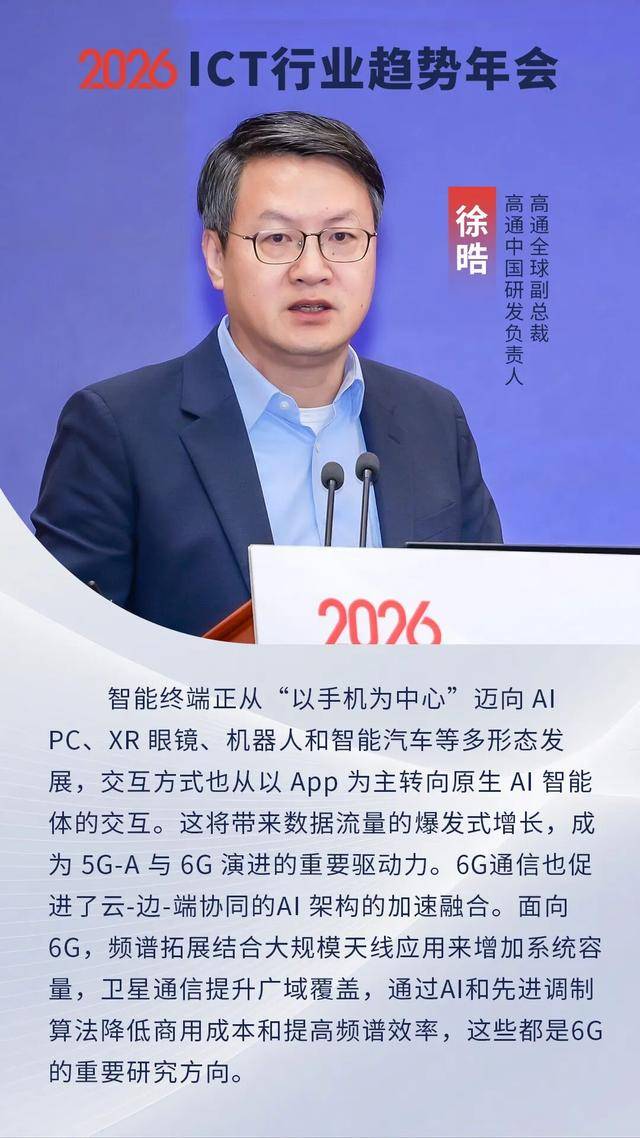
微软(MSFT.US)已摆脱OpenAI依赖,Copilot才是华尔街看好走向5万亿市值的“王牌”!
智通财经网· 2025-12-16 07:09
Core Viewpoint - Microsoft is poised to significantly increase its market value in the AI sector, potentially reaching $5 trillion by 2026, driven by its deep integration of AI technologies across its product suite and strategic partnerships, particularly with OpenAI [1][2]. Investment and Financial Insights - Microsoft has invested approximately $13 billion in OpenAI since their initial $1 billion investment in 2019, which has provided Microsoft with a competitive edge in AI technology [3][5]. - Despite holding a 27% stake in OpenAI, Microsoft's financial benefits from this investment are limited, as it primarily recognizes losses rather than profits from OpenAI [9][10]. - Analysts estimate that only 17% of Azure's total revenue comes from AI workloads, with a mere 6% directly linked to reselling OpenAI models, indicating that Microsoft's own AI infrastructure is the main revenue driver [9][10]. Strategic Partnerships and Collaborations - The revised partnership between Microsoft and OpenAI allows both companies to diversify their collaborations, with OpenAI seeking deals with other cloud providers and Microsoft exploring partnerships with other AI model providers [11][12]. - Microsoft has committed to investing $5 billion in Anthropic, which will purchase $30 billion worth of Azure computing capacity, securing substantial future revenue for Microsoft [12]. Future Outlook and Market Position - Analysts believe that Microsoft's broad AI strategy, encompassing various products from Azure to Office and even gaming, positions it uniquely in the market, with no other company having such a diverse product portfolio [14]. - The next major growth area for Microsoft is expected to be AI agents capable of executing complex workflows, with the company anticipated to compete closely with ServiceNow and Salesforce [14]. - Despite the optimism surrounding Microsoft's AI initiatives, there are concerns about over-investment and market sentiment, which could impact the company's performance if AI demand slows or if competitors outperform [15][16].

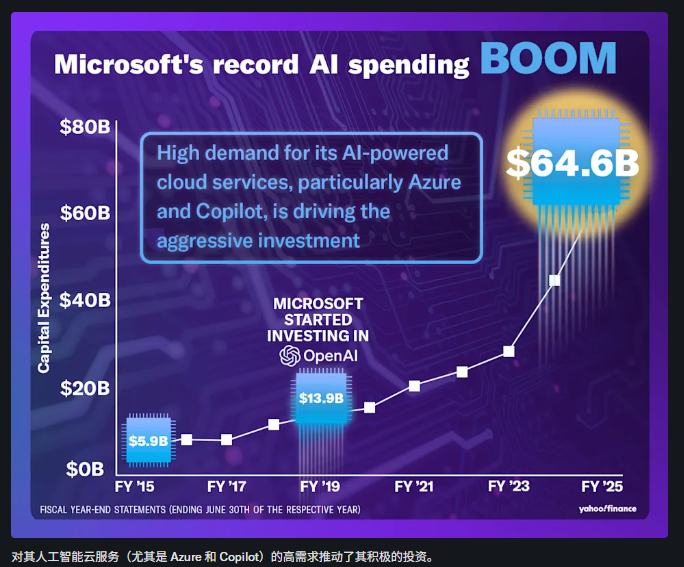
AI版「互联网协议」面世,豆包手机们再也不怕被「封禁」了?
3 6 Ke· 2025-12-12 08:36
Core Viewpoint - The article discusses the growing restrictions on the "Doubao Phone" (Nubia M53) applications, highlighting a significant conflict between AI-driven tools and established app ecosystems, particularly regarding user access and operational permissions [1][13]. Group 1: Doubao Phone and GUI Agent - The Doubao Phone is facing increasing bans on major applications like WeChat, Alipay, and various e-commerce platforms, limiting user access [1]. - The Doubao Phone Assistant employs a GUI Agent approach, allowing AI to interact with mobile interfaces without relying on official APIs, which raises concerns among major app providers [2][15]. - The conflict is not new; platforms like WeChat have previously opposed GUI-based AI interactions, indicating a broader resistance within the industry [13][15]. Group 2: MCP Protocol and Industry Standards - The Model Context Protocol (MCP) has emerged as a potential solution to the challenges posed by GUI Agents, aiming to establish a standardized interface for AI interactions across platforms [4][5]. - MCP is gaining traction as a de facto standard, with major tech companies like OpenAI and Google integrating it into their systems, indicating a shift towards a more interoperable AI ecosystem [7][8]. - The donation of MCP to the Linux Foundation signifies a move towards a neutral governance structure, enhancing its credibility and adoption across the industry [8][9]. Group 3: Future of AI Interaction - The article suggests that the future of AI will rely on a combination of GUI and MCP approaches, where GUI serves as a fallback in the current ecosystem while MCP establishes clearer operational boundaries for AI interactions [20][21]. - The transition to MCP will require significant changes in the internet ecosystem, but it promises a more structured and secure way for AI to interact with various platforms [19][20]. - Ultimately, the goal is to create a unified system where AI can operate seamlessly across different services while adhering to established rules and permissions [20][21].

MEET2026挤爆了,AI圈今年最该听的20+场演讲&对谈都在这
3 6 Ke· 2025-12-11 07:32
Core Insights - The MEET2026 Smart Future Conference highlighted the rapid evolution of AI technologies, emphasizing the transition towards AGI and the emergence of intelligent agents as a pivotal development in the industry [1][3][5]. Group 1: Conference Overview - The MEET2026 conference, hosted by Quantum Bit, attracted nearly 1,500 attendees and over 3.5 million online viewers, showcasing significant interest from various sectors including academia, industry, and investment [5]. - Key themes discussed included the integration of AI across different modalities and the importance of collaboration between industry and academia to drive innovation [3][5]. Group 2: Keynote Highlights - Zhang Yaqin from Tsinghua University emphasized the trend of AI integration across information, physical, and biological intelligence, predicting that foundational models will consolidate into fewer than ten globally [8]. - Wang Ying from Baidu discussed the evolution of generative AI into intelligent agents, which will replace many existing SaaS and apps, marking a shift towards an "agent internet" [8][9]. - Wang Zhongyuan from Beijing Academy of Artificial Intelligence noted that the current AI wave is a critical turning point, moving from weak AI to general AI, with a focus on multi-modal learning [11]. Group 3: Industry Applications - Dennis Yue from Google Cloud highlighted the importance of AI agents in automating processes and creating new business models, emphasizing the need for seamless integration across various platforms [21]. - Zhao Ce from Zhuosheng Technology discussed the necessity of creating a closed-loop commercial model that integrates models, terminals, and data to achieve effective AI deployment in industries [25]. - Yang Haibo from Guanglun Intelligent stressed the importance of simulation infrastructure in bridging the gap between simulated and real-world applications, which is crucial for the success of physical AI [49]. Group 4: Challenges and Future Directions - The industry faces challenges such as cognitive biases and user experience gaps in AI product usage, which need to be addressed to empower users effectively [9]. - The need for a robust ecosystem to support AI applications was emphasized, with calls for collaboration among enterprises to build open-source platforms [39]. - The discussions pointed towards a future where AI agents will need to demonstrate controllability and interpretability, ensuring they can work alongside humans effectively [57].

C. H. Robinson Worldwide (NasdaqGS:CHRW) 2025 Conference Transcript
2025-12-03 18:57
Summary of C.H. Robinson Worldwide Conference Call Company Overview - C.H. Robinson is one of the largest logistics providers, handling 37 million shipments annually with over 83,000 customers and 450,000 carriers [2][3] - The company operates a two-sided marketplace connecting shippers and carriers, providing vast access to various carriers and pricing options [2][3] Core Business Model and Transformation - The company is undergoing a transformation based on a lean operating model, which emphasizes continuous improvement and has enhanced productivity and technology [3][4] - Generative AI has been successfully integrated into operations, leading to a 40% productivity increase since the end of 2022 [4][12] AI Implementation and Impact - A tangible example of AI's impact is in the quoting process, where the time to process quotes has decreased from 15-17 minutes to about 30 seconds, allowing the company to respond to 100% of opportunities compared to 65% previously [5][12] - The company defines productivity as shipments per person per day in freight brokerage and files per person per month in global forwarding [6][7] - The transition to agentic AI is expected to further enhance productivity by applying reasoning to off-system data [7][10] Financial Performance and Metrics - The company reports greater than 40% productivity improvements across the enterprise, which translates into revenue growth, gross margin expansion, and operating margin expansion [12][13] - The focus on P&L performance is emphasized as the ultimate measure of AI investment value [12][16] Competitive Advantage - C.H. Robinson differentiates itself through domain expertise, a unique operating model, and a culture of building proprietary technology rather than relying on third-party solutions [36][38] - The company has a scalable model with low marginal costs for serving additional volume, which is a significant advantage over competitors who rely on outsourced models [40][42] - The ability to quickly adapt and implement new technologies is highlighted as a key differentiator [41][43] Future Outlook - The leadership believes the next two years will be more exciting than the last, with significant opportunities for ideation and discovery that will enhance bottom-line results [52][53] - The company positions itself as an undervalued AI industrial play, emphasizing its operational and technological differentiators [53] Technology Stack and Partnerships - C.H. Robinson uses Microsoft Azure as its primary cloud partner and has the flexibility to switch between different LLM providers based on performance and cost [21][26] - The company does not use open-source models but relies on enterprise-grade models from Microsoft, Google, and Anthropic [45][46] Conclusion - C.H. Robinson is leveraging AI to drive significant productivity improvements and financial performance, with a strong focus on building proprietary technology and maintaining a competitive edge in the logistics industry [52][54]

豆包手机普遍溢价超700元,骁龙8至尊版提供端侧AI算力
Xin Lang Cai Jing· 2025-12-02 08:29
Core Insights - ByteDance's Doubao team and ZTE have announced the sale of engineering samples equipped with the Doubao mobile assistant, which is designed to perform complex tasks beyond shopping, including travel and business applications [1][5][6] - The engineering sample, Nubia M153, utilizes Qualcomm's Snapdragon 8 Gen 1 mobile platform, priced at 3499 yuan, and is currently sold out [1][6] - The second-hand market for this device shows prices ranging from 4200 yuan to 4999 yuan, indicating a premium of 700 to 1500 yuan over the official price [1][6] - Qualcomm's Snapdragon 8 Gen 1 platform, launched in October last year, supports personalized multimodal generative AI, enhancing voice, situational, and image understanding capabilities [1][6] - Qualcomm's CEO, Cristiano Amon, believes that user experience is shifting from smartphone-centric to AI-centric, suggesting a new era where various devices, including smartphones, will provide enhanced application experiences [2][6]


专家:金融体系加速从规模扩张转向质量提升 智能体AI将重塑金融服务模式
Xin Hua Cai Jing· 2025-11-29 05:49
Core Insights - The 10th New Finance Forum held in Beijing focused on the new challenges and opportunities in the "14th Five-Year Plan" for the economy and finance, emphasizing the transition from scale expansion to quality improvement in the financial system and the application of AI in finance [1] Group 1: "14th Five-Year Plan" Development Framework - The three main lines of the "14th Five-Year Plan" include promoting high-quality development, prioritizing people-centered approaches for comprehensive development and common prosperity, and ensuring coordinated development and security amidst international challenges [2] - The development of pension finance is crucial for the elderly's future living security, with expectations for a mature basic pension insurance system and an optimized multi-level pension structure during the "14th Five-Year Plan" period [2] - The achievements during the "13th Five-Year Plan" have laid a solid foundation for realizing socialist modernization by 2035, emphasizing the need for high-quality development to counter international uncertainties [2] Group 2: Enhancing Financial System Quality and Efficiency - Recommendations for financial system transformation include focusing on core business, optimizing financing structures, supporting new productive forces, encouraging direct financing by commercial banks, and developing corporate bond markets [3] - The path for Chinese financial development requires adherence to four principles: party leadership, commitment to fundamental purposes, a steadfast theme, and cultural cultivation [3] - The capital market is being positioned as a key facilitator for technological innovation and national strategic implementation, with insurance funds increasingly supporting equity investments [3] Group 3: Technological Empowerment in Financial Services - AI has evolved from generative AI to intelligent agent AI, capable of collaborative and autonomous task completion, with VISA proposing a smart business framework that includes personalized services while protecting user privacy [4] - Innovation in service trade can be enhanced through national strategic guidance, leveraging financial power to create new growth engines, and building an innovative investment and financing ecosystem through collaborative efforts [4]
中国AI芯片在推理赛道寻突破
Zhong Guo Jing Ying Bao· 2025-11-25 14:36
Core Insights - The demand for AI computing power is shifting from training to inference, with inference expected to become the main driver of AI computing growth starting in 2025 [1][4] - Domestic AI chip companies are focusing on differentiation in the inference market, particularly in video generation, edge computing, and industry applications, despite the dominance of NVIDIA and AMD in the general AI computing market [1][3] Group 1: Industry Challenges - Chinese AI chip industry faces challenges due to geopolitical factors, with limitations in advanced processes, high bandwidth memory (HBM), packaging technology, and design tools [2] - Current domestic AI chips primarily use 12nm and 7nm processes, while North America is advancing towards 2nm, resulting in domestic chips having only about 30% of the computing power of their North American counterparts [2] Group 2: Technological Innovations - Domestic industry is innovating through technological pathways, such as computing power networking and super-node architecture, achieving overall computing power that is 2.1 times that of similar North American systems with 384 card deployments [2] - The shift towards inference chips is seen as a strategic opportunity for Chinese chip companies, as the demand for inference computing is experiencing explosive growth [4][5] Group 3: Market Dynamics - The ratio of computing power demand between training and inference is expected to reverse from 6:4 to favor inference by 2025, indicating a significant market shift [4] - The complexity of intelligent AI tasks requires higher performance, energy efficiency, and compatibility from inference chips, as they will need to handle more tokens and multiple model calls compared to traditional methods [4] Group 4: Future Directions - The focus for domestic AI chip companies is shifting from merely being available to being effective and cost-efficient, which is crucial for breaking through in the inference market [5] - The market for inference chips emphasizes scenario adaptability, low power consumption, and cost control, aligning with the strengths of Chinese chip companies in specific fields [5]
千问App一周下载破千万,超越DeepSeek成为增长最快的AI应用
Guan Cha Zhe Wang· 2025-11-24 05:17
Core Insights - Alibaba's "Qianwen" project has officially launched, marking its entry into the AI to C market, and has quickly become the fastest-growing AI application in history, surpassing competitors like ChatGPT and DeepSeek [4][5][9] Group 1: Market Performance - Following the announcement of Qianwen, Alibaba's stock surged by 4.13% by midday [3] - The Qianwen app reached the fourth position on the Apple App Store's free applications chart within a day of its public beta launch, causing server congestion due to high traffic [5][6] - By November 19, just two days after its launch, Qianwen climbed to the third position on the App Store [6] Group 2: Competitive Landscape - Qianwen's download speed has significantly outpaced other popular AI applications, achieving over 10 million downloads faster than ChatGPT and DeepSeek [7][8] - The Qwen model, which powers Qianwen, has become a leading open-source model globally, with over 600 million downloads, and is recognized for its superior performance compared to competitors like Llama and DeepSeek [9] Group 3: Strategic Vision - Alibaba views Qianwen as a critical component in the "AI era future battle," aiming to establish a consumer-facing AI entry point [10] - Analysts suggest that Qianwen's initial success is just the beginning, with potential for further growth through subscription models and integration with Alibaba's other services [10] - The app is positioned as an "Agentic AI" capable of understanding and executing complex tasks, indicating a shift from passive AI tools to proactive AI agents [11]