
汽车

Search documents
飞龙股份:愿与国内外优质客户及供应商在汽车、充电桩及液冷、储能等领域交流合作
Jin Rong Jie· 2025-09-23 01:00
Group 1 - The company, Feilong Co., has confirmed its willingness to collaborate with both domestic and international quality clients and their suppliers in various fields, including automotive, charging piles, liquid cooling, and energy storage [1] - Currently, multiple projects with HP are underway, and some projects have already begun bulk supply [1]

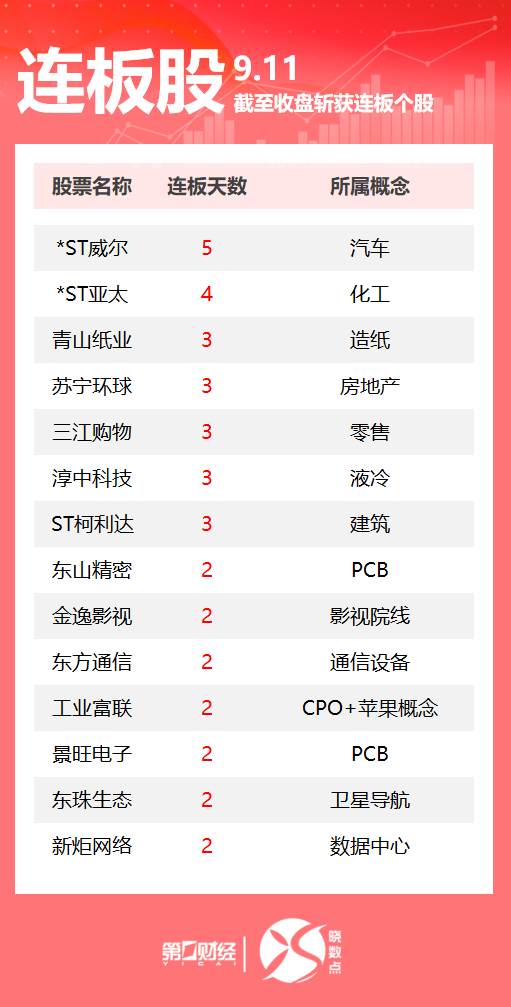
连板股追踪丨A股今日共96只个股涨停 这只地产股3连板
Di Yi Cai Jing· 2025-09-11 07:53
Group 1 - The core point of the news highlights the performance of certain stocks in the A-share market, with a total of 96 stocks hitting the daily limit up on September 11 [1] - Among the notable performers, real estate stock Suning Universal achieved three consecutive limit-up days, while PCB concept stocks Dongshan Precision and Jingwang Electronics recorded two consecutive limit-up days [1][2] Group 2 - The table lists stocks with consecutive limit-up days, including *ST Weir with five days in the automotive sector, *ST Asia Pacific in the chemical sector, and Qingshan Paper in the paper manufacturing sector, among others [2] - Suning Universal is specifically noted for its three consecutive limit-up days in the real estate sector, indicating strong market interest and potential investment opportunities [2]


国联安鑫发混合A:2025年上半年利润1.93万元 净值增长率0.45%
Sou Hu Cai Jing· 2025-09-03 14:44
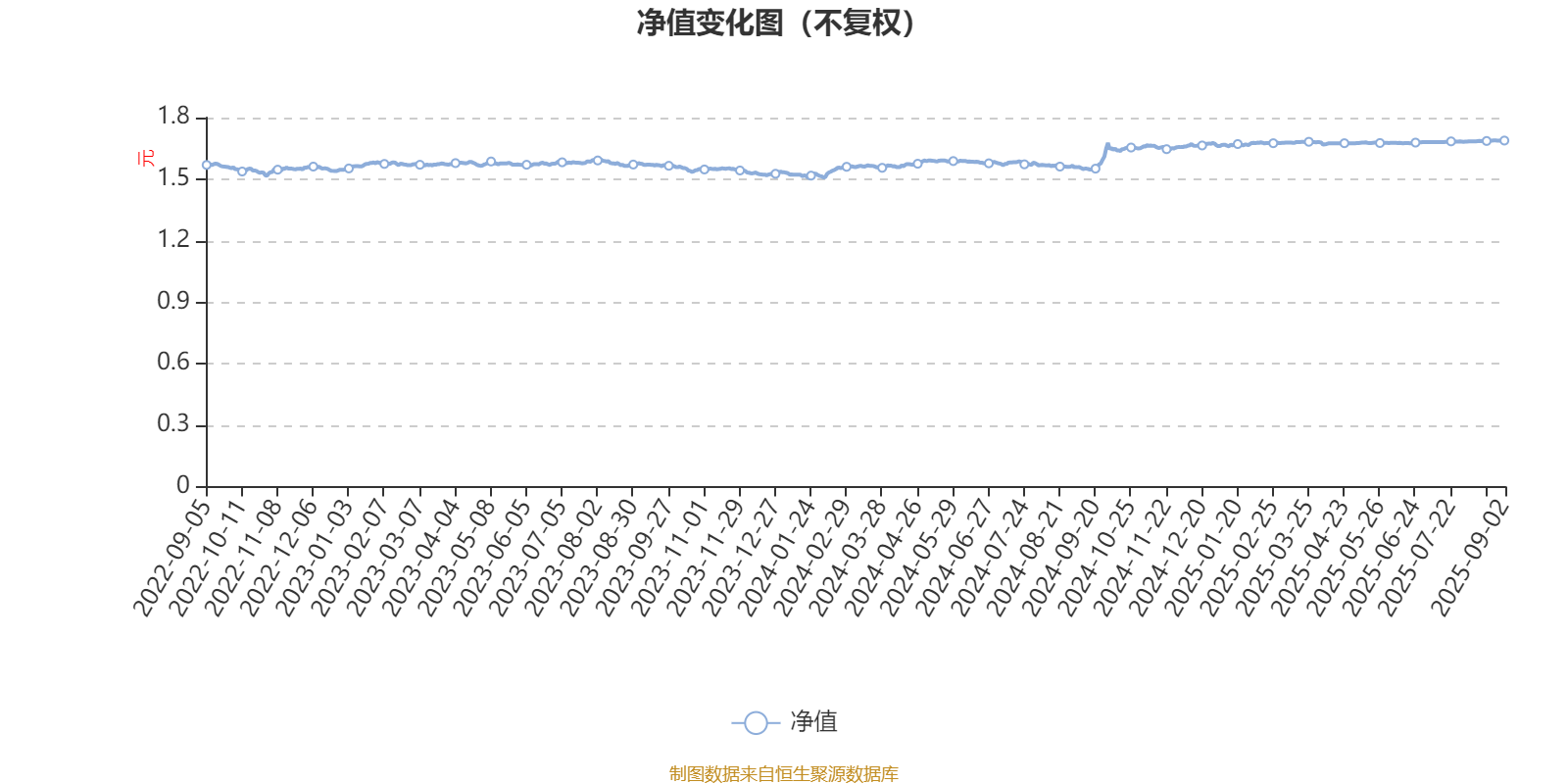
Core Viewpoint - The report indicates that the Guolian Anxin Mixed A Fund (004131) has shown modest performance in the first half of 2025, with a profit of 19,300 yuan and a net asset value growth rate of 0.45% [3]. Fund Performance - As of September 2, the fund's unit net value was 1.688 yuan [3]. - The fund's performance metrics include a three-month net value growth rate of 0.69%, a six-month growth rate of 0.75%, a one-year growth rate of 8.36%, and a three-year growth rate of 7.79% [6]. Fund Management Insights - The fund management anticipates greater economic pressures in the second half of the year due to delayed impacts of U.S. tariff policies, leading to a continuation of proactive fiscal and moderately loose monetary policies [3]. - The fund will maintain a diversified and stable asset allocation strategy, focusing on undervalued high-dividend assets and growth opportunities in sectors like TMT, automotive, and machinery [3]. Valuation Metrics - As of June 30, 2025, the fund's weighted average price-to-earnings (P/E) ratio was approximately 14.47 times, compared to the industry average of 17.52 times [10]. - The weighted average price-to-book (P/B) ratio was about 1.54 times, while the industry average was 1.75 times [10]. - The weighted average price-to-sales (P/S) ratio was approximately 1.7 times, slightly above the industry average of 1.59 times [10]. Growth Metrics - For the first half of 2025, the fund's weighted revenue growth rate was 0.02%, and the weighted net profit growth rate was 0.04% [18]. Fund Composition - As of June 30, 2025, the fund's total assets amounted to 3.9149 million yuan [33]. - The top ten holdings included companies such as Haier Smart Home, Bank of Communications, and Yili Group [42]. Investor Composition - The fund had a total of 659 holders, with individual investors holding 91.35% of the shares, while institutional investors accounted for 8.65% [36]. Trading Activity - The fund's turnover rate for the last six months was approximately 123.31%, which has been consistently below the industry average for two years [39].
美芯晟:公司在汽车与机器人领域产品应用会进一步增加
Zheng Quan Shi Bao Wang· 2025-09-03 08:33
Core Viewpoint - The company, Meichengsheng (688458), is expanding its product offerings in the automotive and robotics sectors, focusing on sensors, automotive lighting, interface chips, and LiDAR technology, with a positive growth trend in market share for robotics and plans for mass production in automotive applications [1] Group 1 - The company is actively developing a diverse range of products including sensors, automotive lighting, interface chips, and LiDAR [1] - The robotics sector has achieved a breakthrough in market share and is showing a favorable growth trend [1] - The automotive sector is expected to gradually achieve mass production and establish a complete product line in the future [1]

美芯晟(688458.SH):产品应用会进一步增加,机器人领域已实现市场份额的突破并呈现良好的增长态势
Ge Long Hui· 2025-09-03 08:20
Group 1 - The company, Meixinsheng (688458.SH), is expanding its product offerings in the automotive and robotics sectors, focusing on sensors, automotive lighting, interface chips, and LiDAR technology [1] - The company has achieved a breakthrough in market share within the robotics sector, showing a positive growth trend [1] - In the automotive sector, the company anticipates gradual mass production and the establishment of a complete product line in the future [1]
世运电路(603920):聚焦汽车+AI双驱动 产能扩充打开成长上限
Xin Lang Cai Jing· 2025-08-29 12:34
Core Insights - The company reported a revenue of 2.579 billion yuan for H1 2025, representing a year-over-year increase of 7.64% [1] - The net profit attributable to shareholders reached 384 million yuan, with a year-over-year growth of 26.89% [1] - The gross margin and net margin were 22.72% and 14.38%, respectively [1] Financial Performance - In Q2 2025, the company achieved a revenue of 1.361 billion yuan, showing a year-over-year increase of 4.55% and a quarter-over-quarter increase of 11.83% [1] - The net profit attributable to shareholders for Q2 was 204 million yuan, reflecting a year-over-year growth of 5.23% and a quarter-over-quarter growth of 13.59% [1] - The gross margin and net margin for Q2 were 22.75% and 14.62%, respectively [1] Product Development and Market Position - The company has successfully developed a comprehensive automotive product matrix, including high-density interconnect (HDI) boards and millimeter-wave radar PCBs [1] - The company has entered the supply chains of leading automotive manufacturers such as Geely, Chery, and Li Auto, and has received certifications from international Tier 1 suppliers [1] - The performance outlook is positively influenced by the decline in North American new energy subsidies and the launch of new models by major clients [1] Expansion into AI and New Markets - The company has successfully entered the supply chains of NVIDIA and AMD through OEM partnerships, achieving mass production [2] - The company has secured new product contracts with humanoid robot client F and is advancing projects in low-altitude flying vehicles [2] - The company is providing one-stop supply solutions for AI smart glasses, with overseas projects already in mass production and domestic projects in the certification phase [2] Capacity Expansion - The company is planning to establish new manufacturing bases in Thailand and Heshan, with the Thailand factory expected to have an annual capacity of 1 million square meters [2] - The Heshan new manufacturing base is projected to have an annual capacity of 660,000 square meters, focusing on chip-embedded PCBs and high-end HDI [2] - Both facilities are expected to commence operations in late 2025 and mid-2026, respectively [2] Profit Forecast and Valuation - The company is projected to achieve net profits of 862 million yuan and 1.167 billion yuan for 2025 and 2026, respectively [2] - The corresponding price-to-earnings ratios are estimated at 30x for 2025 and 22x for 2026 [2] - A target price of 41 yuan is set for 2026, maintaining a "buy" rating [2]

世运电路(603920):公司25年中报业绩点评:聚焦汽车+AI双驱动,产能扩充打开成长上限
Guoyuan Securities· 2025-08-29 11:05
Investment Rating - The report maintains a "Buy" rating for the company, with a target price of 41 CNY per share for 2026, based on a 25x valuation of the estimated EPS [3][13]. Core Insights - The company reported a revenue of 2.579 billion CNY for H1 2025, representing a year-over-year increase of 7.64%. The net profit attributable to shareholders was 384 million CNY, up 26.89% YoY, with gross and net profit margins at 22.72% and 14.38%, respectively [1][7]. - The company is expanding its production capacity with new manufacturing bases in Thailand and Heshan, which are expected to alleviate capacity constraints and support future growth [3][10]. - The automotive product matrix is being enhanced, with successful integration into the supply chains of major automotive companies, and the company is also making strides in the AI sector by entering the supply chains of Nvidia and AMD [2][9]. Summary by Sections Financial Performance - For H1 2025, the company achieved a revenue of 2.579 billion CNY, a YoY increase of 7.64%, and a net profit of 384 million CNY, reflecting a YoY growth of 26.89%. The gross margin was 22.72%, and the net margin was 14.38% [1][7]. - In Q2 2025, the revenue was 1.361 billion CNY, with a YoY growth of 4.55% and a QoQ increase of 11.83%. The net profit for the quarter was 204 million CNY, up 5.23% YoY and 13.59% QoQ [1][7]. Automotive Sector - The company has successfully launched high-speed 3rd and 4th generation HDI PCBs and has developed various millimeter-wave radar PCBs. It has secured contracts with leading automotive manufacturers such as Geely and Ideal [2][8]. - The company is also benefiting from the North American EV subsidy reduction and the upcoming model releases from major clients, which are expected to enhance revenue elasticity [2][8]. AI Sector - The company has made significant progress in the AI server market, achieving mass production of various PCBs required for AI applications. It has entered the supply chains of Nvidia and AMD through OEM partnerships [9]. - The company is also involved in projects related to humanoid robots and low-altitude flying vehicles, with successful collaborations and product deliveries [9]. Capacity Expansion - The company plans to build a new factory in Thailand with an initial capacity of 1 million square meters per year, expected to commence operations by the end of 2025. Additionally, a new manufacturing base in Heshan is planned with a capacity of 660,000 square meters per year, projected to start production in mid-2026 [3][10]. Valuation and Forecast - The company is forecasted to achieve net profits of 862 million CNY and 1.167 billion CNY for 2025 and 2026, respectively, with corresponding P/E ratios of 30x and 22x [3][13].
瑞声科技(02018):声学毛利率承压,光学毛利率改善
HTSC· 2025-08-25 09:19
Investment Rating - The report maintains a "Buy" rating for the company with a target price of HKD 60.30 [4][6][14] Core Views - The company reported a revenue of HKD 13.3 billion for 1H25, representing an 18% year-over-year increase, with a gross margin of 20.7%, down 0.8 percentage points year-over-year [1][2] - The net profit attributable to shareholders for 1H25 was HKD 880 million, a 63% increase year-over-year [1] - The report indicates a downward adjustment in net profit forecasts for 2025, 2026, and 2027 by 1%, 5%, and 4% respectively, due to lower-than-expected gross margin improvements in the MEMS microphone business [1][4] Revenue and Profitability - The revenue breakdown for 1H25 includes: - Acoustic segment: HKD 3.52 billion, up 2% year-over-year, with a gross margin of 27.2%, down 2.7 percentage points [2] - Optical segment: HKD 2.65 billion, up 20% year-over-year, with a gross margin of 10.2%, up 5.5 percentage points [2] - Motor and precision components: HKD 4.63 billion, up 27% year-over-year, with a gross margin of 22.9%, roughly flat year-over-year [2] Future Growth Opportunities - The company is expected to benefit from growth in new intelligent terminals such as automotive, XR glasses, and robotics, with significant breakthroughs anticipated in the next 2-3 years [3][4] - Collaborations with PSS and acquisitions in the automotive sector are expected to enhance the company's competitive position in vehicle acoustics [3] - The report highlights the potential for rapid revenue growth from XR customers due to successful product placements [3] Valuation Metrics - The target price of HKD 60.30 corresponds to a 2026 target PE of 25.0x, which is a premium compared to the average of comparable companies at 20.6x [4][14] - The report suggests that the current valuation of 18.0x for the 2026 forecast PE is attractive [14]
小摩:瑞声科技管理层交出正面下半年毛利率展望 目标价上调至65港元
Zhi Tong Cai Jing· 2025-08-22 08:18
Group 1 - Morgan Stanley has a positive outlook on AAC Technologies (02018), raising the target price from HKD 60 to HKD 65, reflecting a projected P/E ratio of 22 times for the second half of 2026 to the first half of 2027 [1] - AAC Technologies' management provided a positive gross margin outlook for the second half of the year, driven by increased production of new high-end products and ongoing improvements in the optical business [1] - The revenue outlook for the second half of the year exceeds market expectations, benefiting from significant growth in new businesses such as thermal management and automotive acoustics, as well as upgrades to existing product specifications [1] Group 2 - Management is confident that the gross margin for the full year 2025 will still show year-on-year growth or at least remain on par with 2024's 22.1%, indicating that the gross margin for the second half of 2025 will exceed 23% compared to 20.7% in the first half of 2025 [1] - It is estimated that the mass production of new tactile motors for smartphones in the second half of the year will enhance the product mix, with gross margins expected to return to above 30% levels [1]
摩根大通:上调瑞声科技目标价至65港元 维持“增持”评级
Xin Lang Cai Jing· 2025-08-22 06:42
Core Viewpoint - Morgan Stanley's report indicates that AAC Technologies' management provided a positive outlook for gross margins in the second half of the year, driven by increased production of new high-end products and ongoing improvements in the optical business [1] Revenue Outlook - The revenue outlook for the second half of the year exceeds market expectations, benefiting from significant growth in new businesses, including thermal management and automotive acoustics, as well as upgrades to existing product specifications [1] Long-term Opportunities - The company maintains a solid outlook and holds a positive view on long-term opportunities in artificial intelligence, robotics, and automotive sectors, leading to an increase in the target price from HKD 60 to HKD 65 while maintaining a "Buy" rating [1]