生猪产能去化

Search documents
畜牧ETF(159867)冲击4连涨,机构看好生猪产能去化
Xin Lang Cai Jing· 2025-11-10 03:06
消息面上,上周猪价格环比下跌,全国生猪价格 11.97 元/公斤,周环比-4.7%。此外,10 月中旬以来二 育快速上量博弈年前猪价行情,当前二育入场渐至尾声,市场存量二育已高于 2024 年同期。 券商研究方面,开源证券指出,当前行业生猪出栏均重高于 2024 年同期,生猪出栏均重或再度上移。 当前标肥价差已收窄,肥猪供给渐充裕,展望后市猪价反弹或渐至尾声,供给压力下猪价磨底或延续。 而当前较高的存量二育或将造成供给增量后移压力。该压力或将于年前集中释放,届时猪价或进一步承 压下行。在此背景下,生猪及仔猪均陷亏损,叠加政策疫病多因素催化,生猪去化或加速。 截至2025年11月10日 10:22,中证畜牧养殖指数(930707)上涨,成分股罗牛山(000735)上涨5.30%,蔚蓝 生物(603739)上涨2.45%,兄弟科技(002562)上涨2.00%,海大集团(002311)上涨1.89%,安迪苏(600299) 上涨1.78%。畜牧ETF(159867)上涨0.45%, 冲击4连涨。最新价报0.67元。 畜牧ETF紧密跟踪中证畜牧养殖指数,中证畜牧养殖指数选取涉及畜禽饲料、畜禽药物以及畜禽养殖等 业务 ...
供应宽松制约生猪上涨空间
Qi Huo Ri Bao· 2025-11-07 00:17
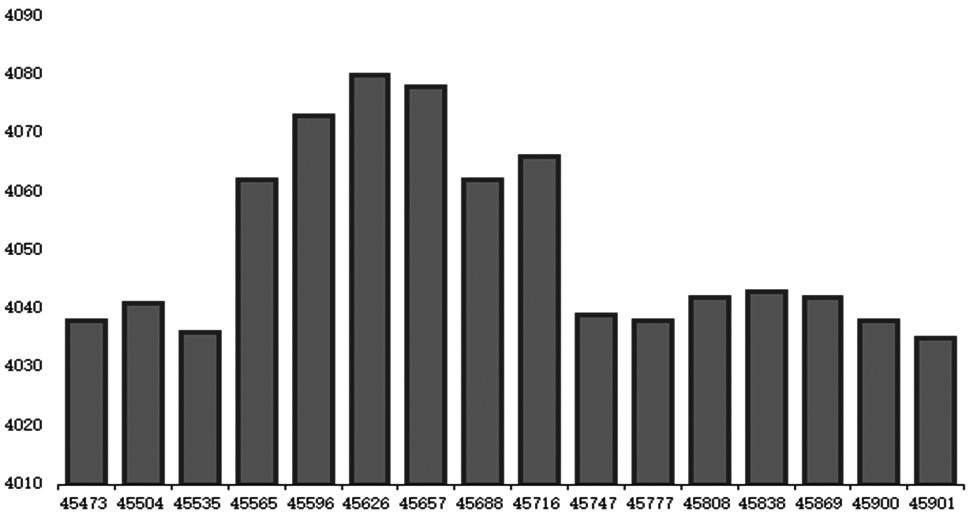
近期,国内生猪现货市场在经历短暂反弹后再次调头下行,期货市场亦同步走弱。截至10月31日,生猪期货主力2601合约收盘价较前期反 弹高点下跌约5%,反映出市场情绪再度趋于谨慎。本轮猪价"止涨转跌"并非孤立现象,而是基本面供应充裕、需求边际转弱等多重因素共 同作用的结果,预示着四季度中后期猪价仍将面临一定的供应压力。 能繁母猪存栏偏高奠定供应基础 从生猪生长的周期来看,能繁母猪存栏水平决定了10个月后市场的生猪供应潜力。根据农业农村部发布的数据,2024年四季度至2025年三 季度末,全国能繁母猪存栏量持续维持在4000万头以上,高于农业农村部设定的3900万头正常保有量。这一数据表明,能繁母猪产能仍处 于相对宽松区间,为后续商品猪供应提供了坚实基础。 图为能繁母猪存栏量(单位:万头) 企业建库意愿降低与消费提振递减 在国庆后的一轮反弹中,猪价逐渐逼近行业完全成本线,部分利好因素开始减弱甚至消退。 1.冻品入库经济性明显下降 在猪价跌破现金流成本线时,部分屠宰企业倾向于将鲜肉转为冻肉储备,以此平衡市场供应,并博取远期猪价上涨的利润。然而,随着近 期猪价反弹至行业平均养殖完全成本线附近,冻品入库的经济性显著下降。 ...

养殖ETF(159865)近20日净流入超20亿元,资金抢筹布局,关注“含猪量”约60%的养殖ETF
Mei Ri Jing Ji Xin Wen· 2025-11-06 09:38
Core Viewpoint - The supply pressure in the pig farming industry remains significant in Q4, but ongoing "anti-involution" measures are expected to positively impact pig prices in 2024 [1] Supply and Demand Analysis - Since May 2024, pig production capacity has increased, leading to continued supply growth expected in Q4 2025 and Q1 2026, which will exert pressure on pig prices [1] - The industry is actively implementing "anti-involution" strategies, focusing on controlling production capacity, reducing weight, and limiting second breeding [1] Policy and Market Impact - The enforcement of policies is expected to intensify, coupled with recent low pig prices and increasing losses, which may accelerate the reduction of production capacity [1] - A new upward trend in pig prices is anticipated in the second half of next year [1] Industry Index Overview - The Livestock ETF (159865) tracks the China Securities Livestock Index (930707), which selects listed companies involved in livestock farming and feed processing to reflect the overall performance of the livestock sector [1] - The China Securities Livestock Index covers various sub-sectors, including livestock farming, feed, and animal health, demonstrating strong industry representation [1]
生猪期货与期权2025年11月报告:生猪:10月份猪价大跌后反弹,养殖户压栏惜售令春节前仍存担忧-20251103
Fang Zheng Zhong Qi Qi Huo· 2025-11-03 06:20
Report Industry Investment Rating There is no relevant content provided in the given documents. Core Viewpoints - In October 2025, after a sharp decline, the pig price rebounded. However, farmers' reluctance to sell due to pressure on holding pigs still causes concerns before the Spring Festival. The group enterprises' volume reduction and price support, combined with the second - fattening support, have relieved the near - end pressure. But with a high basic inventory this year, there are still great concerns about the year - end pig price. [1][3] - The current open interest of the live hog index has reached a record high of 320,000 lots, with nearly 10 billion yuan of settled funds. The market is highly divided. The forward curve shows a contango structure, and the near - end futures price has a large discount to the spot price. The futures price reflects a certain pessimistic expectation of the year - end slaughter pressure. Given that the absolute price has fallen below the cash cost of some farmers, short - selling should be cautious. [3] - The reduction of live hog production capacity mainly occurs in two stages: first, reducing the slaughter weight, which was initially achieved in October this year mainly by reducing pressure on holding pigs and shortening the breeding time; second, reducing the capacity of breeding sows, which is driven by the passive elimination of breeding sows by farmers when the piglet slaughter incurs significant losses. [3] - Looking forward to the end of 2025, the feed sector lacks strong positive factors, and the continuously decreasing live hog breeding cost leads to a slow reduction of production capacity. The cyclical pressure of the sector is an important factor dragging down the pig price. The current industry is in the first stage of weight reduction, and there is still a long way to go before entering the second stage of reducing the inventory of breeding sows. [5] Summary According to Relevant Catalogs 2025 October and November Review and Outlook - In the context of capacity reduction in October 2025, the industry as a whole started to reduce the slaughter weight. The hog - grain ratio has fallen below 5:1, and the piglet price has dropped to around 175 yuan per head. The rapid deterioration of breeding profits will drive the industry into the capacity reduction stage. [3][5] - The expected increase in feed imports after the smooth progress of the new round of Sino - US negotiations in October has limited impact on the near - end pig price. The current group enterprises still have room to reduce the breeding cost, but the average industry cost is still around 13 yuan per kilogram. [4] 2025 Fourth - Quarter Outlook - The futures and spot price trends are expected to remain at the bottom due to the lack of strong positive factors on the supply side. The 2601 contract is recommended to be observed, and it is advisable to buy the 2607 contract on dips below 12,000 points in the medium term. For options, a covered call strategy combination can be held. [5] 2025 October Live Hog Futures and Spot Price Review - In October 2025, the agricultural product index fell to a new low for the year, with the feed and breeding industry chain leading the decline. The live hog spot price broke through the support level and hit a new low for the same period in recent years, and the piglet price accelerated its decline. [8][15][18] - The feed price fluctuated and declined overall in October 2025. The low downstream frozen product inventory provided some support for the white - strip price, while the low meat - poultry price dragged down the pig price. [21][24][30] - From August to October in the third quarter of this year, the cumulative decline of the pig price exceeded 18%. [39] Live Hog Production Capacity and Slaughter Situation - The inventory of breeding sows is currently in the green and reasonable range, with a cumulative decline of about 1% compared to July 2025. The discount rate of culled sows increased in October, and the production efficiency per sow has improved. [44][45][46] - The slaughter volume is expected to continue to increase, but the growth rate may not be large. [52] Listed Pig Enterprises - In the first half of 2025, the overall profitability of leading companies expanded, but some turned to losses in the third quarter. [58] Near - End Supply - Demand Fundamentals - In October, the slaughter volume increased significantly, and the slaughter weight decreased month - on - month but remained at a high level year - on - year. The slaughter weight in the fourth quarter is the main factor affecting the spot price. [62][64][67] - The current monthly average profitability is at the historical median. The profit of purchasing piglets returned to near the break - even point in July, and the fattening loss continued to widen from August to October. [75] October Live Hog Futures Price Situation - In October, the live hog futures price reached a record low with increasing open interest. The live hog index hit a new low, and the open interest increased significantly both month - on - month and year - on - year. [77][78] - The futures - to - feed price ratio of live hogs on the market is close to the historical low level. The 2603 and 2605 contracts have fallen below the breeding cost. The near - month contracts lack confidence in the spot price, and the 2511 contract finally entered the delivery month with a large discount. [84][86][89]
生猪去化或将加速,继续布局龙头
2025-11-03 02:35
Summary of Conference Call on Swine Industry Industry Overview - The swine market is currently experiencing a dual increase in supply and demand, but supply pressure remains significant. The number of new piglets is expected to rise in the first half of 2025, leading to increased fattening output in Q4 2025. However, the breeding group has a pessimistic outlook for 2026, compounded by high Q4 output, which continues to exert supply pressure [1][4]. Key Financial Insights - The swine industry faced losses at the end of Q3 and the beginning of Q4 2025, with cash costs around 11 RMB/kg. Small and medium-sized farmers are losing approximately 16 RMB and 34 RMB per pig, respectively, while those purchasing piglets are facing losses of 257 RMB per pig. The overall profitability of the industry is under pressure, and production capacity is entering a phase of reduction [1][5]. Production Capacity and Market Predictions - It is anticipated that swine production capacity will continue to decrease in the near term. In September 2025, the number of breeding sows decreased by 90,000 compared to the end of Q2. The industry is expected to face losses again in Q4 2025 and the first half of 2026, accelerating the capacity reduction process under government encouragement to control production [1][6]. Investment Recommendations - The company recommends investing in Muyuan Foods, which maintains industry-leading costs and is increasing its dividend levels while reducing its debt ratio, indicating potential for value re-evaluation. Other recommended companies include Wens Foodstuff Group and several second-tier firms with good growth potential, low costs, and attractive valuations, such as Dekang Bange, Shennong Group, Juxing Agriculture, Tiankang Co., and Lihua Co. These companies have relatively stable debt ratios and are expected to have advantages in the next cycle [1][7][8]. Market Trends and Opportunities - The current market price trend for swine is in a clear downward phase, with prices dropping below expectations post-October. Although there has been a recent rebound to 12.2 RMB/kg, this is primarily due to previous sharp declines and absorption by the breeding group. Overall, supply remains high, and prices are expected to remain under pressure in the coming months [3][4]. Historical Context and Future Outlook - Historical data indicates that excess returns in each cycle often occur during the capacity reduction phase. The current situation presents a critical opportunity for investment, as industry losses and accelerated capacity reduction lay the groundwork for future upward cycles [2][9].

数据出来了,二师兄又要捏把汗了!
Sou Hu Cai Jing· 2025-11-01 12:42
Core Viewpoint - The pig price experienced a rise in late October, returning to the 6 yuan era, but has since shown signs of stagnation and slight decline as of November, indicating a potential oversupply in the market [2][4]. Supply and Demand Dynamics - As of the end of Q3 2025, the national breeding sow inventory stands at 40.35 million heads, which is above the normal holding level of 39 million heads, suggesting an oversupply in the pig industry [2]. - The total pig inventory reached 437 million heads by the end of Q3, reflecting a 2.9% increase quarter-on-quarter and a 2.3% increase year-on-year, indicating that the supply of pigs is increasing rather than decreasing [2]. - Cumulative pig slaughter in the first three quarters was approximately 530 million heads, showing a year-on-year growth of 1.8%, further emphasizing the supply pressure in the market [2][4]. Seasonal Trends - The fourth quarter is typically a peak season for pork consumption, which also correlates with increased slaughter rates. Even maintaining the current growth rate, the total pig slaughter for 2025 could reach 710 million heads, just below the 726 million heads in 2023 [4]. Market Sentiment and Price Support - The previous rise in pig prices was largely driven by secondary fattening, but the current market expectations are low, leading to decreased enthusiasm for this practice due to rising costs [6]. - Two main factors currently support pig prices: the ongoing large pig market and market sentiment. As long as the price difference between large and standard pigs remains profitable, there will be some incentive for secondary fattening [7]. - Market sentiment remains stable due to upcoming consumption peaks in the fourth quarter, such as for preserved meats and holiday celebrations, which may prevent immediate price drops despite the lack of upward momentum [9].
生猪月报:产能去化加速进程有限,警惕旺季反弹风险-20251031
Zhong Hui Qi Huo· 2025-10-31 12:20
Report Title - 202501031 Zhonghui Futures Monthly Report on Live Pigs: Limited Acceleration in Capacity Reduction, Beware of Rebound Risks in Peak Season [1] Core Viewpoints - Short - and medium - term trading follows fundamental logic, with the futures market showing signs of bottoming. There may be a certain warming opportunity in the peak season due to improved demand and structural support from large pigs, but the rebound height in Q4 is expected to be limited. The far - month contracts can be strategically bullish in the long - term, subject to policy influence. It is recommended to short on rebounds for near - month contracts, beware of the rebound risk of the peak - season 01 contract after bottom - probing, and also consider shorting opportunities for the off - season 03 contract. Pay attention to reverse arbitrage opportunities during the downward repair of the far - month premium [4][5]. Summary by Directory 1. Spot Performance - **Live Pig Spot Prices**: This week, the national live pig spot price rebounded to 12.54 yuan/kg, with prices in other provinces also rebounding to varying degrees. For example, the price in Henan rebounded to 12.74 yuan/kg, in Jiangsu to 12.86 yuan/kg, in Hunan to 12.1 yuan/kg, in Chongqing it remained stable at 13.25 yuan/kg, and in Sichuan it rebounded to 12.2 yuan/kg [3][16]. - **Sow Prices**: The average price of culled sows rebounded slightly, up 0.68 yuan to 8.97 yuan/kg. The average price of二元sows decreased by 14.28 yuan/head to 1529.52 yuan/head. Due to weak demand from farmers, the price of二元sows is expected to continue its weak performance [3][18]. - **Piglet Prices**: The national 7kg piglet出栏price increased by 17.62 yuan to 182.86 yuan/head, and the 15kg piglet price increased by 20 yuan to 260.8 yuan/kg. It is speculated that small - scale farmers are entering the market by purchasing piglets [3][20]. 2. Logic and Outlook - **Price Movement Logic**: Before mid - October, due to the loose supply - demand pattern, both the futures and spot prices of live pigs declined. After the price reached a new low in the 10 - yuan range, farmers' willingness to hold prices increased. The widening of the standard - fat price difference in North and Northeast China led to more farmers delaying sales and second - fattening, supporting a staged price rebound. However, the short - selling pressure on the futures market remains significant [4]. - **Supply - Demand Fundamentals** - **Supply**: In the short term, the supply pressure remains high. The planned出栏of large - scale farms has increased, the出栏weight is relatively high, and the inventory structure supports high supply pressure in Q4. Although the inventory of large pigs supports the peak season to some extent, the subsequent pressure from second - fattening is obvious. The reduction of the breeding sow inventory is not significantly accelerating, and the improvement in production efficiency offsets some of the reduction pressure [4]. - **Demand**: Recently, demand has shown a stable trend, with the slaughter rate remaining stable and the decline in the fresh - meat sales rate slowing down. It is expected that demand will improve with the cooling weather, resulting in a pattern of both supply and demand increasing [4]. - **Cost - Profit**: The short - term divergence between feed and live pig prices has reduced farmers' losses, which is not conducive to accelerating capacity reduction. Further losses are needed to drive the reduction of breeding sow inventory [4]. 3. Key Data - **Spot Prices**: The national average price of三元live pigs was 12.52 yuan/kg, the average price of二元sows was 32.47 yuan/kg, the average price of culled sows was 8.97 yuan/kg, the 7kg piglet出栏price was 182.86 yuan/head, and the 15kg piglet price was 260.8 yuan/kg [7]. - **Supply Data** - **Short - term Supply**: In September, the national live pig inventory increased to 436.8 million heads. The 10 - month enterprise planned出栏was 13.3933 million heads, a 5.48% increase from the previous month. The standard - fat price difference was - 0.75 yuan/kg [7][22][26]. - **Medium - term Supply**: In September, the national piglet birth number was 5.676 million, and the survival rate was 92.56% [7][32]. - **Long - term Supply**: In September, the national breeding sow inventory was 40.35 million heads, a decrease of 30,000 from the previous month [7][34]. - **Demand Data**: This week, the national slaughter enterprise's operating rate rebounded to 34.94%, the slaughter volume increased to 147,506 heads, and the fresh - meat sales rate was 86.04%. The pork wholesale volume in Beijing Xinfadi and the pig trading volume in Foshan Zhongnan Agricultural Products Wholesale Market are in seasonal growth. The frozen - product storage rate increased to 18.22% [7][36][38]. - **Cost and Profit Data**: The cost of purchasing piglets and self - breeding has decreased. Currently, the profit of purchasing piglets is about - 80 yuan/head, and the self - breeding profit is about 10 yuan/head [7][45].
东兴证券:猪价持续下行 产能去化趋势已现 建议关注牧原股份
智通财经网· 2025-10-29 03:35
Core Viewpoint - The report from Dongxing Securities indicates that the regulation of pig production capacity under policy guidance will remain a central theme in the near future, with expectations for the elimination of outdated capacity increasing, highlighting the cost advantages of high-quality production capacity, which will lead to better profit elasticity post-regulation [1] Industry Supply and Demand Performance - The downward trend in pig prices continues, with average prices for piglets, live pigs, and pork in September 2025 being 30.06 CNY/kg, 13.81 CNY/kg, and 24.50 CNY/kg respectively, reflecting month-on-month changes of -10.62%, -3.79%, and -1.92% [1] - After the National Day holiday, the average price of live pigs has been on a continuous decline, with the national average for external three yuan live pigs at 10.90 CNY/kg as of October 20 [1] Supply Side - In September, there was a concentrated release of live pigs, with an increase in the outflow plans from both large-scale and social farms as the weather cooled, leading to a rise in market pig supply and meat output [2] - The demand side saw slight improvement due to pre-holiday stocking and cooler weather, but slaughter enterprises remained cautious, and slow inventory reduction of frozen products limited fresh product consumption growth [2] - By mid-October, the pace of second fattening at near the 10 CNY/kg bottom price accelerated, providing slight support for short-term pig prices [2] Capacity Change Trends - As of the end of September, the number of breeding sows was 40.35 million, a month-on-month decrease of 0.07%, and a reduction of 90,000 heads compared to the end of Q2 [3] - Data from various sources indicate a consistent downward trend in breeding sow inventory, with a month-on-month decline of 0.84% in September according to Yungyi and 0.28% according to Ganglian [3] Policy Regulation and Price Decline - Recent meetings have clarified requirements for capacity regulation, slaughter weight, and environmental funding, with policy implementation now in full swing, and leading enterprises responding positively [4] - As of the end of September, Muyuan Foods had a breeding sow inventory of 3.305 million, a reduction of 126,000 heads compared to the end of June [4] - The average profit per head for self-bred pigs in the industry is -185.68 CNY, while the profit for purchased piglets is -289.07 CNY, indicating increasing losses in farming [4] - The combination of policy regulation and industry losses is expected to accelerate capacity reduction, with pig prices likely to see an upward turning point in the second half of 2026 [4]

农林牧渔行业报告(2025.10.13-2025.10.19):猪价止跌,9月产能去化
China Post Securities· 2025-10-21 06:44
Investment Rating - The industry investment rating is "Outperform the Market" and is maintained [2] Core Views - The agricultural sector experienced a downward adjustment, with the Agricultural, Forestry, Animal Husbandry, and Fishery (Shenwan) index declining by 2.20%, ranking 13th among 31 primary industries [4][13] - National pig prices showed a slight rebound after a decline, with the average price rising to 11.03 CNY/kg as of October 19, indicating a potential bottoming out [5][18] - The "anti-involution" policies have been intensified since May, which is expected to accelerate capacity reduction in the pig industry and lead to a price increase in the second half of next year [6][20] Summary by Sections Market Review - The agricultural sector followed the overall market trend and declined, with the Shanghai Composite Index and CSI 300 dropping by 1.47% and 2.22%, respectively [13][14] Livestock Industry Chain Tracking Pigs: Price Stabilization and Capacity Reduction - The national average pig price fell to a low of 10.87 CNY/kg before rebounding to 11.03 CNY/kg [5][18] - The average loss for self-bred pigs was approximately 254 CNY per head, while for purchased piglets, it was about 375 CNY [19] - The breeding stock saw a reduction in September, with a decrease of 0.07% in the number of breeding sows [19] Broilers: Profit Squeeze - As of October 19, the price of broiler chicks was 3.5 CNY per chick, with an average profit of 0.4 CNY per chick, while the price of broiler chickens was 3.37 CNY per jin, resulting in a loss of 2.2 CNY per chick [31] - The number of grandparent stock updated in the first three quarters of 2025 was 803,300 sets, a decrease of 9.86 million sets or 19.01% compared to the same period in 2024 [31][32] Planting Industry Chain Tracking - Sugar prices continued to decline, with white sugar priced at 5,780 CNY/ton, down 55 CNY/ton [35] - The price of corn was 2,216 CNY/ton, showing a slight decrease [36]
广发证券:9月上市猪企整体出栏保持增长 关注行业潜在催化因素
智通财经网· 2025-10-17 06:59
Core Viewpoint - The pig farming industry is currently facing significant losses due to declining prices, with the national average price dropping to approximately 11 yuan/kg, leading to a downturn in the entire sector [1] Industry Overview - The pig price has been fluctuating and has accelerated its decline post-National Day, with the average price falling to about 11 yuan/kg, indicating that the industry is in a loss-making phase [1] - The price of piglets has also decreased sharply, with the price for 7 kg piglets dropping to 183 yuan/head, a decline of 43.5% since early September [1] - The industry is experiencing a comprehensive loss, and the "anti-involution" policy is expected to accelerate the reduction of pig farming capacity [1] - The number of breeding sows has decreased by 0.1% month-on-month as of August, according to the Ministry of Agriculture [1] Company Performance - In September, listed companies reported a total pig output of 14.23 million heads, a decrease of 6.3% month-on-month but an increase of 26.3% year-on-year [3] - Excluding Muyuan Foods, the total output of listed companies was 8.65 million heads, reflecting a month-on-month increase of 17.6% and a year-on-year increase of 38.8% [3] - For the first three quarters, the total output of listed companies reached 142.2 million heads, marking a year-on-year growth of 30.7% [3] - Specific companies like Muyuan Foods, Wens Foodstuff Group, New Hope Liuhe, and Dekang Agriculture reported varying output changes in September, with Muyuan Foods seeing a significant decrease of 20.4% month-on-month [3] Sales and Pricing - The average sales price for listed companies in September was calculated at 13.0 yuan/kg, reflecting a month-on-month decline of 6.12% [4] - The average weight of pigs sold in September was approximately 114.7 kg/head, showing a month-on-month increase of 0.7% [4] - Both fat pigs and piglets are currently in a loss-making situation, which is likely to accelerate the reduction of production capacity [4] Investment Recommendations - The pig farming sector is in a state of comprehensive losses, with prices falling below the cash costs for most enterprises, and piglet sales are also unprofitable [5] - Given the current loss situation in the industry and the "anti-involution" backdrop, the reduction of pig farming capacity is expected to commence [5] - The sector is currently valued relatively low, with a focus on leading companies with cost advantages recommended, such as Wens Foodstuff Group and Muyuan Foods [5] - Other companies to watch include Dekang Agriculture and New Hope Liuhe, with potential turnaround candidates like Zhengbang Technology and smaller farming enterprises such as Tiankang Biological and Shennong Group [5]