能源强国

Search documents
【展望二〇二六】构筑能源强国新格局
Jing Ji Ri Bao· 2026-01-31 23:03
Core Viewpoint - The development of a strong energy nation is crucial for China's economic and social progress, emphasizing the need for comprehensive enhancement of energy technology, industrial chains, and system capabilities to boost international competitiveness and support sustainable development [1]. Group 1: New Energy System Construction - The new energy system is the main focus in building a strong energy nation, with a shift from top-level design to comprehensive construction during the "14th Five-Year Plan" and "15th Five-Year Plan" periods [2]. - The goal is to significantly increase the share of non-fossil energy, with plans to add over 20 million kilowatts of wind and solar power capacity annually by 2026 [2]. - The development of clean energy sources such as wind, solar, hydro, and nuclear power will be prioritized, while also promoting biomass, geothermal, and marine energy as supplementary sources [2]. Group 2: Clean Utilization of Fossil Energy - The transition to cleaner and more efficient use of fossil energy is essential during the transitional period, with coal power being upgraded to serve as a flexible and stable backup for renewable energy [3]. - By 2026, initiatives will be implemented to enhance coal power's low-carbon development through technology upgrades and innovative mechanisms [3]. - A new electric power system will be established to ensure efficient distribution and utilization of clean energy, including the construction of high-voltage lines and smart grids [3]. Group 3: Challenges in New Energy Development - The rapid growth of new energy capacity has led to challenges in the power system, including difficulties in transmitting green electricity from western regions to eastern cities and the volatility of renewable energy generation [6]. - The National Energy Administration aims to promote integrated development of new energy by 2030, enhancing reliability and market competitiveness [6][7]. - The optimization of power system regulation capabilities is crucial, with a goal to significantly improve these capabilities by 2027 to support the integration of over 20 million kilowatts of new energy annually [8]. Group 4: Coal Consumption Trends - Coal consumption in China has shown signs of decline, with a negative growth rate for the first time since 2017, but short-term demand is expected to remain resilient due to the need for coal in power generation and chemical industries [10]. - The long-term trend indicates a gradual reduction in coal consumption as part of the carbon peak strategy, with coal's role shifting from a primary energy source to a backup energy source [11]. - The integration of coal and new energy is emphasized, with initiatives to develop renewable energy in coal-producing regions and promote clean energy alternatives [11][12]. Group 5: Future Energy Technologies - The "15th Five-Year Plan" highlights the importance of future industries such as hydrogen energy and nuclear fusion, which are seen as key components for ensuring energy security and sustainable development [14]. - Hydrogen energy is recognized for its potential but faces challenges in achieving market competitiveness due to a lack of sufficient application scenarios [15]. - The development of nuclear fusion is positioned as a long-term goal, with significant investments and research needed to overcome technical and commercial hurdles [16]. Group 6: Overall Energy Strategy - Building a strong energy nation is a strategic task for the "15th Five-Year Plan" and is essential for China's modernization efforts, requiring collaboration among government, enterprises, and society [17].
构筑能源强国新格局
Jing Ji Ri Bao· 2026-01-31 22:09
Core Viewpoint - The development of a strong energy nation is crucial for China's economic and social progress, emphasizing the need for comprehensive enhancement of energy technology, industrial chains, and system capabilities to boost international competitiveness and support sustainable development [1]. Group 1: New Energy System Construction - The new energy system is the main focus in building a strong energy nation, with a shift from top-level design to comprehensive construction during the "15th Five-Year Plan" period [2]. - The goal is to significantly increase the share of non-fossil energy, with plans to add over 200 million kilowatts of wind and solar power capacity annually by 2026 [2]. - The integration of various energy sources, including biomass, geothermal, and marine energy, will complement the new energy system [2]. Group 2: Clean and Efficient Use of Fossil Energy - The transition to cleaner and more flexible coal power is essential during the transition period, with coal power expected to act as a stabilizer for energy supply [3]. - By 2026, efforts will focus on upgrading coal power technology and promoting carbon capture and utilization in the oil and gas sector [3]. - The construction of a new power system will require the establishment of high-voltage lines and smart grids to ensure efficient energy distribution [3]. Group 3: Overcoming Bottlenecks in New Energy Development - China aims to lead global energy transformation, with a target of achieving six times the wind and solar power capacity by 2035 compared to 2020 levels [5]. - Challenges such as the inability to transmit green electricity from western regions to eastern cities and the volatility of renewable energy generation need to be addressed [6]. - The focus will shift from simple capacity expansion to system collaboration and value creation in new energy development [6]. Group 4: Coal Consumption Trends - Coal consumption in China has shown signs of decline, with a negative growth rate for the first time since 2017, but short-term demand is expected to remain resilient [9]. - The long-term trend indicates a gradual reduction in coal consumption, with a peak expected around 2027, after which a more significant decline is anticipated [10]. - The integration of coal and new energy is essential for the sustainable development of the coal industry, with initiatives to develop renewable energy in coal mining areas [11]. Group 5: Future Industry Development - The "15th Five-Year Plan" emphasizes the need to cultivate future industries such as hydrogen energy and nuclear fusion, which are critical for energy security and sustainable development [14]. - Hydrogen energy is seen as a key component of the future energy system, with efforts to support pilot projects and promote large-scale applications [15]. - Nuclear fusion is positioned as a long-term solution for energy challenges, with significant investments and research needed to overcome commercialization hurdles [16][17].
各地驻京办集结“驻京通”路演 累计落地项目总金额169.8亿元
Zhong Guo Jing Ying Bao· 2026-01-31 11:46
Core Insights - The "Zhu Jing Tong" investment sharing platform held its first offline project roadshow in 2026, focusing on addressing homogenized competition, optimizing the business environment, and innovating investment attraction models [1] Group 1: Platform Performance - Since its launch, the "Zhu Jing Tong" platform has significantly improved investment service efficiency, hosting 12 online and offline investment recommendation events in 2025, attracting 236 government units [1] - The platform has facilitated the establishment of 19 projects nationwide, with a total investment amount of 16.98 billion yuan [1] Group 2: Government and Institutional Support - The platform has received high recognition from various government agencies, including the National Administration for the Management of State Affairs and local government offices [1] - The Hangzhou Municipal Government's representative emphasized the platform's role in enhancing industry services and investment cooperation, while also expanding channels for collaboration between Beijing and Hangzhou [1] Group 3: Project Diversity - Eleven projects from cities such as Beijing, Shanghai, Zhejiang, Shenzhen, and Hefei were presented during the roadshow, covering sectors like new materials, biomedicine, new energy vehicles, unmanned logistics, and digital cultural performances [1] Group 4: Collaborative Mechanisms - The platform fosters a collaborative environment among national institutions, enabling mutual information sharing and resource exchange [2] - The Hangzhou Municipal Government's office is leveraging its strengths in big data and artificial intelligence to create broader platforms for project exchanges and negotiations [2] Group 5: Strategic Positioning - The "Zhu Jing Tong" platform is seen as a "navigation tool" for cities to identify their unique positioning, aligning resource-rich cities with energy powerhouses and tech-focused cities with scientific innovation [2] - The platform promotes a comprehensive service ecosystem that integrates central and local government efforts, regional collaboration, and resource aggregation, marking a shift from policy competition to ecological competition [2]
2026年陕西省能源工作会议在西安召开
Zhong Guo Fa Zhan Wang· 2026-01-30 13:42
Core Viewpoint - The 2026 Shaanxi Province Energy Work Conference emphasized the importance of energy security and the transition to a green energy system, aiming to enhance the province's energy development and support high-quality economic growth [1][4]. Group 1: Achievements in 2025 - The energy system in Shaanxi made significant progress in 2025, with enhanced energy security and a notable role of coal as a stabilizing force, alongside successful completion of the oil and gas "seven-year action plan" [3]. - Major project construction accelerated, with effective investment growth in the energy sector and a shift towards greener energy structures, including advancements in coal, oil, and gas production capacities [3]. - Renewable energy saw historic growth, surpassing thermal power in installed capacity, with significant developments in hydropower, hydrogen, and energy storage industries [3]. - Innovations in the energy sector led to new production capabilities and technological breakthroughs, with a focus on digital transformation [3]. - The conference highlighted improvements in energy-related public services, including clean heating initiatives and the development of distributed photovoltaic systems [3]. Group 2: Goals for 2026 - The energy work for 2026 will focus on high-quality planning and implementation of the "14th Five-Year" energy plan, aiming to establish a new energy system with regional collaborative development [4]. - Strengthening energy production and supply capabilities is a priority, with plans to enhance coal production, optimize oil and gas pipeline layouts, and improve electricity supply security [4]. - The transition to a green and low-carbon energy system will be accelerated, with an emphasis on expanding renewable energy supply and enhancing electric vehicle charging infrastructure [4]. - The conference called for deepening reforms in energy governance and market mechanisms to improve efficiency and ensure energy security [4]. - Continuous development of a high-quality energy workforce and strengthening of political loyalty and integrity within the energy sector were also emphasized [4].
【石油化工】发挥能源保供“顶梁柱”作用,为建设能源强国努力奋斗——中国石油集团跟踪报告之六(赵乃迪/蔡嘉豪/王礼沫)
光大证券研究· 2026-01-28 23:07
Core Viewpoint - The article discusses the strategic goals and achievements of China National Petroleum Corporation (CNPC) during the 14th Five-Year Plan and outlines the objectives for the 15th Five-Year Plan, emphasizing the company's commitment to high-quality development and becoming a world-class enterprise [4][5][6]. Group 1: Strategic Goals and Achievements - CNPC has successfully navigated significant challenges during the 14th Five-Year Plan, enhancing its comprehensive strength, market competitiveness, and international influence [5]. - The company has maintained strong operational performance, ranking among the top in profits among central enterprises for four consecutive years [5]. - CNPC has made substantial progress in technology independence and self-reliance, contributing to national strategic technological capabilities [5]. Group 2: Future Development Plans - By 2030, CNPC aims to achieve high-quality development and establish itself as a world-class enterprise, focusing on value creation, energy supply security, and technological innovation [6]. - The company plans to enhance its governance system and modernize its management structure to support its strategic objectives [6]. - Emphasis will be placed on intelligent, green, and integrated development within the modern energy and chemical industry [6]. Group 3: Business Transformation and Integration - CNPC is enhancing its integrated advantages across the oil and gas industry, with a focus on increasing reserves and production [7]. - In 2024, the company expects to achieve a domestic crude oil production of 106.15 million tons, a year-on-year increase of 0.3%, and a domestic natural gas production of 158.6 billion cubic meters, a year-on-year increase of 3.8% [7]. - The company is optimizing its product structure in the refining and chemical sectors, with plans to produce over 2 million tons of new materials in 2024 [7].


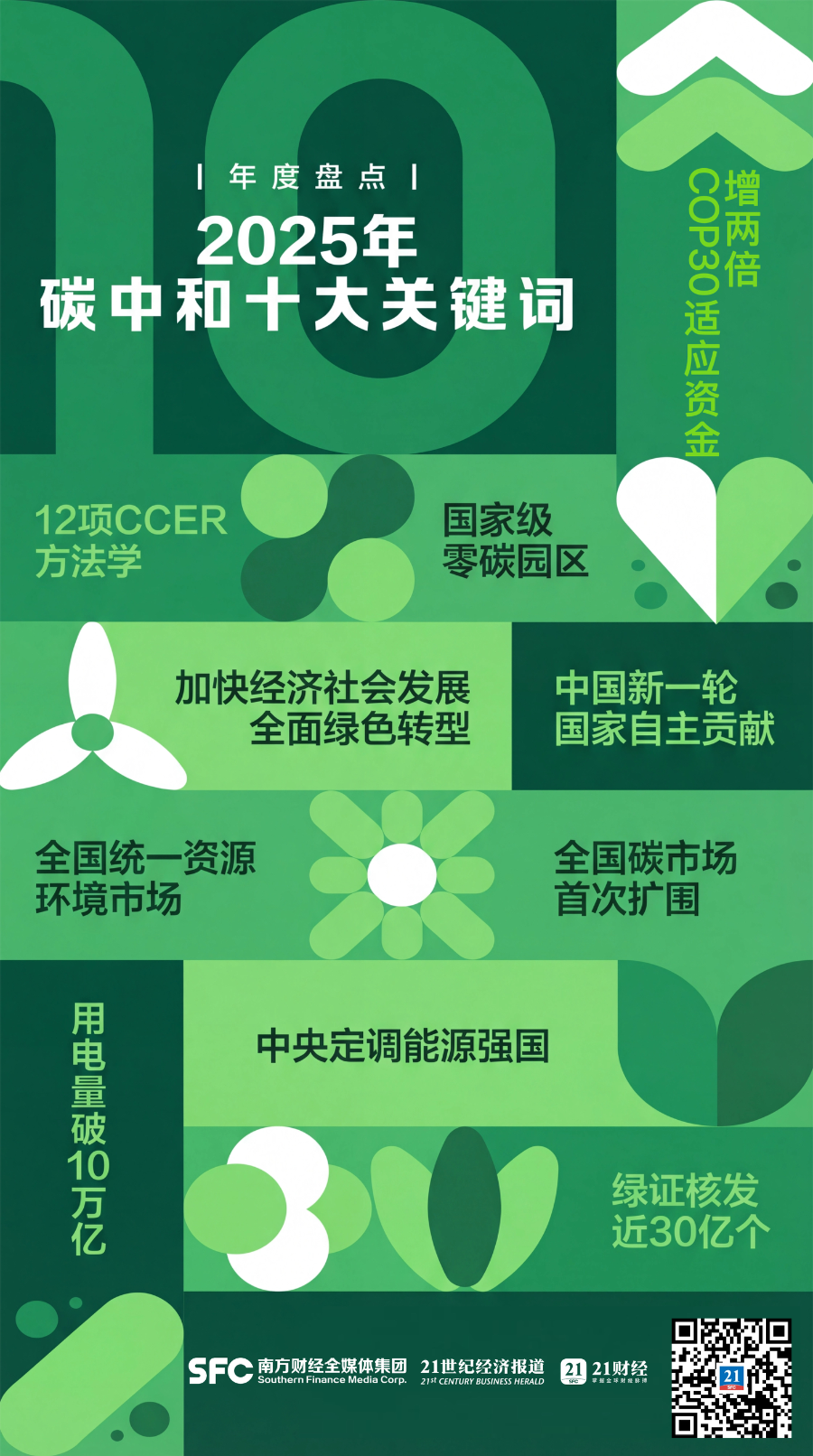
能源强国、新NDC……速览2025年碳中和十大关键词
2 1 Shi Ji Jing Ji Bao Dao· 2026-01-28 09:49
Group 1 - The core viewpoint of the articles emphasizes China's commitment to accelerating a comprehensive green transformation in its economy and society, with a focus on achieving carbon neutrality by 2035 [1][4][5] - The 20th Central Committee of the Communist Party of China has set "accelerating comprehensive green transformation" as a core task for the 14th Five-Year Plan, highlighting the importance of ecological security and green development [4][5] - Key mechanisms for carbon neutrality have made significant progress, including the expansion of the national carbon market to cover steel, cement, and aluminum industries, and the establishment of national zero-carbon parks [1][6][11][13] Group 2 - China's new round of Nationally Determined Contributions (NDC) aims for a 7%-10% reduction in greenhouse gas emissions by 2035, with non-fossil energy consumption reaching over 30% of total energy consumption [6][10] - The national unified resource and environmental market is being developed to enhance market efficiency and promote the marketization of resource and environmental factors [7][8] - The total electricity consumption in China surpassed 10 trillion kilowatt-hours in 2025, marking a significant milestone and reflecting the resilience and vitality of the economy [9][10] Group 3 - The energy power strategy emphasizes energy security, green transformation, and technological self-reliance, with a focus on seven key tasks for energy work in 2026 [10][11] - The first batch of national zero-carbon parks has been established, with 52 parks across various regions, focusing on low-energy, low-pollution, and high-value-added industries [11][12] - The national carbon market has expanded to include three major high-energy-consuming industries, significantly increasing the coverage of carbon emissions [13][15] Group 4 - The issuance of green certificates reached nearly 3 billion in 2025, with international recognition from the RE100 initiative, enhancing the credibility and market demand for Chinese green certificates [16][17] - Twelve new CCER methodologies were implemented in 2025, focusing on key areas for voluntary emission reductions, which is expected to activate the voluntary carbon market [18][19] - The COP30 conference resulted in a commitment from wealthy nations to double funding for climate change adaptation by 2035, although the omission of fossil fuel references in the final text raised concerns [20][21]
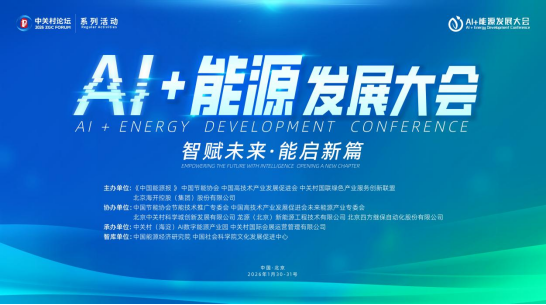
以智能科技助能源强国 以融合创新谱转型新篇——AI+能源发展大会即将启幕
Zhong Guo Neng Yuan Wang· 2026-01-27 02:32
大会由1场主论坛和2场闭门研讨会构成,主论坛将于中国能源报官方网站、微信、抖音等账号同步直 播。全方位展现AI与能源产业融合发展的最新成果与未来方向。圆桌对话环节将聚焦"大国能源治理现 代化""AI在传统能源与新能源领域的应用"等核心议题,邀请政产学研用代表深入研讨,凝聚发展共 识。同时,大会还将举行"AI+能源绿色产业万里行""中关村科学城AI数字能源产业园揭牌""2026年中国 —非洲经贸博览会(摩洛哥专场)"等多项重要启动仪式,推动一批重大合作项目落地,构建开放包容的 创新生态。两场平行闭门研讨会将分别围绕"商业模式落地与安全监管协同""数据治理关键问题与解决 方案"展开深度研讨,破解体制机制与技术壁垒,推动产业融合从"简单叠加"迈向"化学反应"。 此次AI+能源发展大会的举办,既是响应全球能源转型与科技革命的时代号召,也是落实国家战略、推 动高质量发展的关键举措。大会将打造常态化、品牌化的国际交流机制,促进创新成果规模化应用,全 面提升我国能源产业自主创新能力与国际竞争力,为实现高水平科技自立自强和产业安全提供有力支 撑。同时,大会也将向世界展示中国推进智慧能源建设、践行全球可持续发展承诺的坚定决心, ...
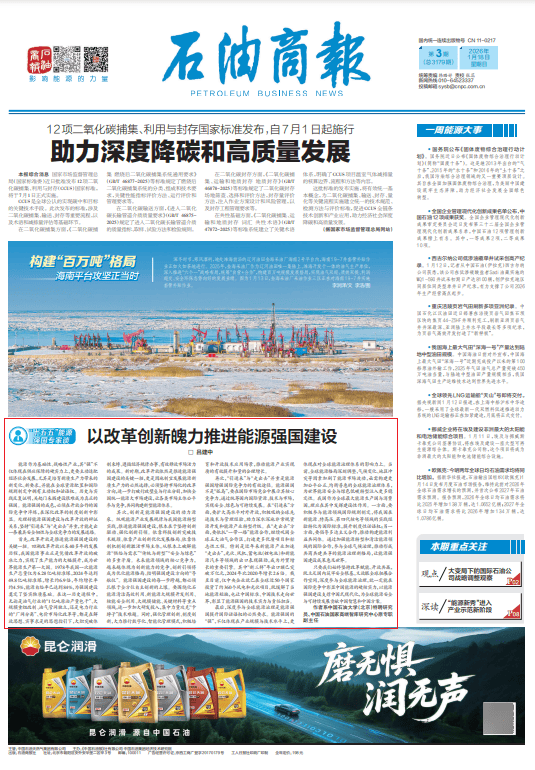
“十五五”能源强国专家谈 | 吕建中:以改革创新魄力推进能源强国建设
Sou Hu Cai Jing· 2026-01-19 09:47
Core Viewpoint - The construction of an energy power must adapt to the new changes and requirements brought by the cultivation of new productive forces, emphasizing the importance of open cooperation and international competition in achieving energy security and global competitiveness [1] Group 1: Reform and Opening Up - Reform and opening up are crucial for advancing the construction of an energy power, with significant production capacity increases since 1978, where primary energy production rose from 628 million tons of standard coal to 4.98 billion tons in 2024, a growth of approximately 6.9 times, with an average annual growth rate of about 4.5% [2] - The energy self-sufficiency rate has reached 84%, laying a solid material foundation for the construction of a strong nation [2] - Key reforms in the oil and gas industry, such as the "1 million tons of crude oil production quota" and the separation of power generation and grid management in the electricity sector, have effectively released market vitality [2] Group 2: Innovation as a Driving Force - Innovation is identified as the driving force for building an energy power, emphasizing the need for technological, industrial, and institutional innovations to resolve multiple contradictions in energy supply and demand [3] - Future competitiveness in the energy sector will increasingly depend on innovation capabilities, with a focus on clean and efficient use of fossil energy, large-scale development of renewable energy, and safety in nuclear energy [3] - Increased R&D investment is necessary to tackle critical technological challenges and promote digital and intelligent management models [3] Group 3: International Engagement - Balancing "bringing in" and "going out" is an effective way to enhance international competitiveness, with a focus on expanding high-level openness and absorbing global advanced technologies [4] - The export of new energy products, including photovoltaic, wind turbines, and lithium batteries, has become a significant driver of foreign trade growth, with exports of these "new three items" exceeding 1 trillion yuan in 2024, a 2.6 times increase compared to 2020 [4] - Central enterprises have invested in approximately 360 wind and photovoltaic projects across nearly 50 countries, showcasing China's technological strength and responsibility [4] Group 4: Global Energy Governance - Deep participation in global energy governance is essential for enhancing international discourse power, with a need for a fair and balanced global energy governance system [5] - As the largest energy producer and consumer, China should actively participate in the formulation of international energy rules and advocate for multilateral cooperation [5] - Strengthening international cooperation in energy transition and clean energy can contribute to global climate governance and promote a new energy governance framework that benefits all [5]
以强大电力引擎支撑AI时代竞技
Zhong Guo Neng Yuan Wang· 2026-01-18 03:05
Group 1 - China is projected to have the largest power supply capacity globally, with total installed capacity expected to exceed 3.8 billion kilowatts by 2025, accounting for one-third of the world's total [1][2] - The total electricity consumption in China is anticipated to surpass 10 trillion kilowatt-hours, exceeding the combined annual consumption of the EU, Russia, India, and Japan [1][2] - China has established the world's largest and most advanced power supply system, with a reliability rate of 99.924% and coverage of 99.95% of the country [1][2] Group 2 - The development of renewable energy in China has seen significant growth, with installed capacity for wind and solar power exceeding 1.7 billion kilowatts, historically surpassing thermal power capacity [2][3] - The "14th Five-Year Plan" emphasizes building a clean, low-carbon, safe, and efficient energy system, highlighting safety, cleanliness, and efficiency as core requirements [2][4] - China's energy transition aims to create a complex super system capable of large-scale integration of renewable energy through digital and intelligent means [2][4] Group 3 - The demand for AI computing power necessitates a robust and continuously upgraded power system, as AI model training is energy-intensive [3][4] - The establishment of large-scale green computing centers in renewable energy-rich regions is becoming an economically and environmentally friendly choice [3][4] - A stable and intelligent power grid is essential for ensuring uninterrupted computing services and improving overall energy efficiency [3][4] Group 4 - Challenges remain in the power industry, particularly regarding the intermittency of renewable energy and the high stability requirements of computing facilities [4] - Continuous improvement in flexibility, cross-regional coordination, and market mechanisms is necessary to address these challenges [4] - The modernization of the energy system is crucial for competitiveness in the AI era, with China focusing on solidifying its energy foundation alongside advancements in computing and chips [4][5] Group 5 - China's energy revolution aims to support future digital civilization, ensuring economic development and carbon neutrality while providing a new paradigm for global AI infrastructure [5]
能源强国建设“大家谈”︱建设能源强国支撑经济社会发展全面绿色转型
国家能源局· 2026-01-17 10:33
Core Viewpoint - The article emphasizes the importance of building an energy powerhouse as a strategic foundation for achieving socialist modernization and carbon neutrality goals in China, highlighting the energy sector's critical role in national security and economic development [3][4]. Group 1: Building an Energy Powerhouse - Building an energy powerhouse is essential for achieving carbon peak and carbon neutrality goals, with a focus on increasing electrification and green electricity supply [4]. - The energy sector is a significant contributor to GDP, with the clean energy industry accounting for over 10% of GDP, necessitating a robust industrial and supply chain [4]. - The transition to a new energy system is crucial for the comprehensive green transformation of the economy and society, driven by the third energy revolution and advancements in artificial intelligence [4]. Group 2: New Energy System as a Driving Force - A new energy system is vital for ensuring national energy security, given China's resource endowment of "rich coal, poor oil, and little gas," and the high dependence on oil and gas imports [5]. - China has significant potential for wind and solar energy, with exploitable capacities exceeding 100 billion kilowatts and 400 billion kilowatts, respectively, which can meet future electricity demands [5]. - The cost of renewable energy has significantly decreased, with onshore wind power costs dropping over 60% and solar power costs falling by 80% in the past decade, making renewables more economically viable than coal [5]. Group 3: Climate Change Response - The new energy system is a necessary response to climate change, with China's commitment to reducing greenhouse gas emissions by 7%-10% from peak levels by 2035 [6]. - The energy sector accounts for over 80% of national carbon emissions, with the power industry being the main battlefield for carbon reduction efforts [6]. Group 4: Development Pathways for Energy Powerhouse - The 14th Five-Year Plan is a critical period for accelerating the construction of a new energy system, focusing on reforms, technological innovation, green consumption, and overall exports [8]. - Recommendations include deepening electricity market reforms, enhancing technological innovation in the energy sector, and promoting green low-carbon consumption models [9][10].