通胀放缓

Search documents
2025年第二季度阿尔及利亚经济增长3.9%
Shang Wu Bu Wang Zhan· 2025-11-28 16:25
Economic Growth - Algeria's economy is projected to grow by 3.9% in Q2 2025, slightly above the same period last year [1] - The non-hydrocarbon sector is becoming the true engine of economic growth, with a growth rate of 5.3% [1] - Manufacturing is recovering with a growth of 6.4%, while trade has increased by 6.7% [1] - Agriculture, despite unstable production, has grown by 4.5% and remains a pillar of the economy [1] - The electricity and gas sector has seen a significant growth of 9.7% due to increased capacity and demand [1] - The hydrocarbon sector experienced a slight decline of 1.2% in production [1] Domestic Demand and Investment - Domestic demand and investment have become the new drivers of economic growth, with domestic demand increasing by 10.2%, up from 6.8% in the same period last year [1] - Investment has risen significantly by 12.4% [1] - Government spending has increased by 3.1%, higher than the 2.3% growth in the previous year [1] - Household consumption has slightly decreased by 3.9%, but the decline is less than the previous year's drop of 4.1% [1] Inflation and Consumer Behavior - Inflation has significantly slowed down to 1.1%, down from 4.1% in the same period last year [2] - Food prices have decreased by 1.4%, largely due to a drop in vegetable prices, although some food items like chicken and fruits have seen price increases of 19% and 21.6% respectively [2] - The overall price of processed foods has decreased by 0.7%, while children's clothing and school supplies have seen declines of 1.6% and 7.7% respectively [2] - The data indicates a diversification of the economy, but consumer spending growth is slowing, reflecting more cautious household consumption habits [2]
黄金早参丨通胀担忧减弱,降息预期持续升温,金价积累上涨动能
Sou Hu Cai Jing· 2025-11-28 01:21
Core Viewpoint - Gold prices surged past the $4200 mark due to rising expectations of a Federal Reserve rate cut and a weakening dollar, before slightly retreating to close at $4189.6 per ounce [1] Economic Indicators - The U.S. core PCE year-on-year growth is expected to decrease from 2.9% in August to 2.8% in September, based on the CPI and PPI inflation data [1] - Service inflation has stabilized or weakened after a slowdown in August, with significant declines in housing inflation; October rent fell by 0.31% month-on-month, marking the largest monthly drop in 15 years [1] - Prices for various categories in U.S. commodities and personal care products have shown a consistent slowdown or decline over several months, indicating a broader trend of easing inflation [1] Federal Reserve Outlook - According to CME's "FedWatch," there is an 86.9% probability that the Federal Reserve will cut rates by 25 basis points in December [1] - Analysts indicate that the risk of weakening employment in the U.S. economy currently outweighs the risk of rising inflation, suggesting the need for continued rate cuts to support employment and consumption among middle and low-income groups [1] - Most Federal Reserve officials supported three rate cuts within the year during the September economic forecast, viewing a December cut as a baseline scenario, despite existing divisions within the Fed [1]
高盛预判:美联储12月延续降息,黄金ETF华夏(518850)强势涨 1.68%
Mei Ri Jing Ji Xin Wen· 2025-11-25 08:03
Group 1: Gold Market Analysis - Gold prices reached a peak of $4,152 before retreating, currently trading around $4,140, with related products showing narrowed gains [1] - Strong investment demand is supporting the gold market, testing resistance near $4,150 per ounce, preventing significant declines [1] - Although gold prices have decreased approximately 6% from last month's historical high of around $4,360 per ounce, the pullback is relatively mild and has not triggered panic selling [1] Group 2: Federal Reserve Monetary Policy - Goldman Sachs predicts the Federal Reserve will implement a third consecutive rate cut in December, citing easing inflation and a cooling labor market as factors [2] - The firm anticipates further rate cuts in 2026, with the federal funds rate expected to fall to a range of 3.00% to 3.25% [2] - The baseline view is that the Federal Reserve will increasingly believe in the sustainability of the inflation slowdown trend, reducing the need for restrictive monetary policy [2]
2026年亚洲经济展望-从科技到非科技-复苏范围扩大
2025-11-25 05:06
Summary of the 2026 Asia Economics Outlook Conference Call Industry Overview - The report focuses on the economic outlook for Asia, particularly the recovery from technology to non-technology sectors, highlighting the expansion of recovery across various industries [3][4][13]. Key Points and Arguments 1. **Recovery Expansion**: The recovery is broadening, with non-technology exports rebounding, leading to improved capital expenditure momentum and better labor market conditions, which in turn boosts consumption [3][4]. 2. **GDP Growth Projections**: - Asia's real GDP growth is expected to rise from 4.3% in Q4 2025 to 4.7% in Q4 2026 [3][35]. - Nominal GDP growth for Asia (excluding China) is projected to rebound from 5.5% in Q4 2025 to 7.2% in Q4 2026 [3][35]. 3. **Inflation Trends**: - Inflation pressures are expected to ease in 2026, with overall inflation in Asia (excluding Japan) projected to rise slightly but remain within central banks' comfort zones [3][4][49]. - In China, inflation is anticipated to improve moderately, with a complete exit from deflation expected by 2027 [3][4][51]. 4. **Monetary Policy Outlook**: Central banks are nearing the end of the rate-cutting cycle, with most expected to maintain rates steady in 2026, except for Australia, which may need further easing [4][35]. 5. **Risks to Growth**: - Upside risks include stronger private sector spending in the U.S. and faster-than-expected adoption of AI, which could enhance productivity [4]. - Downside risks involve a potential mild recession in the U.S. that could negatively impact non-technology exports in Asia [4]. Additional Important Insights 1. **Technology vs. Non-Technology Exports**: - While technology exports have been strong, they account for only about 25% of total exports, limiting their spillover effects on the broader economy [3][13]. - Non-technology exports, which make up 75% of total exports, are expected to benefit from easing trade tensions and monetary easing effects [3][4][13]. 2. **Capital Expenditure**: - The improvement in non-technology exports is anticipated to positively influence capital expenditure, with growth expected to rise to 3.7% in H1 2026 and further accelerate to 4.4% in H2 2026 [27][29]. 3. **Consumer Spending**: - A dual recovery in exports and capital spending is expected to enhance labor market conditions, leading to a rebound in previously weak disposable income consumption [31][33]. 4. **Country-Specific Insights**: - **China**: Expected to see real GDP growth improve but nominal GDP growth remains subdued due to ongoing real estate weakness [45]. - **India**: Projected to have the strongest nominal GDP growth in Asia, driven by tax cuts and improved consumer sentiment [45]. - **Japan**: Expected to maintain strong nominal GDP growth supported by expansionary fiscal policies [46]. - **Korea**: Anticipated recovery in consumption driven by improved real income and fiscal support [46]. - **ASEAN**: Economic performance is expected to be mixed, with Malaysia and Singapore benefiting from non-tech export recovery, while Indonesia and Thailand face challenges [47]. Conclusion The 2026 Asia Economics Outlook presents a cautiously optimistic view of the region's economic recovery, driven by a shift from technology to non-technology sectors, with significant implications for GDP growth, inflation, and consumer spending across various Asian economies [3][4][35].

金价回调 一度重回4150美元关口|XIN消费
Sou Hu Cai Jing· 2025-11-25 04:22
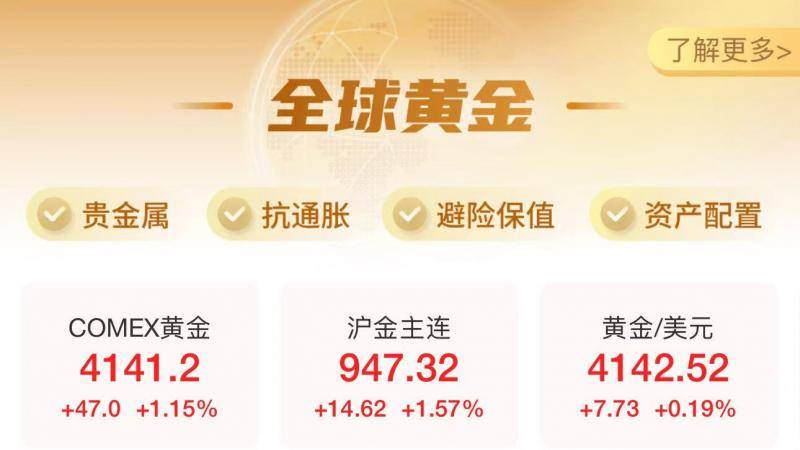
Group 1 - The core viewpoint of the articles indicates a strong expectation in the market for the Federal Reserve to implement a rate cut in December, with probabilities rising from 40% to 81% [2] - Spot gold prices experienced significant fluctuations, reaching a peak of $4155.89 per ounce before settling at $4142.52 per ounce, driven by the anticipation of monetary easing [2] - Analysts believe that the attractiveness of gold as a non-yielding asset has been fully activated due to declining real interest rates and moderate inflation expectations [2] Group 2 - Goldman Sachs predicts that the Federal Reserve will implement its third consecutive rate cut in December, citing slowing inflation and a cooling labor market as factors that allow for further monetary policy easing [3] - The bank also forecasts two additional rate cuts in March and June 2026, projecting the federal funds rate to fall to a range of 3.00% to 3.25% [3]

金价大逆转!美联储理事沃勒:主张在12月降息
Zhong Guo Ji Jin Bao· 2025-11-24 22:00
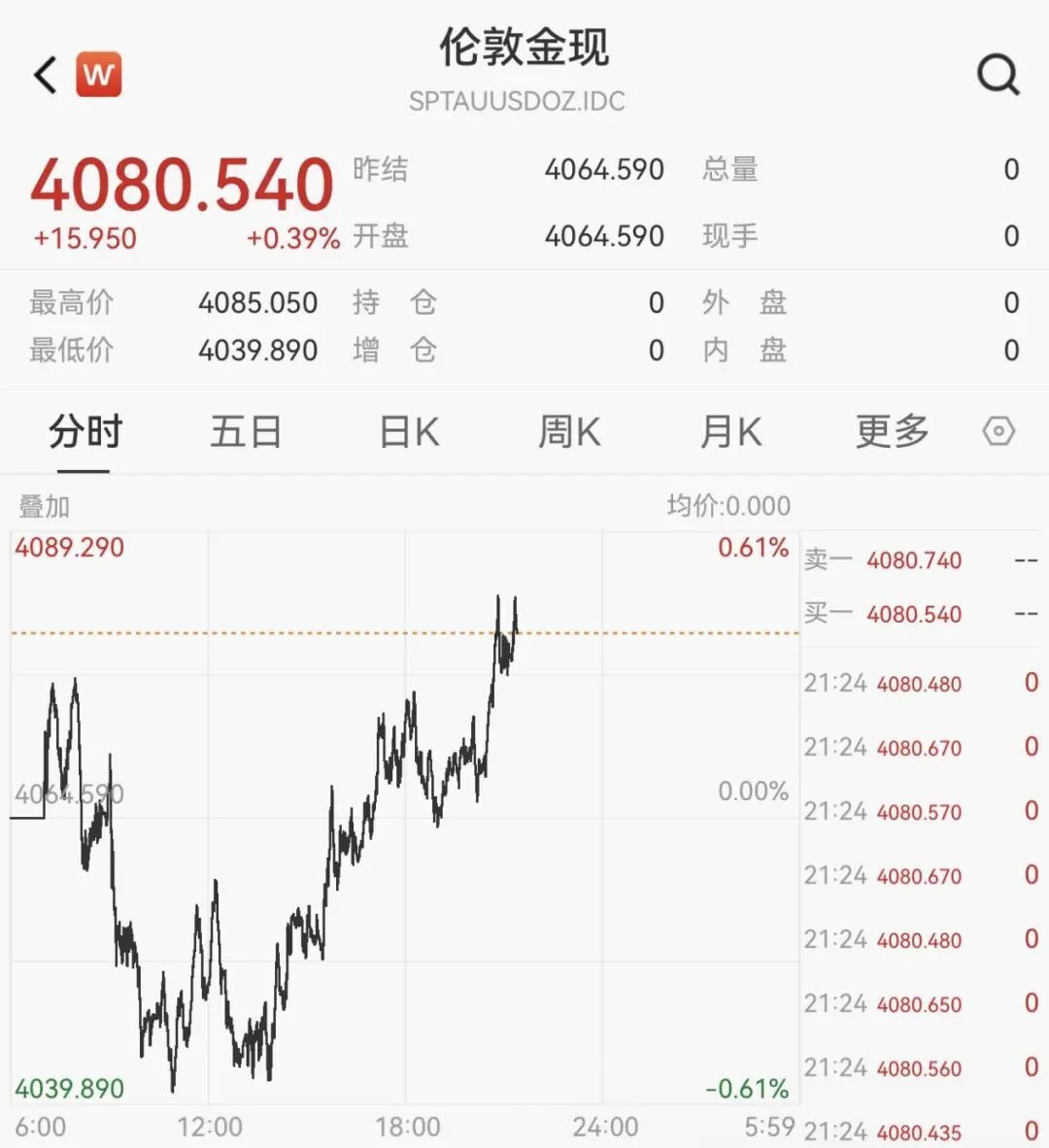
Core Viewpoint - Federal Reserve Governor Christopher Waller advocates for a rate cut in December, citing a weak labor market and stable inflation as key factors [2][3]. Group 1: Federal Reserve's Position - Waller emphasizes that the labor market shows signs of weakness, with no immediate indications of increased hiring from businesses [2]. - He expresses concern over the labor market and suggests that the employment data from September may be revised downward [2]. - The probability of a 25 basis point rate cut in December is reported at 69.4%, with a 30.6% chance of maintaining the current rate [3]. Group 2: Market Reactions - Following Waller's comments, spot gold prices surged nearly $10 per ounce, reaching $4080 per ounce [4]. - Goldman Sachs predicts that the Federal Reserve will implement a third consecutive rate cut in December, driven by slowing inflation and a cooling labor market [5]. - Goldman Sachs also forecasts two additional rate cuts in March and June 2026, bringing the federal funds rate to a range of 3.00% to 3.25% [5]. Group 3: Economic Perspectives - Generali Investments' economist Paolo Zanghieri suggests that the market's expectations for rate cuts may be overly optimistic, predicting only a 50% chance of a cut next month [6]. - Zanghieri believes that the market's anticipation of nearly four rate cuts next year is excessive, expecting only a total of 50 basis points by summer [6].
以色列央行行长Yaron:目前的经济条件适宜降息。降息的可能性得益于以下因素:供应限制减少、导致通胀放缓,本币谢克尔走强,风险
Sou Hu Cai Jing· 2025-11-24 19:35
Core Viewpoint - The current economic conditions in Israel are suitable for interest rate cuts, supported by reduced supply constraints and slowing inflation, alongside a strengthening currency and lower risk premiums [1] Group 1: Economic Conditions - Supply constraints have decreased, leading to a slowdown in inflation [1] - The Israeli currency, the shekel, has strengthened [1] - Risk premiums have lowered, indicating improved economic stability [1] Group 2: Interest Rate Outlook - The possibility of gradual interest rate cuts is anticipated, with two 25 basis point cuts expected by September 2026 [1] - It is unlikely that interest rates will return to zero [1] Group 3: Consumer Demand and Budgeting - Strong consumer demand continues to be observed despite geopolitical and economic uncertainties [1] - There is hope that the national budget for 2026 will focus on reducing expenditures, especially as most fighting in Gaza has concluded [1]
深夜,全线大涨!中国资产爆发!
证券时报· 2025-11-24 15:43
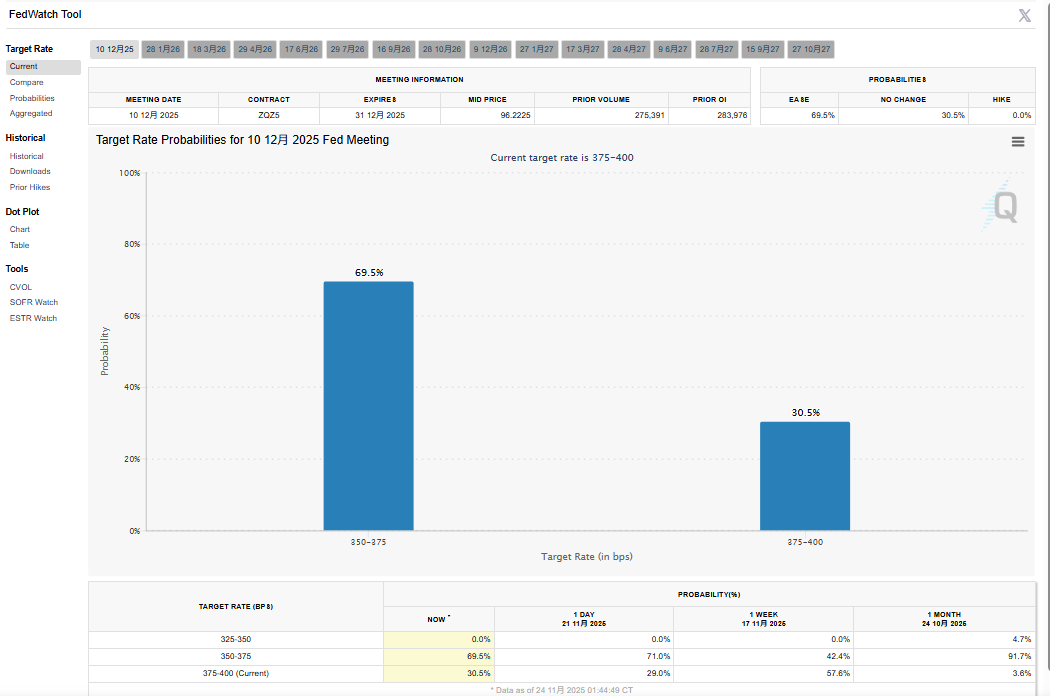
Market Performance - US stock market indices showed significant gains, with the S&P 500 rising by 1.03% and the Nasdaq Composite increasing by 1.78%. Notable stocks such as Google, Tesla, and Broadcom saw their gains exceed 5% [1] - The Nasdaq China Golden Dragon Index also experienced an increase of 2.38%, reaching 7692.89 points [2] Federal Reserve Outlook - Goldman Sachs predicts that the Federal Reserve will implement its third consecutive rate cut in December, citing easing inflation and a cooling labor market as factors allowing for further monetary policy relaxation [5] - The bank anticipates two additional rate cuts in March and June 2026, bringing the federal funds rate down to a range of 3.00% to 3.25% [5] - Goldman Sachs believes that the Fed will increasingly trust the trend of slowing inflation, suggesting that monetary policy does not need to remain at a restrictive level [6] Economic Conditions - Analysts from Goldman Sachs indicate that while the Fed may maintain a cautious tone in the short term, the trajectory of core prices and wage growth suggests a gradual transition to a neutral policy stance next year [7] - Since the Fed began its rate-cutting cycle, financial conditions have significantly eased, stabilizing corporate borrowing costs and household credit flow [8] - By mid-2026, Goldman Sachs expects the Fed to complete its first substantial easing cycle since the pandemic, with rates significantly lower than last year's peak but still above the ultra-loose levels of the past decade [8] Market Expectations - According to CME FedWatch data, the market currently estimates a 30.5% probability that the Fed will maintain rates in December, while the probability of a 25 basis point rate cut has risen to 69.5%, up from approximately 42% a week prior [9] Upcoming Economic Data - Key economic data that had accumulated during the US federal government shutdown will be released prior to the Fed's December meeting. This includes the October Producer Price Index (PPI) from the Labor Department and the core Personal Consumption Expenditures (PCE) price index, which is favored by the Fed, along with the revised third-quarter GDP data [10]


刚刚,金价大逆转,美联储降息大消息
Zhong Guo Ji Jin Bao· 2025-11-24 14:54
Core Viewpoint - Federal Reserve Governor Christopher Waller advocates for a rate cut in December, indicating a potential shift in monetary policy due to a softening labor market and manageable inflation levels [2][3]. Group 1: Federal Reserve's Position - Waller emphasizes that existing data shows little change since the last Fed meeting, with inflation not being a significant concern [3]. - He expresses worries about the labor market, noting a lack of signs indicating a hiring surge, and suggests that September employment data may be revised downward [3]. - The probability of a 25 basis point rate cut in December is reported at 69.4%, with a 30.6% chance of maintaining current rates [4]. Group 2: Market Reactions and Predictions - Following Waller's comments, spot gold prices surged nearly $10 per ounce, reaching $4080 per ounce [5]. - Goldman Sachs predicts that the Fed will implement a third consecutive rate cut in December, citing cooling inflation and a weakening labor market as justifications for further easing of monetary policy [7]. - Goldman Sachs also forecasts two additional rate cuts in 2026, bringing the federal funds rate to a range of 3.00% to 3.25% [7]. Group 3: Alternative Perspectives - Generali Investments' economist Paolo Zanghieri argues that market expectations for rate cuts may be overly optimistic, suggesting a 50% chance of a December cut and cautioning against the anticipated four rate cuts next year [8].
高盛最新研判:美联储12月将降息,明年再降两次!
Sou Hu Cai Jing· 2025-11-24 08:53
Group 1 - Goldman Sachs predicts that the Federal Reserve will implement a third consecutive rate cut in December, citing easing inflation and a cooling labor market as factors allowing for further monetary policy relaxation [1][2] - The firm anticipates that the Fed will lower rates two more times in 2026, bringing the federal funds rate to a range of 3.00%–3.25% [1] - Goldman believes that the trend of slowing inflation will persist, leading to a gradual transition of monetary policy towards a neutral stance next year [2] Group 2 - Since the Fed began its rate-cutting cycle, financial conditions have significantly eased, which has helped stabilize corporate borrowing costs and household credit flow [2] - Market expectations for a rate cut in December have increased, with the probability of a 25 basis point cut rising to 69.5%, up from approximately 42% a week prior [2] - In contrast, Morgan Stanley and JPMorgan have abandoned their predictions for a December rate cut following a stronger-than-expected non-farm payroll report, which showed an unexpected increase of 119,000 jobs in September [4]