AI硬件

Search documents
三大指数集体飘绿,算力及半导体板块跌幅居前;港股走强,阿里巴巴涨1.05%,千问将面向全球推出多款AI硬件产品 | 股市早盘
Mei Ri Jing Ji Xin Wen· 2026-02-27 04:27
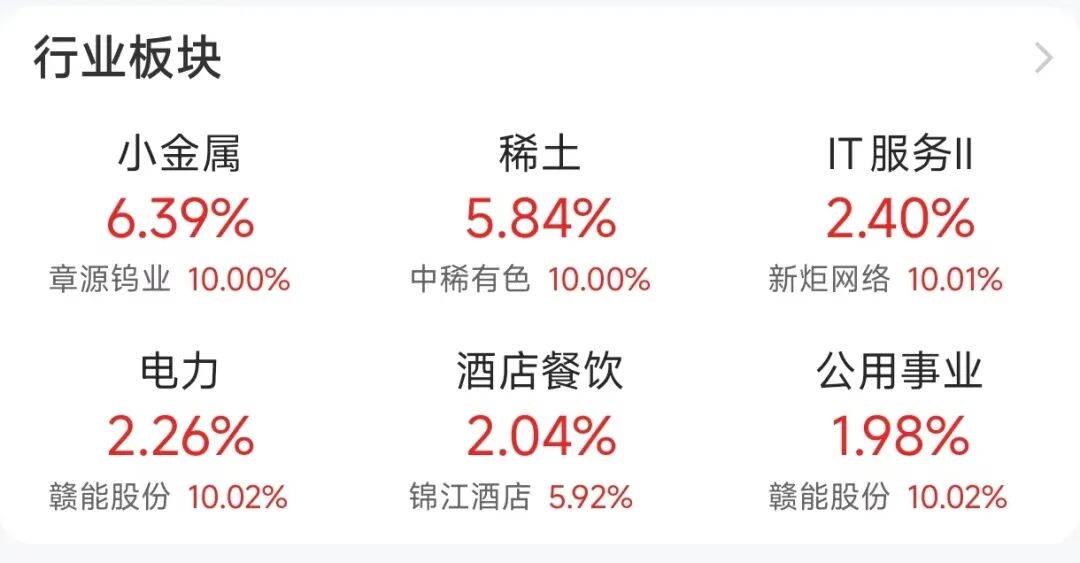
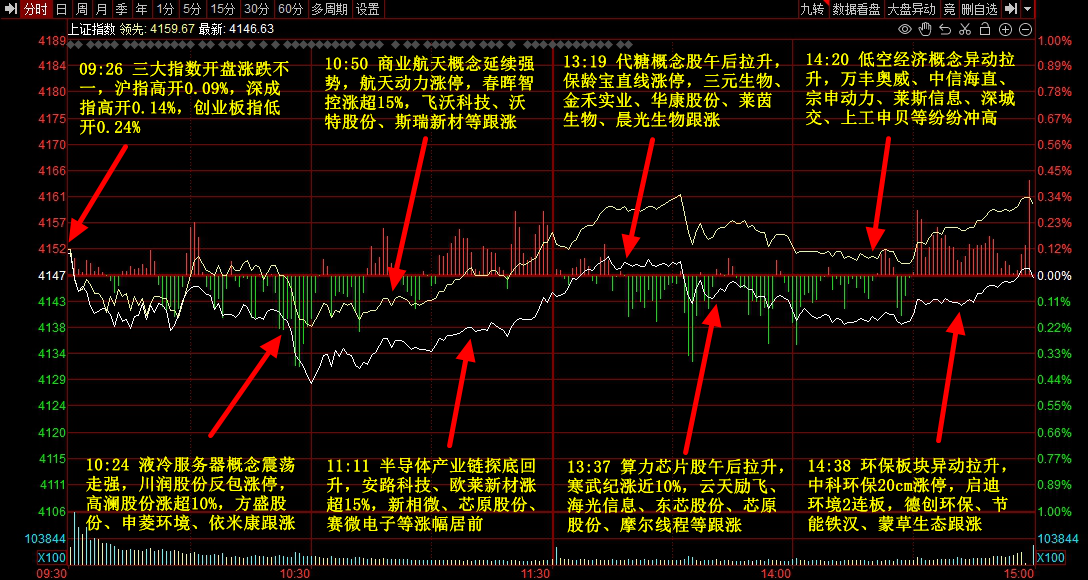
Market Overview - A-shares opened lower with the Shanghai Composite Index down 0.17%, Shenzhen Component down 0.68%, and ChiNext Index down 1.46% at midday [1] - The total trading volume in the market reached 1.60 trillion yuan, with over 2900 stocks declining [1] Sector Performance - The computing power and semiconductor industry chain experienced a pullback, with notable declines in stocks such as Shengmei Shanghai down 8.74%, Yuanjie Technology down 6.59%, and Saiwei Electronics down 6.02% [1] - The circuit board and CPO sectors led the decline, while high-voltage transmission, consumer electronics, and commercial aerospace themes weakened [1] - Small metals and rare earth sectors showed renewed strength, and IT services and power concept stocks rebounded [1] Investment Outlook - According to a report by Galaxy Securities, the construction of AI infrastructure is expected to remain strong through 2026, with a focus on increasing domestic localization rates [1] - Continued optimism is noted for investments in semiconductors and related components, including domestic computing chips, storage chip price increases, PCB, semiconductor manufacturing and equipment, advanced packaging, and semiconductor materials [1] Hong Kong Market - The Hang Seng Index rose by 0.75% and the Hang Seng Technology Index increased by 1.03% [3] - The trading volume in Hong Kong reached 121.83 billion yuan, with 870 stocks declining and 661 stocks rising [4] AI Hardware Development - Alibaba's AI assistant "Qianwen" is set to enter the AI hardware market, launching various products globally this year [6] - The first product, AI glasses, will be unveiled at the 2026 Mobile World Congress in Barcelona, with online and offline reservations starting on March 2 [6] - Additional products such as AI rings and AI headphones are also planned for release within the year [6]


千问将推出 AI 眼镜、指环等
Xin Lang Cai Jing· 2026-02-27 03:59
Group 1 - The core focus of the news is on Qianwen's launch of its first AI glasses at the 2026 Mobile World Congress in Barcelona, with online and offline reservations starting on March 2 [2] - Qianwen's app capabilities, such as food delivery and ride-hailing, will be integrated into its AI glasses and other terminal devices, aiming for a seamless transition from "finger interaction" to "scenario-based interaction" [2] - Qianwen's hardware strategy is part of a broader trend among global tech giants accelerating their investments in AI hardware, particularly in the hot market for AI smart glasses [2] Group 2 - In the first half of 2025, the global smart glasses market shipped 4.065 million units, marking a 64.2% year-on-year increase, with Meta holding a dominant 75.7% market share [3] - The top five companies in the global smart glasses market, apart from Meta, are all Chinese manufacturers: Xiaomi, Thunder, Xreal, and Viture [3] - Meta has launched multiple AI smart glasses, including the Ray-Ban Meta AI glasses, and is building a wearable hardware ecosystem that includes AI headphones and smartwatches [4] Group 3 - Apple is also advancing its AI wearable device lineup, developing AI smart glasses and other products to enhance its AI capabilities and create a comprehensive AI ecosystem centered around the iPhone [5] - OpenAI has reportedly formed a hardware team of over 2,000 people, planning to launch several consumer-grade hardware devices, including smart glasses and wearable pins, by late 2026 to 2027 [5]
和讯投顾杨玉杰:主线浮出水面,只盯刺少肉多的
Sou Hu Cai Jing· 2026-02-27 03:33
Core Viewpoint - The market is currently experiencing a limited adjustment, which is seen as a necessary consolidation before a larger rally begins. The significant opportunities are expected to emerge in March, driven by a combination of capital, policy, and sentiment resonance [1] Group 1: Market Trends - The current market adjustment is characterized as a "washing out" process before a major rally, with limited downside observed [1] - The main focus for investment should be on price increase themes, particularly in metals, non-ferrous, chemicals, and resource products, which are expected to remain the primary trend after a short-term consolidation [1] - The recent adjustment is viewed as an opportunity to enter the market, with the opening of the market showing signs of upward movement [1] Group 2: Investment Strategies - The cyclical price increase effect and the supportive policies from the upcoming March Two Sessions regarding stable growth and energy security are expected to bolster upstream resources [1] - AI hardware, including CPUs and semiconductors, has shown a rebound due to being oversold, but the risk-reward ratio for short-term investments is currently unfavorable, suggesting a wait-and-see approach for clearer market signals [1] - It is emphasized that market logic must be continuously validated, and investors should avoid blindly following trends, instead focusing on key signals and maintaining core investment themes to develop true investment skills this year [1]
领益智造:公司已于2026年1月以8.75亿元现金收购结合表决权委托取得了对Readore(立敏达)的控制权
Zheng Quan Ri Bao Wang· 2026-02-26 14:09
Core Viewpoint - The company Lingyi Zhi Zao (002600) has acquired control of Readore (立敏达) for 875 million yuan, enhancing its capabilities in the North American server liquid cooling market [1] Group 1: Acquisition Details - The acquisition was completed in January 2026, with a cash payment of 875 million yuan [1] - Readore has officially become a subsidiary of the company and is included in the consolidated financial statements [1] Group 2: Readore's Business and Market Position - Readore specializes in core thermal management hardware products, including server liquid cooling quick-disconnect connectors, liquid cooling manifolds, and phase change liquid cooling modules [1] - The company has established itself as a key supplier for leading clients in the North American computing power industry, ensuring continuous bulk deliveries [1] Group 3: Strategic Benefits of the Acquisition - The acquisition is expected to facilitate rapid access to technology reserves and customer certification qualifications in the North American server liquid cooling business [1] - It aims to reduce development costs and product validation cycles for server power-related products, thereby enriching the company's product matrix in the server segment [1] - The move is anticipated to enhance the scale and profitability of the company's AI hardware server segment [1]

A股五张图:狂撒欢乐豆
Xuan Gu Bao· 2026-02-26 10:36
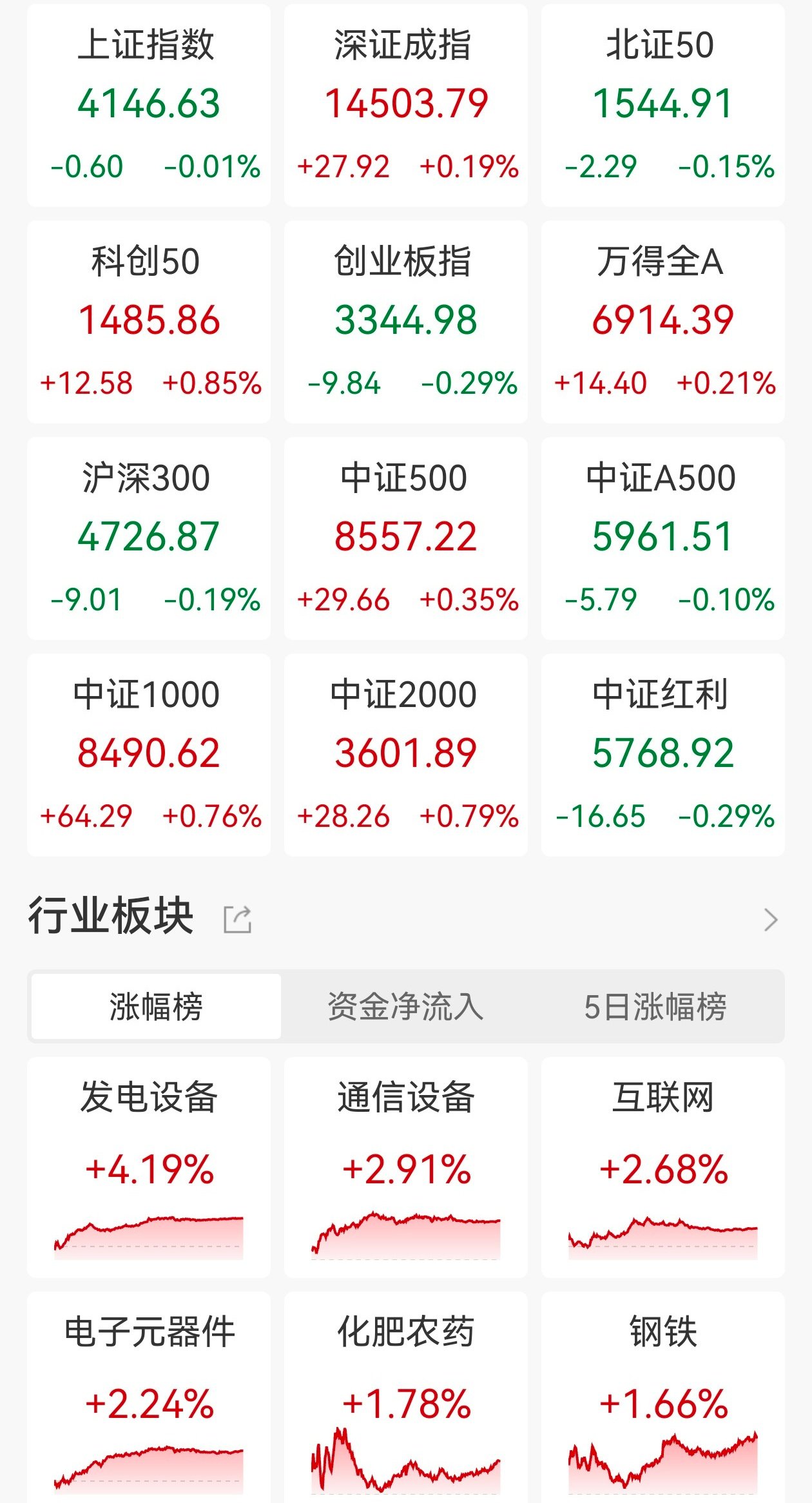
Market Overview - The AI hardware sector showed collective strength, with liquid cooling servers and PCB stocks experiencing significant gains, while the overall market saw mixed results with the Shanghai Composite Index and ChiNext Index down by 0.01% and 0.29% respectively, and the Shenzhen Component Index up by 0.19% [3][4] PCB Sector - The PCB sector was notably strong, with a 3.41% increase, highlighted by stocks such as Huadian Technology and Shenghong Technology reaching their daily limit up [7][8] - Huadian Technology saw a trading volume exceeding 10 billion, ranking among the top ten in the market, while Shenghong Technology surged nearly 10% in a single day, with a trading volume of approximately 25 billion [8] - The surge in Shenghong Technology's stock price is attributed to reports that NVIDIA will act as a cornerstone investor in its upcoming Hong Kong IPO, following its participation in NVIDIA's supply chain conference [8] Liquid Cooling Sector - The liquid cooling sector experienced a significant rise, with a final increase of 3.59%, driven by stocks like Jialitu and Chuanrun shares hitting their daily limit up [11] - The catalyst for this surge was NVIDIA's announcement of its Q4 fiscal year 2026 earnings, which exceeded Wall Street expectations, and the introduction of its fully liquid-cooled Vera Rubin computing system [11][12] Horse Racing Industry - Reports emerged about Guangzhou planning a 10 square kilometer horse racing industry cooperation zone, with the Hong Kong Jockey Club announcing international standard horse racing events in October [15] - However, the market reaction was muted, as the events will not include betting, leading to a lack of investor interest [15] Changchun High-tech - Changchun High-tech gained attention after its subsidiary, Gensci, received approval for a clinical trial of a drug aimed at treating specific pediatric conditions, leading to a surge in its stock price [17][21] - The stock's performance was influenced by media coverage, which highlighted the drug's potential, despite previous announcements having little impact on the market [18][20]
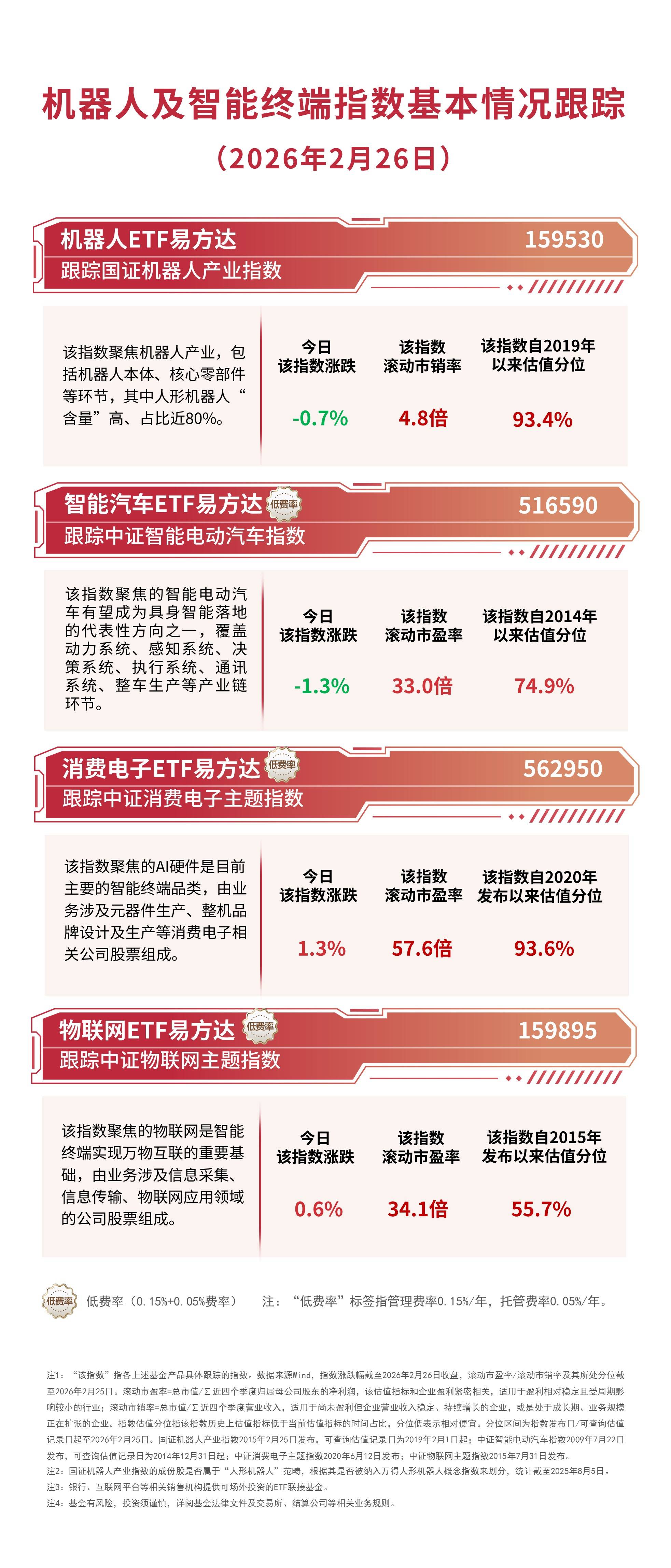
机器人产业指数低开低走,机器人ETF易方达(159530)连续12个交易日获资金布局
Sou Hu Cai Jing· 2026-02-26 10:33
Group 1 - The core viewpoint of the news highlights the performance of various indices related to consumer electronics, IoT, robotics, and smart electric vehicles, with the consumer electronics index rising by 1.3% and the IoT index increasing by 0.6%, while the robotics and smart electric vehicle indices fell by 0.7% and 1.3% respectively [1] - The robot ETF from E Fund (159530) has seen continuous investment for 12 trading days, accumulating over 1.3 billion yuan, indicating strong market interest in the robotics sector [1] - Huatai Securities reports that the robotics and smart driving sectors have shown strong performance around the Spring Festival, particularly with four major domestic robot companies gaining significant exposure during the Spring Festival Gala, leading to increased orders and capital attention [1] Group 2 - The smart electric vehicle index is expected to represent a significant direction for embodied intelligence, focusing on various aspects of the electric vehicle industry [3] - The AI hardware segment, which is a major category of smart terminals, includes companies involved in component production and complete product design and manufacturing within the consumer electronics sector [6]

千亿级龙头股大涨!A股前三
Zhong Guo Zheng Quan Bao· 2026-02-26 08:52
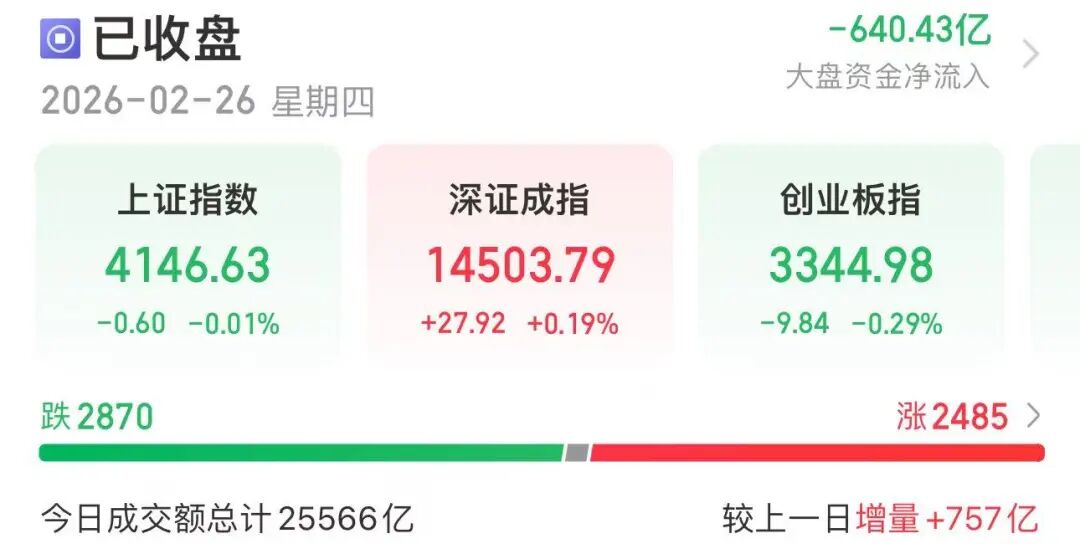
Market Overview - On February 26, A-shares showed mixed performance with the Shanghai Composite Index down 0.01%, Shenzhen Component Index up 0.19%, ChiNext Index down 0.29%, and the Sci-Tech Innovation Index up 1.29% [1] - The total trading volume reached 25,566 billion yuan, an increase of 757 billion yuan compared to the previous trading day [1] Sector Performance - AI hardware stocks surged due to Nvidia's better-than-expected earnings report and the ongoing AI wave, with significant gains in sectors such as CPO, copper cable high-speed connections, optical fibers, PCBs, liquid-cooled servers, and semiconductors [4][6] - Notable stocks included Cambrian (up nearly 10%), Tianfu Communication, and Hengtong Optic-Electric, with several stocks reaching historical highs [4] Key Stock Highlights - The top three stocks by trading volume were Shenghong Technology (247.03 billion yuan, up 7.75%), Cambrian (160.35 billion yuan, up 7.96%), and Tianfu Communication (156.56 billion yuan, up 6.01%) [4][5] - Shenghong Technology's latest market value is 275.07 billion yuan, Cambrian's is 492.87 billion yuan, and Tianfu Communication's is 281.44 billion yuan [4] Earnings Reports and Market Drivers - Cambrian's significant price increase was influenced by the earnings forecast from Haiguang Information, which expects a revenue growth of 62.91% to 75.82% year-on-year for Q1 2026, driven by increased R&D investment and enhanced product competitiveness [9] - Nvidia's Q4 earnings report showed revenue of $68.127 billion, exceeding market expectations, which positively impacted tech stocks in both the US and A-shares [10] - Global cloud service providers are projected to increase capital expenditures to over $710 billion by 2026, a 61% year-on-year increase, to enhance AI application infrastructure [10] Industry Trends - The storage chip market is expected to experience a price increase due to a widening supply-demand gap, which may persist throughout 2026 [10] - The shift from copper connections to optical interconnections is becoming crucial for achieving high-performance, high-bandwidth, low-latency AI networks, with ongoing technological advancements in optical modules [10][11]


沪指差点翻红 “古典算力”集体走强!开始发补偿金的白银LOF 3天涨近20%
Mei Ri Jing Ji Xin Wen· 2026-02-26 07:52
Market Overview - On February 26, the market showed mixed performance with the three major indices fluctuating. The Shanghai Composite Index fell by 0.01%, while the Shenzhen Component Index rose by 0.19%, and the ChiNext Index decreased by 0.29% [2] - The overall market saw over 2800 stocks decline, with a trading volume of 2.54 trillion yuan, an increase of 759 billion yuan compared to the previous trading day [2] Sector Performance - Strong sectors included PCB, CPO, liquid-cooled servers, and computing power chips, while the power sector also performed well. In contrast, the film and television, insurance, and real estate sectors experienced significant declines [2] - The average stock price across the A-share market reached 30.32 yuan, nearing a new high for 2026 and the highest in over a decade [4] AI Hardware and Semiconductor Trends - AI hardware stocks led the market gains, significantly influenced by Nvidia's strong earnings report, which exceeded market expectations. Nvidia reported Q4 revenue of $68.127 billion, up from $39.331 billion year-on-year [10] - The computing power chip sector saw notable increases, with companies like Cambrian Technology and Moore Threads experiencing substantial gains [12] - The semiconductor sector is expected to benefit from rising storage prices driven by real AI demand and limited cleanroom space, with reports indicating smartphone storage chip costs have risen over 80% year-on-year [12] Silver LOF Fund Developments - The Guotai Asset Silver LOF fund initiated a compensation scheme for investors affected by a valuation adjustment that caused a significant drop in net value. The scheme aims to provide full compensation to over 90% of individual investors impacted [14][16] - The fund's price has shown strong performance recently, with a cumulative increase of 19.43% over three trading days [16][17]

ETF收评 | AI硬件股全线领涨,中韩半导体ETF逼近涨停
Ge Long Hui· 2026-02-26 07:37
Market Performance - The three major A-share indices showed mixed results, with the Shanghai Composite Index down 0.01%, the Shenzhen Component Index up 0.19%, and the ChiNext Index down 0.29% [1] - The total trading volume in the Shanghai, Shenzhen, and Beijing markets reached 25,566 billion yuan, an increase of 757 billion yuan compared to the previous day, with over 2,400 stocks rising [1] Sector Performance - Leading sectors included CPO, copper cable high-speed connections, optical fibers, PCBs, liquid-cooled servers, wind power equipment, aviation engines, cultivated diamonds, semiconductors, and sugar substitute concepts, which saw significant gains [1] - Underperforming sectors included film and television, insurance, real estate, short drama games, complete automobiles, precious metals, duty-free shops, liquor, and retail, which experienced notable declines [1] ETF Performance - AI hardware stocks led the gains, with the China-Korea Semiconductor ETF nearing a limit-up, while various communication ETFs saw increases of 3.41%, 2.78%, 2.58%, and 2.54% [1] - The electric grid sector also performed well, with the electric grid ETF and electric grid equipment ETF rising by 3.23% and 2.91%, respectively [1] - The medical sector faced declines, with the Hang Seng Medical ETF and other related ETFs dropping over 3%, while the real estate ETF fell by 3% [1]
A股收评:三大指数涨跌不一,沪指接近平收,CPO概念、PCB板块爆发
Ge Long Hui· 2026-02-26 07:09
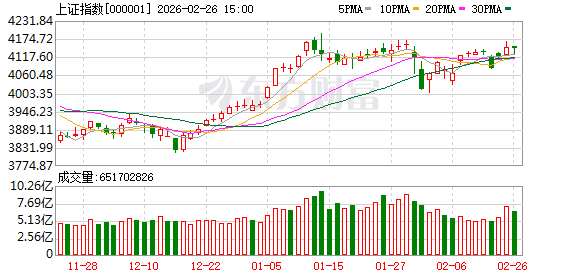
Market Overview - The A-share market showed mixed performance today, with the Shanghai Composite Index down 0.01% to 4146 points, the Shenzhen Component Index up 0.19%, and the ChiNext Index down 0.29% [1] - The total market turnover reached 2.56 trillion yuan, an increase of 75.7 billion yuan compared to the previous trading day, with over 2800 stocks declining [1] Sector Performance - Nvidia's earnings exceeded expectations, leading to a surge in AI hardware sectors, including CPO concepts, copper cable high-speed connections, and liquid-cooled servers, with stocks like Fenghuo Communication, Hengtong Optic-Electric, and Zhongtian Technology hitting the daily limit [1] - The PCB and electronic components sectors also saw gains, with stocks like Huhua Electronics reaching the daily limit [1] - The controllable nuclear fusion sector strengthened, with stocks like Dongfang Electric hitting the daily limit [1] - Fertilizer, wind power, and rare metals sectors performed well, showing significant gains [1] - Conversely, the real estate sector opened high but closed low, with Hualian Holdings dropping over 6% [1] - The film and media sector continued to decline, with Bona Film Group hitting the limit down [1] - The aquaculture, tax refund stores, and oil and petrochemical sectors experienced the largest declines [1] Capital Inflow - The top sectors by capital inflow included power generation equipment, communication equipment, and the internet, with respective five-day gains of 4.19%, 2.68%, and 2.91% [2] - Other notable sectors with positive performance included electronic components, fertilizers and pesticides, and steel, with gains of 1.78%, 2.24%, and 1.66% respectively [2]