
产业协同

Search documents
东杰智能股权变更,遨博智能韩永光成实际控制人
Qi Lu Wan Bao Wang· 2025-08-27 06:42
Core Viewpoint - The actual controller of Dongjie Intelligent has changed from the Zibo Finance Bureau to the individual Han Yongguang, following a significant equity transfer involving a transaction price of 1.62 billion yuan [2][5]. Group 1: Company Control Changes - Dongjie Intelligent's actual controller has been changed to Han Yongguang from the Zibo Finance Bureau [2]. - The change in control is a result of the transfer of 99% of the fund shares of Zibo Zhanzheng Hongsong Equity Investment Fund Partnership to Hainan Heping Investment Co., Ltd. for 1.62 billion yuan [5]. Group 2: Corporate Leadership - Han Yongguang has been elected as the chairman of the ninth board of directors of Dongjie Intelligent, succeeding the former chairman Xing Chengliang [5]. - Han Yongguang is also known for his roles as CEO of Aobo (Beijing) Intelligent Technology Co., Ltd. and chairman of Aobo (Shandong) Intelligent Robot Co., Ltd. [5]. Group 3: Financial Performance - In the first half of 2025, Dongjie Intelligent achieved operating revenue of 539 million yuan, representing a year-on-year increase of 24.90% [5]. - The company reported a net profit attributable to shareholders of 5.95 million yuan, marking a year-on-year growth of 113.96% [5]. Group 4: Industry Position and Collaborations - Aobo (Shandong) Intelligent Robot Co., Ltd. has established deep collaborations with over 300 companies, including BYD, Chery, Geely, and Huawei, and has been the leading supplier in collaborative robots in China for five consecutive years [6][7]. - Dongjie Intelligent has also made significant investments in robot research and application, focusing on warehouse logistics robots, industrial arms, and service robots, indicating strong industry synergy with Aobo [7].


康希通信: 康希通信关于参与投资私募基金暨关联交易的公告
Zheng Quan Zhi Xing· 2025-08-26 16:40
Core Viewpoint - The company plans to invest RMB 30 million in the Shanghai Haiwang Hezhong Private Equity Fund, which focuses on growth and mature enterprises in key industries such as integrated circuits, high-end manufacturing, and biomedicine, aligning with the company's main business [1][2][3] Investment Overview - The investment will be made as a limited partner (LP) in the Haiwang Hezhong fund, which has a total subscription amount of RMB 2.11 billion, with the company's contribution representing 1.4218% of the total [3][7] - The investment is intended to leverage the expertise and resources of professional investment institutions to optimize the company's investment structure and capture industry opportunities [2][15] Related Party Transactions - The investment involves a related party transaction as Shanghai Pudong Haiwang Private Fund Management Co., Ltd., the general partner (GP) of the fund, is associated with the company through an external director [1][4] - The transaction does not constitute a major asset restructuring as defined by regulations [1][4] Decision and Approval Process - The investment was approved by the company's board of directors and independent directors, with the related party abstaining from the vote, and does not require shareholder approval [2][17] - The independent directors believe the investment will enhance the company's ecological layout in the industry chain and is conducted on fair and reasonable terms [17] Fund Management and Structure - The fund will have a lifespan of 8 years, with a 5-year investment period followed by an exit period, during which the GP can extend the investment or exit periods under certain conditions [7][13] - The management fee for the fund is set at 2% per year, based on the partners' subscribed capital during the investment period [9][10] Financial Impact - The investment will not be consolidated into the company's financial statements and is expected to have no adverse impact on the company's operations or financial health [15][16] - The company will fulfill its capital contribution obligations as per the GP's payment notice [3][16]
康希通信: 招商证券股份有限公司关于格兰康希通信科技(上海)股份有限公司参与投资私募基金暨关联交易的核查意见
Zheng Quan Zhi Xing· 2025-08-26 16:40
招商证券股份有限公司 关于格兰康希通信科技(上海)股份有限公司 参与投资私募基金暨关联交易的核查意见 招商证券股份有限公司(以下简称"招商证券"或"保荐机构")作为格兰 康希通信科技(上海)股份有限公司(以下简称"康希通信"或"公司")首次 公开发行股票并上市持续督导的保荐机构,根据《证券发行上市保荐业务管理办 法》 《上海证券交易所科创板股票上市规则》 《上海证券交易所上市公司自律监管 指引第 11 号——持续督导》 《上海证券交易所科创板上市公司自律监管指引第 1 号——规范运作》等相关法律、法规和规范性文件的规定,对康希通信参与投资 私募基金暨关联交易的事项进行了核查,具体情况如下: 一、参与投资私募基金暨关联交易概述 (一)基本情况 为借助专业投资机构的经验和资源,拓宽投资方式和渠道,把握公司所在行 业的投资机会,优化公司投资结构,实现产业协同。公司作为有限合伙人(LP) 参与投资上海海望合纵私募基金合伙企业(有限合伙) (以下简称"海望合纵")。 公司拟以自有资金出资人民币 3,000.00 万元,出资金额占海望合纵总认缴出 资额的 1.4218%。 本次投资中公司未对其他投资人承诺保底收益或进行退 ...

中期业绩扭亏为盈,中国儒意如何凭产业协同战略“深蹲起跳”?
Zhi Tong Cai Jing· 2025-08-26 03:09
Core Viewpoint - The company has demonstrated significant financial improvement in the first half of the year, with revenue reaching RMB 2.206 billion, a year-on-year increase of 20%, and a net profit of RMB 1.228 billion, successfully turning a profit, with adjusted net profit growing by 140% to RMB 1.303 billion, indicating a substantial enhancement in profitability [1] Group 1: Business Performance - The company's three core businesses—film, streaming media, and gaming—are working in synergy, driving substantial growth [2][7] - The content production segment generated RMB 570 million in revenue, with several popular films contributing significantly to the company's performance [2] - The gaming segment has become a new growth engine, with revenue of RMB 1.21 billion, reflecting a 40% year-on-year increase [5][6] Group 2: Future Growth Drivers - Multiple high-quality films are set to be released, providing strong momentum for future earnings growth [3] - The company is actively integrating AI technology into its operations, enhancing user experience and content personalization [4][6] - The company has made strategic investments in emerging sectors such as trendy toys and financial technology, expanding its business landscape [7][8] Group 3: Strategic Initiatives - The acquisition of 30% stake in Kuaiqian for RMB 240 million marks the company's entry into the third-party payment and fintech sector, enhancing its ecosystem [8][9] - The collaboration with 52TOYS in the trendy toy sector aims to tap into the growing "Guzi economy" and strengthen emotional connections with younger audiences [7] - The company is focused on creating a closed-loop of "content payment + fintech," which is expected to enhance its operational capabilities and drive new revenue streams [9]
中期业绩扭亏为盈,中国儒意(00136)如何凭产业协同战略“深蹲起跳”?
智通财经网· 2025-08-26 03:07
Core Viewpoint - The company has reported strong financial performance for the first half of the year, with revenue of RMB 2.206 billion, a year-on-year increase of 20%, and a net profit of RMB 1.228 billion, marking a significant turnaround from losses, with adjusted net profit rising 140% to RMB 1.303 billion, indicating a substantial improvement in profitability [1] Group 1: Business Performance - The content production segment generated revenue of RMB 570 million, driven by several successful film releases, including "Detective Chinatown 1900," which achieved a box office of RMB 3.6 billion, and "The Lychee of Chang'an," which reached RMB 647 million [2] - The game segment has become a new growth engine, with revenue of RMB 1.21 billion, reflecting a 40% year-on-year increase, supported by the successful launch of multiple new games [5] - The company is actively expanding into new business areas such as trendy toys and financial payments, enhancing its growth potential [7][8] Group 2: Strategic Initiatives - The company is focusing on synergistic effects among its three core businesses: film, streaming, and gaming, which are driving significant growth [1][5] - The company has made strategic investments, including acquiring a 30% stake in Kuaiqian for RMB 240 million, entering the third-party payment and fintech sector, which is expected to enhance its ecosystem [8][9] - The company is leveraging AI technology across its operations, improving content personalization and user experience in both streaming and gaming [6][4] Group 3: Future Outlook - The company anticipates further revenue growth in the second half of the year, supported by the release of several new films and games [1][2] - The integration of payment solutions with existing services is expected to create new revenue streams and enhance operational efficiency [9] - The overall strategic layout is clear, with significant collaborative effects expected to drive sustainable growth and open new avenues for profitability [9]
陕天然气(002267):引入战略投资者增强产业协同,调价落地公司业绩有望稳健增长
Xinda Securities· 2025-08-26 01:35
Investment Rating - The investment rating for the company is "Accumulate" [1] Core Views - The introduction of strategic investors is expected to enhance industrial synergy and stabilize the company's performance, leading to steady growth [4] - The company's long-distance pipeline business remains stable, while the decline in net profit is primarily due to reduced profitability in urban gas operations [2] - The company is positioned as a core gas operator in Shaanxi Province, with its long-distance pipeline assets providing a solid profit foundation [4][7] Financial Performance Summary - In the first half of 2025, the company achieved total revenue of 4.85 billion yuan, a year-on-year decrease of 1.47%, and a net profit attributable to shareholders of 509 million yuan, down 12.62% [1] - The long-distance pipeline business contributed 3.231 billion yuan in revenue, a slight increase of 0.04%, while urban gas revenue fell by 4.35% to 1.619 billion yuan [2] - The company expects a reduction in revenue of approximately 262 million yuan and a decrease in net profit of about 223 million yuan due to a recent price adjustment in pipeline transportation [5] Future Outlook - The company has two major pipelines under construction, which are expected to significantly enhance its gas transmission capacity upon completion [5] - The company maintains a high dividend payout ratio, with expectations of continued strong returns to shareholders [7] - The projected net profit for 2025 is estimated at 707 million yuan, with earnings per share (EPS) of 0.64 yuan [7][6]

精耕时代,潮涌嘉禾:产业未来大会邀您共赴产业变革新浪潮
3 6 Ke· 2025-08-25 07:17
Group 1 - The global economic landscape and industrial ecology are undergoing profound changes, transitioning from a period of extensive growth to a "precision farming era" that emphasizes depth, collaboration, and long-term value [2] - The upcoming 2025 conference hosted by 36Kr in Xiamen will focus on five core sectors: artificial intelligence, low-altitude economy, advanced manufacturing, new energy, and consumer goods, aiming to shape the future of China's industrial development [2][4] - The concept of "patient capital" is emerging as a driving force in China's venture capital market, with a shift from mere financial returns to building a sustainable ecosystem for innovative enterprises [3] Group 2 - The 2025 conference aims to create a high-impact industrial event by integrating resources and attracting significant capital, enhancing project quality and efficiency [5] - The agenda will focus on the collaboration between government, capital, and industry to address pain points and bottlenecks in industrial development [6] - The term "嘉禾" (Jiahe), meaning thriving rice, symbolizes hope and resilience, reflecting the current need for meticulous efforts in the market [7]

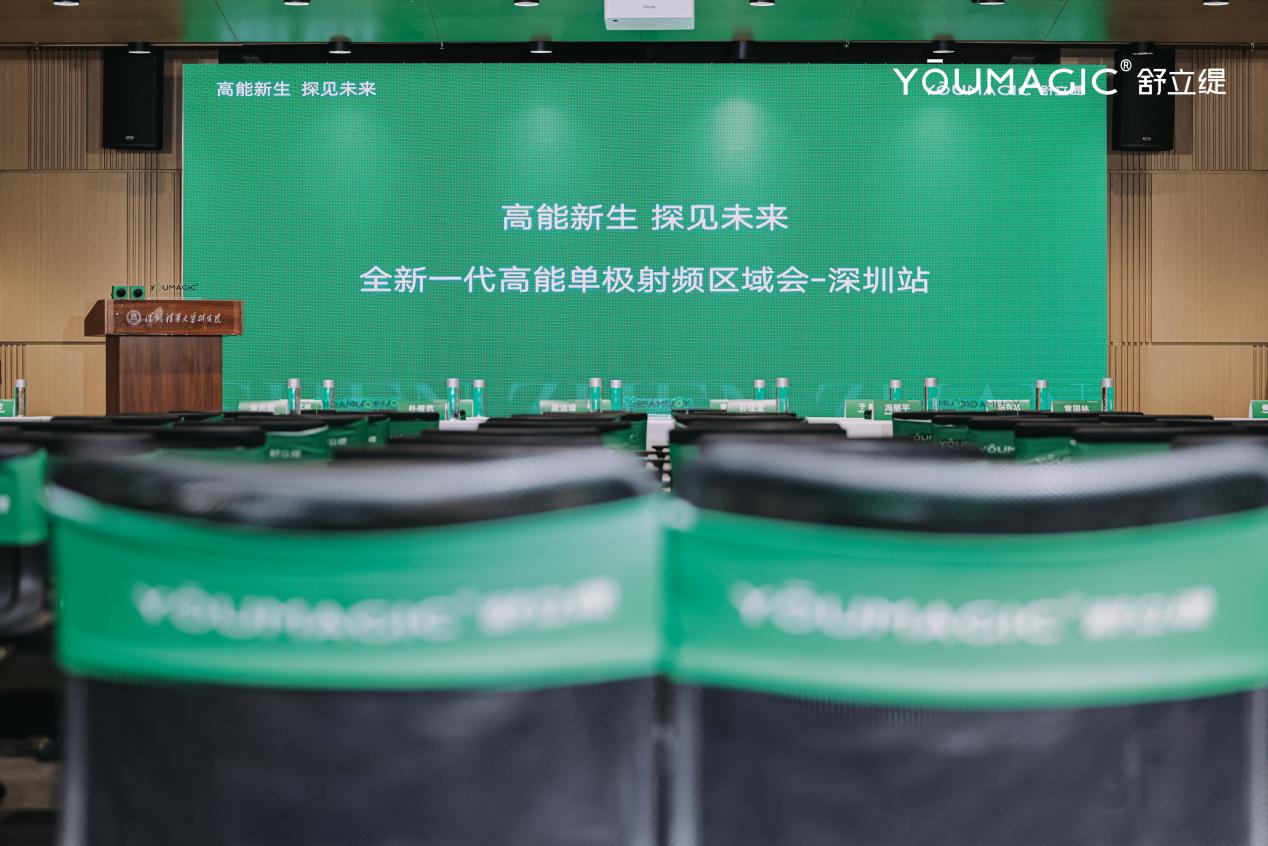
以清华底色构筑价值,YOUMAGIC舒立缇高能单极射频深圳区域会高能举办
Sou Hu Wang· 2025-08-25 03:25
Core Insights - The anti-aging market is undergoing a qualitative transformation, with consumers increasingly demanding precision, comfort, and effectiveness in treatments, leading to a shift towards a "value war" in the industry [1][3][5] - The YOUMAGIC Shuliti event held in Shenzhen aimed to explore new possibilities in the anti-aging field through innovation, gathering medical authorities, industry leaders, and experienced operators to share strategic insights and innovative technologies [1][3][18] Industry Trends - The anti-aging demand is driven by changing population demographics in China, with "self-care consumption" becoming a core growth driver, and consumers evolving towards a focus on professionalism, personalization, and segmentation [3][5] - The industry is facing stricter regulations, making "technical barriers, focusing on subcategories, and institutional collaboration" the key directions for development [3][5] Company Strategy - YOUMAGIC Shuliti is committed to a more focused and in-depth strategic layout in the anti-aging sector, aiming to create a full-chain closed loop of "technological innovation → clinical evidence → market empowerment" [5][18] - The brand plans to empower institutions to enhance conversion rates and shift the industry from "fragmented competition" to "ecosystem win-win" [5][18] Technological Innovations - YOUMAGIC Shuliti utilizes a capacitive monopolar radiofrequency product operating at a frequency of 6.78 MHz and a power of 175 W, allowing penetration of 6-8 mm into the skin to achieve skin tightening and wrinkle improvement [6][9] - The technology includes a 100 ms flash pulse technology and intelligent temperature control, enhancing comfort without sacrificing treatment effectiveness [8][9] Clinical Applications - Clinical insights indicate that monopolar radiofrequency effectively promotes collagen fiber regeneration and remodeling, addressing the fundamental issue of facial aging [9][11] - The treatment can achieve satisfactory improvement with minimal discomfort, allowing for flexible and personalized treatment options [11][9] Market Dynamics - The industry is entering an era focused on deepening existing customer relationships, with YOUMAGIC Shuliti positioned as a potential "explosive product" that can drive growth by pairing with hydration projects [15][18] - The brand has accumulated significant online presence, which can be leveraged to enhance traffic and conversion rates [15][16] Collaborative Efforts - The event highlighted the importance of platform collaboration to enhance conversion pathways, with insights on targeting male consumers and utilizing social media for decision-making [16][18] - Institutions are encouraged to focus on data-driven marketing strategies to improve conversion rates at every step of the customer journey [16][18]
创历史同期新高!今年前七月京津冀区域出口突破八千亿元
Bei Jing Ri Bao Ke Hu Duan· 2025-08-24 07:56
Core Insights - The Beijing-Tianjin-Hebei region's import and export value reached 2.64 trillion yuan in the first seven months of the year, accounting for 10.3% of China's total import and export value [1][3] - Exports from the region surpassed 800 billion yuan for the first time, reaching 813.43 billion yuan, a year-on-year increase of 3.6%, marking a historical high for the same period [1][3] - The region's exports have shown consistent growth, with a 9.8% increase in July, reaching 124.2 billion yuan, the highest monthly export scale and growth rate of the year [3] Export Performance - The region has experienced four consecutive months of export growth from April to July, with monthly exports exceeding 120 billion yuan [3] - Private enterprises continue to dominate foreign trade, with 33,000 private enterprises achieving export performance, a 12.8% increase, representing 88.5% of total exporting enterprises [3] - Mechanical and electrical products accounted for 56.4% of the region's exports, with notable growth in automotive parts (13.7% increase) and shipbuilding (142% increase) [3] Trade Partners and Market Expansion - The region's exports to countries involved in the Belt and Road Initiative reached 471.11 billion yuan, a 6.5% increase, making up 57.9% of the region's total exports [4] - Exports to ASEAN, the Middle East, Africa, and South America grew by 2.1%, 7.5%, 33.8%, and 13.2% respectively [4] Collaborative Efforts - The three provinces have closely collaborated in fields such as information technology, biomedicine, and high-end equipment, leveraging their respective advantages [3] - Exports from Beijing in electronic technology and integrated circuits grew by 13.4% and 4.5%, while Tianjin's shipbuilding and medical material exports increased by 174% and 2.6% respectively [3]

作价319.49亿元!焦作万方拟收购三门峡铝业99.4375%股权
Bei Jing Shang Bao· 2025-08-24 04:17
Group 1 - The core point of the news is that Jiaozuo Wanfang plans to acquire a 99.4375% stake in Sanmenxia Aluminum through a share issuance, with the transaction valued at 31.949 billion yuan, constituting a major asset restructuring and related party transaction [1] - The acquisition will allow Jiaozuo Wanfang to expand its business in the aluminum industry, as Sanmenxia Aluminum will become a subsidiary, enhancing the company's upstream operations and creating a complete aluminum material industry chain from alumina to electrolytic aluminum and aluminum processing [1] - This strategic move is expected to improve the industry synergy effect for Jiaozuo Wanfang [1] Group 2 - On August 22, Jiaozuo Wanfang's stock price fell by 0.33%, closing at 9.2 yuan per share, with a total market capitalization of 10.97 billion yuan [2]
