外汇储备

Search documents
黄金储备九连涨,全球央行购金态势延续,金价或易涨难跌
Hua Xia Shi Bao· 2025-08-08 07:45
Core Viewpoint - The People's Bank of China (PBOC) has increased its gold reserves for the ninth consecutive month, reaching 7.396 million ounces as of the end of July, with a month-on-month increase of 6,000 ounces, although the pace of increase has slowed [2][3]. Group 1: Gold Reserves - As of July 2023, China's gold reserves stand at 7.396 million ounces, marking a month-on-month increase of 6,000 ounces [2]. - This increase is the ninth consecutive month of growth, but the monthly increment has been low for five months [2]. - The PBOC's gold accumulation is seen as a response to changing global political and economic conditions, with expectations that gold prices may remain high for an extended period [2][5]. Group 2: Global Central Bank Trends - In Q2 2023, global central banks net purchased 166 tons of gold, a year-on-year decrease of 21% in the rate of accumulation [3][6]. - Despite the slowdown in gold purchases, central banks are expected to continue accumulating gold due to ongoing economic and geopolitical uncertainties [3][6]. - A survey indicated that 95% of central banks anticipate increasing their gold reserves in the next 12 months, with no central banks expecting a decrease [6]. Group 3: Foreign Exchange Reserves - As of July 2023, China's foreign exchange reserves totaled $32,922 billion, a decrease of $25.2 billion or 0.76% from the end of June [3][4]. - The decline in foreign reserves is attributed to the appreciation of the US dollar and the impact of trade agreements reached by the US with multiple countries [4]. - The overall financial asset prices in China's foreign reserves have risen, which has mitigated the effects of the dollar's appreciation [4]. Group 4: Future Outlook - Experts suggest that the PBOC should continue to increase gold reserves while moderately reducing US Treasury holdings to optimize the structure of international reserves [5]. - The current proportion of gold in China's official international reserve assets is 7.0%, significantly below the global average of around 15% [5]. - The ongoing geopolitical and economic uncertainties are expected to drive further increases in gold reserves among central banks globally [6].

我国外储规模保持稳中有升
Jing Ji Ri Bao· 2025-08-08 07:19
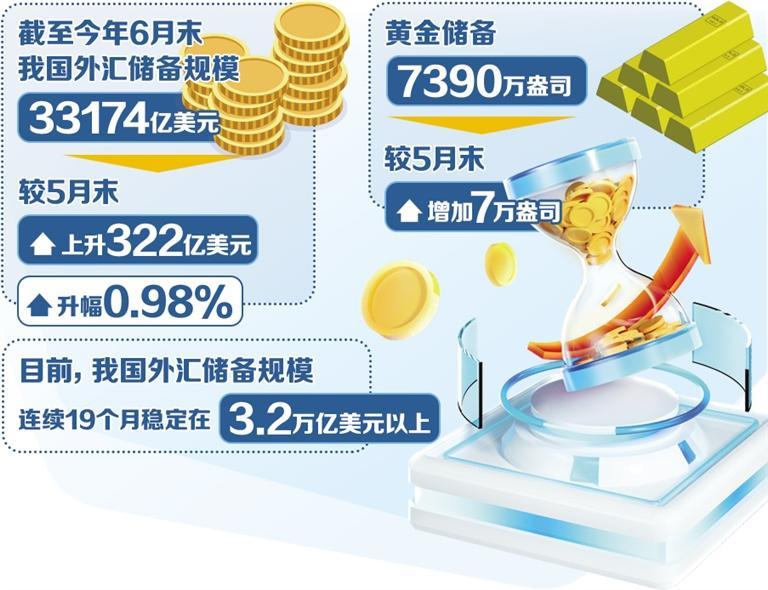
Group 1 - As of the end of June, China's foreign exchange reserves reached $33,174 billion, an increase of $322 billion from the end of May, marking a rise of 0.98% [2] - The increase in foreign exchange reserves is attributed to the depreciation of the US dollar, which fell by 2.5% to a three-year low of 96.9, leading to a collective appreciation of non-USD currencies [2][3] - The rise in global financial asset prices, including a 1.0% increase in the USD-denominated global bond index and a 5.0% rise in the S&P 500 index, also supported the increase in foreign reserves [2][3] Group 2 - Analysts believe that the significant depreciation of the US dollar has enhanced the valuation of non-USD assets within China's foreign reserves, contributing to the larger increase in reserves for June [3] - The current level of foreign reserves is considered to be at a moderately sufficient level, providing support for maintaining the RMB exchange rate and acting as a buffer against external shocks [3] - China's economy is expected to continue its steady growth, and resilient foreign trade is likely to help maintain the stability of foreign exchange reserves [3] Group 3 - As of the end of June, China's gold reserves amounted to 7.39 million ounces, an increase of 70,000 ounces from the end of May, indicating a continued strategy of increasing gold holdings [4] - The importance of gold as a widely recognized ultimate payment method is increasing, especially in the context of rising geopolitical risks and the diminishing reliability of traditional safe-haven assets like the US dollar [4] - Gold is viewed as a non-sovereign credit reserve asset that can effectively hedge against single currency risks and optimize the structure of foreign exchange reserves [4]
上半年非银行部门跨境收支规模创历史同期新高
Zheng Quan Ri Bao· 2025-08-08 07:04
Core Insights - The State Administration of Foreign Exchange (SAFE) reported that in June 2025, banks settled foreign exchange transactions amounting to $207.7 billion and sold $182.3 billion, indicating a stable foreign exchange market performance [1] - For the first half of 2025, cumulative bank settlements reached $1,143.2 billion, while cumulative sales were $1,168.5 billion, reflecting ongoing active cross-border trade and investment activities [1] Group 1: Foreign Exchange Reserves and Market Dynamics - In the first half of 2025, the total cross-border income and expenditure of non-bank sectors reached $7.6 trillion, a year-on-year increase of 10.4%, marking a historical high for the same period [2] - The net inflow of cross-border funds for non-bank sectors was $127.3 billion, continuing the trend from the second half of last year, with a 46% quarter-on-quarter increase in Q2 [2] - The foreign exchange market showed basic balance, with a deficit of $25.3 billion in bank settlements, but a shift to surplus in May and June, indicating rational trading behavior among enterprises and individuals [2][3] Group 2: Market Activity and Future Outlook - The total trading volume in the domestic RMB foreign exchange market reached $21 trillion, a 10.2% increase year-on-year, with spot and derivative transactions accounting for 35% and 65% respectively [3] - As of the end of June, China's foreign exchange reserves stood at $3,317.4 billion, an increase of $115.1 billion from the end of 2024, supported by the appreciation of non-USD currencies and rising global financial asset prices [3] - SAFE plans to continue implementing policies that promote a more convenient, open, secure, and intelligent foreign exchange management system to support high-quality economic development and openness [3]
“A+” 展望“稳定”不变 我国经济向好底气足
Yang Shi Wang· 2025-08-08 05:36
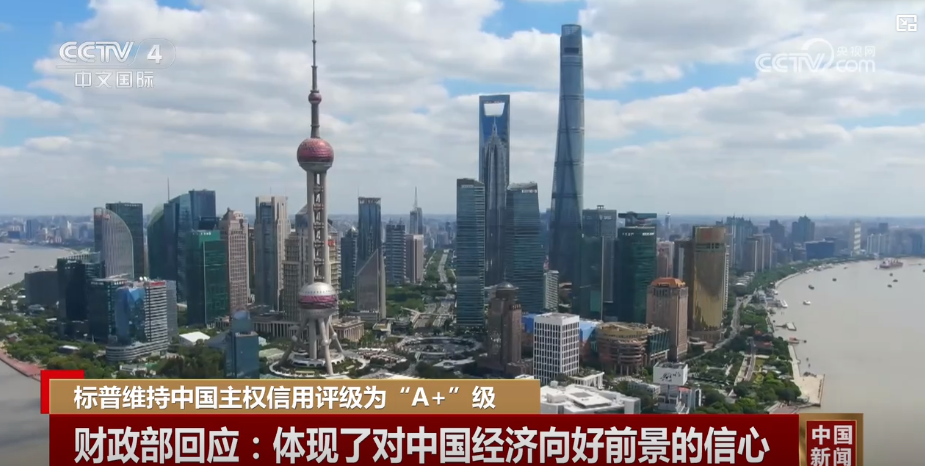
Group 1 - S&P Global Ratings has maintained China's sovereign credit rating at "A+" with a stable outlook, reflecting confidence in the country's economic resilience and debt management effectiveness [1][3] - The International Monetary Fund has raised its 2025 economic growth forecast for China to 4.8%, an increase of 0.8 percentage points from the previous estimate in April [3] - China's foreign exchange reserves stood at $32,922 billion as of the end of July, indicating a strong economic foundation and long-term positive trends [4] Group 2 - The Ministry of Finance expressed satisfaction with S&P's decision, highlighting the recognition of China's economic growth potential and effective debt control [3] - The Chinese government plans to continue macroeconomic policies with flexibility and stability in the second half of the year [3]
央行连续9个月扩大黄金储备
Jing Ji Wang· 2025-08-08 03:34
Group 1 - As of the end of July 2025, China's foreign exchange reserves stood at $329.22 billion, a decrease of $25.2 billion from the end of June, representing a decline of 0.76% [1] - The decline in foreign exchange reserves was influenced by macroeconomic data, monetary policy, and expectations from major economies, leading to an increase in the US dollar index [1][2] - The US dollar index rose by 3.4% in July, reaching a peak of 100.1042 on July 31, the highest since May 23, contributing to the depreciation of non-US currencies [1] Group 2 - The fluctuation in foreign exchange reserves was also affected by the performance of global financial assets, with the US stock indices reaching new highs, providing some support to the reserves [2] - China's economic fundamentals remain strong, with long-term supportive conditions for maintaining stable foreign exchange reserves [2] - As of the end of July, China's gold reserves increased to 7.396 million ounces, up by 60,000 ounces from the end of June, marking nine consecutive months of gold accumulation by the People's Bank of China [2] Group 3 - The international gold price continued to fluctuate in July, while China's central bank maintained a steady pace of gold accumulation [3] - In the medium term, uncertainties in global trade and geopolitical factors are expected to drive central banks and investors to increase gold investments [3] - The long-term strategy of diversifying international reserves and dynamically adjusting gold reserves will remain unchanged, with a continued focus on increasing gold holdings [3]
7月末我国外汇储备规模为32922亿美元 专家认为,稳中向好经济态势将为外储规模保持稳定奠定基础
Jin Rong Shi Bao· 2025-08-08 02:34
7月,我国出口顶住外部压力,通过优化产品结构、贸易伙伴多元化、拓展外贸新动能等方式实现了超 预期增长。国内经济在财政、货币、产业、民生等政策支持下稳健运行。下半年,我国经济依然面临不 少风险挑战,7月30日召开的中共中央政治局会议指出,宏观政策要持续发力、适时加力。要落实落细 更加积极的财政政策和适度宽松的货币政策,充分释放政策效应。"国内宏观经济将在政策的大力支持 下延续稳中向好态势,为国际收支保持整体平衡和外储规模保持稳定奠定基础。"民生银行首席经济学 家温彬表示。 国家外汇管理局8月7日发布的统计数据显示,截至2025年7月末,我国外汇储备规模为32922亿美元,较 6月末下降252亿美元,降幅为0.76%。 谈及外汇储备规模变动的原因,业内专家认为,汇率折算和资产价格变化等因素综合作用,导致7月外 汇储备规模下降。中银证券(601696)全球首席经济学家管涛对《金融时报》记者表示,7月我国外汇 储备规模小幅回落,主要是受主要经济体宏观经济数据、货币政策及预期等因素影响,美元指数由此前 月度"五连跌"转为上涨,非美元货币对美元总体贬值产生的负估值效应。7月,美元指数上涨3.2%至 100.0,为5月下旬 ...
7月末中国外汇储备为32922亿美元
Zhong Guo Xin Wen Wang· 2025-08-08 02:32
Core Insights - As of July 2025, China's foreign exchange reserves stood at $32,922 billion, a decrease of $252 billion from the end of June, with gold reserves at 73.96 million ounces [1] - The increase in the US dollar index in July, influenced by macroeconomic data and monetary policy expectations, led to fluctuations in global financial asset prices, impacting the valuation of China's foreign exchange reserves [1] - The People's Bank of China has increased its gold holdings for the ninth consecutive month, maintaining a steady pace of gold accumulation [1] Economic Context - The National Foreign Exchange Administration believes that China's economic fundamentals remain strong, with advantages and resilience that support the stability of foreign exchange reserves [2] - The ongoing uncertainty in global trade and geopolitical factors is expected to drive central banks and investors to continue increasing their gold investments, providing ongoing support for gold prices [1]
央行黄金储备九连涨
2 1 Shi Ji Jing Ji Bao Dao· 2025-08-08 00:33
Group 1: Foreign Exchange Reserves - As of July 2025, China's foreign exchange reserves stood at $32,922 billion, a decrease of $252 billion from June, marking a decline of 0.76% [1] - The decline in reserves is attributed to the rise in the US dollar index and fluctuations in global financial asset prices, despite the reserves remaining above $3.2 trillion for 20 consecutive months [1][3] - The current level of foreign reserves is considered adequate, providing support for the stability of the RMB exchange rate amidst external volatility [1][3] Group 2: Gold Reserves - The central bank has increased its gold reserves for the ninth consecutive month, reaching 7,396 million ounces (approximately 2,300.41 tons) by the end of July, with a month-on-month increase of 6,000 ounces [2][5] - The value of gold reserves rose by $10 billion to $243.985 billion, representing 7.41% of the total foreign exchange reserves, which is still below the global average of around 15% [2][5] - The increase in gold reserves is driven by the need to diversify international reserve assets and enhance the stability of the currency amidst a changing global economic landscape [6][7] Group 3: Economic Outlook - Despite facing risks and challenges, macroeconomic policies are prepared to adapt flexibly, with an emphasis on proactive fiscal and moderately loose monetary policies to support economic stability [5] - The central bank's strategy includes a continued increase in gold reserves while potentially reducing holdings in US Treasury bonds, aiming to optimize the structure of international reserves [6][7] - A survey indicated that over 90% of central banks expect to increase their gold holdings in the next 12 months, reflecting a growing trend towards gold as a safe-haven asset [7]

截至7月末我国外汇储备规模为32922亿美元
Ren Min Ri Bao Hai Wai Ban· 2025-08-08 00:18
国家外汇管理局相关负责人表示,我国经济基础稳、优势多、韧性强、潜能大,长期向好的支撑条件和 基本趋势没有变,有利于外汇储备规模保持基本稳定。 国家外汇管理局7日发布数据显示,截至今年7月末,我国外汇储备规模为32922亿美元,较6月末下降 252亿美元,降幅为0.76%。 7月,受主要经济体宏观经济数据、货币政策及预期等因素影响,美元指数上涨,全球金融资产价格涨 跌互现。汇率折算和资产价格变化等因素综合作用,当月外汇储备规模下降。 ...
外汇储备降至3.29万亿美元,央行连续9个月增持黄金至7396万盎司
Sou Hu Cai Jing· 2025-08-07 23:01
Group 1: Foreign Exchange Reserves - As of July 2025, China's foreign exchange reserves stood at $32,922 billion, a decrease of $25.2 billion from the end of June [1] - The decline in reserves is primarily attributed to the rise in the US dollar index and the depreciation of non-dollar currencies, which affected the exchange rate conversion [1][3] - China's foreign exchange reserves have remained above $3.2 trillion for 20 consecutive months, indicating strong stability [3] Group 2: Currency Performance - In July, the US dollar index increased by 3.2%, ending a five-month decline and surpassing the 100-point mark [3] - Non-dollar currencies, including the Japanese yen, euro, and British pound, depreciated against the dollar by 4.5%, 3.2%, and 3.8% respectively [3] - The delay in the Federal Reserve's interest rate cut expectations has further strengthened the relative position of the US dollar [3] Group 3: Gold Reserves Strategy - The central bank continued to increase its gold reserves by 60,000 ounces in July, maintaining a steady accumulation strategy since November of the previous year [4] - Currently, gold accounts for approximately 7.0% of China's official international reserve assets, significantly lower than the global average of around 15%, indicating room for future increases [4] - The World Gold Council reported that 95% of surveyed central banks expect to increase their gold reserves in the next 12 months, reflecting ongoing trends in gold accumulation amid economic and geopolitical uncertainties [4]