
车路云一体化

Search documents
自动驾驶地图数据智能处理项目启动
Zhong Guo Zi Ran Zi Yuan Bao· 2025-04-29 02:08
Core Viewpoint - The project "Key Technology Research on Intelligent Processing and Innovative Application of Autonomous Driving Map Data" aims to enhance collaboration between ministries and provinces, addressing the needs for rapid and efficient acquisition, updating, and review of geographic information data for intelligent connected vehicles [1][2] Group 1: Project Overview - The project was initiated on January 2025 and involves 14 organizations, including the Ministry of Natural Resources and Mogan Mountain State Capital Holding Group [1] - Key tasks include building rapid review and regulatory capabilities for autonomous driving maps, updating maps from multiple sources, ensuring data security, and enhancing sensor detection capabilities for intelligent connected vehicles [1] Group 2: Industry Implications - The collaboration is seen as a significant step in deepening innovative cooperation between ministries and local governments, leveraging geographic information technology to empower the vehicle networking industry [2] - A dual system of "industry empowerment + safety control" is proposed to balance the convenience of smart travel with national security [2] Group 3: Project Execution Strategy - The project will implement a dynamic assessment and elimination system, establish a shared intellectual property pool, and create a replicable "standard review process + data governance norms" model [2] - The focus will be on addressing industry challenges such as the timeliness of map updates, inconsistent review specifications, and weaknesses in the safety control system for spatiotemporal data [2]
琼海:挺立潮头向新行
Hai Nan Ri Bao· 2025-04-29 01:53
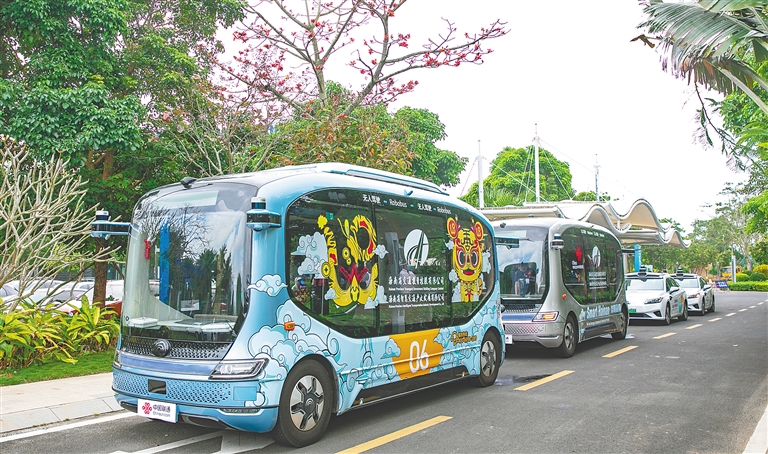
Core Viewpoint - The article emphasizes the development of new productive forces in Qionghai, focusing on five strategic directions: agricultural enhancement, marine economy, digital innovation, aerial industry, and green development, to attract investment and foster economic growth [5][6][10][12][16]. Group 1: Agricultural Enhancement - Qionghai is leveraging its unique climate to enhance its tropical fruit industry, introducing nearly 700 varieties of tropical fruits, with over 300 successfully trialed [8][9]. - The use of satellite technology in breeding has accelerated the development of new fruit varieties, significantly reducing the time needed for breeding [9]. Group 2: Marine Economy - Qionghai is developing the marine economy by enhancing the Tamen central fishing port, focusing on deep processing, distribution, and tourism integration within the fishing industry [10][11]. - The second phase of the South China Sea Museum is expected to enhance cultural exchange and support the construction of Hainan's free trade port [10][11]. Group 3: Digital Innovation - The introduction of smart transportation systems, including autonomous buses, is part of Qionghai's "vehicle-road-cloud integration" project, improving traffic efficiency and safety [12][13]. - Qionghai is a pilot city for national smart vehicle integration, aiming to expand its capabilities in autonomous vehicle testing and development [13]. Group 4: Aerial Industry - The construction of the third phase of Boao Airport is underway, featuring a zero-carbon terminal designed to handle 2.05 million passengers annually [14][15]. - Qionghai is planning to develop an airport economic zone to focus on air cargo, maintenance, and general aviation services [15]. Group 5: Green Development - The Boao near-zero carbon demonstration zone has achieved significant milestones in carbon neutrality, recognized by international standards [16][17]. - Qionghai is developing ecological products and exploring carbon trading to balance ecological and economic benefits, contributing to sustainable development [17].

车路云专题解读
2025-04-28 15:33
Summary of the Conference Call on Vehicle Road Cloud Integration Industry Overview - The conference call focuses on the **Vehicle Road Cloud (车路云)** integration industry, which is experiencing accelerated development driven by government policies and support. [2][3][6] Key Points and Arguments 1. **Government Support and Investment**: - Starting from April 2025, there will be a significant rollout of projects related to Vehicle Road Cloud integration, with a budget of approximately **1 trillion yuan** allocated for investments and over **3 trillion yuan** in special bonds. [2][4][14] - The investment is primarily concentrated on road and cloud infrastructure, which is costly and requires comprehensive funding support from various sources, including social capital and market participation. [2][4] 2. **Technological Development**: - There is a strong focus on the development of **smart driving technologies** and **V2X communication** applications, aiming to enhance urban traffic management and provide residents with safer and more efficient travel experiences. [2][3][5] - The relationship between single-vehicle intelligence and road collaboration is complementary, with road collaboration expected to optimize resource allocation through cloud computing. [2][15][18] 3. **Pilot Projects and Regional Initiatives**: - Major cities like **Beijing, Shanghai, and Shenzhen** have initiated pilot projects for Vehicle Road Cloud integration, with significant progress in infrastructure construction and technology deployment. [3][9][10] - Specific projects include smart driving technology development, V2X communication systems, and innovative applications such as smart parking and logistics systems. [5][9][10] 4. **Funding Structure**: - The funding structure for projects varies by region, with local governments contributing a significant portion alongside central and provincial funding. For example, in **Wuxi**, the funding structure includes **30%** from central finance, **20%** from provincial finance, and **30%** from local enterprises. [14] 5. **Future Development and Challenges**: - The pace of Vehicle Road Cloud integration is expected to accelerate in the next one to two years, with a focus on quality and speed as mandated by government policies. [6][9] - Challenges include the need for substantial investment and the integration of various technologies to ensure effective collaboration between vehicles and road infrastructure. [4][18] Additional Important Content - The national government is beginning to downplay the hype surrounding smart driving to manage public expectations, indicating a shift in focus towards practical applications and integration. [2][20] - The **eCall** emergency call system is gradually being developed, with standards expected to be approved by **2026**, focusing on new vehicles rather than retrofitting existing ones. [29][30] - The integration of cloud technology in traffic management has already shown success in applications like real-time traffic signal updates and emergency alerts, enhancing overall road safety and efficiency. [27][28] This summary encapsulates the critical insights and developments discussed during the conference call regarding the Vehicle Road Cloud integration industry, highlighting the interplay between government support, technological advancements, and regional initiatives.
专访中汽股份总经理:推动中国特色的“车路云一体化”落地
Zheng Quan Shi Bao Wang· 2025-04-28 06:21
Core Viewpoint - The establishment of the intelligent connected vehicle testing ground by China Automotive Technology & Research Center (CATARC) represents a significant advancement in the automotive industry's shift towards intelligence and connectivity, filling a critical gap in systematic verification platforms for smart vehicles in China [1][2]. Group 1: Testing Ground Overview - The testing ground, built with an investment of 1.5 billion yuan, features innovative facilities such as the world's first intelligent connected tunnel and a multi-dimensional simulation platform for complex environments, creating a comprehensive verification system covering "vehicle-road-cloud-network-map" [1][2]. - The facility includes 8 dedicated testing roads for intelligent connected vehicles, a 32,000 square meter laboratory, and a comprehensive energy center capable of supporting various testing scenarios for smart vehicles, heavy-duty commercial vehicles, flying cars, and low-altitude aircraft [2]. Group 2: Technological Innovations - The intelligent connected complex environment multi-dimensional simulation platform utilizes rain and fog array technology and controllable light source point array technology to simulate various weather conditions for testing smart vehicle driving capabilities [3]. - The testing ground has integrated a low-altitude economic framework, featuring a super-wide testing runway that meets the takeoff and landing standards for general flying vehicles, thus supporting the testing of flying cars and low-altitude aircraft [3]. Group 3: Regional Development Impact - The testing ground aims to provide professional testing services to local smart connected vehicle companies, support the development of hydrogen fuel cell vehicles, and enhance the automotive industry's reputation in Yancheng [4]. - The facility will collaborate with universities and enterprises in the Yangtze River Delta region to establish an innovation hub for intelligent connected vehicles and participate in the formulation of relevant industry standards [4]. Group 4: Future Development Plans - CATARC plans to further develop the digital testing ground, creating virtual scenarios for testing and promoting open testing on public roads, while engaging in research and validation across various fields including communication devices and cloud control platforms [5]. - The company is actively involved in promoting the "vehicle-road-cloud integration" technology, contributing to the development of national standards for intelligent connected vehicles, which will enhance traffic management and intelligent driving assistance [5].
四维图新发布智能驾驶技术新布局 深化产业协同生态构建
Huan Qiu Wang· 2025-04-27 07:38
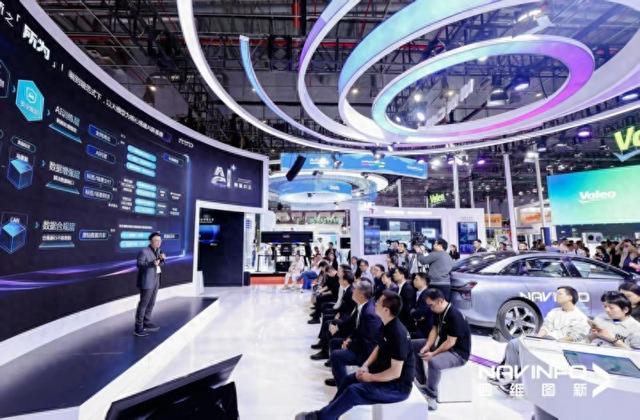
Core Insights - The company has unveiled its latest strategic developments in the intelligent driving sector during the 2023 Shanghai International Auto Show, showcasing its full-stack technical capabilities in high-precision mapping, vehicle-mounted chips, and advanced driving assistance solutions [1] - The company has established deep strategic partnerships with technology firms such as Qualcomm and Volcano Engine [1] Technical Architecture - The company launched two core product lines based on the Snapdragon® Digital Chassis™ solution, optimizing computing power utilization by 27% and supporting urban NOA Lite functionality [3] - A joint development with Zhuoyue Technology has achieved 0.1-meter-level recognition accuracy for stationary obstacles in complex road conditions through sensor hardware and map data integration [3] Safety Technology Framework - The company introduced a five-layer intelligent driving demand model derived from Maslow's hierarchy of needs, breaking down safety performance into seven core modules, with speed control accuracy of ±1.5 km/h and lateral control error within 0.3 meters [5] - The integration of dynamic high-precision map data has reduced the warning response time for temporary construction zones to 200 milliseconds [5] Industry Collaboration - The collaboration with Volcano Engine has led to breakthroughs in multi-modal interaction for cockpit systems, achieving a voice recognition accuracy of 98.6% in noisy environments and supporting real-time conversion of 12 dialects [7] - Partnership with Hangsheng Electronics has resulted in a 35% reduction in domain controller costs, with plans for mass production of over one million units by 2024 [7] Production Data - In 2023, the company added 23 automotive manufacturers covering 47 models for its advanced driving assistance systems, with basic ADAS product lines achieving large-scale deployment in models priced below 150,000 yuan [9] - The company's self-developed visual perception module has reduced costs by 40% compared to industry averages, while the millimeter-wave radar solution achieves a detection range of 150 meters with an angular resolution of ±0.2 degrees [9] Technological Validation - The CEO emphasized that the company's solutions utilize a white-box verification architecture, with all algorithm modules certified to ISO 26262 ASIL-B level, achieving a 99.3% success rate in recognizing construction scenarios during 100,000 kilometers of road testing [9][10] Integrated Urban Trials - The company has disclosed participation in integrated vehicle-road-cloud trials in six cities, including Beijing and Shanghai, with roadside equipment supporting L4-level autonomous driving capabilities [12] - The V2X technology implemented has reduced traffic event warning information transmission latency to within 50 milliseconds, resulting in a 63% reduction in accident rates compared to purely visual solutions [12] - The recent technology release signifies the establishment of a complete ecosystem in China's intelligent driving supply chain, encompassing "chips-algorithms-data-cloud services," with costs for integrated driving and parking solutions expected to drop to the 2,000 yuan range, accelerating the adoption of L2+ level autonomous driving in the passenger vehicle market [12]

莱斯信息(688631):业绩短暂承压 全国低空市场拓展前景可期
Xin Lang Cai Jing· 2025-04-27 02:40
Core Insights - The company reported a revenue of 1.61 billion yuan for 2024, a decrease of 3.94%, and a net profit of 129 million yuan, down 2.31% [1] - In Q4 2024, the company achieved a revenue of 692 million yuan, a decline of 2.41%, with a net profit of 113 million yuan, down 5.47% [1] - For Q1 2025, the company reported a revenue of 109 million yuan, a significant drop of 55.53%, and a net loss of 15 million yuan, although the loss narrowed year-on-year [1] Financial Performance - The company's performance was temporarily pressured due to a decrease in urban governance business and an increase in bad debt provisions [2] - By segment, air traffic management in civil aviation generated 626 million yuan (+13.68%), urban road traffic management generated 671 million yuan (+33.47%), while urban governance saw a revenue drop to 269 million yuan (-47.31%) [2] - R&D expenses for 2024 and Q1 2025 were 146 million yuan and 40 million yuan, respectively, reflecting increases of 12.31% and 18.99% [2] Low-altitude Economy - The company established the first provincial-level low-altitude service management platform in Jiangsu, setting a benchmark for future market expansion [3] - The company is accelerating market development with its "Tianmu" series products, planning low-altitude development strategies in over 20 provinces and cities [3] - Future plans include integrating management platforms and developing operational service platforms to enhance the low-altitude flight service support system [3] Civil Aviation Management - The company captured early opportunities in civil aviation construction, winning key projects in Hohhot and Harbin [4] - It achieved comprehensive coverage of automated products in seven major regions and is actively developing new products [4] - The demand for air traffic management systems is expected to grow, with a projected market size of 6.912 billion yuan by 2025 due to increased domestic production rates [4] Urban Traffic Management - The company is advancing the integration of vehicle-road-cloud systems, successfully developing core signal control products [5] - It has expanded its market presence in over 10 previously untapped areas, completing the development of an open signal control system [5] - The company anticipates significant revenue growth in the low-altitude sector and civil aviation, with projected revenues of 1.739 billion yuan in 2025 [5]

突破智驾内卷,德赛西威另辟路径
雷峰网· 2025-04-26 10:00
" 从座舱域控到组合辅助驾驶,德赛西威靠软硬一体化稳步推进智 能化布局。 " 作者丨林子川 编辑丨林觉民 提起中国新能源汽车市场,理想、小鹏、蔚来是绕不过的三大明星车企。2020年前后,三家公司先后推出 理想ONE、小鹏P7、蔚来ES6,凭借智能化定位迅速打开市场,成为造车新势力的代表作。 但鲜有人注意到,这三款成名车型背后,都站着同一个供应商——德赛西威。 2019年,理想ONE是国内首款实现四屏交互的量产车型,其座舱大屏和系统集成来源德赛西威;小鹏P7 是国内首批搭载英伟达Xavier芯片的量产车型,而在当时,只有德赛西威拿到了该芯片的合作授权,几乎 以一己之力推动了高算力域控在中国市场的首次量产落地;蔚来ES6上市当年,带动品牌销量同比增长近 五成,其座舱系统和中控大屏,同样出自德赛西威。 然而,近二十年前,德赛西威的主业务几乎只制造车载音响、仪表盘,与其它供应商没有多大区别。 过去十年的汽车行业变革,德赛西威成功抓住了两轮市场红利:2017年,特斯拉引领的新能源汽车座舱大 屏化,德赛西威提前布局,常年稳居座舱大屏市场份额榜首;2020年后,新能源汽车辅助驾驶功能渗透率 增高,其凭借域控制器、雷达、摄像 ...
诺安基金左少逸:人工智能新基建价值落地 看好AI智能终端
news flash· 2025-04-23 06:20
Core Viewpoint - The technology sector is currently one of the most dynamic segments in both A-shares and Hong Kong stocks, with a positive outlook for 2025 despite potential fluctuations [1] Group 1: Market Trends - The decline in costs associated with artificial intelligence is facilitating the entry of consumer-grade products such as AR glasses and service robots into the market [1] - The integration of large models into industries like intelligent driving is a significant trend, alongside the focus on new infrastructure and innovation in technology [1] Group 2: Competitive Landscape - The competition in computing power driven by large model training is crucial for the global technology industry's development, as it reduces the costs of training and using large models [1] - The concept of "vehicle-road-cloud integration" is essential for the further advancement of intelligent driving technologies [1] Group 3: Investment Focus - Future investments should concentrate on intelligent terminals and application sectors, with attention to the decreasing costs of computing power, upgrades of large models, and the empowerment of industries through low-cost solutions [1] - Domestic large models are being integrated into various fields such as finance and healthcare, promoting intelligent upgrades through customized development and fostering the collaborative development of industry standards and application ecosystems [1]
【新能源周报】新能源汽车行业信息周报(2025年4月14日-4月20日)
乘联分会· 2025-04-22 08:44
点 击 蓝 字 关 注 我 们 目 录 行业信息 10、商务部:开展"车路云一体化"应用试点 推动相关基础设施规模化建设、智能网 联汽车产业化发展 11、能识别交警手势 地平线发布对标特斯拉的 HSD 政策信息 1、广州: 进一步明确补贴方向、加大补贴力度,带动汽车、家电、数码类产品消费 2、2026年7月施行! 电动汽车电池新国标公布 3、辽宁省机关事务管理局印发《2025年辽宁省公共机构节约能源资源工作安排》的通 知 4、上海市浦东新区发展和改革委员会发布关于印发浦东新区 2025 年碳达峰碳中和及 节能重点工作安排的通知 5、成都市经信局发布《关于组织开展成都市 2023-2024 年度电动汽车充换电设施项目 建设补贴申报工作的通知》 6、广州市花都区政府印发《关于花都区支持新能源产业高质量发展的十条措施的通知》 7、广东省能源局关于做好全省充电基础设施高质量接入广东省电动汽车充电设施智能 服务平台的通知 8、云南昆明市市场监督管理局发布关于《电动汽车公共充换电站(桩)消防安全管理 规范》征求意见稿地方标准的公示 10、山西晋中市政府印发《晋中市碳达峰实施意见》 11、青海省发展和改革委员会印发《青海省 ...




深圳自主泊车迈入2.0时代,深业上城商区试点启动 升级车路云 泊车更自如
Shen Zhen Shang Bao· 2025-04-20 16:50
Core Insights - Shenzhen has officially launched the Autonomous Parking 2.0 and pilot program for autonomous parking valet services in the Shenye Shangcheng business district, marking the first implementation of integrated vehicle-road-cloud applications in a commercial area [1][2] - The upgraded version 2.0 enhances the vehicle-road-cloud integration system, establishing a smart parking platform that improves parking efficiency, safety, and convenience compared to the previous version [1][2] Group 1 - The Autonomous Parking 2.0 version includes high-precision physical modeling and dynamic information standardization for vehicle access, enhancing parking space dispatch efficiency and event warning capabilities [1][2] - The "Shen i Park" platform integrates real-time parking space availability, charging station status, and indoor navigation, providing users with a one-stop service for precise queries, autonomous scheduling, and guided arrival [2] - The platform will soon be available for trial use, significantly reducing the time citizens spend searching for parking and increasing parking space utilization [2] Group 2 - Shenzhen plans to accelerate the promotion of the Autonomous Parking 2.0 model, aiming to replicate the pilot experience in various scenarios such as hubs, business districts, hospitals, and industrial parks [3] - Future developments will include features like automatic car washing and charging, aiming to create fully intelligent autonomous parking facilities [3] - The city will continue to advance the construction of core digital platforms for intelligent networked safety monitoring and comprehensive traffic scheduling, facilitating the large-scale application of autonomous parking and information integration [3]