预制菜

Search documents
天马科技涨2.06%,成交额2.24亿元,主力资金净流出978.90万元
Xin Lang Cai Jing· 2025-09-30 05:39
Core Insights - Tianma Technology's stock price increased by 2.06% on September 30, reaching 16.34 CNY per share, with a total market capitalization of 8.209 billion CNY [1] - The company has seen a year-to-date stock price increase of 28.26%, with notable gains of 4.95% over the last five trading days and 17.72% over the last twenty days [1] Financial Performance - For the first half of 2025, Tianma Technology reported a revenue of 2.974 billion CNY, a year-on-year decrease of 1.18%, while the net profit attributable to shareholders was 60.217 million CNY, reflecting a year-on-year growth of 7.40% [2] - Cumulative cash dividends since the company's A-share listing amount to 103 million CNY, with 33.1775 million CNY distributed over the past three years [3] Shareholder Information - As of June 30, 2025, the number of shareholders increased by 2.41% to 17,100, with an average of 29,450 circulating shares per shareholder, a decrease of 2.35% [2] - The eighth largest circulating shareholder is Guotai Zhongzheng Livestock Breeding ETF, holding 5.0048 million shares, an increase of 872,700 shares compared to the previous period [3] Business Overview - Tianma Technology, established on December 13, 2005, and listed on January 17, 2017, is primarily engaged in the research, production, and sales of special aquatic feed [1] - The company's revenue composition includes 57.62% from livestock feed sales, 28.94% from special aquatic feed, 18.70% from breeding sales, 7.20% from food sales, 1.86% from raw material sales, and 0.36% from other sources [1]

步步高涨2.11%,成交额4.80亿元,主力资金净流出1429.28万元
Xin Lang Cai Jing· 2025-09-30 03:13
Company Overview - Bubu Gao Commercial Chain Co., Ltd. is located in Changsha, Hunan Province, established on December 11, 2003, and listed on June 19, 2008. The company's main business involves retail sales, with revenue composition as follows: supermarkets 64.34%, others 27.44%, department stores 6.01%, logistics and advertising 2.21% [1]. Stock Performance - As of September 30, Bubu Gao's stock price increased by 2.11% to 5.81 CNY per share, with a trading volume of 480 million CNY and a turnover rate of 3.91%, resulting in a total market capitalization of 15.621 billion CNY [1]. - Year-to-date, Bubu Gao's stock price has risen by 47.09%, with a 6.41% increase over the last five trading days, a 5.07% decrease over the last 20 days, and a 14.60% increase over the last 60 days [1]. Financial Performance - For the first half of 2025, Bubu Gao achieved a revenue of 2.133 billion CNY, representing a year-on-year growth of 24.39%. The net profit attributable to shareholders was 201 million CNY, showing a significant year-on-year increase of 357.71% [2]. - Since its A-share listing, Bubu Gao has distributed a total of 1.677 billion CNY in dividends, with no dividends paid in the last three years [3]. Shareholder Information - As of June 30, 2025, the number of shareholders for Bubu Gao was 88,500, an increase of 96.50% compared to the previous period. The average circulating shares per person decreased by 49.11% to 17,105 shares [2]. - Among the top ten circulating shareholders, Hong Kong Central Clearing Limited is the tenth largest shareholder, holding 10.5068 million shares as a new shareholder [3]. Industry Classification - Bubu Gao belongs to the Shenwan industry classification of retail trade, specifically general retail and supermarkets. The company is associated with several concept sectors, including prepared dishes, community group buying, delisting concepts, duty-free concepts, and unified market concepts [2].

未来预制菜:解锁新兴消费市场的无限机遇
Sou Hu Cai Jing· 2025-09-30 02:01
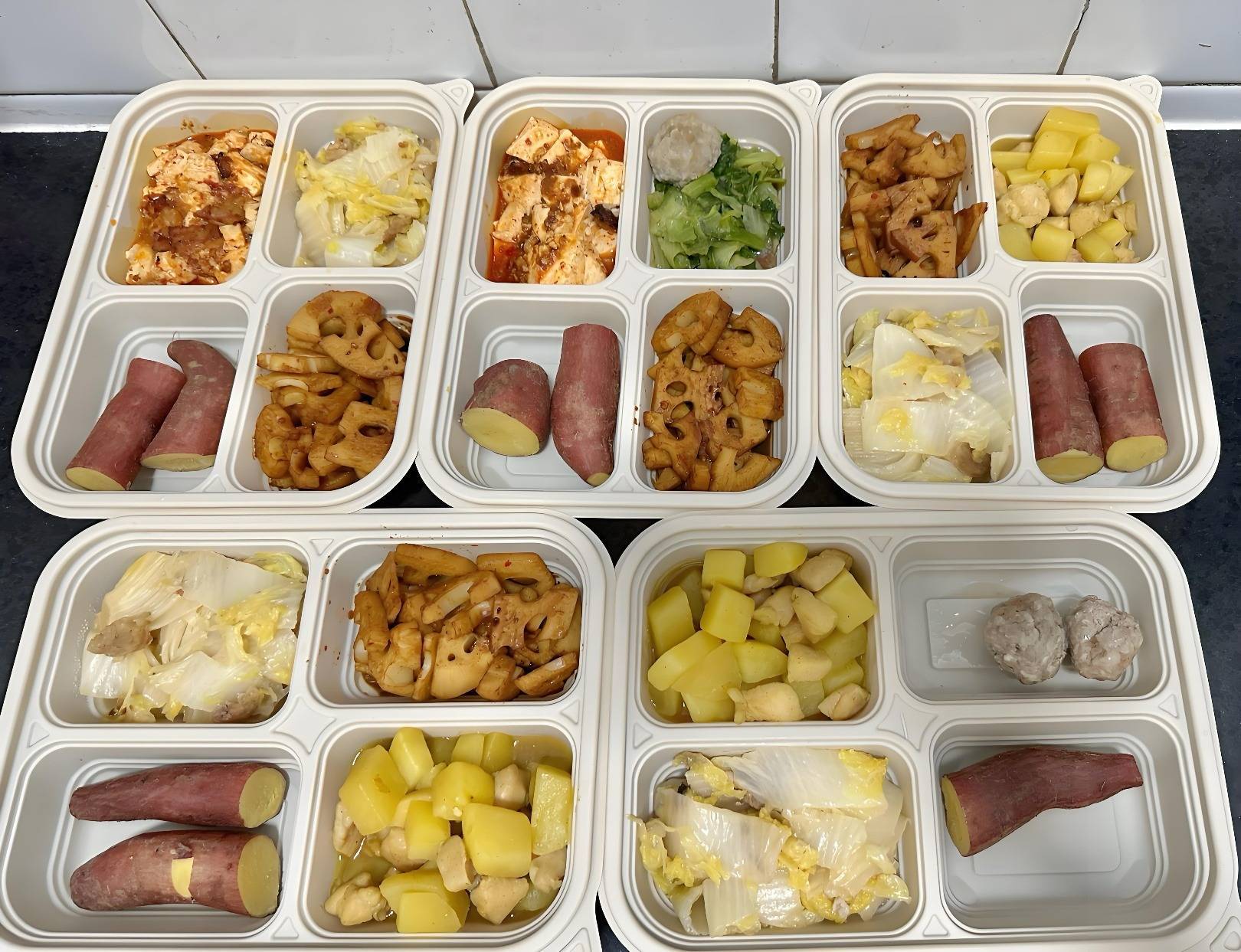
Core Insights - The pre-prepared meal industry is emerging as a solution to modern consumers' needs for convenience and quality, driven by fast-paced lifestyles and changing dietary preferences [1][8] - The market is primarily targeted at single households, dual-income families, and younger generations who prioritize diversity, taste, and convenience in their meals [2] Group 1: Definition and Characteristics - Pre-prepared meals are defined as foods that are partially or fully processed, requiring minimal preparation before consumption, thus saving time and reducing cooking difficulty [1] - The industry focuses on ingredient selection, process control, and packaging design to ensure product stability during storage and transportation [1] Group 2: Market Demand and Consumer Behavior - The demand for pre-prepared meals is increasing due to urbanization and lifestyle changes, with consumers willing to pay a premium for products that are both delicious and healthy [2] - Special occasions and gatherings further drive the consumption of pre-prepared meals, as they facilitate efficient meal preparation [2] Group 3: Technological Innovations - Technological advancements in food processing, preservation, and logistics are crucial for the industry's growth, including low-temperature preservation and smart production lines [3] - Big data analytics is utilized for flavor development and inventory management, aligning products with regional preferences and seasonal changes [3] Group 4: Product Diversity and Application Scenarios - The variety of pre-prepared meals is expanding, covering all meal types from breakfast to snacks, and applications range from home use to office and outdoor activities [4] - Collaborations with food service channels are enhancing the market reach by providing semi-finished products to restaurants [4] Group 5: Challenges and Strategies - Key challenges include consumer concerns about food safety, competition, and cost control, which require companies to focus on quality assurance and innovative flavors [5] - Environmental issues are becoming increasingly important, with a focus on reducing packaging waste and promoting recyclable materials [5] Group 6: Future Trends and Market Opportunities - The pre-prepared meal market is expected to grow, driven by lifestyle changes, technological advancements, and evolving consumer attitudes towards health and convenience [7] - There is potential for personalized products targeting specific demographics, as well as cross-industry collaborations to enhance user experience [7] - The market expansion is not limited to first-tier cities, as lower-tier markets are being explored for growth opportunities [7]

高德“杀入”餐饮业:会边缘化预制菜吗?
Sou Hu Cai Jing· 2025-09-30 01:02
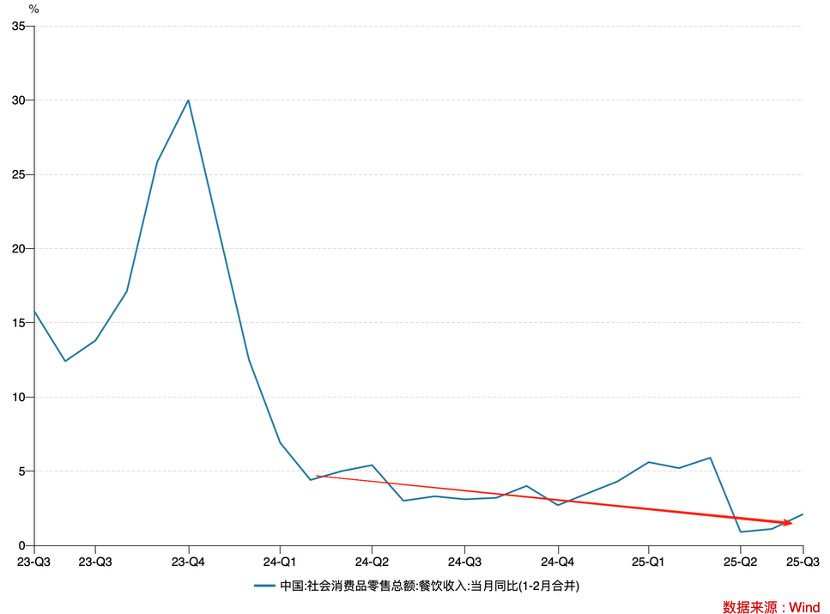
Core Viewpoint - The restaurant industry is currently in a period of internal competition, with the rise of chain operations increasing operational difficulties, leading to the adoption of "pre-made dishes" as a reluctant choice [1][2] - The influence of online marketing on the restaurant industry is weakening, and the trust between users, platforms, and merchants is diminishing [1] - To marginalize pre-made dishes, it is essential to rebuild the trust chain, which is a critical issue that companies like Gaode are addressing [1] Industry Analysis - The restaurant industry has faced significant challenges in recent years, particularly since 2024, with monthly revenue growth lagging behind GDP growth, indicating a period of internal competition [2] - The capital influx into the restaurant sector has led to a significant increase in chain operation rates, from 15% in 2020 to 23% in 2024, which has improved standardization but also increased financial burdens on businesses [5] - Despite high levels of investment, the number of business cancellations and closures has reached new highs, indicating a growing pessimism within the industry [6] Financial Performance - Companies often resort to price reductions as a means of counter-cyclical adjustment, but in the current environment, this strategy may not effectively resolve operational challenges and could worsen financial performance [4][6] - The focus has shifted to "cost-cutting," with pre-made dishes being a method to enhance operational efficiency through modern preservation technologies [7] Trust and Marketing Dynamics - The reliance on online platforms for driving traffic to physical restaurants has not yielded the expected results, as evidenced by the stagnation in growth for companies like Jiumaojiu, which saw only a 1.5% revenue increase despite a nearly 25% rise in marketing expenses [11] - Trust is a critical factor in the restaurant industry, and the erosion of trust due to conflicts of interest and biased reviews has led to inefficiencies in advertising and a mismatch in consumer needs [12] Future Expectations - In the short term, the restaurant industry can leverage trust to improve profitability and emerge from the current competitive downturn, with expectations for significant gains during the upcoming holiday season [14] - In the medium term, there is an anticipated decrease in the proportion of pre-made dishes as the industry refocuses on quality and taste [15] - In the long term, the goal is for consumers to enjoy quality food while businesses concentrate on culinary excellence [15]
双节旺季将至,白酒龙头积极应对!消费ETF(159928)V型反转,盘中获1.56亿份净申购,最新份额创新高!
Xin Lang Cai Jing· 2025-09-29 06:13
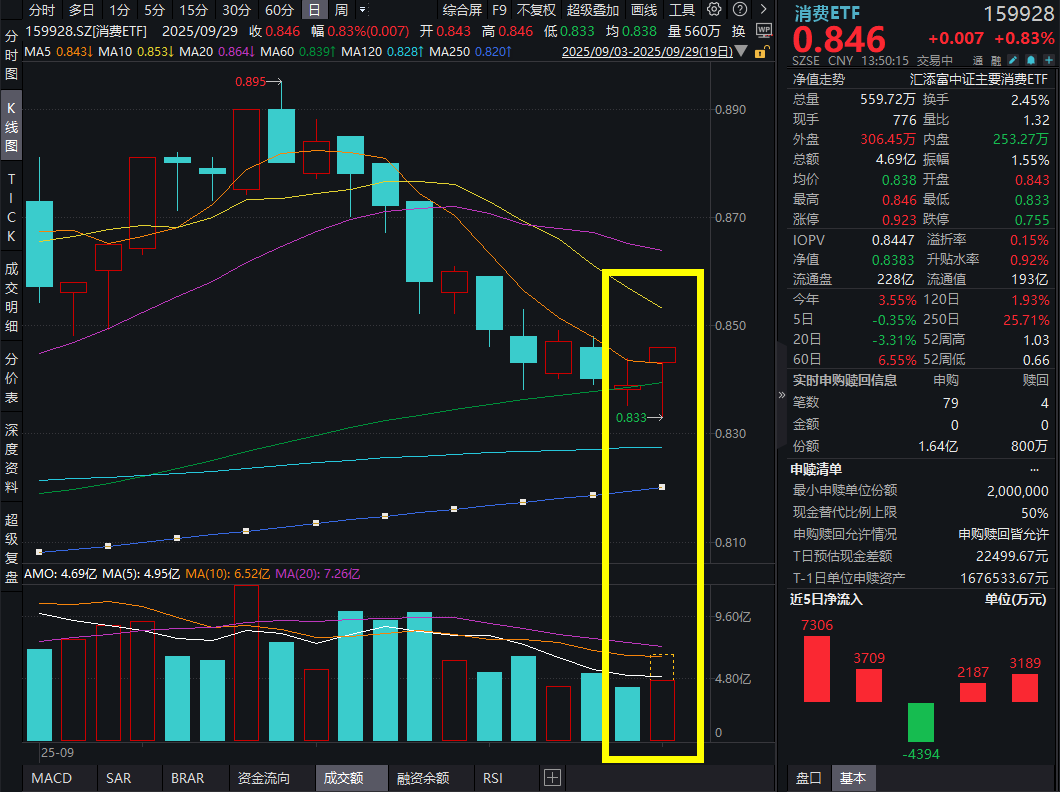
Core Viewpoint - The consumption ETF (159928) shows a strong rebound with a net subscription of 156 million units, indicating robust investor interest in the consumer sector as the "super golden week" approaches, driven by increased travel and spending intentions [1][5]. Group 1: Market Performance - The major consumption index (000932) increased by 0.63%, with notable gains in stocks such as Yangyuan Beverage (603156) up 8.71%, Luzhou Laojiao (000568) up 4.16%, and Gujing Gongjiu (000596) up 3.42% [3]. - The top ten component stocks of the consumption ETF account for over 68% of the index, with four leading liquor stocks making up 32% and major consumer staples like Yili (9.56%) and Moutai (8.68%) also contributing significantly [7][8]. Group 2: Consumer Trends - The upcoming Mid-Autumn and National Day holidays are expected to boost consumer spending, with online travel platforms reporting a significant increase in travel bookings, particularly for interprovincial and outbound travel [5]. - The liquor market is experiencing a cautious inventory buildup, with traditional sales channels under pressure, while new retail formats like live streaming and instant retail are showing rapid growth [5]. Group 3: Industry Insights - Leading liquor companies are actively responding to market conditions, with Moutai initiating market research and price stabilization efforts, while Wuliangye is addressing pricing issues through dealer meetings [5]. - The food and beverage sector is seeing policy-driven catalysts, particularly in the prepared food segment, which may benefit leading brands through increased market share [6].



遍布全国的连锁餐饮,为何进不了江西?
Sou Hu Cai Jing· 2025-09-29 01:05
Core Viewpoint - The article highlights the challenges faced by popular national chain restaurants, such as Xibei, in entering the Jiangxi market due to the region's unique culinary culture and strong local dining ecosystem [2][10]. Group 1: Market Characteristics - Jiangxi province has a deep-rooted "Jiangxi stir-fry" culture, where consumers prefer freshly cooked dishes that emphasize the unique aroma of food just off the stove, known as "guo qi" [3][5]. - Local restaurants prioritize fresh ingredients, with a typical meal costing around 40 yuan, contrasting sharply with chain restaurants that charge nearly 100 yuan per meal [5][6]. - Jiangxi consumers exhibit a strong preference for spicy and fragrant dishes that pair well with rice, making it difficult for northern or coastal chain brands to adapt to local tastes [3][6]. Group 2: Challenges for Chain Restaurants - Many chain restaurants, including Xibei, struggle with high entry barriers in Jiangxi due to entrenched local food culture and consumer preferences for fresh, made-to-order meals [10][11]. - The reliance on pre-prepared ingredients and standardized recipes by chain restaurants is at odds with Jiangxi consumers' expectations for freshness and authenticity [9][10]. - The logistics of sourcing high-quality ingredients from distant regions, such as the northwest for Xibei's signature dishes, adds to the operational challenges and costs [7][9]. Group 3: Consumer Preferences - Jiangxi consumers are generally resistant to pre-prepared dishes, believing that only freshly made meals can satisfy their taste requirements [5][7]. - The price sensitivity of Jiangxi consumers, combined with their loyalty to local dining options, creates a significant barrier for higher-priced chain restaurants [6][10]. - Efforts by chain restaurants to promote their offerings through social media and local influencers have not yielded significant results due to the pronounced taste differences and consumer aversion to pre-prepared foods [10][11]. Group 4: Future Considerations - For chain restaurants to succeed in Jiangxi, they must deeply understand and respect local culinary traditions while adapting their business models to meet local demands [11]. - The potential for successful cross-regional expansion exists, but it hinges on achieving a balance between local preferences and the operational strategies of chain brands [11].
50万学生午餐,成了谁的提款机?
36氪· 2025-09-28 13:00
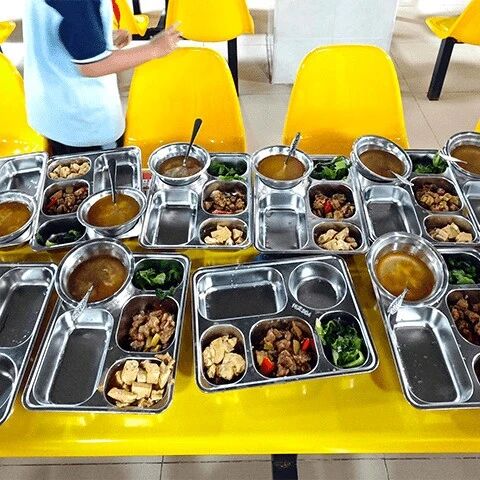
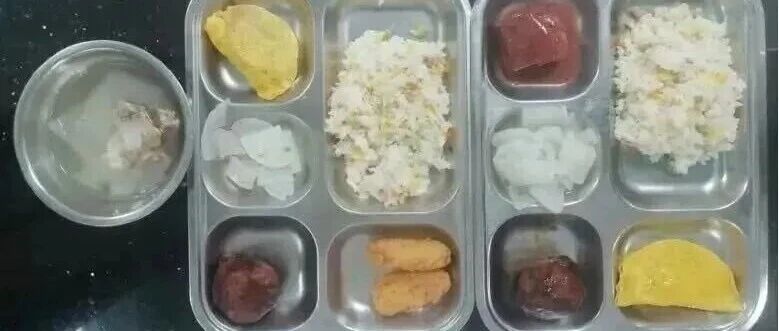
Core Viewpoint - The article discusses the controversy surrounding Shanghai Lujie, a major player in the school meal supply market, highlighting issues of food safety, quality, and the influence of capital in the education sector [6][24][34]. Group 1: Company Background - Shanghai Lujie, established in 2014, has grown to supply over 500 schools and kindergartens, providing more than 500,000 meals daily, capturing nearly 30% of the market share in Shanghai [8][24]. - The company has faced long-standing complaints from parents regarding the quality of meals, with reports of unappetizing and unhealthy food options [8][10]. Group 2: Recent Controversy - A recent incident involving spoiled shrimp served in school meals has sparked outrage among parents, leading to calls for better quality control and accountability from suppliers [6][10]. - The company was found to have concealed food safety issues, resulting in an investigation by authorities for allegedly failing to report critical safety information [10][11]. Group 3: Financial Insights - Shanghai Lujie operates on a prepayment model, allowing it to accumulate approximately 200 million yuan in funds from meal fees, which can be invested for additional returns [24]. - The company reported revenues of 560 million yuan in 2017, with a net profit margin of 15.7%, significantly higher than many competitors in the food service industry [24][27]. Group 4: Capital Influence - The ownership structure of Shanghai Lujie reveals connections to significant capital players, including the Liu Yonghao family and various offshore entities, raising concerns about accountability and transparency [19][20][22]. - The article suggests that the profit-driven motives of these capital entities may compromise food quality and safety standards in the pursuit of financial gains [6][34]. Group 5: Market Dynamics - The competitive landscape in the school meal sector is characterized by aggressive bidding and rapid expansion, with Shanghai Lujie reportedly winning over 80 contracts since January 2025, surpassing previous years' totals [30][31]. - The pricing model of 18 yuan per meal, with actual costs estimated at 6-8 yuan, pressures the company to cut corners, potentially impacting food quality [33][34].
一只“臭虾王”炸出资本“天团”:50万学生午餐,成了谁的提款机?
商业洞察· 2025-09-28 09:25
Core Viewpoint - The article highlights the controversy surrounding Shanghai Green捷, a major player in the school meal supply market, following a food safety incident involving spoiled shrimp. This incident has sparked public outrage and raised concerns about the quality and safety of school meals, revealing deeper issues related to capital-driven profit motives in the food supply chain [3][7][33]. Group 1: Incident Overview - A parent discovered spoiled shrimp in their child's school lunch, leading to a public outcry and a petition for better meal quality from suppliers like 西贝 [3]. - The incident reflects long-standing grievances from parents regarding the quality of school lunches, which are often perceived as unhealthy and made from low-quality ingredients [3][9]. - Shanghai Green捷, which supplies around 500,000 meals daily, has faced scrutiny for its food safety practices and the quality of its meals, which are often criticized as unappetizing and unhealthy [9][10]. Group 2: Financial and Operational Insights - Shanghai Green捷 has been operating as a "hidden champion" in the school meal market since its establishment in 2014, serving a significant portion of Shanghai's schools [9]. - The company has a meal cost of 6-8 yuan while charging 18 yuan per meal, raising questions about profit margins and the quality of ingredients used [7][31]. - The financial performance of Shanghai Green捷 has been strong, with revenues reaching 5.6 billion yuan in 2017 and a net profit margin of 15.7%, significantly higher than many competitors [26][27]. Group 3: Capital and Ownership Structure - The ownership structure of Shanghai Green捷 involves complex offshore arrangements, with significant investments from major players like the Liu Yonghao family and Temasek [21][22]. - The company has been linked to various capital entities, indicating a network of financial interests that may prioritize profit over food safety [15][21]. - The involvement of family-linked businesses in both supply and inspection raises concerns about conflicts of interest and accountability in food safety practices [19][23]. Group 4: Regulatory and Safety Concerns - Following the food safety incident, Shanghai Green捷 faced investigations for allegedly concealing information about food safety issues [14][33]. - The company's response to the incident was criticized for being inadequate, lacking a comprehensive plan for accountability and improvement [14][33]. - The incident has highlighted the broader issue of how capital interests can compromise food safety and quality in essential services like school meals [33].
西贝贾国龙多个社交账号内容被清空,抖音仅留一条视频作品
2 1 Shi Ji Jing Ji Bao Dao· 2025-09-28 07:02
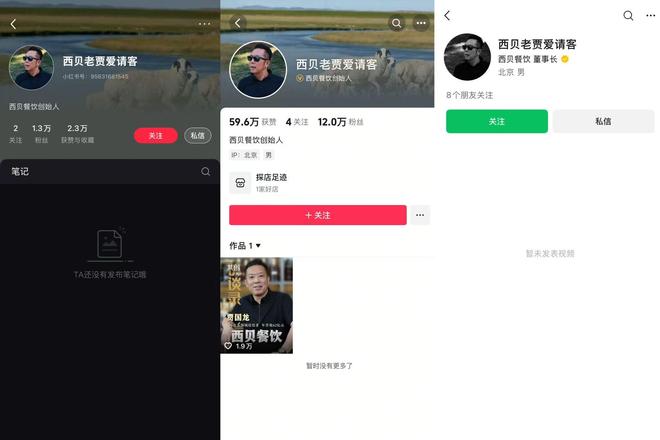
Core Viewpoint - The recent actions of Xibei Catering Group's founder, Jia Guolong, to clear his social media accounts come in the wake of a public relations crisis related to the company's use of pre-packaged food and other controversies [1][3]. Group 1: Public Relations Crisis - Xibei faced backlash after a public comment by Luo Yonghao criticized the high prices of their pre-packaged dishes, leading to Jia's initial denial and threats of legal action [3]. - Following the opening of their kitchen to the public, issues such as the accumulation of frozen ingredients and the use of genetically modified soybean oil were revealed, further intensifying public scrutiny [3]. - Content published by Xibei, including articles and videos, was criticized for being overly sentimental and perceived as deliberate marketing ploys, leading to negative public reactions [3][4]. Group 2: Legal Actions and Consumer Rights - A long-time customer and lawyer filed a lawsuit against Xibei for alleged false advertising and violation of consumer rights, aiming to promote better food safety legislation in China [4]. - The lawsuit highlights concerns over Xibei's marketing practices and the need for more stringent regulations to protect consumer health and safety [4]. Group 3: Social Media Strategy - Xibei attempted to improve its image through emotional storytelling in videos, but these efforts were met with skepticism and ridicule from the public [4]. - The company's official customer service stated that the removal of certain content was due to online harassment faced by customers and employees [4].
西贝创始人贾国龙清空社交账号!
Zheng Quan Shi Bao· 2025-09-28 04:44
Core Viewpoint - The recent controversy surrounding Xibei Restaurant, initiated by a claim from entrepreneur Luo Yonghao regarding the use of pre-prepared dishes, has led to significant public backlash and a series of responses from the company's founder, Jia Guolong [11]. Group 1: Company Response and Actions - Xibei's founder, Jia Guolong, has publicly denied the use of pre-prepared dishes in their restaurants and has expressed a strong intention to pursue legal action against Luo Yonghao [11]. - Following the controversy, Xibei issued an official apology on September 15, outlining plans to enhance food preparation processes by moving central kitchen operations to in-store cooking by October 1, 2025 [11]. - Specific adjustments include switching to non-GMO soybean oil for all dishes, preparing children's meals on-site, and ensuring that various meat dishes are freshly cooked at the restaurant [11][13]. Group 2: Public and Media Reaction - A public relations article titled "The 7-Year-Old Maomao: I Thought I Would Never Eat Xibei Again" was published but later deleted due to negative feedback, with critics labeling it as ineffective and overly sentimental [9][14]. - The initial apology letter faced scrutiny for its wording, particularly the phrase "customers abuse me thousands of times," which was later modified to include quotation marks around "abuse" [14]. - Luo Yonghao responded to the apology, questioning the company's claims and highlighting the ongoing sale of potentially leftover dishes before the promised changes take effect [17].