稀土出口管制

Search documents
欧盟刚把嗓子喊破,要求中国30天内取消稀土出口管制,否则冯德莱恩就不来了
Sou Hu Cai Jing· 2025-07-27 13:57
Group 1 - The EU Ambassador to China issued a 30-day ultimatum for China to lift its rare earth export controls, or else the European Commission President von der Leyen would not visit China [1][3] - Rare earth elements are critical for modern industries, with 98% of heavy rare earths sourced from China, and current stockpiles are only sufficient for 21 days [3][5] - European companies, such as Volkswagen, are already facing production halts due to shortages of rare earth materials, highlighting the dependency on Chinese supplies [3][5] Group 2 - Despite the ultimatum, China has responded by shortening the upcoming summit and tightening export approvals, indicating a firm stance on its export policies [5][7] - Recent customs data shows a decrease in rare earth exports by 11% month-on-month, while prices have increased by 18%, suggesting a strategy of selling less for higher profits [5][7] - European companies are beginning to prepare for a prolonged supply shortage, with ASML advising its supply chain to brace for a tight market, and Renault sending executives to secure quotas [5][7] Group 3 - The EU's approach mirrors past strategies used in the solar industry, where China raised silicon prices by 30%, leading to a significant drop in European installations [7] - The decision on whether von der Leyen will visit China now rests with the approval processes in Chinese rare earth mines, indicating a shift in power dynamics [7] - The situation reflects a miscalculation by the EU, as their attempts to leverage cooperation have turned into a standoff, with China remaining unhurried in its response [7]


要警惕了!6月稀土对美出口环比暴涨660%
Sou Hu Cai Jing· 2025-07-27 06:22
Core Insights - In June, China's rare earth exports to the U.S. surged by 660% month-on-month, reaching 352.8 tons, primarily due to new export control measures and increased demand from U.S. companies [1][3] Group 1: Export Dynamics - The significant increase in rare earth exports in June was influenced by the addition of several rare earth products to China's export control list in April, which delayed approvals in May, resulting in a drastic drop in exports to only 46 tons [1] - The approval process for export applications was expedited in June, allowing more exporters to receive permits, contributing to the month-on-month surge from a low base in May [3] Group 2: U.S. Market Response - U.S. companies began stockpiling rare earth materials to mitigate risks after experiencing shortages over the past two months, which affected several automotive manufacturers and led to production halts due to supply chain disruptions [3] - The recent phase of the U.S.-China trade agreement has led to a reduction in restrictions, prompting U.S. businesses to place large orders for imports of rare earth materials [3] Group 3: Importance of Rare Earths - Rare earths, often referred to as "industrial MSG," are crucial in high-end manufacturing sectors such as aerospace, military equipment, electronic information, and new energy, despite their relatively low usage [3] - China dominates over 90% of the global supply of rare earth magnets, particularly in the medium and heavy rare earth sectors, highlighting its critical role in the supply chain [3]
稀有金属ETF涨幅居前丨ETF基金日报
2 1 Shi Ji Jing Ji Bao Dao· 2025-07-25 02:57
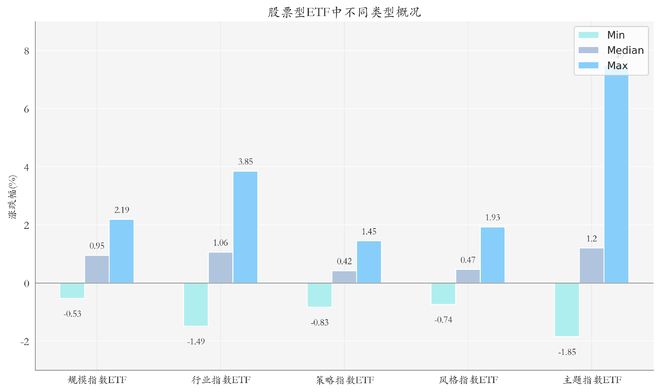
Market Overview - The Shanghai Composite Index rose by 0.65% to close at 3605.73 points, with a daily high of 3608.73 points [1] - The Shenzhen Component Index increased by 1.21% to close at 11193.06 points, reaching a high of 11193.06 points [1] - The ChiNext Index saw a rise of 1.5%, closing at 2345.37 points, with a peak of 2345.37 points [1] ETF Market Performance - The median return of stock ETFs was 0.98%, with the highest return from the Penghua CSI 1000 Enhanced Strategy ETF at 2.19% [2] - The highest performing industry index ETF was the China Tai Chi ChiNext Pharmaceutical and Health ETF, yielding 3.85% [2] - The highest return among thematic index ETFs was the GF CSI Rare Metals Theme ETF at 7.49% [2] ETF Gains and Losses - The top three ETFs by gain were: - GF CSI Rare Metals Theme ETF (7.49%) - Huafu CSI Rare Metals Theme ETF (7.32%) - ICBC Credit Suisse CSI Rare Metals Theme ETF (6.87%) [4] - The top three ETFs by loss were: - Bosera CSI Sustainable Development 100 ETF (-1.85%) - Hua Bao CSI Bank ETF (-1.49%) - Fortune CSI 800 Bank ETF (-1.48%) [4] ETF Fund Flows - The top three ETFs by inflow were: - Huatai-PB CSI 300 ETF (inflow of 1.274 billion) - Southern CSI 1000 ETF (inflow of 1.198 billion) - Southern CSI 500 ETF (inflow of 551 million) [6] - The top three ETFs by outflow were: - Huaxia Shanghai Stock Exchange Sci-Tech Innovation Board 50 ETF (outflow of 350 million) - Invesco Great Wall CSI 500 ETF (outflow of 286 million) - Guotai CSI All-Index Construction Materials ETF (outflow of 237 million) [6] ETF Margin Trading Overview - The top three ETFs by margin buying were: - Huaxia Shanghai Stock Exchange Sci-Tech Innovation Board 50 ETF (8.08 billion) - Guotai CSI All-Index Securities Company ETF (361 million) - E Fund ChiNext ETF (330 million) [8] - The top three ETFs by margin selling were: - Huatai-PB CSI 300 ETF (28.25 million) - Southern CSI 500 ETF (16.49 million) - Huaxia Shanghai Stock Exchange 50 ETF (11.31 million) [8] Institutional Insights - Guoxin Securities noted that the rise in rare metals ETFs reflects market demand for long-term allocation in new energy metals, with a caution on short-term pullback risks [9] - China Galaxy Securities anticipates a significant rebound in the aluminum and lithium sectors due to policy reforms expected by Q3 2025, which may lead to increased institutional investment [10][11]
中国稀土对美出口暴增660%,管制失效了?这是一场精准“放水”
Sou Hu Cai Jing· 2025-07-23 05:53
Core Viewpoint - The recent surge in China's rare earth exports to the U.S. is not a sign of a policy shift but rather a strategic maneuver in the ongoing U.S.-China trade conflict, reflecting a complex negotiation process between the two nations [1][5][16]. Export Data - In May, China's rare earth exports to the U.S. were only 46 tons, but in June, this figure skyrocketed to 353 tons, marking an increase of 307 tons and a year-on-year growth of 660% [2]. Strategic Context - The increase in exports is attributed to pre-existing orders made before the escalation of the trade conflict, as well as a significant accumulation of rare earth materials by Chinese companies, which now exceeds 2000 tons [3][5]. - Recent breakthroughs in U.S.-China tariff negotiations, including the easing of restrictions on EDA software and H20 chips, have prompted China to expedite the approval process for rare earth exports to the U.S. [5][16]. Export Control Policies - China maintains a firm stance on export controls, allowing only civilian rare earths to be exported while military-grade materials remain strictly off-limits [7][16]. - The U.S. is reportedly attempting to circumvent these restrictions by re-labeling civilian rare earths for military use through third-party countries [11]. Technology and Market Dynamics - Both countries are engaged in a technological arms race, with China seeking to reduce its dependency on high-performance chips through domestic innovation, as evidenced by the success of companies like Huawei and SMIC [13][18]. - The ongoing trade conflict is characterized by a mutual dependency, where neither side can fully disengage from the other in the short term, but the long-term winner will be determined by who achieves breakthroughs in critical technologies first [20].


受益供给侧管理强化,稀土景气度将持续回升
First Capital Securities· 2025-07-22 13:05
Investment Rating - Industry investment rating is "Recommended," indicating a favorable industry outlook with expectations that the industry index will outperform the benchmark index [28]. Core Viewpoints - The report highlights that China's export controls on key minerals, including rare earths, serve as an effective countermeasure against U.S. trade policies, significantly impacting the trade dynamics between the two countries [5][6]. - Following the implementation of export controls, overseas prices for rare earths, particularly heavy rare earths, have surged, creating a substantial price gap between domestic and international markets [10][12]. - The domestic rare earth price index has shown a notable upward trend, breaking through 192 points in mid-July 2025, marking a new high since early 2024, driven by refined control measures and the resumption of exports [11][19]. Summary by Sections Section 1: Impact of Export Controls - China's export controls on key minerals have been effective in countering U.S. restrictions, with significant implications for trade negotiations [5][6]. - The U.S. has responded by lifting certain export bans, indicating a shift in trade relations [7]. Section 2: Price Dynamics - The price of heavy rare earths, such as dysprosium, has increased dramatically, with European prices rising from $250-310 per kilogram to $700-1000 per kilogram within a month [10]. - The domestic price for dysprosium remains significantly lower at approximately $233 per kilogram, highlighting the disparity created by export controls [12]. Section 3: Domestic Price Trends - The domestic rare earth price index fluctuated between 155 and 180 points until June 20, 2025, when it surpassed 180 points, indicating a recovery trend [11]. - The report anticipates continued price increases in the domestic market due to ongoing export controls and the tightening of production regulations [19]. Section 4: Regulatory Environment - Recent regulatory measures have strengthened the management of rare earth production and exports, with a focus on establishing a traceability system for rare earth products [18][20]. - The government has indicated that the control measures will be further refined, suggesting a sustained positive outlook for the rare earth industry [19].
受益供给侧管理强化稀土景气度将持续回升
First Capital Securities· 2025-07-22 08:15
Investment Rating - The industry investment rating is "Recommended," indicating a favorable outlook for the industry fundamentals and an expectation that the industry index will outperform the benchmark index [28]. Core Viewpoints - The report highlights that China's export controls on key minerals, including rare earths, serve as an effective countermeasure against U.S. trade policies, particularly in the context of high-tech restrictions [5][6]. - Following the implementation of export controls, overseas prices for rare earths, especially heavy rare earths, have surged significantly, creating a substantial price gap between domestic and international markets [10][12]. - The domestic rare earth price index has shown a notable upward trend, breaking through 192 points in mid-July 2025, marking a new high since early 2024, driven by refined control measures and the resumption of exports [11][19]. Summary by Sections Section 1: Impact of Export Controls - China's export controls on key minerals have been effective in countering U.S. trade restrictions, with significant implications for rare earth exports [5][6]. - The U.S. has responded by lifting certain export bans, indicating a complex trade relationship influenced by these controls [7]. Section 2: Price Dynamics - The price of heavy rare earths, such as dysprosium, has increased dramatically, with prices reaching 700-1000 USD/kg in Europe, compared to approximately 233 USD/kg domestically [10][12]. - The domestic rare earth price index has fluctuated between 155-180 points until June 2025, after which it surged past 192 points, reflecting a recovery trend [11][19]. Section 3: Regulatory Developments - The Chinese government has implemented stricter regulations on rare earth production and export, including the introduction of management measures and a traceability system for rare earth products [18][20]. - Ongoing meetings among various government departments indicate a commitment to enhancing the effectiveness of these regulatory measures [19].
太!搞笑了?欧洲议会通过决议:要求中国全面取消稀土出口管制
Sou Hu Cai Jing· 2025-07-22 06:07
Core Viewpoint - China is implementing strict export controls on medium and heavy rare earths starting April 2025 to prevent resource loss and protect national security [1][3][4] Group 1: Importance of Rare Earths - Rare earth materials like samarium and terbium are critical for manufacturing advanced technologies, including military equipment such as the F-35 fighter jet, which consumes over 400 kilograms of rare earth materials per unit [3] - China holds a dominant position in the global rare earth market, controlling 99% of the supply and monopolizing refining technologies, making export controls essential for resource management [3] Group 2: Environmental and Economic Implications - Blind mining practices in regions like Ganzhou, Jiangxi, have led to severe agricultural land damage, with remediation costs reaching 38 billion, significantly exceeding past profits [3] - By controlling exports, China is encouraging its rare earth companies to shift towards higher value-added products, resulting in substantial profit increases for these firms [3] Group 3: Policy and International Relations - China's policy of restricting rare earth exports to military enterprises while allowing sales to civilian sectors, such as semiconductor manufacturing, reflects a strategic approach to resource management [3] - The upcoming dual-use item regulations in 2024 will align with international agreements like the Wassenaar Arrangement, emphasizing the need for fair resource management [4] - Cooperation among nations is essential to avoid conflicts over rare earth resources, and a rational approach is necessary to prevent short-term profit pursuits from escalating tensions [6]
日本Proterial拟量产无重稀土EV马达磁铁
日经中文网· 2025-07-22 02:30
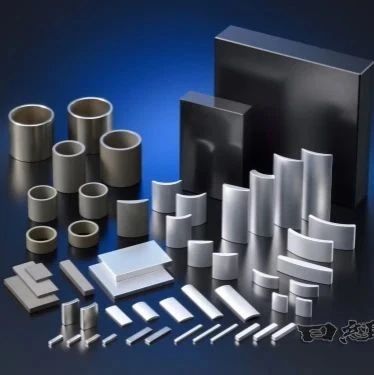
Core Viewpoint - Proterial has developed a new type of magnet for electric vehicle (EV) motors that does not use heavy rare earth materials, addressing supply chain concerns due to China's export restrictions on rare earth elements [1][2]. Group 1 - Proterial has created two types of new magnets, one of which has begun providing trial samples from mass production facilities, while the other is a next-generation magnet with improved heat resistance, expected to start shipping samples around April 2026 [1][2]. - The new magnets are designed to replace traditional neodymium magnets used in precision instruments and electric vehicles, offering stronger magnetic power [1][2]. - The development of these magnets is crucial as the automotive industry faces supply disruptions, exemplified by Suzuki's suspension of production for its Swift model due to rare earth shortages [2].
除了断供镓和锗,东大还有一张王牌,打出来西方将伤筋动骨
Sou Hu Cai Jing· 2025-07-21 09:26
Group 1 - The Chinese government announced export controls on gallium and germanium, causing concern in the U.S. as they have no gallium stock and limited germanium processing capabilities [1][3] - The real strategic asset for China is rare earth elements, which have been developed over decades, with significant contributions from scientist Xu Guangxian [3][5] - Xu Guangxian developed a more efficient method for separating rare earth elements, drastically reducing costs and increasing production efficiency, leading China to dominate the global rare earth market by the 1980s [5][8] Group 2 - Rare earth elements are critical for modern technology and defense, with China controlling nearly half of the global reserves and over 90% of refining capabilities [8][10] - The U.S. is significantly behind in rare earth processing technology, with a gap of about 20 years, which poses a risk to its defense capabilities [10][12] - Recent export controls by China are seen as a response to U.S. actions that threaten China's economic interests, highlighting the strategic importance of rare earths in global supply chains [12][15]
稀土出口管制下,XRF的“机遇”与“痛点”?
仪器信息网· 2025-07-21 03:13
Core Viewpoint - The Ministry of Commerce has implemented export controls on seven types of medium and heavy rare earth elements, which may impact the supply chain and market dynamics in the rare earth industry [1]. Group 1: Rare Earth Elements Overview - Rare earth elements consist of 17 elements, including lanthanides and closely related elements like yttrium and scandium, which are crucial for modern industrial upgrades despite their low abundance in the earth's crust [2]. - These elements significantly enhance the performance of end products, such as improving the efficiency of electric vehicle motors by 30% through neodymium-iron-boron magnets [2]. Group 2: Mining and Processing Challenges - There are over 160 known minerals containing rare earth elements, but only four are primarily mined, making the identification and extraction of rare earth ores particularly challenging [3]. - The processing of rare earth ores is complex and relies heavily on chemical engineering, which is more intricate than the processing of other metals like gold [3]. Group 3: Detection Technology - The export control policy necessitates higher precision and efficiency in detecting medium and heavy rare earth content, with specific requirements such as a measurement error of less than 0.5% for neodymium and dysprosium [3]. - X-ray fluorescence (XRF) technology is highlighted for its rapid, non-destructive, and efficient detection capabilities, making it suitable for various applications in the rare earth sector, including customs supervision and quality inspection [3][4]. Group 4: Recent Developments - The Haike Center has developed the "Haike Guardian K5," a portable XRF quick detection instrument that addresses challenges in sampling, identification, and detection related to dual-use item export controls [4]. - The "Haike Guardian K5" has achieved a 100% identification rate in trials, enhancing the effectiveness of export control enforcement [5]. Group 5: Industry Standards and Future Outlook - Despite the advantages of XRF technology, the rare earth detection industry faces challenges due to the lack of standards for rapid detection, which hampers the technology's broader adoption [5]. - As relevant standards are gradually established, XRF technology is expected to play a more significant role in the rare earth detection field [5].