
自动驾驶

Search documents
Lemonade(LMND) - 2025 Q4 - Earnings Call Transcript
2026-02-19 14:02
Financial Data and Key Metrics Changes - In-force premium grew to $1.24 billion, up 31% year-over-year, marking nine consecutive quarters of accelerating growth [5][11] - Revenue increased by 53% to $228 million, significantly outpacing in-force premium growth [13] - Gross profit rose 73% year-over-year to a record $111 million, with adjusted gross profit increasing 69% to $112 million [6][12] - Adjusted EBITDA loss narrowed to $5 million, representing a $19 million improvement year-over-year [6][17] - Positive adjusted free cash flow of $37 million was generated in Q4, marking the second consecutive year of cash reserve growth [6][14] Business Line Data and Key Metrics Changes - Customer growth was 23%, with approximately 550,000 new customers added in 2025, a 35% increase from the previous year [11] - Gross loss ratio reported at 52%, with favorable prior period development contributing positively [11] - Annual Dollar Retention (ADR) remained stable at 85%, indicating effective customer retention efforts [14] Market Data and Key Metrics Changes - Pet and Car insurance segments are experiencing hypergrowth, with in-force premium growth in the 50s and Europe in the triple digits [7][20] - The Autonomous Car insurance product is positioned to leverage telematics for precise risk assessment and pricing [9][10] Company Strategy and Development Direction - The company is focused on leveraging AI technologies to enhance go-to-market operations, pricing, and cross-selling capabilities, aiming for a durable competitive advantage [7][8] - The launch of the Lemonade Autonomous Car product is a strategic initiative to adapt to the evolving insurance landscape as vehicles become increasingly autonomous [9][10] - The company plans to continue diversifying growth drivers, reducing reliance on any single segment or product line [20] Management's Comments on Operating Environment and Future Outlook - Management expressed optimism about achieving EBITDA profitability in Q4 2026 and for the full year of 2027, with a continued focus on maintaining a solid LTV to CAC ratio [6][17][38] - The company anticipates significant investments in R&D and technology development to enhance operational efficiency and customer experience [31][32] - Management believes that the evolving insurance landscape presents limitless market opportunities despite potential market contractions due to AI advancements [24][25] Other Important Information - The company ended the quarter with approximately $1.1 billion in cash and investments, with $250 million required as regulatory surplus [14] - Operating expenses increased by 24% year-over-year, primarily due to growth spending, while maintaining stable marketing efficiency [15][16] Q&A Session Summary Question: Improvement in marketing efficiency and implications for 2026 - Management indicated that Q4 performance reflects a strategy to reinvest marketing efficiency into growth while maintaining a solid LTV to CAC ratio [26][28] Question: Target for premiums to surplus and operational leverage - Management expects to maintain a capital-light structure with sufficient surplus to support ambitious growth rates through 2027 and beyond [36][38][39] Question: Integration of AI tools like ChatGPT in policy binding - The company currently utilizes its own AI for customer interactions but has not launched a ChatGPT interface yet [42][46] Question: Future of car insurance pricing models - The company envisions a mix of variable and fixed pricing models for car insurance, leveraging real-time data for precise pricing [48][49] Question: Strategic initiatives for cross-selling and home insurance growth - Cross-selling remains a key focus, with over 5% of customers holding multiple policies, contributing significantly to in-force premium [52][55]

华尔街见闻早餐FM-Radio | 2026年2月19日
Hua Er Jie Jian Wen· 2026-02-18 23:22
Market Overview - Technology stocks supported the U.S. market with two consecutive days of gains, while the Federal Reserve's meeting minutes revealed significant divisions among officials regarding interest rate policies [2][3] - The Dow Jones experienced a sharp drop at one point, while Nvidia rose by 1.6% and Amazon, boosted by Bill Ackman's fund, increased nearly 2% [2] - The chip index rose nearly 1%, and Micron, significantly increased by hedge fund Appaloosa, surged over 5% [2] - European stock indices achieved three consecutive days of gains, reaching historical highs, while the UK stock market also set new records [2] Oil and Commodities - Oil prices rebounded significantly, with U.S. crude rising over 4%, marking the largest increase in nearly four months, and Brent crude closing above $70 for the first time this month [2][3] - Gold and silver prices also saw rebounds, with gold rising nearly 3% and silver increasing by 6.5%, although gold later fell below $5,000 [2][7] Key News - The Federal Reserve's meeting minutes indicated a split among officials, with some supporting further rate cuts while others hinted at potential rate hikes [10][11] - The European Central Bank's President Lagarde may leave her position early, which could impact the continuity of monetary policy in the Eurozone [11] - Overseas investors net purchased $1.55 trillion in U.S. long-term financial assets last year, countering the narrative of "selling America" [11] - U.S. core capital goods orders exceeded expectations in December, with a 0.6% increase compared to the anticipated 0.3% [12] Company Developments - Tesla's first Cybercab, designed for fully autonomous driving without a steering wheel or pedals, has rolled off the production line [12] - Google launched the Pixel 10a smartphone ahead of Apple's iPhone 17e, maintaining a price of $499 with limited upgrades [13] - Notable investor Tepper increased his holdings in Micron by 200% and purchased a Korean ETF, betting on the storage sector [14] Investment Trends - Prominent investors are shifting strategies, with some selling Apple shares to increase positions in Nvidia and other AI-related companies [14] - The market is witnessing a trend of reallocating investments towards software stocks that have been undervalued due to recent sell-offs [15]


加码自动驾驶基建布局,优步(UBER.US)斥资1亿美元自建快充站
智通财经网· 2026-02-18 13:36
Core Viewpoint - Uber plans to invest over $100 million in building fast-charging stations for autonomous vehicles in the U.S. to establish a key position in the self-driving taxi industry [1] Group 1: Investment and Infrastructure - The investment will focus on developing high-capacity charging hubs in the San Francisco Bay Area, Los Angeles, and Dallas [1] - The funding will cover site development costs, equipment, grid connections, and capital expenditures related to charging infrastructure [1] - Uber aims to enhance efficiency, reduce costs, and maximize vehicle utilization and operational time by owning some of the charging stations [1] Group 2: Competitive Landscape - Uber is responding to Wall Street's skepticism about its human-driven ride-hailing platform by increasing investments to become a leading supplier and operational partner in autonomous driving technology [1] - The company has invested hundreds of millions in autonomous driving firms like Lucid, Nuro, and Wayve, and has agreements to purchase autonomous taxi fleets for large-scale deployment on its platform [1] Group 3: Strategic Partnerships and Services - Uber's autonomous driving strategy has received mixed reactions from investors, with its stock down 14% this year, while it remains optimistic about providing autonomous vehicle services in at least 10 cities by the end of 2026 [2] - The company plans to launch autonomous taxi services using Lucid and Nuro in the Bay Area and Volkswagen's autonomous delivery vehicles in Los Angeles this year [2] - Uber has partnered with Waymo in Austin and Atlanta to provide autonomous services, managing vehicle operations through third-party companies [2] Group 4: Charging Solutions and Electric Vehicle Strategy - Uber announced new agreements with charging operators to enhance charging convenience for its electric ride-hailing drivers, ensuring usage guarantees for partners [2][3] - The partnerships include companies like EVgo in New York, Los Angeles, San Francisco, and Boston, as well as Hubber in London and Ionity in Europe [3] - The shift in Uber's electric vehicle investment strategy comes as driver concerns about charging convenience have surpassed worries about vehicle purchase costs [3]

马斯克重申:特斯拉Cybercab 4月投产,无方向盘无踏板【附自动驾驶行业市场分析】
Xin Lang Cai Jing· 2026-02-18 05:56
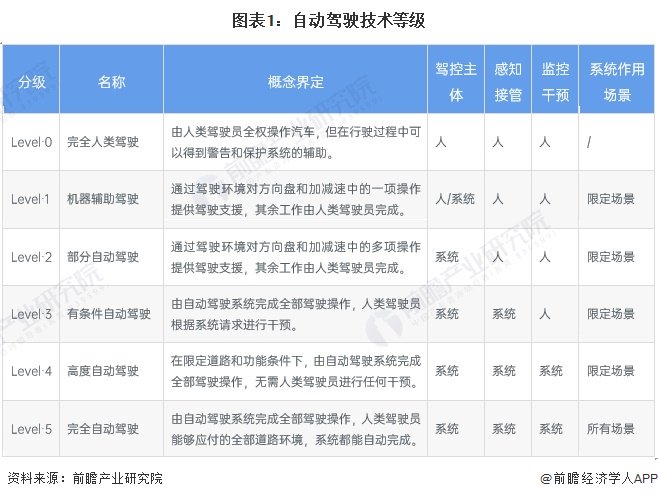
Group 1: Tesla's Cybercab Production - Tesla CEO Elon Musk reiterated that the production of the Cybercab, a fully autonomous vehicle without a steering wheel or pedals, will begin in April 2024, marking the third time he has confirmed this timeline in six months [1] - The Cybercab is designed to be a core component of Tesla's Robotaxi network, reflecting the company's strategic shift towards an autonomous ride-hailing service [1] - Musk acknowledged that initial production volumes of the Cybercab will be low due to the use of revolutionary new components and production techniques, with a production ramp-up expected to follow an S-curve pattern [1] Group 2: Autonomous Driving Market Trends - Autonomous driving has become a core competitive advantage for automakers, serving as a key component of technological barriers and business model upgrades [2] - The SAE defines six levels of autonomous driving (L0-L5), with L5 representing full automation, or true "driverless" operation [2] - Level 2 (L2) advanced driver assistance systems have become mainstream, with penetration rates in China's passenger car market increasing from 23.5% in 2021 to 42.4% in the first half of 2023 [4] Group 3: Future Predictions - NVIDIA CEO Jensen Huang predicted that a significant portion of vehicles will be autonomous or highly automated within the next decade, potentially reaching a scale of one billion autonomous vehicles [6]

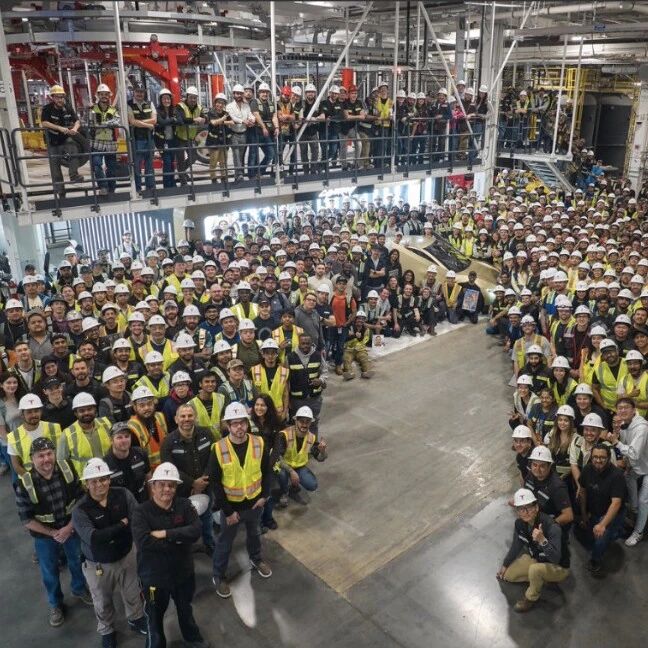
特斯拉首辆Cybercab下线:没有方向盘和踏板的汽车终于来了
华尔街见闻· 2026-02-18 04:33
Core Viewpoint - Tesla has launched its purpose-built autonomous taxi vehicle, Cybercab, marking a significant step in the fully autonomous driving sector, but its commercial prospects depend on regulatory approval progress [1][3]. Group 1: Vehicle Design and Features - The Cybercab is designed specifically for Tesla's emerging autonomous taxi business, differing from the 2025 Model Y, as it lacks any manual driving controls [3][4]. - This two-door vehicle is intended for complete autonomous driving, eliminating the steering wheel and pedals [3][4]. Group 2: Regulatory Challenges - Achieving legal road use for the Cybercab requires overcoming significant regulatory hurdles, as federal vehicle safety standards were established with human control systems in mind [3][6]. - Tesla may need to apply for special exemptions from regulatory agencies to meet these requirements, similar to what Zoox has done for its operations in Las Vegas and San Francisco [7][8]. Group 3: Market Position and Pricing - Currently, Tesla's autonomous taxi project primarily operates using the 2025 Model Y, with most trips still relying on human safety supervisors [4]. - Elon Musk indicated that consumers will have the option to purchase the Cybercab, which is designed for autonomous driving and is priced at approximately $25,000 [8].
【Tesla每日快訊】 CarPlay 又卡死!Apple Maps 竟成最大絆腳石🔥中國2027禁止軛輪/全球警界愛上 Tesla(2026/2/17)
大鱼聊电动· 2026-02-17 10:15
大家好我是大鱼 Tesla 终于松口 要让 CarPlay 上车 却在最后一哩路 直接卡死 FSD 模式下 Apple Maps 喊直走 Tesla 地图 已准备右转 两个指令同时炸开 萤幕瞬间变成 最危险的拉锯战 这不是小问题 而是自动驾驶 安全的致命冲突 马斯克团队 宁可延迟数月 也绝不让步半分 现在关键patch 已藏在iOS 26里 Tesla 内部时间表 正悄悄往前推 这次合作 会是马斯克 最大的一次低头 还是另一场 完美主义的胜利? 大家不要错过 今天的精彩内容 OK let's go 第一部分 CarPlay 又卡死! 你还在盯Tesla 的CarPlay 吗? 本来以为 很快就能上车 结果最新消息 直接泼冷水 又延迟了! 但这次不是 Tesla 耍大牌 而是Apple Maps 跟Tesla 自家地图在 自动驾驶 时闹别扭 听起来有点搞笑 却是马斯克团队 最认真的地方 根据Bloomberg 的报导 Tesla 跟Apple 已经合作好几个月 目标是让CarPlay 以视窗形式 跑在Tesla的 原生介面里 不会完全取代 自家系统 车主还是能用 Tesla 那套 超流畅的导航 音乐跟FSD 控 ...
小鹏为什么这么“烦”L3
虎嗅APP· 2026-02-16 13:01
Core Viewpoint - Xiaopeng Motors is shifting focus from L3 to L4 autonomous driving technology, arguing that L3 is a transitional technology that hinders progress due to regulatory constraints and safety concerns [12][20]. Group 1: Industry Context - The Chinese autonomous driving sector is projected to see total investments of 700-750 billion yuan by 2025, a 40% increase year-on-year, while the overall automotive industry's profit margin is only 4.1%, indicating a mismatch between profit growth and R&D investment [3]. - Many automakers are constrained by current regulations, with L3 technology being limited in its operational design domain (ODD), primarily restricted to urban and highway scenarios [8][24]. Group 2: Technological Development - Xiaopeng's GX model is currently undergoing L4 road tests, utilizing a high computing power of 3000 TOPS, which surpasses competitors like Li Auto's new L9 [5][7]. - The L4 technology is being validated through successful commercial trials, with companies like Pony.ai and RoboTaxi demonstrating profitability in specific applications [17][19]. Group 3: Challenges and Considerations - Transitioning directly to L4 from L2 requires substantial data accumulation, as L4 relies on insights gained from L3 operations [23]. - Regulatory frameworks pose significant challenges, as L3's operational limitations are defined by legal and liability considerations, which differ from L4's clearer responsibility structure [24]. - The current L4 implementations face hurdles, including the need for advanced perception systems that can handle diverse environmental conditions, which may not be achievable with a purely vision-based approach [28][30].

小鹏汽车-W(09868.HK):看好VLA2.0能力 即将在26Q1全量推送
Ge Long Hui· 2026-02-15 21:03
Core Insights - Xiaopeng Motors is set to launch VLA 2.0 in March, significantly enhancing its intelligent driving capabilities with advanced hardware and software integration [1] - The year 2026 is projected to be a pivotal year for Xiaopeng Motors, marking the introduction of Robotaxi services and the launch of multiple new models [2] - The company is expected to see substantial growth in overseas sales, with a focus on expanding into European, Southeast Asian, Middle Eastern, and Latin American markets [3] - 2026 will also witness the mass production of advanced humanoid robots, aimed at commercial applications [4] - Investment recommendations highlight strong product cycles, overseas expansion, and emerging business opportunities in robotics and Robotaxi services [5] Group 1: VLA 2.0 and Intelligent Driving - Xiaopeng Motors will begin rolling out VLA 2.0 in March, featuring 2250 TOPS of in-car computing power and a cloud computing cluster with 30,000 cards [1] - The first batch of vehicles to receive the update includes the 2025 models of P7, G7, and X9, with subsequent models to follow [1] Group 2: Robotaxi and New Models - The company plans to launch three Robotaxi models in 2026, equipped with four Turing chips and a pure vision autonomous driving system [2] - Xiaopeng's first large six-seater SUV, the GX, has begun L4 autonomous driving tests on public roads [2] Group 3: Overseas Expansion - In 2025, Xiaopeng delivered 45,000 vehicles overseas, marking a 96% year-on-year growth, with expectations for continued strong growth in 2026 [3] - The company will introduce three new models in overseas markets, including P7+ and Mona SUVs, while focusing on local production partnerships in Europe, Indonesia, and Malaysia [3] Group 4: Robotics and Future Innovations - Xiaopeng showcased its latest generation Iron robot, with plans for mass production by the end of 2026, targeting commercial service applications [4] Group 5: Investment Outlook - The company anticipates total vehicle sales of approximately 430,000, 570,000, and 840,000 units from 2025 to 2027, with total revenues projected at 75.2 billion, 103.1 billion, and 145.5 billion RMB respectively [5] - The valuation for the partnership with Volkswagen is estimated at 30.3 billion HKD, while the main business is valued at 169.9 billion HKD, leading to a total valuation of 200.2 billion HKD [5]
马斯克:就我所能想象的未来而言,特斯拉(TSLA.O)将拥有规模最大的自动驾驶汽车车队。
Jin Rong Jie· 2026-02-15 07:53
马斯克:就我所能想象的未来而言,特斯拉(TSLA.O)将拥有规模最大的自动驾驶汽车车队。 ...
马斯克:特斯拉FSD将停止一次性付费服务,转为订阅制
Ge Long Hui A P P· 2026-02-15 03:44
Core Viewpoint - Tesla will stop selling its Full Self-Driving (FSD) system through a one-time payment model and will fully adopt a monthly subscription model starting February 14 [1] Group 1: Business Model Changes - The previous pricing for the FSD system was $8,000 for a one-time payment or $99 per month for a subscription [1] - The shift to a subscription model may be influenced by CEO Elon Musk's compensation structure, which is tied to business growth metrics [1] Group 2: Performance Targets - Tesla must achieve multiple targets, including reaching 10 million FSD subscription users, for Musk to receive additional stock rewards as per a compensation plan approved by shareholders [1] Group 3: Regional Adjustments - In Australia, the deadline for the one-time purchase option has been extended to March 31 [1]