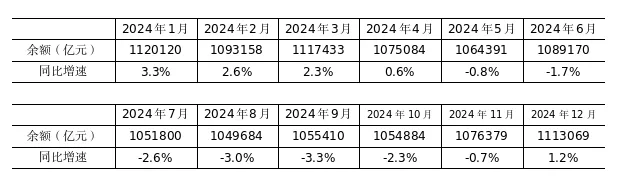
社会融资规模

Search documents
8月M1、M2“剪刀差”再创年内新低 更多资金转为活期存款“拿出来花”
Shang Hai Zheng Quan Bao· 2025-09-12 18:42
Group 1 - The core viewpoint of the articles indicates that China's financial metrics, including social financing scale, broad money (M2), and RMB loans, are showing robust year-on-year growth, reflecting a stable financial environment that supports economic activities [2][5][6] - As of the end of August, the social financing scale reached 433.66 trillion yuan, with a year-on-year growth of 8.8%, indicating a strong support for economic activities [5] - The M1 and M2 "scissor difference" has narrowed to 2.8 percentage points, the smallest value this year, suggesting a shift towards more liquid deposits that can facilitate consumption and investment [5][6] Group 2 - The RMB loan balance reached 269.1 trillion yuan by the end of August, with a year-on-year growth of 6.8%, supported by recovering industry sentiment, resilient exports, and seasonal consumption peaks [3][4] - The manufacturing sector has seen a significant increase in loan demand, with new manufacturing loans accounting for 53% of new corporate loans, up 33 percentage points from the previous year [3] - Personal loans have also increased due to traditional summer consumption patterns and policies promoting consumption, indicating a rise in consumer demand [3][4] Group 3 - Recent housing policies in major cities like Beijing and Shanghai have stimulated demand for personal housing loans, leading to a noticeable increase in loan consultations and agreements [4] - The issuance of special refinancing bonds for replacing local government hidden debts reached 1.9 trillion yuan by the end of August, contributing to a higher loan growth rate [4] - The overall loan growth rate, adjusted for the impact of hidden debt replacement, is estimated to be around 7.8%, indicating strong support for the real economy [4] Group 4 - The balance of inclusive small and micro loans reached 35.20 trillion yuan, growing by 11.8%, while medium to long-term loans for manufacturing increased by 8.6%, both outpacing the overall loan growth rate [7] - Loan interest rates remain at historical lows, with the average interest rate for new corporate loans at approximately 3.1%, down about 40 basis points year-on-year [7] - Analysts predict that the macroeconomic environment will continue to support a stable and moderately loose monetary policy, enhancing financial support for key sectors [8][9]

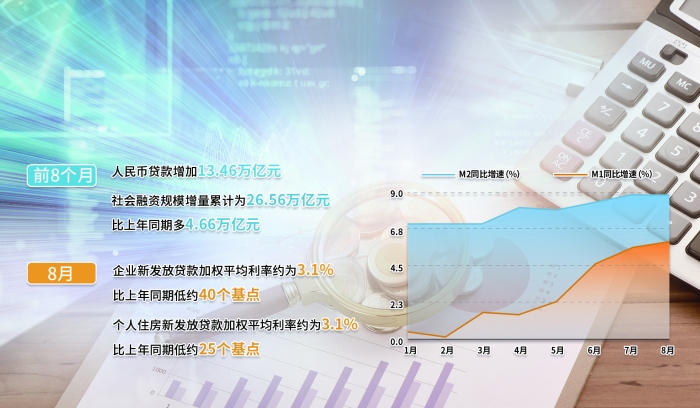
【新华解读】社融保持较高增速 信贷支持力度稳固——透视8月金融数据
Xin Hua She· 2025-09-12 16:39
Core Viewpoint - The People's Bank of China reported that the social financing scale grew by 8.8% year-on-year as of the end of August, indicating sustained financial support for the real economy [1] Group 1: Credit Supply and Growth - As of the end of August, the total social financing stock was 433.66 trillion yuan, with a year-on-year growth of 8.8%. The balance of RMB loans to the real economy was 265.42 trillion yuan, growing by 6.6% year-on-year [1] - The growth in loans during August was significant, with strong internal momentum for credit supply. A combination of proactive fiscal policy and moderately loose monetary policy has created a favorable monetary environment for economic recovery [1] - The broad money supply (M2) increased by 8.8% year-on-year, while the narrow money supply (M1) grew by 6%, indicating a narrowing "scissors difference" that suggests more funds are being converted into demand deposits for consumption and investment [1] Group 2: Bond Financing - In the first eight months, net financing from corporate bonds reached 1.56 trillion yuan, while government bonds net financing was 10.27 trillion yuan. The increase in government bond financing significantly supported social financing growth [2] Group 3: Loan Distribution and Quality - In the first eight months, RMB loans increased by 13.46 trillion yuan, with enterprise loans accounting for a significant portion. Long-term loans increased by 7.38 trillion yuan, making up over 60% of the total [3] - Notably, loans to the manufacturing sector and small and micro enterprises showed significant growth, with advanced manufacturing sectors experiencing high demand for financing [4] - By the end of August, the balance of medium- and long-term loans in the manufacturing sector was 14.87 trillion yuan, growing by 8.6% year-on-year, while loans to small and micro enterprises reached 35.2 trillion yuan, growing by 11.8% [4] Group 4: Consumer Loans and Housing Market - In August, short-term loans for residents increased by over 100 billion yuan, with a slight increase in medium- and long-term loans. Policies promoting consumption have further released consumer demand [5] - Recent housing market policies in major cities have led to a noticeable increase in mortgage loan inquiries and signings, supporting the growth of household loans [5] Group 5: Loan Interest Rates - In August, the weighted average interest rate for new corporate loans was approximately 3.1%, slightly lower than the previous month and down about 40 basis points year-on-year. The same rate for personal housing loans was also around 3.1%, down 25 basis points year-on-year [6] - The sustained low interest rates for loans help reduce the financial burden on enterprises and residents, facilitating consumption and investment potential [6] - Starting September 2024, the People's Bank of China will initiate a pilot program to enhance transparency in corporate loan financing costs, aiming to further reduce comprehensive financing costs [6]
8月份金融数据释放积极信号对实体经济支撑有力
Zheng Quan Ri Bao· 2025-09-12 16:24
Core Insights - The People's Bank of China reported that as of the end of August, M2 money supply reached 331.98 trillion yuan, growing by 8.8% year-on-year, indicating a moderately loose monetary policy that supports economic growth [1][6] - The total social financing stock was 433.66 trillion yuan, also reflecting an 8.8% year-on-year increase, suggesting a stable macroeconomic policy environment [1][5] Monetary Supply and Loans - As of the end of August, the balance of RMB loans was 269.1 trillion yuan, with a year-on-year growth of 6.8%, indicating a healthy credit environment [1] - In the first eight months of the year, RMB loans increased by 1.346 trillion yuan, with August alone contributing 590 billion yuan, driven by both household and corporate loans [2] Credit Growth Drivers - Factors such as industry recovery, resilient exports, summer consumption peaks, and supportive real estate policies have bolstered credit growth in August [3] - Manufacturing sector loans have seen significant growth, with new loans in this sector accounting for 53% of total corporate loans, a substantial increase of 33 percentage points compared to the previous year [3] Real Estate Market Impact - Major cities like Beijing, Shanghai, and Shenzhen have introduced real estate policies to stimulate demand, leading to a notable increase in housing transactions and mortgage loan inquiries [4] Financial Policy and Social Financing - The cumulative increase in social financing for the first eight months was 26.56 trillion yuan, exceeding the previous year's figures by 4.66 trillion yuan, supported by proactive fiscal policies [5] - The M1 money supply reached 111.23 trillion yuan, growing by 6% year-on-year, contributing to a narrowing of the M1-M2 gap to -2.8%, the lowest since June 2021 [6]
财经聚焦丨社融保持较高增速 信贷支持力度稳固——透视8月金融数据
Xin Hua Wang· 2025-09-12 15:01
Core Viewpoint - The People's Bank of China reported that the social financing scale increased by 8.8% year-on-year as of the end of August, indicating sustained financial support for the real economy [2] Group 1: Financial Support and Growth - As of the end of August, the total social financing scale reached 433.66 trillion yuan, with a year-on-year growth of 8.8%. The balance of RMB loans to the real economy was 265.42 trillion yuan, growing by 6.6% year-on-year [2] - The broad money supply (M2) increased by 8.8% year-on-year, while the narrow money supply (M1) grew by 6%, indicating a narrowing "scissors difference" which suggests more funds are being converted into demand deposits for consumption and investment [2] - In the first eight months, net financing through corporate bonds reached 1.56 trillion yuan, and government bonds net financing was 10.27 trillion yuan, supporting the growth of social financing [3] Group 2: Credit Structure and Quality - In the first eight months, RMB loans increased by 13.46 trillion yuan, with 12.22 trillion yuan going to enterprises, primarily in the form of medium- and long-term loans [4] - Significant credit growth was observed in the manufacturing sector and for small and micro enterprises, with medium- and long-term loans in manufacturing reaching 14.87 trillion yuan, growing by 8.6% year-on-year [4] - Financial institutions are focusing on optimizing credit structures to support high-quality economic development, moving away from "involution" competition [4] Group 3: Consumer Demand and Housing Market - Policies promoting consumption, such as trade-in programs and financial incentives, have led to an increase in short-term consumer loans [6] - Recent housing market policies in major cities have stimulated mortgage loan inquiries and signings, indicating a recovery in housing demand [6] Group 4: Loan Rates and Financial Environment - In August, the average interest rate for newly issued corporate loans was approximately 3.1%, slightly lower than the previous month and down about 40 basis points year-on-year, indicating a supportive financial environment [7] - The People's Bank of China has initiated a pilot program to enhance transparency in corporate loan costs, aiming to further reduce financing costs [9]

M2突破331万亿!居民存款“搬家”股市 8月金融市场有这些新变化
Bei Jing Shang Bao· 2025-09-12 14:31
Core Insights - The latest financial data released by the People's Bank of China indicates a significant growth in broad money (M2) and social financing, with M2 reaching 331.98 trillion yuan, up 8.8% year-on-year, and social financing stock at 433.66 trillion yuan, also up 8.8% year-on-year [1][12]. Group 1: Loan Growth and Structure - As of the end of August, the balance of RMB loans stood at 269.1 trillion yuan, reflecting a year-on-year growth of 6.8% [4]. - In the first eight months of the year, RMB loans increased by 13.46 trillion yuan, with household loans rising by 711 billion yuan and corporate loans increasing by 12.22 trillion yuan [4][5]. - August saw a net increase of 590 billion yuan in RMB loans, with corporate and personal loans both experiencing growth, supported by favorable policies and seasonal consumption trends [5][7]. Group 2: Social Financing Trends - Cumulative social financing growth for the first eight months reached 26.56 trillion yuan, which is 4.66 trillion yuan more than the same period last year [8]. - In August alone, new social financing amounted to 2.57 trillion yuan, a year-on-year decrease of 463 billion yuan, primarily due to reduced RMB loans to the real economy [9]. - The issuance of special bonds for replacing local government hidden debts has provided significant funding support, with 1.9 trillion yuan issued by the end of August [9][10]. Group 3: Monetary Supply and Policy Outlook - By the end of August, M2 growth remained robust at 8.8%, driven by increased fiscal spending and a decrease in fiscal deposits [12]. - Experts anticipate that the People's Bank of China may implement a new round of interest rate cuts and reserve requirement ratio reductions in the fourth quarter, aiming to support credit growth and economic activity [13][14]. - The current monetary policy is characterized as supportive, with a focus on optimizing the structure of financial growth rather than merely increasing total volume [12][13].
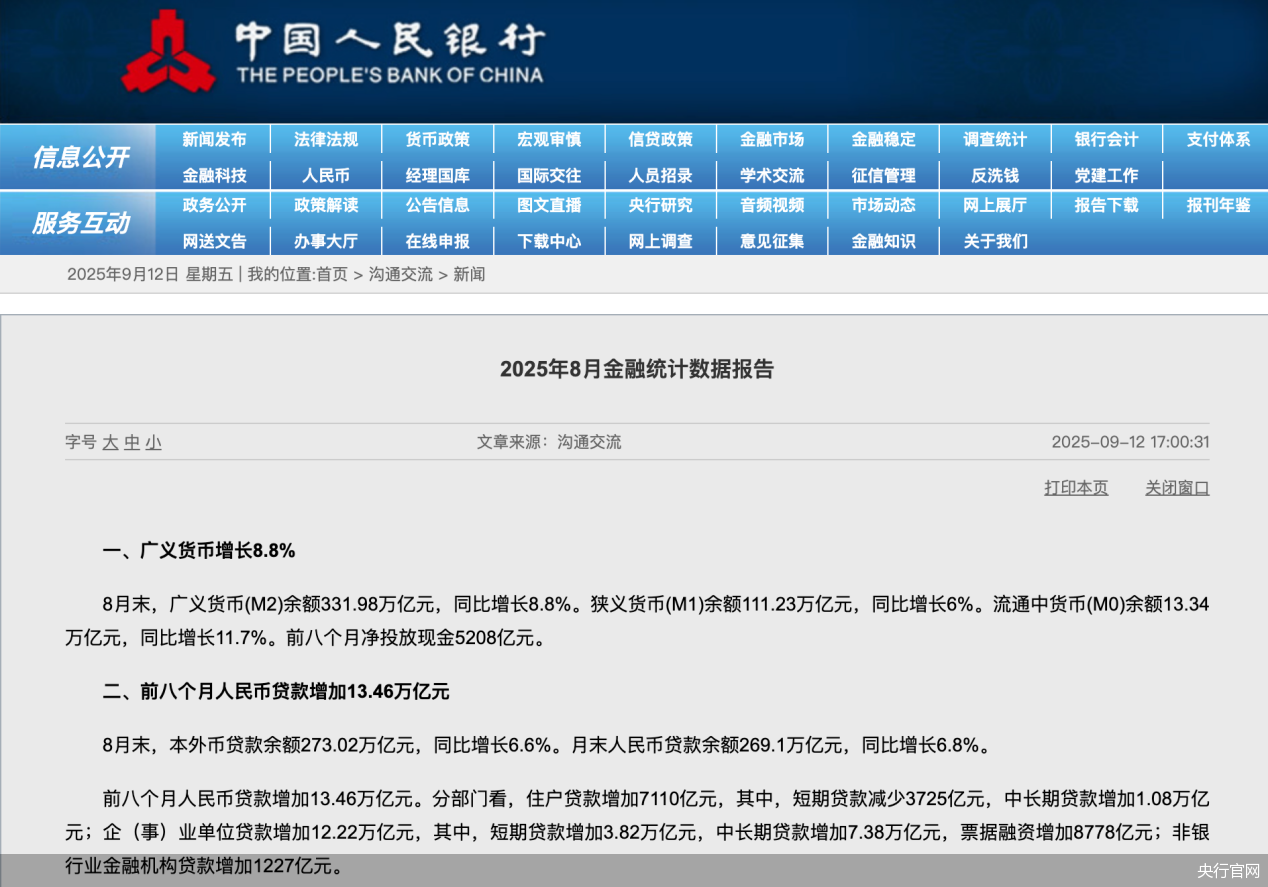
M2突破331万亿!居民存款“搬家”股市,8月金融市场有这些新变化
Bei Jing Shang Bao· 2025-09-12 14:24
Group 1 - The core viewpoint of the article highlights the recovery in credit growth supported by various factors such as industry recovery, resilient exports, summer consumption peak, and real estate support policies [1][4][7] - As of August 2025, the broad money (M2) balance reached 331.98 trillion yuan, with a year-on-year growth of 8.8%, which is 2.5 percentage points higher than the same period last year [1][11] - The total social financing stock was 433.66 trillion yuan, also growing by 8.8% year-on-year, indicating a stable financing environment [1][8] Group 2 - In August, the RMB loan balance increased to 269.1 trillion yuan, reflecting a year-on-year growth of 6.8%, with a notable increase in corporate loans and personal loans [4][5] - The manufacturing sector has shown a significant recovery, with new manufacturing loans accounting for 53% of new corporate loans, a substantial increase of 33 percentage points compared to the previous year [5] - Personal loans have also seen growth due to traditional summer consumption patterns and policies promoting consumption, leading to increased loan demand [5][6] Group 3 - The social financing growth rate has shown a marginal decline, with a total increase of 26.56 trillion yuan in the first eight months of 2025, which is 4.66 trillion yuan more than the same period last year [8][9] - In August alone, new social financing amounted to 2.57 trillion yuan, a decrease of 4.63 trillion yuan year-on-year, primarily due to a reduction in loans to the real economy [9][10] - The issuance of special refinancing bonds has provided significant support for addressing hidden debts, with 1.9 trillion yuan issued by the end of August [9][10] Group 4 - The monetary supply data indicates that M1 and M0 also experienced growth, with M1 reaching a year-on-year growth of 6% and M0 growing by 11.7% [11][12] - Experts suggest that the narrowing gap between M1 and M2 indicates a shift towards more liquid deposits, which can enhance consumption and investment activities [12] - The People's Bank of China is expected to continue implementing supportive monetary policies, including potential interest rate cuts and reserve requirement ratio reductions in the fourth quarter [12][13]
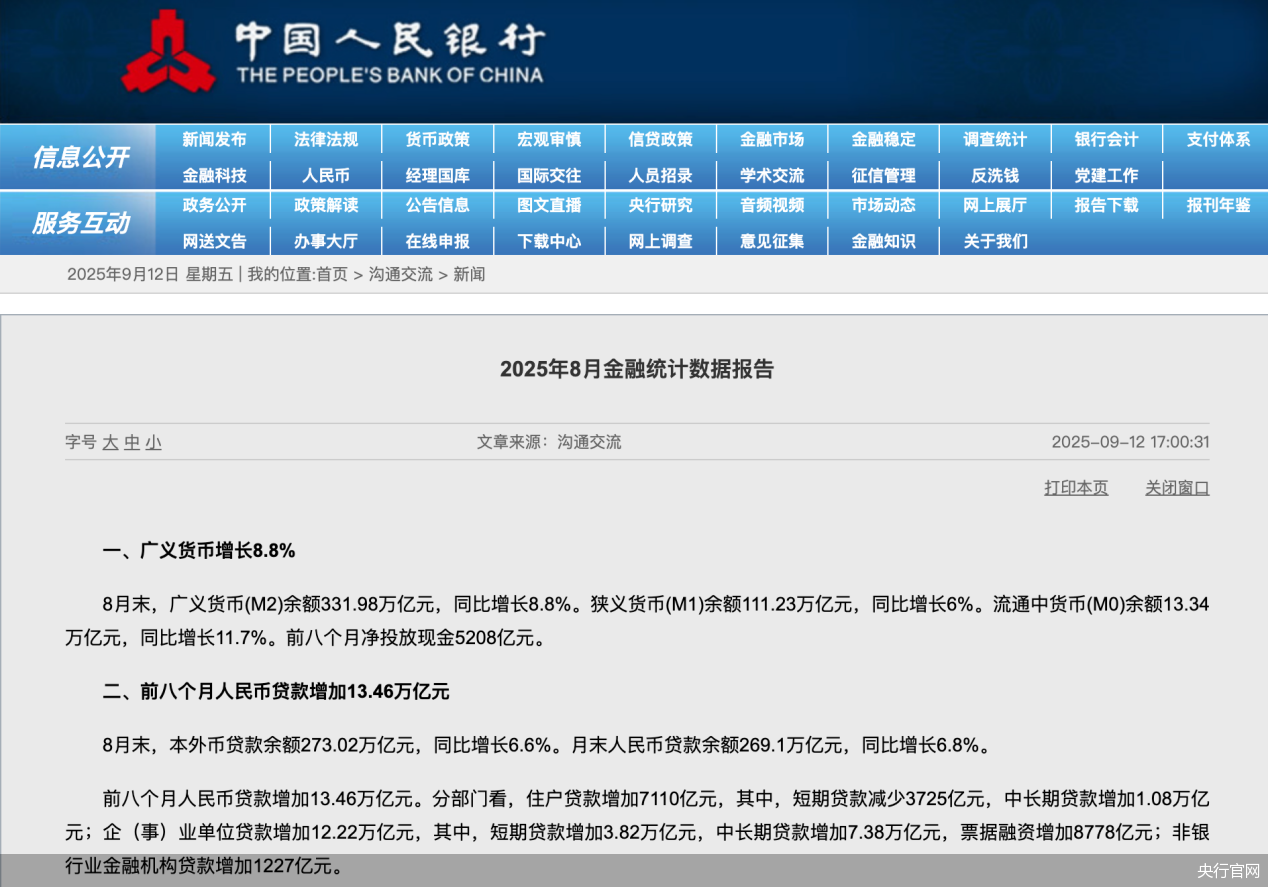
中国8月末社会融资规模存量433.66万亿元 同比增8.8%
Zhong Guo Xin Wen Wang· 2025-09-12 12:53
Group 1 - As of the end of August 2025, China's social financing scale reached 433.66 trillion yuan, reflecting a year-on-year growth of 8.8% [1] - The balance of RMB loans issued to the real economy was 265.42 trillion yuan, with a year-on-year increase of 6.6% [1] - The cumulative increase in social financing for the first eight months of 2025 was 26.56 trillion yuan, which is 4.66 trillion yuan more than the same period last year [1] Group 2 - The chief economist of China Minsheng Bank, Wen Bin, noted that the combination of more proactive fiscal policies and moderately loose monetary policies has supported the growth of social financing [1] - The scale of social financing that includes government bonds has become a leading indicator for the recovery of the Chinese economy [1] - Direct financing, primarily through government and corporate bonds, has been growing faster than credit financing, indicating a shift in the financing structure that aligns better with economic transformation [1] Group 3 - Looking ahead, the fourth quarter is crucial for achieving the annual and "14th Five-Year" economic targets, with expectations for new policies to be introduced [2] - Key sectors such as infrastructure and real estate are anticipated to receive more favorable policies, especially with the continued growth of government bond issuance [2] - Financial data is expected to improve, supported by factors like the "Golden September and Silver October" in real estate [2]
央行发布最新金融数据!
Zheng Quan Ri Bao Wang· 2025-09-12 12:24
Group 1 - The People's Bank of China reported that as of the end of August 2025, the broad money supply (M2) reached 331.98 trillion yuan, an increase of 8.8% year-on-year [1] - The narrow money supply (M1) stood at 111.23 trillion yuan, growing by 6% year-on-year [1] - The cash in circulation (M0) was 13.34 trillion yuan, reflecting a year-on-year increase of 11.7% [1] Group 2 - The total amount of loans in both domestic and foreign currencies reached 273.02 trillion yuan, with a year-on-year growth of 6.6% [1] - The balance of RMB loans was 269.1 trillion yuan, marking a year-on-year increase of 6.8% [1] - In the first eight months, RMB loans increased by 13.46 trillion yuan, with household loans rising by 711 billion yuan [1] Group 3 - The social financing scale increment for the first eight months of 2025 totaled 26.56 trillion yuan, which is an increase of 4.66 trillion yuan compared to the same period last year [2] - The issuance of RMB loans to the real economy increased by 12.93 trillion yuan, which is a decrease of 4.85 trillion yuan year-on-year [2] - The net financing of government bonds reached 10.27 trillion yuan, which is an increase of 4.63 trillion yuan year-on-year [2] Group 4 - As of the end of August 2025, the total social financing scale stood at 433.66 trillion yuan, reflecting a year-on-year growth of 8.8% [3] - The balance of RMB loans to the real economy was 265.42 trillion yuan, with a year-on-year increase of 6.6% [3] - The balance of government bonds grew by 21.1% year-on-year, reaching 91.36 trillion yuan [3]
金融总量增速保持高位,8月金融数据解读来了
Sou Hu Cai Jing· 2025-09-12 12:24
Core Insights - The People's Bank of China reported that as of the end of August 2025, the broad money supply (M2) reached 331.98 trillion yuan, reflecting a year-on-year growth of 8.8% [1] - The social financing scale stood at 433.66 trillion yuan, also showing a year-on-year increase of 8.8%, with the total new social financing for the first eight months amounting to 26.56 trillion yuan, which is 4.66 trillion yuan more than the same period last year [1] - The loan growth to the real economy was supported by various factors including industry recovery, resilient exports, and consumption during the summer peak season [1][4] Monetary Policy and Financial Support - The financial system's support for the real economy remains strong, with new RMB loans totaling 13.46 trillion yuan from January to August 2025 [2] - The People's Bank of China has implemented multiple rate cuts since 2020, leading to a significant decrease in the comprehensive financing costs for the real economy [2] - As of August, the average interest rate for newly issued corporate loans was approximately 3.1%, down about 40 basis points year-on-year [2] Consumer and Housing Loan Growth - August saw a rise in personal loans driven by traditional summer consumption and government policies promoting consumption [4] - Major cities like Beijing, Shanghai, and Shenzhen introduced real estate policies to better meet housing demand, which is expected to further stimulate loan demand [4] Future Outlook - The fourth quarter is crucial for achieving annual economic targets, with expectations for new policies to support key sectors like infrastructure and real estate [4] - The continued growth in government bond issuance and seasonal factors are anticipated to stabilize financing scales, with financial data expected to improve [4][5] Structural Monetary Policy - Future monetary policy should focus on optimizing the structure while maintaining reasonable growth in total financial volume [5] - Structural monetary policy tools are expected to enhance financial institutions' ability to support key sectors effectively [5]
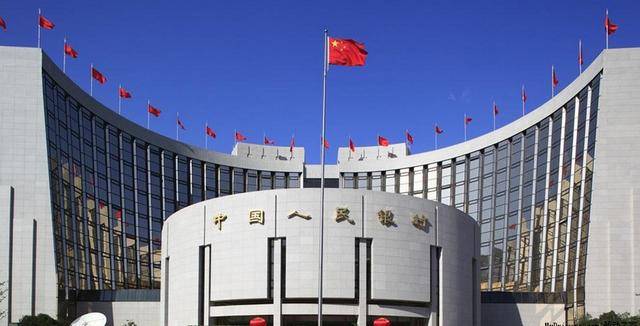
刚刚 央行发布!
Zhong Guo Ji Jin Bao· 2025-09-12 12:15
Group 1: Monetary Statistics - As of the end of August, the broad money supply (M2) reached 331.98 trillion yuan, growing by 8.8% year-on-year [1] - The narrow money supply (M1) stood at 111.23 trillion yuan, with a year-on-year increase of 6% [1] - The cash in circulation (M0) amounted to 13.34 trillion yuan, reflecting a year-on-year growth of 11.7% [1] - In the first eight months, a net cash injection of 520.8 billion yuan was recorded [1] Group 2: Loan Statistics - By the end of August, the total balance of RMB loans was 269.1 trillion yuan, marking a year-on-year increase of 6.8% [1] - In the first eight months, RMB loans increased by 13.46 trillion yuan [1] - Household loans rose by 711 billion yuan, with short-term loans decreasing by 372.5 billion yuan and medium to long-term loans increasing by 1.08 trillion yuan [1] - Corporate loans increased by 12.22 trillion yuan, with short-term loans up by 3.82 trillion yuan and medium to long-term loans up by 7.38 trillion yuan [1] Group 3: Deposit Statistics - The total balance of RMB deposits reached 322.73 trillion yuan, growing by 8.6% year-on-year [3] - In the first eight months, RMB deposits increased by 20.5 trillion yuan [3] - Household deposits rose by 9.77 trillion yuan, while non-financial enterprise deposits increased by 610.6 billion yuan [3] Group 4: Foreign Currency Statistics - As of the end of August, the foreign currency loan balance was 551.7 billion USD, down by 7.1% year-on-year [2] - The foreign currency deposit balance reached 1.02 trillion USD, reflecting a year-on-year increase of 19.4% [4] - In the first eight months, foreign currency loans increased by 9.6 billion USD [2] - Foreign currency deposits rose by 165.4 billion USD during the same period [4] Group 5: Interbank Market Activity - In August, the weighted average interest rate for interbank RMB market lending was 1.4%, lower by 0.05 percentage points from the previous month and 0.37 percentage points year-on-year [4] - The total transaction volume in the interbank RMB market reached 202.68 trillion yuan, with an average daily transaction of 9.65 trillion yuan, a year-on-year increase of 16.8% [4] Group 6: Cross-Border RMB Settlement - In August, the cross-border RMB settlement amount under the current account was 1.47 trillion yuan, with goods trade accounting for 1.11 trillion yuan [5] - The direct investment cross-border RMB settlement amount was 0.61 trillion yuan, with outbound direct investment at 0.24 trillion yuan and foreign direct investment at 0.37 trillion yuan [5] Group 7: Social Financing Scale - As of the end of August, the total social financing scale was 433.66 trillion yuan, growing by 8.8% year-on-year [9] - The balance of RMB loans to the real economy was 265.42 trillion yuan, with a year-on-year increase of 6.6% [9] - The balance of government bonds reached 91.36 trillion yuan, reflecting a year-on-year growth of 21.1% [9] Group 8: Social Financing Increment - In the first eight months, the cumulative increment of social financing was 26.56 trillion yuan, which is 4.66 trillion yuan more than the same period last year [11] - RMB loans to the real economy increased by 12.93 trillion yuan, which is a decrease of 4.85 trillion yuan compared to the previous year [11] - Government bond net financing was 10.27 trillion yuan, which is an increase of 4.63 trillion yuan year-on-year [11]