全国统一大市场建设

Search documents
泓德基金:坚持内需主导,关注“两新”政策后续
Xin Lang Cai Jing· 2025-12-12 09:46
Core Insights - The Central Economic Work Conference held in Beijing from December 10 to 11 acknowledged the achievements of the past year and the "14th Five-Year Plan" period, proposing five essential points for economic work under new circumstances, which will serve as the ideological foundation for future policies [1][3] Group 1: Economic Policy Direction - The current economic challenges are characterized as developmental and transitional issues, leading to a policy approach that maintains strategic stability, focusing more on support rather than drastic measures [1][3] - Fiscal policy language has become more moderate, emphasizing reform, while monetary policy remains moderately accommodative, with a new focus on reasonable price recovery. The expression regarding reserve requirement ratio (RRR) and interest rate cuts has shifted from "timely" to "flexibly and efficiently utilizing various policy tools," highlighting the importance of marginal policy effects [1][3] Group 2: Demand and Supply Side Focus - The conference emphasizes a demand-driven approach, with a primary focus on domestic demand and the construction of a robust domestic market. There is a commitment to expand the supply of quality goods and services, along with an optimization of the "two new" policy implementation, which will involve monitoring the scale and scope of subsidies [2][4] - In terms of investment, the conference aims to stabilize and reverse the downward trend, with future policies likely to balance investment stabilization and "anti-involution" efforts structurally [2][4] - The real estate sector is characterized by a stabilizing approach, with specific measures including controlling new supply, reducing inventory, and enhancing supply quality, reflecting a mindset focused on revitalizing existing assets and policy support [2][4] Group 3: Innovation and Reform - The conference prioritizes innovation-driven growth and the cultivation of new momentum as the second key focus for the coming year, shifting from merely expanding industries to emphasizing institutional development [2][4] - Regarding reforms, the conference announced plans to establish a national unified market construction regulation and to address "involutionary" competition more concretely than previous statements, indicating a stronger commitment to regulating disorderly competition among enterprises [2][4] Group 4: Risk Management - The content related to risk prevention has been deprioritized, suggesting that the most urgent phase of systemic risk prevention may have passed. However, risk management remains a bottom line, with an emphasis on urging local governments to actively manage their debts [5]
一文梳理丨中央经济工作会议提了哪些关键词
Sou Hu Cai Jing· 2025-12-12 08:38
Core Viewpoint - The Central Economic Work Conference outlined eight key tasks for economic work in 2026, emphasizing the importance of domestic demand and innovation-driven growth [1][4]. Policy Orientation - The policy tone for next year is characterized by "seeking progress while maintaining stability" and "improving quality and efficiency," indicating a focus on the effectiveness of policies [3]. - The conference reiterated the need for a more proactive macroeconomic policy, enhancing the forward-looking, targeted, and coordinated nature of policies to expand domestic demand and optimize supply [3][4]. Domestic Demand Focus - "Maintaining domestic demand as the primary task" is highlighted as crucial for economic stability and security, with an emphasis on transforming market potential into real growth [4][5]. - The conference plans to implement a "rural and urban residents' income increase plan" to boost consumption capacity and willingness [6]. Investment and Consumption - The conference aims to stabilize investment by increasing the scale of central budget investments and optimizing the use of local government special bonds [6][7]. - Fiscal support for consumption is expected to rise from 300 billion to 500 billion, with a focus on service consumption and policies to encourage spending [6]. Innovation-Driven Growth - The emphasis on "innovation-driven growth" aims to strengthen the role of technology in shaping new development advantages, with plans to enhance support for tech enterprises [8][9]. - The conference outlines a strategy for developing key industries, including traditional sectors transitioning to high-end, intelligent, and green models, and emerging sectors like renewable energy and aerospace [9]. Market Regulation and Competition - The conference stresses the need for reform to enhance high-quality development, including the establishment of a national unified market construction regulation to eliminate unfair competition [10]. - The focus on creating a win-win environment for platform enterprises and workers indicates a shift towards quality improvement in the platform economy [10]. Real Estate Market Stability - The conference emphasizes stabilizing the real estate market through targeted policies, including increasing loan quotas for real estate projects and encouraging the purchase of existing homes for affordable housing [11][12]. - The deepening of housing provident fund system reforms is expected to provide significant policy space for supporting the real estate market [12].


解读2025中央经济工作会议:真抓实干“十五五”|宏观经济
清华金融评论· 2025-12-12 08:30
Core Viewpoint - The article emphasizes the importance of a systematic and practical approach to economic policy in China, focusing on targeted and effective measures to address existing challenges while maintaining long-term growth potential [4][5]. Group 1: Economic Policy Direction - The Central Economic Work Conference has shifted from general principles to a more systematic and practical approach, emphasizing "targeted precision" and "solid implementation" in economic policies [5]. - The conference acknowledges the intertwining of long-term positive economic trends with new challenges, advocating for integrated effects of existing and new policies rather than a scattered use of policy tools [5][7]. Group 2: Key Focus Areas - The conference identifies three main focus areas: expanding domestic demand, fostering innovation and reform, and addressing risk in key sectors such as real estate and local government debt [10]. - It highlights the need to tackle demand shortfalls, enhance innovation-driven growth, and manage risks effectively, particularly in the real estate market and local government debt [10][19]. Group 3: Practical Implementation - The article outlines specific actions to boost domestic demand, including initiatives to enhance consumer spending and increase investment through government support and private sector engagement [13][14]. - It stresses the importance of aligning consumption and investment strategies to create a robust foundation for domestic demand growth [14][15]. Group 4: Innovation and Reform - The conference sets a clear agenda for innovation, including the establishment of international technology innovation centers and the promotion of a collaborative ecosystem for technology and industry integration [16]. - It emphasizes the need for reforms that dismantle barriers and release institutional dividends, with specific regulations and action plans to support private enterprises and improve the business environment [17]. Group 5: Social Welfare and Risk Management - The article discusses measures to enhance social welfare, focusing on employment stability, education, healthcare, and support for vulnerable groups, ensuring a safety net for the population [18]. - It outlines a structured approach to risk management, particularly in the real estate sector and local government debt, advocating for precise and gradual measures to mitigate systemic risks [19][20]. Group 6: Capital Market Development - The article highlights the importance of deepening capital market reforms to enhance attractiveness and inclusivity, aiming to create a multi-layered and differentiated market system [22][23]. - It calls for optimizing return mechanisms for investors and improving the regulatory framework to support long-term investments and facilitate market access for various stakeholders [22][23].

中央经济工作会议精神解读:内外统筹、注重质效、问题导向、持续摸索
Western Securities· 2025-12-12 08:28
Group 1: Economic Policy Insights - The Central Economic Work Conference emphasized a coordinated approach to internal and external economic challenges, highlighting the need to strengthen domestic capabilities to address external risks[1] - The macroeconomic policy maintains a consistent tone with previous years, focusing on necessary fiscal deficits, total debt scale, and expenditure, reflecting a commitment to stabilize the economy and expectations[2] - The conference adopted a problem-oriented approach, addressing issues such as stabilizing investment and new birth rates, indicating a strong resolve to tackle existing challenges[2] Group 2: Real Estate and Market Development - The report reiterates the need to "reduce inventory" in the real estate sector, a continuation of previous policies aimed at addressing excess inventory, particularly in third and fourth-tier cities[3] - Future policies are expected to include the establishment of a unified national market and energy development plans, indicating a strategic focus on long-term market stability[3] - Risks include potential geopolitical disruptions and the possibility that policy implementation may not meet expectations, which could affect market confidence[4]
中央经济工作会议解读及市场策略:聚焦内需提振和经济增长
SPDB International· 2025-12-12 08:18
Core Insights - The report emphasizes the importance of boosting domestic demand and economic growth, with a focus on moderate policy stimulus that is data-driven and efficiency-oriented [3] - The central economic work conference outlines three main investment themes for the upcoming year: expanding domestic demand, promoting technological and industrial innovation, and advancing the construction of a unified national market [3] Group 1: Expanding Domestic Demand - The conference highlights the need to implement special actions to boost consumption, develop urban and rural income plans, and optimize the supply of quality goods and services [3] - It suggests that improving consumer capacity, enhancing willingness to consume, and creating favorable consumption conditions are essential for driving future consumption growth in China [3] - Key sectors to focus on include new retail, dining, hospitality, cultural tourism, and modern services such as healthcare, elderly care, childcare, and finance [3] Group 2: Technological and Industrial Innovation - The report calls for a comprehensive plan to advance education and technology talent development, strengthen the role of enterprises in innovation, and implement high-quality development actions for key industrial chains [3] - It emphasizes the strategic direction of artificial intelligence (AI) development, advocating for the "AI+" initiative to enhance technological research and industrial upgrading [3] - Investment opportunities are identified in high-end manufacturing, renewable energy, and AI-related industries, with a particular focus on AI application implementation in the coming year [3] Group 3: Unified National Market Construction - The conference indicates the need to establish regulations for a unified national market and to address "involution" competition [3] - The "anti-involution" approach is expected to support inflation and improve supply-demand relationships in traditional cyclical industries, while also benefiting emerging industries by regulating competition [3] - Sectors likely to benefit include new energy vehicles, e-commerce, lithium batteries, and photovoltaics, as they may experience enhanced output efficiency [3] Short-term Market Judgments and Investment Strategies - The report notes that while the central economic work conference has released positive policy signals, the short-term market will still be influenced by liquidity factors and market sentiment [3] - It suggests a balanced investment strategy, combining defensive sectors like banking, insurance, telecommunications, and utilities with growth sectors in technology, particularly those with strong AI attributes and reasonable valuations [3] - The report recommends focusing on AI-leading companies in the Hong Kong stock market and opportunities in the A-share computing power industry chain and AI application layer [3]
建设全国统一大市场不能靠卷
Nan Fang Du Shi Bao· 2025-12-12 07:00
Group 1 - The Central Economic Work Conference emphasized the need for a more proactive macro policy to enhance economic governance and resilience, focusing on stable progress and quality improvement [1] - Eight key tasks were outlined, including the construction of a unified national market and addressing "involution" competition [1] - The construction of a unified national market is essential for strengthening domestic circulation and releasing consumption potential, which is crucial for economic recovery [1] Group 2 - Market segmentation and local protectionism are prevalent issues, often involving administrative interference that disrupts fair competition [2] - The State Taxation Administration highlighted measures to combat tax-related issues in local investment attraction, where some regions create "shell companies" to manipulate tax incentives [2] - Local governments have been using low tax zones and zero tax burdens to attract businesses, leading to unhealthy competition and market distortions [3] Group 3 - There is a need for clear regulations in local investment attraction to prevent local protectionism and ensure fair competition [3] - Short-term incentives can create a false sense of prosperity but are detrimental to long-term development [3] - The construction of a unified national market requires improved rules in the investment attraction process to ensure equitable competition across regions [3]

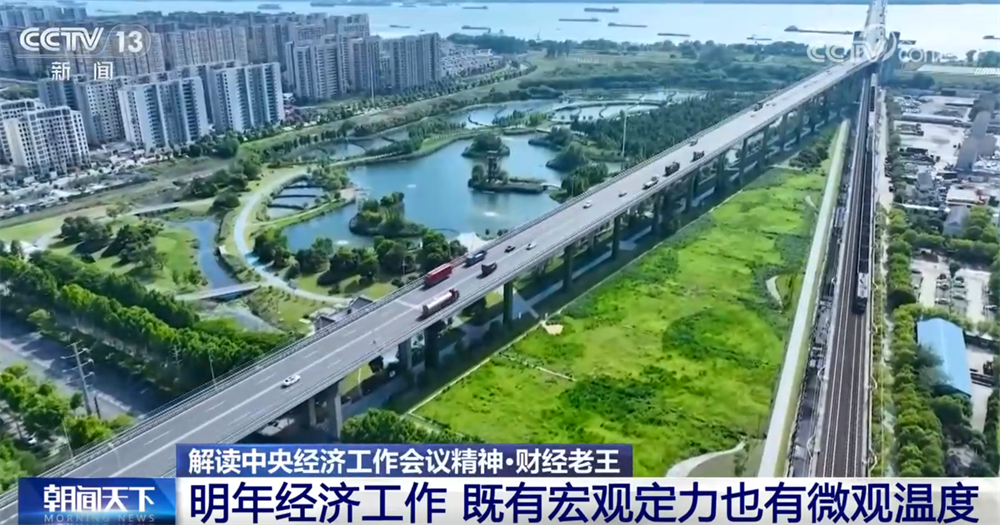
明年经济工作重点有什么新提法、新信号?一起了解“宏观定力+微观温度”
Yang Shi Wang· 2025-12-12 02:35
会议特别强调"一体推进教育科技人才发展方案",还点名打造京津冀、长三角、粤港澳三大国际科创中心。更值得关注的是,"人工智能 +"要"深化拓展"并"完善治理"——既要跑得快,也要跑得稳。 央视网消息:中央经济工作会议明确了明年经济工作的重点,更透露出不少新提法、新信号。来看总台央视记者王雷——财经老王带来的 解读。 先说财政政策。大家熟悉的育儿补贴、家电以旧换新、养老服务支持,背后都有财政"真金白银"的支撑。明年,我国将继续实施"更加积 极的财政政策"。跟去年的"提高赤字率、增加发行超长期特别国债"相比,今年变成了"保持必要的财政赤字、债务总规模和支出总量"。听着 是不是有点低调?其实不然。老王问了专家:2026年,国家要把每一分钱都用在刀刃上——该给养老的给养老,该补科技的补科技,该稳企业 的稳企业。说白了,财政要"提质增效"。 再看货币政策。会议强调要"加大逆周期和跨周期调节力度"。逆周期调节是通过降息、扩大财政支出等措施稳定经济;而跨周期调节则是 强调政策的连续性和可持续性。"逆周期+跨周期"意味着政策将从应急救火转向长期筑基,既要稳住当下,更要布局未来,提前五年甚至十年 布局,解决人口老龄化、产业升级等 ...
解读中央经济会议精神
2025-12-12 02:19
Summary of Key Points from the Conference Call Industry and Company Overview - The conference call primarily discusses the macroeconomic policies and their implications for various sectors, particularly focusing on the real estate market, investment strategies, and monetary and fiscal policies in China. Core Insights and Arguments 1. **Macroeconomic Policy Shift**: The central economic work conference emphasizes a transition from extraordinary counter-cyclical adjustments to normalized management, focusing on cross-cycle adjustments, indicating a paradigm shift in policy [1][9]. 2. **Real Estate Market Measures**: Specific measures for the real estate market include controlling new supply, reducing inventory, and improving supply quality. The reform of the housing provident fund system is highlighted, aiming to stabilize the market [1][3][4]. 3. **Investment Focus**: The conference stresses the need to stabilize investment, particularly in infrastructure projects, urban renewal, and quality housing construction, to counteract the decline in investment growth [1][2][7]. 4. **Monetary Policy Outlook**: While the possibility of reserve requirement ratio (RRR) cuts and interest rate reductions is mentioned, the emphasis is on flexible and efficient application, suggesting limited room for significant cuts [1][6][10]. 5. **Fiscal Policy Projections**: Fiscal policy is expected to maintain necessary deficits, with a projected increase in fiscal spending of 6% to 7% in 2025, primarily to support infrastructure and consumption [1][2][5]. 6. **Future Demand Drivers**: Potential demand growth is anticipated in real estate, infrastructure, urban renewal, service industry openings, high-end service exports, manufacturing exports, and consumer spending [1][7]. 7. **Economic Work Background for 2026**: The economic work for 2026 is based on a long-term positive outlook, despite external challenges and domestic supply-demand conflicts, emphasizing the importance of tapping into economic potential [1][8]. 8. **Supply-Side Structural Reforms**: The focus on supply-side structural reforms is reiterated, aiming to optimize supply and activate existing resources, indicating a strategic shift from previous years [1][11]. 9. **Risk Prevention Measures**: Risk prevention priorities have shifted, with a reduced emphasis on risk management compared to previous years, reflecting a more optimistic view on internal and external risks [1][12]. 10. **A-Share Market Strategy**: The A-share market strategy is characterized by a moderate tone, with expectations of a spring market rally potentially starting in mid-December, focusing on domestic demand and technology sectors [1][18][19]. Other Important but Possibly Overlooked Content 1. **Debt and Fiscal Discipline**: The conference highlights the importance of maintaining fiscal discipline, with local debt levels set at 4.9 trillion, ensuring effective use of funds [1][5][13]. 2. **Consumer Expectations**: There is a cautious approach towards consumer spending, with expectations for a more conservative outlook compared to previous plans [1][14]. 3. **Investment in People and Goods**: The integration of investments in goods and people is emphasized as crucial for addressing current economic conditions [1][8]. 4. **Market Environment Stability**: The conference aims to create a stable macroeconomic environment, which is deemed beneficial for stock selection and alpha opportunities [1][23]. 5. **Sector-Specific Recommendations**: Recommendations for growth sectors include aviation equipment, AI chains, and power equipment, while cyclical sectors like chemicals and energy metals are also highlighted [1][20][21]. This summary encapsulates the key points discussed in the conference call, providing insights into the macroeconomic landscape and sector-specific strategies moving forward.
工业硅:关注新疆地区天气情况、多晶硅:盘面高位震荡格局
Guo Tai Jun An Qi Huo· 2025-12-12 02:07
Report Summary 1. Investment Rating - No investment rating for the industry is provided in the report. 2. Core Viewpoints - The report focuses on the fundamentals of industrial silicon and polysilicon, including price, profit, inventory, and raw material cost data. It also mentions the trend strength of industrial silicon and polysilicon, with industrial silicon at 0 (neutral) and polysilicon at 1 (偏强) [3]. 3. Content Summaries by Category 3.1 Fundamental Tracking - **Futures Market**: Si2601 (industrial silicon) closed at 8,285 yuan/ton with a trading volume of 203,929 lots, while PS2605 (polysilicon) closed at 55,765 yuan/ton with a trading volume of 197,180 lots [1]. - **Basis**: Industrial silicon's spot premium against different grades and polysilicon's spot premium against N - type re -投料 are presented, showing various price differences over different time intervals [1]. - **Price**: Prices of industrial silicon (e.g., Xinjiang 99 silicon at 8750 yuan/ton), polysilicon (N - type re -投料 at 52300 yuan/ton), and related products like silicon wafers, battery cells, and components are provided [1]. - **Profit**: Silicon factory profits for different grades in Xinjiang and Yunnan are negative, while polysilicon enterprise profit is 8.0 yuan/kg [1]. - **Inventory**: Industrial silicon's social inventory is 56.1 million tons, enterprise inventory is 18.7 million tons, and polysilicon's factory inventory is 29.3 million tons [1]. - **Raw Material Cost**: Prices of raw materials such as silicon ore, washed coal, petroleum coke, electrodes, and chemicals for polysilicon production are given [1]. 3.2 Macro and Industry News - The Central Economic Work Conference from December 10 - 11 determined next year's economic work priorities, including reform, market construction, and financial system improvement [2][3]. 3.3 Trend Intensity - Industrial silicon has a trend intensity of 0 (neutral), and polysilicon has a trend intensity of 1 (偏强) [3].
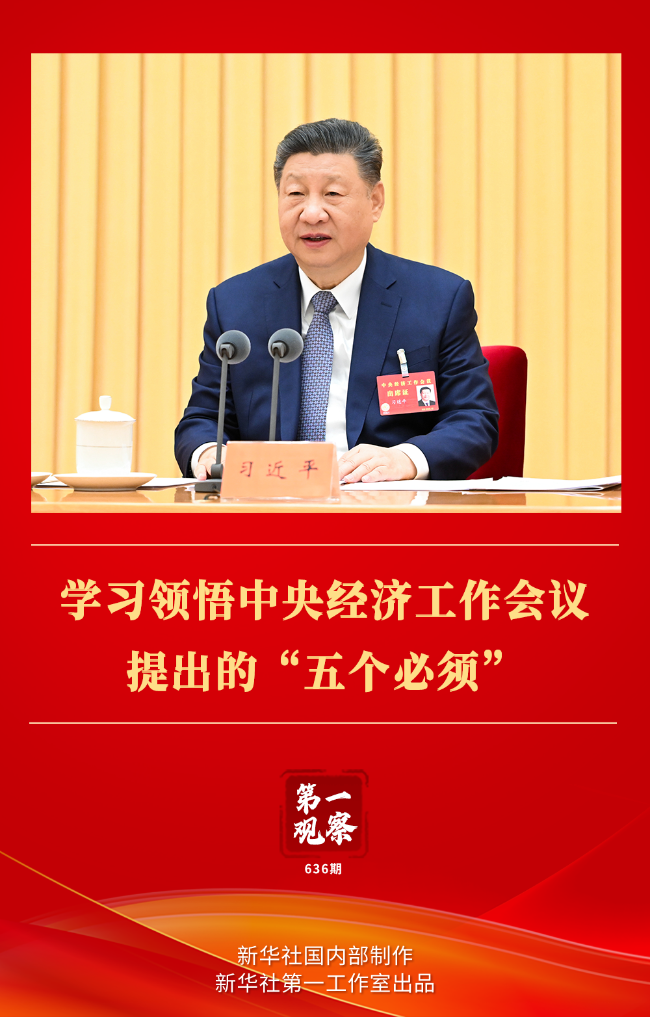
第一观察 | 学习领悟中央经济工作会议提出的“五个必须”
Xin Hua She· 2025-12-12 00:28
21 ir 学习领悟中央经济工作会议 提出的"五个必须" e36期 新华社国内部制作 新华社第一工作室出品 12月10日至11日在北京举行的中央经济工作会议上,习近平总书记发表重要讲话,总结2025年经济工 作,分析当前经济形势,部署2026年经济工作。 会议鲜明提出,通过实践,我们对做好新形势下经济工作又有了新的认识和体会,即"五个必须"—— 必须充分挖掘经济潜能,必须坚持政策支持和改革创新并举,必须做到既"放得活"又"管得好",必须坚 持投资于物和投资于人紧密结合,必须以苦练内功来应对外部挑战。 2026年是"十五五"规划开局之年,做好经济工作至关重要。"五个必须"既对以往经济实践作出了深刻精 辟的总结,也为做好当前和今后一个时期的经济工作提供了思想指引和行动指南。 必须充分挖掘经济潜能—— 另一方面,强调"坚持改革攻坚",明确"制定全国统一大市场建设条例""深入整治'内卷式'竞争""制定和 实施进一步深化国资国企改革方案""拓展要素市场化改革试点"等重点领域与关键环节。 政策支持和改革创新融合促进,政策工具与制度安排相互支撑,既推动现实问题解决,确保实现稳中求 进,又有利于提质增效,实现更高质量、更具韧 ...