AGI

Search documents
MiniMax通过港交所聆讯:有望成为从成立到IPO历时最短的AI公司
IPO早知道· 2025-12-21 12:45
以收入多元化与极致效率重塑AI公司成长范式。 本文为IPO早知道原创 作者| Stone Jin 微信公众号|ipozaozhidao 据 IPO 早知道消息, MiniMax Group Inc. ( 稀宇科技, 以下简称 "MiniMax" )日前已通过港 交所聆讯并于 12 月 21 日披露通过聆讯后的资料集, 中金公司和瑞银集团 担任联席保荐人。 这意味着,这家成立于 2022 年 " 年轻极致的 AI 公司 " 有望成为从成立到 IPO 历时最短的 AI 公 司 —— 根据招股书披露, MiniMax 员工平均年龄仅为 29 岁,董事会平均年龄仅为 32 岁。 要知道,在 AI 这个领域,年轻不仅意味着精力,更意味着对原生 AI ( AI-native )逻辑的本能理 解。这种极致的年轻化,使得 MiniMax 在组织效率上展现出一种 " 硅谷式 " 的灵动,同时将使其 成为 " 最具活力的 AI 标的 " 。 在视频生成方面, MiniMax2024 年 8 月发布的 Video-01 模型及海螺 AI 产品已达到当时业界顶尖 水平; 2025 年 6 月推出的升级版 Hailuo-02 ,在权威 ...


计算机周观察20251221:豆包模型重磅升级,智谱通过港股聆讯
CMS· 2025-12-21 11:39
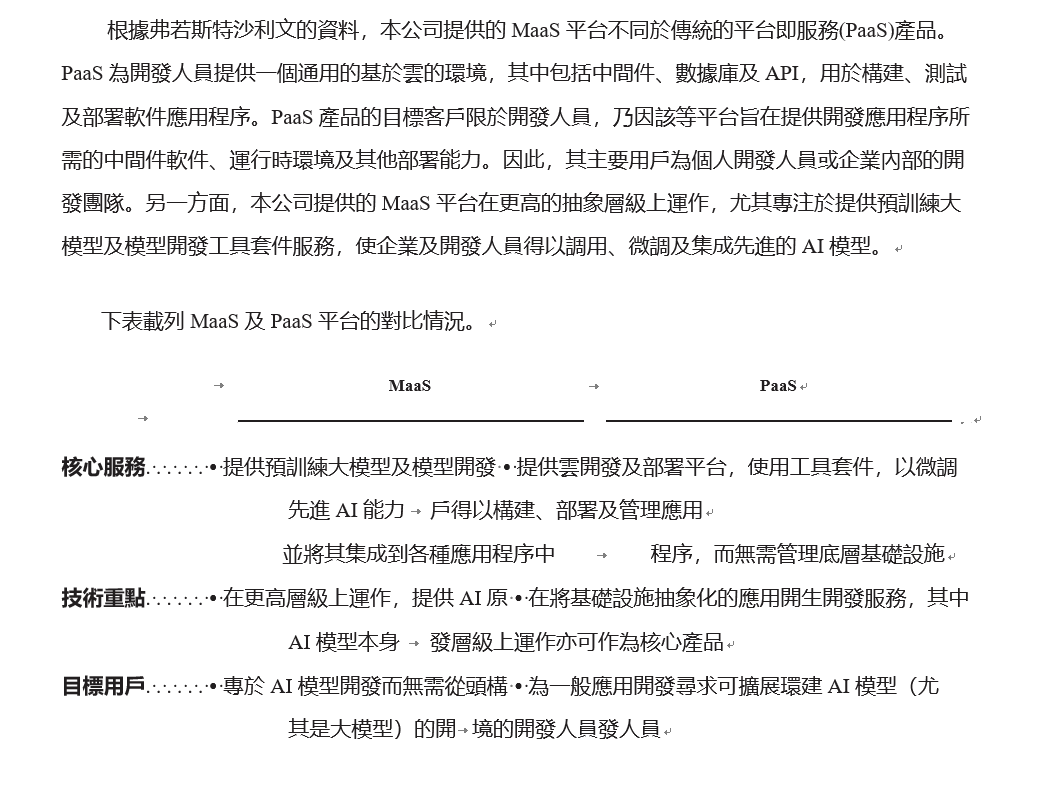
Investment Rating - The report maintains a "Recommended" rating for the industry, indicating a positive outlook for the sector's fundamentals and expected performance relative to the benchmark index [4]. Core Insights - The report highlights the significant advancements in the Doubao model family, particularly the release of Doubao Model 1.8 and Seedance 1.5 pro, which have achieved top-tier capabilities in multimodal understanding and generation [8][11]. - The Doubao model's daily token usage has surpassed 50 trillion, ranking first in China and third globally, with over 100 enterprises utilizing the platform [11][12]. - The introduction of the "AI Savings Plan" aims to optimize model usage costs for enterprises, offering discounts of up to 47% based on usage volume [8][18]. - Zhihui Technology has successfully passed the Hong Kong Stock Exchange listing hearing, marking a significant milestone as the first company in Hong Kong focused on AGI foundational models [18]. - Zhihui's revenue is projected to grow from 57 million yuan in 2022 to 312 million yuan in 2024, reflecting a compound annual growth rate of over 130%, despite increasing losses due to R&D investments [23][28]. Summary by Sections Industry Overview - The report emphasizes the rapid iteration of AI large models and the intensifying competition for super OS entry points, urging continued attention to AI applications [8][28]. Company Performance - Zhihui's MaaS platform offers a comprehensive range of models, including language, multimodal, agent, and code models, with a focus on adaptability and extensive application scenarios [20][22]. - The company's revenue structure shows a strong growth trajectory, with significant R&D expenditures impacting net profits [23][27]. Market Performance - The computer sector experienced a slight decline of 0.68% in the third week of December 2025, with notable stock performances from companies like Xinghuan Technology and Wanjitech [29][30].
“蚂蚁阿福”冲上苹果应用总榜第三;Temu跃居英国电商访问量第三丨Going Global
创业邦· 2025-12-21 10:33
Key Insights - Temu has rapidly climbed to become the third most visited e-commerce site in the UK, gaining 8 million new users in one year, with a monthly visit count of 28.4 million as of May, indicating strong market penetration [5][6][7] - Xiaomi, TCL, and Hisense have collectively increased their sales on AliExpress by 300% year-on-year, positioning the platform as a core part of their international strategy [8][9] - Ant Group's AI health app "Antifufu" has surged to the third position on the Apple App Store, with over 15 million monthly active users and a compound growth rate of 83% [11][12][14] - The first overseas store of Mixue Ice Cream has opened in Los Angeles, offering competitively priced products, marking a significant step in its global expansion strategy [15][16][20] - MiniMax is set to become the world's first publicly listed company focused on AGI, having passed the Hong Kong Stock Exchange hearing, with a projected market growth from $189 billion in 2023 to $4.8 trillion by 2033 [23][24] - Xiaomi's new open-source model MiMo-V2-Flash has been highlighted for its efficiency and competitive edge, ranking among the top two global open-source models [25][27] - Elon Musk's net worth has reached $700 billion, following a court ruling that reinstated the value of his Tesla stock options, significantly impacting his overall wealth [30][32] - SpaceX is preparing for an IPO, with a potential valuation of $1.5 trillion, and has entered a "quiet period" to comply with regulatory requirements [40][41] - OpenAI is in talks with Amazon for a potential investment of at least $10 billion, which would elevate its valuation to over $500 billion, while also planning to adopt Amazon's AI chips [44][45]

LeCun离职前的吐槽太猛了
量子位· 2025-12-21 05:45
Core Viewpoint - LeCun expresses skepticism about the potential of large language models (LLMs) to achieve artificial general intelligence (AGI), arguing that the path to superintelligence through LLMs is fundamentally flawed [2][78]. Group 1: Departure from Meta - LeCun is leaving Meta after nearly 12 years, criticizing the company's increasingly closed approach to research and its focus on short-term projects [3][11][26]. - He plans to establish a new company named Advanced Machine Intelligence (AMI), which will prioritize open research and focus on world models [10][19]. Group 2: World Models vs. LLMs - LeCun believes that world models, which handle high-dimensional and continuous data, are fundamentally different from LLMs, which excel at discrete text data [28][29]. - He argues that relying solely on text data will never allow AI to reach human intelligence levels, as the complexity of real-world data is far greater than that of text [31][32]. Group 3: Research Philosophy - LeCun emphasizes the importance of open research and publication, stating that without sharing results, research lacks validity [15][17]. - He critiques Meta's shift towards short-term projects, suggesting that true breakthroughs require long-term, open-ended research [18][26]. Group 4: Future of AI - LeCun envisions that the development of world models and planning capabilities could lead to significant advancements in AI, but achieving human-level intelligence will require substantial foundational work and theoretical innovation [84][85]. - He asserts that the most challenging aspect of AI development is not reaching human intelligence but rather achieving the intelligence level of dogs, as this requires a deep understanding of foundational theories [88][89]. Group 5: Personal Mission - At 65, LeCun remains committed to enhancing human intelligence, viewing it as the most scarce resource and a key driver for societal progress [92][94]. - He reflects on his career, expressing a desire to continue contributing to the field and emphasizing the importance of open collaboration in scientific advancement [103].


Codex负责人打脸Cursor CEO“规范驱动开发论”!18天造Sora爆款,靠智能体24小时不停跑,曝OpenAI狂飙内幕
Sou Hu Cai Jing· 2025-12-21 02:38
Core Insights - Codex has experienced a remarkable growth of 20 times since the release of GPT-5, processing trillions of tokens weekly, making it OpenAI's most popular programming AI [1][14] - The success of Codex is attributed not only to the strength of the model but also to the integration of the model, API, and framework, which work together seamlessly [1][20] - Codex has improved its long-duration task capabilities through a mechanism called "compression," allowing it to summarize learned content and continue tasks over extended periods [1][18] Group 1: Codex's Development and Impact - Codex's user growth was significantly boosted by moving from a cloud-based model to a local IDE integration, making it more accessible to engineers [3][7] - The Sora team utilized Codex to launch an Android application in just 28 days, achieving the top rank in the App Store [2] - Codex is envisioned as a "smart but non-proactive intern," with aspirations for it to participate in the entire software development process [11][21] Group 2: Organizational Culture and Speed - OpenAI's unique organizational culture emphasizes rapid iteration and a bottom-up approach, allowing for quick adaptations based on real user feedback [5][10] - The company prioritizes hiring top talent and fostering a culture that encourages fast-paced development and experimentation [5][10] - OpenAI's approach contrasts with traditional methods, focusing on releasing products quickly and refining them based on actual usage [9][10] Group 3: Future of AI and AGI - The current limitations to achieving AGI are seen as human factors, such as input and review speeds, rather than model capabilities [4] - A prediction is made that the first wave of productivity increases from AI will occur next year, leading to rapid changes in the industry [4] - The future of AI is expected to shift from passive tools to proactive teammates that can autonomously assist in various tasks [21][22] Group 4: Technical Innovations and Framework - Codex's architecture consists of a smart reasoning model, an API, and a framework that collectively enhance its performance [20][23] - The model's ability to work continuously for 24 to 60 hours on tasks is a significant advancement, allowing for unprecedented levels of productivity [7][18] - The integration of Codex into local environments has created a powerful feedback loop, enhancing its reliability and effectiveness [16][23] Group 5: Implications for Software Engineering - The role of engineers is expected to evolve, with AI acting as a collaborator rather than a replacement, enhancing the importance of human skills in understanding and designing systems [30] - The focus is shifting towards making the coding process enjoyable and reducing the burden of code review, which is often seen as tedious [31][38] - The concept of "chat-driven development" is proposed, where AI integrates into daily communication, making it easier for engineers to interact with the technology [33][34]
深度|DeepMind CEO Demis: AGI还需5-10年,还需要1-2个关键性突破
Z Potentials· 2025-12-21 02:24
Core Insights - The conversation highlights the transformative potential of AGI (Artificial General Intelligence) and the need for societal readiness for its arrival, which is estimated to be within five to ten years [6][30] - Demis Hassabis emphasizes the importance of responsible AI usage and the need for ongoing discussions about AI safety and societal impacts [8][15] - The dialogue also touches on the competitive landscape of AI, particularly the race between the US and China, with the US currently holding a slight edge in algorithmic innovation [21][22] Group 1: AGI and Its Implications - AGI is seen as one of the most transformative moments in human history, requiring careful preparation from governments and leaders [6][8] - Current AI systems lack critical capabilities such as continuous learning and reasoning, which are essential for achieving true AGI [31] - The timeline for achieving AGI is projected to be five to ten years, contingent on one or two significant breakthroughs [30][31] Group 2: AI Safety and Responsibility - There is a strong emphasis on the responsible use of AI, focusing on what AI can improve and accelerate while maintaining caution in its deployment [8][15] - The potential risks of AI misuse by malicious actors and the possibility of AI systems becoming uncontrollable are significant concerns [15][20] - The need for robust AI safety measures is underscored, especially as AI systems become more autonomous [20][19] Group 3: Competitive Landscape - The US and Western countries are currently leading in AI, but the gap with China is narrowing, with Chinese models showing impressive capabilities [21][22] - The competition for AI talent is intensifying, with companies needing to attract mission-driven individuals to stay at the forefront of innovation [33] - The importance of algorithmic innovation is highlighted, with the US still holding an advantage in this area despite China's rapid advancements [22] Group 4: Technological Advancements - The integration of multimodal capabilities in AI, such as the ability to process and generate text, images, and videos, is a key focus for future developments [11][12] - The introduction of systems like Gemini 3 showcases significant advancements in reasoning depth and the ability to generate nuanced outputs [25][27] - The potential for AI to assist in various domains, including sports analytics, is also discussed, indicating its broad applicability [37][38]


OpenAI,65倍,8300亿美元
Ge Long Hui· 2025-12-20 11:39
Core Viewpoint - OpenAI plans to raise $100 billion in a new funding round, potentially increasing its valuation to $830 billion, a significant jump from $500 billion just two days prior, highlighting the rapid escalation in perceived value within the AI sector [1][3]. Group 1: Valuation and Revenue Projections - If OpenAI achieves its target valuation of $830 billion, its price-to-sales ratio would be 65 times based on projected revenues of $12.7 billion in 2025 [2][3]. - OpenAI's revenue is expected to grow significantly, with estimates of $3.7 billion in 2024 and $12.7 billion in 2025, representing a 243% increase [6][7]. - The revenue structure includes substantial contributions from consumer subscriptions, enterprise services, and ecosystem commissions, with projections indicating that by 2029, revenues could reach $100 billion [7][8]. Group 2: Technological Advancements - OpenAI's competitive edge is attributed to its technological moat, particularly with the development of GPT-5, which utilizes a dual-track design for improved efficiency and cost reduction [3][11]. - The company is also working on "recursive self-improvement" technology, which could enhance model training efficiency by tenfold, necessitating a significant portion of the new funding [3][12]. Group 3: Financial Needs and Expenditures - OpenAI's projected costs for training advanced models are expected to soar into the tens of billions, driven by hardware and energy expenses, with estimates indicating a need for $100 billion in funding to support these initiatives [13][14]. - The company plans to invest heavily in building its own data centers to reduce reliance on external cloud services, with projected expenditures exceeding $450 billion from 2024 to 2030 [16][20]. Group 4: Market Dynamics and Competition - OpenAI faces intense competition for talent, necessitating substantial investments in employee compensation to retain top researchers amid offers from tech giants [20][21]. - The involvement of major investors, including SoftBank and Middle Eastern sovereign wealth funds, reflects a strategic interest in securing a foothold in the evolving AI landscape [25][26]. Group 5: Risks and Future Outlook - OpenAI's current business model is characterized by high cash burn rates, with projections indicating potential losses of $14 billion in 2026 and cumulative losses of $44 billion from 2023 to 2028 [23]. - The company's future hinges on successfully achieving AGI and significantly lowering inference costs; failure to do so could lead to a substantial market correction [27].
CMU教授万字反思:西方式AGI永远到不了
量子位· 2025-12-20 07:38
Core Viewpoint - The discussion around AGI (Artificial General Intelligence) is fundamentally flawed as it ignores the physical limitations of computing resources and hardware, making AGI an unattainable goal [1][17]. Group 1: Hardware Limitations - The performance peak of GPUs was reached in 2018, and further improvements are limited, with significant optimizations expected to exhaust their potential by 2027 [14][15]. - The cost of moving information increases exponentially with distance, which affects the efficiency of computation [5]. - Current AI architectures, such as Transformers, are nearing the physical limits of hardware optimization, indicating that further advancements will be minimal [8]. Group 2: Resource Consumption - Achieving linear improvements in AI performance requires exponential increases in resources, making it increasingly impractical [9][16]. - The cost of collecting data from the physical world is prohibitively high, which complicates the development of AGI that can handle complex real-world tasks [18]. - The assumption that scaling up models will enhance AI performance is flawed, as the diminishing returns on resource investment will soon become evident [16]. Group 3: Future of AI - The future of AI lies in gradual improvements within physical constraints, focusing on practical applications that enhance productivity rather than pursuing the elusive AGI [20]. - The approach in the U.S. tends to focus on achieving superintelligence through significant investment, while China emphasizes practical applications and productivity enhancements through subsidies [21][22].

大模型第一股来了
财联社· 2025-12-20 07:38
Core Viewpoint - The article discusses the significance of Zhipu's IPO as it aims to become the first global large model stock, providing a valuation benchmark for the underrepresented large model industry in the public market, and marking a shift from a "technical race" to "capital validation" for China's AI sector [3]. Financial Performance - Zhipu's revenue is projected to grow rapidly from 57.4 million yuan in 2022 to 312.4 million yuan in 2024, with a compound annual growth rate (CAGR) of 130% [4]. - The gross margin for Zhipu is expected to be 54.6% in 2022, 64.6% in 2023, and 56.3% in 2024, with a gross margin of 50% in the first half of 2025 [4]. - Despite significant revenue growth, Zhipu has recorded losses of 144 million yuan in 2022, 788 million yuan in 2023, and 2.958 billion yuan in 2024, with a loss of 2.358 billion yuan in the first half of 2025 [5]. Research and Development - Zhipu has invested heavily in R&D, with expenditures increasing from 84.4 million yuan in 2022 to 2.195 billion yuan in 2024, totaling over 4.4 billion yuan [5]. - The company has achieved a breakthrough in domestic GLM architecture, compatible with over 40 domestic chips, and has developed a comprehensive product matrix covering various AI applications [5]. Market Position and Competition - Zhipu ranks first among independent general-purpose large model developers in China and second among all general-purpose large model developers, with a market share of 6.6% as of 2024 [4]. - The company has raised over 8.3 billion yuan in funding since its establishment in 2019, with notable investors including Meituan, Tencent, and Xiaomi [6]. Business Model and Revenue Streams - Zhipu's revenue primarily comes from localized deployment of large models, contributing 84.5% of total revenue by 2024, while cloud revenue accounts for 15.5% [7]. - The company is shifting its focus towards cloud deployment and MaaS (Model as a Service) to enhance scalability and profitability [8][9]. - The annual recurring revenue (ARR) from its model services for global developers has surpassed 100 million yuan, indicating a strategic shift towards increasing the revenue share from API services [11]. Strategic Direction - Zhipu aims to strengthen its core business of localized deployment while increasing the revenue share from its MaaS platform, which has shown exponential growth [10]. - The company is also focusing on expanding its cloud services and reducing reliance on private deployments, as evidenced by the increasing share of cloud business revenue [12]. - Zhipu's daily token consumption has surged from 500 million in 2022 to 4.6 trillion in the first half of 2025, highlighting its ambition to become a scalable cloud-based model platform [13].

“全球大模型第一股”来了?智谱“家底”曝光 营收3.12亿估值243 亿
Xin Lang Cai Jing· 2025-12-20 06:52
Core Viewpoint - Zhiyu is on the verge of entering the capital market, aiming to become the world's first publicly listed large model company, which will provide a reference for valuation in the long-lacking public market of the large model industry [2] Company Overview - Zhiyu has accumulated over 4.4 billion yuan in R&D investment and is experiencing rapid revenue growth, with projected revenues of 57.4 million yuan, 124.5 million yuan, and 312.4 million yuan from 2022 to 2024, reflecting a compound annual growth rate of 130% [3] - The company has not yet achieved profitability, recording losses of 144 million yuan, 788 million yuan, and 2.958 billion yuan from 2022 to 2024, with a loss of 2.358 billion yuan in the first half of 2025 [3] Market Position - According to a report by Frost & Sullivan, Zhiyu ranks first among independent general large model developers in China and second among all general large model developers, with a market share of 6.6% as of 2024 [3] - As of September 30, 2025, Zhiyu's models have reached 12,000 enterprise clients, over 80 million terminal user devices, and more than 45 million developers [8] Business Model - The core revenue source for Zhiyu comes from localized deployment of large models, contributing 84.5% of revenue as of 2024, while cloud revenue accounts for 15.5% [8] - The company is shifting its focus towards cloud deployment and the MaaS (Model as a Service) model to enhance its scalability and demonstrate its business model's profitability and long-term growth potential [8][9] Strategic Direction - Zhiyu's MaaS platform is experiencing exponential growth, with annual recurring revenue (ARR) from its global developer model service exceeding 100 million yuan (approximately 14 million USD) [9] - The company aims to increase the revenue share from API services to 50% and is actively working on enhancing its cloud-based offerings [9] Competitive Landscape - The company has established a strong presence in the technology internet and enterprise service markets, with nine of the top ten internet companies in China utilizing Zhiyu's GLM large models [11] - The average daily token consumption has surged from 500 million in 2022 to 4.6 trillion in the first half of 2025, indicating a shift towards a scalable cloud-based model [12] International Expansion - Zhiyu's localized deployment services have begun generating revenue from overseas clients, particularly in Southeast Asia, with the revenue share from this region increasing from 0.5% in 2024 to 11.1% in the first half of 2025 [12]