企业出海

Search documents
中东成为中国企业“出海”热土
Shang Wu Bu Wang Zhan· 2025-09-16 16:34
Core Insights - Saudi Arabia and the UAE are the top investment destinations for Chinese companies in the Middle East, attracting 84% and 79% of surveyed firms respectively [1] - 90% of Chinese companies plan to expand their business in the Middle East, with 44% having formal plans in place [1] - Over 60% of respondents express satisfaction with their investments, indicating the region's growing importance in Chinese corporate strategies [1] Investment Trends - Saudi Arabia is favored for its rapid economic transformation and large market size, while the UAE is recognized for its role as a diversified investment hub [1] - The shift from representative offices to direct service through physical entities is evident, with 77% of companies now operating this way, reflecting a transition from "testing the waters" to "long-term commitment" [1] - Emerging sectors such as digital technology, renewable energy, artificial intelligence, and biopharmaceuticals are attracting increased interest from investors [1] Regulatory Environment - 72% of companies seek tax incentives outside of free zones, highlighting a demand for cost efficiency [1] - 74% of respondents call for a more transparent and efficient regulatory framework, emphasizing the importance of policy clarity and governance systems for investors [1]
企业“出海”东南亚有何阻碍 本土化怎么走?|出海·投资
Sou Hu Cai Jing· 2025-09-16 11:12
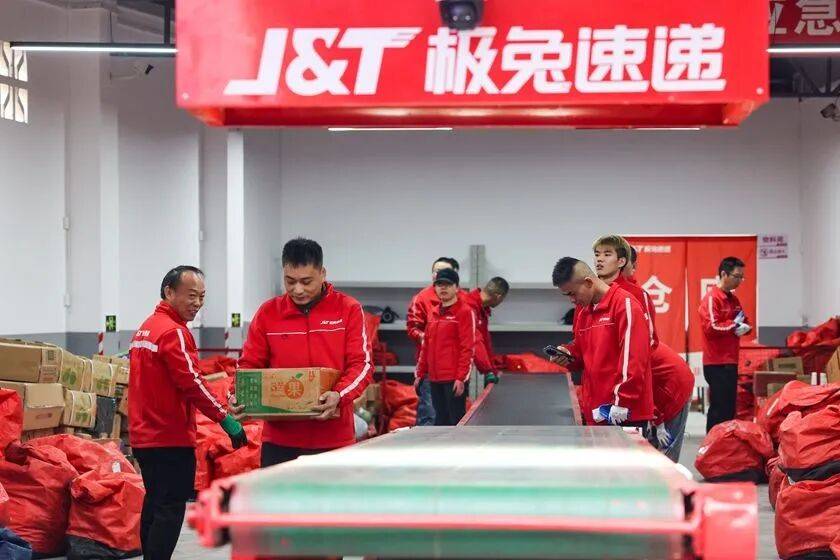
极兔副总裁后军仪表示,部分中国企业"出海"进入新市场时仍认为自己在当地具有竞争优势,"如果抱着降维打击的心 态,(在当地)成功的概率会大幅降低。" 图片来自视觉中国 后军仪认为,在不同国家开拓市场时,企业不仅要忘记自己是一个国际品牌或一个中国人经营、管理的品牌,还要把自 己当作本地企业,尽量符合本地市场需求以及当地的法律法规,并根据当地的地理特征针对性地提供服务。 后军仪表示,在由1.7万多个岛屿组成的印尼,极兔要触达、覆盖收件人就要采用不同的运输方式、应用不同的时效标 准、使用不同的工具设备。在占地面积广阔的巴西,极兔既要应对亚马逊森林那样的地貌,也要为里约、圣保罗这样的 大都市服务,因此也面临不少挑战。 …… 作者|邹晓桐 "国际化就是本土化,我们进入任何一个国家、任何一个市场,都把自己当成一个本土企业。"9月12日,在财新传媒主 办的第三届亚洲愿景论坛"跨越边界:东南亚市场扩张的成功蓝图"圆桌上,极兔速递集团副总裁后军仪等多位嘉宾均强 调本地化对于企业"出海"的重要性。 极兔速递2015年成立于印尼,后进入越南和马来西亚等东南亚七国并进入中国,2022年1月开始在阿联酋和沙特开展业 务,随后又进军埃及、 ...

“2025凤凰之星”评委万喆:“卷”本质是一种“激烈竞争”
Feng Huang Wang Cai Jing· 2025-09-16 02:56
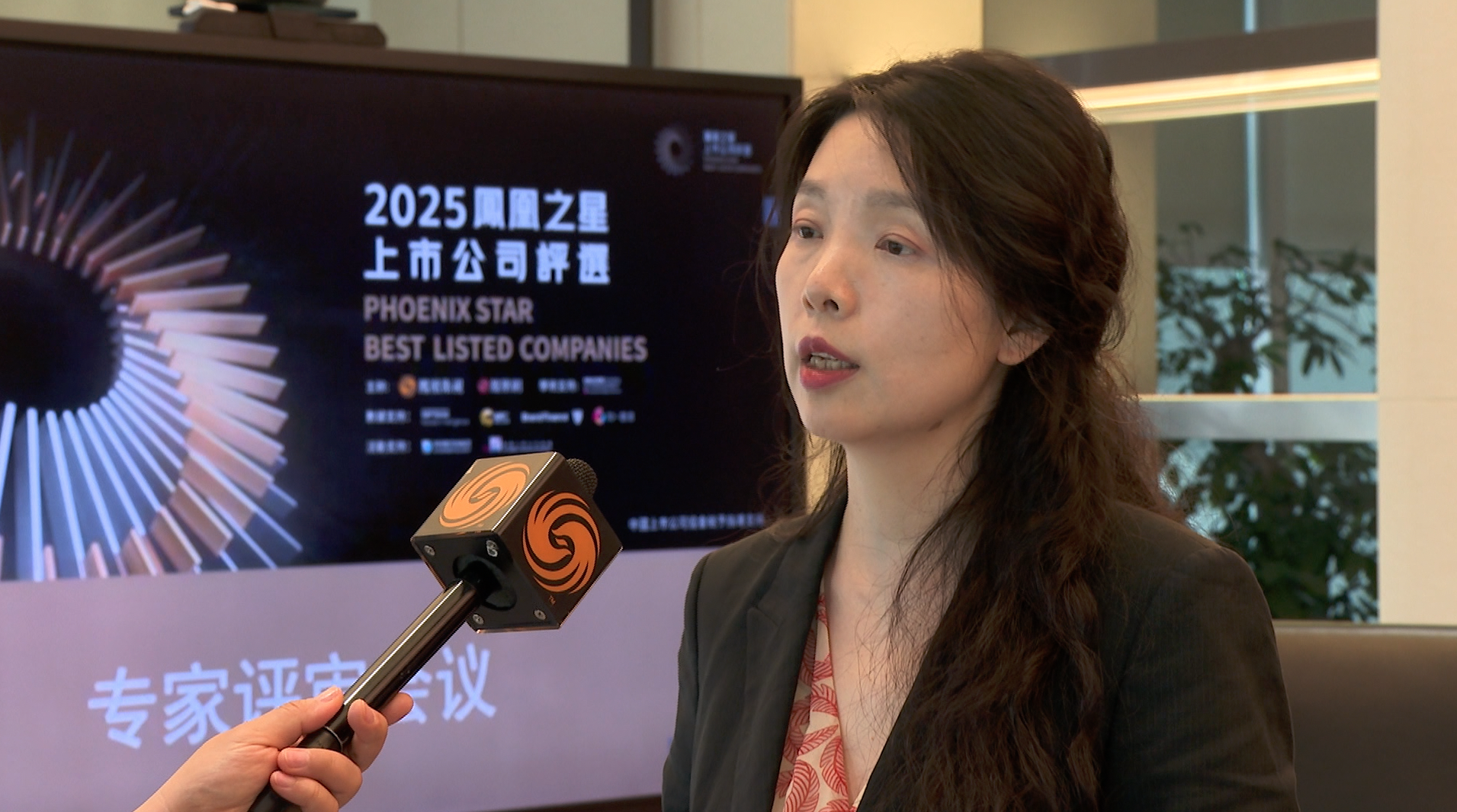
Group 1 - The "2025 Phoenix Star Listed Company Selection" aims to highlight the core competitiveness and influence of Chinese listed companies, supporting the healthy development of mainland and Hong Kong stock markets [1] - The selection process includes multiple phases: registration, preliminary evaluation, and public voting, with results to be announced on September 23 [1][9] - The evaluation will cover nine major awards, including Best Innovative Listed Company and Best Shareholder Return Listed Company, utilizing big data models and five evaluation dimensions [3][4] Group 2 - The selection's unique value lies in its comprehensive evaluation approach, which includes operational efficiency, innovation capability, social responsibility, and international performance, moving beyond traditional revenue-focused metrics [4][5] - The evaluation emphasizes a global perspective, assessing companies' capabilities to compete internationally and integrate into global supply chains [4][5] Group 3 - The selection process encourages companies to develop long-term strategies for global competition, moving from low-cost competition to resource integration and localized cooperation [5][6] - The concept of "localized cooperation" is highlighted, where companies engage with local markets through training and collaboration, transforming from outsiders to participants in local economies [6][7] Group 4 - The evaluation aims to distinguish between healthy competition and detrimental "involution," advocating for compliance with local laws and fostering cooperative relationships with local communities [7] - The "Belt and Road" initiative is identified as a platform for Chinese companies to engage in high-level international cooperation, enhancing their global competitiveness [7] Group 5 - Brand building is emphasized as a long-term endeavor, with companies encouraged to focus on sustainable strategies rather than short-term gains [8][9] - Successful examples of brand development include companies like Pop Mart and BYD, which leverage cultural creativity and innovation to enhance their global brand recognition [8][9] Group 6 - The selection is supported by various institutions, including the China Listed Companies Association and the American Drucker Management Institute, with results to be revealed at the "Phoenix Bay Area Financial Forum 2025" [9]
专访安盛天平首席执行官左伟豪:企业出海风险“双重升级”,应将风险管理纳入战略决策核心
Mei Ri Jing Ji Xin Wen· 2025-09-15 14:14
Core Viewpoint - The 2025 China International Service Trade Fair highlights the innovation and practical achievements of China's financial services, particularly in supporting enterprises going global through cross-border financial services [1] Group 1: Challenges Faced by Enterprises Going Global - Enterprises face challenges concentrated in four main areas: legal and regulatory differences, cultural differences, data challenges, and service network deficiencies [2][3] - Legal and regulatory differences can lead to compliance risks and legal disputes due to unfamiliarity with local regulations [2] - Cultural differences create localization challenges, including product-market fit and employee management [2] - Data challenges arise from a lack of historical data for pricing, particularly in the auto insurance sector [3] - Service challenges include the absence of overseas claims and repair networks, increasing claims costs [3] Group 2: Evolving Risk Landscape - The risk landscape for enterprises going global has evolved from "product output" to "system output," with risks becoming more complex and structured [3][5] - Traditional risks include cultural differences, market adaptation, brand recognition, localization competition, and supply chain management [3] - Emerging risks include geopolitical conflicts, compliance pressures, cybersecurity, ESG requirements, and supply chain resilience [3][5] Group 3: Strategic Support for Globalization - The company aims to support Chinese enterprises' globalization by leveraging its global network and innovative cooperation models [4][6] - Strategic partnerships with major state-owned financial institutions are being formed to enhance local insurance services for Chinese enterprises abroad [4] - The company emphasizes a three-dimensional risk management approach: pre-compliance, in-process intervention, and post-claim efficiency [5][6] Group 4: Insights on the Chinese Market - The Chinese market presents unique value through its vast consumer potential, regulatory openness, and innovative ecosystem [6][7] - The company has actively participated in China's financial market reforms and has benefited from the increasing openness of the insurance sector [7] - The ongoing reforms and policies are expected to provide a sustainable growth environment for foreign insurance companies in China [7]
(活力中国调研行)上海以“企业服务包”一揽子政策助力企业高质量出海
Zhong Guo Xin Wen Wang· 2025-09-15 09:17
Group 1 - Shanghai is implementing a comprehensive "Enterprise Service Package" policy to support companies in achieving high-quality international expansion [4] - Huqin Technology Co., Ltd. is a leading global ODM in consumer electronics, with approximately 50% of its revenue coming from overseas markets [1][3] - The company has expanded its business from mobile phones to various fields, including smart wearables, laptops, automotive electronics, servers, and robotics, employing around 17,000 R&D personnel [1][3] Group 2 - Shanghai's advantages include a strong talent pool, a robust supply chain in the Yangtze River Delta, and comprehensive government support for technological innovation [3] - The Shanghai government has introduced various supportive policies, including funding, talent support, and rent subsidies, to encourage companies to innovate and expand internationally [3][4] - Shanghai aims to cultivate 400 pioneering companies and 100 headquarters for overseas operations by the end of the 14th Five-Year Plan [4] Group 3 - Qinglong Intelligent Technology Co., Ltd. has developed a full range of robotic products, including humanoid robots and delivery robots, with over 50% of its revenue coming from international markets since entering overseas markets in 2022 [6] - The company has shipped over 100,000 robots, covering more than 600 cities in over 60 countries, with a total operational mileage exceeding 40 million kilometers [6] - The diverse applications of intelligent robots in various scenarios, such as restaurants and hospitals, exemplify Shanghai's support for companies going global [6]


香港贸发局携企业做客新京报访谈间,讲述服务京企出海故事
Sou Hu Cai Jing· 2025-09-14 07:39
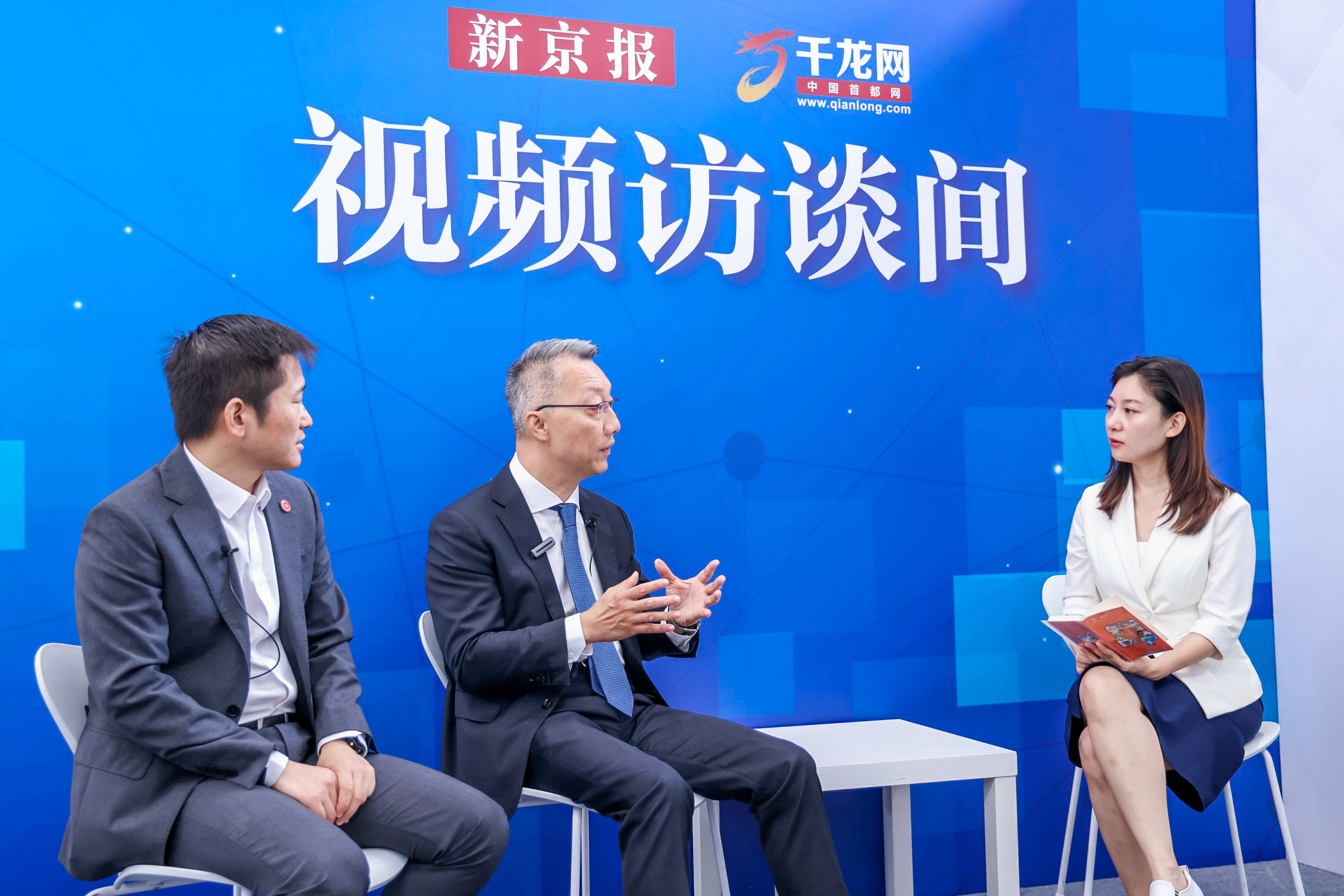
Core Insights - The article discusses how Hong Kong's service trade is facilitating mainland Chinese companies' expansion into international markets, highlighting the role of the Hong Kong Trade Development Council (HKTDC) and the success stories of companies like Yonyou Software [1][4][6]. Group 1: Hong Kong's Role in Service Trade - The HKTDC has established the Hong Kong Pavilion at the China International Fair for Trade in Services for 12 consecutive years, showcasing Hong Kong's unique advantages as a "super connector" and "super value creator" [4][5]. - This year's pavilion features award-winning works from nine Hong Kong designers and brands, emphasizing high-quality design services in cultural creativity, technology, and green products [4][6]. - HKTDC is organizing a series of interviews to address the challenges faced by mainland companies in areas such as talent acquisition, investment, market development, and supply chain management when going global [4][8]. Group 2: Yonyou Software's Global Expansion - Yonyou Software, established in 1988, utilized Hong Kong as a base for its global expansion, completing its international business layout over 20 years [6][7]. - The company's internationalization journey is divided into three phases: initial expansion in Southeast Asia from 2003 to 2013, consolidation in the same regions from 2013 to 2023, and a new phase starting in 2023 focusing on markets in Japan, Europe, the Middle East, and the Americas [6][7]. - Yonyou's transformation from a local to an international enterprise highlights Hong Kong's critical role as a bridge for mainland companies [6][7]. Group 3: Advantages of Hong Kong for Mainland Enterprises - Hong Kong offers four core advantages for mainland companies looking to expand internationally: a service industry that constitutes 90% of its GDP, a strong focus on innovation and R&D, a talent pool from top global universities, and a comprehensive market development platform [7][8]. - The city is developing into an international technology innovation center, providing opportunities for mainland enterprises to enhance their international competitiveness [7]. - Hong Kong's financial services are robust, featuring the world's largest offshore RMB business system and leading global new stock financing, which provides capital access for companies [8].

专访安盛天平CEO左伟豪:企业出海风险呈现双重升级 建议将风险管理纳入战略核心
Mei Ri Jing Ji Xin Wen· 2025-09-14 03:12
Core Viewpoint - The 2025 China International Service Trade Fair highlights the innovation and practical achievements of China's financial services, particularly in supporting enterprises going global amidst increasing risks and challenges [1][10]. Group 1: Challenges Faced by Enterprises Going Global - Enterprises face challenges in four main areas: legal and regulatory differences, cultural differences, data issues, and service network deficiencies [2][3]. - Legal and regulatory complexities can lead to compliance risks and legal disputes for companies unfamiliar with local laws [2]. - Cultural differences create localization challenges, affecting product-market fit and employee management [2]. - Data challenges arise from a lack of historical data for pricing and difficulties in accessing critical data from automotive companies [2]. - The absence of overseas claims and repair service networks can increase claims costs for enterprises [3]. Group 2: Evolution of Risks in Global Expansion - The transition from "product output" to "system output" signifies a dual upgrade in risks, with traditional risks becoming more complex and new risks emerging [4]. - Traditional risks include cultural differences, market adaptation, brand recognition, localization competition, and supply chain management [4]. - New risks include geopolitical conflicts, increased compliance pressures, stringent cybersecurity and data protection regulations, and rising ESG (Environmental, Social, and Governance) requirements [4][7]. Group 3: Strategic Support for Enterprises - The company emphasizes the importance of a risk-prevention mindset, integrating risk management into strategic decision-making for enterprises preparing to go global [8]. - It advocates for compliance with regulatory requirements and effective use of insurance tools to create a safety net for global risk transfer [8]. - The company has established strategic partnerships with major state-owned financial institutions to enhance insurance cooperation and support Chinese enterprises' overseas operations [5][10]. Group 4: Insights on the Chinese Market - The Chinese market presents unique opportunities due to its vast consumer potential, regulatory openness, and innovative ecosystem [9][10]. - The company has actively participated in China's financial market reforms and has benefited from the country's commitment to high-level openness [10]. - The ongoing reforms and policies are expected to provide a sustainable growth environment for foreign insurance companies operating in China [10].
发挥供应链优势 香港多维度护航内地企业出海
Zhong Guo Jing Ji Wang· 2025-09-13 08:24
Core Insights - Hong Kong plays an irreplaceable role in supporting mainland enterprises' internationalization through its comprehensive service trade system, which includes finance, law, accounting, logistics, and consulting [2][6] - The establishment of an international mediation center in Hong Kong enhances its legal service capabilities, providing a reliable framework for dispute resolution for companies venturing abroad [3][6] - Challenges faced by mainland enterprises in international markets include cultural adaptation, policy compliance, talent shortages, and the need for a global management system, with supply chain stability being crucial for overcoming these challenges [4][5] Group 1: Hong Kong's Role in Supporting Enterprises - Hong Kong's service trade framework connects mainland enterprises to global markets, offering multi-currency financing, cross-border fund management, and risk management services [2] - The region's logistics infrastructure ensures rapid global goods movement, supporting stable supply chain operations for enterprises [2] - Legal, accounting, and consulting services in Hong Kong provide comprehensive support for compliance, tax planning, and risk assessment, helping enterprises mitigate overseas market risks [2] Group 2: Legal and Supply Chain Support - The international mediation center in Hong Kong, supported by a common law system and strategic backing from the central government, positions the region as a key player in legal services and dispute resolution [3] - Companies are advised to utilize professional legal services for risk prevention and to conduct thorough due diligence before entering international markets [3] - Deloitte's experience in assisting a mainland electronics manufacturer in navigating European market regulations exemplifies the importance of compliance and supply chain localization [4] Group 3: Challenges and Strategies for Enterprises - Differences in operational strategies between state-owned and private enterprises highlight the need for both to focus on global supply chain integration and local market adaptation [5] - Engineering firms face challenges related to standardization and contract management in international projects, necessitating a focus on local compliance and long-term strategic investment [5] - Hong Kong is recommended as a strategic base for enterprises to leverage its advantages and collaborate with other cities in the Greater Bay Area to optimize supply chain resources [5][6]
瑞安集团主席罗康瑞:企业要跳出国内市场的“内卷”,坚定地出海去竞争
Mei Ri Jing Ji Xin Wen· 2025-09-13 05:02
Core Viewpoint - The current global environment necessitates that companies expand internationally to enhance their competitiveness and drive innovation, moving away from domestic competition and price wars [5][6]. Group 1: Importance of International Expansion - Companies should view international expansion as a crucial strategy to escape domestic "involution" and engage with top-tier global competitors [5]. - The process of going abroad should be supported by thorough and objective research to identify the most suitable countries for investment, assessing product compatibility and the company's core competencies [5]. Group 2: Sustainable Development and Localization - Achieving sustainable development in international markets requires deep localization, including hiring local talent and forming partnerships with local entities [5]. - Companies should prioritize long-term market cultivation over short-term gains, committing time, resources, and capital to build a presence in foreign markets [6].

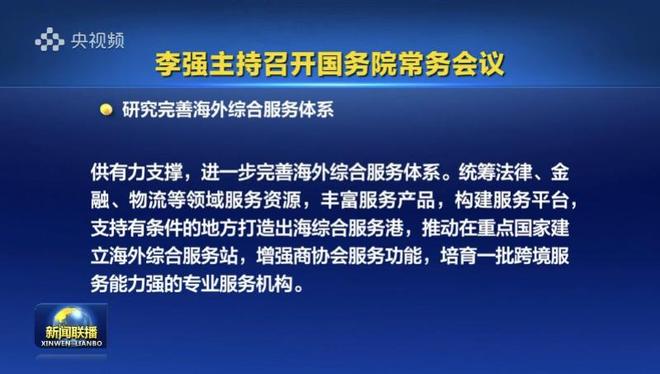
中国企业“走出去”需求迫切,国常会部署打造出海综合服务港
Nan Fang Du Shi Bao· 2025-09-13 02:06
Core Viewpoint - The Chinese government is enhancing its overseas comprehensive service system to support enterprises in international cooperation and competition, with a focus on creating service ports for outbound businesses [1][3]. Group 1: Government Initiatives - The State Council meeting emphasized the need to strengthen support for outbound enterprises by improving the overseas comprehensive service system, integrating resources from legal, financial, and logistics sectors [3][6]. - Various regions in China have already begun exploring ways to assist enterprises in going global, such as the launch of the "Shenzhen Overseas Comprehensive Service Platform" which integrates 70 public service items [4][5]. - Zhejiang Province has introduced 18 specific service measures to enhance the overseas service system, including the establishment of online and offline service platforms [5]. Group 2: Service Platforms and Features - The Shenzhen platform includes a legal service area that has helped nearly 100 companies resolve cross-border legal issues, acting as a "legal think tank" for outbound enterprises [4]. - The Shanghai North Bund International Legal Service Port offers core functions like legal consultation and international arbitration, utilizing a shared model to improve resource efficiency [4]. - The establishment of comprehensive service ports aims to provide a one-stop service for enterprises, covering compliance, legal, financial, and other essential support [6]. Group 3: Industry Challenges - Industry insiders highlight the necessity of robust professional support in areas such as law, tax, finance, and brand management for enterprises venturing abroad [6]. - Despite leading in goods export, Chinese companies often lack awareness in cultural and management aspects of going global, indicating a need for better preparatory planning [6].