即时零售

Search documents
左手“欠款”右手“豪购”!杨陵江收购“国内酒庄第一股”
Mei Ri Jing Ji Xin Wen· 2025-12-23 14:36
Core Viewpoint - The founder of 1919, Yang Lingjiang, has acquired 73.63% of Yiyuan Wine Industry, marking a significant move amidst challenges faced by 1919, including debt issues with franchisees and a struggling industry [1][4][6]. Group 1: Acquisition Details - Yang Lingjiang's acquisition of Yiyuan Wine Industry was disclosed on December 15, with an estimated transaction value of approximately 1.56 billion HKD (around 141 million RMB) based on Yiyuan's stock price before suspension [4][6]. - Yiyuan Wine Industry, the first listed winery in China, has faced financial difficulties, reporting losses in recent years, including a loss of 4.1 million RMB in 2024 [6][12]. - The acquisition is seen as a strategic move to leverage Yiyuan's asset value and potential for industry consolidation during a challenging period for the wine sector [6][28]. Group 2: Financial Context - 1919 has been experiencing significant financial strain, with reports of overdue payments to franchisees and a tightening cash flow situation [11][12]. - Yang Lingjiang stated that the company has reduced its debt from 60 billion RMB to a much healthier level, with a debt ratio dropping from 92% to below 20% by year-end [12][28]. - The company aims to resolve outstanding payments to franchisees by December, indicating a proactive approach to address financial concerns [12][19]. Group 3: Industry Challenges and Strategic Shifts - The wine industry is undergoing a deep adjustment, with companies like Huazhi Wine facing severe performance declines [1][6]. - Yang Lingjiang's strategy includes a shift towards a new business model focusing on instant retail and a multi-layered commercial approach, moving away from traditional sales methods [19][22]. - The company plans to eliminate 1,500 underperforming franchise stores by year-end as part of its transformation strategy [19][28]. Group 4: Future Prospects and Listing Plans - There are speculations about 1919 potentially restarting its listing process, with Yang Lingjiang's acquisition of Yiyuan seen as a step towards facilitating this [28][29]. - The acquisition may provide a more favorable platform for capital operations, simplifying the listing process and enhancing control [28][29]. - However, challenges remain, including the need for improved business health and compliance with regulatory requirements for a potential IPO [28][29].


存量盘活 | 2025年12月商业地产零售业态发展报告
Sou Hu Cai Jing· 2025-12-23 14:15
Group 1 - The core viewpoint highlights the acceleration of domestic and offshore duty-free shopping, with various provinces focusing on enhancing consumption capabilities and expanding domestic demand during the 14th Five-Year Plan period [5][8][10] - Major cities are being supported to become international consumption centers, with initiatives in cities like Guangzhou, Shenzhen, and Wuhan to drive regional economic growth [8][9] - The duty-free economy is expanding, with new city duty-free stores opening in Tianjin and Xi'an, and Hainan's full island closure set to enhance the range of zero-tariff goods available [10][12] Group 2 - Meituan reported a widening loss in Q3, with a slight revenue increase but a decline in core local business revenue, while instant retail emerged as a growth highlight [6][25][28] - JD.com announced the acquisition of German retail group Ceconomy for €22 billion, indirectly gaining a 22% stake in French e-commerce platform Fnac Darty, aiming to strengthen its presence in the European market [6][29] - The REITs market is expected to expand into more asset types, with a focus on urban renewal and infrastructure, although many consumer REITs have seen price declines [7][30][33] Group 3 - The trend of creating aggregated commercial spaces is rising, with community commercial projects focusing on food markets becoming popular among companies like Yuexiu and CR Land [18][19] - Restaurant brands are accelerating listings and expansion, with "Yujian Xiaomian" becoming the first Chinese noodle restaurant to list on the Hong Kong Stock Exchange, despite a significant drop in share price on its debut [21][22] - Hema's new discount supermarket model is entering a phase of scale expansion, marking a significant shift in the competitive landscape of the discount retail sector [22][23]
东古调味与淘宝闪购战略携手,深化即时零售布局
Jin Tou Wang· 2025-12-23 09:52
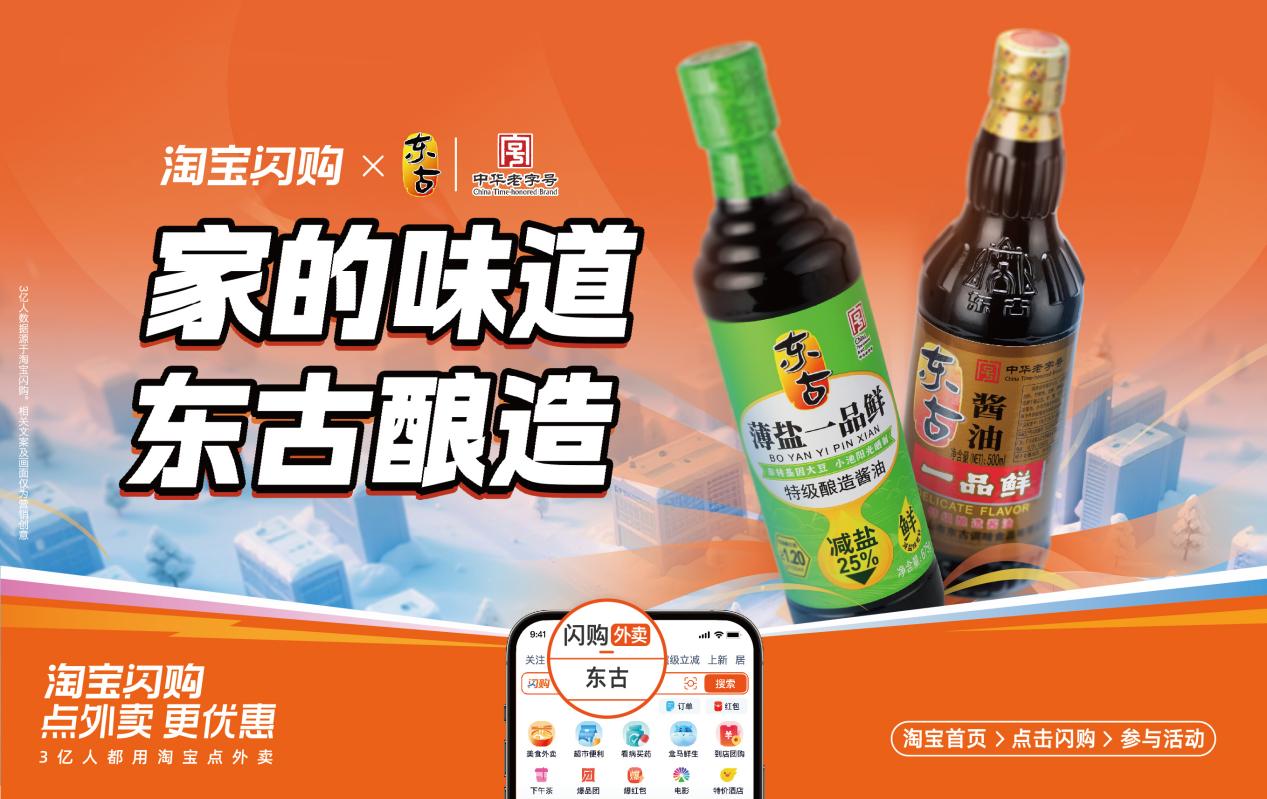
Core Insights - The collaboration between Donggu Seasoning and Taobao Flash Purchase marks a strategic move into the instant retail sector, showcasing the brand's commitment to integrating traditional flavors with modern consumer habits [1][5] Group 1: Collaboration Details - Donggu Seasoning has launched the "Donggu Warm Winter Gratitude Season" campaign in partnership with Taobao Flash Purchase, which includes not only product promotion but also participation in community activities [1][3] - Consumers ordering takeout through Taobao Flash Purchase will receive Donggu's thin-salt soy sauce as a complimentary item, enhancing the dining experience [1][3] Group 2: Market Strategy - The partnership is seen as a strong alliance between "good taste" and "fast logistics," leveraging Taobao Flash Purchase's efficient delivery network for rapid service [3][5] - Donggu aims to provide a seamless experience where consumers can easily order soy sauce, ensuring that the essence of home cooking is always present, even during busy times [4][5] Group 3: Long-term Vision - Donggu's strategy reflects a long-term commitment to instant retail, adapting to changing consumer trends while maintaining its traditional brewing techniques [5][6] - The brand is focused on expanding its presence across various consumer scenarios, from traditional supermarkets to instant retail platforms, ensuring that its products are readily available [5][6]
酒行业周度市场观察-20251223
Ai Rui Zi Xun· 2025-12-23 07:39
Investment Rating - The report does not explicitly provide an investment rating for the industry Core Insights - The Chinese liquor industry is expected to face challenges in the next five years due to demographic changes, technological advancements, and internal adjustments, necessitating a shift from scale expansion to structural optimization [1] - The liquor distribution sector is transitioning from traditional inventory models to user operation and instant retail, with companies like 1919 leading the way by building over 100,000 pre-positioned warehouses [2] - The collaboration between liquor companies and new energy giants aims to reduce high energy costs in production and align with carbon neutrality goals, indicating a trend towards sustainability in the industry [5] - The introduction of e-commerce tax regulations is expected to create a more equitable market environment, benefiting compliant businesses while phasing out non-compliant ones [6] - The industry is witnessing a shift from profit based on price differences to a focus on service capabilities, emphasizing the importance of user engagement and data operations [7] Industry Trends - The liquor industry is projected to grow through three main variables: demographic changes, deepening technological revolutions, and internal adjustments, with a focus on value creation and AI-driven transformations [1] - The transition to instant retail is characterized by the development of core capabilities such as brand management, online customer acquisition, and supply chain efficiency [2] - The success of cross-industry products, like soda water, highlights the need for differentiated offerings in a market facing high inventory and slow sales [5] - The integration of new energy technologies in liquor production aims to lower costs and enhance sustainability, responding to both market pressures and environmental goals [5] - The e-commerce tax reform is set to regulate online sales, promoting fair competition and encouraging a shift from price wars to value-based competition [6] - The traditional liquor retail model is evolving, with a focus on service and user experience becoming critical for survival in a competitive landscape [7] Top Brand News - 1919 is leading the liquor distribution transformation by implementing a "center store + pre-positioned warehouse" model, aiming to enhance local service efficiency [2] - The launch of low-alcohol products like the 38-degree Guojiao 1573 has positioned it as a market leader, reflecting a growing consumer preference for healthier drinking options [16] - The collaboration between Guojiao 1573 and the Australian Open showcases the brand's commitment to cultural resonance and global outreach [19] - The introduction of new products by brands like JunTai emphasizes the importance of aligning with consumer trends in both everyday celebrations and high-end collections [22]



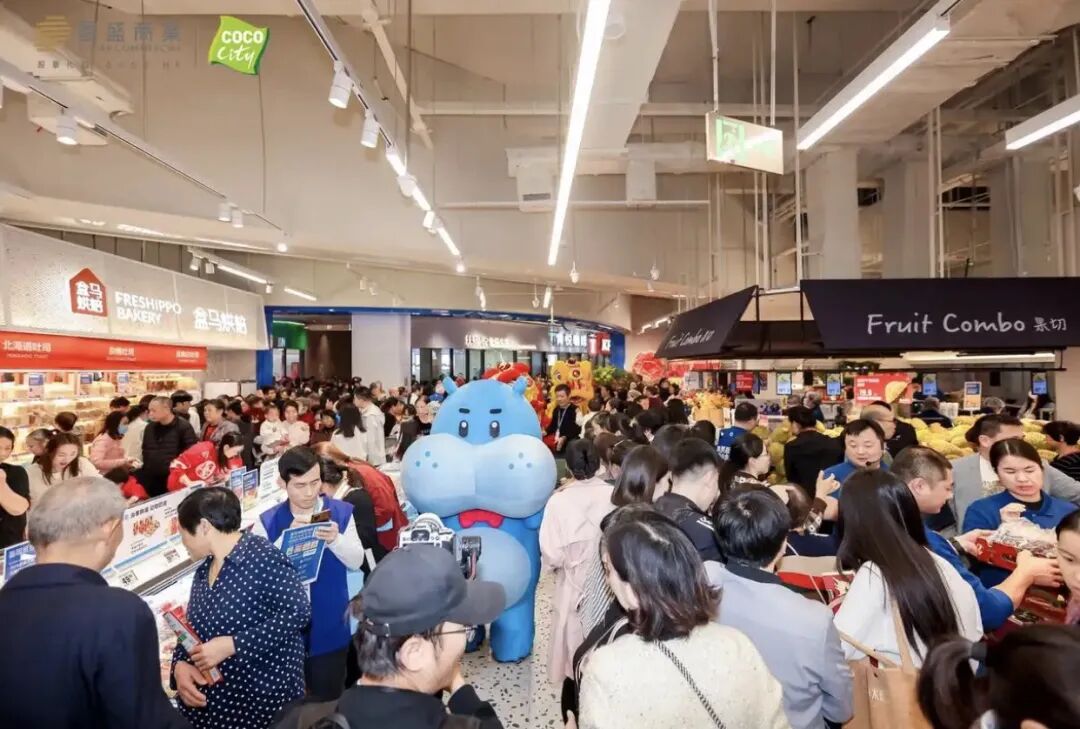
七鲜、小象、盒马鲜生新店同日开张,谁在重新定义“线下零售”
Sou Hu Cai Jing· 2025-12-23 05:18
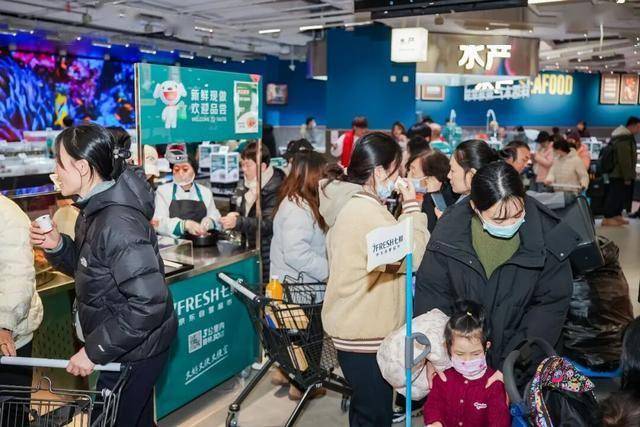
Core Insights - The article discusses the shift of internet companies back to offline retail, emphasizing the importance of physical stores in the evolving retail landscape [5][6][31] - It highlights the different strategies employed by companies like JD's 7Fresh, Meituan's Xiaoxiang Supermarket, and Hema Fresh, each redefining the role of offline stores [24][31] Group 1: Reasons for Offline Return - Internet companies are returning to offline retail due to the limitations of online platforms in providing unique value, particularly in fresh produce and consumer trust [7][8] - The competition has shifted from efficiency to value, necessitating a physical presence to address issues of freshness, safety, and consumer experience [8][31] Group 2: Company Strategies - JD's 7Fresh aims to enhance user experience and supply chain authority by creating a tangible representation of its fresh standards [11][13] - Meituan's Xiaoxiang Supermarket focuses on establishing a physical touchpoint for high-value users and data collection, rather than merely selling products [15][18] - Hema Fresh is consolidating its network by filling gaps in instant delivery and stabilizing its high-end consumer base, moving towards a model of consistent output rather than extreme innovation [20][30] Group 3: Redefining Offline Retail - The article posits that offline stores are evolving from mere sales points to multi-functional nodes that facilitate fulfillment, trust, data collection, and lifestyle integration [24][31] - The new roles of offline stores include being a terminal for product sales, a fulfillment point for instant retail, a place for consumer trust, and a physical interface for data and branding [26][31] Group 4: Differentiation as a Survival Strategy - Traditional retailers must focus on differentiation rather than competing directly with online platforms, as the latter have advantages in scale, capital, and system efficiency [33][37] - The article emphasizes that successful offline models will likely center around fresh produce, processing, and private brands, which are challenging to replicate [40][41] - The essence of differentiation lies in long-term capabilities rather than short-term tactics, with a focus on what can be sustained over time [45]
京东七鲜、美团小象、盒马鲜生新店同日开张,谁在重新定义“线下零售”
3 6 Ke· 2025-12-23 00:00
Core Insights - The article discusses the recent trend of internet companies returning to offline retail, particularly in the fresh food sector, highlighting the strategic shift from "disrupting offline" to "embracing offline" [3][5][26] Group 1: Reasons for the Shift to Offline - Internet companies are forming a "consensus" on the necessity of offline presence due to the limitations of online platforms in delivering unique value [3][4] - The competition in instant retail has intensified, prompting companies to explore new offline strategies as a means of upgrading their online systems [3][4] - The challenges of ensuring freshness, safety, and premium pricing in fresh food categories cannot be effectively addressed through online channels alone, making offline stores essential [4][18] Group 2: Company-Specific Strategies - JD's 7Fresh aims to address its "scene shortfall" and strengthen supply chain authority by enhancing user experience through physical stores [6][7] - Meituan's Little Elephant supermarket focuses on "occupying entry points," using offline stores as touchpoints for high-value users and data collection [6][12] - Hema Fresh is not aggressively expanding but rather stabilizing its network by filling gaps in instant delivery and maintaining a standard model for high-end family consumers [6][17] Group 3: Redefining Offline Retail - The article posits that fresh food is a common consensus among these companies, as it is the most challenging category for e-commerce and significantly impacts daily consumer presence [18][26] - Offline stores are evolving from mere sales points to multi-functional nodes that facilitate sales, fulfillment, trust, and data interaction [22][26] - The new roles of offline stores include being a terminal for product sales, a fulfillment node for instant retail, a place for consumer trust, and a physical interface for data and branding [22][26] Group 4: Differentiation and Survival - Traditional retail cannot compete directly with internet platforms; differentiation is essential for survival [27][30] - The focus should be on categories that are difficult to e-commerce, such as fresh food, processing, and private brands, which require long-term capabilities rather than quick tactics [33][34] - The essence of differentiation lies in the ability to excel in areas where e-commerce struggles, ensuring that offline stores remain relevant and valuable [39][40]


促消费向稳向好需政策加力优化
Sou Hu Cai Jing· 2025-12-22 22:43
Core Viewpoint - The Chinese government is prioritizing the expansion of domestic demand and strengthening the domestic circulation to stabilize economic growth, with consumer spending playing a crucial role in this strategy [1]. Group 1: Economic Growth and Consumer Contribution - In the first three quarters of 2025, China's GDP grew by 5.2% year-on-year, with final consumption expenditure contributing 53.5% to economic growth, an increase of 9 percentage points compared to the previous year [1]. - The Central Economic Work Conference emphasized the importance of expanding domestic demand and optimizing supply as key tasks for economic work in the coming year [1]. Group 2: Consumer Demand and Retail Performance - From January to November 2025, the total retail sales of consumer goods increased by 4.0% year-on-year, surpassing the 3.5% growth rate of 2024 [2]. - The service retail sector saw a year-on-year growth of 5.4%, indicating a stable growth trend [2]. - The "old-for-new" policy for consumer goods has been expanded, leading to over 2.5 trillion yuan in sales and benefiting more than 360 million people [2]. Group 3: New Consumption Trends - New types of service consumption, such as travel, culture, entertainment, and health, have become popular, with significant increases in domestic travel during holidays [3]. - The online retail of physical goods grew by 5.7% year-on-year, accounting for 25.9% of total retail sales, indicating a shift towards e-commerce [3]. - The retail sales of new energy passenger vehicles increased by 33.3%, with a penetration rate of 50.2% in the first half of 2025 [3]. Group 4: Supply-Side Innovations and CPI Trends - The Consumer Price Index (CPI) rose by 0.7% year-on-year in November 2025, reflecting improvements in product and service quality due to innovation [4]. - The number of new consumer goods registered in 2024 exceeded 21.63 million, marking a significant increase in supply-side innovation [4]. Group 5: Challenges in Consumer Market - Despite the potential and resilience of the consumer market, there are structural contradictions, such as consumer spending growth lagging behind income growth [6]. - The growth rate of service consumption spending has slowed, which may hinder the upgrading of consumption structure [7]. - The consumer market is increasingly segmented, with distinct consumption patterns emerging among different income groups [7]. Group 6: Policy Recommendations for Consumption Growth - To boost consumption, policies should focus on enhancing employment, increasing income, and stabilizing expectations [9]. - The "old-for-new" policy should be optimized to stimulate service consumption, particularly in sectors like tourism and elderly care [10]. - A supportive mechanism combining policy support, digital empowerment, and industrial fund support should be established to foster innovation in consumption [11].
美团食杂零售瘦身:关停快递电商、美团优选 小象线下开大店
2 1 Shi Ji Jing Ji Bao Dao· 2025-12-22 12:29
Core Viewpoint - Meituan is undergoing significant restructuring in its grocery and snack business, focusing on expanding its successful offline stores while shutting down underperforming segments like Meituan E-commerce and Meituan Youxuan [1][2][7] Group 1: Business Adjustments - Meituan is closing its e-commerce operations and Meituan Youxuan, while expanding its successful Xiaoxiang supermarket chain, which has opened its first large offline store in Beijing [1] - The decision to halt the Tuanhaohuo business reflects a shift towards exploring new retail formats, as the existing B2C e-commerce model has not gained significant traction among users [2][6] - Meituan Youxuan, a major loss-making segment, is being scaled back, with reports indicating its closure in most regions, which could help reduce overall losses in Meituan's new business sector [7][9] Group 2: Performance and Strategy - The Xiaoxiang supermarket, which evolved from Meituan's previous grocery initiatives, has expanded to over 30 cities and is now positioned as a comprehensive instant retail platform [1][10] - Meituan's new business losses narrowed to 7.3 billion yuan in 2024, a 63.9% reduction year-on-year, indicating a positive trend following the adjustments made to underperforming segments [9] - The new Xiaoxiang store features a diverse product range and aims to enhance customer experience, positioning itself similarly to high-end competitors like Sam's Club and Hema [10][11]
当亚马逊被“围猎”,谁在瓜分新的万亿蛋糕?
3 6 Ke· 2025-12-22 11:44
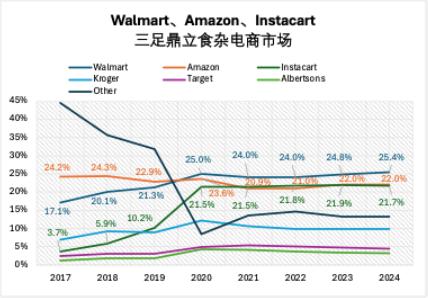
Group 1: Core Insights - The disparity in online retail penetration between China (30%) and the U.S. (16%) is significant, indicating different market dynamics and maturity levels [1][2] - U.S. e-commerce is not merely lagging behind but is in a mature market with strong offline competitors like Walmart and Costco, leading to structural differentiation rather than total growth [2][3] - The U.S. retail landscape is characterized by a robust offline infrastructure that complicates the growth of e-commerce, as traditional retailers provide high efficiency and experience [4][5] Group 2: Market Dynamics - The U.S. e-commerce market, valued at over $1.1 trillion, is supported by a $7 trillion retail base, despite a lower penetration rate [4] - The competition in the U.S. e-commerce space is shifting towards specific niches where traditional retailers cannot compete, such as extreme low pricing, traffic stimulation, and fresh food delivery [4][10] - Amazon, while still a leader, faces challenges from low-cost competitors and content-driven e-commerce platforms like TikTok Shop, which leverage social media for sales [5][9] Group 3: Competitive Landscape - Companies like Temu and Shein are disrupting the U.S. market by utilizing Chinese supply chains to offer low prices without the burden of high logistics costs [7][8] - TikTok Shop is transforming its video content into e-commerce opportunities, presenting a new avenue for merchants seeking alternatives to Amazon [9] - Walmart has successfully adapted to the e-commerce landscape by utilizing its extensive store network for efficient fresh food delivery, surpassing Amazon in this segment [12] Group 4: Key Companies - **Amazon (AMZN)**: Despite facing competition, Amazon maintains a strong retail market share of approximately 37% and continues to perform well in core categories like consumer electronics [13][14] - **Walmart (WMT)**: Walmart is evolving into a full-channel giant, with its e-commerce business growing over 20% for seven consecutive quarters, driven by its fresh food offerings [15] - **PDD Holdings (PDD)**: Temu is transitioning to a model that enhances its pricing power and logistics efficiency, targeting Amazon's mid-tier merchant ecosystem [16] - **Shopify (SHOP)**: Shopify is leveraging AI to enhance traffic distribution and improve monetization rates, moving beyond its initial role as a platform provider [17] - **Instacart (CART)**: Instacart dominates the U.S. third-party fresh food delivery market, with a significant portion of its revenue coming from high-margin advertising [18]


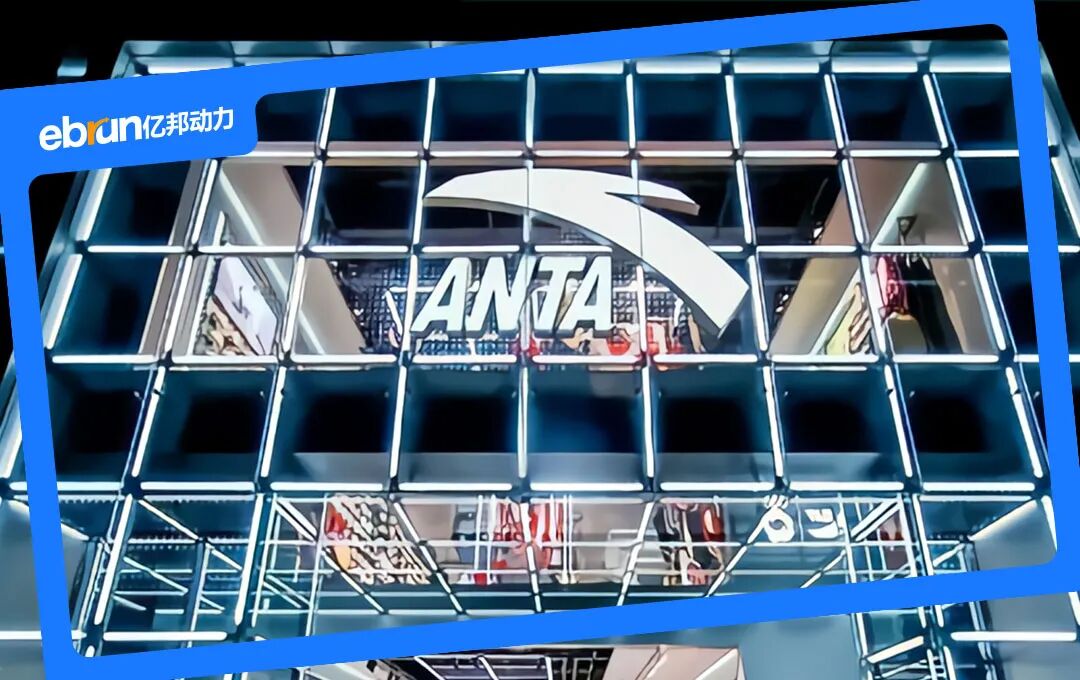
安踏接入淘宝闪购,2026年将全面覆盖4000多家门店
Xin Lang Cai Jing· 2025-12-22 11:24
Core Insights - Anta, a leading domestic sports brand, has officially integrated with Taobao Flash Sale, expanding its reach to over 1,000 offline stores across 174 cities, with plans to cover more than 4,000 stores by 2026 [2][5] - The product offerings on Taobao Flash Sale include essential winter items such as down jackets, waterproof jackets, cotton shoes, and running shoes, along with new autumn/winter collections [2][5] - The integration is a key step in Anta's strategy to enhance its omnichannel retail approach, addressing consumer needs for immediate delivery and emergency purchases in various scenarios like travel and fitness [2][5] Industry Trends - There is a growing trend among domestic sports brands to leverage instant retail platforms like Taobao Flash Sale to capture both regular and immediate consumer demand for sports equipment [3][6] - Sports brands are considered a high-frequency, high-ticket, and strong-scenario category in the instant retail sector, making them an attractive entry point for platforms seeking to secure core assets of offline stores [3][6] - The competition in the instant retail space is shifting focus from food delivery to capturing the offline store assets of brands, with sports products being a prime target [3][6]