数字经济

Search documents
北京新疆重设GDP五年目标——图观地方两会第7期
一瑜中的· 2026-02-04 15:22
Core Viewpoint - The article discusses the GDP targets and economic performance of various provinces in China for the "14th Five-Year Plan" and "15th Five-Year Plan" periods, highlighting adjustments in growth expectations and specific economic goals for 2026. Group 1: GDP Targets and Adjustments - Beijing has set a new GDP growth target of 4.5%-5% annually, aiming for better results [7] - Xinjiang's target is adjusted to an annual growth of 5.5%-6% [7] - Hunan has lowered its target by 0.5-1 percentage points to 5%-5.5% [9] - Jiangsu's target is down by 0.5 percentage points to around 5% [9] - Guangdong's target remains stable at around 5% [9] - Gansu and Guizhou have both reduced their targets by 1.5 and 2 percentage points respectively [9] Group 2: Economic Performance in 2025 - Jiangsu's GDP grew by 5.3% in 2025, maintaining the highest increment nationally [12] - Sichuan's GDP growth was 5.5%, ranking fifth in total and growth rate [19] - Shanghai's GDP increased by 5.4%, with significant growth in industrial investment [27] - Hunan's GDP growth was 4.8%, with a notable decline in fixed asset investment [31] Group 3: 2026 Economic Goals - Jiangsu aims for a GDP growth of around 5% in 2026, with a focus on better results [13] - Sichuan targets a GDP growth of approximately 5.5% for 2026 [20] - Shanghai's GDP target for 2026 is set at around 5% [27] - Hunan's GDP goal is around 5%, with an emphasis on achieving better outcomes [33] Group 4: Investment and Consumption - Jiangsu's fixed asset investment target for 2026 is not yet disclosed, following a 12.7% decline in 2025 [17] - Hunan's fixed asset investment is expected to achieve positive growth in 2026 [37] - Consumption in Jiangsu is targeted to grow by around 5% in 2026, down from 5.5% in 2025 [15] - Sichuan's social retail sales target for 2026 is not yet disclosed, with a 2025 goal of 5% [23] Group 5: Key Focus Areas for 2026 - Jiangsu plans to enhance consumption through cultural and tourism integration [13] - Sichuan aims to develop the cultural tourism industry as a pillar of economic growth [20] - Hunan will focus on digital economy growth and infrastructure projects [31] - Shanghai will prioritize major engineering investments and digital economy initiatives [27]


2026年北京将鼓励环球影城等龙头企业提升二次消费
Bei Jing Shang Bao· 2026-02-04 15:13
Core Viewpoint - In 2026, Beijing aims to boost consumption and enhance the cultural and tourism industry system, focusing on the development of entertainment areas and promoting various tourism products and experiences [1] Group 1: Consumption and Industry Development - Beijing will promote the clustered development of performance areas such as Tianqiao and Sanlitun, leveraging large concerts to stimulate consumption [1] - Support will be provided to talent agencies to attract more projects, and leading enterprises like Universal Studios will be encouraged to enhance secondary consumption [1] - The city plans to enrich tourism offerings for seniors, fashion tourism, and educational tourism, while accelerating the development of industrial and technology tourism [1] Group 2: New Tourism Products and Economic Scenarios - A series of high-quality industrial tourism routes and technology tourism products will be launched, alongside the creation of more night economy, ice and snow economy, ticket economy, trendy play economy, and waterfront space consumption scenarios [1] - The integration of artificial intelligence with cultural and tourism sectors will be expanded, contributing to the establishment of a global digital economy benchmark city [1] Group 3: Cultural and Event Integration - The deep integration of culture, commerce, tourism, and sports will be promoted, with initiatives tied to major events like the Beijing International Film Festival and various international competitions [1] - The city will work on enhancing the quality of cultural tourism sites along the Grand Canal and improve the "Jingji Great Wall" scenic route, while developing the "Yongding River Left Bank" leisure brand [1]
报告建议拓展数字人民币应用场景,夯实其数字经济底层地位
Zhong Guo Xin Wen Wang· 2026-02-04 15:04
Core Insights - The current wave of digital technology revolution is profoundly reshaping the global economy and financial system, with digital currencies and crypto assets evolving rapidly, expanding the technical boundaries of financial operations while posing new challenges to monetary sovereignty, financial security, and governance capabilities [1] Group 1: Digital Currency and Crypto Assets - The pilot program for digital RMB has achieved large-scale operation, extending its functions to fund management and governance tools [1] - The global stablecoin market has significantly increased, necessitating attention to its spillover effects [1] - The crypto asset market is experiencing heightened volatility and concentration towards leading assets, closely linked to macroeconomic policies [1] Group 2: Policy Recommendations - The report suggests expanding the application scenarios of digital RMB to solidify its foundational role in the digital economy [1] - It emphasizes the need to coordinate the prevention of stablecoin risks to maintain the strategic space for RMB internationalization [1] - The report calls for enhanced forward-looking research to promote collaboration between regulation and academia [1] Group 3: Research and Development - The report outlines the development trends, core characteristics, and global regulatory policies related to digital RMB and crypto assets, providing academic references and intellectual support for the normative development of digital finance in China and safeguarding national financial security [1]

去年新设外资企业7万余家,它们在中国看到哪些机会
第一财经· 2026-02-04 14:59
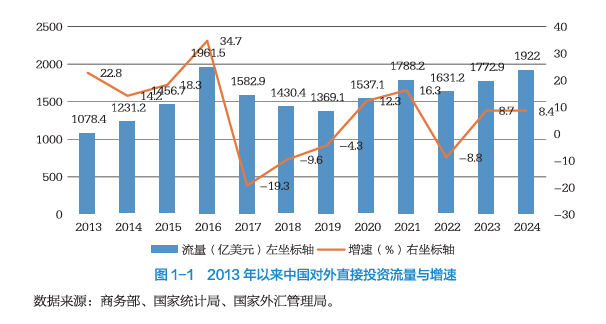
Core Viewpoint - The article emphasizes China's commitment to expanding openness and improving the level of investment liberalization and facilitation, further solidifying its position as a global investment powerhouse while steadily enhancing the quality of foreign capital utilization [2]. Group 1: Investment Trends and Data - In 2025, over 70,000 new foreign-funded enterprises are expected to be established in China, representing a growth of 19.1%, with foreign capital absorption reaching 747.69 billion yuan, of which high-tech industries account for 32.3% [3]. - China's non-financial direct investment abroad is projected to reach 1 trillion yuan in 2025, marking a growth of 1.6%, while the newly signed contracts for foreign engineering projects are expected to total 2.1 trillion yuan, an increase of 8.5% [3]. Group 2: Technological Innovation and Foreign Investment - China's technological innovation capabilities rank among the top globally, with opportunities in innovation becoming a significant driving force for foreign enterprises to enhance their global competitiveness [4]. - The country has established a robust technological innovation ecosystem, particularly in artificial intelligence and 5G, providing fertile ground for foreign companies to set up R&D centers and innovation entities [4]. Group 3: Encouraging Domestic Enterprises to Go Global - The report highlights the importance of Chinese enterprises "going out" as a vital pathway for survival and development, emphasizing the need for reasonable and compliant overseas expansion [6][8]. - The government is encouraged to support collective overseas ventures by industries and to create favorable industrial ecosystems in overseas industrial parks [8]. Group 4: Policies to Stabilize Foreign Investment - In response to a complex international investment environment, China is committed to promoting economic globalization and implementing policies to stabilize foreign investment while encouraging high-quality outbound investment by Chinese enterprises [8][9]. - The Ministry of Commerce aims to enhance the "Invest in China" brand, reduce the negative list for foreign investment access, and improve the service guarantee system for foreign investors [9][10].
去年新设外资企业7 万余家,它们在中国看到哪些机会
Di Yi Cai Jing· 2026-02-04 12:43
Group 1 - China's position as a major global investor is solidified, contributing positively to global economic prosperity through expanded openness and improved investment facilitation [1][2] - The report indicates that in 2025, over 70,000 new foreign-funded enterprises will be established, representing a growth of 19.1%, with foreign investment absorption reaching 747.69 billion yuan, of which high-tech industries account for 32.3% [2] - China's foreign direct investment (FDI) in non-financial sectors is projected to reach 1 trillion yuan, growing by 1.6%, while new contracts for foreign engineering projects will amount to 2.1 trillion yuan, increasing by 8.5% [2] Group 2 - China's technological innovation capabilities rank among the top globally, with significant advancements in fields such as artificial intelligence and 5G, providing a robust ecosystem for foreign enterprises [2][3] - The report highlights that China's outbound investment not only boosts tax revenue and employment in host countries but also enhances their industrialization and development capabilities through infrastructure improvements [4] - Manufacturing sector outbound direct investment has shown remarkable growth, with an average annual increase of 15% from 2020 to 2025, surpassing the overall growth rate of outbound direct investment by 10 percentage points [4] Group 3 - The Chinese government is committed to creating a favorable environment for foreign investment, including reducing the negative list for foreign investment access and implementing new policies to encourage reinvestment [6][7] - The Ministry of Commerce aims to expand high-level opening-up and enhance the attractiveness of foreign investment by promoting pilot projects in sectors like telecommunications, healthcare, and education [7] - A comprehensive service support system is being established to assist Chinese enterprises in their overseas expansion, ensuring compliance and strategic positioning in global supply chains [5][6]
浙江“十五五”共富新局:打造AI高地,居民收入接近发达经济体
2 1 Shi Ji Jing Ji Bao Dao· 2026-02-04 12:33
Core Viewpoint - Zhejiang aims to establish a high-quality development and common prosperity demonstration zone by 2030, targeting GDP and income levels close to developed economies [1] Economic Development - The plan emphasizes high-quality economic development and the implementation of an employment-first strategy to ensure stable income growth for urban and rural residents [1] - Key initiatives include building an innovation hub for artificial intelligence and enhancing the modern industrial system through the "415X" advanced manufacturing cluster cultivation project [2][3] Industry Focus - Zhejiang will strengthen traditional industries such as green petrochemicals and textiles while promoting new industries like integrated circuits, new energy vehicles, and biomedicine [2][3] - The province aims to enhance its competitive edge in traditional sectors and transition towards high-end, low-carbon industrial chains [2] Employment Strategy - The plan outlines measures to promote high-quality and sufficient employment, with a target of 1.158 million new urban jobs by 2025, exceeding the annual goal [6][7] - The average urban unemployment rate is projected to remain at 4.6%, lower than the national average [6] Digital Economy Integration - The integration of the digital economy with the real economy is a priority, with plans to deepen the construction of a national digital economy innovation development pilot zone [5] - The focus will be on upgrading clusters in artificial intelligence, smart IoT, integrated circuits, and high-end software [5] Employment Services Improvement - Zhejiang will enhance its unified human resources market and develop a comprehensive service system for various employment groups, including graduates and migrant workers [7] - The province aims to establish a "15-minute employment service circle" in cities like Hangzhou to provide accessible job services [7]
南兴股份:业务范围主要包括:数据中心、云计算、云联网及数字化解决方案等服务
Zheng Quan Ri Bao Wang· 2026-02-04 12:16
Core Viewpoint - Naxing Co., Ltd. (002757) emphasizes its commitment to digital economy infrastructure services, focusing on data centers, cloud computing, and digital solutions [1] Group 1: Company Overview - The company’s subsidiary, Yiwang Network, is recognized as a leading provider of digital economy infrastructure services [1] - The primary business scope includes data centers, cloud computing, cloud interconnection, and digital solutions [1] Group 2: Industry Insights - Data centers are identified as a critical infrastructure for the development of the digital economy, serving as the physical carrier of computing power [1] - The company plans to closely monitor industry trends and technological advancements [1] - There is an intention to actively seek multi-faceted collaborations with enterprises that have demands for IDC and cloud computing services [1] - The company aims to continuously promote the construction and operational deployment of cloud computing and data center digital infrastructure [1]

2025年历下区GDP为2712亿元,同比增长5.6%
Qi Lu Wan Bao· 2026-02-04 11:31
Economic Performance - The district's GDP reached 271.2 billion yuan, with a year-on-year growth of 5.6% [1] - General public budget revenue was 17.38 billion yuan, with tax revenue of 15.99 billion yuan, reflecting a growth of 1.5% [1] - The tax revenue accounted for 92% of the total budget, indicating strong fiscal health [1] Development Goals - The district aims to establish a new urban development pattern characterized by "three zones coordination, north-south synergy, multi-park blooming, and simultaneous quantity and quality improvement" [2] - The focus will be on creating a headquarters economy cluster, targeting modern finance and high-end commerce for attracting quality headquarters enterprises [2] - The district plans to enhance its financial sector by attracting national and regional financial institutions, aiming to build a comprehensive financial ecosystem [2] Industry Focus - The district is set to develop a smart industry leading area, expanding the AI computing center and promoting the integration of digital and real economies [2] - Cultural and tourism integration will be emphasized, leveraging historical and natural resources to enhance the attractiveness of the tourism sector [3] - High-end consumption areas will be developed, focusing on upgrading commercial districts and expanding quality goods and services [3] Quality of Life - The district aims to improve urban living conditions through city renewal, fine management, and functional enhancements [3] - Initiatives will be taken to support community childcare, education, youth entrepreneurship, and multi-level elderly care services [3]
君逸数码(301172) - 301172君逸数码投资者关系管理信息20260204
2026-02-04 11:02
Group 1: Company Overview - The company has expanded its business from smart city solutions to digital economy and AI applications, focusing on providing digital and information solutions [3] - The strategic planning is centered around the integration of smart IoT, big data, and AI, with a particular emphasis on the optical field as a second growth curve [3] Group 2: Investment Strategy - The investment in the optical and optical communication sectors is based on years of industry tracking and deep understanding, starting with an early investment in Guangdong Jinding Optical Technology Co., Ltd. [3] - The company increased its investment in Guangdong Jinding by 2,000 million yuan in May 2025, recognizing the management team's insights into industry trends [3] Group 3: AI Software Development - The company established a Digital City Research Institute to actively develop AI-related fields, leveraging large model capabilities to enhance product performance and new product development [4] - The self-developed AI intelligent platform includes multi-modal data analysis, intelligent knowledge management, and precise Q&A capabilities, with applications in various sectors [4] Group 4: Order Status - As of June 30, 2025, the company has an order backlog of approximately 985 million yuan, with new contracts and backlog reaching historical highs [6] - The current orders are primarily concentrated in core areas of digital transformation for government and enterprise clients, aligning closely with the company's main business [6] Group 5: Collaboration with Guanghong Precision - The collaboration with Guanghong Precision is characterized by technical synergy, where Guanghong's optical products enhance the company's digital solutions [5] - Market synergy is also evident, as the company's client resources can expand the application scenarios for Guanghong's optical products [5] Group 6: Optical Communication Business - Guanghong Precision is focusing on developing core optical products for optical communication, including micro-lens arrays and high-precision optical components [7] - These products are currently in the technical optimization phase and are intended to support the company's data communication business [7] Group 7: Risk Warning - The company advises investors to refer to official announcements for business information and clarifies that descriptions of future strategies do not constitute binding commitments [9]
在印尼:会中文,月薪近万
Di Yi Cai Jing· 2026-02-04 10:42
Core Insights - The dominance of Japanese brands in Indonesia's automotive market has decreased from 90% a decade ago to around 70% due to the rise of Chinese electric vehicles [2] - Indonesia is a significant market for Chinese companies, with a growing demand for Chinese products and services, particularly in the digital economy and e-commerce sectors [4][11] - The increasing importance of the Chinese language in Indonesia reflects a shift in perception towards Chinese goods and the growing economic ties between China and Indonesia [5][6] Automotive Industry - Japanese brands, particularly Toyota and Mitsubishi, remain prevalent in Indonesia, but their market share is declining as Chinese electric vehicles gain traction [2] - The presence of new Chinese brands, such as BYD, indicates a competitive shift in the automotive landscape [2] E-commerce and Digital Economy - Indonesia has become the largest market for TikTok e-commerce globally, with a GMV growth of over 100% year-on-year, surpassing the U.S. market [11] - The country's GDP accounts for approximately 40% of Southeast Asia's total, and its e-commerce market represents over 50% of the region's total [11] - The rapid growth of the digital economy in Indonesia is attracting numerous Chinese enterprises, with significant investments expected to continue [7][15] Language and Talent Demand - The demand for Chinese-speaking professionals in Indonesia is rising, with salaries for bilingual positions reaching up to 10,000 RMB per month [5][6] - The increasing number of Chinese companies operating in Indonesia is driving the need for local talent proficient in Chinese [6] Investment Trends - Chinese direct investment in Indonesia is projected to reach $4.59 billion in 2024, marking a 46.5% increase year-on-year [7] - Indonesia is ranked as the fifth-largest destination for Chinese foreign direct investment, with significant contributions to its economy [7] Market Opportunities - The Indonesian market presents opportunities for Chinese brands across various sectors, including consumer goods, food and beverage, and electric vehicles [16] - The rapid development of e-commerce and social media is facilitating faster brand establishment in Indonesia compared to previous years [16] Strategic Insights - Successful market entry strategies in Indonesia involve focusing on high-potential sectors and leveraging existing digital platforms for growth [18] - The logistics and supply chain challenges in Indonesia can be navigated by concentrating on key islands where the majority of the population resides [18]