数实融合

Search documents
将千年运河IP培育为文旅新增长极
Xin Hua Ri Bao· 2025-05-19 21:07
Core Viewpoint - The development of the Grand Canal in Jiangsu is emphasized as a cultural heritage that needs to be protected, inherited, and utilized effectively to foster a new growth pole in cultural tourism [1][3]. Group 1: Cultural and Historical Significance - The Grand Canal in Jiangsu has historically supported the livelihoods and prosperity of its people, with eight major cities and numerous cultural landmarks along its banks [2]. - The canal is home to 28 elements of world cultural heritage, covering a length of 325 kilometers, which constitutes one-third of the entire canal [2]. - There are 214 national key cultural relic protection units and 131 items of national intangible cultural heritage along the canal, highlighting its importance as a cultural heritage site [2]. Group 2: Challenges in Cultural Tourism Development - The cultural tourism development along the Grand Canal faces several bottlenecks, including insufficient depth in cultural resource exploration and ineffective resource conversion [3]. - There is a lack of systematic protection and promotion of cultural carriers such as ancient towns and historical sites, leading to a disconnect with the broader cultural narratives [3]. - The ecological protection efforts are hampered by inconsistent management across different cities, resulting in environmental degradation and challenges in balancing ecological preservation with tourism development [3]. Group 3: Strategic Recommendations for Development - To cultivate a cultural tourism super IP for the Grand Canal, a digital-enabled cultural value system should be established, integrating advanced technologies like blockchain and AI for resource management [4]. - An ecological governance model should be developed, focusing on coordinated efforts across regions to restore and protect the canal's ecological environment [4]. - A cultural and technological integration framework should be created to foster new business models in the cultural tourism sector, enhancing the overall tourism experience and promoting regional collaboration [4].
广西基本实现城乡同网同速同质
Guang Xi Ri Bao· 2025-05-19 03:22
Group 1 - The 2025 World Telecommunication and Information Society Day Conference was held in Nanning, marking the 10th anniversary of universal telecommunications service implementation in Guangxi [1] - Over the past decade, Guangxi has built 205,000 communication base stations in rural areas, achieving over 99.9% 4G network coverage, 98.4% fiber optic coverage, 98.1% 5G coverage, and 96.7% gigabit network coverage [1] - The 2024 Guangxi Internet Development Report indicates that the number of internet users in the region has surpassed 38 million, with an internet penetration rate of 77% [1] Group 2 - The "Action Plan" outlines five major actions: strengthening networks, improving quality, promoting integration, ensuring security, and pushing for low carbon, aiming to upgrade from "dual gigabit" to "dual ten-gigabit" networks by the end of 2027 [2] - By 2027, Guangxi plans to establish 190,000 5G base stations, achieve 5G-A coverage in cities at the county level and above, and reach an 88% penetration rate for individual 5G users [2] - The plan also includes scaling up the deployment of ten-gigabit optical networks, with the capacity to connect over 1 million households [2]
中国联通光纤到户率超99%
Zhong Guo Jing Ji Wang· 2025-05-19 02:33
Group 1 - China Unicom is leveraging its strengths in computing power and network capabilities to create an integrated solution that combines cloud, network, endpoint, and security services [1] - The company has launched a family robot named "Zhi Jia Tong Tong," which represents its innovation in integrating computing power networks, artificial intelligence, and the real economy [1] - The deployment of over 300 intelligent computing cloud pools allows for resource allocation closer to users, enhancing service responsiveness [1] Group 2 - The company aims to enhance complex task processing capabilities and provide intelligent emotional support through the "Zhi Jia Tong Tong" product, utilizing the Yuanjing large model [2] - Huawei emphasizes the collaboration of endpoint, network, cloud, and user experiences to redefine the smart home concept, supporting the development of "Zhi Jia Tong Tong" [2] - The integration of hardware and intelligent interaction innovations is a key focus, ensuring an optimal user experience through dual 10G capabilities [2]

培育壮大数字经济核心产业
Jing Ji Ri Bao· 2025-05-17 21:50
Core Insights - The digital economy in China is rapidly growing, with the core industries expected to account for about 10% of GDP by 2024 [1][2][19] - The core industries of the digital economy include digital product manufacturing, digital product services, digital technology applications, and data-driven industries [2][19] - In 2023, the added value of the digital economy's core industries reached 12.7555 trillion yuan, with significant contributions from various sectors [2][19] Industry Development - The number of enterprises in the digital economy core industries reached 4.5741 million by the end of November 2024, marking a 17.99% increase from the end of 2023 [3][19] - The growth in enterprise numbers reflects the acceleration of digital China construction and the increasing support of the digital economy for high-quality economic development [3][19] Technological Innovation - Technological innovation is a key driver for the development of the digital economy core industries, with significant advancements in areas such as 5G, artificial intelligence, and quantum computing [7][8] - In 2023, the number of invention patents authorized in the digital economy core industries reached 406,000, accounting for 45% of the total authorized patents in society [2][7] Infrastructure and Market Development - China has established the world's largest mobile communication and fiber broadband network, with 5G base stations reaching 4.251 million by the end of 2024 [4] - The online retail sales in China for 2024 are projected to be 15.5225 trillion yuan, reflecting a 7.2% increase from the previous year [4] Data Resource Utilization - The digital economy core industries have significantly improved the level of data resource development and utilization, providing advanced technology and tools for deeper data resource utilization [19] - The added value of the digital technology application industry was 5.56 trillion yuan in 2023, while the digital product manufacturing industry contributed 4.31 trillion yuan [19][20] Challenges and Recommendations - Despite the rapid growth, challenges remain, including a lack of specialized institutions, the need for improved technical levels, and the expansion of application ranges [20] - Recommendations include encouraging traditional enterprises to develop data businesses, enhancing collaboration among industry, academia, and research, and supporting enterprises in transitioning from business-driven to data-driven models [20]
贾康:改革牵引 因地制宜 支持科创发展投融资创新
Zhong Guo Zheng Quan Bao· 2025-05-16 21:22
Group 1 - The core viewpoint emphasizes the need for a collaborative development mechanism among institutional innovation, technological innovation, and management innovation to achieve comprehensive economic transition and modernization in China [1] - The breakthrough of cutting-edge technologies like artificial intelligence is fundamentally a market selection process that requires a high-level research ecosystem for support [1] - To build a quality research and innovation ecosystem, two key elements must be reinforced: a fair competitive market environment and a comprehensive rights protection system, along with a trial-and-error tolerance mechanism that aligns with research laws [1] Group 2 - Financial reform should focus on deepening financial institution reforms and enhancing the diversification and systematization of financial products, promoting collaborative innovation between direct and indirect financing [2] - The financial supply system must improve its product innovation capabilities to meet the diverse financing needs of market entities, particularly in the context of "digital-physical integration" [2] - The core function of finance in supporting scientific innovation and industrial cluster upgrades is to precisely match the supply with the development needs of new productive forces, creating a multi-layered and effective financial service system for high-quality development of innovative enterprises [2]
四川促消费“上新”,这次为何瞄准电竞?
Mei Ri Jing Ji Xin Wen· 2025-05-16 14:44
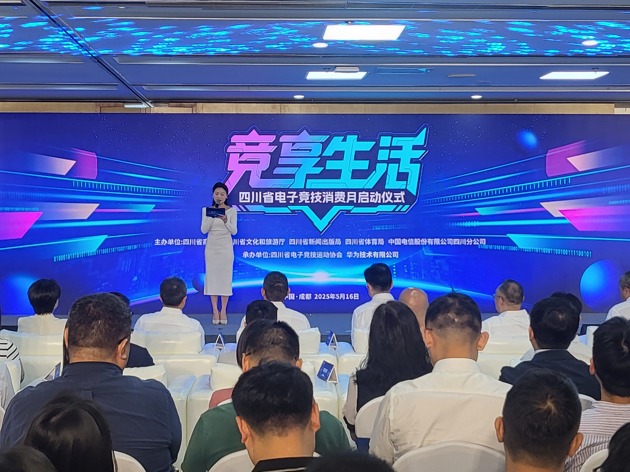
Core Insights - The article highlights the launch of the "Digital Consumption Month" in Sichuan, focusing on the eSports industry as a new growth driver for local consumption [1][2] - Sichuan's eSports industry is experiencing healthy growth, with significant participation in events and a large user base, indicating strong potential for future consumption [2][4] Group 1: Event Overview - The "Digital Consumption Month" is the first province-wide eSports themed event in Sichuan, lasting one month and involving over 11,000 offline stores [1] - The event employs a "1+4+N" model, with a main venue in Chengdu and multiple sub-venues across the province, including various eSports competitions and activities [1] Group 2: Market Potential - Sichuan's eSports user base is expected to exceed 28 million this year, with an annual consumption potential nearing 10 billion yuan [2] - The eSports industry in Sichuan is well-structured across the entire value chain, including hardware, gaming, and related tourism sectors, indicating a collaborative growth environment [2][3] Group 3: Promotional Strategies - The event features various promotional activities, including discounts on gaming hardware and collaborative online-offline sales initiatives with platforms like JD.com [3] - Special offers include significant price reductions on eSports equipment and promotional activities in eSports hotels, which are becoming a key source of consumption [3] Group 4: Economic Impact - The consumption generated from eSports is expected to support the local gaming industry, creating a cycle of "events driving consumption and consumption promoting city development" [4] - The gaming sector is projected to generate 8.28 billion yuan in revenue in 2024, representing 88.1% of the total income from the digital cultural industry in Sichuan [4] Group 5: Future Directions - Sichuan plans to assess the consumption impact of the event and explore the feasibility of extending promotional periods [5] - Future initiatives may focus on integrating artificial intelligence, sci-fi IP, and cultural tourism to enhance the digital creative landscape in Sichuan [5]

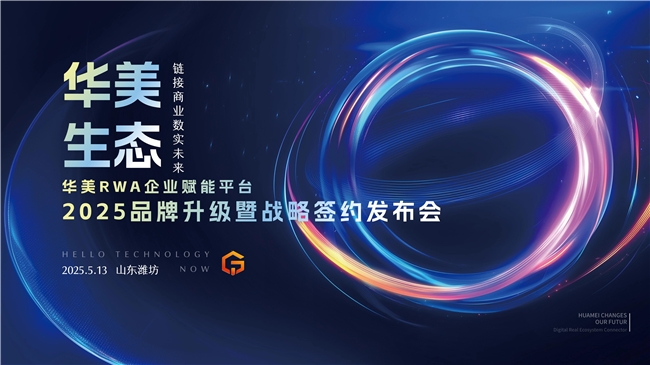
华美RWA企业赋能平台2025品牌升级暨战略签约发布会圆满成功,共启数实商业新篇
Sou Hu Wang· 2025-05-16 02:55
Core Insights - The event marked the launch of the Huamei RWA Enterprise Empowerment Platform and the strategic upgrade of the brand for 2025, aiming to connect digital and physical business futures [1][18] - The platform focuses on transforming consumer behavior data into tradable digital assets through blockchain technology, enhancing the efficiency of the real economy [6][18] Group 1: Event Overview - The event took place on May 13, 2015, in Weifang, featuring notable speakers including Li Baoyi, Chairman of the Weifang Economic Development Promotion Association, and Sophie Harrison from the Harrison Family Foundation [3][5] - The Hong Kong Huamei Industrial Group announced a deep dive into the RWA track for consumer rights and unveiled the brand's new upgrade for 2025 [3][6] Group 2: Strategic Partnerships - A significant partnership was formed between Hong Kong Huamei Industrial Group and Shandong Ruiyang Cultural Communication Co., Ltd., involving a $10 million investment in five-star collectible sapphires [8][10] - The collaboration aims to explore a new model for digital trade in the gemstone industry, integrating cultural and artistic property rights into the RWA framework [8][12] Group 3: Platform Features - The Huamei RWA platform is designed to convert consumer data into digital assets, creating a complete value chain from data rights to asset circulation and appreciation [6][18] - The platform aims to empower small and medium-sized enterprises (SMEs) and merchants by allowing them to leverage consumer data for brand enhancement and market potential [13][16] Group 4: Future Plans - By 2025, the company plans to establish a nationwide service station network to support businesses and consumers, enhancing connectivity and resource sharing [15][16] - The initiative is part of a broader strategy to respond to national data policies and promote the assetization of cultural intellectual property [8][12]
数实融合激发消费新动能
Jing Ji Ri Bao· 2025-05-15 22:11
Group 1 - Consumption is identified as the main engine for economic growth, with the 2024 Central Economic Work Conference emphasizing the importance of boosting consumption and expanding domestic demand as key tasks for 2025. In Q1 of this year, the per capita consumption expenditure of residents reached 7,681 yuan, reflecting a nominal growth of 5.2% compared to the same period last year [1] - From a global perspective, China's consumption rate remains low, and the upgrading of consumption structure faces constraints such as slowing growth in per capita disposable income and a low proportion of service consumption [1] - The integration of digital economy and real economy is seen as a crucial breakthrough for stimulating new consumption momentum, with digital-physical integration being a new economic paradigm driven by digital technology and data elements [1] Group 2 - The current marginal propensity to consume among residents is constrained by insufficient supply of developmental and service-oriented consumption, with high-value-added consumption in areas like healthcare, education, and entertainment being relatively low [2] - Digital technology is reshaping the time-space boundaries and value creation models of service consumption, transforming services like healthcare and education into replicable and transferable digital products, thus lowering the marginal costs of expanding high-quality service supply [2] - Examples include internet healthcare platforms utilizing AI-assisted diagnosis and 5G remote consultation to extend quality resources to county markets, and knowledge payment platforms using personalized recommendation algorithms to enhance educational service delivery [2] Group 3 - The integration of national markets is essential for tapping into consumption potential, as traditional economic systems often face low market access efficiency in remote areas due to insufficient digital infrastructure [3] - The large-scale construction of digital infrastructure, such as 5G networks and cloud computing, is integrating regions with different development levels into a unified digital market, enhancing the market participation of small and micro enterprises [3] - The real-time flow of data elements is breaking down information silos, enabling a shift from predictive production to responsive manufacturing, thus addressing resource mismatches [3] Group 4 - The current economic transformation in China is constrained by multiple factors, and reducing transaction costs and barriers is a feasible strategy to activate consumption [4] - Digital platforms are restructuring the topology of commercial circulation, compressing redundant links in traditional distribution systems, which lowers costs and enhances price transparency [4] - This creates a collaborative loop of "supply upgrade - spatial integration - supply-demand matching - cost optimization," which helps reshape consumer preferences and habits while promoting structural optimization of consumption growth [4] Group 5 - There are significant disparities in the construction level of digital infrastructure between regions, which affects the smooth flow of data and hinders the expansion of new consumption scenarios [5] - Key core technology self-research still has shortcomings, leading to high external dependence in foundational technology fields, which limits consumption upgrades to application-level improvements [5] - Barriers to data resource circulation remain, with unclear data ownership and imperfect transaction rules, which obstructs the large-scale application of innovative consumption scenarios [5] Group 6 - A new type of information infrastructure system that covers all areas and promotes efficient collaboration is needed to support the role of digital-physical integration in boosting consumption [6] - The establishment of a technology research system driven by market demand is essential for enabling enterprises to master underlying technology and ensuring continuous reliable and differentiated consumer experiences [6] - Supporting leading enterprises to form industry-academia-research joint laboratories can bridge the gap between technology research and consumption scenarios, ensuring precise alignment of R&D direction with market pain points [6] Group 7 - A clear and efficient data element market allocation mechanism is necessary to activate the value of dormant data assets [7] - Establishing a data asset management system and a layered data trading network can facilitate the compliant use of data, thus providing rich data resources for consumption innovation [7]
焦点访谈|从产业升级到生活点滴 看“数字中国”发展新信号、新亮点、新趋势
Yang Shi Wang· 2025-05-15 13:49
Core Viewpoint - The article highlights the significant advancements in China's digital economy over the past decade, showcasing the impact of digital technologies on various sectors and daily life, particularly during the 8th Digital China Construction Summit held in Fuzhou [1][5][21]. Group 1: Digital Economy Growth - China's digital economy is projected to grow from 18.6 trillion yuan in 2015 to over 60 trillion yuan by 2025, increasing its GDP share from 27% to over 45% [5][9]. - The annual transaction volume of mobile payments has surpassed 600 trillion yuan, and the number of internet users has increased from 688 million to 1.12 billion [5][9]. Group 2: Infrastructure Development - Over the past decade, China has developed a leading optical fiber and mobile communication network, with 5G base stations totaling 4.251 million by the end of 2024 [7]. - The number of mobile broadband base stations has increased 27 times, accounting for 60% of the global total, and the average monthly data traffic per user has risen 24 times [7]. Group 3: Data as a Production Factor - The establishment of the National Data Bureau aims to transform China's vast data resources into competitive advantages, with data production expected to reach 41.06 zettabytes in 2024, a 25% increase year-on-year [9]. - The integration of data into various industries is accelerating, enhancing productivity and efficiency across sectors [9][15]. Group 4: Digital Transformation in Traditional Industries - The textile industry in Fuzhou has undergone significant digital transformation, with over 30,000 basic intelligent factories and 1,200 advanced intelligent factories established, covering more than 80% of manufacturing sectors [13]. - The average production efficiency has improved by 22.3%, and product development cycles have been shortened by 28.4% due to digital integration [13]. Group 5: Digital Life Services - The "15-minute high-quality life service circle" in Chongqing exemplifies how digital services are enhancing daily life, allowing residents to access local services easily [17][19]. - The digitalization of public services has led to the completion of 51 million transactions under the "efficient handling of one matter" initiative since 2024 [21].
济宁高新区:“数智引擎”驱动先进制造业量质齐升
Sou Hu Cai Jing· 2025-05-15 11:35
Core Insights - Jining High-tech Zone is leveraging digital empowerment to drive the transformation of advanced manufacturing towards higher levels of sophistication, intelligence, and sustainability [1][10] Group 1: Digital Infrastructure - Jining High-tech Zone has implemented 115 digital transformation projects, achieving full coverage of digital transformation among 286 industrial enterprises [3] - The zone has established one national-level intelligent manufacturing demonstration factory and eight provincial-level intelligent factories, along with six provincial-level digital workshops [3] Group 2: Green Transformation - Digital empowerment has led to a 130% increase in per capita output and a 30% reduction in energy consumption for companies like Chenxin Pharmaceutical [5] - The zone has built eight national-level green factories and ten provincial-level green factories, earning recognition as a national-level green industrial park [5] Group 3: Innovation and Cluster Development - In 2024, Jining High-tech Zone ranked 61st in the national evaluation of high-tech zones, marking three consecutive years of improvement [7] - Key projects such as Komatsu's global intelligent manufacturing base and Longcheng New Energy headquarters are accelerating, with domestic production capacity for innovative drugs reaching 650 million tablets [7] Group 4: Future Planning - The zone collaborates with 32 research institutions, including the Chinese Academy of Sciences and Tsinghua University, aiming to break through 12 key core technologies within three years [9] - By 2025, the zone plans to deepen the integration of research and production, while enhancing cross-border e-commerce channels to achieve record transaction volumes [9]