
新能源转型

Search documents
大唐发电20250915
2025-09-15 14:57
Summary of Datang Power's Conference Call Company Overview - Datang Power has undergone significant restructuring by divesting inefficient coal chemical assets to improve its asset quality and operational efficiency, laying a solid foundation for future development [2][3] - The company is actively transitioning towards renewable energy, with clean energy sources such as hydro, wind, and solar accounting for 40% of its energy mix by 2024, outperforming other major thermal power state-owned enterprises in diversification [2][6] Financial Performance - Since 2021, Datang Power's performance has gradually recovered due to increased electricity sales, improved electricity prices, and a decline in coal prices, showing better profit elasticity compared to peers, especially in regions with stable electricity prices like Beijing-Tianjin-Hebei [2][7] - The company has optimized its unit structure, with 15% of its capacity being million-kilowatt coal units and 12% gas units, leading to improved coal consumption efficiency, second only to Huadian International [2][10] - Datang Power's financial performance has been impacted by economic fluctuations and high coal prices in recent years, but it has seen a recovery since 2021, with a focus on cost control and asset disposal to clarify future asset quality [7][12] Regional and Structural Insights - Datang Power's assets are primarily concentrated in the Beijing-Tianjin-Hebei region and the northeast coastal areas, with a balanced unit structure that mitigates operational risks [8][19] - The company has adjusted its dividend policy to maintain a payout ratio of no less than 50%, making it an attractive investment option with a projected dividend yield of approximately 5.4% to 5.5% [4][20] Renewable Energy Development - Datang Power has rapidly developed its renewable energy business, with wind power utilization hours exceeding the national average and steady progress in solar projects. By the first half of 2025, the renewable energy segment's profits are expected to approach the total for 2024 [2][13][15] - The company has seen a significant increase in renewable energy capacity, growing from 6 million kilowatts in 2020 to 16 million kilowatts by 2024, although there has been a slowdown in investment growth in 2025 [14][15] Hydropower and Nuclear Investments - Datang Power's hydropower assets are stable, contributing to consistent cash flow, with a total installed capacity of 2.9 million kilowatts by the end of 2024. The company also has a stake in the Ningde nuclear project, generating annual investment returns of 1 to 1.4 billion yuan [4][18][16] - The company’s balanced asset structure helps mitigate the impact of profitability fluctuations from individual business segments, supported by stable cash flows from hydropower and nuclear investments [19] Competitive Landscape and Future Outlook - The competitive environment for thermal power has improved with falling coal prices, and Datang Power's profit elasticity has shown significant improvement from 2021 to 2024, reflecting a recovery in its operational performance [11][12] - Future growth will depend on regional power demand and supply dynamics, particularly in areas where Datang has a strong presence, such as Beijing-Tianjin-Tangshan and northeastern regions [11][12]
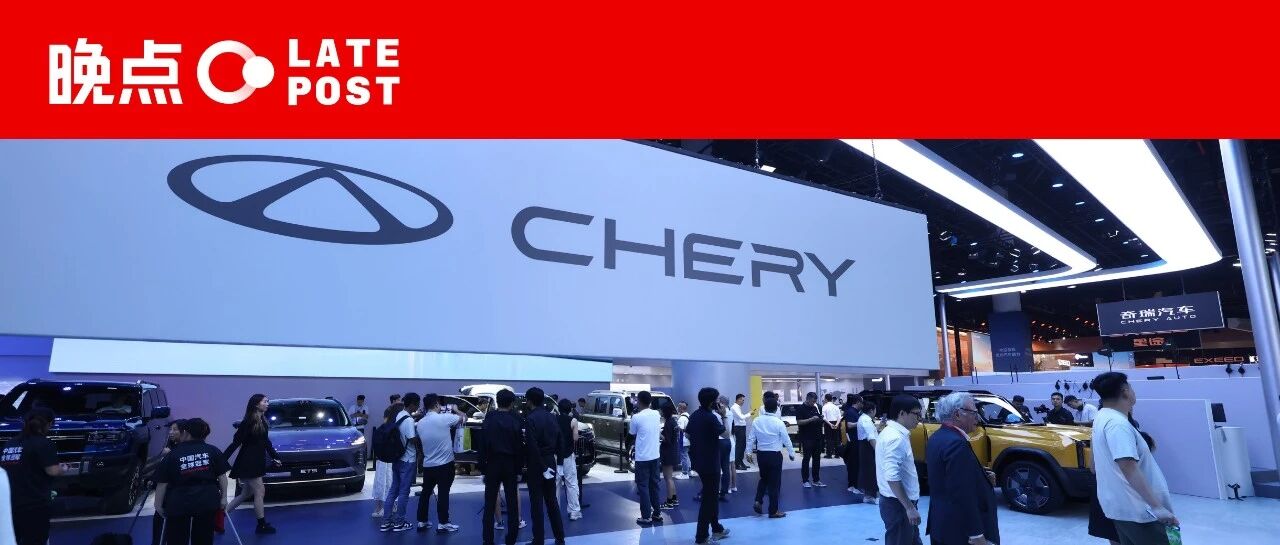
为何近年来强势增长的奇瑞,市场对其估值热情并不高?
晚点LatePost· 2025-09-13 04:10
Core Viewpoint - Chery Automobile is preparing for its listing on the Hong Kong Stock Exchange, highlighting its growth logic and underlying issues despite high growth and profitability figures [4]. Group 1: Profit Structure - Chery exhibits a "low gross margin + high net profit" structure, which is unusual compared to its peers, as it has a significantly lower gross margin but a higher net profit margin [7][11]. - The company's net profit margin is heavily influenced by other income sources, which accounted for 5.3% of revenue, including bank interest, tax rebates, and foreign exchange gains [7][9]. - If excluding foreign exchange gains, Chery's net profit margin would drop to between 1.6% and 3.3%, aligning more closely with industry norms [7]. Group 2: Cost Structure - Chery's total expenses as a percentage of revenue are lower than comparable companies, with a combined expense ratio of 9.5% compared to 10.3% for Great Wall and 13.7% for BYD [8][12]. - The company's R&D expenditure is notably low, with a capitalized intangible asset value of only 2.4 billion yuan compared to its total assets exceeding 200 billion yuan [9]. Group 3: Sales and Distribution Strategy - Chery's sales strategy relies heavily on dealer incentives, with a significant increase in dealer rebates from 6.5% of revenue in 2022 to 8.0% in 2025Q1, which has helped expand its dealer network [20][23]. - The number of Chery's dealer outlets has grown significantly, from 3,901 in 2022 to 6,285 in 2024, correlating with the increase in rebate amounts [23]. Group 4: Capacity and Operational Challenges - Chery's production capacity utilization has been consistently above 100%, reaching 159% in 2025Q1, which has led to increased pressure on dealer prepayments and operational efficiency [24]. - The company has invested in fixed assets but has not significantly expanded its production capacity, leading to potential liquidity issues and operational strain [25][26]. Group 5: Market Valuation and Future Outlook - Chery's IPO is expected to raise between $1.5 billion and $2 billion, with market valuations ranging from 500 billion to 1,500 billion yuan, reflecting a conservative outlook compared to its revenue and growth metrics [28]. - The company's transition to electric vehicles has seen rapid growth, but future growth may face uncertainties, particularly regarding its partnership with Huawei and the performance of its new energy brand, Zhijie [29].

岚图借东风登陆港股有何深意
Jing Ji Ri Bao· 2025-09-12 21:54
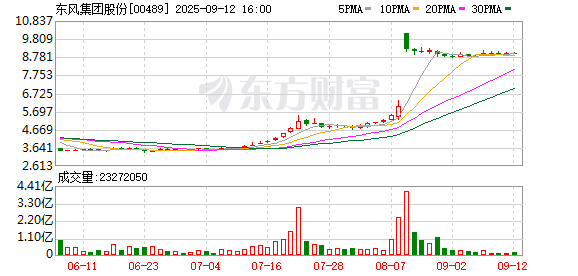
Group 1 - Dongfeng Group's privatization plan is innovative, involving the separation of its new energy business and the divestment of traditional operations [1] - Dongfeng Group will distribute 79.67% of its shares in Lantu Automotive to shareholders, who will then list Lantu on the Hong Kong Stock Exchange through an introduction listing [1] - The stock price of Dongfeng Group has increased by over 50% following the announcement, indicating market approval of the plan [1] Group 2 - The automotive industry is capital, technology, and talent-intensive, requiring substantial ongoing investment for development, especially in the context of electrification and smart technology [2] - Traditional funding models are inefficient, and companies must adapt to new financing strategies to keep pace with market changes and capitalize on growth opportunities [2] Group 3 - The introduction listing method allows existing shareholders to list their securities without issuing new shares or raising capital, which is advantageous for companies in the investment phase [3] - The Hong Kong Stock Exchange has relaxed financial requirements for companies, allowing unprofitable but high-growth potential firms to go public [3] Group 4 - Lantu Automotive's listing will mark it as the first new energy stock from a state-owned enterprise, highlighting the commitment of state-owned car manufacturers to transition towards new energy [4] Group 5 - The current favorable market conditions, including capital inflows and a high Hang Seng Index, provide an opportune moment for companies to achieve better valuations upon listing [5] - Becoming a public company will enhance Lantu's governance, management, and international presence, facilitating future growth and brand recognition [5]
中国铀业招股说明书拆解:中核铸基石,铀业见锋芒
Minsheng Securities· 2025-09-12 09:17
Investment Rating - The report maintains a positive investment rating for the uranium industry, highlighting the company's strong position and growth potential in the nuclear energy sector [7]. Core Insights - The company is a leading player in the global nuclear energy market, focusing on the mining, sales, and trade of natural uranium and associated radioactive minerals, ensuring energy security [1][10]. - Revenue and net profit are on an upward trend, with a compound annual growth rate (CAGR) of 17.9% for revenue and 7.8% for net profit from 2022 to 2024 [1][20]. - The company has a robust resource base, with significant uranium production capacity and a strategic focus on enhancing operational efficiency through various investment projects [3][58]. Summary by Sections 1. Company Overview - The company has established itself as a key player in China's nuclear energy sector, with a comprehensive business model encompassing uranium mining and the utilization of associated radioactive resources [10][11]. - It has a clear ownership structure, with the controlling stake held by China National Nuclear Corporation, ensuring strategic alignment and operational efficiency [15][18]. 2. Core Competitiveness - The company possesses rich uranium resources and significant exploration rights, with a strong presence in key mining regions [35][36]. - Production technology is mature and stable, allowing for efficient extraction and processing of uranium and associated minerals [38][39]. 3. Fundraising Projects - The company plans to utilize raised funds for projects aimed at increasing uranium production capacity and enhancing the comprehensive utilization of associated resources [58][60]. - Key projects include the development of in-situ leaching uranium mining and improvements in processing technologies for associated minerals [59][60]. 4. Industry Dynamics - The uranium industry is characterized by high supply concentration and increasing demand driven by nuclear energy development, with China being the second-largest consumer globally [4]. - The report emphasizes the industry's high entry barriers due to resource ownership, regulatory requirements, and technological expertise [4][5].
矿业巨头合并引爆市场热情!矿业ETF(159690)飙涨超4%,云南铜业、北方铜业双双10CM封板
Sou Hu Cai Jing· 2025-09-12 07:03
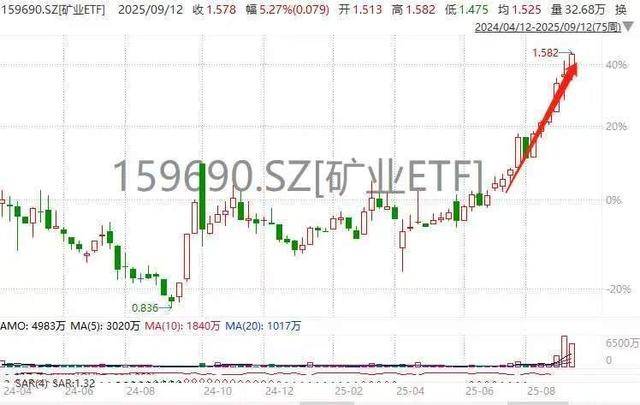
Group 1 - The mining sector experienced a significant surge, with the mining ETF (159690) rising by 3.82% and reaching a peak increase of 4.28% as of 10:46 AM on September 12, 2023. Year-to-date, the ETF has accumulated a gain of 62.87% [1][3] - Key stocks such as Yunnan Copper and Northern Copper both hit the 10% limit up, while Hunan Silver, Xingye Silver Tin, Jiangxi Copper, and Yun Aluminum also showed notable gains [1] - Trading activity intensified, with a turnover rate of 25.88% and a transaction volume exceeding 12 million, representing an 88.40% increase compared to the previous day [1] Group 2 - The strong rise in the mining sector is primarily driven by the $53 billion merger between Canadian Teck Resources and Anglo American, indicating a high recognition of copper's long-term prospects within the mining capital [3] - The merger highlights the ongoing transformation in copper demand driven by the AI computing revolution and global military spending expansion, further solidifying copper's status as a "strategic metal" [3] - The continuous momentum from the energy transition is reinforcing copper's position as a core target for capital investment [3]


上半年车市三大阵营协同发力 “中国智造”动能澎湃
Zhong Guo Chan Ye Jing Ji Xin Xi Wang· 2025-09-11 21:40
Group 1: Overview of the Chinese Automotive Market - The Chinese automotive market is experiencing a "diverse bloom" in the first half of 2025, with significant growth in sales and revenue among various companies, including BYD, Leap Motor, and Changan [1] - The transition to new energy vehicles (NEVs) is being driven by state-owned enterprises, private companies, and new energy vehicle manufacturers, showcasing the resilience of the Chinese automotive industry [1] Group 2: State-Owned Enterprises - Dongfeng Motor Corporation reported a decline in sales to approximately 824,000 vehicles, a 14.7% decrease year-on-year, but achieved a revenue of 54.53 billion yuan, a 6.6% increase [2] - Changan Automobile's revenue reached 72.69 billion yuan, a 5.25% decrease, while its NEV sales grew by 49.1% to approximately 452,000 vehicles [3] - Beijing Automotive's revenue fell to 82.40 billion yuan, a 12.6% decrease, with a profit drop of 81.8% to 360 million yuan [4] Group 3: Private Enterprises - BYD's revenue for the first half of 2025 was 371.28 billion yuan, a 23.3% increase, with NEV sales reaching 2.146 million units, a 33% increase [6] - Geely's total revenue reached 150.3 billion yuan, a 27% increase, with a core profit of 6.66 billion yuan, a 102% increase [7] - Great Wall Motors reported a total revenue of 92.33 billion yuan, a 0.99% increase, with a total sales volume of 568,852 vehicles, a 2.52% increase [7] Group 4: New Energy Vehicle Manufacturers - Leap Motor achieved a revenue of 24.25 billion yuan, a 174% increase, with a delivery of 221,664 vehicles, leading among new energy brands [9][10] - XPeng Motors reported a revenue of 34.08 billion yuan, a 132.5% increase, with deliveries of 197,189 vehicles, surpassing the total for the previous year [10] - Li Auto's revenue for the second quarter was 30.2 billion yuan, a 4.5% decrease year-on-year, but with a significant increase in operating profit by 76.7% [11] Group 5: Market Dynamics and Future Outlook - The first half of 2025 has established a multi-faceted landscape in the Chinese automotive market, characterized by state-owned enterprises transitioning to NEVs, private companies leading in scale, and new energy manufacturers innovating to capture market share [11]



豪华品牌的最后阵地:新能源反击战能否改写格局?
Tai Mei Ti A P P· 2025-09-11 02:32
Core Insights - The Chinese automotive market is entering a critical phase where traditional luxury brands are compelled to accelerate their transition to electric vehicles, marking the beginning of a counterattack in the new energy sector [2][3] - New models such as the Volvo XC70, Audi E5 Sportback, and BMW iX3 are designed on new platforms and are pivotal to their respective brands' strategies to regain market share and brand value lost during the era of fuel vehicles [2][4] Industry Trends - The penetration rate of new energy vehicles has been steadily increasing, with some emerging brands experiencing sales growth that significantly outpaces the industry average, putting traditional luxury brands under immense pressure [3] - Traditional luxury brands like BMW, Audi, and Volvo are adopting a more measured approach to their electric vehicle strategies, relying on profits from fuel vehicles to support their transition [4] Product Development - The Volvo XC70 is built on the new SMA hybrid architecture, emphasizing safety and innovative design, while the BMW iX3 represents a complete product iteration aimed at enhancing overall user experience [5][6] - The Audi E5 Sportback is positioned as a competitive offering in the market, with a pricing strategy that undercuts previous luxury electric models, aiming to attract consumers away from popular models like the Tesla Model 3 [8] Pricing Strategies - The Volvo XC70's pre-sale price was strategically lowered to between 299,900 and 329,900 RMB, generating significant consumer interest with over 5,000 orders in just 85 minutes [7] - The Audi E5 Sportback's pricing ranges from 235,900 to 319,900 RMB, breaking the historical price barrier for German luxury electric vehicles, thus directly targeting competitors [8] Market Positioning - The new generation of luxury electric vehicles is expected to disrupt the current market landscape significantly, with models from Volvo, Audi, and BMW set to launch in the near future [12] - Despite challenges from domestic brands and new entrants, traditional luxury brands possess strong brand equity, manufacturing excellence, and a loyal customer base, which may help them regain traction in the new energy vehicle market [12][14] Challenges Ahead - Traditional luxury brands face ongoing challenges in technology innovation and market competition, necessitating continued investment in R&D and the adaptation of marketing strategies to remain competitive [13][14]
长城汽车(601633):点评:8月销量11.6万辆,新能源同比持续高增,出口创新高
Changjiang Securities· 2025-09-07 14:42
Investment Rating - The investment rating for the company is "Buy" and is maintained [8] Core Views - In August 2025, the company achieved a total sales volume of 116,000 vehicles, representing a year-on-year increase of 22.3% and a month-on-month increase of 10.7%. Among these, export sales reached 45,000 vehicles, accounting for 39.1% of total sales. The sales of new energy vehicles (NEVs) reached 37,000 units, with NEV passenger vehicles accounting for 36.7% of total sales, showing a year-on-year increase of 5.9 percentage points [2][10] - The company is accelerating its global expansion and is committed to transitioning to new energy, with a continuous new vehicle cycle expected to drive improvements in sales and performance. Long-term strategies are expected to open up growth opportunities for sales, while the shift towards smart technology is anticipated to enhance profitability across the entire industry chain [2][10] Summary by Sections Sales Performance - In August 2025, total sales reached 116,000 vehicles, with NEV sales at 37,000 units, marking a year-on-year increase of 50.9%. Cumulatively, from January to August 2025, total sales were 790,000 vehicles, up 5.9% year-on-year, and NEV sales were 233,000 units, up 28.2% year-on-year [10][10] - By brand, Haval sold 68,912 vehicles, Tank sold 20,022 vehicles, WEY sold 8,028 vehicles, Ora sold 5,223 vehicles, and Great Wall Pickup sold 13,322 vehicles in August 2025 [10] Global Expansion - The company has implemented the "ONE GWM" strategy to accelerate its overseas expansion, covering over 170 countries and regions with more than 1,400 overseas sales channels. It has established three complete vehicle production bases in Thailand and Brazil, and several KD factories in Ecuador and Pakistan [10] Financial Projections - The company is expected to achieve net profits of 14.13 billion, 17.12 billion, and 21.52 billion yuan for the years 2025 to 2027, corresponding to A-share P/E ratios of 15.8X, 13.0X, and 10.4X, and Hong Kong stock P/E ratios of 10.6X, 8.8X, and 7.0X respectively [10]

获增资85.5亿元,悦达汽车成一汽奔腾第二大股东
Di Yi Cai Jing Zi Xun· 2025-09-06 15:42
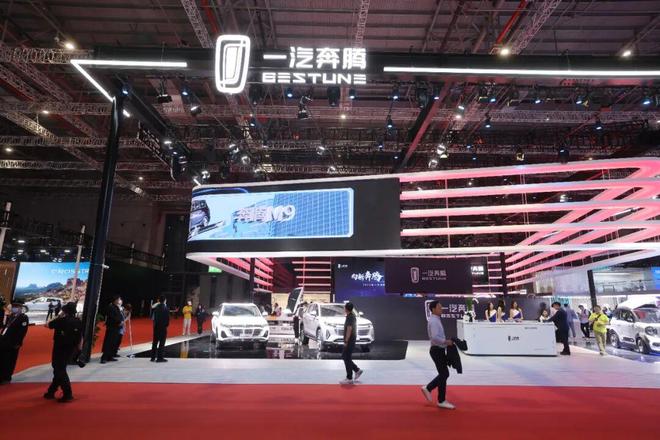
Group 1 - The core point of the article is that FAW Bestune has completed a capital increase project, raising a total of 8.55 billion yuan, which will be used for new energy technology research and development, smart manufacturing upgrades, and channel ecosystem construction [2][3]. - The capital increase involved several investors, including Jiangsu Yueda Automobile Group investing 1.71 billion yuan, Agricultural Bank of China’s investment platform investing 1 billion yuan, China Telecom investing 500 million yuan, and Nanjing Horizon Information Technology investing 100 million yuan [2]. - Following the capital increase, the shareholding structure of FAW Bestune changed, with China FAW's stake decreasing from 86.1568% to 79.0394%, while Yueda Automobile's stake increased from 1.9741% to 10.3358%, making it the second-largest shareholder [2]. Group 2 - FAW Bestune's mixed-ownership reform began in 2023, with Yueda Automobile's initial investment of 166.32 million yuan marking the first external investment since the company's establishment [3]. - In 2023, FAW Bestune's sales returned to over 100,000 units, with a projected sales target of 151,000 units for 2024, following strategic adjustments and mixed-ownership reforms [3][4]. - FAW Bestune has been late to enter the new energy sector compared to other domestic brands, but it is accelerating its transformation through external investments and shareholding reforms [4]. Group 3 - The production base for new energy vehicles was established in Yancheng, with the first model, the Bestune Pony (a micro pure electric vehicle), rolling off the production line in May last year [4]. - The new energy series "Bestune Yuyi" was officially launched this year, with the first model Yuyi 03 and the hybrid model Yuyi 07 introduced to the market [4]. - From January to August this year, FAW Bestune's cumulative sales reached 118,000 units, a year-on-year increase of 47.5%, with new energy product sales accounting for 101,000 units [4].
一汽奔腾获增资85.5亿元,悦达汽车成为第二大股东
Di Yi Cai Jing· 2025-09-06 14:42
Group 1 - The core point of the news is that FAW Bestune has undergone a significant capital increase, raising 8.55 billion yuan, which has altered its shareholding structure [1][2] - After the capital increase, the shareholding ratio of FAW Group in FAW Bestune decreased from 86.1568% to 79.0394%, while Yueda Auto's share increased from 1.9741% to 10.3358%, making it the second-largest shareholder [1] - The funds raised will primarily be used for research and development in new energy technology, upgrading intelligent manufacturing, and building a channel ecosystem [1] Group 2 - FAW Bestune's mixed reform began in 2023, with Yueda Auto investing 166.32 million yuan, marking the first external investment since the company's establishment [2] - In 2023, FAW Bestune's sales returned to over 100,000 units, and projected sales for 2024 are expected to reach 151,000 units [2] - FAW Bestune has started its new energy transition later than other domestic brands, but is accelerating this process through external investments and shareholding reforms [2] Group 3 - FAW Group's Yancheng branch began production last May, with the first model, the Bestune Xiaoma (micro pure electric vehicle), rolling off the production line [3] - The Yancheng production base is expected to exceed an annual capacity of 150,000 units by the end of 2025, focusing on multiple new energy models [3] - From January to August this year, FAW Bestune's cumulative sales reached 118,000 units, a year-on-year increase of 47.5%, with new energy product sales accounting for 101,000 units [3]