新发展格局

Search documents
《中国金融》|陈四清:中国式现代化与国有商业银行的责任
Sou Hu Cai Jing· 2025-08-22 09:17
Group 1 - The core argument emphasizes the necessity of building a strong financial nation to advance Chinese-style modernization, with state-owned commercial banks playing a crucial role due to their solid foundation, extensive business scope, and large scale [1][7]. - Chinese-style modernization, as defined by the Communist Party, provides a unique direction for financial reform and development, highlighting the importance of maintaining centralized leadership and ensuring high-quality financial development [2][7]. - The financial sector must focus on serving the real economy, enhancing financial services to meet the growing demand for quality financial products from the public, and addressing pressing issues faced by the populace [3][8]. Group 2 - There is a strong emphasis on supporting high-quality development by aligning financial services with the new development pattern, focusing on optimizing resource allocation, and enhancing financial service quality [3][8]. - The financial sector is urged to increase support for technological innovation, ensuring that financial services align with national strategies for education, technology, and innovation [4][8]. - The promotion of green finance is highlighted as essential for achieving harmony between humanity and nature, with a focus on directing investments towards low-carbon and sustainable economic practices [5][8]. Group 3 - Financial risk prevention and resolution are identified as ongoing priorities, with a call for a comprehensive risk management system to maintain financial stability and national security [6][9]. - Continuous reform and innovation in the financial sector are necessary, with a focus on balancing economic security and development, and adapting to changing external environments [10][11].
苏州市委理论学习中心组召开学习会
Su Zhou Ri Bao· 2025-08-22 00:29
Group 1 - The meeting emphasized the importance of studying "Xi Jinping's Economic Works" in conjunction with the important speeches by General Secretary Xi Jinping regarding Jiangsu and Suzhou's work [1][2] - It highlighted the need to strengthen the Party's leadership over economic work and enhance the capabilities of Party members and cadres to navigate complex situations and manage economic tasks [2] - The meeting called for a better understanding of the new development pattern's strategic foundation, focusing on expanding domestic demand and high-level opening up to better serve the domestic and international dual circulation [2] Group 2 - The discussion included the necessity to develop new productive forces tailored to local conditions, promoting deep integration of technological and industrial innovation to create new momentum and industries [2] - It stressed the organic combination of an effective market and a proactive government, supporting the construction of a unified national market while maintaining the protection of enterprises and entrepreneurs' legitimate rights [2] - The meeting also addressed the importance of improving people's livelihoods, enhancing employment support for key groups, and refining social security and assistance systems [2]
国务院发展研究中心原副主任余斌:立足四大优势积极识变应变求变
Qi Huo Ri Bao Wang· 2025-08-21 01:02
Core Viewpoint - The current economic foundation of China is stable, with multiple advantages, strong resilience, and significant potential, supporting a long-term positive trend in the economy [1][2] Group 1: Domestic Demand and Consumption - Emphasis on boosting consumption to expand domestic demand, focusing on income, wealth, and expectations to steadily improve the income levels of citizens and enhance consumption capacity [1] - Service consumption has become a major driver of resident consumption growth, with an annual growth rate of 8.7% from 2013 to 2023, surpassing the 2.4% growth rate of goods consumption [2] - The proportion of service consumption in per capita consumption increased from 39.7% to 45.2% from 2013 to 2023, with a further increase to 46.1% expected in 2024 [2] Group 2: Economic Policy Focus - Economic policies should shift more towards benefiting people's livelihoods and promoting consumption, creating new economic growth points through the improvement of living standards [1] - Continuous optimization of expenditure structure is necessary, with a focus on benefiting people's livelihoods and promoting consumption while ensuring the government operates within tighter budgets [1] Group 3: Competitive Advantages - China's economic advantages include institutional benefits, a super-large market, a complete industrial system, and abundant talent resources, which should be leveraged to gain strategic advantages in international competition [2] - The goal is to achieve qualitative improvements and reasonable quantitative growth in the economy, promoting comprehensive development and common prosperity for all citizens [2]
钢铁丝路贯东西 援疆班列激活开放新动能
Ren Min Wang· 2025-08-20 09:19
Core Insights - The "Zhejiang New Express" train service is enhancing cross-border trade between Zhejiang and Xinjiang, significantly improving logistics efficiency and reducing costs for businesses [1][3][4] - The establishment of a dual-direction railway freight service is addressing the logistical challenges faced by industries in both regions, facilitating a more integrated supply chain [3][4] Group 1: Trade and Logistics Development - A train loaded with Xinjiang cotton yarn has successfully established a direct route to Zhejiang, marking a significant improvement in trade logistics [1] - The "Zhejiang New Express" train has opened a new trade corridor from Zhejiang to Central Asia, while the "Aid Xinjiang Train" provides a consistent freight service from Southern Xinjiang to the Yangtze River Delta [3] - The dual train services have resulted in over 25% savings in logistics costs and a 40% improvement in transportation efficiency for cotton spinning enterprises [3][4] Group 2: Economic Impact - By July 2025, the "Zhejiang New Express" is expected to operate 37 trains, transporting over 21,000 tons of goods valued at more than 710 million yuan, establishing itself as a stable and long-distance integrated trade route [4] - The "Aid Xinjiang Train" has dispatched 82 trains, delivering 115,000 tons of products worth 2.94 billion yuan to the Yangtze River Delta, accounting for 30% of the total railway freight from Aksu to Zhejiang [4] - The logistics improvements have led to a 35% increase in foreign trade orders for companies, with significant investments in production capacity expansion [4]

在“海权时代”转向“新陆权时代”中 奋力打开中国经济地理新空间
Sou Hu Cai Jing· 2025-08-20 05:06
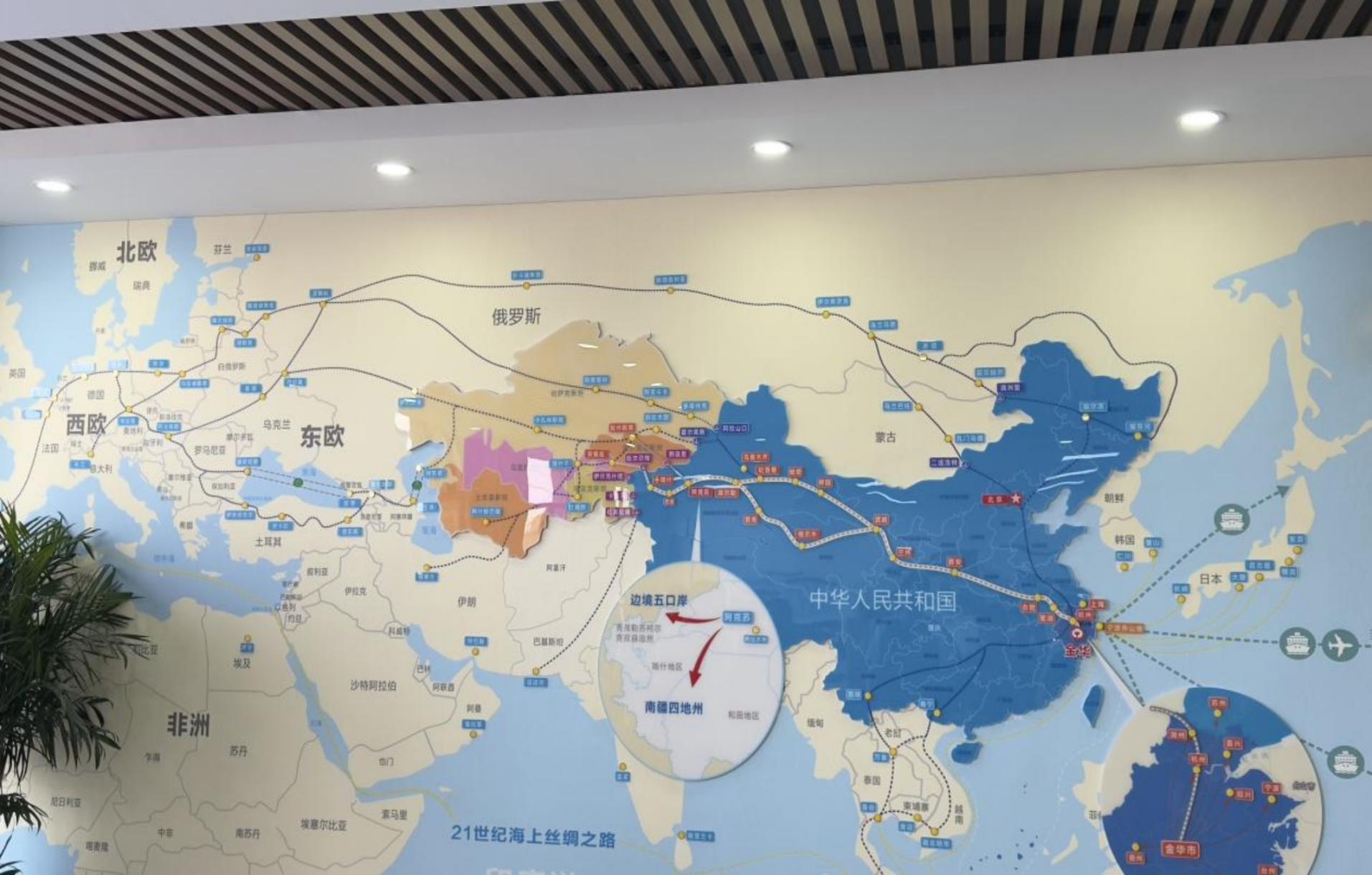
Core Viewpoint - The article emphasizes the strategic importance of Hubei as a pivotal point for the rise of the central region in China, highlighting the shift from a maritime to a land-based power dynamic in global geopolitics and the need for Hubei to adapt to this new development pattern [5][15]. Group 1: Strategic Importance of Hubei - Hubei is positioned as a crucial strategic support for the rise of the central region, aiming to create an open framework that supports the central area, radiates nationwide, and connects globally [5][16]. - The province's economic total ranks seventh in the country, but its foreign trade ranking has lagged behind other provinces, although it has seen significant improvement in recent years [17][19]. - Hubei's foreign trade share of the national total has more than doubled since the implementation of the central region's rise strategy and the high-quality development of the Yangtze River Economic Belt [17]. Group 2: Historical Context and Economic Shifts - The article discusses the historical transitions between land power and sea power, noting that each shift has impacted the rise and fall of different regions in China [17][18]. - The transition to a new land power era presents a unique opportunity for the central region to leverage new international resources [17][19]. - The article highlights the importance of talent development in Hubei, with the province's population constituting about one-quarter of the national total and Wuhan being a key city with significant educational and research resources [19]. Group 3: New Development Patterns - The new development pattern proposed by China focuses on domestic circulation as the mainstay, with domestic and international dual circulation mutually promoting each other [15]. - The shift in trade patterns post-2018, moving from reliance on the US and Europe to ASEAN, indicates a significant geopolitical influence on trade relationships [15]. - The establishment of new transportation routes, such as the western land-sea new corridor, aims to enhance trade connections beyond traditional maritime routes [15].

辉煌60载 魅力新西藏丨高质量发展跑出“加速度” 雪域高原谱新篇
Yang Shi Xin Wen Ke Hu Duan· 2025-08-18 02:21
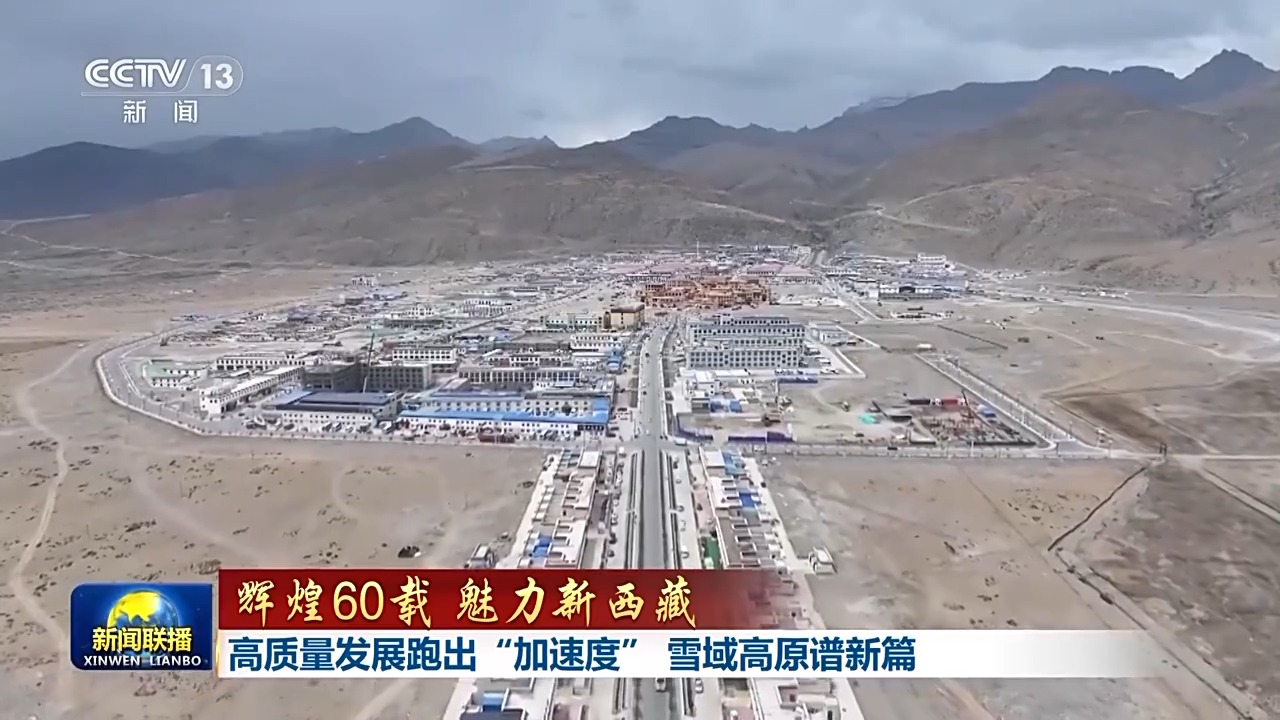
Economic Growth - Tibet's GDP reached 138.27 billion yuan in the first half of 2025, with a year-on-year growth of 7.2%, maintaining a leading position nationally for several consecutive quarters [1] - The per capita disposable income of residents increased by 7.6% year-on-year, indicating continuous improvement in living standards [1] Industry Development - Key industries such as green mining and clean energy are accelerating their development in Tibet [1] - The completion of the first wind turbine at the world's highest wind farm in Shomoe will provide electricity for 120,000 households upon production [3] - The second phase of the Talqin International Town in the Ali region has been completed, creating new opportunities for the local tourism industry [3] - The "black barley" planting base in Shigatse is experiencing a transformation into a profitable industry, with high-quality barley products gaining popularity in cities like Shanghai [3] Infrastructure Improvement - By the end of 2024, Tibet's total road mileage and railway operating mileage are expected to reach 124,900 kilometers and 1,359 kilometers, respectively, enhancing connectivity with the world [5] - The establishment of 183 international and domestic flight routes is creating an "aerial bridge" for Tibet [5] Income Growth - In 2024, the per capita disposable income for urban residents is projected to be 55,444 yuan, while for farmers and herders it is expected to be 21,578 yuan, representing significant increases compared to 1965 [7] - Tibet's GDP is anticipated to exceed 300 billion yuan this year, achieving the third hundred billion target in just six years [7]
金句丨促进民营经济健康发展,总书记深入阐述
Xin Hua Wang· 2025-08-16 08:59
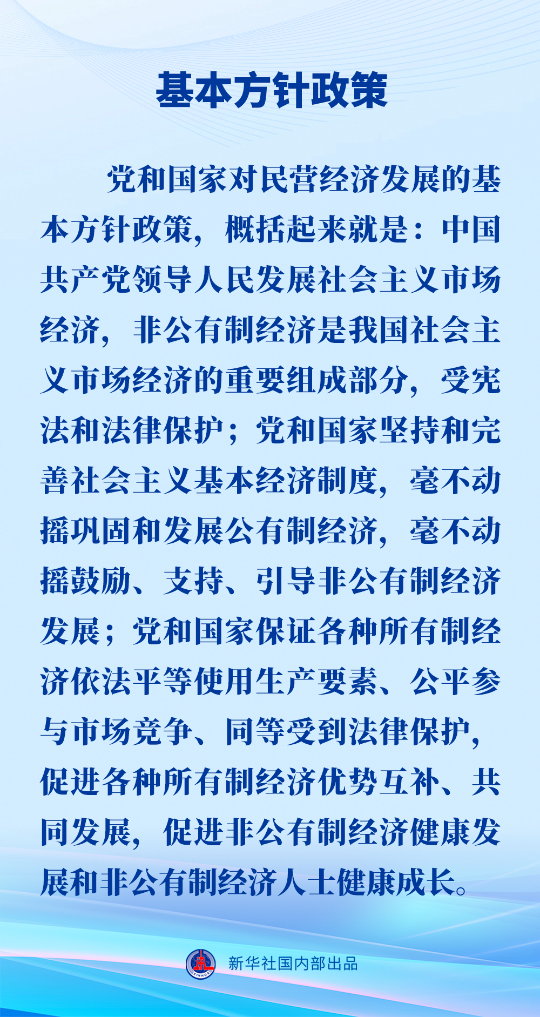
Core Viewpoint - The article emphasizes the importance of promoting the healthy and high-quality development of the private economy in China, highlighting the broad prospects and significant opportunities for private enterprises and entrepreneurs in the new era [1]. Policy Guidelines - The fundamental policy for the development of the private economy includes the leadership of the Communist Party in developing a socialist market economy, recognizing the non-public economy as an essential part of this system, and ensuring equal legal protection for all forms of ownership [2]. Current Environment - The political, economic, and social environments are currently very favorable for the development of the private economy, providing a timely opportunity for private enterprises and entrepreneurs to showcase their capabilities [4]. Key Actions for Development - The focus is on implementing concrete measures to promote the private economy, including: 1. Removing obstacles to the equal use of production factors and fair market competition. 2. Addressing issues related to overdue payments to private enterprises. 3. Protecting the legal rights and interests of private enterprises and entrepreneurs. 4. Effectively implementing various relief policies. 5. Further establishing a clean relationship between government and business [8]. Entrepreneurial Responsibilities - Private enterprises and entrepreneurs are encouraged to enhance their ideals, cultivate a sense of national responsibility, and contribute to the construction of socialism with Chinese characteristics and modernization [11]. High-Quality Development - High-quality development is deemed essential for the private economy, with a call for private enterprises to actively engage in creating a new development pattern and contributing to technological innovation, modern industrial systems, rural revitalization, and improving people's livelihoods [13]. Self-Reform and Management - To become enduring enterprises, private companies must adopt advanced management systems and be willing to undergo self-reform, similar to state-owned enterprises [14]. Integrity and Legal Compliance - Entrepreneurs are urged to adhere to principles of integrity, respect the law, and cultivate a good reputation, while also promoting the healthy development of the private economy through ethical practices [16].
固收点评:2025Q2货政报告,几点理解
Tianfeng Securities· 2025-08-16 07:21
1. Report Industry Investment Rating No relevant content provided 2. Core Viewpoints of the Report - The domestic economic tone is more positive, reducing the short - term urgency for policy intensification. The overseas environment shows positive changes but still requires caution, and domestic policies should enhance flexibility and predictability [1][6]. - Monetary policy maintains its stance, and liquidity will remain abundant. Central bank regulation will continue to be targeted, and the use of aggregate tools may be more cautious [3][15]. - The financial system's focus on serving the real economy is more prominent. Short - term capital fluctuations may have less signal significance, and the central bank is more focused on achieving multiple monetary policy goals [4][18]. 3. Summary According to Relevant Catalogs 3.1 Domestic Economy Steady with Progress, Overseas Environment with Prudent Optimism - **Domestic Economy**: The report's tone on the domestic economy is more positive. In H1 2025, the economy grew steadily with a GDP growth of 5.3%. The stock and bond markets' pricing of July economic data was limited. The positive tone may reduce the short - term need for policy intensification, and incremental policies need a longer observation period [6][13]. - **Overseas Environment**: The description of the overseas economic recovery process and tariff policies in the report has become less severe. The RMB exchange rate has certain resistance, and the impact of tariff games is gradually weakening. However, uncertainties such as Sino - US tariff games and the Fed's interest - rate cut path still exist, so vigilance cannot be relaxed [2][7]. 3.2 Policy Maintains Stance, Liquidity Abundance Re - confirmed - The moderately loose monetary policy emphasizes "implementation and refinement", indicating good implementation in H1 and more focus on policy effectiveness in H2. The central bank's regulation will continue to be targeted, and liquidity will remain abundant with interest rates likely to fluctuate within a narrow range. - The central bank pays attention to preventing financial risks, aiming to balance reducing bank liability costs and supporting the real economy. Aggregate tools may be used more cautiously, with more focus on improving frameworks and transmission mechanisms and reducing non - interest financing costs [3][15]. 3.3 Focus on Multiple Goals, Signal Significance of Short - term Capital Fluctuations May Weaken - The Q2 monetary policy report has four columns highlighting how finance supports the real economy, and structural monetary policy tools will continue to be the main means. - The central bank is more focused on achieving multiple monetary policy goals. Short - term capital fluctuations may be due to temporary supply - demand frictions, and the market should not over - interpret them [4][18].
大国债务:经济增长的代价
Hu Xiu· 2025-08-15 07:12
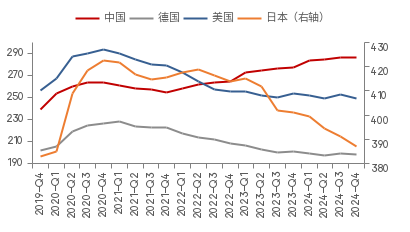
Group 1 - The macro leverage ratio is a relative indicator of debt levels, calculated as the ratio of non-financial sector debt to total GDP [1] - The increase in macro leverage ratio is driven by the growth rate of debt exceeding the growth rate of nominal GDP [2] - As of the end of 2019, the macro leverage ratios for China, Germany, Japan, and the United States were 239.5%, 202%, 382.9%, and 256.3% respectively, with projections for 2024 showing significant increases for China [3] Group 2 - The trend for Germany, Japan, and the United States shows a pattern of "sharp rise and fall," with their macro leverage ratios peaking in 2020 and returning to levels similar to 2019 by the end of 2024, while China's ratio continues to rise steadily [4] - The macro (non-financial sector) debt total is composed of household, non-financial enterprise, and government debt [6] Group 3 - Household leverage ratios in China, Germany, Japan, and the United States remained relatively stable, with changes within a range of approximately ±5 percentage points from 2019 to 2024 [7] - China's non-financial enterprise leverage ratio exhibited a pattern of "rise-fall-rise," with a notable increase since 2022, contrasting with the trends in Germany, Japan, and the United States [8][10] Group 4 - The government leverage ratio in China has been steadily increasing, projected to rise from 59.6% at the end of 2019 to 88.4% by the end of 2024, while the ratios for Germany, Japan, and the United States show an initial increase followed by a decline [14] - The increase in China's government leverage ratio is not solely linked to international economic crises, indicating a potential weakening of the effectiveness of counter-cyclical policies over time [24] Group 5 - The analysis indicates that the increase in China's macro leverage ratio is associated with a slower growth in nominal GDP, despite higher real GDP growth compared to the United States [38][39] - The nominal GDP growth in China from 2022 to 2024 is projected to lag behind that of the United States, Germany, and Japan [39] Group 6 - The current macro leverage ratio in China is significantly higher than the global trend, indicating a situation of "debt before wealth" [43] - The government debt levels in China have increased significantly, with the nominal value of government debt nearly doubling from 2019 to 2024, while the increases in Germany, Japan, and the United States are comparatively lower [33][34]
统计局:7月规模以上工业增加值增长5.7% 社会消费品零售总额增长3.7%
Guo Jia Tong Ji Ju· 2025-08-15 03:06
Economic Overview - In July, under the strong leadership of the Central Committee, the national economy maintained a steady growth trend, with production and demand continuing to rise, and overall employment and prices remaining stable [1][9] Industrial Production - In July, the industrial added value above designated size increased by 5.7% year-on-year and 0.38% month-on-month. The mining industry grew by 5.0%, manufacturing by 6.2%, and electricity, heat, gas, and water production and supply by 3.3% [2] - The equipment manufacturing industry saw an 8.4% increase, while high-tech manufacturing grew by 9.3%, outperforming the overall industrial growth by 2.7 and 3.6 percentage points respectively [2] - The manufacturing purchasing managers' index was at 49.3, indicating a slight contraction in manufacturing activity [2] Service Sector - The service production index rose by 5.8% year-on-year in July, with significant growth in information transmission, software, and IT services (11.9%), finance (8.7%), and leasing and business services (8.0%) [3] - The business activity index for services was at 50.0, indicating stable activity levels [3] Retail Sales - In July, the total retail sales of consumer goods reached 38,780 billion yuan, a year-on-year increase of 3.7% [4] - Online retail sales amounted to 86,835 billion yuan, growing by 9.2% year-on-year, with physical goods accounting for 70,790 billion yuan, a 6.3% increase [4] Fixed Asset Investment - From January to July, fixed asset investment (excluding rural households) totaled 288,229 billion yuan, a year-on-year increase of 1.6% [5] - Manufacturing investment grew by 6.2%, while real estate development investment declined by 12.0% [5] Trade and Exports - In July, the total value of goods imports and exports reached 39,102 billion yuan, a year-on-year increase of 6.7% [6] - Exports amounted to 23,077 billion yuan, growing by 8.0%, while imports were 16,026 billion yuan, increasing by 4.8% [6] Employment - The urban survey unemployment rate averaged 5.2% from January to July, with July's rate at 5.2%, a 0.2 percentage point increase from the previous month [7] Consumer Prices - In July, the Consumer Price Index (CPI) remained flat year-on-year, with a month-on-month increase of 0.4% [8] - Core CPI, excluding food and energy, rose by 0.8%, indicating a slight increase in underlying inflation pressures [8]