稀土出口管制

Search documents
欧盟大使表态,希望在冯德莱恩访华之前,中国能够恢复稀土供应
Sou Hu Cai Jing· 2025-06-27 08:49
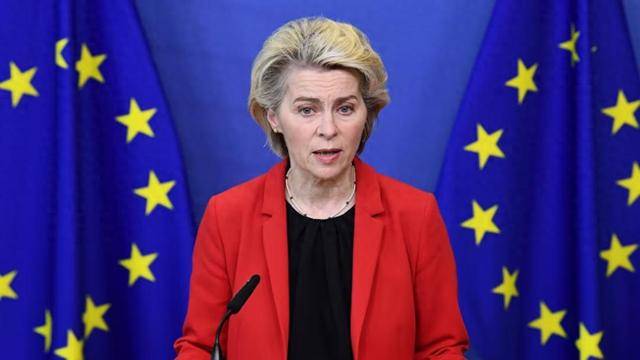
Core Viewpoint - The EU is requesting China to restore rare earth supplies before the visit of European Commission President Ursula von der Leyen next month, highlighting the EU's concerns over shortages in rare earth magnets [1][3][12] Group 1: EU's Position and Requests - The EU Ambassador to China has openly expressed the hope that China will understand Europe's fear regarding the shortage of rare earth magnets and restore supplies before von der Leyen's visit [3][12] - The EU's request is seen as an attempt to leverage its relationship with China while still imposing tariffs on Chinese electric vehicles [3][9] Group 2: Ursula von der Leyen's Stance - Ursula von der Leyen is characterized as pro-American and anti-China, having previously sought to align with the Trump administration by portraying China as a common enemy [5][7] - During the G7 summit, von der Leyen emphasized the "China threat" narrative, particularly focusing on China's restrictions on rare earth and magnet exports [5][7] Group 3: US-EU Relations and Strategy - The EU's strategy appears to involve using China as a bargaining chip to negotiate with the US, hoping to ease tariffs imposed on Europe while pressuring China to lift its export restrictions [9][11] - The EU's dual approach of trying to appease both the US and China is seen as risky due to its lack of sufficient power to effectively manage both sides [11]

中国将加快向美国出口稀土?商务部回应
Zheng Quan Shi Bao· 2025-06-27 07:57
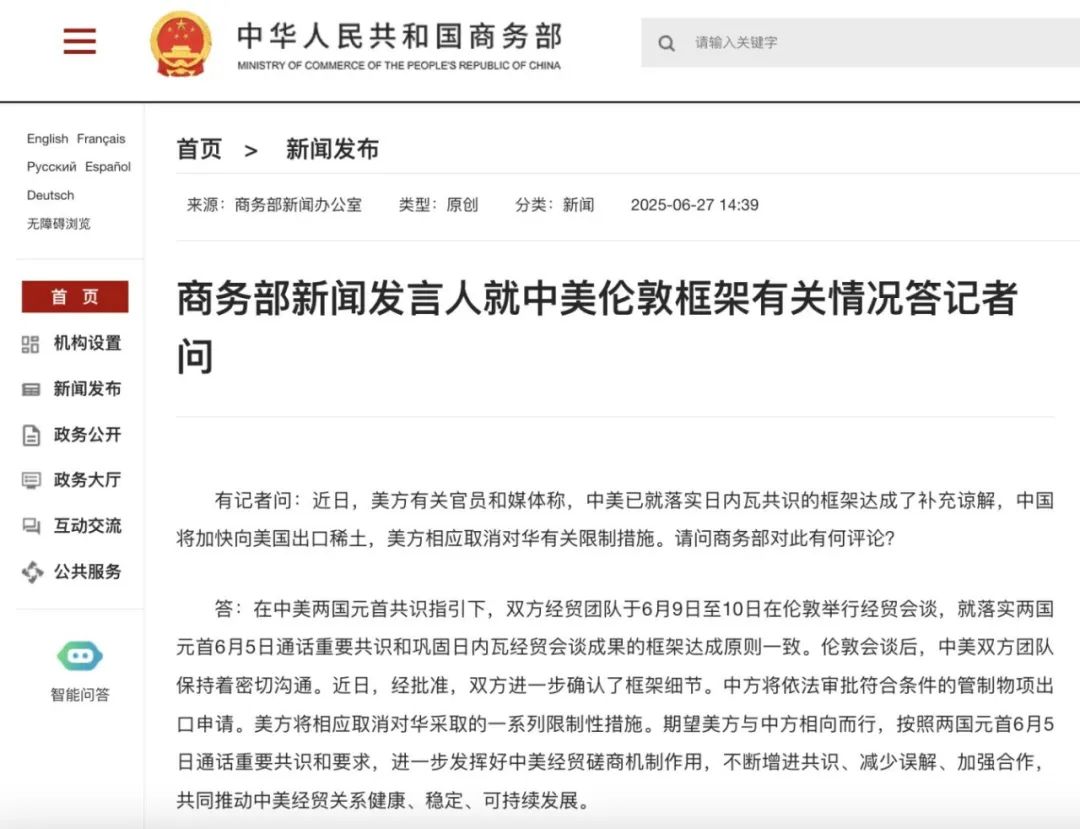
商务部新闻发言人就中美伦敦框架有关情况答记者问。 有记者问:近日,美方有关官员和媒体称,中美已就落实日内瓦共识的框架达成了补充谅解,中国将加快向美国出口稀土,美方相应取消对华有关限制措 施。请问商务部对此有何评论? 答:在中美两国元首共识指引下,双方经贸团队于6月9日至10日在伦敦举行经贸会谈,就落实两国元首6月5日通话重要共识和巩固日内瓦经贸会谈成果的 框架达成原则一致。伦敦会谈后,中美双方团队保持着密切沟通。近日,经批准,双方进一步确认了框架细节。中方将依法审批符合条件的管制物项出口 申请。美方将相应取消对华采取的一系列限制性措施。期望美方与中方相向而行,按照两国元首6月5日通话重要共识和要求,进一步发挥好中美经贸磋商 机制作用,不断增进共识、减少误解、加强合作,共同推动中美经贸关系健康、稳定、可持续发展。 在6月12日的例行新闻发布会上,CGTN记者提问:我们注意到,美国总统特朗普在社交平台发文称,中美已达成协议,美国将对华征收55%的关税,中 国将对美征收10%的关税,并且中国将和之前一样向美国出口磁体和稀土材料,请问发言人有何评论? 对此,商务部新闻发言人何亚东表示,据了解,中美经贸磋商机制首次会议 ...
中国将加快向美国出口稀土?商务部回应
证券时报· 2025-06-27 07:46
商务部新闻发言人就中美伦敦框架有关情况答记者问。 有记者问:近日,美方有关官员和媒体称,中美已就落实日内瓦共识的框架达成了补充谅解,中国将加快 向美国出口稀土,美方相应取消对华有关限制措施。请问商务部对此有何评论? 此前,商务部在例行新闻发布会上多次回应稀土相关问题。 在6月12日的例行新闻发布会上,CGTN记者提问:我们注意到,美国总统特朗普在社交平台发文称,中 美已达成协议,美国将对华征收55%的关税,中国将对美征收10%的关税,并且中国将和之前一样向美 国出口磁体和稀土材料,请问发言人有何评论? 对此,商务部新闻发言人何亚东表示,据了解,中美经贸磋商机制首次会议讨论并达成落实两国元首6月5 日通话共识以及日内瓦会谈共识框架,就解决双方彼此经贸关切取得新进展。中方反对单边加征关税措施 的立场是一贯的,敦促美方恪守世贸组织规则,与中方按照相互尊重、和平共处、合作共赢的原则,共同 推动中美经贸关系稳定、可持续发展。 此外,对于稀土出口管制相关问题,何亚东多次表示,中国一贯高度重视维护全球产供链的稳定与安全, 依法依规不断加快对稀土相关出口许可申请的审查,已经依法批准一定数量的合规申请,并将持续加强合 规申请的 ...

荣耀启动A股IPO;阿里合伙人精简至17人|南财早新闻
2 1 Shi Ji Jing Ji Bao Dao· 2025-06-26 23:52
Company Movements - Honor has officially launched its A-share IPO, with the Shenzhen Securities Regulatory Commission approving its listing guidance. If successful, Honor is expected to become the first AI terminal ecosystem company listed in A-shares, reshaping the capital market's AI sector [8] - Alibaba Group reported a revenue of 996.347 billion yuan for the fiscal year 2025, with a net profit increase of 77% to 125.976 billion yuan. The company also announced a reduction in its partnership, with nine partners exiting, leaving a total of 17 [9] - Xiaomi has launched its first SUV, the Xiaomi YU7, starting at 253,500 yuan, achieving over 200,000 pre-orders within three minutes and 289,000 within an hour. Additionally, Xiaomi introduced AI glasses priced from 1,999 yuan [9] - Dongfeng Motor Group announced the establishment of a new company aimed at integrating resources across the entire value chain to accelerate the development of its independent passenger vehicle business [9] - FWD Group plans a global offering from June 26 to July 2, 2025. The company, founded by Li Zeqi in 2013, operates in ten Asian markets and achieved positive operating cash flow for the first time in 2024 [10] - Yushun Technology's founder revealed that the company has over 1,000 employees and annual revenue exceeding 1 billion yuan [11] Investment News - The Hong Kong government released the "Hong Kong Digital Asset Development Policy Declaration 2.0," aiming to position Hong Kong as a global innovation center in the digital asset sector [6] - As of June 24, 2025, 40 institutions have upgraded their licenses to provide virtual asset trading services, including 38 brokerages, one bank, and one internet company [6] - The IPO fundraising amount in the Hong Kong stock market has reached 95.929 billion HKD this year, marking a year-on-year increase of 758.8% [6] - The total scale of stock ETFs has returned to over 3 trillion yuan, reaching 3.05 trillion yuan, the second-highest level in history [6] - The Shanghai Stock Exchange held a meeting to discuss the implementation of the "1+6" policy for the Sci-Tech Innovation Board, aiming to stabilize market expectations and enhance market confidence [6]


“中方要求稀土企业上报这些信息,防止机密外泄”
Guan Cha Zhe Wang· 2025-06-26 00:14
Core Viewpoint - China is tightening control over its rare earth industry by requiring companies to submit lists of personnel with technical expertise to prevent the leakage of commercial secrets to foreign entities [1][3]. Group 1: Regulatory Measures - China has requested rare earth companies to provide detailed information about their technical personnel, including their expertise, educational background, and research experience [1]. - The initiative aims to create a formal registry of rare earth professionals in China and closely monitor them to prevent the outflow of sensitive information [1]. - The measures apply to both upstream and downstream companies involved in rare earth processing and manufacturing [1]. Group 2: Geopolitical Implications - The control over rare earth resources is increasingly seen as a significant geopolitical issue, especially given the critical role of rare earth materials in various industries, including automotive and electronics [1]. - China's dominance in the rare earth market, with over 60% of global production and 92% of refined supply, poses challenges for other countries attempting to develop their own rare earth industries [8]. Group 3: Export Control Developments - In December 2023, China announced a list of technologies related to rare earth extraction and processing that are prohibited or restricted for export, which has drawn attention from international media [3]. - The introduction of an export licensing system for rare earth materials and related technologies indicates a long-term strategy for China to maintain its competitive edge in the global market [5]. - The Chinese government is also implementing a tracking system for rare earth products to enhance oversight and combat illegal activities such as smuggling and tax evasion [6][5]. Group 4: International Reactions - U.S. companies have expressed relief at the news of potential export licenses for rare earth materials, although concerns remain about the sufficiency of these licenses for stockpiling [11]. - Analysts suggest that China is unlikely to approve enough exports to allow U.S. clients to stockpile rare earths, thereby maintaining its influence in the sector [11].
日本被印度坑惨!买了13年的印度稀土是中国货,直接“人财两空”
Sou Hu Cai Jing· 2025-06-25 16:46
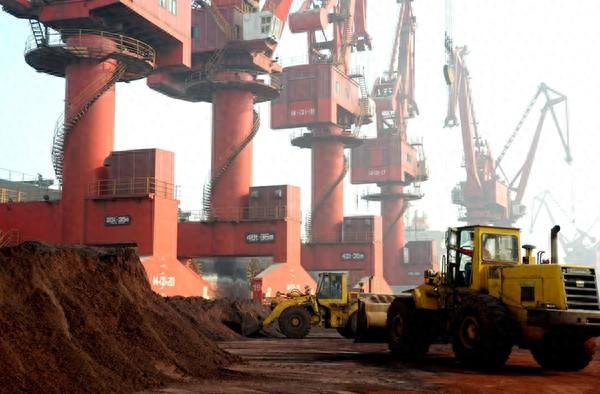
Group 1 - India announced a unilateral suspension of its rare earth agreement with Japan, halting exports of rare earths to Japan, which previously sourced about 15% of its rare earth consumption from India [1][22] - The suspension may be influenced by China's recent restrictions on rare earth exports, prompting India to develop its own rare earth processing industry and reduce reliance on China [3][24] - India's rare earth resources are primarily light rare earths, while heavy rare earths, which are more valuable and harder to process, are predominantly found in China [5][10] Group 2 - The majority of India's rare earth mining involves monazite, which contains radioactive elements, complicating the extraction and processing of rare earths [12][13] - India's rare earth production is minimal, accounting for less than 1% of global output, while China dominates with over 90% [18] - The agreement with Japan primarily involved unrefined ore, which Japan would then send to China for further processing, indicating India's role as a middleman rather than a primary supplier [20][22] Group 3 - India's ambition to become a major rare earth exporter faces significant challenges, including the need for advanced technology and infrastructure to process its unique monazite deposits [28][30] - The extraction of rare earths is often a byproduct of aluminum production, and India lacks the capacity to produce the necessary aluminum to support a robust rare earth industry [26][28] - The technology for refining rare earths is concentrated in a few countries, with China unlikely to share its expertise with India, further hindering India's development in this sector [30][31]
事关稀土,中国亮出最后“王牌”,没有中方同意,美休想卷土重来
Sou Hu Cai Jing· 2025-06-23 06:46
Core Viewpoint - The global rare earth market is facing significant challenges due to supply shortages, primarily driven by China's export controls, which have led to soaring prices and potential stagnation in the automotive industry in Europe, the US, and India [1][3]. Supply Chain Challenges - China produces nearly 70% of the world's rare earth elements, which are critical for various technologies, from advanced military applications to everyday electronics [3]. - The US has been attempting to reduce its dependence on Chinese rare earths by developing its supply chain, but faces significant obstacles, including a lack of commercially viable natural reserves and a shortage of skilled engineers [3]. - The US is approximately 20 years behind China in rare earth separation and purification technology, making it difficult to establish a stable supply chain in the short term [3]. Regulatory Environment - China's export control policy on rare earths has tightened approval processes rather than imposing a complete ban, affecting the participation of non-state entities in the sector [4]. - The 2024 quota for rare earth mining has significantly slowed to a growth rate of 5.88%, down from over 20% in previous years, indicating a continued tightening of supply [4]. Demand Dynamics - There is an explosive growth in demand for rare earth permanent magnet materials, particularly from humanoid robots and the new energy sector [6]. - High demand projections include 3115 tons of rare earth materials needed for humanoid robots by 2030, with a potential market of 20-40 million tons if 100 million units are sold [6]. - The demand for rare earth materials in electric vehicles is expected to reach 58,000 tons by 2025, with China accounting for 34,000 tons [6]. Price Trends - Overseas rare earth prices have begun to rise, with significant increases reported for dysprosium and terbium oxides in Europe [6]. - The ongoing impact of China's export controls is expected to sustain the upward trend in rare earth prices [6]. Opportunities for Domestic Companies - Domestic rare earth companies are positioned to benefit from the combination of supply constraints and strong demand, leading to a clear upward trend in prices [8]. - Industry leaders like Northern Rare Earth and China Rare Earth Group are expected to gain market share and profit margins due to their resource advantages and favorable policies [8]. - Increased funding for research and development will drive innovation in rare earth applications, further solidifying China's dominant position in the global rare earth supply chain [9].
【Tesla每日快訊】FSD即將登陸德國?快來看內部消息! 🔥路透社的報導可信嗎?(2025/6/21-1)
大鱼聊电动· 2025-06-21 05:09
Market Trends & Geopolitics - China's restrictions on rare earth exports have had a substantial impact, with exports of rare earth magnets plummeting 74% year-over-year in May 2025, including a 93% drop to the US [1] - The EU is prioritizing rare earth access as a core issue at the upcoming China-EU summit due to supply chain disruptions affecting European automakers [1] - Tesla employees in Germany have received internal emails indicating that FSD (Supervised version) is expected to be launched by the end of 2025 [1] - Tesla is planning to launch a Robotaxi service in Austin, Texas, in late June, initially using approximately 10 Model Y vehicles with remote operation technology [1] - Musk believes it is important to localize supply chains to mitigate geopolitical risks [2] Regulatory Landscape - The United Nations Economic Commission for Europe (UNECE) is expected to approve System-Initiated Maneuvers on highways in September 2025, potentially enabling Tesla's FSD on German highways [1] - A Texas Democratic lawmaker has requested a delay in the release of Robotaxi until September, pending the enactment of a new autonomous driving law, highlighting regulatory pressures [1] Tesla Production & Operations - Tesla's stock closed at $32216, up 003% [1] - Tesla is launching a monthly subscription Extended Service Agreement (ESA) in the US, covering repairs or replacements for up to four years or 100000 miles, with monthly fees varying by model (e,g, $50 for Model 3, $60 for Model Y, $125 for Model S, and $150 for Model X) [2] - Tesla is offering a limited-time promotion in Canada for Model 3 purchases made before June 30, 2025, including one year of free Supercharging [2]

中国稀土(3)澳大利亚和巴西要成为稀土大国
日经中文网· 2025-06-20 07:23
Core Viewpoint - The article discusses the global shift in rare earth production, particularly in response to China's export controls, highlighting the emergence of new players like Australia and Brazil in the heavy rare earth market [1][2]. Group 1: Australia and Lynas - Lynas Corporation has successfully separated heavy rare earths outside of China for the first time, extracting dysprosium from ore in Malaysia, with plans to extract terbium soon [1]. - The company is expanding its operations to include heavy rare earth production and plans to build a new extraction facility in Texas, USA, supported by $258 million from the U.S. Department of Defense [1][2]. - Following China's export restrictions, Lynas has received increased inquiries from new customers, indicating a growing demand for non-Chinese rare earth sources [2]. Group 2: Brazil's Initiatives - Brazil, holding the second-largest rare earth reserves globally, is aiming to enhance its production, which currently accounts for only 0.005% of the total [2]. - The Brazilian government is simplifying the geological survey and permitting processes to expedite the development of rare earth projects, with plans to start operations at its first large rare earth mine in Goiás state in 2024 [2]. - Brazil's rare earth projects are part of the "Mineral Security Partnership" initiated by Japan, the U.S., the EU, and the UK, receiving an additional $150 million in investment [2]. Group 3: India's Export Controls - In response to China's export controls, the Indian government has requested its state-owned rare earth company, IREL, to halt exports to Japan to secure domestic supplies [3][4]. - The Indian government emphasizes the importance of rare earths for its "Make in India" manufacturing strategy, indicating a focus on domestic production and supply security [4].
深度 | 稀土,何以成为反制“杀手锏”?【陈兴团队·财通宏观】
陈兴宏观研究· 2025-06-20 02:10
Group 1 - Rare earth elements are crucial for various industries, including defense, aerospace, energy, electronics, and transportation, with applications in modern weapon systems and electric vehicles [1][4][6] - China dominates the rare earth industry, controlling nearly 90% of the refining of magnetic rare earths and holding the largest reserves and production capacity globally [2][23][24] - The global rare earth market is characterized by a supply-demand imbalance, with China producing approximately 70% of the world's rare earths [21][23] Group 2 - China's rare earth management system has evolved, with recent implementations of export licensing to protect national interests and respond to international pressures [3][39][41] - The U.S. heavily relies on China for rare earth products, with nearly 60% of its imports coming from China, particularly in the context of military and high-tech applications [30][31] - Historical instances of China's export controls, such as during the Diaoyu Islands dispute, resulted in significant price increases and highlighted the potential impact of current export restrictions on the U.S. military-industrial complex [32][35] Group 3 - The recent export controls on rare earths are seen as a strategic response to U.S. sanctions and tariffs, with potential for reciprocal easing if the U.S. adjusts its trade policies [3][42] - The automotive industry in the U.S. and Europe has already faced production halts due to rare earth shortages, emphasizing the critical nature of these materials in electric vehicle manufacturing [10][11] - Other sectors, such as wind energy and robotics, also show a high dependency on rare earths, with projections indicating a tripling of demand for wind energy by 2030 [13][11]