绿色低碳发展

Search documents
为全球气候治理注入更多稳定性和确定性
Ren Min Ri Bao· 2025-11-14 22:03
Core Points - The COP30 conference in Brazil highlights China's commitment to green and low-carbon development, showcasing various sustainable products and technologies [1] - China has submitted its 2035 Nationally Determined Contribution (NDC) targets, which include absolute reduction goals for greenhouse gas emissions and ambitious renewable energy development plans [2] - International representatives acknowledge China's significant role in global climate governance and its technological innovations that lower clean energy costs [2][3] - China is actively involved in South-South cooperation, providing support and technology to developing countries to help them reduce carbon emissions [4][5] - The emphasis on multilateralism at COP30 reflects the need for global cooperation in addressing climate change, with China being recognized for its leadership in this area [6][7] Group 1 - The COP30 conference showcases China's green low-carbon development initiatives, including sustainable products made from recycled materials [1] - China has set a historic 2035 NDC target that includes absolute greenhouse gas reduction goals and aims for a sixfold increase in wind and solar power capacity by 2035 [2] - International figures emphasize the importance of collaboration with China in achieving climate goals, highlighting its technological advancements in renewable energy [2][3] Group 2 - China is launching flagship projects like the "Clean Stove" initiative to assist developing countries in reducing emissions and pollution [4] - The cooperation between China and countries like Antigua and Barbuda in solar energy projects demonstrates China's commitment to supporting low-income households [5] - The multilateral approach advocated by China is seen as crucial for effective climate action, with various countries recognizing its leadership role [6][7]
事关动力电池产业发展 市场监管总局累计实施质量强链项目1724个
Yang Shi Xin Wen· 2025-11-14 13:08
记者今天在2025世界动力电池大会"质量强链赋能动力电池产业发展"专题会议上了解到,2024年以来, 全国累计实施质量强链项目1724个,解决质量堵点卡点18254个。 市场监管总局有关负责人表示,在动力电池产业发展中要强化全链条质量管理,防范化解重大安全风 险;加快构建碳足迹计量标准体系,完善动力电池梯次利用产品认证制度,推动构建覆盖研发、设计、 生产、制造、使用维保、退役回收、再生利用全生命周期的标准和规范体系,共同助力动力电池产业绿 色低碳发展;要营造有利于动力电池产业建圈强链的环境,保障我国动力电池产业链供应链开放、稳 定、安全。 (文章来源:央视新闻) ...
《中国能源转型展望2025》发布 我国迈入更系统全面的低碳韧性发展新征程
Xin Hua Cai Jing· 2025-11-14 08:07
王善成介绍了国务院新闻办公室近日发布的《碳达峰碳中和的中国行动》白皮书,提出中国立足基本国 情和发展阶段,在保障能源安全的前提下,大力实施可再生能源替代,推进新型能源体系和新型电力系 统建设,更大力度节能和提高能效,走出了一条符合中国国情、顺应全球发展大势、适应时代要求的能 源转型之路。他表示,中国将以更加积极的姿态参与和引领全球气候治理进程,加强与国际社会的合作 与交流,共同应对气候变化挑战。 李创军发布了《中国绿证发展报告》,报告诠释了中国绿证的历史沿革,围绕建成完善的制度体系、核 发质效显著提升、市场活力持续增强、应用需求不断释放、国际互认积极推进、系统支撑保障有力等六 个方面,全面介绍了中国绿证的核发、交易、应用、国际互认和系统建设等方面取得的成效,并展望了 未来绿证的发展前景。 熊敏峰指出,中国能源转型正在为全球绿色低碳发展注入强大动力。面对气候变化和能源转型等全球性 议题,任何国家都难以独善其身,各国需携手努力,共同维护全球能源产业链供应链畅通,维护能源安 全和市场稳定,加快推动能源发展与转型。 新华财经北京11月14日电(记者余蕊)记者从中国宏观经济研究院能源研究所了解到,巴西贝伦当地时 间11 ...
国家能源局有关负责同志就《石油天然气基础设施规划建设与运营管理办法》答记者问
国家能源局· 2025-11-14 02:52
Core Viewpoint - The revised "Management Measures for the Planning, Construction, and Operation Management of Oil and Gas Infrastructure" aims to enhance the regulatory framework and operational efficiency of the oil and gas sector in response to new industry demands and the need for a unified national market [2][3][4]. Group 1: Background and Purpose of the Revision - The original management measures, implemented in 2014, were effective but required updates to align with new industry developments and regulatory needs [3]. - The revision is part of the broader energy reform initiated in 2017, particularly focusing on the independent operation of oil and gas pipelines and the transition to a new market structure [3][4]. - The revision also aims to improve the management system within the oil and gas industry, reflecting recent experiences and achievements in infrastructure planning and investment [4]. Group 2: Key Revisions in the Management Measures - The revised measures emphasize supporting the green and low-carbon development of the oil and gas industry, promoting digitalization and innovation in infrastructure [5]. - A separate chapter for oil and gas infrastructure planning has been established, ensuring alignment with national plans and preventing fragmented local planning [5]. - The investment and construction mechanisms for oil and gas infrastructure have been clarified, allowing for greater participation of social capital in non-mainline projects [5][6]. - The measures promote a unified national pipeline network, ensuring financial independence and market integration of provincial networks [6]. - The management of facility access and usage has been streamlined, with a focus on high-quality industry development [6][7]. - The measures set clear requirements for natural gas reserves and peak-shaving market mechanisms, including specific emergency storage capacity mandates [7]. Group 3: Regulatory and Operational Enhancements - The revised measures will enhance the regulation of natural monopoly sectors, ensuring that companies focus on their core responsibilities and do not misuse their market position [8][9]. - There is a commitment to improving the overall layout of infrastructure investment and ensuring compliance with national strategies and safety responsibilities [8][9]. - The measures advocate for a dual approach of enhancing physical infrastructure while also improving the regulatory environment to foster competition and efficiency [9][10]. - The management framework will adapt to the current development stage of the oil and gas industry, focusing on optimizing existing infrastructure and promoting new investments [10]. Group 4: Implementation and Future Directions - The National Development and Reform Commission and the National Energy Administration will coordinate efforts to implement the revised measures and ensure compliance [11]. - Key tasks include developing a national oil and gas development plan and enhancing the integration of provincial planning efforts [11].

四川“十四五”时期筑牢维护国家生态安全战略屏障主要成就发布 生态环境质量创近20年来最好水平
Si Chuan Ri Bao· 2025-11-14 00:31
Core Viewpoint - Sichuan Province has made significant progress in ecological protection and restoration during the "14th Five-Year Plan" period, achieving historical breakthroughs in pollution prevention and control, while promoting green and low-carbon industrial transformation. Ecological Protection and Restoration - A total of 530 natural protected areas have been optimized and integrated, with ecological restoration covering over 6.5 million acres, effectively protecting wildlife [7] - Sichuan has established a three-tier ecological restoration planning system at the provincial, municipal, and county levels, delineating ecological protection red lines covering 148,700 square kilometers, which is 30.59% of the province's area [7] Blue Sky, Clear Water, and Clean Land Campaign - PM2.5 concentration has reached the best level since monitoring began, dropping to 25.3 micrograms per cubic meter in the first ten months of this year [4] - The water quality of national and provincial monitoring sections has maintained a 100% excellent rate for two consecutive years, with the Yangtze and Yellow Rivers consistently rated at Class II or above [4] - Over 3,400 "waste-free city cells" have been established, with a construction waste recycling rate of 70%, ranking first in Western China [6] Industrial Transformation - Sichuan has eliminated over 700 enterprises with backward production capacity, achieving a 15.4% reduction in energy consumption per unit of industrial added value, completing the "14th Five-Year" industrial energy-saving target one year ahead of schedule [8] - The water consumption per ten thousand yuan of industrial added value has decreased to 11.5 cubic meters, which is about half of the national average [8] Pollution Prevention Achievements - The number of heavily polluted days has decreased by 80% compared to ten years ago, and the rural sewage treatment rate has increased from less than 20% in 2019 to 78% [3] - The province has implemented proactive air quality monitoring and prediction, achieving a 90% accuracy rate in forecasts [4] Ecosystem Diversity and Stability - The population of endangered species, such as the critically endangered Qing头潜鸭, has expanded due to improved water quality in Sichuan [7] - The province has completed the construction of the Giant Panda National Park and the Ruoergai National Park, enhancing ecosystem diversity and stability [7]

中国COP30亮出绿色“成绩单”,能耗强度累计降幅超26%
2 1 Shi Ji Jing Ji Bao Dao· 2025-11-13 13:02
Core Points - China emphasizes its commitment to global climate governance, achieving an average energy consumption growth of 3.4% since 2012 while supporting an average economic growth of 6.1%, with a cumulative reduction of energy intensity exceeding 26% [1] - The country has established the world's largest and most comprehensive waste recycling system, with a resource recycling industry scale reaching 4.5 trillion yuan, ranking first globally [2] - China has developed the largest carbon trading market globally, covering over 60% of national carbon emissions, and has launched a voluntary greenhouse gas reduction trading market in 2024 [2] - During the 14th Five-Year Plan period, China assisted other countries in reducing emissions by approximately 4.1 billion tons and signed 54 climate cooperation memorandums with 42 developing countries [3] Summary by Sections Economic Growth and Energy Consumption - China has maintained a 3.4% annual growth in energy consumption while achieving a 6.1% economic growth rate since 2012, with a significant reduction in energy intensity [1] Waste Recycling and Circular Economy - The country has built the largest waste recycling system globally, with a resource recycling industry valued at 4.5 trillion yuan, demonstrating significant progress in circular economy initiatives [2] Carbon Emission Trading - China has established the largest carbon emission trading market, covering key industries such as electricity, steel, and cement, and has initiated a voluntary greenhouse gas reduction trading market [2] International Cooperation on Climate Change - China has played a significant role in assisting other nations with emission reductions and has engaged in numerous capacity-building projects, reflecting its commitment to global climate cooperation [3]
国家发改委:服务油气行业绿色低碳发展 完善油气基础设施规划体系
智通财经网· 2025-11-13 12:21
Core Points - The National Development and Reform Commission has revised and issued the "Regulations on the Planning, Construction, and Operation Management of Oil and Gas Infrastructure," effective from January 1, 2026, focusing on green and low-carbon development in the oil and gas industry [1][29] - The regulations emphasize the need for technological innovation and digital transformation in infrastructure construction and operation, promoting the development of new technologies, industries, and business models [1][32] Summary by Sections General Principles - The regulations aim to standardize the planning, construction, and operation management of oil and gas infrastructure, ensuring service quality and efficiency while safeguarding public interests and energy security [3] - The regulations apply to all oil and gas infrastructure activities within the jurisdiction of the People's Republic of China, excluding certain facilities like military and gas facilities [3] Planning of Oil and Gas Infrastructure - The State Council's energy department will coordinate the planning and construction of major oil and gas infrastructure, ensuring alignment with national and regional energy plans [5][6] - Local governments are prohibited from independently segmenting and approving cross-border or cross-province oil and gas pipeline projects [6][7] Construction of Oil and Gas Infrastructure - The National Pipeline Group is responsible for the construction of main oil and gas pipelines, with encouragement for social capital participation in various projects [7][8] - Projects must comply with investment management regulations and undergo necessary approvals, with a focus on environmental protection during construction [8][9] Operation of Oil and Gas Infrastructure - Operators of oil and gas pipelines must ensure fair access and usage of facilities, with strict regulations against engaging in competitive businesses [11][12] - The regulations require operators to maintain safety standards and provide transparent information regarding service capabilities and operational status [14][15] Natural Gas Storage and Regulation - The regulations establish a framework for natural gas storage facilities, mandating a minimum storage capacity for gas supply companies [17][18] - A market mechanism for gas storage services will be developed to ensure effective supply during peak demand and emergencies [17][18] Supervision and Management - The energy departments at various levels are tasked with supervising the planning and construction of oil and gas infrastructure, ensuring compliance with regulations [28][29] - The regulations outline the responsibilities of the State Council's energy department in overseeing fair access to oil and gas pipeline facilities [19][20] Legal Responsibilities - Clear legal responsibilities are defined for violations of the regulations, including penalties for non-compliance in project approvals and operational standards [21][22] - The regulations emphasize the importance of maintaining safety and environmental standards in the operation of oil and gas infrastructure [23][24] Implementation and Future Considerations - The regulations will be implemented starting January 1, 2026, with a focus on aligning with national energy strategies and improving the overall management of oil and gas infrastructure [28][29] - The government will continue to refine and develop supporting guidelines to enhance the effectiveness of the regulations [38][39]

绿色之光闪耀中国角
人民网-国际频道 原创稿· 2025-11-13 09:20
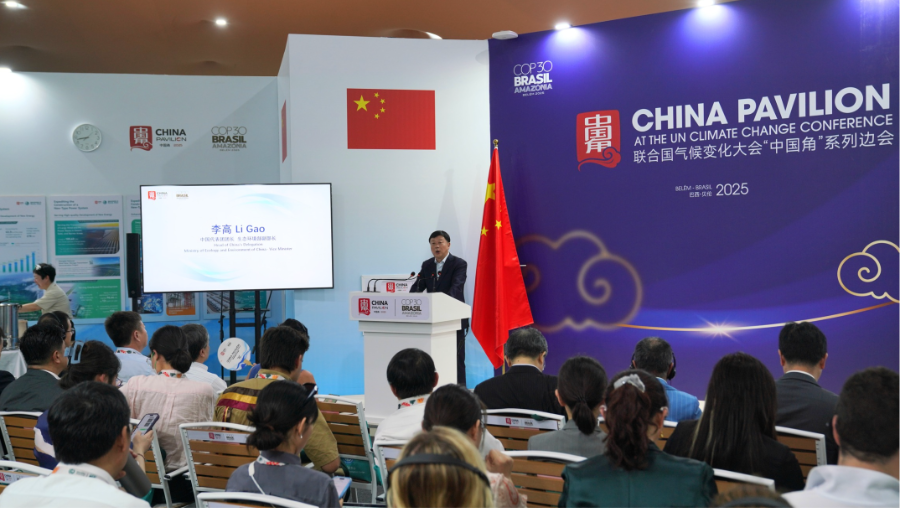
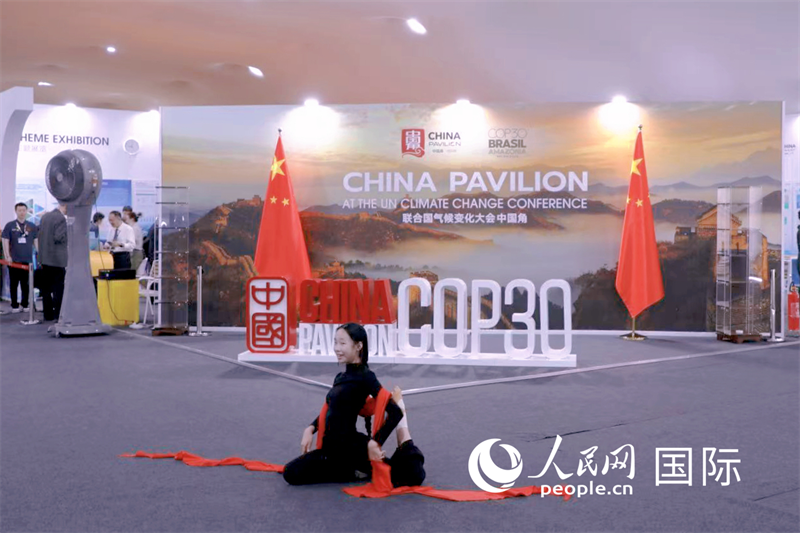
Core Points - The 30th Conference of the Parties (COP30) to the United Nations Framework Convention on Climate Change commenced in Belem, Brazil, on November 10, showcasing the "China Corner" as a unique feature of the event [1] - The "China Corner" highlighted China's commitment to green and low-carbon development through creative displays and interactive experiences [3] Group 1: China's Green Initiatives - The Chinese delegation emphasized that China is both an advocate and a practitioner of green low-carbon development [5] - Furniture in the "China Corner" is made from recycled materials, such as waste circuit boards and retired lithium batteries, showcasing innovative recycling practices [5] - Each ton of such furniture production can reduce approximately 1.2 tons of carbon dioxide emissions, with a resource utilization rate of 95% [7] Group 2: Sustainable Practices and Products - The "China Corner" featured lightweight and sturdy furniture made from corrugated paper and disposable cups made from rice husks, emphasizing low-carbon living [9] - Attendees could sample various teas, coffees, and snacks from China, including the "Ruyi Tea Cake," which reflects the transformation of local ecological resources into economic benefits [10] - All vehicles used by the Chinese delegation were domestically produced new energy vehicles, with brands like BYD and Great Wall providing 230 electric commuting cars for the event [10]
山东海阳市生态东港项目建设取得重要进展
Xin Hua Wang· 2025-11-13 08:31
Core Points - The completion of the last stone placement marks a significant milestone in the Shandong Haiyang Ecological East Port Project, transitioning from underwater construction to land-based activities [1] - The project includes the construction of two 50,000-ton berths, breakwater engineering, a 50,000-ton navigation channel, and supporting roadworks, with an annual designed throughput of 19.11 million tons and a passing capacity of 22.1 million tons [1] - The successful closure of the dam is a critical and high-risk phase in port construction, achieved through close collaboration with maritime authorities to navigate adverse weather conditions [1] - The enclosed area created by the dam closure can accommodate approximately 3 million cubic meters of dredged silt, significantly reducing costs compared to complex and expensive external disposal methods, reflecting the ecological construction philosophy of the project [1] Industry Impact - The completion of the Haiyang Ecological East Port Project is expected to significantly enhance maritime shipping capacity in Haiyang, providing strong momentum for regional economic development and contributing to the green, low-carbon, and high-quality development of the Shandong Peninsula [2]

【三晋能源转型观察】矿山“智”变 “绿”动新生 潞安化工古城煤矿谱写矿山焕新记
Xin Hua Cai Jing· 2025-11-13 07:07
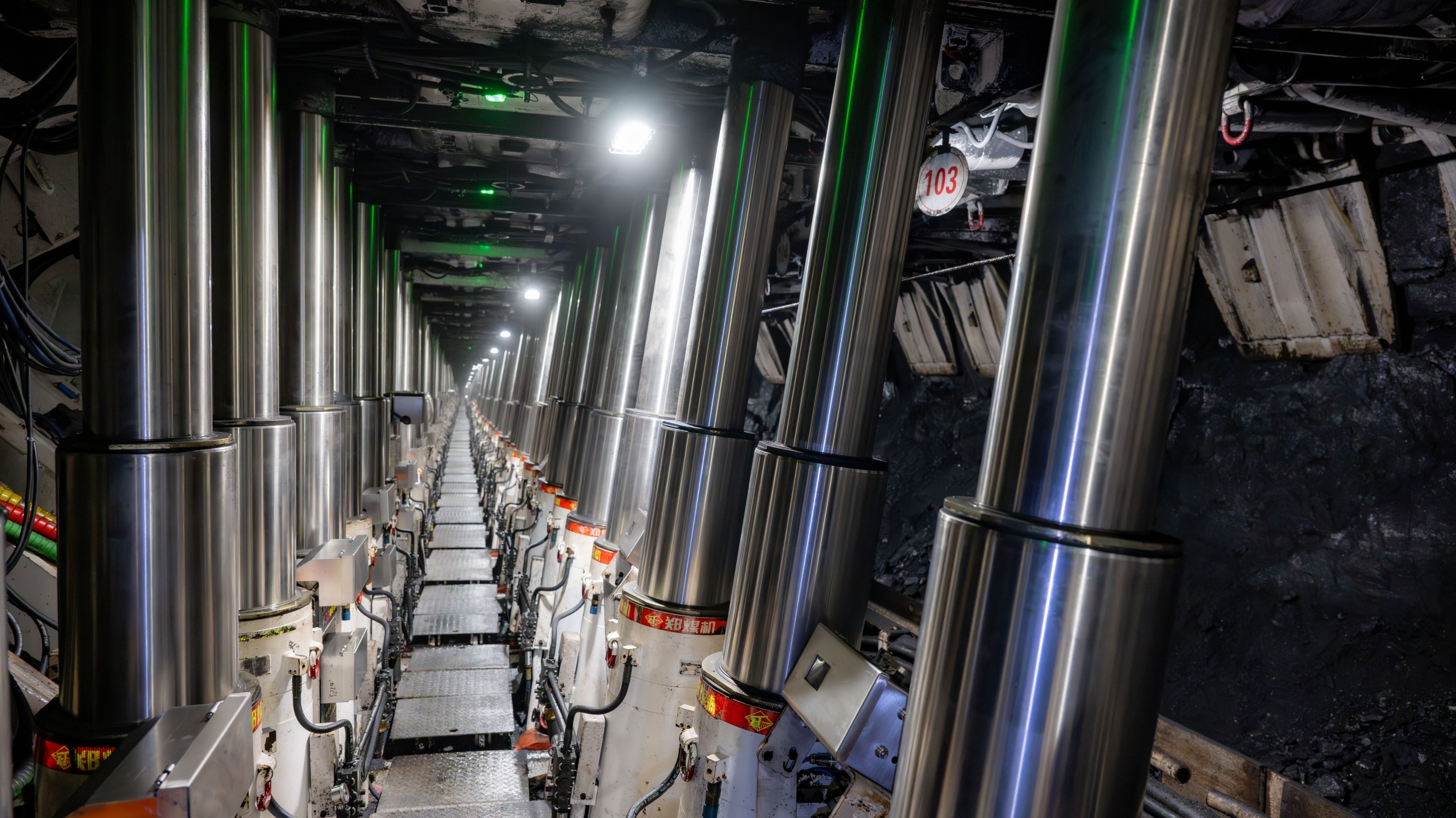
Core Viewpoint - Traditional coal enterprises face the challenge of sustainable development, and the Gucheng Coal Mine of Lu'an Chemical Group is leveraging intelligent technology and green initiatives to enhance operational efficiency and environmental sustainability [1]. Group 1: Intelligent Equipment Upgrade - The Gucheng Coal Mine has implemented intelligent mining technologies to overcome traditional development bottlenecks, enhancing coal mining, transportation, and safety monitoring [2]. - The introduction of 12000KN hydraulic supports has increased mining height to 4.5 meters and improved support strength by over 30% compared to traditional supports [4]. - The time required for adjusting supports has been reduced from 1 hour to 5 minutes due to intelligent equipment, significantly increasing equipment uptime and coal recovery rates [4]. Group 2: Transportation and Safety Management - The mine has launched an intelligent management system for trackless rubber-tired vehicles, enabling real-time monitoring of vehicle location, speed, and traffic control [3]. - The implementation of electronic fencing in hazardous areas has led to a noticeable decrease in unsafe behaviors and violations, enhancing overall safety levels in production [5]. - The integration of AI video management systems has improved supervision of operational behaviors, ensuring compliance with safety standards [5]. Group 3: Green Transformation Initiatives - Gucheng Coal Mine has integrated green, low-carbon, and circular development concepts into its transformation process, achieving significant results [6]. - The mine has developed a methane utilization project that converts low-concentration gas into electricity, generating over 100 million kWh annually and reducing carbon dioxide emissions by approximately 1.6 million tons [6]. - Wastewater treatment systems have been established to recycle mine water and domestic sewage, ensuring compliance with environmental standards and supporting various operational needs [8]. Group 4: Future Development Goals - The Gucheng Coal Mine aims to align its operations with dual carbon goals, embedding green and low-carbon requirements into its overall development strategy [10].