数字化

Search documents
玛氏旗下工厂入选“卓越级智能工厂”名单
Zhong Guo Jing Ji Wang· 2025-11-25 13:10
Core Viewpoint - Mars has been recognized for its Yonghe factory in Guangzhou as one of the latest "Excellent Intelligent Factories" by multiple Chinese government ministries, highlighting its commitment to digitalization and smart manufacturing [1] Group 1: Factory Achievements - The Yonghe factory has undergone a five-year upgrade, completing the intelligent transformation of all 21 production lines, resulting in improvements in capacity, quality, cost, and delivery levels [1] - The factory utilizes 3D modeling and AI algorithms for real-time monitoring of production factors, achieving 100% high-precision traceability in key manufacturing processes [1] - Cloud-based collaborative scheduling has accelerated response times to production anomalies by over 50% [1] Group 2: Technological Innovations - The factory employs nearly a hundred automated guided vehicles and collaborative robots that operate seamlessly 24/7, ensuring "dark factory" operations for finished product stacking and raw material delivery [1] - Collaborative robots are capable of executing automatic feeding processes with no human intervention required [1] Group 3: Strategic Implications - The Vice President of Supply for Mars Wrigley China stated that the "Excellent Intelligent Factory" is a significant practice of Mars' smart manufacturing strategy, injecting new momentum into the company's long-term development in China [1] - Mars aims to continuously build a more efficient and sustainable supply system driven by digitalization, intelligence, and green initiatives to provide high-quality products and services to Chinese consumers [1]
两位数“五连增”!海尔智家核心数据亮眼
Zhong Guo Zheng Quan Bao - Zhong Zheng Wang· 2025-11-25 11:57
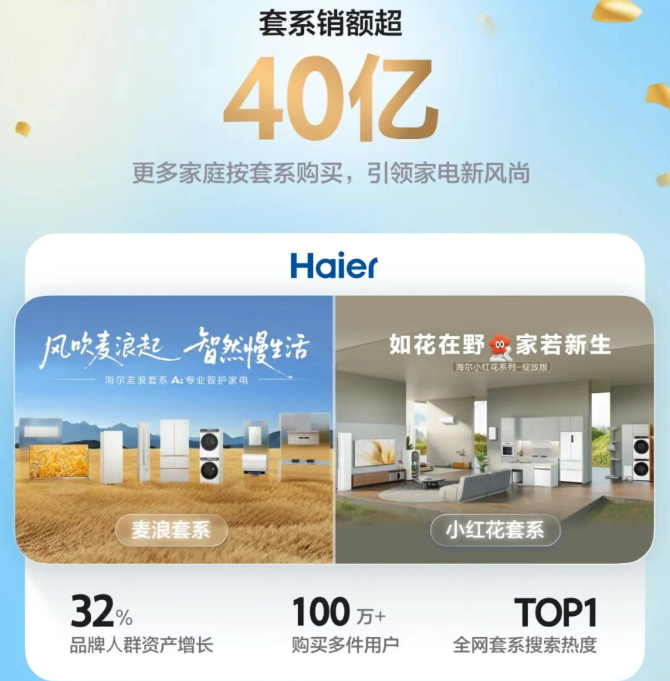
Core Insights - Haier Smart Home has achieved impressive growth, with a continuous double-digit year-on-year increase in net profit attributable to shareholders for five consecutive years [1][2] - The company has established itself as a "hardcore growth" leader in the appliance industry, successfully navigating challenges such as market saturation and rising raw material costs [2] Financial Performance - From 2021 to 2025, the year-on-year growth rates of net profit attributable to shareholders for the first three quarters were 57.68%, 17.26%, 12.71%, 15.27%, and 14.68% respectively [1][7] - The latest report indicates a 14.68% year-on-year increase in net profit for the first three quarters of 2025, surpassing revenue growth [7] Strategic Dimensions - Haier's growth is driven by five strategic dimensions: high-end, globalization, digitalization, intelligence, and ecological integration, which collectively enhance user recognition [3] - The Casarte brand, known for its differentiated technology, has become a key profit driver, with products like the zoned washing machine and oxygen-preserving refrigerator meeting high-end consumer needs [3] Globalization Efforts - Haier's globalization strategy focuses on localizing products and services, establishing R&D, production, and sales systems in key markets to serve local users effectively [3] Digital Transformation - Digital transformation plays a crucial role in enhancing operational efficiency and user experience, with initiatives like the comprehensive inventory management system and multi-channel digital operations [4] - The application of AI technology has led to innovative products that address everyday consumer pain points, contributing to significant sales during major shopping events [4][5] Market Position and Future Outlook - During the 2025 Double Eleven shopping festival, Haier's product sales exceeded 4 billion yuan, with significant contributions from specific product lines [5] - Analysts maintain a positive outlook on Haier's growth potential, citing the ongoing deepening of its high-end strategy, steady globalization, and increasing penetration of smart home solutions [7]


Fortum (OTCPK:FOJC.F) 2025 Investor Day Transcript
2025-11-25 09:02
Summary of Fortum's Investor Day 2025 Company Overview - **Company**: Fortum - **Industry**: Energy (specifically Nordic power market) - **Key Executives Present**: Markus Rauramo (President and CEO), Tiina Tuomela (CFO), Simon Eerik Ollus, Mikael Rönnblad Core Points and Arguments Strategic Priorities and Growth Vision - Fortum aims to create value for shareholders through its core operations and strategic execution focused on the Nordic power market [4][5][6] - The company has a strong position in the Nordic power market with a portfolio that includes flexible hydro and baseload nuclear energy [5][6] - Fortum's nuclear fleet has a total capacity exceeding 3 gigawatts, and hydro assets amount to almost 4.7 gigawatts, contributing to a significant share of the Nordic power market [6] Market Dynamics and Demand Projections - The Nordic power demand is projected to grow to 550 terawatt-hours per year by 2030 and 975 terawatt-hours by 2050, driven by sectors like data centers [9][10] - The company sees robust underlying demand from various industrial sectors, although long-term power purchase agreements (PPAs) are currently less favored [10][11] - Data centers are identified as the most active sector, expected to increase power demand before larger industrial projects [11] Financial Performance and Targets - Fortum's EBITDA for the last 12 months was EUR 1,258 million, with a comparable operating profit of EUR 930 million [6] - The company aims for a return on net assets (RONA) target of 14% and a credit rating of at least BBB flat [18][19] - A new capital expenditure (CapEx) target of approximately EUR 2 billion is set for the next five years, with potential additional investments of up to EUR 2.5 billion [44][49] Sustainability and Decarbonization - Fortum has set ambitious sustainability targets, including net zero greenhouse gas emissions by 2040 and exiting coal by the end of 2027 [32][33] - The company emphasizes the importance of low-carbon technologies, with 99% of its electricity production already decarbonized [34] Operational Efficiency and Cost Management - Fortum has cut EUR 100 million in annual fixed costs, with a target fixed cost level of EUR 870 million from 2026 onwards [37] - The optimization premium from flexible hydro is expected to be around EUR 8-10 per megawatt-hour for 2026, with a long-term guidance of EUR 6-8 [25][61] Customer Engagement and Commercial Strategy - Fortum is shifting focus towards direct interaction with industrial customers, aiming to stabilize revenue streams through long-term contracts [17][26] - The company targets to hedge at least 25% of its Nordic wholesale electricity production over a rolling 10-year period by the end of 2028 [48] Other Important Insights - Fortum's hydro assets are viewed as highly valuable due to their low carbon emissions and infinite lifespan, although new hydro plants are difficult to build [5][38] - The company is exploring new supply options, including pumped hydro storage, to meet future demand [38] - Fortum's strategy includes a focus on digitalization and enhancing operational capabilities to improve efficiency and customer satisfaction [30][31] This summary encapsulates the key points discussed during Fortum's Investor Day 2025, highlighting the company's strategic direction, market dynamics, financial targets, and commitment to sustainability.
汇川技术:公司面向流程工业应用的产品和解决方案有了较大的提升,业务取得一定的增长
Zheng Quan Ri Bao· 2025-11-25 08:56
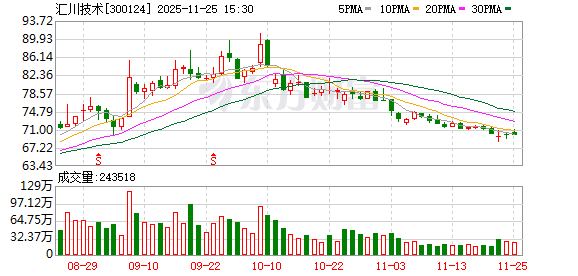
Core Viewpoint - The company has made significant improvements in products and solutions for the process industry, leading to business growth and identifying promising entry points for expansion [2] Group 1: Industry Trends - The process industry has high demands for product reliability, system integration, and comprehensive solutions [2] - There is a trend towards localization in the process industry, which presents opportunities for the company [2] - The process industry is undergoing digitalization and intelligent transformation, as well as a new industrialization reconstruction [2] Group 2: Company Strategy - The company is focusing on data-centric approaches to assist the Chinese process industry in achieving new industrialization and driving technological breakthroughs [2] - The company is enhancing its capabilities in digitalization and large PLC (Programmable Logic Controller) sectors [2] - The company aims to create model projects to penetrate the process industry [2]

Veolia Environnement (OTCPK:VEOE.F) Update / Briefing Transcript
2025-11-25 08:02
Summary of Veolia Environnement Update / Briefing Company Overview - **Company**: Veolia Environnement (OTCPK: VEOE.F) - **Industry**: Urban energy, waste management, and environmental services - **Key Focus**: Decarbonization, urban heating networks, and energy efficiency Core Points and Arguments 1. **Acquisition Announcement**: Veolia announced a major acquisition in the US related to hazardous waste, emphasizing its strategy of combining strongholds and boosters in its operations [1] 2. **Pozna's Energy Transformation**: Pozna is transitioning to a 100% coal-free urban heating network by 2030, showcasing a model for energy transformation across Europe [2] 3. **New Energy Equation**: The energy crisis has highlighted the need for local energy production, affordability, stability, efficiency, flexibility, and decarbonization, which Veolia aims to address [3] 4. **Revenue Breakdown**: In 2024, Veolia generated EUR 45 billion in revenues, with energy representing 25% (EUR 11 billion) of its business, primarily from urban heating networks [4][24] 5. **Heating Networks**: 50% of energy consumed in Europe is heat, with 75% still derived from fossil fuels, presenting a significant opportunity for transformation [6] 6. **Leadership in Urban Heating**: Veolia claims leadership in urban heating networks due to its scale, local presence, public procurement expertise, and ability to integrate various energy solutions [7][8] 7. **Efficiency Metrics**: Veolia operates at an average efficiency of 88% across its networks, with some achieving 94%, compared to the European average of 75% [11] 8. **Decarbonization Projects**: Significant projects in Germany and the Czech Republic have achieved emission reductions of 45% to 60% without service interruptions, with investments totaling EUR 700 million since 2018 [14][15] 9. **EcoThermal Grid Launch**: Veolia launched EcoThermal Grid to optimize existing networks and create new ones, targeting a EUR 4 billion addressable market and EUR 350 million in additional turnover by 2030 [19][20] 10. **2030 Ambition**: Veolia aims to become the number one player in urban heating in Europe, achieve a coal exit across all operations, and generate EUR 350 million from EcoThermal Grid [20] Additional Important Insights 1. **Regulatory Support**: EU regulations are accelerating the shift towards decarbonization and energy efficiency, with ambitious targets for connecting additional citizens to heating networks by 2030 [6] 2. **Financial Resilience**: Veolia's strategy includes hedging against energy price volatility and maintaining stable cash flows through long-term contracts and pass-through mechanisms [28][29] 3. **Growth Drivers**: Future growth will come from new connections, additional services, and geographic expansion, supported by favorable regulations and efficiency gains [30][31] 4. **Coal Exit Strategy**: Veolia's commitment to exit coal by 2030 involves a multi-fuel approach, including biomass, waste heat recovery, and geothermal energy, with expected additional EBITDA of EUR 250 million [32][34] 5. **Partnership with Pozna**: The collaboration with the city of Pozna has been crucial for the successful transition to a decarbonized heating system, highlighting the importance of local partnerships [49][60] This summary encapsulates the key points from the Veolia Environnement update, focusing on the company's strategic direction, financial performance, and commitment to sustainability and decarbonization in urban energy systems.
外资品牌集体 “改姓中”:星巴克、汉堡王易主背后,中国资本的本土化手术刀
Sou Hu Cai Jing· 2025-11-25 00:11
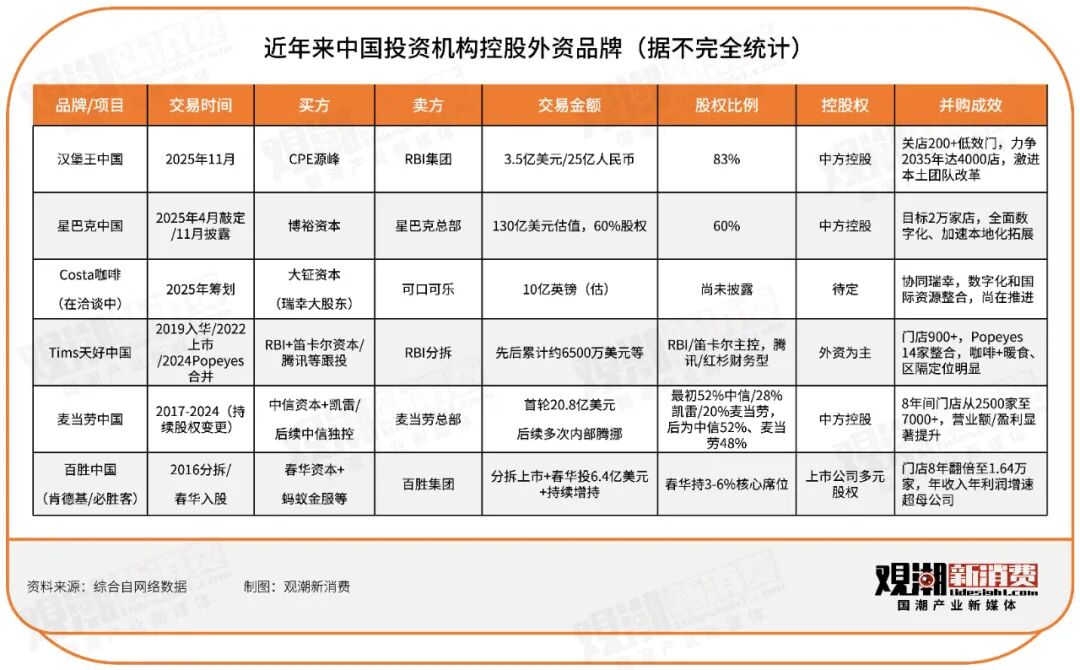
Core Insights - The ownership transfer of Starbucks China and Burger King China signifies a significant shift in market dynamics, where international brands are increasingly relying on local capital to regain competitiveness in the Chinese market [4][7][8] - The era of easy profitability through brand prestige is over, as international brands face systemic challenges and must adapt to local market conditions to survive [4][8][9] Ownership Changes - Starbucks China has transferred 60% of its equity to Hillhouse Capital, valuing the joint venture at $13 billion [6] - Burger King China was acquired by CPE Yuanfeng for $350 million, gaining 83% control [6] - McDonald's China has seen its stake increase to 52% under CITIC Capital, reflecting a trend of local capital taking control of international brands [6][8] Market Challenges - International brands are experiencing a decline in market share, with Starbucks' share dropping to 14% in 2024, less than half of its peak [6][8] - The competitive landscape has shifted, with local brands like Luckin Coffee surpassing international giants, highlighting the failure of traditional business models [8][9] Structural Issues - Decision-making inefficiencies in multinational corporations hinder their ability to respond quickly to market changes, leading to missed opportunities [11] - A digital capability gap exists, as international brands struggle to adapt their global IT systems to the unique Chinese market, resulting in operational inefficiencies [12] - Local teams possess a better understanding of the market and are more willing to innovate, reversing the advantages once held by international brands [13] Strategic Solutions - Local capital is restructuring control by acquiring stakes in international brands, allowing for more agile decision-making and operational autonomy [14][17] - Digital transformation is being prioritized, with companies like McDonald's leveraging partnerships to enhance their digital capabilities and customer engagement [14][16] - Supply chain localization is being implemented to improve cost efficiency and responsiveness, crucial for competing in the Chinese market [15] Case Studies - CITIC Capital's acquisition of McDonald's China exemplifies a successful model of value creation through phased control and operational restructuring, resulting in significant growth in store numbers and digital engagement [16][17] Strategic Implications - Investors should identify brands with strong potential for operational improvement despite current challenges, as these may offer significant upside [18] - Emphasizing local management teams and operational strategies is essential for navigating the complexities of the Chinese market [18][19]



乡村游购空间大
Jing Ji Ri Bao· 2025-11-25 00:02
Core Insights - The integration of rural tourism and shopping is enhancing the multi-dimensional value of rural areas and injecting strong momentum into rural revitalization [1] - The development of rural tourism and shopping has shown a positive trend in both quantity and quality, with 240 key leisure agricultural counties and 2,195 beautiful leisure villages established nationwide [1] - Challenges such as a disconnect between supply quality and consumer demand, lack of distinctive features, and digital service lag are hindering the growth of rural tourism and shopping [1] Group 1: Current Development - The rural tourism and shopping integration is providing a new consumer experience for urban and rural residents [1] - Various regions are exploring integrated development models, such as in Ningxia, where a multi-faceted development model combining agriculture, leisure, and cultural experiences has been established [1] - The shift from "selling products" to "selling experiences" is reshaping the rural economic ecosystem and becoming a consumption engine for rural revitalization [1] Group 2: Challenges and Recommendations - There is a serious issue of homogenization in rural tourism projects, with many areas blindly copying popular templates, leading to a "thousand villages looking the same" phenomenon [1] - Future development should focus on quality improvement rather than just scale expansion to address the challenges of "high traffic but low retention" and "high popularity but low warmth" [1] - Strengthening top-level design and resource integration is essential, with policy support needed to avoid blind imitation and promote unique regional characteristics [2] Group 3: Strategic Initiatives - Companies should collaborate with relevant platforms to create exclusive IPs and utilize big data for precise consumer engagement, enhancing the visibility and influence of rural tourism and shopping [2] - Developing a "one-stop" smart shopping ecosystem and integrating features like a rural shopping map app can streamline services for consumers [2] - Initiatives like issuing rural tourism consumption vouchers and establishing a "rural shopping season" can stimulate consumer interest and demand [2]
外资品牌集体 “改姓中”:星巴克、汉堡王易主背后,中国资本的本土化手术刀如何改写全球规则?
3 6 Ke· 2025-11-24 11:09
Core Insights - The ownership transfer of international brands in China, such as Starbucks and Burger King, signifies a profound market rule restructuring, driven by the need for localization and survival strategies [3][5][6] - The era where international brands could thrive solely on their legacy is over, as they face significant challenges in the Chinese market [5][6][8] Ownership Changes - Starbucks China has transferred 60% of its equity to Hillhouse Capital, with a valuation of $13 billion, aiming for 20,000 stores and accelerated localization [4][5] - Burger King China was acquired by CPE Yuanfeng for $350 million, gaining 83% control, with plans to close over 200 underperforming stores and target 4,000 stores by 2035 [4][5] - Other brands like Costa Coffee and Tims are also undergoing similar transitions, indicating a broader trend of international brands seeking local capital for revitalization [4][5] Market Challenges - Starbucks' market share in China has dropped to 14% in 2024, less than half of its peak, with local competitor Luckin Coffee surpassing it [4][5] - International brands are experiencing systemic failures in the Chinese market, with their traditional centralized operational models proving ineffective [6][10][11] Structural Issues - Decision-making inefficiencies due to centralized control hinder international brands' ability to respond quickly to market changes [10] - A significant digital capability gap exists, with local brands like Luckin leveraging advanced digital systems for operational efficiency [11] - The reversal of latecomer advantages means local teams are now more adept at innovation and market understanding than their international counterparts [12] Strategic Solutions - The restructuring of control through local capital acquisition allows for more agile decision-making and operational autonomy [12][17] - Digital transformation is essential, as seen in McDonald's China, where digital orders surged from under 20% to over 90% post-acquisition [13][14] - Localizing supply chains enhances price competitiveness and operational flexibility, crucial for success in the Chinese market [15] Case Study: McDonald's China - The acquisition by CITIC Capital exemplifies effective value creation, with store numbers increasing from 2,000 to over 7,200 and a robust digital membership system established [16][17] - The transition to a localized decision-making structure has significantly improved operational efficiency [17] Strategic Implications - Investors should identify international brands with strong potential for value enhancement despite operational challenges [18] - Emphasizing the importance of building capable local management teams is critical for successful acquisitions [18] - A deep commitment to localization across all operational aspects is necessary for international brands to thrive in China [19] Market Opportunities - The underdeveloped lower-tier markets present significant growth potential, with retail sales in rural areas exceeding 6 trillion yuan in 2023 and 2024 [20]
恒逸石化(000703) - 000703恒逸石化投资者关系管理信息20251124
2025-11-24 08:56
Company Overview - Hengyi Petrochemical Co., Ltd. is a leading integrated enterprise in the "refining-chemical-fiber" industry chain, focusing on a strategic positioning of "one drop of oil, two strands of silk" [2][3] - The company has established a unique dual-main business model of "polyester + nylon" through the Brunei refining project, creating a closed-loop from crude oil processing to chemical fiber products [2][3] Financial Performance - In the first three quarters of 2025, the company achieved a revenue of CNY 83.885 billion and a net profit attributable to shareholders of CNY 231 million, with a year-on-year net profit growth of 0.08% [4] - As of September 30, 2025, total assets amounted to CNY 1115.10 billion, and net assets attributable to shareholders were CNY 24.458 billion [4] Market Insights Southeast Asia Oil Market - Southeast Asia is the largest net importer of refined oil globally due to insufficient infrastructure investment, despite having rich oil and gas resources [4][5] - The region's oil demand is projected to increase from 5 million barrels per day to 6.4 million barrels per day by 2035, with Southeast Asia expected to account for 25% of global energy demand growth in the next decade [4][5] Polyester Industry Outlook - The company holds a leading position in polyester production, with a diversified product range including long fibers, short fibers, and chips [6][7] - Domestic retail sales in China grew by 5% in the first half of 2025, with the textile sector seeing a 3.1% increase, while fiber and textile exports rose by 12% [6][7] Project Developments Qinzhou Project - The Qinzhou project aims for an annual production capacity of 1.2 million tons of caprolactam and nylon, with the first phase recently entering trial production [8][9] - The project integrates advanced proprietary technologies, optimizing energy consumption and production costs, and is expected to significantly enhance the company's competitive position in the nylon market [8][9] Convertible Bonds - The company decided not to adjust the conversion price of Hengyi convertible bonds and Hengyi Convertible 2, maintaining investor confidence amid market fluctuations [10]

研报掘金丨国盛证券:首予赛维时代“买入”评级,有望依托数字化筑牢多品牌格局
Ge Long Hui A P P· 2025-11-24 05:53
Group 1 - The core viewpoint of the article highlights the steady growth of cross-border e-commerce in the apparel sector, with some emerging clothing segments maintaining high growth rates [1] - The company, Saiwei Times, is identified as a technology-driven leader in the cross-border market, focusing on the apparel field and forming a multi-brand matrix [1] - The company leverages a fully digitalized middle platform to create an organizational structure of "large middle platform + small front end," combined with flexible supply chain advantages to achieve multi-category and multi-brand extensions [1] Group 2 - Looking ahead, the company is expected to strengthen its multi-brand positioning through digitalization [1] - The report initiates coverage with a "buy" rating for the company [1]