
第三代半导体

Search documents
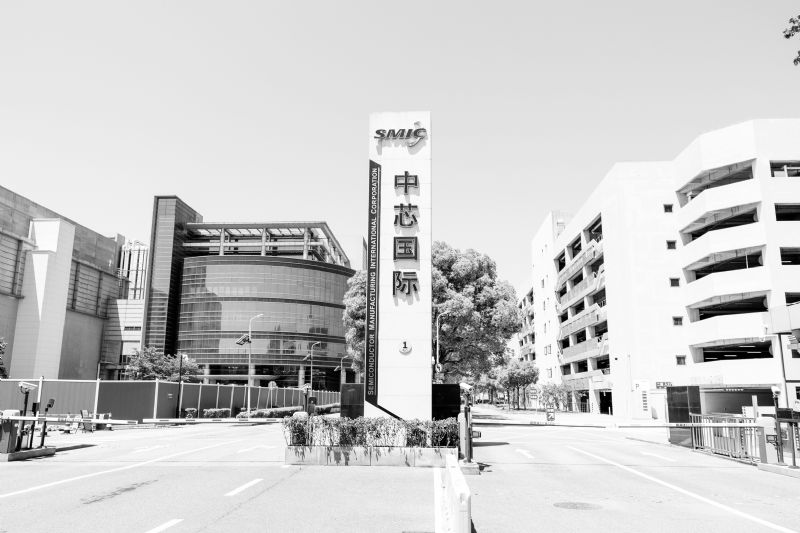
中芯国际半年盈利22.94亿增39% 产能利用率92.5%订单爆表排至10月
Chang Jiang Shang Bao· 2025-08-11 00:42
Core Viewpoint - Semiconductor foundry company SMIC reported better-than-expected operating performance for Q2 2025, with a slight revenue decline compared to Q1 but significant year-over-year growth [2][3][6]. Financial Performance - In Q2 2025, SMIC achieved sales revenue of $2.209 billion, a decrease of 1.7% from Q1 2025's $2.247 billion, but an increase of 16.2% compared to Q2 2024 [2][3]. - The net profit attributable to shareholders for Q2 2025 was $132 million, down 29.5% from $188 million in Q1 2025, and down 19.5% from $165 million in Q2 2024 [4][6]. - For the first half of 2025, the total net profit was $320 million, approximately 39% year-over-year growth [2][4]. Capacity and Utilization - SMIC's capacity utilization rate reached 92.5% in Q2 2025, indicating high demand, with orders exceeding capacity until October [2][7]. - The company had capital expenditures totaling $3.3 billion in the first half of 2025, with R&D expenses of $331 million [2][8]. Revenue Breakdown - Revenue from the Chinese market accounted for 84.1% in Q2 2025, while the U.S. and Eurasian markets contributed 12.9% and 3.0%, respectively [3][4]. - The majority of revenue came from wafer services, comprising 94.6% in Q2 2025 [3][4]. Cost and Profitability - General and administrative expenses increased to $189 million in Q2 2025, a rise of 26.5% from Q1 2025 [4][6]. - The gross margin for Q2 2025 was 20.4%, down from 22.5% in Q1 2025 but up from 13.9% in Q2 2024 [4][6]. Future Outlook - For Q3 2025, SMIC provided revenue guidance of a 5% to 7% increase and a gross margin forecast of 18% to 20% [8]. - The company continues to invest heavily in R&D to enhance its technology and service capabilities, with a total of $331 million spent in the first half of 2025 [7][8].


中芯国际赵海军:渠道加紧备货持续到三季度 四季度急单将相对放缓
Zheng Quan Shi Bao Wang· 2025-08-08 07:43
Core Insights - The company reported a revenue growth of 16.2% year-on-year for Q2, driven by inventory replenishment amid changing domestic and international policies [1] - The company anticipates a revenue increase of 5% to 7% in Q3, with stable gross margin guidance [3] Financial Performance - Q2 revenue reached $2.209 billion, with a year-on-year increase of 16.2% and a quarter-on-quarter decrease of 1.7% [1] - For the first half of the year, total revenue was $4.46 billion, reflecting a 22% year-on-year growth, with a gross margin of 21.4%, up 7.6 percentage points from the previous year [1] - Capital expenditures for the first half totaled $3.301 billion [1] Revenue Breakdown - Revenue by region in Q2: China (84%), USA (13%), Eurasia (3%), remaining stable compared to previous quarters [1] - Revenue by application in Q2: smartphones (25.2%), computers and tablets (15%), consumer electronics (41%), IoT and wearables (8.2%), industrial and automotive (10.6%) [1] Automotive Sector Growth - The automotive electronics segment saw a 20% quarter-on-quarter growth, with significant contributions from various types of automotive chips [2] - The company is well-prepared for future growth in the automotive sector, focusing on capacity layout and customer collaboration [2] Production and Capacity Utilization - Q2 gross margin was 20.4%, down 2.1 percentage points due to production fluctuations and changes in product mix [3] - Capacity utilization reached 92.5%, with both 8-inch and 12-inch wafer utilization improving [3] - The company’s 8-inch standard logic monthly capacity increased to 991,000 wafers by the end of Q2 [3] Market Outlook - The company expects stable smartphone shipment volumes for the year, with its market share increasing among smartphone clients [3] - The fourth quarter is traditionally a slow season, but the company does not foresee significant impacts on capacity utilization due to overall demand [4] Strategic Focus - The company will not enter the mainstream power device foundry market but will focus on meeting the needs of strategic international clients [4] - Future plans include establishing capacity for third-generation semiconductors like SiC and GaN based on "China for China" demand [4]
【公告全知道】存储芯片+第三代半导体+光伏+超导!公司部分半导体新产品已完成验证并获试订单
财联社· 2025-08-07 15:11
Group 1 - The article highlights the importance of weekly announcements from Sunday to Thursday, which include significant stock market updates such as suspensions, increases or decreases in holdings, investment wins, acquisitions, performance reports, unlocks, and high transfers [1] - Key announcements are marked in red to assist investors in identifying investment hotspots and preventing potential black swan events, providing ample time for analysis and selection of suitable listed companies [1] Group 2 - A company in the semiconductor sector has completed verification of some new products and received trial orders, focusing on storage chips, third-generation semiconductors, photovoltaics, and superconductors [1] - Another company is collaborating with humanoid robot enterprises to conduct material verification, with a focus on rare earth permanent magnets, humanoid robots, military industry, drones, and chips [1] - A company is advancing over ten innovative drug and medical device projects in the fields of innovative drugs, traditional Chinese medicine, medical devices, and ophthalmic medical care [1]

告别54V时代,迈向800V,数据中心掀起电源革命
3 6 Ke· 2025-08-07 11:21
Core Insights - The rapid growth of AI applications like ChatGPT and Claude is driving an exponential increase in power demand for global AI data centers, pushing them towards critical power limits [1] - The power consumption of AI data centers is shifting from traditional levels of 20-30 kW per rack to levels reaching 500 kW and even 1 MW [1][2] - NVIDIA has announced the formation of an 800V HVDC power supply alliance aimed at developing next-generation AI data centers capable of supporting 1 MW per rack by 2027 [4] Group 1: Power Demand and Infrastructure - AI workloads are causing data center power demands to surge, with traditional 54V power systems becoming inadequate for modern AI factories that require megawatt-level power [2] - The transition to 800V HVDC systems is seen as essential to reduce energy losses and improve overall efficiency in data centers [1][3] - The current reliance on 54V systems is leading to physical limitations in space and efficiency, necessitating a shift to higher voltage systems [2][3] Group 2: Technological Developments - The 800V HVDC architecture is expected to enhance end-to-end energy efficiency by up to 5% and significantly reduce maintenance costs by up to 70% [5] - NVIDIA's collaboration with partners across the energy ecosystem aims to overcome previous barriers to the widespread adoption of HVDC technology in data centers [4] - Domestic companies like InnoSilicon and Changdian Technology are also advancing their technologies to align with the 800V HVDC trend, indicating a competitive landscape [6][7] Group 3: Semiconductor Innovations - The global supply of Gallium Nitride (GaN) is becoming increasingly strained, with companies like InnoSilicon positioned to leverage this scarcity in the context of NVIDIA's supply chain [9] - GaN devices offer superior performance in high-voltage applications compared to traditional silicon-based semiconductors, making them ideal for the evolving demands of AI data centers [11][12] - The integration of GaN technology is expected to significantly enhance power density and efficiency in the new 800V HVDC systems [12]

星徽股份涨0.71%,成交额5959.49万元,近5日主力净流入-123.42万
Xin Lang Cai Jing· 2025-08-06 07:37
Core Viewpoint - The company, Guangdong Xinghui Precision Manufacturing Co., Ltd., is benefiting from its cross-border e-commerce business, particularly in the small home appliance sector, amidst the depreciation of the RMB. Group 1: Business Overview - The company specializes in the research, production, and sales of precision metal components, including slides and hinges, with a significant portion of its revenue coming from cross-border e-commerce [7]. - As of March 31, the company's revenue composition includes 55.24% from slides, 15.69% from smart home appliances, and 7.71% from hinges, among other categories [7]. - The company reported a revenue of 3.35 billion yuan for the first quarter of 2025, a year-on-year decrease of 8.65%, with a net profit of -28.42 million yuan, a significant decline of 161.13% [7]. Group 2: Financial Performance - The company's overseas revenue accounted for 67.99% of total revenue, benefiting from the depreciation of the RMB [3]. - In the first half of 2022, the sales revenue from smart home appliances reached 240 million yuan, representing 37.14% of the company's e-commerce revenue [2]. - The company has distributed a total of 71.16 million yuan in dividends since its A-share listing, with no dividends paid in the last three years [8]. Group 3: Market Activity - On August 6, the company's stock price increased by 0.71%, with a trading volume of 59.59 million yuan and a market capitalization of 2.591 billion yuan [1]. - The stock has shown a net inflow of 5.09 million yuan from major investors today, indicating a lack of clear trend in major investor activity [4][5]. - The average trading cost of the stock is 5.53 yuan, with the current price approaching a resistance level of 5.67 yuan, suggesting potential for upward movement if the resistance is broken [6].

新股解读|传天岳先进启动2.5-3亿美元IPO预路演 强劲增长预期或催热投资情绪
Zhi Tong Cai Jing· 2025-08-06 01:17
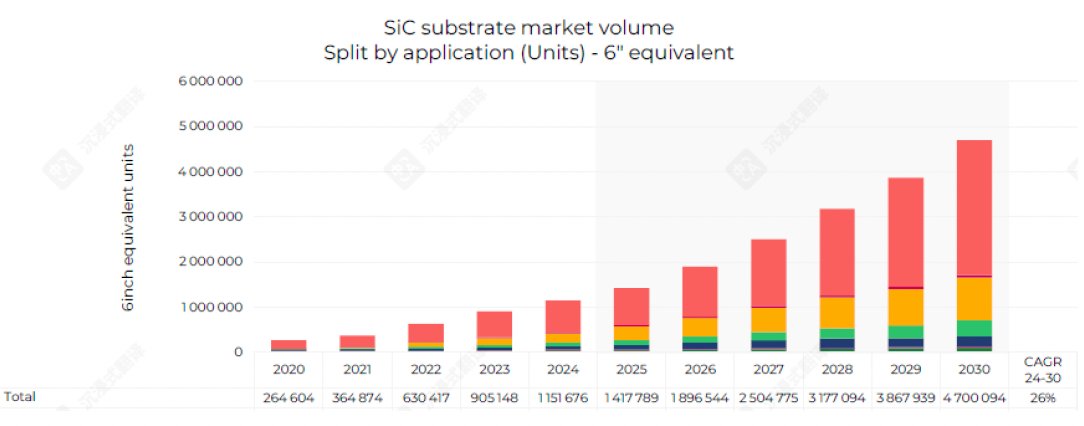
Core Viewpoint - Tianyue Advanced is set to go public in Hong Kong, aiming to raise approximately $250 to $300 million, showcasing strong growth in the silicon carbide (SiC) substrate market with a projected revenue increase of 41% in 2024 [1][2]. Company Summary - Tianyue Advanced has successfully passed the listing hearing on July 30 and is currently conducting an IPO pre-roadshow [1]. - The company is recognized as a leader in the third-generation semiconductor SiC substrate sector, leveraging technological innovation to accelerate growth [1]. - In 2024, Tianyue Advanced's revenue from substrates is expected to grow significantly, contrasting with many international peers experiencing slowdowns [1][2]. Industry Summary - The global power SiC device market is projected to reach $10.3 billion by 2030, with a compound annual growth rate (CAGR) of 20.3% from 2024 to 2030 [2]. - The shipment volume of 6-inch substrates is forecasted to increase from approximately 1.15 million pieces in 2024 to nearly 4.7 million pieces by 2030, reflecting a CAGR of 26% [2]. - Despite short-term fluctuations in the electric vehicle market, the long-term growth trend for SiC substrates remains intact, driven by demand from sectors like renewable energy storage, AI data centers, and electric vehicles [2]. Competitive Position - Yole identifies Tianyue Advanced as a representative enterprise in the upstream wafer materials sector within China's expanding SiC ecosystem [4]. - The company is expected to benefit from China's position as the largest electric vehicle market and the "China for China" strategy, enhancing its market presence [4]. - In 2024, while competitors like Wolfspeed and Coherent faced revenue declines, Tianyue Advanced's revenue in the N-type SiC substrate sector grew by 35% [4]. Strategic Partnerships - Tianyue Advanced has established significant supply agreements with leading international manufacturers such as Infineon, Bosch, and Onsemi, integrating into the global core supply chain [5]. - The company is recognized as a leader capable of delivering large volumes of 8-inch wafers to the open market, aligning with the industry's shift towards larger substrate sizes [5]. Future Outlook - The ongoing trend towards larger SiC substrates is expected to facilitate applications in emerging consumer electronics, such as AI glasses, which are projected to see substantial market growth [6]. - The anticipated explosion in the AI glasses market could provide Tianyue Advanced with a second growth curve, with expected shipments exceeding 65.9 million units by 2030 [6]. - With a solid fundamental outlook and promising growth expectations, Tianyue Advanced is positioned as a compelling investment opportunity in the upcoming Hong Kong IPO market [6].

星徽股份涨0.72%,成交额6144.53万元,今日主力净流入-470.28万
Xin Lang Cai Jing· 2025-08-05 07:41
Core Viewpoint - The company, Guangdong Xinghui Precision Manufacturing Co., Ltd., is benefiting from its cross-border e-commerce business and the depreciation of the RMB, with a significant portion of its revenue coming from overseas sales [3]. Group 1: Company Overview - Guangdong Xinghui Precision Manufacturing Co., Ltd. was established on November 11, 1994, and listed on June 10, 2015. The company specializes in the research, production, and sales of precision metal components such as slides and hinges, with a focus on cross-border e-commerce [7]. - The company's main business revenue composition includes: slides (55.24%), smart small appliances (15.69%), hinges (7.71%), power supplies (7.54%), computer and mobile peripherals (3.54%), and others [7]. - As of March 31, the number of shareholders is 25,100, a decrease of 13.57% from the previous period, with an average of 14,152 circulating shares per person, an increase of 27.50% [7]. Group 2: Financial Performance - In the first quarter of 2025, the company achieved operating revenue of 335 million yuan, a year-on-year decrease of 8.65%, and a net profit attributable to the parent company of -2.84 million yuan, a year-on-year decrease of 161.13% [7]. - The company has distributed a total of 71.16 million yuan in dividends since its A-share listing, with no dividends distributed in the past three years [8]. Group 3: Market Activity - On August 5, the company's stock rose by 0.72%, with a trading volume of 61.45 million yuan and a turnover rate of 3.09%, bringing the total market capitalization to 2.573 billion yuan [1]. - The company's cross-border e-commerce segment includes small household appliances such as aroma machines, coffee machines, air fryers, and milk frothers, primarily sold overseas [2]. - The company reported that its audio products, under the brand TaoTronics, achieved annual sales of tens of millions of dollars, with TWS technology widely applied in its Bluetooth earphone products [2].
2天暴涨70%,英诺赛科靠英伟达“改命”?
Huan Qiu Lao Hu Cai Jing· 2025-08-04 12:18
Core Viewpoint - InnoLux has seen a significant stock price surge, driven by its successful entry into NVIDIA's supply chain, with a recent increase of over 30% on August 4, leading to a market capitalization of HKD 67.2 billion [2][3] Group 1: Company Performance - InnoLux's stock price rose by 30.47% to HKD 75.15, with a cumulative increase of 70.8% over two trading days [3] - The company reported an adjusted net loss of HKD 835 million for 2024, a reduction from the adjusted net loss of HKD 1.016 billion in 2023, indicating a narrowing loss margin [2][12] Group 2: Strategic Partnerships - InnoLux has partnered with NVIDIA to promote the large-scale implementation of the 800 VDC power architecture in AI data centers, which is expected to enhance power efficiency significantly [2][4] - The company has also extended its collaboration with STMicroelectronics, which will allow it to leverage STMicroelectronics' manufacturing capacity outside China for GaN wafer production [5][6] Group 3: Technological Advancements - InnoLux specializes in third-generation semiconductor silicon-based gallium nitride (GaN) technology, with capabilities to produce 8-inch GaN wafers, which are crucial for the 800 VDC architecture [4][11] - The 800 V architecture is designed to support AI computing power increases of 100 to 1000 times compared to traditional 54V systems, showcasing the technological edge of InnoLux's GaN devices [4] Group 4: Client Relationships - InnoLux's largest client, likely to be CATL, contributed 32.1% of sales in 2023 and 27.1% in the first half of 2024, highlighting the importance of this relationship for revenue growth [8] - The company has also established collaborations with Midea Group, focusing on the application of GaN products in home appliances [9]
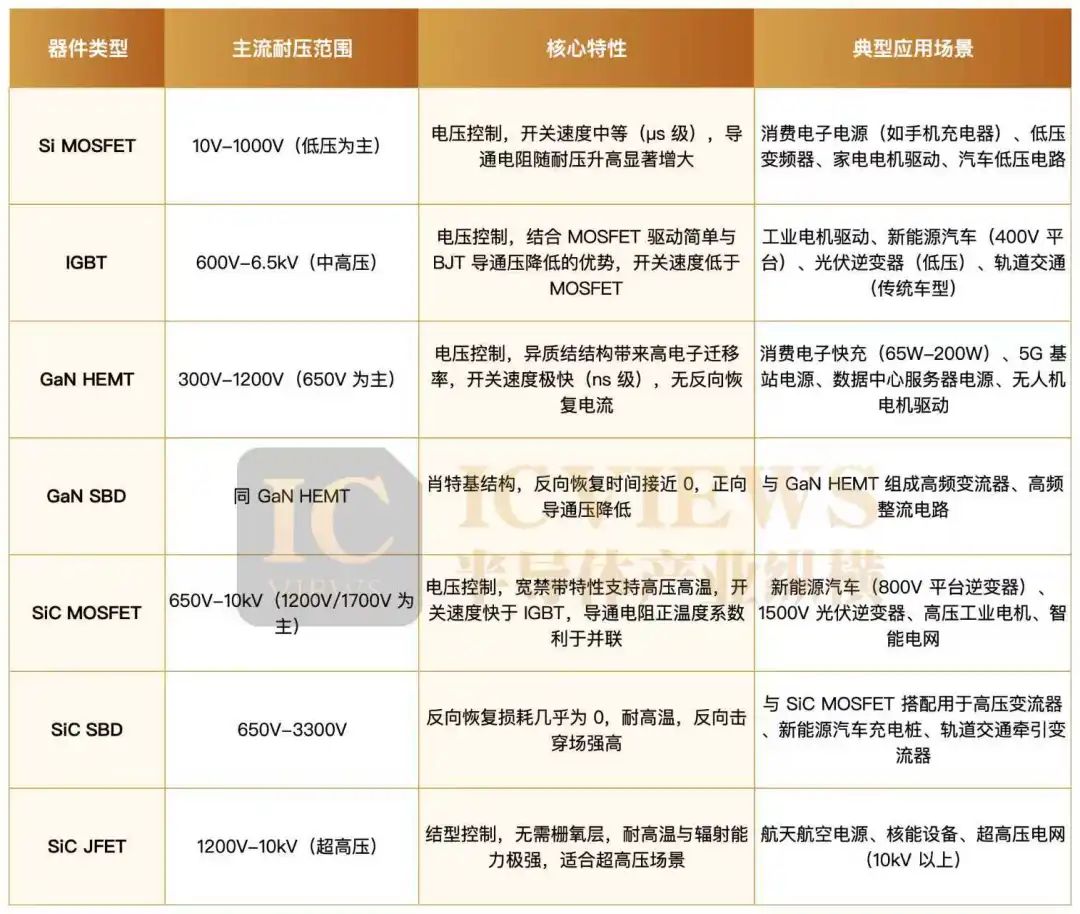
AI算力设施需求驱动,SiC/GaN打开成长空间
Orient Securities· 2025-08-02 14:50
Investment Rating - The report maintains a "Positive" investment rating for the electronic industry in China [4] Core Viewpoints - The demand for AI computing facilities is expected to drive the growth of SiC/GaN power devices, opening up new growth opportunities in the industry [2][24] - The report emphasizes that the application potential of SiC/GaN in AI computing facility power supply systems has not been fully explored, and future demand is likely to continue increasing [7][24] Summary by Sections Investment Recommendations and Targets - AI server and data center demand is anticipated to create growth opportunities for SiC/GaN power devices. Key companies to watch include: - GaN industry leader Innoscience - Major power device manufacturers such as Wingtech Technology, China Resources Microelectronics, New Clean Energy, Star Semiconductor, and Tianyue Advanced - Wafer foundry company Chipone Integrated Circuits focusing on SiC power devices - Passive component companies like Farah Electronics and Jianghai Co., Ltd. - Companies in the third-generation semiconductor equipment market like Zhongwei Company [2][29] Industry Dynamics - The report highlights that AI computing facilities will increase the demand for SiC/GaN devices, particularly in high-voltage direct current (HVDC) and power module applications [7][8] - The transition from traditional power supply architectures to higher voltage systems (800V DC) is expected to enhance power transmission efficiency, thus driving the adoption of SiC/GaN devices [10][14] - The report notes that the penetration rate of SiC in global power semiconductors is projected to reach 4.9% by 2024, while GaN's penetration is at 0.5% in 2023, indicating room for growth [21][22] Company Insights - Innoscience is recognized as the global leader in the GaN industry, with a revenue of 830 million yuan in 2024, reflecting a year-on-year growth of 39.8% [30][34] - Wingtech Technology is focusing on semiconductor business growth, with a revenue of 58.4 billion yuan in 2024, and is strategically transforming to enhance its position in the power semiconductor industry [40][44] - China Resources Microelectronics is experiencing steady revenue growth, achieving 10.12 billion yuan in 2024, with a focus on enhancing its SiC/GaN product capabilities [50][51]


入围英伟达合作商,股价一度涨超60%!英诺赛科回应
2 1 Shi Ji Jing Ji Bao Dao· 2025-08-01 07:12
8月1日午后,英诺赛科(02577.HK)港股股价直线拉升,盘中一度涨超60%,截至13时27分,股价回落至 46.59%,报64.5港元/股,总市值达576亿港元。 消息面上,当日英伟达官网更新800V直流电源架构合作商名录,英诺赛科是本次入选英伟达合作伙伴 中唯一的中国芯片企业。这意味着双方正式达成深度合作,双方将携手推动800V直流(800 VDC)电 (声明:文章内容仅供参考,不构成投资建议。投资者据此操作,风险自担。) 公开资料显示,氮化镓(GaN)是一种非常坚硬、机械稳定的III/V族直接带隙半导体。由于材料上的优 势,GaN功率器件可以实现更小的导通电阻和栅极电荷,在高频场景对提升变换器的效率和功率密度非 常有利。目前GaN功率器件主要应用于电源适配器、车载充电、数据中心等领域,也逐渐成为5G基站 电源的最佳解决方案。 不过,当前英诺赛科面临一定业绩压力。年报显示,公司2024年营收8.28亿元,同比增长39.77%,扣非 归母净利润减亏,但仍亏损10.46亿元。 IO资本创始合伙人赵占祥向21财经·南财快讯记者表示,全球最大的GPU厂商英伟达选择英诺赛科作为 氮化镓芯片供应商,一方面说明氮化镓 ...
