
避险需求

Search documents
黄金、白银涨势能否跨年?
第一财经· 2025-12-28 10:07
2025.12. 28 本文字数:2279,阅读时长大约4分钟 作者 | 第一财经 齐琦 2025年的交易临近收官,全球贵金属市场再度迎来历史性行情。 12月26日,国际金银价格同步创下历史新高,其中伦敦金现货最高触及4549.9美元/盎司;白银表现更为迅猛,盘中最高触及79.4美元/盎司,年内涨幅 超174%。 针对新一轮贵金属大涨行情,南华期货贵金属新能源研究组负责人夏莹莹对第一财经分析称,美联储重启降息并技术性扩表,贸易关税政策加剧去美元 化,美国财政可持续性危机削弱美元信用。投资需求取代央行购金成为主导力量,进一步推升价格。 "白银市场则出现结构性挤兑,全球库存'拆东墙补西墙',叠加工业刚性需求与期货交割量井喷导致现货溢价飙升。"夏莹莹进一步分析称。 金银价格再刷高,交易所提保扩板抑投机 2025年以来,黄金领涨贵金属市场,白银后来居上。 贵金属市场全年的行情先后经历关税驱动、震荡调整、降息预期主导以及技术回调几个主要阶段,就在市场认为行情将在高位震荡收官之际,新一轮涨 势再起,并再创历史新高。 12月26日,伦敦金现货价格突破4500美元/盎司整数关口。截至目前,COMEX黄金期货和伦敦金现货价格年 ...

黄金、白银再刷新高,贵金属涨势能否跨年?
Di Yi Cai Jing· 2025-12-28 09:40
Core Viewpoint - The global precious metals market is experiencing a historic surge, with gold and silver prices reaching all-time highs, driven by factors such as U.S. Federal Reserve's interest rate cuts, trade policies, and structural supply-demand imbalances [1][4][5]. Group 1: Price Movements - On December 26, 2025, spot gold prices reached a peak of $4549.9 per ounce, while silver hit $79.4 per ounce, marking an annual increase of over 174% for silver [1][2]. - Year-to-date, COMEX gold futures and London spot gold prices have both risen by more than 70% [2]. - Domestic markets also saw significant increases, with Shanghai gold futures up 62% and silver futures up over 157% [2]. Group 2: Market Dynamics - The surge in precious metals is attributed to a combination of factors, including the Fed's interest rate cuts, which have created a liquidity-friendly environment, and a persistent supply-demand imbalance in the silver market [4][5]. - Silver has been in a supply deficit for five consecutive years, with industrial demand in sectors like photovoltaics and electronics providing additional support for prices [5]. Group 3: Regulatory Responses - The Shanghai Futures Exchange has adjusted trading parameters for gold and silver futures to mitigate excessive speculation and maintain market stability [3]. - The new trading limits include a 15% price fluctuation cap and increased margin requirements [3]. Group 4: Future Outlook - Analysts predict that gold prices may continue to rise in 2026, potentially reaching $5000 per ounce, although the growth rate may slow to 10%-15% due to previous price increases [7]. - The market is expected to experience increased volatility as it reacts to U.S. monetary policy and economic conditions [7]. - There are warnings about the risks associated with high volatility in silver prices and the potential for profit-taking [7].
全线暴涨!有人一觉醒来,赚了18万
Sou Hu Cai Jing· 2025-12-28 05:21
"三十好几的人了 攒的这些黄金 终于给我赚钱了" 近期 全球贵金属 上演史诗级行情 全线暴涨刷新历史纪录 "涨到可怕!是不是可以卖了?" 一名网友9月下旬入手白银基金,两只期货基金A和C整体涨了近70%。其中A被转入场内后,算上溢价 涨了100%。 有人一觉醒来 赚了18万元 受避险需求增加等因素拉动,国际黄金、白银价格12月26日再创新高。 其中,交投最活跃的2026年2月黄金期货价格,一度达到每盎司4581.30美元,3月白银期货价格突破每 盎司79美元,逼近80美元。 目前,白银相对强弱指数(RSI)读数为93.86,为自1980年1月以来最高。当时RSI曾创下98.77的历史 最高纪录。 一些市场分析人士认为,任何高于70.0的RSI读数都表明市场上涨过度,后续可能出现回调。 今年以来,黄金价格飙升逾70%,有望创下自1979年以来最大年度涨幅。 白银价格今年迄今已上涨超过170%。 受供应紧张等因素影响,铂金期货价格最近一周也飙升至历史新高,首次突破每盎司2300美元大关。 多家国际金融机构近日发布报告预期,未来利用黄金对冲美元计价资产风险的趋势将持续,2026年黄金 价格或进一步上涨。不过,需要警 ...
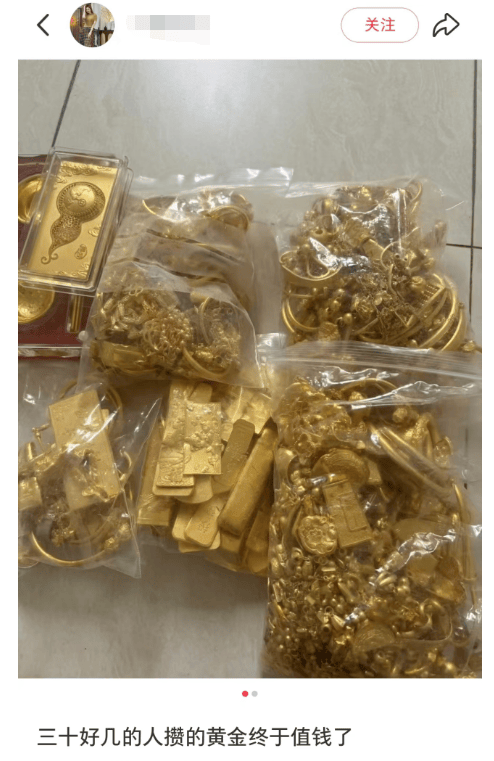
金价,沸了...
Sou Hu Cai Jing· 2025-12-28 05:10
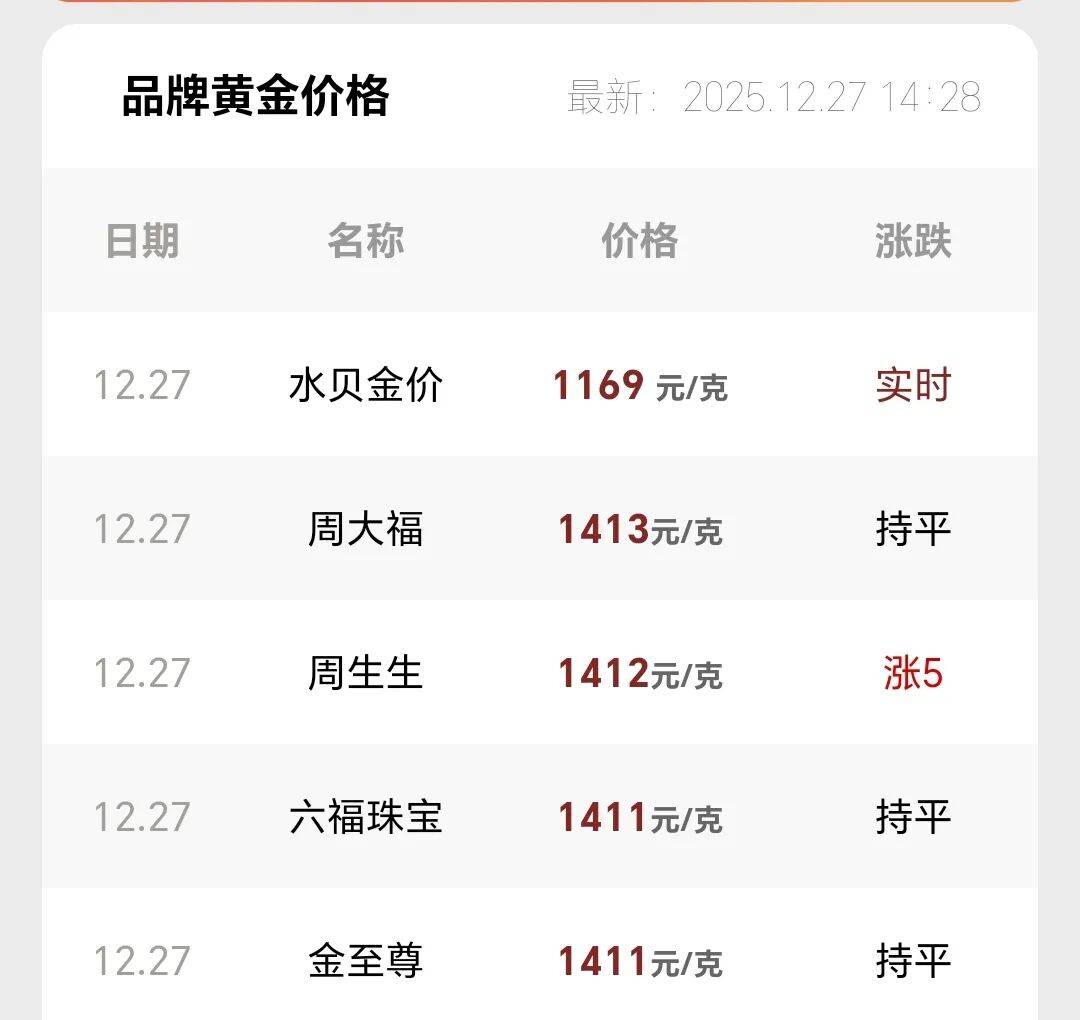
金价,沸了! 受避险需求增加等因素拉动,国际黄金、白银价格26日再创新高。其中,交投最活跃的2026年2月黄金期货价格一度达到每盎司4581.30美元,3月白银期 货价格突破每盎司79美元,逼近80美元。 目前,白银相对强弱指数(RSI)读数为93.86,为自1980年1月以来最高。当时RSI曾创下98.77的历史最高纪录。一些市场分析人士认为,任何高于70.0的 RSI读数都表明市场上涨过度,后续可能出现回调。 今年以来,黄金价格飙升逾70%,有望创下自1979年以来最大年度涨幅。白银价格今年迄今已上涨超过170%。 | 品牌黄金价格 | | 最新:2025.12.27 14:28 | | | --- | --- | --- | --- | | 日期 | 名称 | 价格 | 涨跌 | | 12.27 | 水贝金价 | 1169 元/克 | 实时 | | 12.27 | 周大福 | 1413元/克 | 持平 | | 12.27 | 周生生 | 1412元/克 | 涨5 | | 12.27 | 六福珠宝 | 1411元/克 | 持平 | | 12.27 | 金至尊 | 1411元/克 | 持平 | 受国际金价影 ...
金价、银价,都爆了!
中国能源报· 2025-12-28 04:23
Core Viewpoint - Precious metals prices have reached new highs, driven by increased safe-haven demand and geopolitical risks, leading to a bullish year-end market outlook [1][2][4]. Group 1: Precious Metals Performance - On December 26, gold and silver prices surged, with gold futures rising by 1.11% to $4,552.7 per ounce and silver futures increasing by 7.69% to $77.196 per ounce [2]. - Platinum prices have also soared, breaking the $2,400 per ounce mark for the first time, with a weekly increase of over 22%, while palladium prices rose approximately 13% to $2,023.3 per ounce, marking a three-year high [6]. Group 2: Market Drivers - The weakening US dollar and rising geopolitical tensions, particularly related to US sanctions on Venezuela, have significantly enhanced gold's appeal as a safe-haven asset [4]. - Global silver inventories remain tight, with a continuous five-year supply-demand imbalance, reinforcing market consensus on the ongoing scarcity [8]. Group 3: Future Outlook - Many international financial institutions predict that gold prices could reach $5,000 per ounce by 2026, supported by expectations of continued loose monetary policy from the Federal Reserve and ongoing central bank gold purchases [10]. - The anticipated increase in US national debt, projected to exceed $20 trillion in 2026, alongside continued Fed rate cuts, is expected to drive funds from US Treasuries into gold and silver [12]. Group 4: Other Commodities - Copper prices have risen over 4% due to concerns about potential supply shortages, reinforcing its status as an economic indicator [16].
马斯克担忧白银暴涨:许多工业生产需要用到白银;今年白银价格已上涨超过170%
Sou Hu Cai Jing· 2025-12-28 03:14
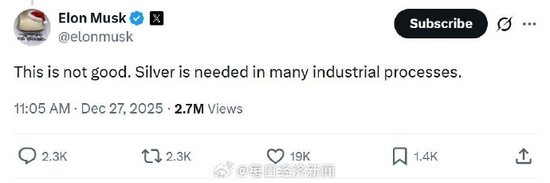
据每日经济新闻,世界首富、特斯拉首席执行官埃隆·马斯克对白银价格上涨表示担忧。当地时间12月 27日,他在社交媒体平台发帖称:"这可不好。白银在许多工业生产过程中是必须的。" 据中国经济网,受避险需求增加等因素拉动,国际黄金、白银价格12月26日再创新高。其中,交投最活 跃的2026年2月黄金期货价格一度达到每盎司4581.30美元,3月白银期货价格突破每盎司79美元,逼近 80美元。 12月26日,现货白银涨10.07%,报79.1075美元/盎司,续创历史新高,本周累涨17.92%,年初至今累涨 174.45%。白银的迅猛涨势远超黄金。 伦敦银现 Q < W SPTAGUSDOZ IDC 昨结 71.810 总量 0 y (e) 71.810 现手 0 +7.519 +10.47% 开盘 最高价 79.405 持 仓 0 外 盘 0 最低价 71.629 增 仓 0 内 盘 0 分时 五日 日K 周K 电子 FK (0) 叠加 设均线 MA5:71.728↑ 10:67.995↑ 20:63.533↑ 82.564 -79.405 - 62.459 45.513 42.354 n and the dire ...

马斯克担忧白银暴涨:许多工业生产需要用到白银 今年白银价格已上涨超过170%
Xin Lang Cai Jing· 2025-12-28 03:06
炒股就看金麒麟分析师研报,权威,专业,及时,全面,助您挖掘潜力主题机会! 据每日经济新闻,世界首富、特斯拉首席执行官埃隆·马斯克对白银价格上涨表示担忧。当地时间12月 27日,他在社交媒体平台发帖称:"这可不好。白银在许多工业生产过程中是必须的。" 据中国经济网,受避险需求增加等因素拉动,国际黄金、白银价格12月26日再创新高。其中,交投最活 跃的2026年2月黄金期货价格一度达到每盎司4581.30美元,3月白银期货价格突破每盎司79美元,逼近 80美元。 目前,白银相对强弱指数(RSI)读数为93.86,为自1980年1月以来最高。当时RSI曾创下98.77的历史 最高纪录。一些市场分析人士认为,任何高于70.0的RSI读数都表明市场上涨过度,后续可能出现回 调。 12月26日,现货白银涨10.07%,报79.1075美元/盎司,续创历史新高,本周累涨17.92%,年初至今累涨 174.45%。白银的迅猛涨势远超黄金。 在工业需求方面,白银正日益成为推动全球经济技术转型不可或缺的关键要素。世界白银协会表示,白 银在太阳能光伏、电动汽车和AI数据中心这三大新经济支柱领域中扮演着至关重要的角色。 据世界白银协 ...
“涨到可怕了!”有人一觉醒来赚了18万
新华网财经· 2025-12-28 02:06
Core Viewpoint - The global precious metals market has experienced a historic surge, with significant price increases in gold and silver, driven by rising demand for safe-haven assets [1][5]. Group 1: Price Movements - Gold prices have soared over 70% this year, potentially marking the largest annual increase since 1979 [7]. - Silver prices have risen more than 170% year-to-date, with March silver futures recently surpassing $79 per ounce [5][7]. - The most actively traded February 2026 gold futures reached $4,581.30 per ounce, setting a new record [5]. Group 2: Market Indicators - The Relative Strength Index (RSI) for silver is at 93.86, the highest since January 1980, indicating potential overbought conditions [5]. - The RSI for gold futures reached a historical high of 95.94, suggesting a similar overbought scenario [5]. - Reports from various financial institutions suggest a continued trend of using gold to hedge against risks associated with dollar-denominated assets, with expectations for further price increases by 2026 [7]. Group 3: Market Sentiment and Recommendations - Analysts caution that both gold and silver may face short-term risks despite the bullish outlook for the medium term [7]. - The Shanghai Gold Exchange has advised investors to manage risk and control positions wisely [7]. - A report from Dongfang Securities indicates that while gold prices may continue to rise steadily, silver prices are likely to experience significant short-term volatility [7].

“黄金闪耀 白银狂飙” 本周贵金属为何集体爆发?
Sou Hu Cai Jing· 2025-12-27 16:00
Core Viewpoint - Precious metals prices have reached new highs, driven by increased safe-haven demand and geopolitical risks, marking a strong end-of-year market trend [1][3]. Precious Metals Performance - On December 26, gold futures rose by 1.11% to $4,552.7 per ounce, while silver futures surged by 7.69% to $77.196 per ounce, both setting new closing records [3]. - Platinum futures also hit a historic high, surpassing $2,400 per ounce with a weekly increase of over 22%, and palladium prices rose approximately 13% to $2,023.3 per ounce, the highest level in over three years [7]. Market Drivers - The decline of the US dollar and rising geopolitical tensions, particularly related to US sanctions on Venezuela's oil trade, have significantly enhanced gold's appeal as a safe-haven asset [5]. - The global silver market has faced a supply-demand imbalance for five consecutive years, contributing to the upward pressure on prices [9]. Future Outlook - Many international financial institutions predict that gold prices could reach $5,000 per ounce by 2026, supported by expectations of continued loose monetary policy from the Federal Reserve and ongoing central bank gold purchases [11]. - The anticipated increase in US national debt, projected to exceed $20 trillion in 2026, alongside potential Fed rate cuts, may lead to a continued trend of capital flowing from US Treasuries to gold and silver [13]. Copper Market Insights - Concerns over a potential supply shortage in the global copper market have led to a more than 4% increase in copper futures on December 26, reinforcing the annual price rise [15].

刷新历史纪录!国际金价、银价,再创新高!
Sou Hu Cai Jing· 2025-12-27 08:47
国际白银期价逼近每盎司80美元 多种贵金属期价创新高 受避险需求增加等因素拉动,国际黄金、白银价格26日再创新高。其中,交投最活跃的2026年2月黄金 期货价格一度达到每盎司4581.30美元,3月白银期货价格突破每盎司79美元,逼近80美元。 目前,白银相对强弱指数(RSI)读数为93.86,为自1980年1月以来最高。当时RSI曾创下98.77的历史 最高纪录。一些市场分析人士认为,任何高于70.0的RSI读数都表明市场上涨过度,后续可能出现回 调。 受供应紧张等因素影响,铂金期货价格最近一周也飙升至历史新高,首次突破每盎司2300美元大关。地 缘政治紧张局势升级以及近期美元走软也起到拉升作用。 最近一周,纽约商品交易所黄金期货RSI创下历史最高纪录,达95.94。黄金RSI历史第二高值出现在 1980年1月,当时达94.69。 今年以来,黄金价格飙升逾70%,有望创下自1979年以来最大年度涨幅。白银价格今年迄今已上涨超过 170%。 此外,纽约铜价继续上涨,进一步巩固了铜价的年度涨幅。一些投资者押注2026年全球铜供应将趋紧。 纽约商品交易所期铜价格26日上涨近4%,至每磅5.7855美元。 转自:新 ...