
投机资金

Search documents
白银为啥跌得比黄金猛?
3 6 Ke· 2026-02-06 10:56
Core Viewpoint - The recent significant price fluctuations in silver, which have erased most of its gains for the year, are attributed to its dual role as both an industrial metal and a precious metal, making it more sensitive to market dynamics compared to gold [8][11][12]. Price Movements - Since January 2, 2026, silver prices have experienced a rollercoaster, starting at $72.49 per ounce and peaking at $121.65 per ounce on January 29, marking a cumulative increase of approximately 61.88% [3]. - On January 30, 2026, silver prices plummeted by 26.42% to $85.26 per ounce, and further fluctuations were noted, with a 9.69% drop on February 6, followed by a recovery to around $72.35 per ounce [3][4]. - In the same period, COMEX silver futures rose from $71.74 per ounce to $121.79 per ounce, reflecting a cumulative increase of about 63.99%, before experiencing a rapid decline [4]. Comparison with Gold - Gold prices also saw fluctuations, with a peak of $5598.75 per ounce on January 29, 2026, and a cumulative increase of approximately 24.52% for the year [6]. - From January 29 to February 6, gold prices fell by about 10.36%, while COMEX gold futures dropped by 8.62% [6][7]. Market Dynamics - The volatility in silver prices is largely due to its smaller market size compared to gold, making it more susceptible to speculative trading and market sentiment [11][12]. - Silver's dual nature as both a precious metal and an industrial metal means it is influenced by economic cycles and industrial demand, which can lead to greater price fluctuations [11][12]. Industrial Demand and Economic Factors - Despite the ongoing global re-industrialization, the demand for silver has not provided sufficient support for its prices due to a lag in demand release and economic uncertainties [13]. - Factors such as the potential appointment of a hawkish Federal Reserve chair and tightening global liquidity have contributed to negative sentiment in the silver market [13]. Future Outlook - Short-term predictions indicate continued volatility in silver prices, influenced by speculative trading and the pace of industrial demand recovery [14]. - Long-term expectations suggest that as industrial demand in sectors like solar energy and AI increases, coupled with supply constraints, silver prices may experience a recovery [15].

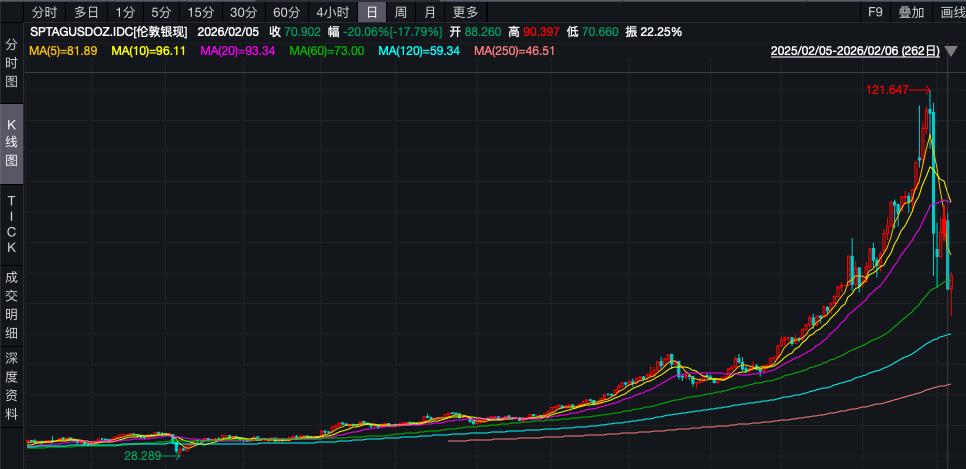
投机资金过度介入国际银动荡
Jin Tou Wang· 2026-02-05 07:24
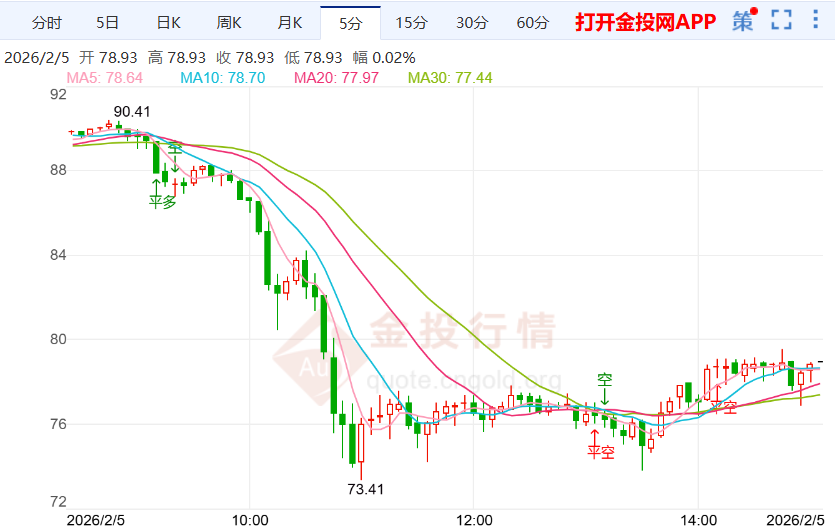
Group 1 - The core point of the article highlights the significant volatility in silver prices, primarily driven by speculative funds rather than fundamental changes in physical demand [3] - Analysts indicate that the accumulation of leveraged positions, the amplification effect of options trading, and the flow of speculative funds are key factors driving price fluctuations, detaching the market from fundamentals [3] - A senior expert emphasizes that a large number of speculative positions have not been fully cleared, suggesting that the market may face further adjustments in the short term [3] Group 2 - Recent trading saw silver prices drop after failing to break the critical resistance level of $90.00, leading to increased selling pressure [4] - The decline occurred under a prevailing short-term bearish correction trend, exacerbated by the failure to maintain above the 50-day Exponential Moving Average (EMA) and negative signals from the Relative Strength Index (RSI) [4] - Unless prices stabilize above the current support level, there is a tendency for further weakness in the market [4] Group 3 - Economic data released shows that January ADP employment figures revealed only 22,000 new jobs in the private sector, significantly below the market expectation of 48,000 and lower than the revised previous value of 41,000, indicating a slowdown in the labor market [3] - The ISM services index remained stable at 53.8, slightly above the expected 53.5, indicating continued expansion in the services sector, but highlighting structural disparities in economic growth [3] - Overall, the combination of hawkish Federal Reserve policies and strong dollar expectations, alongside mixed economic data, supports a short-term upward trend for the dollar, although weak employment growth may limit its long-term strength [3]
白银大跌7%,特朗普:利率很快就会下调
2 1 Shi Ji Jing Ji Bao Dao· 2026-02-05 02:44
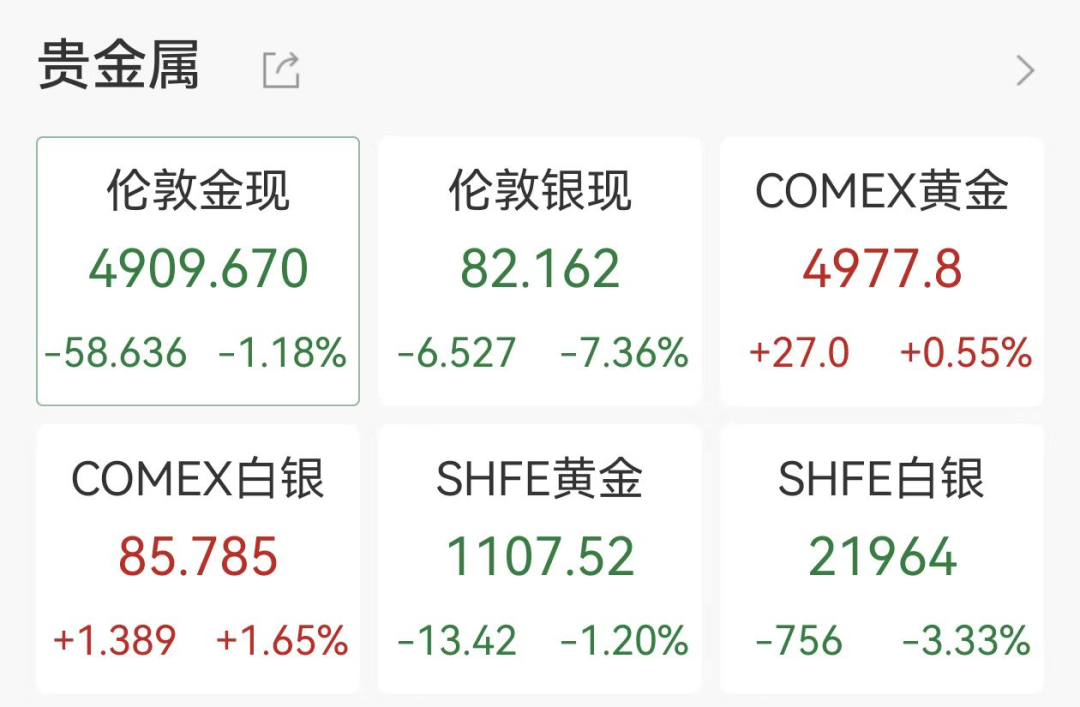
Market Overview - On February 5, gold and silver prices experienced significant declines, with silver dropping over 7% to below $83 per ounce, while gold fell nearly 1.2% to $4909.67 per ounce, reaching a low of $4893 during the day [1] - The latest prices for various commodities include: London gold at $4909.67 (-1.18%), London silver at $82.162 (-7.36%), and COMEX gold at $4977.8 [2] Silver Market Dynamics - The recent volatility in silver prices is largely driven by speculative funds, which tend to dominate the market, especially in the latter stages of price movements. When these funds withdraw, price fluctuations can be severe [3] - Silver is characterized by stronger cyclical and leverage effects compared to gold, which is primarily viewed as a reserve asset and macro hedge [3] Broader Economic Context - International oil prices also fell, with Brent crude down 2% to $67.98 per barrel and WTI crude down 2% to $63.81 per barrel [2] - Former President Trump expressed confidence that interest rates would soon decrease, suggesting that they should be lower than current levels [2] - Diplomatic efforts are ongoing regarding nuclear negotiations between Iran and the U.S., with both countries confirming talks scheduled for June 6 in Muscat, Oman [2]
白银下跌后,出现一个有意思的现象,那就是有些银店不回收银子了,说是没办法定价,其实,就是失去流动性了
Sou Hu Cai Jing· 2026-02-01 15:34
Core Viewpoint - The recent volatility in silver prices has led to a significant decline in physical demand, with silver shops halting purchases due to market instability, indicating a sudden loss of liquidity in the market [2][4]. Group 1: Market Dynamics - The Silver Institute's report indicates that industrial demand for silver is expected to reach a record high of 680 million ounces in 2024, with continued strength in sectors like photovoltaics, AI servers (growing over 50% annually), and automotive electronics [5]. - Approximately 58% of silver demand comes from industrial production, where companies are rational buyers, purchasing based on need rather than speculative trends [7]. - The speculative investment demand for silver peaked at 26.3% in 2022 but has since declined as the Federal Reserve signaled a pause in interest rate cuts, impacting market expectations for silver prices [7][9]. Group 2: Supply and Demand Imbalance - Current market conditions have created a situation where speculative buyers are retreating, leading to a lack of buyers for silver, as evidenced by silver shops refusing to buy back silver [9][11]. - Despite a decrease in silver inventories at the Shanghai Gold Exchange, global supply is projected to increase by 3% in 2025, reaching 1.05 billion ounces, creating a mismatch between rising supply and declining speculative demand [9][11]. - The volatility of silver, often referred to as a "widow maker," highlights its tendency to oscillate between financial and commodity attributes, leading to potential price declines when speculative interest wanes [11][14].

帮主郑重:黄金40年一遇的暴跌,是在给谁上课?
Sou Hu Cai Jing· 2026-01-31 00:56
Core Insights - The global market experienced a significant downturn, with gold prices dropping over 12% in a single day, marking the largest decline in 40 years, while silver saw a dramatic drop of 36%, setting a historical record [1][3]. Group 1: Market Dynamics - The immediate trigger for the crash was a rebound in the US dollar and the nomination of a potentially more hawkish Federal Reserve chair by Trump, but the underlying issue was the excessive speculative funds that had flooded the gold and silver markets in recent months [3]. - The market's extreme volatility is attributed to a collective sentiment of "extreme greed" transitioning to "extreme fear," highlighting the cyclical nature of market behavior [3]. Group 2: Investment Strategies - Investors are advised to reassess the core reasons for holding any assets, particularly gold, whether for long-term inflation hedging or short-term speculative gains, emphasizing the importance of position sizing and overall portfolio stability [4]. - Understanding the dual-edged nature of liquidity in the gold and silver markets is crucial, as strong liquidity can facilitate rapid price increases but can also lead to swift sell-offs [4]. - The recent crash serves as a valuable "stress test" for investors, assessing their risk management systems and emotional resilience in the face of market volatility [4]. Group 3: Future Outlook - The market is expected to enter a complex period of oscillation as it digests the extreme emotions triggered by the crash, raising questions about whether speculative funds will exit the market entirely or seek new narrative-driven targets [5].

伦铜单日飙涨9.3%创历史新高,投机与宽松预期引爆十六年最大涨幅
Hua Er Jie Jian Wen· 2026-01-29 16:03
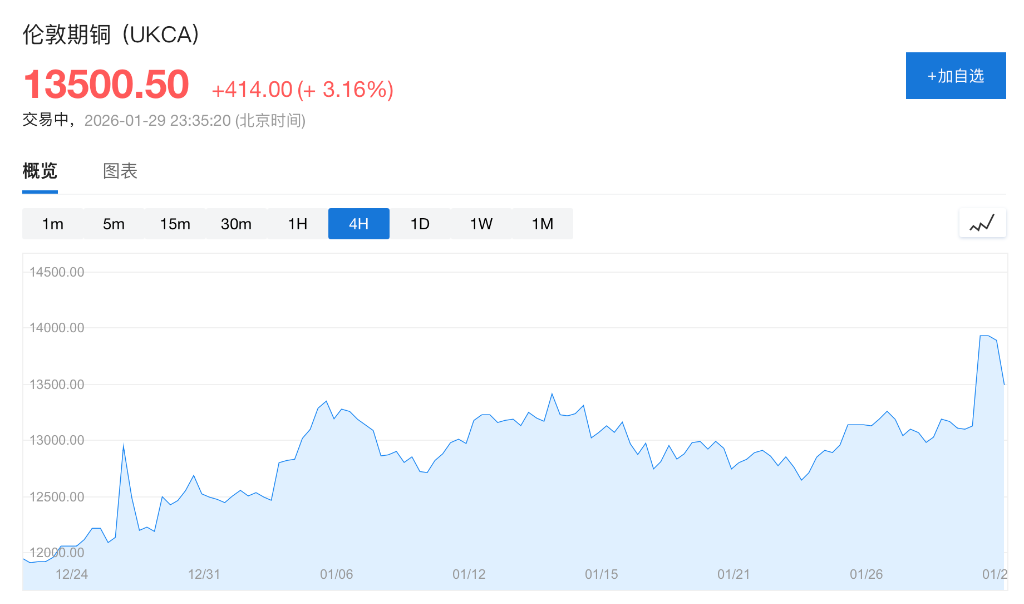
Core Viewpoint - The London Metal Exchange (LME) copper prices surged to a record high, with a significant daily increase of 9.3%, closing at $14,301.50 per ton, driven primarily by speculative trading [1][2]. Group 1: Price Movement and Market Dynamics - Copper prices have increased approximately 25% since early December, with other base metals like aluminum and zinc also showing gains of 1.8% and 5%, respectively [2]. - The recent surge in commodity prices is attributed to multiple factors, including a weaker dollar, rising demand for physical assets as a hedge, geopolitical tensions, and expectations of a more accommodative monetary policy from the Federal Reserve [2]. Group 2: Speculative Trading and Market Activity - Speculative trading activity in the futures market has intensified, with the Shanghai Futures Exchange reporting a significant increase in trading volume, particularly for copper contracts, which recorded the second-highest daily trading volume in history [5]. - The copper futures on the Shanghai exchange rose to 112,000 RMB per ton after a 5.8% increase during daytime trading, indicating a broad influx of speculative funds into the commodity market [5]. Group 3: Supply and Demand Signals - A notable market paradox exists as the price surge occurs despite some fundamental indicators signaling a contrary trend, such as an expanded backwardation in LME copper futures, suggesting a relatively ample supply in the spot market [5]. - Analysts highlight that the long-term demand for copper is structurally supported by energy transition and the expansion of global data centers, with expectations of continued investment in sectors like AI, semiconductors, and electrical infrastructure [6]. Group 4: Federal Reserve Policy Expectations - The Federal Reserve's decision to maintain interest rates, coupled with expectations of a more dovish successor to Chairman Powell, has created a favorable environment for commodity price increases, providing further monetary easing expectations [6]. - However, there are warnings from market analysts about the potential for a "technical adjustment" in metal prices, as the current price levels may exceed actual demand support, raising concerns about the sustainability of the price rally [6].
银价来到变盘临界点? 投机仓位大举撤离至22个月低点 白银“牛市叙事”遭遇重创
Zhi Tong Cai Jing· 2026-01-17 01:00
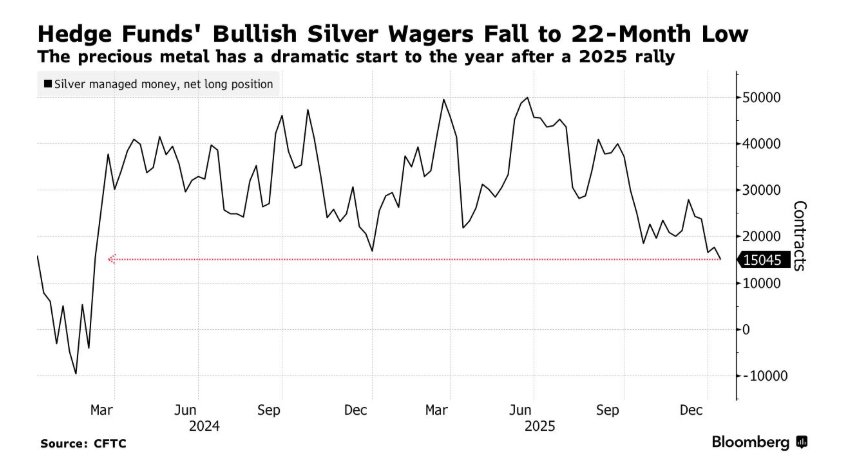
Core Viewpoint - The recent volatility in silver prices is attributed to a significant reduction in bullish positions by leveraged hedge funds and speculators ahead of the Trump administration's decision to temporarily suspend import tariffs on key minerals, including silver [1][4]. Group 1: Silver Market Dynamics - Hedge funds and large speculative entities have cut their net long positions in silver by approximately 15%, bringing it down to 15,045 contracts, the lowest level in 22 months [4]. - The silver spot price fell from a historical high of $93.737 to $90.119, marking a cumulative decline of 3% over two days, with a notable drop of over 7% on one day [2]. - The recent surge of over 20% in silver prices was followed by a sharp correction, primarily driven by profit-taking from speculative funds and the rebalancing actions of the Bloomberg Commodity Index, which led to significant selling pressure [2][9]. Group 2: Comparison with Gold - In contrast to silver, gold prices have shown only minor declines, with a 0.4% drop on one day and a total decline of 0.6% over two days, supported by strong demand from global central banks [3]. - Analysts suggest that gold's price stability is underpinned by central bank purchases and systemic fund allocations, making it less susceptible to the volatility seen in silver, which is heavily influenced by speculative trading [9]. - The outlook for gold remains bullish, with expectations of continued upward momentum driven by geopolitical tensions and central bank demand, potentially pushing prices beyond $5,000 per ounce in the near future [10].
白银牛市狂热遭遇“关税冷却”! 投机势力掀起抛售潮 银价一度暴跌超7%
智通财经网· 2026-01-15 04:28
Group 1 - Silver prices experienced a significant drop of over 4% to around $87.2 after reaching a historical high of $93.7, primarily due to President Trump's announcement to delay tariffs on key mineral imports, which cooled market enthusiasm for silver [1][3] - The recent surge in silver prices, which increased by over 20% in just four trading days, was followed by a sharp correction, attributed to profit-taking by speculative investors and significant selling pressure from the Bloomberg Commodity Index rebalancing [1][4] - Gold prices also saw a decline, but the drop was less than 0.5%, indicating a stronger resilience compared to silver, which is heavily influenced by speculative trading [1][8] Group 2 - The geopolitical tensions, particularly in Venezuela, Cuba, and Iran, have been driving factors behind the recent strong performance of gold and silver, as investors seek safe-haven assets amid fears of escalating conflicts [2][4] - Trump's administration's approach to tariffs, which includes setting price floors rather than percentage-based taxes, has alleviated fears of broad policy impacts, contributing to the recent volatility in precious metals [3][7] - The recent tightening of margin requirements by the CME, shifting from fixed dollar amounts to percentage-based calculations, has increased the cost of high-leverage speculation, leading some investors to reduce their positions in silver [8]
瓶片短纤数据日报-20260115
Guo Mao Qi Huo· 2026-01-15 03:06
Report Summary 1) Report Industry Investment Rating No information provided. 2) Core View of the Report - The PX market has experienced a rapid increase, mainly driven by speculative funds rather than fundamental changes. The futures market dominates price discovery, showing "irrational exuberance" characteristics. Although there are concerns about bubbles, the PX fundamentals are supported, and the market is expected to remain tight in 2026. The PX - naphtha spread has widened to $360, and the PX - mixed xylene spread has reached $155, improving aromatics extraction economics. The PX market is at a critical point where speculative sentiment and fundamentals are intertwined. Domestic PTA maintains high operation rates, benefiting from stable domestic demand and the resumption of exports to India since the end of November. High gasoline spreads support aromatics. New polyester installations drive high polyester loads, keeping PTA consumption high, and the market's inventory intention increases with a rapidly strengthening basis. Although domestic polyester demand weakens seasonally, polyester factory production cuts are insufficient to form a negative feedback [2]. 3) Summary by Relevant Catalog Price Changes - PTA spot price increased from 5060 to 5075, a change of 15 [2]. - MEG domestic price increased from 3686 to 3711, a change of 25 [2]. - PTA closing price decreased from 5140 to 5116, a change of -24 [2]. - MEG closing price increased from 3815 to 3867, a change of 52 [2]. - 1.4D direct - spun polyester staple fiber price decreased from 6520 to 6510, a change of -10 [2]. - Short - fiber basis increased from 34 to 42, a change of 8 [2]. - 2 - 3 spread decreased from 16 to 18, a change of -2 [2]. - Polyester staple fiber cash flow increased from 240 to 246, a change of 6 [2]. - 1.4D direct - spun and imitation large - chemical fiber spread decreased from 1270 to 1260, a change of -10 [2]. - East China water - bottle chip price increased from 6097 to 6148, a change of 51 [2]. - Hot - filling polyester bottle chip price increased from 6097 to 6148, a change of 51 [2]. - Carbonated - grade polyester bottle chip price increased from 6197 to 6248, a change of 51 [2]. - T32S pure polyester yarn price remained unchanged at 10600 [2]. - T32S pure polyester yarn processing fee increased from 4080 to 4090, a change of 10 [2]. - Polyester - cotton yarn 65/35 45S price remained unchanged at 16600 [2]. - Cotton 328 price increased from 15610 to 15615, a change of 5 [2]. - Polyester - cotton yarn profit increased from 1377 to 1381, a change of 5 [2]. - Primary three - dimensional hollow (with silicon) price remained unchanged at 7210 [2]. - Hollow staple fiber 6 - 15D cash flow decreased from 449 to 428, a change of -21 [2]. - Primary low - melting - point staple fiber price remained unchanged at 7775 [2]. Market Conditions - Short - fiber: The short - fiber main futures dropped 32 to 6470. The price of polyester staple fiber production factories was stable, while traders' prices slightly declined. Downstream buyers purchased as needed, and on - site transactions were cautious. The price of 1.56dtex*38mm semi - bright natural white (1.4D) polyester staple fiber in the East China market was 6370 - 6650 RMB/ton (cash, spot, tax - included, self - pick - up), 6490 - 6770 RMB/ton (cash, spot, tax - included, delivered) in the North China market, and 6430 - 6630 RMB/ton (cash, spot, tax - included, delivered) in the Fujian market [2]. - Bottle chips: The mainstream negotiation price of polyester bottle chips in the Jiangsu and Zhejiang markets was 6140 - 6200 RMB/ton, with the average price increasing by 30 RMB/ton compared to the previous working day. PTA and bottle - chip futures were strong, with strong cost - side support. Most supply - side offers were raised, market spot supplies were tight, the low - end price center continued to move up, and the market negotiation center increased [2]. Operating Rates and Sales Ratios - Direct - spun staple fiber load (weekly) increased from 86.77% to 88.84%, a change of 2.07% [3]. - Polyester staple fiber sales ratio decreased from 80.00% to 72.00%, a change of -8.00% [3]. - Polyester yarn startup rate (weekly) remained unchanged at 66.00% [3]. - Recycled cotton - type load index (weekly) remained unchanged at 51.10% [3].
铜牛市还能持续多久?高盛:1.3万高价不可持续,变盘点或在二季度关税落地后
Hua Er Jie Jian Wen· 2026-01-14 07:32
Core Viewpoint - Goldman Sachs believes that the recent surge in copper prices is primarily driven by a stockpiling trend due to anticipated U.S. tariffs and speculative funds, creating a temporary "scarcity premium" in the market. However, the bank warns that the current high price above $13,000 is unsustainable and significantly detached from the fundamentals [1]. Group 1: Price Predictions and Market Dynamics - Goldman Sachs has raised its LME copper price forecast for the first half of 2026 from $11,525 per ton to $12,750 per ton, citing tightening inventories outside the U.S. due to capital inflows and supply shifts [1]. - The bank maintains its fourth-quarter 2026 price forecast at $11,200 per ton, indicating significant downward pressure on prices in the latter half of the year [1]. - The copper price has increased by 22% since late November last year, reaching a peak of $13,387 on January 6 [1]. Group 2: Supply and Demand Outlook - Goldman Sachs expects the second quarter to be a turning point for market sentiment, with a decision on refined copper tariffs likely to shift focus back to a severe global supply surplus [2]. - The global copper market supply surplus forecast for 2026 has been raised from 160,000 tons to 300,000 tons, indicating a return to supply-demand fundamentals as the price driver [2]. Group 3: Speculative Trends and Market Sentiment - The recent rise in copper prices is not supported by traditional supply-demand gaps but rather by capital flows and inventory transfers, with current prices exceeding the reasonable fundamental level of approximately $11,400 per ton [3]. - Speculative positions in the copper market are nearing historical highs, with the proportion of speculative long positions at CME showing signs of being in the later stages of the current price rally [5]. - If speculative net positions increase by 1 percentage point, copper prices could rise by an average of 0.4%, indicating a fragile upward trend driven by speculation [5]. Group 4: Tariff Decision Uncertainty - The timing of the U.S. refined copper tariff decision is a key catalyst for future price movements, with Goldman Sachs reducing the probability of timely implementation from 55% to 45% [4]. - Delays or insufficient increases in tariffs could have dual impacts on LME copper prices, allowing continued stockpiling in the U.S. while also prompting a reassessment of global supply surplus realities [4].