
高端化

Search documents
2025小米手机观察:来自Counterpoint研究的10篇报告数据
Counterpoint Research· 2025-10-28 04:26
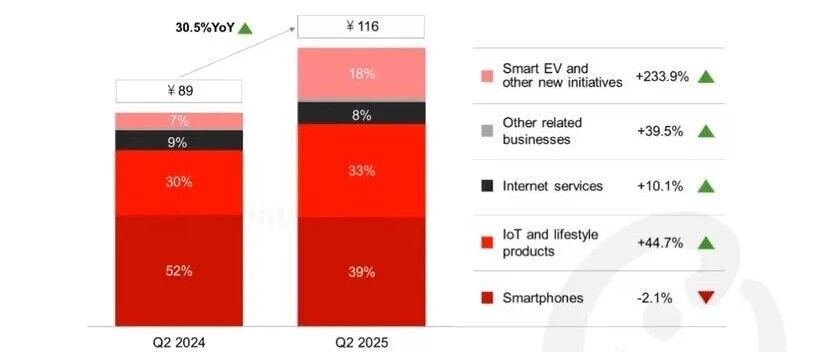
Core Insights - The article discusses the performance and market position of Xiaomi smartphones based on 10 research reports from Counterpoint Research, highlighting growth in various regions and segments [4]. Group 1: Global Smartphone Market Performance - In Q3 2025, global smartphone shipments increased by 4% year-on-year, with Samsung and Apple leading the market. Xiaomi held a 14% share, showing a 2% year-on-year growth, particularly strong in Southeast Asia, the Middle East, and Latin America [5]. - The high-end smartphone market (>$600) saw an 8% year-on-year growth in H1 2025, with Xiaomi's high-end smartphone sales increasing by 55% year-on-year, mainly driven by the Chinese market [9]. Group 2: Regional Market Insights - In Indonesia, Xiaomi maintained a 21% market share in Q2 2025, benefiting from offline channel expansion and a diverse product lineup, despite a 7% decline in overall smartphone shipments [11]. - In Vietnam, Xiaomi launched the 5G-enabled Redmi Note 14, contributing to the 50% market share of 5G smartphones in Q2 2025 [13]. - In Latin America, Xiaomi achieved double-digit year-on-year growth in Q2 2025, solidifying its position in markets like Chile and Colombia, despite challenges in Brazil [17]. Group 3: Xiaomi's Strategic Developments - Xiaomi's Q2 2025 smartphone revenue decreased by 2% year-on-year, with a revised annual shipment target of approximately 175 million units, reflecting a 5%-6% growth expectation, which is significantly higher than the industry average [35]. - The company reported a 30.5% year-on-year revenue growth in Q2 2025, with substantial growth in its automotive and consumer electronics segments, showcasing its successful diversification strategy [40]. - Xiaomi's market share in China reached 15.7% in Q2 2025, with the brand maintaining growth through competitive pricing and promotions, despite a 2% decline in overall smartphone shipments in the country [28].


青岛啤酒(600600):结构延续升级,成本红利兑现
Ping An Securities· 2025-10-28 03:40
Investment Rating - The investment rating for Qingdao Beer (600600.SH) is "Recommended" [1][4][11] Core Views - The report highlights stable revenue growth and the release of cost benefits, with a 1.4% year-on-year increase in revenue to 29.4 billion yuan for the first three quarters of 2025, and a 5.7% increase in net profit to 5.3 billion yuan [4][5] - The company continues to upgrade its product structure, with a focus on high-end products, achieving a 6.8% increase in sales of mid-to-high-end products in Q3 2025 [7] - The report anticipates a slight adjustment in net profit forecasts for 2025-2027, now projected at 4.63 billion yuan, 4.90 billion yuan, and 5.11 billion yuan respectively [7] Financial Performance Summary - For the first three quarters of 2025, Qingdao Beer achieved a revenue of 29.4 billion yuan, with a net profit of 5.3 billion yuan, reflecting a year-on-year growth of 1.4% and 5.7% respectively [4][5] - The company's gross margin improved to 43.6%, up 1.4 percentage points year-on-year, driven by a 2.7% decrease in operating costs [7] - The report projects revenue for 2024 at 32.14 billion yuan, with a slight decline of 5.3%, followed by a recovery in 2025 with an expected revenue of 32.58 billion yuan [6][9] Key Financial Ratios - The report indicates a projected net profit margin of 14.2% for 2025, with a return on equity (ROE) of 14.4% [6][9] - The price-to-earnings (P/E) ratio is expected to decrease from 21.1 in 2023 to 19.4 in 2025, indicating a more attractive valuation over time [6][9] - The company's asset-liability ratio is projected to decline from 41.9% in 2024 to 39.3% in 2025, reflecting improved financial stability [9]

锐财经丨工业企业利润加快恢复
Ren Min Ri Bao Hai Wai Ban· 2025-10-28 02:35
Core Insights - The profits of industrial enterprises above designated size increased by 3.2% year-on-year in the first three quarters, with a notable acceleration in September, where profits grew by 21.6% [1][2] Profit and Revenue Analysis - The profit growth rate for industrial enterprises above designated size has continued to rebound, with manufacturing profits increasing by 9.9% and the electricity, heat, gas, and water production and supply sector growing by 10.3% [2] - Revenue for these enterprises grew by 2.4% year-on-year in the first three quarters, with September showing a 2.7% increase, indicating a favorable condition for sustained profit recovery [3] Industrial Value Added - The industrial value added for enterprises above designated size increased by 6.2% year-on-year in the first three quarters, with manufacturing growing at 6.8% [4] - In September, the industrial value added grew by 6.5%, reflecting a significant acceleration compared to August [5] Sector Performance - Out of 41 major industrial categories, 37 experienced year-on-year growth, resulting in a growth coverage of 90.2% [5] - The equipment manufacturing sector played a crucial role, with a 9.7% increase in value added, contributing significantly to overall industrial growth [5] Advancements in Manufacturing - The manufacturing sector is advancing towards high-end, intelligent, and green production, with high-tech manufacturing value added increasing by 9.6% [6][7] - Notable growth in production of green products includes a 29.7% increase in new energy vehicles and a 72.4% increase in wind turbine production [7]
工业企业利润加快恢复
Ren Min Ri Bao Hai Wai Ban· 2025-10-28 00:24
Core Insights - The profits of industrial enterprises above designated size increased by 3.2% year-on-year in the first three quarters, with a notable acceleration in September, where profits grew by 21.6% [1][2] Group 1: Profit Growth - The profit growth rate for industrial enterprises above designated size has continued to rebound, with manufacturing profits increasing by 9.9% and profits in the electricity, heat, gas, and water production and supply sector rising by 10.3% [2] - In terms of enterprise size, large, medium, and small enterprises saw profit increases of 2.5%, 5.3%, and 2.7% respectively [2] - Private enterprises and foreign-invested enterprises reported profit growth of 5.1% and 4.9%, respectively, indicating a recovery across different types of enterprises [2] Group 2: Revenue Growth - Revenue for industrial enterprises above designated size grew by 2.4% year-on-year in the first three quarters, with September showing a growth of 2.7% [3] - The profit margin for these enterprises improved, with a profit margin of 5.26% in the first three quarters, increasing to 5.49% in September [3] Group 3: Industrial Value Added - The industrial value added for enterprises above designated size increased by 6.2% year-on-year in the first three quarters, with manufacturing growing by 6.8% [4][5] - A significant majority of industries saw growth, with 37 out of 41 major industrial categories reporting an increase in value added [5] Group 4: High-tech and Green Manufacturing - High-tech manufacturing value added grew by 9.6%, contributing 24.7% to the overall industrial growth [6] - The production of green products, such as new energy vehicles and lithium-ion batteries, saw substantial increases, with production growth rates of 29.7% and 46.9%, respectively [7]
工业企业利润加快恢复(锐财经)
Ren Min Ri Bao· 2025-10-27 22:55
Core Viewpoint - The profit of industrial enterprises above designated size in China has shown a significant recovery in the first three quarters of the year, with a year-on-year growth of 3.2%, accelerating by 2.3 percentage points compared to the first eight months. In September alone, profits surged by 21.6%, indicating a strong recovery trend [1][2]. Group 1: Profit and Revenue Analysis - In the first nine months, the profit growth of industrial enterprises above designated size reached 3.2%, marking the highest cumulative growth rate since August of the previous year. The manufacturing sector saw a profit increase of 9.9%, while the electricity, heat, gas, and water production and supply sector grew by 10.3%. Conversely, the mining sector experienced a decline of 29.3%, although the decline has narrowed by 1.3 percentage points [2]. - Revenue for industrial enterprises above designated size increased by 2.4% year-on-year in the first nine months, with September's revenue growth reaching 2.7%, up by 0.8 percentage points from August. This consistent revenue growth over two months has created favorable conditions for ongoing profit recovery [3]. Group 2: Industrial Value Added - The industrial value added for enterprises above designated size grew by 6.2% year-on-year in the first three quarters. The manufacturing sector's growth rate was 6.8%, surpassing the overall industrial growth by 0.6 percentage points. The mining and electricity sectors grew by 5.8% and 2%, respectively [4]. - Among 41 major industrial categories, 37 reported year-on-year growth in value added, resulting in a growth coverage of 90.2%. In terms of products, 385 out of 623 major industrial products saw an increase in output, achieving a growth coverage of 61.8% [5]. Group 3: Trends in Manufacturing - The high-tech manufacturing sector's value added increased by 9.6% year-on-year, contributing 24.7% to the overall growth of industrial enterprises above designated size. Key industries such as integrated circuit manufacturing and biopharmaceuticals saw significant growth rates of 22.4% and 11.8%, respectively [6]. - The digital product manufacturing sector also experienced a value added growth of 9.7%, exceeding the overall industrial growth by 3.5 percentage points. Industries like smart device manufacturing reported a 12.2% increase [7]. Group 4: Green Manufacturing Initiatives - The production of green products has seen substantial growth, with output for new energy vehicles, lithium-ion batteries for vehicles, and charging piles increasing by 29.7%, 46.9%, and 22.2%, respectively. Additionally, green energy equipment such as wind turbines and solar cells also reported significant output increases [7].
万通液压20251027
2025-10-27 15:22
Summary of the Conference Call for Wantong Hydraulic Industry and Company Overview - The conference call pertains to Wantong Hydraulic, a company specializing in hydraulic cylinders, particularly in the medium and high-pressure segments, with applications in automotive, energy extraction, construction machinery, and military equipment [2][4]. Key Points and Arguments - **Financial Performance**: In 2025, despite a significant reduction in government subsidies, the company's non-GAAP net profit grew by 36%, indicating robust profitability. The net profit growth was 26.13%, with total revenue increasing by 14% year-on-year [3][2]. - **Product Development**: Wantong Hydraulic is focusing on high-end, intelligent, and green product iterations in the hydraulic cylinder sector. The company has seen growth in its three main products: dump truck cylinders, machinery cylinders, and gas springs, with all three experiencing year-on-year revenue growth for the first time in four accounting years [2][8][9]. - **Market Expansion**: The company has successfully issued a targeted convertible bond of 150 million yuan, attracting strategic investors like Pangu Intelligent and SAIC Group, which will help expand into new sectors such as wind power and new energy vehicles [2][6]. - **Order Growth**: The company reported a 50% year-on-year increase in orders on hand, with optimistic expectations for the fourth quarter due to strong demand across various business segments [31]. Additional Important Insights - **Product Revenue Breakdown**: In Q3, the revenue share of the three main products was 25% for dump truck cylinders, 53% for machinery cylinders, and 18% for gas springs, consistent with mid-year reports [11]. - **Oil Gas Spring Growth**: The oil gas spring segment saw over 30% growth in Q3, primarily driven by overseas market demand, with its revenue share approaching 20% [13]. - **Military Equipment Orders**: The military equipment business is performing well, with a faster order confirmation rate than initially expected [14]. - **Future Plans**: The company aims to maintain an annual growth rate of no less than 30% and is focusing on potential products in robotics, wind power, and passenger vehicles to enhance profitability [7]. - **Technological Advancements**: Wantong Hydraulic has made significant progress in developing oil gas suspension systems, which are being applied in advanced projects, including the global first KN95 autonomous driving fleet [17][16]. - **Market Penetration**: The penetration rate of oil gas springs in the wide-body dump truck sector is currently around 30%, with lower penetration in other logistics vehicles due to reliance on aftermarket modifications [20]. Conclusion Wantong Hydraulic is positioned for growth with a strong financial foundation, innovative product development, and strategic partnerships. The company is optimistic about future market opportunities, particularly in new energy and advanced automotive applications.
登康口腔(001328):业绩持续稳健增长 线上投放阶段性收缩
Xin Lang Cai Jing· 2025-10-27 06:32
Core Insights - The company achieved steady growth in the first three quarters of 2025, with revenue reaching 1.228 billion, a year-on-year increase of 16.66%, and net profit attributable to shareholders at 136 million, up 15.21% year-on-year [1] - The third quarter saw revenue of 386 million, reflecting a year-on-year growth of 10.49%, while net profit was 51 million, up 11.43% year-on-year [1] - The company is focusing on high-quality development, leading to a strategic adjustment in online channel investments, particularly on platforms like Douyin [1] Financial Performance - Gross margin for Q3 2025 was 45.90%, down 8.02 percentage points year-on-year, while the sales expense ratio was 25.51%, a decrease of 8.00 percentage points year-on-year [1] - The company launched a new product, "Jiao Protein" toothpaste, which is expected to become a significant product alongside the "Medical Research Seven Days" toothpaste [1] - Operating cash flow for Q3 2025 was 111 million, showing a year-on-year growth of 4.29%, indicating stable cash flow management [2] Operational Efficiency - Inventory turnover days decreased to 90 days, down 20 days year-on-year, and accounts receivable turnover days were reduced to 7 days, down 1 day year-on-year [2] - The company is optimizing its expense structure and improving the precision and efficiency of its online advertising investments [3] Market Outlook - The company is expected to maintain its steady growth trajectory, with a focus on high-end medical research series products driven by technological innovation and high-margin new products [3] - The forecast for net profit attributable to shareholders for 2025-2027 has been slightly adjusted to 204 million, 243 million, and 294 million, respectively, reflecting the need for time to cultivate new product launches [3]
梦洁股份:智能升级激活增长新动能 前三季度净利同比增长近三成
Zhong Zheng Wang· 2025-10-27 02:12
Core Viewpoint - The report indicates that Mengjie Co., Ltd. has achieved significant growth in revenue and net profit for the first three quarters of 2025, driven by a high-end product strategy and innovative retail approaches [1][2]. Group 1: Financial Performance - The company reported a revenue of 1.099 billion yuan and a net profit of 26.5176 million yuan for the first three quarters, marking a year-on-year increase of 28.69% in net profit [1][2]. - The inventory decreased by 12.92% compared to the same period last year, and the net cash flow from operating activities increased by 276.33% year-on-year [2]. Group 2: High-End Product Strategy - Mengjie Co., Ltd. focuses on a "high-end bedding" strategy, leveraging its recognition as a "Chinese Time-Honored Brand" to enhance its brand positioning and cultural integration [2]. - The company launched several high-end new products in the third quarter, including the Mengjie Lunar 1.0 Deep Sleep Pillow, which received positive market feedback and sold out quickly [2]. - The establishment of the "Mengjie Plateau (Polar) Bedding Research Institute" has led to the development of a high-altitude bedding certification standard, with the company recently obtaining the first 3H high-altitude certification in the country [2]. Group 3: Retail and Channel Innovation - The company is enhancing its market competitiveness through smart retail upgrades and channel innovation, exploring new growth paths [3]. - Mengjie Co., Ltd. is implementing refined operations in smart retail, integrating online and offline data for comprehensive member lifecycle management [3]. - The company has partnered with Douyin to reconstruct offline traffic paths, launching initiatives such as live broadcasts and flagship store upgrades to drive traffic and improve conversion efficiency [3]. - The production side is advancing smart manufacturing and digital upgrades, focusing on high-end, intelligent, and green production processes [3].

明泰铝业20251026
2025-10-27 00:31
Summary of Ming Tai Aluminum Industry Conference Call Company Overview - **Company**: Ming Tai Aluminum Industry - **Industry**: Aluminum manufacturing and recycling Key Points and Arguments Financial Performance - In Q3 2025, Ming Tai Aluminum achieved sales of 396,900 tons and revenue of 8.9 billion yuan, a year-on-year increase of 6.39% [4] - Net profit for Q3 was 464 million yuan, up 36% year-on-year [4] - The pre-tax net profit per ton increased steadily: 1,300 yuan in Q1, 1,410 yuan in Q2, and 1,526 yuan in Q3 [4][3] - The company expects net profit in Dandong to reach around 1,600 yuan, with total profit projected at 3.6 billion yuan, reflecting a compound annual growth rate of approximately 13% [3][10] Strategic Developments - Ming Tai Aluminum is focusing on high-end, green, and intelligent manufacturing strategies, with significant progress in product structure transformation [2][4] - The company plans to increase production and sales to 2.3 million tons over the next 3-5 years, with high-value-added products expected to account for over 40% of total output [10] New Projects and Technological Advancements - The company launched a new project for producing 720,000 tons of aluminum-based new materials and completed the first phase of the Hongsheng Xitai Automotive Green Energy Transportation Industrial Park [2][6] - Introduction of laser-induced laser spectral separation technology significantly enhances recycling capabilities, allowing for the processing of various composite waste materials [8][9] Market Dynamics - Processing fees for various products, including PS boards and CTP boards, have increased due to capacity clearing in surrounding areas and rising overseas demand, with some products seeing fee increases of $50 to $100 [7] - The market for recycled aluminum is currently tighter than that for electrolytic aluminum, with prices for recycled aluminum products rising faster [21] Tax and Policy Impacts - Changes in tax policies regarding convertible bonds have led to a one-time increase in tax expenses of approximately 70 million yuan, but this is not expected to affect future sustainability [5][11] - The reduction in waste tax refunds has resulted in a decrease in other income by 90 million yuan [13] Dividend Policy - The company plans to increase its dividend payout ratio, implementing a ten-for-one dividend in 2025, which is double the amount from the previous year [5][10] Challenges and Risks - The company faces challenges in negotiating lower raw material prices due to market conditions, although overall market prices have decreased [19][20] - Delays in government subsidies, particularly for recycled aluminum, have impacted other income but are expected to be resolved in the fourth quarter [31][18] Management Changes - Recent management changes, including the appointment of a new general manager, are not expected to significantly alter the company's strategic direction, which remains focused on high-end development [30][24] Future Outlook - The company maintains a positive outlook for Q4 2025, anticipating continued strong demand and price increases for certain products [32] - Plans to enhance the proportion of recycled aluminum in overall production from 60% to 70% face challenges related to downstream consumption capacity [28][29] Additional Important Information - The company is actively communicating with the government to address delays in subsidy payments and expects these funds to be received gradually [16][18] - The overall industry landscape is improving, with processing fees continuing to rise due to increased demand [7]

爱玛科技20251024
2025-10-27 00:31
Summary of Aima Technology's Conference Call Company Overview - **Company**: Aima Technology - **Industry**: Electric Two-Wheelers and Three-Wheelers Key Financial Metrics - **Q3 Revenue**: 8.062 billion CNY, up 17.3% YoY [2][3] - **Net Profit**: 650 million CNY, up 17.64% YoY [2][3] - **Sales Volume**: 3.82 million units, up 11% YoY [2][3] - **Average Selling Price**: 2,110 CNY per unit, up 6.24% YoY [2][3] - **Net Profit per Unit**: 181.9 CNY, up 4% YoY [2][3] - **Year-to-Date Revenue**: 21.093 billion CNY, up 20.78% YoY [3] - **Year-to-Date Net Profit**: 1.907 billion CNY, up 22.78% YoY [3] - **Sales Volume Year-to-Date**: 10.08 million units, up 15.5% YoY [3] Business Segments Electric Two-Wheelers - Focus on compliant products and a layered product matrix [2][6] - Emphasis on lightweight design, aesthetics, and smart features to differentiate from competitors [6] - Sales volume of electric two-wheelers: 3.62 million units, up 11% YoY [3] Electric Three-Wheelers - Strategy includes enhancing capacity, product design, and retail service capabilities [7] - Sales volume of electric three-wheelers: 204,000 units, up 6.47% YoY [3] Market Trends and Strategies Domestic Market - New national standards (New National Standard) have shifted focus to compliant products [4][6] - Anticipated industry growth of 5-10% next year due to compliance and market demand [4][12] High-End Brand Development - Launch of high-end sub-brand "Zero Season" focusing on performance, quality, and user experience [8] - Upcoming product launch event on October 28 to reveal brand positioning and core product specifications [8] Overseas Market - Differentiated competition strategy in key markets like Vietnam and Indonesia, leveraging local channels for rapid expansion [9] - Focus on potential markets like Brazil and Africa, and high-end markets like Europe and North America [9] Challenges and Responses Regulatory Changes - Transition to new standards has created short-term sales pressure due to inventory clearance [10][12] - Compliance with new standards is expected to enhance product quality and user experience [12][13] Competitive Landscape - Increased industry concentration with smaller brands exiting the market due to regulatory pressures [14] - Aima Technology aims to capture market share from exiting brands by enhancing service and product offerings [14] Future Outlook - Plans to expand into commercial vehicle markets with tailored products for specific use cases [15][18] - Anticipated growth in electric three-wheeler demand, with production capacity expansion underway [21] - Continued focus on digital support and compliance to enhance operational efficiency and reduce costs [17] Conclusion - Aima Technology is well-positioned to leverage regulatory changes and market dynamics to enhance its competitive edge in the electric vehicle sector, with a strong focus on compliance, product differentiation, and market expansion strategies.
