
资产配置

Search documents
从个人投资者的角度看黄金:定位、回撤与仓位边界
雪球· 2026-01-12 13:01
以下文章来源于六亿居士 ,作者六亿居士 六亿居士 . 雪球2024年度十大影响力用户。每周发布指数估值表,坚持指数基金(ETF)低估定投,分享指数基金基础分析,让我们:买入有依,持有有底,卖出有 据。 ↑点击上面图片 加雪球核心交流群 ↑ 风险提示:本文所提到的观点仅代表个人的意见,所涉及标的不作推荐,据此买卖,风险自负。 作者:六亿居士 来源:雪球 最近一段时间,黄金再次站到了市场的聚光灯下。 国内首饰金价多款突破1400元/克,现货黄金折算人民币站稳1000元/克上方,纽约现货黄金价格强势冲破4600美元/盎司关口,持续刷新历史纪 录,黄金市场热度再攀高峰,成为全球关注的焦点。 每当类似场景出现 , 投资者的情绪往往会迅速分化 。 我们可能一边有 担心错过的焦虑 , 一边是对 高位风险的警惕 。 表面看是分歧 , 实则 指向同一个问题 : 黄金 , 到底该怎么配 ? 最近一段时间 , 后台留言中提及黄金的频次明显上升 。 这种在 " 想配 " 与 " 不敢配 " 之间反复摇摆的状态 , 正是当下不少投资者的真实写 照 。 从资产配置的角度看 , 黄金确实是一种重要的配置资产 , 但它的核心作用 , 并不是 ...


首席经济学家共议资产前景: 权益仍是主线,商品轮动深化
Di Yi Cai Jing· 2026-01-12 12:56
Group 1: Market Outlook - The core logic of asset allocation in China is shifting from "total game" to "structural evolution" over the next one to three years, with equity assets remaining the main focus for the medium to long term [1] - The bond market may present phase-specific allocation opportunities due to intertwined expectations of easing and risk aversion [1] Group 2: Institutional Reforms and Asset Revaluation - Continuous institutional reforms in the capital market over the past two years are changing the underlying logic of asset pricing in China, emphasizing investment returns over mere financing [2] - The establishment of a "lower limit" in market fluctuations is crucial for attracting long-term capital, as concerns over extreme drawdowns have eased [2] Group 3: Equity Assets - Equity assets are viewed positively, with technology remaining a key focus, although there is increasing divergence in rhythm and structure among economists [3] - The strategy of "dividend base and technology for elasticity" is recommended as the Chinese economy transitions [3] - Caution is advised regarding valuation and industry realization capabilities, as some segments within technology have become crowded [3] Group 4: Commodity Market - The commodity market is expected to experience both volatility and opportunities, with a shift from financial attributes to supply-demand logic [4] - Gold remains a safe-haven asset, while industrial metals and new energy products are gaining traction, indicating a transition in market dynamics [4] Group 5: Bond Market - The bond market is currently viewed with caution, but there are still potential opportunities, especially if monetary policy shifts unexpectedly [6] - Bonds are seen as a defensive and balancing tool within asset portfolios rather than a core offensive strategy [6] Group 6: Currency and Cross-Border Allocation - The stability and gradual appreciation potential of the RMB are enhancing the international attractiveness of Chinese assets [7] - A shift in resident asset allocation from a "721" model (real estate and fixed income) to a "442" structure (40% stable assets, 40% equity, 20% commodities) is anticipated [7] - Dynamic adjustment capabilities in asset allocation will be crucial in a volatile environment, with recommendations for quarterly rebalancing strategies [7]
硬核赛道如何投?大类资产如何配置?2026博时基金投资策略会干货分享
Zheng Quan Shi Bao Wang· 2026-01-12 12:55
公募基金行业正处深度转型期,高质量发展已成为行业共识。坚守初心本源,创造投资价值。张东表 示,博时基金将始终秉持"做投资价值发现者"的初心,坚持将投资者利益置于首位,以客户价值创造为 根基,以长期主义为行动准则。 1月9日下午,博时基金携手证券时报主办的2026博时基金投资策略会圆满落幕。 本次会议以"丙午奋蹄投资路,红启东方十五五"为主题,汇聚基金、券商、银行、保险、信托等各类金 融机构代表及新闻媒体等200余人,共话资本市场新机遇。 会上,多位国内资深券商首席分析师及博时基金知名基金经理齐聚一堂,围绕2026年全球和国内宏观经 济走势、权益市场布局、债券投资策略展开深度展望,同时聚焦科创行业投资机会、大类资产配 置、"固收+"产品发展等行业热点议题展开专业剖析,为投资者清晰梳理丙午马年的投资主线,前瞻未 来市场的机遇与挑战。本次策略会上,博时基金还发布了《博时基金2026年宏观策略报告》,为市场提 供专业的投资参考与决策支持。 变局蕴新机,实干开新篇 步入2026年,面对更加复杂的全球环境,博时基金党委书记、董事长张东在致辞中表示,中国经济的相 对稳定与持续开放,将进一步提升人民币资产在全球配置中的吸引力 ...
“资产提升战”打响!工、农、中、建等齐下场,有人薅到上万元“羊毛”
Zhong Guo Ji Jin Bao· 2026-01-12 12:29
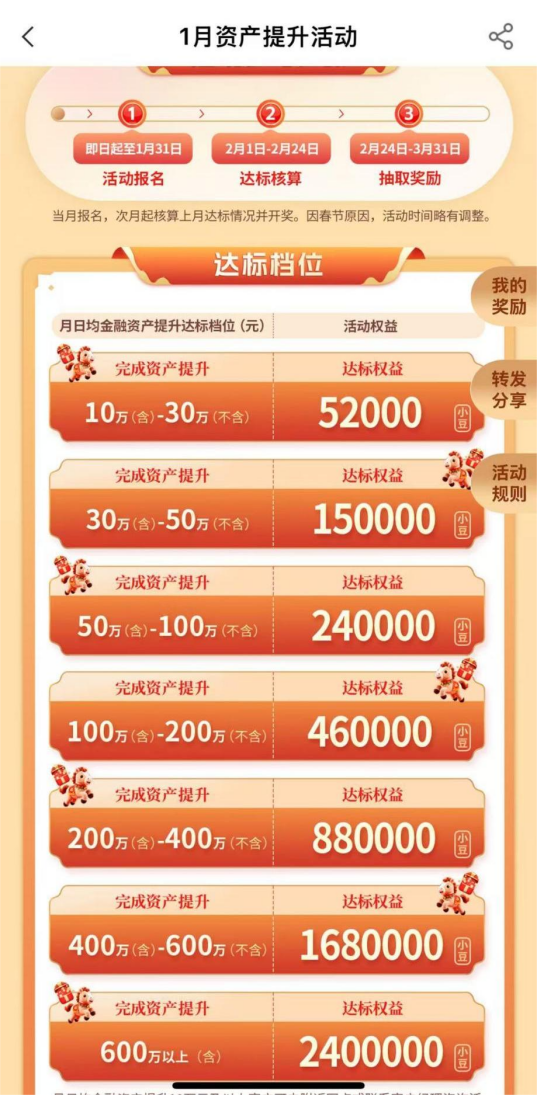
中国银行表示,1月5日至1月31日,月日均金融资产较上月提升1万元及以上最高可抽取600万尊享积分;月日均金融资产晋级为理财、财富、私行、企业 家私行等级客户,最高可获赠550元微信立减金权益。 新年伊始,银行业掀起新一轮零售领域的"资产提升战",部分银行的最高奖励超过3000元。同时,微信、小红书等平台也出现了不少"薅羊毛"相关帖子, 甚至有网友透露去年薅到的"羊毛"价值2万多元。 业内人士认为,零售AUM已成为衡量银行零售业务竞争力与未来盈利潜力的关键指标。用户"薅完一家换一家"的现象频发,说明短期激励难以转化为长 期黏性。为了有效提升零售AUM,银行需摒弃短期活动思维,多举措构建以专业服务和长期信任为核心的综合能力。 部分奖励超3000元 银行"资产提升战"打响 开年以来,多家银行密集推出新一期"资产提升活动",用户参与活动达标后可获得相应的积分、微信立减金等权益,涉及国有大行、城商行等。 国有大行中,工行、农行、中行、建行等目前均发布了"资产提升活动"介绍,其中农业银行表示,即日起至1月31日,月日均金融资产(包括:存款、理 财、基金、保险、国债、存金通)提升至相应档位的客户,最高可获得240万小豆的 ...
历史性时刻!金价再创历史新高:现货黄金首次突破4600美元!普通人还能上车吗?
Sou Hu Cai Jing· 2026-01-12 12:17
Group 1 - The core point of the article is that the global financial market witnessed a historic moment on January 12, 2026, with the London spot gold price surpassing $4600 per ounce, marking a significant milestone in a seven-year bull market for gold [1][3] - The surge in gold prices is attributed to two main drivers: escalating global geopolitical conflicts and a crisis of confidence in the Federal Reserve [5][6][7] - The geopolitical tensions include various conflicts, such as the U.S. operation in Venezuela and ongoing issues in Iran, which have led to increased demand for gold as a safe-haven asset [6][7] Group 2 - The Federal Reserve's credibility is under scrutiny due to a criminal investigation involving its chairman and the potential for a more dovish new chairman, which could lead to lower interest rates and a depreciation of the dollar [7][11] - The article highlights that the price of gold has risen significantly, with a 70% increase in 2025 and a rapid rise from around $4300 to $4600 within just 12 days in 2026 [3][11] - Future predictions for gold prices are optimistic, with institutions like CITIC Securities forecasting prices could exceed $5100 by the end of 2026, while JPMorgan is even more aggressive, predicting a rise to $6000 [11][12]
70万亿定期存款年内到期,留在银行还是进入股市?
Di Yi Cai Jing· 2026-01-12 12:12
存款搬家"叙事"迎来验证期 开年资本市场火热,加上"天量"存款将在今年到期,市场对"存款搬家"的讨论热度更加激烈。 多家机构抛出对存款到期规模的最新测算数据,结果不尽相同。综合来看,2026年面临到期的居民存款 规模可能超过160万亿元甚至170万亿元,其中1年期以上定期存款到期量接近70万亿元,比2025年高出 约10万亿元。今年一季度是这些定存到期的重要时点;机构层面,国有大行是主力。 "67万亿元中长期定存到期存在重新配置需求,但从历史经验看,90%以上的存款仍然留存于银行系 统。从分流的方向来看,私募基金和保险对于风险偏好较高、流动性需求较低的高净值投资者存在吸引 力,而普遍的存款大规模入市迹象尚不明显。"中金公司银行业分析师林英奇认为,相比67万亿元"天 量"存款到期的"叙事",6万亿元"超额储蓄"的去向可能更为关键。 今年到底有多少存款到期? 去年以来,不少机构对存款到期规模进行了相关测算,但因为统计口径差异等原因,各家测算结果存在 差异。 综合来看,2026年到期的居民存款是百万亿级的,其中1年期以上的定存到期规模预计在50万亿元至70 万亿元,2年期以上定存到期规模则在30万亿元上下。(详见报 ...
经济学家称人民币大概率稳步升值
Sou Hu Cai Jing· 2026-01-12 10:55
从货币属性来看,郑后成认为,在美联储持续降息、美元走弱背景下,黄金与白银均不具备系统性下跌 基础,仍是资产配置中重要的稳定器。 来源:@究竟视频微博 #洪灏称黄金已不再只是避险资产# 【#经济学家称人民币大概率稳步升值#】 黄金与贵金属:从避险资产到"估值锚" 在对贵金属的判断上,洪灏的立场较为乐观。他认为,在全球信用体系重塑背景下,黄金已不再只是传 统意义上的避险资产,而正逐步成为新一轮资产定价体系中的"核心锚"。从长期技术形态与全球流动性 指标来看,黄金仍处于大周期上行阶段,其价格中枢有望显著抬升。 在此基础上,他进一步强调白银及部分有色金属的弹性机会。由于白银在历史尺度上与全球流动性高度 相关,且金银比、金铜比等指标仍处于偏低区间,贵金属内部的结构性行情或尚未充分展开。 人民币资产:汇率与股市的共振逻辑 在人民币资产方面,多位首席经济学家形成了较为一致的判断。郑后成认为,在美联储降息周期与中国 价格水平回升的共同作用下,2026年人民币汇率大概率呈现稳步升值态势,升值节奏可能延续至2027 年。 申万宏源首席经济学家赵伟进一步指出,人民币已于2025年进入升值通道,从2026年起,未来数年内可 能形成更 ...
4只产品业绩超23%!鹏华养老FOF凭多元配置能力脱颖而出
Cai Fu Zai Xian· 2026-01-12 10:17
鹏华养老FOF出色表现背后的源泉是什么?根植于其清晰、坚定且经受住检验的资产配置思想。鹏华 FOF团队以 "中国特色资产配置框架" 为指导,在2025年执行了鲜明的多元资产配置战术。鹏华养老目 标日期2040五年持有期混合为例,其超配权益资产与黄金,国内权益部分聚焦"新质生产力"与战略资 源;低配海外资产与固定收益及高股息板块。以鹏华长治稳健养老目标一年持有期混合为例:同样维持 对权益资产的超配,并在结构上增配科创板、创业板等成长主线,以及黄金、有色等周期资源类资产, 同时低配纯债。 这一配置组合基于一套严密的宏观逻辑。鹏华基金首席资产配置官、资产配置与基金投资部总经理郑科 及其团队的核心判断,构成了上述策略的基石:其一,基于长周期视角判断,新质生产力有望成为经济 增长的主要驱动力,延续超配A股的思路,尤其是相关成长领域;其二,增配黄金是其多元化配置能力 的具体体现,其与股市的低相关性,有效平滑了组合波动;其三,对海外资产保持谨慎,同时,在利率 下行环境下,低配传统固收,并将仓位集中到更具弹性的资产上。 因此,在FOF市场回归资产配置本源的关键转折点上,鹏华养老FOF的领先,远不止于精准把握了2025 年的市 ...
黄金年涨64%破46年纪录,2026狂欢延续,致命风险暗藏
Sou Hu Cai Jing· 2026-01-12 10:15
Core Insights - In 2025, gold experienced a remarkable increase of 64%, marking the largest annual gain in 46 years, with multiple historical highs reached throughout the year [3][4] - The surge in gold prices is part of a broader trend where precious metals, including silver and platinum, also saw significant increases, with silver futures rising approximately 132% [3] - The rise in gold prices is attributed to a combination of factors, including a decline in the US dollar index by 5.2%, and a global trend towards "de-dollarization" as countries seek more reliable assets [7][8] Market Dynamics - Central banks globally have been accumulating gold, with purchases reaching about 980 tons in 2025, accounting for 26.8% of annual production, tightening supply-demand dynamics [12] - The Federal Reserve's initiation of a rate-cutting cycle in 2025 has reduced the opportunity cost of holding gold, leading to increased investment in the asset as other options become less attractive [12] - Gold is transitioning from an optional asset to a necessary component for balancing risk in investment portfolios, reflecting a shift in market perception [12] Investment Strategy - Investors are advised to approach gold investments cautiously, as the significant price increase in 2025 may have already priced in expectations related to a weak dollar, rate cuts, and de-dollarization [15] - A recommended strategy for ordinary investors is to use dollar-cost averaging when purchasing gold ETFs to mitigate price volatility, rather than making large, one-time investments [17] - It is suggested that gold should constitute 5%-15% of household liquid assets, serving as a stabilizing element against risks in equity and bond markets [17]
黄金站上4600美元 追?等?还是撤?
Sou Hu Cai Jing· 2026-01-12 09:21
Core Viewpoint - The recent surge in gold prices, surpassing $4600 per ounce, is driven by multiple factors including geopolitical tensions, a crisis of trust in the Federal Reserve, and a weakening dollar, leading to increased global risk aversion [2][3][4] Group 1: Factors Driving Gold Prices - The U.S. Department of Justice's criminal investigation into Federal Reserve Chairman Jerome Powell has reignited concerns over political interference in the Fed's independence, contributing to a decline in the dollar index and U.S. stock futures, which in turn supports higher gold and silver prices [3] - Ongoing U.S. military interventions, particularly in Venezuela, have heightened geopolitical risks, further bolstering market demand for safe-haven assets like gold [3][4] - The accumulation of fiscal risks in the U.S., with national debt nearing $40 trillion and a fiscal deficit rate of 6.8%, has diminished the attractiveness of dollar-denominated assets, making gold a preferred choice for both institutions and retail investors [3] Group 2: Central Bank Gold Purchases - Central banks globally are increasingly viewing gold as a strategic asset, with expectations of net purchases exceeding 1000 tons by 2025, reflecting a shift towards "de-dollarization" [4] - The strategic accumulation of gold by central banks is expected to continue, with UBS predicting purchases to rise to 950 tons in 2026, indicating a long-term trend in gold's role as a stabilizing asset on national balance sheets [4] Group 3: Investor Sentiment and Strategies - Ordinary investors are experiencing a divide in sentiment regarding gold prices, with a surge in gold account openings alongside reports of individuals facing losses from recent price fluctuations [6][7] - Investment strategies vary, with recommendations for those looking to "chase" gold to use idle funds and adopt a phased buying approach, while those opting to "wait" should set specific price triggers for entry [7] - For those considering "withdrawal," it is advised to lock in profits or exit if gold is misperceived as a short-term speculative tool [7] Group 4: Long-term Investment Perspective - The current gold price level serves as a reflection of individual attitudes towards risk and uncertainty, emphasizing the importance of a clear investment framework rather than merely speculating on price peaks [8] - Investors are encouraged to focus on building resilient portfolios that can withstand market volatility, rather than seeking quick gains, highlighting the significance of long-term holding strategies [8]
