量化投资

Search documents
欧洲稀土王炸背后:99%股民忽略的关键数据
Sou Hu Cai Jing· 2025-11-13 21:49
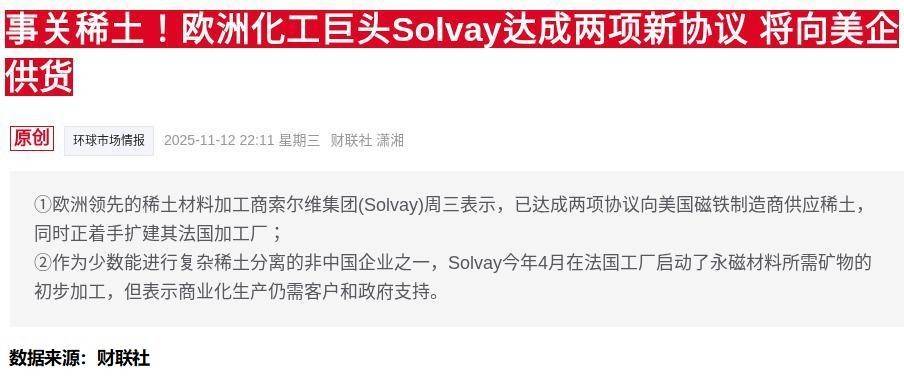
一、稀土巨头的阳谋与散户的困局 欧洲稀土巨头索尔维最近干了件大事。他们不仅跟美国两家磁铁制造商签了供应协议,还要扩建法国工厂。这事儿放在全球供应链重构的背景下,简直就是 一记重拳。但有意思的是,当我打开股吧论坛,发现大多数人还在争论明天大盘是涨是跌。 菲利普·凯伦这个老狐狸说得直白:"美国客户已经准备好签合同了。"言下之意就是钱到位了。可咱们的散户朋友呢?还在为要不要补仓纠结得睡不着觉。 这让我想起十八年前刚接触量化系统时的自己——盯着分时图上的每一根波动线,活像个赌场里数牌的菜鸟。 二、牛市幻觉与真实世界的鸿沟 都说牛市来了猪都能飞,但现实是多数人连猪都不如。为什么?因为大多数人根本分不清什么是"看得见的机会",什么是"抓得住的机会"。就像现在稀土概 念炒得火热,但真正能吃到肉的,早在一个月前就通过机构资金流向锁定了目标。 我见过太多人在牛市中赚过又吐回去的故事。上周还有个老友炫耀他抓到了涨停板,结果这周就哭诉"刚解套又套牢"。问题出在哪?他们总把K线图当圣 经,却不知道机构早就在量化数据里留下了蛛丝马迹。 | ∞ 机构库存 高度活跃: 增加 | LULL LLL LLL LLL P | | | " | | ...

基本面选股组合月报:AEG估值潜力组合今年实现6.46%超额收益-20251113
Minsheng Securities· 2025-11-13 10:53
Quantitative Models and Construction Methods Models and Construction Methods 1. Model Name: Competitive Advantage Portfolio - **Model Construction Idea**: This model incorporates the competitive environment and strategic factors of enterprises into the stock selection logic, providing a value quantification perspective different from traditional factor investing[12] - **Model Construction Process**: The framework identifies four types of industries: "Barrier Shield", "Intense Competition", "Steady Progress", and "Seeking Breakthrough". The strategy focuses on identifying "dominant" companies in the "Barrier Shield" industries and "cooperative win-win" companies in industries without clear leaders. For non-"Barrier Shield" industries, the strategy targets "efficient operation" companies that perform well even in competitive environments[12][13] - **Model Evaluation**: This model has been effective in identifying companies with significant management competitive advantages and maintaining market leadership positions[12] 2. Model Name: Margin of Safety Portfolio - **Model Construction Idea**: The core of competitive advantage lies in creating entry barriers for enterprises, ensuring their unique position and sustainable profitability in the market[17] - **Model Construction Process**: The model calculates the intrinsic value of a company based on its profitability value, selecting the top 50 stocks with the highest margin of safety from a pool of stocks with comprehensive competitive advantages. The portfolio is weighted by dividend yield to maximize the margin of safety[17][19] - **Model Evaluation**: This model effectively identifies companies with significant intrinsic value gaps, providing a reliable reflection of the actual value of enterprises[17] 3. Model Name: Dividend Low Volatility Adjusted Portfolio - **Model Construction Idea**: The model aims to avoid the "high dividend trap" by considering the sustainability of company earnings and long-term value, rather than solely chasing high dividend yields[23] - **Model Construction Process**: The model predicts dividend yields and excludes stocks with extreme price performance or abnormal debt ratios, optimizing the dividend strategy[23] - **Model Evaluation**: This model effectively balances dividend yield and company stability, avoiding the pitfalls of high dividend traps[23] 4. Model Name: AEG Valuation Potential Portfolio - **Model Construction Idea**: The model focuses on the abnormal earnings growth (AEG) to determine the value of investments based on expected total returns, including dividend reinvestment[27] - **Model Construction Process**: The model selects the top 100 stocks using the AEG_EP factor, then narrows down to the top 50 stocks with high dividend reinvestment/P ratios[31] - **Model Evaluation**: This model targets companies with growth potential not yet fully recognized by the market, providing significant investment opportunities[27][31] 5. Model Name: Cash Cow Portfolio - **Model Construction Idea**: The model introduces free cash flow (FCF) and cash flow return on investment (CFOR) as key analysis dimensions to evaluate the profitability and cash generation efficiency of enterprises[35] - **Model Construction Process**: The CFOR system dissects cash flow return rates, revealing how companies convert operating cash flows into net profits, and evaluates the stability of free cash profit ratios and operating asset return rates[35][36] - **Model Evaluation**: This model provides a comprehensive assessment of a company's operational performance and financial stability[35] 6. Model Name: Distress Reversal Portfolio - **Model Construction Idea**: The model captures short-term valuation fluctuations to gain from valuation improvements, complementing the long-term effectiveness of prosperity investment[42] - **Model Construction Process**: The model uses inventory cycles to depict distress reversals, considering accelerated recovery and undervaluation, and constructs a top 50 portfolio based on valuation improvements[42] - **Model Evaluation**: This model effectively captures valuation-driven returns, providing continuous gains even when prosperity investment strategies fail[42] Model Backtest Results Competitive Advantage Portfolio - **Annualized Return**: 20.60%[16] - **Sharpe Ratio**: 0.97[16] - **IR**: 0.12[16] - **Max Drawdown**: -19.32%[16] - **Calmar Ratio**: 1.07[16] Margin of Safety Portfolio - **Annualized Return**: 23.45%[22] - **Sharpe Ratio**: 1.17[22] - **IR**: 0.16[22] - **Max Drawdown**: -16.89%[22] - **Calmar Ratio**: 1.39[22] Dividend Low Volatility Adjusted Portfolio - **Annualized Return**: 17.23%[24] - **Sharpe Ratio**: 1.01[24] - **IR**: 0.16[24] - **Max Drawdown**: -21.61%[24] - **Calmar Ratio**: 0.80[24] AEG Valuation Potential Portfolio - **Annualized Return**: 25.13%[33] - **Sharpe Ratio**: 1.14[33] - **IR**: 0.15[33] - **Max Drawdown**: -24.02%[33] - **Calmar Ratio**: 1.05[33] Cash Cow Portfolio - **Annualized Return**: 14.11%[40] - **Sharpe Ratio**: 0.71[40] - **IR**: 0.10[40] - **Max Drawdown**: -19.80%[40] - **Calmar Ratio**: 0.71[40] Distress Reversal Portfolio - **Annualized Return**: 25.02%[44] - **Sharpe Ratio**: 1.01[44] - **IR**: 0.15[44] - **Max Drawdown**: -33.73%[44] - **Calmar Ratio**: 0.74[44]





量化看市场系列之二:市场运行状态与位置监控的十大指标
Huachuang Securities· 2025-11-13 06:44
Quantitative Models and Construction Methods 1. Model Name: A-share Market Cap/GDP Ratio (Buffett Indicator) - **Model Construction Idea**: The ratio of the total market capitalization of the stock market to GDP is used to measure the alignment between market valuation and the economic fundamentals. A lower ratio indicates the market is undervalued relative to the economy, suggesting potential room for a bull market, while a higher ratio signals potential market bubbles[16][17]. - **Model Construction Process**: - The formula is: $ \text{Buffett Indicator} = \frac{\text{Total Market Cap of A-share}}{\text{GDP}} $ - Interpretation: - Below 60%: Severely undervalued, often seen during major bear markets or periods of extreme economic pessimism (e.g., 2005, 2008, 2013-2014, 2018, and October 2022)[16] - Above 100%: Significantly overvalued, indicating potential market bubbles (e.g., 150% during the 2007 bull market peak, 120% during the 2015 bull market peak)[17] - **Model Evaluation**: This indicator is a useful tool for long-term asset allocation and strategic market timing. However, it should not be used as the sole decision-making tool and is not suitable for short-term trading[20]. 2. Model Name: Ratio of Household Deposits to Total Market Cap - **Model Construction Idea**: This ratio reflects the relative abundance of "off-market funds" compared to "on-market assets." It is conceptualized as the "water reservoir" (household deposits) versus the "irrigated farmland" (stock market capitalization)[21]. - **Model Construction Process**: - The formula is: $ \text{Ratio} = \frac{\text{Household Deposits}}{\text{Total Market Cap of A-share}} $ - Interpretation: - A higher ratio indicates more off-market funds relative to the stock market, suggesting potential for market inflows - A lower ratio indicates a higher proportion of funds already invested in the market - **Model Evaluation**: Similar to the Buffett Indicator, this ratio provides a general indication of market conditions but cannot pinpoint exact turning points. It is also slightly overestimated as it does not account for Chinese investments in overseas markets like Hong Kong and the US[24]. 3. Model Name: Financing Balance/Total A-share Free-float Market Cap Ratio (Leverage Activity Indicator) - **Model Construction Idea**: This ratio measures the activity level of leveraged funds in the A-share market and serves as a barometer for market risk appetite. It evaluates the proportion of the market driven by borrowed funds[25]. - **Model Construction Process**: - The formula is: $ \text{Leverage Activity Ratio} = \frac{\text{Financing Balance}}{\text{Total A-share Free-float Market Cap}} $ - Interpretation: - A higher ratio indicates high investor sentiment and optimism, with more willingness to leverage - A lower ratio indicates lower investor confidence - **Model Evaluation**: While this indicator is useful for gauging market trends, it should be used cautiously as leverage can amplify both market gains and losses. It is essential to remain aware of the potential risks associated with high leverage[28]. 4. Model Name: Stock-Bond Investment Cost-Effectiveness (Equity Risk Premium) - **Model Construction Idea**: This model compares the expected returns of stocks and bonds to determine which asset class offers better value. It measures the equity risk premium, which is the additional return investors expect for taking on the higher risk of stocks[29]. - **Model Construction Process**: - The formula is: $ \text{Equity Risk Premium} = \text{Expected Stock Market Return} - \text{Bond Yield} $ - Interpretation: - Equity risk premium > 4%: Stocks are undervalued and have high cost-effectiveness - Equity risk premium between 2%-4%: Stocks are slightly more attractive, suggesting a balanced allocation - Equity risk premium < 2%: Bonds become more attractive due to their defensive value - **Model Evaluation**: This indicator is a reliable measure of relative attractiveness between stocks and bonds. However, it should be used in conjunction with other macroeconomic indicators for a comprehensive analysis[32]. 5. Model Name: Market Overall Valuation - **Model Construction Idea**: This indicator evaluates the overall valuation level of the market. When the valuation reaches historically high levels, it signals that asset prices are expensive, and market sentiment is overly optimistic, potentially forming a market top[33]. - **Model Construction Process**: - The valuation is calculated based on historical data and compared to previous market peaks - Historical reference points include 2015 (valuation of 23.11) and 2018 (valuation of 19.12) - **Model Evaluation**: While this indicator is useful for identifying potential market tops, it should be used alongside macroeconomic factors. High valuations do not always indicate an imminent market top, as markets can remain overvalued for extended periods[36]. 6. Model Name: Low-Priced Stock Ratio - **Model Construction Idea**: This indicator analyzes the proportion of low-priced stocks in the market, which tends to increase during the late stages of a bull market due to speculative behavior. It serves as an auxiliary indicator for market trend analysis[37]. - **Model Construction Process**: - The ratio is calculated as the proportion of low-priced stocks in the market - Historical trends are analyzed to identify correlations between low-priced stock ratios and market trends - **Model Evaluation**: This indicator is not an absolute signal but serves as a supplementary tool for market analysis. It is particularly useful for identifying speculative bubbles in the market[40]. 7. Model Name: Shareholder Reduction - **Model Construction Idea**: This indicator tracks the behavior of corporate insiders (e.g., shareholders) who are considered to have the best understanding of a company's intrinsic value. A significant increase in shareholder reduction may indicate overvaluation[41]. - **Model Construction Process**: - Monthly frequency data is used to calculate: $ \text{Net Reduction Events} = \frac{\text{Reduction Events} - \text{Increase Events}}{\text{Total Number of Stocks}} $ - **Model Evaluation**: This indicator is more effective in identifying market bottoms when shareholder increases outnumber reductions. It is less reliable for identifying market tops but can still provide valuable insights when combined with other indicators[44]. 8. Model Name: Small Transaction Volume - **Model Construction Idea**: This indicator reflects market sentiment and changes in participant structure. It is based on the logic of the transition between "retail investors entering" and "smart money exiting"[45]. - **Model Construction Process**: - The indicator is calculated as follows: 1. Calculate the ratio of small order net active buy volume to total trading volume for each stock on a weekly basis 2. Select the top 10% of stocks with the highest retail participation 3. Compute the average of the indicator for these stocks and standardize it using a 150-week rolling z-score - **Model Evaluation**: This indicator is a useful supplementary signal for market sentiment. However, it should be used in conjunction with other indicators, as small transaction volume alone may not provide a complete picture of market conditions[48]. 9. Model Name: CSI 300 Turnover Ratio - **Model Construction Idea**: This indicator measures the proportion of CSI 300 turnover relative to the total A-share market turnover. It is used to assess changes in market capital flow and risk appetite, providing insights into whether the market is driven by value or speculation[49]. - **Model Construction Process**: - The formula is: $ \text{CSI 300 Turnover Ratio} = \frac{\text{CSI 300 Turnover}}{\text{Total A-share Turnover}} $ - A 5-day moving average is used for stability - **Model Evaluation**: This indicator is effective in identifying market tops, especially when the ratio exceeds 45%. Currently, the ratio is at 26%, indicating a healthy market condition[53]. 10. Model Name: Proportion of Equity Fund Issuance - **Model Construction Idea**: This classic market sentiment indicator examines the relationship between equity fund issuance and market performance. Extreme values and trends in this ratio are considered warning signs of market overheating[54]. - **Model Construction Process**: - The formula is: $ \text{Proportion of Equity Fund Issuance} = \frac{\text{Monthly Equity Fund Issuance}}{\text{Total A-share Free-float Market Cap}} $ - **Model Evaluation**: The peak values of this indicator have a strong correlation with market trends. Currently, the proportion is relatively low, indicating a healthy market condition[57]. --- Model Backtesting Results 1. A-share Market Cap/GDP Ratio (Buffett Indicator) - Current value: 88%[17] 2. Ratio of Household Deposits to Total Market Cap - Current value: 47.35%[24] 3. Financing Balance/Total A-share Free-float Market Cap Ratio - Current value: 2.5%[28] 4. Stock-Bond Investment Cost-Effectiveness (Equity Risk Premium) - Current value: 3.96%[32] 5. Market Overall Valuation - Current value: 17.33[36] 6. Market Low-Priced Stock Ratio - Current value:
百亿量化私募再增10家!幻方年内业绩再夺亚军!超量子、翰荣、无量位列前10
私募排排网· 2025-11-13 04:15
Core Viewpoint - The A-share market has shown a trend of steady upward movement in October, with accelerated sector rotation and a balanced performance between large and small caps, leading to a notable recovery in quantitative long products, with 10 new billion-yuan quantitative private equity firms added in a single month [2] Group 1: New Billion-Yuan Quantitative Private Equity Firms - Six new quantitative private equity firms have entered the billion-yuan club, including Niuda Investment, Square and Investment, Super Quantum Fund, Shanghai Xiaoyong Private Equity, Dadao Investment, and Xiyue Investment [2] - The total number of billion-yuan quantitative private equity firms has reached 55 as of the end of October 2025, with a net increase of 10 firms compared to the end of September [2] Group 2: Performance and Strategy of Quantitative Private Equity - The new billion-yuan private equity firms primarily consist of quantitative managers who attract talent and invest in new technologies and hardware to maintain effective strategies and sustained performance [5] - The average return of the 37 billion-yuan quantitative private equity firms with at least three qualifying products has reached ***% this year [6] - Notable firms with high returns include Ningbo Huansheng Quantitative, Stable Investment, Chengqi Asset, Evolutionary Capital, and Tianyan Capital [6] Group 3: Geographical Distribution and Employee Count - Shanghai has the highest number of billion-yuan quantitative private equity firms, totaling 28, accounting for over 50% of the total, followed by Beijing with 11 firms [6] - Among these firms, 13 have more than 100 employees, with two firms, including Jiankun Investment, having over 150 employees [6] Group 4: Notable Firms and Their Achievements - Ningbo Huansheng Quantitative ranks second in returns for the year, maintaining its position from the previous month, with an average return of ***% across 11 products [10] - Super Quantum Fund, established in June 2015, has the highest returns among the new billion-yuan firms, with an average return of ***% across three products [10] - Cloudrise Quantitative leads the 50-100 billion category with a return of ***%, focusing on technology-driven and data-driven investment strategies [13] Group 5: Performance in Smaller Private Equity Categories - In the 20-50 billion category, Hanrong Investment and Xiangmu Asset achieved the top two positions, with significant performance increases noted [14] - In the 10-20 billion category, Longyin Tiger Roar, Wuliang Capital, and Yibei Investment ranked first, second, and third respectively [18] - In the 0-5 billion category, Jingying Zhito achieved a notable return of ***%, leading the segment [26][29]

量化多头超额收益显著修复!蒙玺、幻方、量创今年业绩位列前3
私募排排网· 2025-11-12 07:00
Core Insights - The A-share market has entered a volatile rotation phase since October, with significant recovery in the returns of quantitative products [2] - Among the 825 quantitative long products with performance data, the average return for the year is 41.02%, with an excess return of 14.36% [3] Summary by Category Performance of Strategies - Quantitative long products have the highest average return in October among all stock strategy products, reaching 0.93% with an average excess return of 1.5% [2] - The performance of various strategies is as follows: - Quantitative long: 825 products, average return 41.02%, monthly return 0.93% [3] - Subjective long: 2156 products, average return 36.11%, monthly return -1.35% [3] - Macro strategy: 201 products, average return 27.17%, monthly return 0.96% [3] - Composite strategy: 409 products, average return 25.66%, monthly return 1.11% [3] - Other derivative strategies: 15 products, average return 25.63%, monthly return 4.45% [3] Top Performing Products - In the quantitative long category, the top products by excess return include: - CSI 1000 index enhancement: 158 products, average return 45.51%, excess return 15.48% [4] - Quantitative stock selection: 329 products, average return 39.25%, excess return 15.56% [4] - CSI 500 index enhancement: 201 products, average return 42.07%, excess return 10.96% [4] - CSI 300 index enhancement: 38 products, average return 25.62%, excess return 6.52% [4] - Other index enhancements: average return 43.55%, excess return 18.52% [4] Notable Fund Managers - The top products in the CSI 1000 index enhancement category are managed by notable fund managers from large private equity firms, with the highest returns coming from companies like Jintong Investment and Luxiu Investment [5][9] - In the quantitative stock selection category, the top products are managed by firms such as Longqi Technology and Jiuming Investment [10][12] - The CSI 500 index enhancement products are led by managers from Guobiao Asset and Zhaoxin Private Fund [13][16] - The CSI 300 index enhancement products are managed by firms like Hainan Pengpai Private Fund and Ningbo Huansquare Quantitative [17][20] - Other index enhancement products are managed by firms such as Liangchuang Investment and Yangshi Asset [21][23]

国信证券2026年度策略会金融工程分论坛|邀请函
量化藏经阁· 2025-11-12 00:08
Core Viewpoint - The article discusses the upcoming Guosen Securities 2026 Investment Strategy Conference, highlighting the focus on financial engineering and risk management strategies in the context of new economic cycles and paradigms [1][2]. Group 1: Conference Details - The conference will take place from November 20 to November 21, 2025, at the Shangri-La Hotel in Futian, Shenzhen, China [1]. - The event will feature various sessions, including discussions on multi-strategy enhanced portfolios and comprehensive risk models [2]. Group 2: Key Presentations - Zhang Yu will present on "Multi-strategy Enhanced Portfolios from an Enlightenment Perspective" [2]. - Zhang Xinwei will discuss "Comprehensive Risk Model Strategies" [2]. - Hu Zhichao will introduce a unified improvement framework for selection gene factors from a latent risk perspective [2]. Group 3: Panel Discussion - A roundtable forum titled "Seeking Insights for 2026" will be held, featuring prominent figures from various fund management companies [3]. - Participants include executives from Huaxia Fund, Haitong Fund, and Southern Fund, among others, discussing the role and opportunities of ETFs in asset allocation [3][4]. Group 4: Expert Profiles - Xu Wen, Deputy General Manager of Huatai-PB Fund, has over 24 years of experience in securities and fund management, with significant expertise in ETF management [4]. - Liu Bin, Chief Investment Officer at Harvest Fund, has 19 years of experience in fund management, focusing on quantitative investment strategies [7]. - Yang Chao from Tianhong Fund specializes in quantitative investment, managing over 7 billion in index-enhanced products [9].


中金2026年展望 | 量化策略:随“集”应变
中金点睛· 2025-11-11 23:41
Core Viewpoint - The report explores whether the advantages of quantitative investment strategies can be sustained in the A-share market environment of 2026, highlighting the cyclical switching between "consensus" and "divergence" market conditions as a key determinant of strategy effectiveness [2][3][5]. Market Environment and Strategy Effectiveness - The A-share market is expected to enter a "central uplift platform period" after returning from historical lows, driven by the long-term trend of market institutionalization and the recovery of incremental funds, particularly from ETFs [3][38]. - The report identifies "institutional holding concentration" as a core indicator linking macro market patterns with micro Alpha sources, suggesting that increased concentration indicates a shift to "consensus" markets, while decreased concentration favors "divergence" markets [2][26][30]. Market Outlook for 2026 - The overall market environment for 2026 is assessed as optimistic, with a focus on structural opportunities due to attractive risk premiums and the absence of extreme overheating [4][44]. - The report anticipates a shift in investment strategies from capturing short-term opportunities in "divergence" markets to identifying core trends in "consensus" markets, particularly with the emergence of AI as a new investment theme [11][41]. Alpha Sources and Market Modes - The evolution of Alpha sources is linked to market modes, with "trading Alpha" being more effective in "divergence" markets and "cognitive Alpha" in "consensus" markets [17][25]. - "Trading Alpha" focuses on capturing short-term pricing inefficiencies, while "cognitive Alpha" emphasizes accurate predictions of future fundamentals [18][19]. Market Concentration Dynamics - High market concentration reflects a consensus-driven environment that rewards depth in research, while low concentration indicates a divergence-driven environment that favors breadth in strategy [27][28]. - The report constructs a market concentration index based on the top holdings of public funds, indicating stronger consensus when the index is high and greater divergence when it is low [30][31]. Investment Strategy Recommendations - In the anticipated "central uplift platform period," strategies that effectively combine depth (through alternative data and machine learning) with breadth (systematic capture of rotation opportunities) are expected to perform better [42][41]. - The report suggests that quantitative strategies may continue to outperform average active equity funds due to their ability to adapt to complex market conditions [42][43].

没时间研究基金?让专业“基金严选官”石婧为你代劳
Sou Hu Cai Jing· 2025-11-11 16:38
Core Insights - The article highlights the career journey of Shi Jing, who has successfully navigated multiple cycles in China's asset management industry, showcasing her expertise in quantitative strategies and risk management [1][2][3] Group 1: Career Development - Shi Jing began her career in 2007 during a bull market, working in product development at a joint venture fund company, where she learned to identify effective strategies for excess returns using quantitative thinking [7][9] - Transitioning to a leading insurance asset management firm, she experienced the evolution of the fund industry from a "star" model to a team-based approach, witnessing significant market events and adapting her strategies accordingly [2][11] - Her role as the Director of Multi-Asset Research at China Universal Asset Management involves using hundreds of factor indicators to assess market funds and construct diversified FOF products [2][19] Group 2: Investment Philosophy - Shi Jing emphasizes the importance of building a systematic approach to investment, drawing from her early experiences with overseas institutions, which shaped her understanding of product design and risk control [10][12] - She believes that the key to successful investment lies in understanding the unique styles of fund managers and adapting to market conditions, rather than relying solely on star managers [13][14] - The investment landscape has shifted towards a focus on risk management and the ability to navigate high volatility, particularly highlighted by the market fluctuations in 2015 [15][17] Group 3: FOF Product Development - Shi Jing's involvement in the establishment of FOF products reflects a strategic focus on stability and risk management, prioritizing diversified and balanced investment approaches [19][20] - The FOF team at China Universal Asset Management utilizes advanced quantitative tools for comprehensive market tracking and risk assessment, enhancing their investment decision-making capabilities [22][24] - The team is expanding its research capabilities and product offerings, including a new FOF product aimed at conservative investors, which incorporates a broader range of asset classes [26][27]

当散户焦虑时,量化模型看到了什么?
Sou Hu Cai Jing· 2025-11-11 14:02
Group 1 - UBS's report predicts that the S&P 500 could reach 7500 points driven by AI breakthroughs, corporate earnings growth, and expectations of Federal Reserve rate cuts [1] - There is a notable divergence between the bullish sentiment in the market and the actual flow of institutional funds, with hedge funds showing a record low in long-short positions despite rising stock prices [1][4] - The distinction between "allocation funds" and "trading funds" is becoming blurred, with public funds trading more frequently than speculative funds [4] Group 2 - The current market dynamics suggest that ordinary investors may misinterpret their participation in value investing, potentially getting caught in high-frequency trading instead [4] - Recent data indicates that while AI stocks are experiencing a surge, institutional inventory for some leading stocks is quietly declining, signaling a potential shift in market sentiment [11] - The "China+1" strategy reflects a structural change in international capital flows, indicating a shift along the supply chain rather than a simple withdrawal from China [11] Group 3 - The low valuation of A-shares is widely recognized, but foreign investors are more focused on the arbitrage opportunities presented by historically low implied volatility [13] - The unique appeal of China's policy toolbox is highlighted, especially as the Federal Reserve's rate cut expectations reach their limits, leaving the Chinese central bank with more policy space [13] - The restructuring of the supply chain may benefit high-end manufacturing companies in China as Southeast Asia rises [13] Group 4 - Investors should abandon the fixation on specific index levels like 7500 or 8000 points and instead focus on sectors that can consistently attract institutional inventory [13] - Modern institutions employ a multi-dimensional strategy that includes hedging and cross-market arbitrage rather than solely taking long positions [13] - Embracing quantitative thinking is essential as fundamental analysis becomes less reliable, with data providing a more truthful representation of market conditions [13]

平方和投资吕杰勇:量化行业的底层逻辑是对A股的长期信心
Zhong Guo Zheng Quan Bao· 2025-11-11 13:39
Core Insights - The conference highlighted the long-term confidence in the A-share market and the recognition of China's economic fundamentals, capital market reforms, and policy support as the underlying logic for the quantitative investment industry [3][4]. Group 1: Market Performance and Quantitative Strategies - From Q4 2021 to Q4 2024, the market has undergone a three-year adjustment cycle, indicating a long-term demand for market growth from a mean reversion perspective [4]. - Since September 24 of the previous year, both market indices and quantitative strategies have shown positive performance, aided by improved market sentiment and activity [4]. - The average return of quantitative index-enhanced products in the current year exceeds 40%, while market-neutral products generally yield over 10%, marking a favorable operational environment for the quantitative industry [4]. Group 2: Regulatory Impact on Quantitative Trading - The scale of quantitative and algorithmic trading has reached approximately 1.5 trillion yuan, necessitating regulatory policies to ensure long-term healthy development [6]. - The core of the new regulatory guidelines is to standardize the development of the quantitative industry without stifling its vitality, focusing on curbing potentially unfair market practices [6][7]. - The introduction of regulations is expected to shift the focus of quantitative strategies from speed to quality, thereby improving market liquidity and creating a fair trading environment [7]. Group 3: Future Outlook and Strategy Development - In 2026, the quantitative industry needs to enhance both trading and cognitive capabilities to adapt to different market phases and improve the ability to generate excess returns [8]. - The effectiveness of Alpha strategies varies with market conditions, where trading-type Alpha performs better during periods of market divergence, while cognitive-type Alpha is more valuable during consensus phases [8]. Group 4: Company Growth and Achievements - Square and Investment successfully entered the 10 billion yuan club in 2025, attributed to market recovery, enhanced research capabilities, and increased brand influence [5].