
人工智能革命

Search documents
高额债务与贸易壁垒危及发展中国家未来
Shang Wu Bu Wang Zhan· 2025-10-22 17:36
Core Insights - The global trade system is facing severe challenges, with average tariffs in major economies rising from 2.8% to over 20%, highlighting the importance of maintaining a rules-based multilateral trade system to avoid trade wars [1] Group 1: Economic Challenges - Developing countries are caught in a dual crisis of "debt default" and "development stagnation," forced to make difficult choices between debt repayment and infrastructure investment [1] - Global investment has shrunk for the second consecutive year and is unevenly distributed, with financing costs for developing countries significantly higher than those in developed nations; for instance, financing costs in Zambia are three times higher than in Zurich [1] Group 2: Inequality and Technological Gaps - The technological divide is exacerbating inequality, as most developing countries are unprepared for the artificial intelligence revolution [1] - Despite the global economy exceeding one hundred trillion dollars, half of the population has experienced stagnant income, and international trust continues to erode [1] Group 3: Call for International Cooperation - The UN General Assembly President emphasized the urgent need for the international community to strengthen cooperation and rebuild trust in light of the multiple pressures of debt burdens, insufficient investment, and trade uncertainty [1]
逆向投资欧股将获长期回报
Guo Ji Jin Rong Bao· 2025-10-20 04:54
Core Insights - The European market is currently facing significant challenges due to geopolitical fluctuations, de-globalization trends, and the ongoing AI revolution, leading to performance divergence among countries, industries, and stocks [1] - There is a structural transformation occurring in Europe, presenting attractive opportunities for contrarian investors who can identify long-term profit potential in overlooked companies [1][2] Group 1: Investment Strategy - Focus on domestic-oriented companies that are likely to benefit from fiscal stimulus policies and long-term structural themes in healthcare, defense, finance, and construction [1] - Implement proactive and forward-looking investment strategies to navigate the uneven impacts of structural transformation, as winners and losers will vary significantly across different sectors and regions [1][2] Group 2: Opportunity Identification - Investors should capitalize on a broader "opportunities set" in the current volatile and differentiated market environment, emphasizing companies with strong fundamentals and long-term growth potential despite ongoing downward revisions in earnings expectations [2] - Identify mispriced stocks by looking for companies that have experienced significant price declines and earnings downgrades, but where the pace of earnings downgrades is slowing, indicating potential turning points [2] Group 3: Sector-Specific Insights - The food industry is undergoing a major transformation, with opportunities in food ingredient companies that are not yet fully recognized by the market, driven by a projected increase in diabetes cases [4] - In the construction materials sector, stricter building regulations and the urgent need for energy-efficient and climate-adaptive infrastructure are attracting substantial investments, with the EU allocating over €100 billion for energy efficiency projects from 2021 to 2027 [4] - The construction industry is expected to benefit from rising demand, particularly in addressing housing shortages in countries like France, Germany, and the UK [4] Group 4: Long-Term Investment Perspective - There are numerous attractive valuation opportunities in European stocks with structural advantages and solid fundamentals, emphasizing the importance of long-term thinking [4] - Investors need to be patient and maintain positions during market turbulence until company fundamentals and market sentiment realign, as a contrarian, bottom-up investment strategy is expected to yield significant long-term returns [4]

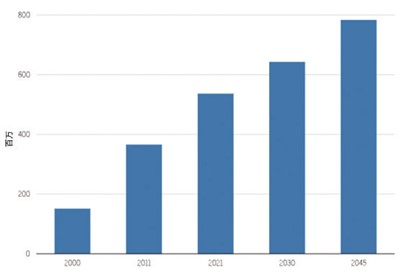
香港市场中国焦点策略:"十五五"规划下的港股投资主线
Bank of China Securities· 2025-10-13 10:52
Market Performance - The Hang Seng Index (HSI) closed at 26,290, down 1.7% for the day but up 31.1% year-to-date (YTD) [2] - The MSCI China index decreased by 2.4% for the day, with a YTD increase of 35.7% [2] - The CSI 300 index fell by 2.0% for the day, with a YTD increase of 17.3% [2] Commodity Prices - Brent Crude oil price is at US$63 per barrel, down 12.0% YTD [3] - Gold prices increased by 54.2% YTD, currently at US$4,047 per ounce [3] - Copper prices decreased by 3.2% for the day, with a YTD increase of 20.0%, currently at US$10,518 per ton [3] Economic Indicators - The NFIB Small Business Optimism Index reported a slight increase to 100.8, above the consensus of 100.6 [4] - US Initial Jobless Claims were reported at 218,000, lower than the consensus of 229,500 [4] - The US Producer Price Index (PPI) for Final Demand YoY is at 2.6%, matching the consensus [4] Corporate Insights - Atour Lifestyle Holdings (ATAT) is rated as a BUY with a target price of US$46.40, expecting a 20% CAGR in hotel numbers from 2024 to 2027 [10][11] - Great Wall Motor (GWM) is rated as HOLD with a target price of HK$16, forecasting a net profit of over RMB3.5 billion for Q3 2025 [14][15]

革命就要有人牺牲,最后一次人工智能革命牺牲的是谁的命?
Sou Hu Cai Jing· 2025-10-01 06:01
Group 1 - The core viewpoint is that the artificial intelligence revolution is seen as the last technological revolution for humanity, with significant implications across various sectors including defense, healthcare, and finance [1][3] - The development of artificial intelligence relies on core technologies such as machine learning, deep learning, and large models, aiming to achieve autonomous decision-making capabilities [3] - The revolution is expected to unfold over decades or even centuries, potentially accompanied by breakthroughs in energy fusion [1][3] Group 2 - There are known sacrifices in the advancement of artificial intelligence technology, particularly in defense applications, exemplified by the case of Feng Yanghe, a prominent expert who tragically died in a car accident while on duty [5][7] - Feng Yanghe's contributions to military artificial intelligence, including enhancing intelligent decision-making capabilities in defense systems, highlight the risks faced by researchers in this field [5][7] - The official narrative attributes his death to an accident, without evidence of external interference, emphasizing the inherent risks in pioneering technological advancements [7] Group 3 - The ethical, legal, and security challenges associated with the development of artificial intelligence are critical considerations as the technology continues to evolve [3][7] - Ensuring the ethical protection and technical safety of researchers is essential as artificial intelligence applications deepen in sectors like defense [7]

SIS INT'L(00529.HK):中期股东应占溢利上升174%至9100万港元
Ge Long Hui· 2025-09-29 00:16
Core Insights - SIS INT'L (00529.HK) reported a revenue increase of 11% to HKD 4.339 billion for the six months ending June 30, 2025 [1] - Gross profit rose by 15% to HKD 402 million, while profit attributable to shareholders surged by 174% to HKD 91 million [1] - Basic earnings per share reached HKD 0.3289 [1] Revenue and Profitability - The distribution business continued to be the main growth driver, with revenue up 11% and segment profit increasing by 20% during the reporting period [1] - The performance of the commercial and consumer products business in the Thai market was particularly outstanding [1] Strategic Initiatives - The company is embracing the current artificial intelligence revolution and digital transformation [1] - There is a growing demand for technology solutions and services, including cybersecurity, which the company is actively addressing through strategic measures [1]
6000亿变空头支票!特朗普算计遭盟友拆台,36万亿国债没人接盘?
Sou Hu Cai Jing· 2025-09-27 14:41
Core Viewpoint - The article discusses the implications of the Trump administration's approach to managing the U.S. national debt, which amounts to $36 trillion, by applying strategies reminiscent of personal bankruptcy restructuring, including interest rate cuts and tariffs, leading to potential backlash from allies and a weakening of the dollar's credibility [2][22]. Group 1: Economic Strategies - The Federal Reserve's interest rate cuts are interpreted as a routine monetary easing, but they reflect Trump's strategy of creating crises to force policy concessions [4][8]. - Trump's historical approach during the 1990 economic recession involved leveraging bankruptcy protection to negotiate lower interest rates, a tactic he appears to be replicating on a national scale [4][6]. - The proposed interest savings of $300 billion from rate cuts are minimal compared to the $7.5 trillion expenditure of the "Great Beautiful Act," indicating a focus on long-term debt management rather than immediate savings [8][10]. Group 2: Tariff Policies - Tariffs are framed as a means of economic colonialism, where the U.S. imposes unilateral tax increases while demanding market access for its goods, creating a disadvantage for developing countries [10][12]. - The strategy includes pressuring allies like Japan and South Korea to invest in U.S. industries, particularly in the semiconductor sector, while maintaining control over the investment decisions [12][14]. - The imposition of tariffs is expected to ultimately burden U.S. consumers, as the increased costs are likely to be passed down, potentially limiting the effectiveness of interest rate cuts [14][20]. Group 3: International Relations and Investment - Recent investment commitments from allies, such as the EU's $600 billion and Japan's $550 billion, are criticized as lacking substance and unlikely to materialize as actual investments [16][18]. - The agreements often involve loans rather than direct investments, raising concerns about the actual economic benefits for the U.S. and the risks borne by the allies' companies [18][20]. - The diminishing economic appeal of the U.S. is highlighted by allies' reluctance to fully commit to investment agreements, reflecting a shift in global economic dynamics where countries prioritize their own interests [20][22].

三大信号亮红灯!美联储降息叠加中国资产崛起,普通人该怎么抓?
Sou Hu Cai Jing· 2025-09-23 06:57
Group 1 - The recent 25 basis point rate cut by the Federal Reserve is seen as a potential historical turning point that could reshape wealth distribution globally, with predictions of a cumulative 175 basis points of cuts in the next 12 months [1][3] - The Fed Chairman's acknowledgment of balanced inflation risks signals the end of a two-year tightening cycle, coinciding with critical events such as the U.S. election, severe yield curve inversion, and record high gold purchases by global central banks [3][5] - Following the rate cut, significant market reactions were observed, including a surge in gold prices to historical highs, Bitcoin breaking key resistance levels, and a notable appreciation of the offshore RMB, indicating that institutional investors are already positioning themselves for these changes [5][7] Group 2 - The current rate cut cycle differs from previous ones, as it occurs at a time of technological and energy transitions, leading to a focus on growth-oriented and defensive assets rather than traditional safe havens [7][8] - For Chinese investors, this global capital shift presents historic opportunities, with increasing attractiveness of RMB assets and foreign capital inflows, particularly in strategic sectors like renewable energy, semiconductors, and biomedicine [7][8] - Major asset management firms are adjusting their portfolios by increasing holdings in long-term bonds, gold, and quality growth assets, indicating a proactive approach to the changing market landscape [8]

历史高点被“踩在脚下”,所有资产都在涨
凤凰网财经· 2025-09-20 12:37
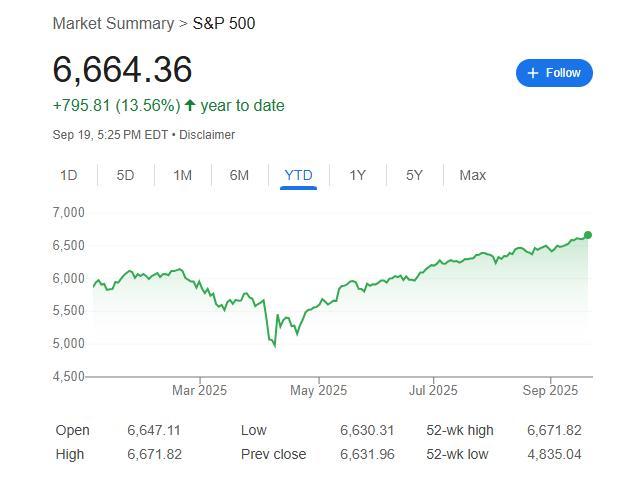
Group 1 - The global financial market is experiencing a broad cross-asset surge, driven by the Federal Reserve's interest rate cuts and the AI boom, marking the most significant rise since the speculative frenzy of 2021 [1] - In the U.S. market, major indices like the S&P 500 and Nasdaq have reached historical highs, with year-to-date gains of 14% and 17% respectively, while the Russell 2000 index has also surpassed its previous peak [2] - The MSCI All Country World Index has hit a record high, indicating a global trend, with emerging market stocks outperforming global indices, signaling a sharp increase in investor risk appetite [4] Group 2 - The credit market is witnessing a similar optimistic trend, with the credit spread for high-rated U.S. companies narrowing to below 0.8 percentage points, the lowest since 1998 [4] - The narrative around this market surge is built on the "Great Resilience Trade," emphasizing resilient consumers, the ongoing AI revolution, and easing trade tensions from the White House [8] - The enthusiasm for AI investments is seen as a core driver, with some firms warning that investors are making one-sided bets while overlooking high valuations and slowing revenue growth [9] Group 3 - The recent interest rate cuts are interpreted as the beginning of a new easing cycle, leading to significant capital inflows into global stock markets, the largest since 2025 [13] - Some investors are cautious, highlighting high geopolitical risks, a slowing U.S. labor market, and extreme market concentration, suggesting current valuations leave little room for error [14][16] - Despite the prevailing optimism, a minority of teams are adopting defensive strategies, with increased short positions in the Russell 2000 index ETF and a rise in funds flowing into safe-haven assets like gold and cash [16]

历史高点被“踩在脚下”,所有资产都在涨
Hua Er Jie Jian Wen· 2025-09-20 04:14
Core Viewpoint - The global financial markets are experiencing a significant rise in risk assets, driven by the Federal Reserve's interest rate cuts and the AI boom, marking the most extensive cross-asset surge since the speculative frenzy of 2021 [1][3][9] Group 1: Market Performance - The S&P 500 and Nasdaq Composite indices in the U.S. have reached new historical highs, with year-to-date increases of 14% and 17% respectively [1] - The MSCI All Country World Index has also hit a historical peak, with emerging market stocks outperforming global indices, indicating a sharp increase in investor risk appetite [3] - The credit market is witnessing a bullish trend, with the credit spread for high-rated U.S. companies narrowing to below 0.8 percentage points, the lowest level since 1998 [3] Group 2: Investor Sentiment and Narratives - The prevailing narrative on Wall Street is termed "The Great Resilience Trade," which is supported by resilient consumer behavior, the ongoing AI revolution, and a more lenient stance from the White House on tariffs [8][9] - The enthusiasm for AI investments is seen as a core driver of this market trend, with some investors likening it to a steroid-fueled internet bubble [9] - Despite the optimism, some analysts express concerns about high valuations, slowing revenue growth, and the significant investment needs of AI giants [9] Group 3: Economic Context and Federal Reserve Policy - The recent interest rate cuts by the Federal Reserve are interpreted as the beginning of a new easing cycle, leading to a substantial influx of capital into global stock markets [9][10] - The market is currently experiencing its largest weekly capital inflow since 2025 following the rate cut announcement, with expectations of at least four more rate cuts next year [9] Group 4: Caution Among Investors - Some investors are beginning to adopt defensive strategies, citing high geopolitical risks, a slowing U.S. labor market, and uncontrolled inflation as concerns [10][11] - The short positions in the iShares Russell 2000 ETF have reached a two-year high, indicating a cautious sentiment among some market participants [11] - Despite the prevailing bullish sentiment, there are indications of skepticism, with some analysts suggesting that the lingering doubts in the market could serve as fuel for the next upward phase [12][13]
Fed Governor: This is an ‘INAPPROPRIATE COMPARISON'
Youtube· 2025-09-19 21:30
Core Viewpoint - The newly confirmed Federal Reserve Governor, Steven Myron, advocates for a 50 basis point interest rate cut, citing disinflationary forces that will likely bring inflation down in the near term [1][2]. Disinflationary Forces - Myron identifies lower immigration as a significant disinflationary factor, noting that the closure of borders has led to a decrease in shelter inflation due to a relatively fixed supply of housing [3][4]. - He argues that there is no material evidence of inflation driven by tariffs, stating that import-intensive core goods have not inflated more than overall core goods [5][8]. Economic Outlook - Myron expresses a positive economic outlook for the second half of the year, attributing previous uncertainties to tax hikes and trade policy changes that have since been resolved [17][18]. - He believes that the incentives for investment from full expensing in the tax cuts will significantly boost economic growth without leading to inflation [19][20]. Monetary Policy Perspective - Myron emphasizes that the current monetary policy is restrictive and poses risks to employment, advocating for a quicker return to a neutral policy stance [19][20]. - He suggests that the Federal Reserve's traditional growth forecast of 2% is overly conservative and does not account for potential growth driven by supply-side policies [12][15]. Tariff Inflation Debate - Myron notes a shift in perception regarding tariff-driven inflation, indicating that many forecasters are beginning to agree that any inflationary impact from tariffs is less significant than previously thought [21][22].