创新药商业化

Search documents
众生药业上半年净利润同比增长114.96% 第二季度业绩亮眼
Zheng Quan Ri Bao Wang· 2025-08-29 07:48
Core Viewpoint - Guangdong Zhongsheng Pharmaceutical Co., Ltd. reported a slight decline in revenue but a significant increase in net profit for the first half of 2025, indicating a strong performance in profitability despite challenging market conditions [1][2]. Financial Performance - The company achieved a revenue of 1.3 billion yuan in the first half of 2025, representing a year-on-year decrease of 4.74% [1]. - The net profit attributable to shareholders reached 188 million yuan, showing a substantial year-on-year growth of 114.96% [1][2]. Strategic Initiatives - The company has developed a mid-term strategic plan focusing on "traditional Chinese medicine as the foundation, innovation leading, and concentrating on specialty pharmaceutical health" in response to anticipated changes in policy and market environment [2]. - Strategic adjustments across the entire value chain include accelerating innovative research and development, optimizing supply chains to reduce costs, and diversifying sales channels while enhancing academic promotion and brand building [2]. Product Development - Traditional Chinese medicine remains the core business and a significant source of revenue growth, with key products like the Compound Xue Shuan Tong series and Nao Shuan Tong capsules expanding in chronic disease treatment [3]. - The company is focusing on deepening market penetration for selected products and enhancing retail business foundations to gradually improve operational performance [3]. Innovation and Market Expansion - The commercialization of innovative drugs and the market expansion of existing chemical drugs are key drivers of revenue growth, with notable products including the first Chinese oral antiviral drug for COVID-19 and a novel flu treatment [4]. - The company has made significant progress in the consistency evaluation of generic drugs, with 31 products passing the evaluation and 6 selected in national drug procurement, enhancing the market value of its chemical drugs [4].

亚盛核心产品销售额猛增93%,医保加持下创新药商业化加速
2 1 Shi Ji Jing Ji Bao Dao· 2025-08-21 14:08
Core Insights - The core viewpoint of the article highlights the significant growth in sales of Ascentage Pharma's key product, Nairik (Orebatinib), which saw a 93% increase in revenue to RMB 217 million, driven by expanded coverage in the national medical insurance directory [1][3] - The company is transitioning from a research-focused biotech firm to a fully commercialized innovative pharmaceutical enterprise, with a strong emphasis on the commercialization of its innovative drugs [6][9] Financial Performance - As of June 30, the company reported cash and bank deposits of RMB 1.661 billion, a year-on-year increase of 31.7%, primarily due to net proceeds of RMB 970 million from its IPO in January 2025 [1] - The sales and distribution expenses increased by RMB 48.2 million, a 53.7% year-on-year rise to RMB 138 million, attributed to the commercialization of Nairik and preparations for the launch of another product, Lisengto [7] Product Development - Nairik is the first approved third-generation BCR-ABL inhibitor in China, with its sales revenue growing from RMB 113 million to RMB 217 million, following its inclusion in the national medical insurance directory [3][4] - Lisengto (Lisatrag) was approved for use in July 2025, becoming China's first domestically developed Bcl-2 inhibitor, which is expected to further enhance the company's product portfolio [4][6] Market Strategy - The company aims to balance high R&D investments with commercial output, with expectations of achieving breakeven by 2027 through the sales profits of its products [7] - The company has engaged in overseas licensing agreements, which have positively impacted cash flow and helped address short-term commercialization needs [8][9] Competitive Landscape - The company faces challenges in a competitive market, particularly in the context of similar products, but its innovative drugs have shown differentiated advantages in clinical data [5][6] - The ongoing support from national medical insurance for innovative products is expected to enhance market recognition for companies with strong commercialization capabilities [9]
康哲药业(00867.HK)中期溢利同比增长3.1%至9.3亿元
Ge Long Hui· 2025-08-18 13:28
Core Viewpoint - 康哲药业 reported a 10.8% year-on-year increase in revenue to RMB 4.002 billion for the six months ending June 30, 2025, with a net profit growth of 3.1% to RMB 930 million, and basic earnings per share rising by 4.2% to RMB 0.3892 [1] Financial Performance - Revenue increased by 10.8% to RMB 4.002 billion [1] - Net profit grew by 3.1% to RMB 930 million [1] - Basic earnings per share rose by 4.2% to RMB 0.3892, compared to RMB 0.3734 in the 2024 interim period [1] - Interim dividend declared at RMB 0.1555 per share, up 3.2% [1] Product Development - The product portfolio has been enriched with the addition of innovative products ZUNVEYL and MG-K10 [1] - ZUNVEYL's New Drug Application (NDA) was accepted by the National Medical Products Administration (NMPA) in July 2025 [1] - The injection product LIZHENRAN was approved for market entry in China in July 2025 [1] - Five existing innovative drugs are progressing steadily in commercialization, with scale effects becoming apparent [1] Strategic Initiatives - The company is focusing on specialty areas and actively deploying new retail and new media strategies to enhance its consumer healthcare product offerings [1] - The skin health business "德镁医药" is set to be independently listed on the Hong Kong Stock Exchange to unlock its independent value and high growth potential [1]
科伦博泰生物-B中报观:商业化确定性拉升,全球创新价值再上台阶
Zhi Tong Cai Jing· 2025-08-18 11:26
Core Viewpoint - The Hong Kong stock market's innovative pharmaceutical sector has seen a significant rebound this year, with net inflows of over 120 billion yuan into the pharmaceutical and biotechnology industry, highlighting a shift towards more reliable quality stocks [1] Group 1: Company Performance - Kelun-Biotech (06990) has emerged as a key target for market investment, achieving a historical high in stock price in August, with a market capitalization exceeding 100 billion HKD and a year-to-date increase of 192.40%, entering the "100 billion club" of Hong Kong's innovative pharmaceuticals [1] - The company's mid-2025 performance report indicates a transition from Biotech to Biopharma, with revenue driven by both business development (BD) collaborations and self-commercialization [3][4] - In the first half of 2025, Kelun-Biotech reported revenues of 950 million yuan, with cash reserves of 4.528 billion yuan, indicating strong cash flow and a shift in revenue structure from BD-driven to self-commercialization [4] Group 2: Commercialization Strategy - The company's core product, TROP2 ADC (Jiatailai), has shown strong commercial potential, generating sales of 51.698 million yuan in its first month post-launch and expanding its indications, which enhances market opportunities [5] - Kelun-Biotech has established a comprehensive commercialization capability, with a professional marketing team of 350 and a wide distribution network covering over 1,000 hospitals and partnerships with more than 60 distributors [8][9] - The company has successfully navigated market access, achieving broad coverage for its products across multiple provinces and actively pursuing inclusion in national insurance schemes to enhance drug accessibility [9] Group 3: Research and Development - Kelun-Biotech has increased its R&D investment, reaching 612 million yuan in the first half of 2025, and has developed three major technology platforms, ensuring a robust pipeline of over 30 candidate drugs [10][11] - The company's international collaborations with major pharmaceutical firms validate its technological capabilities and support the transformation of global innovative results into commercial value [11] - The dual strategy of BD collaborations and self-commercialization aligns with the trend of "true innovation + self-control" in the domestic pharmaceutical industry, positioning Kelun-Biotech as a key player in the Hong Kong pharmaceutical investment landscape [12]

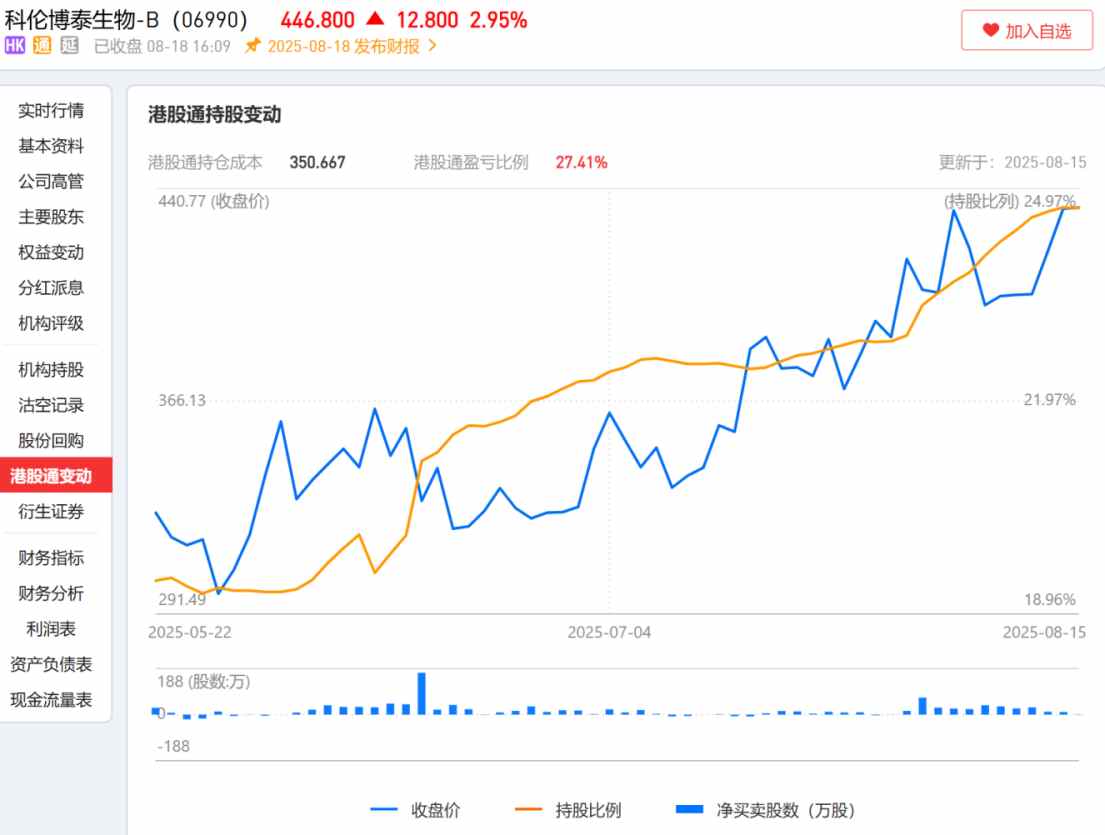
科伦博泰生物-B(06990)中报观:商业化确定性拉升,全球创新价值再上台阶
智通财经网· 2025-08-18 10:20
Core Insights - The Hong Kong stock market's innovative pharmaceutical sector has seen a significant rebound this year, with net inflows of over 120 billion yuan into the pharmaceutical and biotechnology industry, driving funds towards more certain quality targets [1] - Kelun-Biotech (06990) has emerged as a key target for market investment, achieving a historical high in stock price and a market capitalization exceeding 100 billion HKD, with a year-to-date increase of 192.40%, entering the "100 billion club" of Hong Kong's innovative pharmaceuticals [1][3] Revenue Structure Transformation - Kelun-Biotech is transitioning from a biotech to a biopharma company, with its revenue structure evolving to be driven by both business development (BD) collaborations and self-commercialization [3][4] - In the first half of 2025, the company reported revenues of 950 million yuan, with cash reserves of 4.528 billion yuan, indicating a robust cash flow [4] - The sales revenue from its core product, Jiatailai® (TROP2 ADC), has shown strong market acceptance, contributing significantly to the company's revenue growth [5][6] Commercialization Strategy - The company has established a dual approach to commercialization, focusing on both licensing collaborations and self-sustaining revenue generation [4][5] - Kelun-Biotech has formed a professional marketing team of 350 people, achieving extensive coverage across 30 provinces and over 2,000 hospitals in China [7] - The company is actively pursuing national medical insurance access for its products, which could significantly enhance sales through payment leverage [7] R&D and Innovation - Kelun-Biotech has increased its R&D investment, reaching 612 million yuan in the first half of 2025, supporting its competitive edge in key therapeutic areas [8][9] - The company has developed three major technology platforms, enabling a pipeline of over 30 candidate drugs, with more than 10 in clinical stages [8] - International recognition of its R&D capabilities is reflected in its collaborations with various global partners, enhancing its innovation and market reach [9] Summary of Growth Path - Kelun-Biotech's mid-term performance illustrates a clear growth trajectory, with Jiatailai® providing cash flow and three technology platforms ensuring ongoing innovation [9] - The company's dual-driven model of BD collaboration and self-commercialization aligns with the core logic of pharmaceutical investment in Hong Kong, indicating its long-term potential for growth [9]
亿帆医药20250815
2025-08-18 01:00
Summary of YiFan Pharmaceutical Conference Call Company Overview - **Company**: YiFan Pharmaceutical - **Date**: August 15, 2025 Key Points Industry Performance - The domestic pharmaceutical market in the first half of 2025 showed a dichotomy, with traditional drug formulations under significant pressure while innovative drug companies exhibited notable growth potential [10][17]. Financial Performance - YiFan Pharmaceutical achieved revenue of **26.35 billion** yuan in the first half of 2025, showing slight growth compared to the previous year [3]. - Net profit increased by nearly **20%**, attributed to product structure transformation and high-margin products [3][16]. - Drug revenue accounted for approximately **80%** of total revenue, up from **40%** three years ago [16]. Product Performance - Key products in the first half of 2025 included: - **YiliShu**: Sales close to **500 million** yuan, with a target of **1 billion** yuan for the year [7]. - **Dinggan Cross-linked Sodium Hyaluronate**: Expected to double in sales volume [2]. - **Hiroda**: Revenue around **400 million** yuan, with a slight decline in price but stable gross margin due to production efficiency [9]. - **Children's Qingtiao**: Experienced a **30%-40%** decline due to demand and macroeconomic factors [8]. Innovation and R&D - Significant progress in innovative drug commercialization, with **YiliShu** achieving sales in over **40 countries** and receiving regulatory approval to shorten administration time in China [2][11]. - R&D investments increased, with the completion of Phase 1 clinical trials for a traditional Chinese medicine and advancements in several new drug projects [12][14]. Market Strategy - The company is implementing a differentiated pricing strategy globally, with the highest prices in the U.S. at **$4,600** per unit, followed by Europe and China [31][35]. - Plans to enter approximately **160 countries**, focusing on both high-price and competitive pricing markets [34][21]. Supply Chain and Production - The company optimized its international supply chain, transferring filling and packaging to FDA GMP-compliant facilities in China, significantly reducing production costs [4][28]. - Achieved EMA GMP and PIX certifications, enhancing product acceptance in international markets [13]. Future Outlook - The company anticipates stable growth in the second half of 2025, driven by increased sales of self-owned and innovative products [19][20]. - Long-term expectations for **YiliShu** and **Dinggan Cross-linked Sodium Hyaluronate** are optimistic, with significant market potential due to aging populations and clinical advantages [20][25]. Challenges and Opportunities - The company is aware of challenges posed by U.S.-China trade tensions but has strategies in place to mitigate risks, including adjusting transaction structures and leveraging potential tariff exemptions [38][46]. - The internationalization strategy includes expanding existing networks and exploring new markets, particularly in regions with high population but lower economic levels [39][45]. Conclusion - YiFan Pharmaceutical is positioned for growth through innovative products, strategic market expansion, and optimized operations, with a strong focus on R&D and international market penetration [14][47].

泰诺麦博0.32%产销率撞上350人天价销售军团,古稀实控人背数十亿元“对赌炸弹”|创新药观察
Hua Xia Shi Bao· 2025-08-15 13:43
Core Viewpoint - The company Zhuhai Tainuo Maibo Pharmaceutical Co., Ltd. has become the first company to be accepted under the new fifth listing standard of the Sci-Tech Innovation Board, which allows unprofitable companies to go public. However, the company faces significant financial challenges, including a low sales rate of its core product and high operational costs, raising concerns about its future viability in the capital market [2][3][5]. Financial Performance - As of March 31, 2025, the total assets of the company amounted to 1.133 billion yuan, with a total equity attributable to shareholders of 493 million yuan. The asset-liability ratio has increased to 56.48% from 16.54% in 2022 [4]. - The company reported a net profit of -176.72 million yuan for the first quarter of 2025, continuing a trend of losses with cumulative losses exceeding 1.024 billion yuan [11][12]. - The operating revenue for 2025's first quarter was only 169,300 yuan, with a production-sales rate of just 0.32% for its main product, indicating severe market penetration issues [4][5]. Product and Market Challenges - The company's flagship product, Staidotamab injection, was priced at 798 yuan per dose, significantly higher than traditional tetanus prevention treatments, which are priced between 20-30 yuan. This high pricing, combined with the absence of insurance coverage, limits its competitiveness in the market [5][10]. - The company faces competition from other established firms that have already secured insurance coverage for similar products, further complicating its market entry [5][10]. Sales and Operational Structure - The company has a disproportionately high sales team, with 350 sales personnel making up 45.63% of its total workforce, compared to only 145 R&D staff [8][9]. This structure has led to excessive sales expenses, which reached 35.11 million yuan in 2024, raising concerns about the efficiency of its spending [10]. - The average monthly salary for sales personnel was reported at 1.92 million yuan, far exceeding the company's average monthly revenue of 1.25 million yuan during the same period [8][10]. Debt and Financial Obligations - The company has seen a continuous rise in current liabilities, reaching 254 million yuan by the first quarter of 2025, which includes significant short-term loans and accounts payable [12][14]. - A buyback agreement signed in June 2024 poses a substantial risk, as the controlling shareholder may face obligations to repurchase shares worth tens of billions if the IPO is unsuccessful, while the company's net assets stand at only 493 million yuan [13][14].

云顶新耀(1952.HK)艾曲莫德获中国台湾地区NDA受理 亚洲商业化布局再提速
Xin Lang Cai Jing· 2025-08-15 07:35
Core Viewpoint - Cloud-based innovative pharmaceutical company, Yunding Xinyao (1952.HK), has made significant progress in the market access of its key product for autoimmune diseases, with the Taiwan FDA officially accepting the New Drug Application (NDA) for Aiqumote (维长宁) for treating moderate to severe active ulcerative colitis (UC) patients [1] Group 1: Product Development and Market Access - The NDA for Aiqumote was formally accepted by the National Medical Products Administration (NMPA) in mainland China in December 2024, with expectations for approval by the end of this year or early next year [1] - The acceptance of the NDA in Taiwan further strengthens the commercial layout of Aiqumote in Asia, laying a solid foundation for future market entries in more Asian countries [1] - Industry forecasts suggest that Aiqumote's peak sales could reach 5 billion yuan, positioning it as the next major product following Nairfukang (布地奈德肠溶胶囊) [1] Group 2: Clinical Need and Treatment Landscape - Ulcerative colitis is a chronic, recurrent inflammatory bowel disease with a complex pathogenesis and significant treatment challenges, leading to increased disability and colorectal cancer rates among patients [2] - In China, the number of ulcerative colitis patients is projected to grow from approximately 800,000 in 2024 to 1 million by 2030, highlighting a substantial unmet clinical need [2] - Current treatment options are limited, with existing medications, including JAK inhibitors, carrying serious risks such as severe infections and malignancies, prompting the FDA to issue black box warnings [2] Group 3: Efficacy and Safety of Aiqumote - Aiqumote is an oral first-line treatment for ulcerative colitis, demonstrating strong efficacy in achieving mucosal healing and offering good safety profiles [2] - Recent data from the 13th Asian Organization for Crohn's and Colitis (AOCC 2025) annual meeting confirmed Aiqumote's long-term safety and tolerability, reinforcing its advantages as an innovative therapy for moderate to severe UC [2][3] - Aiqumote has been included in the 2024 American Gastroenterological Association (AGA) clinical practice guidelines as a first-line treatment for ulcerative colitis, further validating its clinical value [3] Group 4: Clinical Research and Evidence - The NDA application for Aiqumote is based on results from the ELEVATE UC Phase III registration studies, which demonstrated superior and sustained clinical remission and mucosal healing at both 12 and 52 weeks [3][4] - The ENLIGHT study, the largest Phase III clinical trial for moderate ulcerative colitis in Asia, reported a 52% mucosal healing rate and a 46% complete normalization rate after 52 weeks, providing strong evidence for Aiqumote's application in Asian patients [4] Group 5: Local Production and Market Expansion - Yunding Xinyao is advancing the local production of Aiqumote, with a production facility in Jiaxing set to support supply after its launch in mainland China [5] - Aiqumote has already been approved for sale in Singapore, Macau, and Hong Kong, with a listing application in South Korea accepted in June this year [4]
创新药到底是怎么估值的?
2025-08-07 15:03
Summary of Key Points from Conference Call Records Industry Overview - The discussion primarily revolves around the **innovative drug industry**, focusing on valuation methods, market dynamics, and the competitive landscape in China and the U.S. [1][8][10] Core Insights and Arguments 1. **Valuation Methodology**: - Innovative drug valuation requires detailed breakdowns of indications, market assessment, and product positioning, integrating both objective data and subjective judgment [1][3][4] - The peak sales calculation must consider diagnosis rates, treatment rates, market share, duration of treatment (DOT), and pricing, confirmed with expert opinions [7][8] 2. **Sales Performance**: - The sales of **Fumetinin** exceeded expectations, with an increase in DOT from 1.1 years to 1.3 years, although market share fluctuated due to competition and patent issues [5][6] - The first-year sales of major drugs entering the insurance list often exceed 1 billion RMB, with subsequent years showing significant growth [12][13] 3. **Market Dynamics**: - The Chinese market for innovative drugs has a longer commercialization ramp-up period compared to the U.S., with a typical annual growth rate of around 15% for many drugs [8] - The market is highly concentrated, with the top two players often holding 60%-70% market share in their respective categories [11] 4. **Pricing Strategies**: - In China, the first-year pricing for innovative drugs typically caps at 150,000 RMB, reflecting a balance between affordability and market acceptance [10] - Pricing is influenced by negotiations with health insurance and collective procurement policies, leading to annual price fluctuations [6][9] 5. **Risk Assessment**: - Risk adjustment values for marketed indications are set at one, while those in clinical phases may be discounted significantly (e.g., 80% discount for phase III indications) [6][7] - The success rates for drug development vary significantly by disease type, with hematological malignancies showing higher success rates compared to solid tumors [15][16] Additional Important Insights 1. **Commercialization Advantages**: - Early market entrants often capture significant market share, emphasizing the importance of first-mover advantages in the commercialization process [12][14] - The average gross margin for small molecules is around 95%, with sales expenses in China ranging from 30% to 40% [14] 2. **Market Sentiment**: - Market sentiment plays a crucial role in the valuation of innovative drug companies, with positive sentiment leading to higher valuations for early-stage products [21][23] - The current financing environment has improved, allowing companies with early-stage products to secure funding and advance their development [24][25] 3. **Comparative Success Rates**: - The success rates for drug approval differ across disease categories, with blood cancers having a notably higher success rate compared to cardiovascular and CNS diseases [16][19] 4. **Future Outlook**: - The innovative drug sector is characterized by a self-reinforcing cycle where favorable market conditions lead to increased funding and development, while adverse conditions can stifle progress [25][26] This summary encapsulates the essential points discussed in the conference call, providing a comprehensive overview of the innovative drug industry's current landscape and future prospects.
中国创新药商业化井喷,谁将命中“下一个靶点”
财联社· 2025-07-28 00:47
Core Viewpoint - The rapid growth of overseas licensing transactions by Chinese innovative pharmaceutical companies marks the beginning of a commercial explosion in the industry, with expectations for significant sales and revenue increases in the coming years [1][5][6]. Group 1: Market Growth and Trends - The total amount of overseas licensing transactions by Chinese pharmaceutical companies is projected to reach $51.9 billion in 2024, a 36% increase from the previous year, and exceed $60.8 billion in the first half of 2025 [6]. - The innovative drug sector in China is expected to experience a convergence of three pivotal turning points: explosive sales of previously approved drugs, substantial increases in overseas revenue, and an overall upgrade in the industry's profit model [1][8]. - The cumulative increase in the A-share Innovative Drug 50 ETF is 21%, while the Hong Kong Hang Seng Innovative Drug ETF has surged by 56% [4]. Group 2: Industry Evolution - Since the 2015 reform of drug and medical device review and approval systems, the Chinese innovative drug industry has transitioned from a focus on capability building to a phase of full-scale market realization [1][24]. - The number of approved innovative drugs in China has surged to over 40 in 2024, nearly a tenfold increase since 2015, with R&D investment rising from approximately 50 billion yuan to over 121 billion yuan [24][26]. Group 3: Licensing and Collaboration - Chinese innovative pharmaceutical companies are increasingly binding themselves to leading multinational firms through licensing agreements, which are seen as a means to share risks and enhance R&D capabilities [12][13]. - The trend of overseas licensing is expected to continue, driven by the strong demand from multinational companies for external innovative assets amid patent cliffs [8][12]. Group 4: Future Catalysts and Innovations - The period from 2023 to 2026 is anticipated to be critical for the industry, with a significant number of drugs expected to enter the market, leading to accelerated revenue growth [8][9]. - Emerging technologies such as AI and brain-computer interfaces (BCI) are reshaping drug innovation and treatment methodologies, with AI significantly reducing the time and cost of drug development [17][20]. Group 5: Challenges and Strategic Considerations - Concerns exist regarding the potential for Chinese companies to "sell seedlings," meaning they may be too eager to license early-stage assets for short-term gains, potentially missing out on larger future opportunities [11][12]. - The industry faces challenges related to the high-risk nature of innovative drug development, with many biotech firms having to downsize or exit the market during recent capital downturns [25][26].