
多元共治

Search documents
“电鸡”集中停放充电 每组不超20个端口
Nan Fang Du Shi Bao· 2025-08-28 05:16
Core Viewpoint - The first Shenzhen Electric Bicycle Safety Management Forum was successfully held, focusing on the challenges of electric bicycle safety management and aiming to create a multi-faceted, safe, and reliable travel ecosystem for electric bicycles [1][2]. Group 1: Forum Highlights - The forum gathered over 500 participants from government agencies, research institutions, industry associations, and enterprises to discuss safety management issues [1]. - The Guangdong provincial standard for electric bicycle centralized charging and swapping facilities was officially released, marking a significant step in standardizing safety management practices [1][4]. Group 2: Industry Challenges - The increasing ownership of electric bicycles has led to a growing demand for safer usage technologies, highlighting issues such as fire safety, traffic order, battery quality, and insufficient charging facilities [2]. - The forum emphasized the need to balance convenience with safety and development with order, advocating for a collaborative governance model to address these challenges [2]. Group 3: Technological Innovations - Shenzhen aims to promote smart battery technologies, charging stations, and IoT supervision to enhance safety and efficiency in electric bicycle usage [2]. - A "Battery Swap City" initiative was launched to bring safe battery swapping services into communities, addressing residents' charging difficulties [3]. Group 4: Regulatory Framework - The newly released standard outlines requirements for the construction and operation of centralized charging facilities, including site selection, safety measures, and public information disclosure [4]. - Operators are required to conduct regular safety inspections of the charging facilities, with a minimum frequency of once a week for daily inspections and once a quarter for comprehensive checks [5].
2025首届深圳电动自行车安全管理论坛成功举办
Nan Fang Du Shi Bao· 2025-08-26 06:47
Core Insights - The first Shenzhen Electric Bicycle Safety Management Forum was successfully held, focusing on the theme "Smartly Drawing the Bay Area, Riding into the Future" to address safety management challenges and explore innovative solutions in the electric bicycle industry [1][2] - The forum saw the release of the Guangdong provincial local standard for electric bicycle charging and swapping facilities, indicating a regulatory push towards improved safety and management practices [1][2] Group 1 - The forum gathered over 500 participants from government agencies, research institutions, industry associations, and enterprises, highlighting the collaborative effort to tackle electric bicycle safety issues [1] - Shenzhen's initiative to host this forum aims to address the growing demand for safer electric bicycle technologies amidst increasing ownership [1][2] - The president of the Shenzhen Electric Bicycle Industry Association emphasized the importance of balancing convenience and safety, as well as development and order in urban governance [1] Group 2 - The forum aimed to create a high-level dialogue platform to discuss key areas such as policy innovation, technical standards, smart regulation, safety education, and infrastructure development [2] - A launch ceremony for the "Battery Swap City Community" was held to promote safe battery swapping services, addressing residents' charging difficulties and enhancing public safety [2] - Experts and industry representatives shared insights on digital regulation and the importance of a digital service platform for the entire lifecycle of electric bicycles [2]
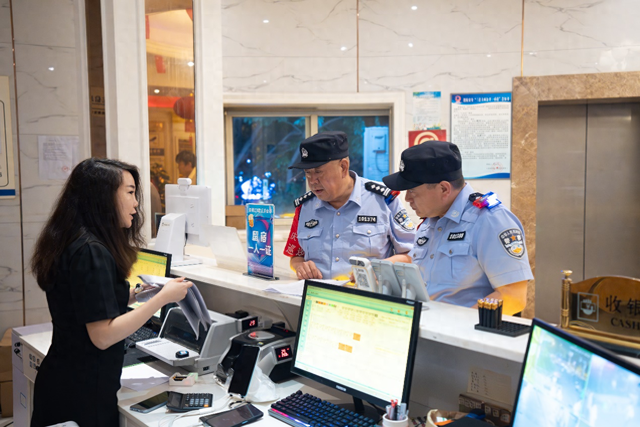
阳光下的守护丨重庆渝中公安创新“网约房”治理新模式
Huan Qiu Wang· 2025-08-20 11:02
Core Viewpoint - The article discusses the innovative regulatory measures taken by the Yuzhong District in Chongqing to manage the burgeoning short-term rental market, particularly focusing on the implementation of a digital management system to enhance safety and compliance while promoting industry growth [1][3][7]. Group 1: Industry Overview - Yuzhong District, a popular tourist area, attracted over 10 million visitors during the 2025 Spring Festival, leading to the rise of over 16,000 short-term rental units [1]. - The short-term rental market has faced challenges such as inconsistent quality of listings and a lack of industry regulations, resulting in safety concerns and consumer disputes [1]. Group 2: Regulatory Innovations - The district has introduced a "one house, one code" dynamic management mechanism, requiring each rental unit to register on the "Yukuaiban" platform, submitting necessary documentation for verification [3]. - As of now, over 13,000 unique rental codes have been issued, allowing for better tracking and management of rental properties [3]. Group 3: Technological Empowerment - The introduction of the "Changzhuzhushou" app has streamlined the check-in process, requiring guests to authenticate their identity and use Bluetooth to unlock doors, increasing registration accuracy from below 60% to 100% [5]. - The district has achieved a smart lock penetration rate of 74.83%, significantly reducing manual registration hours for operators [5]. Group 4: Collaborative Governance - A "Short-term Rental Self-governance Alliance" has been established, involving local authorities, property management, and rental operators to create a self-regulatory framework [6]. - Since 2025, nearly 400 disputes have been resolved collaboratively, with a 33.8% year-on-year decrease in related police incidents [6]. Group 5: Future Directions - The district plans to further enhance the "Changzhuzhushou" app to provide personalized travel recommendations for guests and integrate smart marketing systems for operators [6]. - The ongoing reforms aim to transform short-term rentals from a safety concern into a governance highlight, leveraging digital technology to drive industry development [7].

大城善治重在“绣花功夫”
Jing Ji Ri Bao· 2025-08-19 22:04
Core Viewpoint - China's urbanization is transitioning from rapid growth to stable development, focusing on improving existing urban quality rather than expanding new areas [1] Group 1: Urbanization and Governance - The urbanization rate in China is projected to reach 67% by the end of 2024, reflecting significant achievements in urban development [1] - Challenges such as traffic congestion, housing imbalance, and urban flooding have emerged due to rapid urban growth, alongside issues like aging population and diverse public demands [1] Group 2: Technological Integration in Urban Governance - The digital era requires robust technological support for smart city construction, enhancing digital governance applications and establishing intelligent urban management systems [2] - Utilizing big data and cloud computing can improve governance efficiency by enabling data sharing and early detection of urban risks [2] Group 3: Community-Centric Governance - Modernizing urban governance should prioritize the concerns of the public, focusing on enhancing their sense of gain, happiness, and security [3] - Innovative local measures have been implemented to improve urban living conditions, such as renovating old neighborhoods and optimizing public transport [3] Group 4: Collaborative Governance - Effective urban management cannot rely solely on government efforts; it requires collaboration among government, market, society, and citizens to address complex urban challenges [3]
积极探索保护城市生物多样性
Jing Ji Ri Bao· 2025-08-13 22:05
Core Viewpoint - The recent Central Urban Work Conference emphasizes enhancing urban biodiversity as a key to addressing "urban diseases" and improving urban ecological health and resilience [1] Group 1: Importance of Urban Biodiversity - Biodiversity is a critical indicator of urban ecological health and is essential for the stability and functionality of urban ecosystems, enhancing their adaptability and recovery capabilities [1] - It serves as a vital carrier for optimizing urban ecological environment quality and is a key factor in increasing residents' happiness [1] - Biodiversity supports emerging industries such as ecological tourism and green economy, promoting low-carbon urban economic development [1] Group 2: Progress in Biodiversity Protection - China has made significant progress in urban biodiversity protection, with the "China Biodiversity Protection Strategy and Action Plan (2023-2030)" prioritizing urban biodiversity [1] - Local legislation has been enacted in regions like Hunan and Guangdong, while cities like Shenzhen and Qingdao have revised local planning to enhance policy frameworks [1] - Innovative practices include integrating biodiversity evaluation indicators into national garden and forest city assessments, and exploring concepts like "habitat gardens" in Shanghai [1] Group 3: Challenges in Biodiversity Protection - Many cities still lack sufficient emphasis on biodiversity protection, with fragmented blue-green spaces and inadequate connectivity [2] - The biodiversity monitoring system has not achieved full coverage, hindering precise data support for biodiversity protection [2] Group 4: Recommendations for Improvement - Strengthening technological support by building a comprehensive smart monitoring network using remote sensing, sensors, and AI algorithms for real-time tracking and analysis of biological communities [2] - Establishing a cross-departmental cooperation mechanism to clarify responsibilities and avoid regulatory blind spots, while enhancing public participation through various channels [2] - Integrating biodiversity protection goals into overall and specialized planning, creating a land development intensity zoning mechanism, and ensuring biodiversity impact assessments are part of project approval processes [3]
价格法修订,筑牢“反内卷”关键防线
Sou Hu Cai Jing· 2025-08-01 04:51
Core Viewpoint - The recent revision of the Price Law in China aims to address the issue of "involution" in market competition, particularly in the context of food delivery platforms and other sectors, by implementing stricter regulations on pricing practices and promoting fair competition [1][2]. Group 1: Background and Context - The "subsidy" war among food delivery platforms has brought "involution" competition into public view, prompting the government to take significant reform measures [1]. - The Price Law, in effect since 1998, has played a crucial role in resource allocation and consumer protection, and its first revision seeks to adapt to new economic realities, including digital and platform economies [1][2]. Group 2: Key Changes in the Price Law - The revision includes ten main points focusing on improving government pricing regulations, clarifying standards for unfair pricing practices, and enhancing legal responsibilities for price violations [2]. - The changes aim to regulate typical issues such as predatory pricing, price discrimination, and price gouging [2]. Group 3: Positive Transformations - The revision shifts the role of consumers from passive recipients to active participants in the pricing process, allowing them to influence pricing mechanisms [3]. - It aims to better protect the rights of workers, particularly in flexible employment sectors, by curbing vicious price wars and redirecting funds towards production and research [4]. - The revision also adapts price governance to address new economic developments, including algorithmic pricing discrimination and platform responsibilities, ensuring a fairer competitive environment [5][6]. Group 4: Implications for Economic Development - The changes are expected to foster a market environment that prioritizes quality over low-cost competition, enabling companies to focus on technological innovation and enhancing overall industry competitiveness [6]. - The revision serves as a critical measure against market chaos and supports high-quality economic development by promoting a fair competition order [6].
“神经末梢”何以脉动有力(前沿观察)
Ren Min Ri Bao· 2025-07-28 22:30
Core Viewpoint - The article highlights the innovative approaches taken by Jiangxi Province to enhance grassroots governance through talent cultivation, reducing bureaucratic burdens, and fostering community participation in governance [1][5][8]. Group 1: Talent Development - Jiangxi Province is focusing on strengthening grassroots governance by enhancing the structure and vitality of the talent pool, which is crucial for effective governance [2]. - The "talent return" initiative in Xinfeng County has successfully recruited 712 village-level backup talents, with an average age of 38.4 years and 94% holding a college degree, optimizing the leadership structure in 177 villages [3]. - A total of 41,000 backup talents have been reserved across 17,900 villages in Jiangxi, with a focus on selecting outstanding village leaders for higher positions [3]. Group 2: Reducing Bureaucratic Burdens - Jiangxi has implemented measures to reduce the burden of formalism on grassroots officials, streamlining assessment indicators and reducing unnecessary tasks [5][6]. - The city of Xinyu has eliminated nearly 40 APP check-ins and streamlined responsibilities, resulting in clearer roles and improved efficiency [6][7]. - The province has collectively cleared 1,101 extraneous work items and simplified work mechanisms, allowing officials to focus more on serving the public [7]. Group 3: Community Participation - The article emphasizes the importance of transforming governance from a government-centric model to a collaborative approach involving community participation [8]. - In Zhanggong District, a digital governance platform has been established, allowing residents to report issues and participate in decision-making, achieving a 95% resolution rate for public requests [8]. - The "Red, Blue, Yellow Knight" mechanism in Xiangdong District engages delivery workers in community safety and governance, creating a network of volunteers that enhances local governance [9][10].
专访|推动“多元共治”的人工智能生态——访金砖国家未来网络研究院中国分院国际合作部负责人
Xin Hua She· 2025-07-11 14:40
Core Insights - The core viewpoint emphasizes the need for a "multi-stakeholder governance" approach in the artificial intelligence ecosystem, aiming to make AI a global public good that reduces development disparities [1][2]. Group 1: AI Ecosystem and Governance - The 2025 "AI for Humanity Global Summit" aims to promote a multi-stakeholder governance model for AI, focusing on making AI a global public product [1]. - The Chinese branch of the BRICS Future Network Research Institute is actively involved in fostering international cooperation and enhancing global connectivity in AI [1][2]. - The summit highlighted the necessity for localized AI solutions, particularly in regions like Africa, to ensure technology is rooted in diverse developmental contexts [1]. Group 2: Collaboration and Standards - The BRICS Future Network Research Institute has established a regular communication mechanism among member countries to enhance technology research and innovation [1]. - The role of the Chinese branch is defined as both a practitioner of technology application and a builder of collaborative mechanisms [2]. - The International Telecommunication Union (ITU) is set to establish AI standardization resolutions in October 2024, underscoring the importance of co-creating rules to bridge the digital divide [2].
阳谷:“两大转变”赋能“防解融合”创新构建交通安全治理新格局
Qi Lu Wan Bao Wang· 2025-07-03 03:31
Core Viewpoint - The Yanggu Traffic Police Brigade is implementing a modern governance approach to traffic safety by integrating accident prevention and conflict resolution, aiming for a significant reduction in traffic accidents by 2025 [1][10]. Group 1: Accident Prevention Strategies - The brigade has shifted from passive control to proactive prevention through a "Three-Dimensional Education" initiative, enhancing traffic safety awareness across the region [2]. - A targeted "Civilized Traffic Eight Musts" campaign has been launched, focusing on high-risk areas and vulnerable groups, with extensive outreach efforts covering 159 grassroots units and various community locations [3]. - Innovative methods such as "slogan warnings + smart broadcasting" have been introduced, with large, clear signage and real-time audio alerts at critical intersections to enhance public awareness [3][4]. Group 2: Conflict Resolution Mechanisms - The brigade has established a "Five Connections, Five Transformations" platform to create a comprehensive conflict resolution system, allowing for streamlined services across multiple departments [6]. - A tiered intervention model has been developed to address traffic accident disputes, ensuring that complex cases receive appropriate multi-faceted support [6][7]. - The implementation of a "Four Synchronization" mechanism allows for simultaneous handling of various aspects of conflict resolution, from immediate response to long-term preventive measures [7][9]. Group 3: Integrated Governance Approach - The integration of accident prevention and conflict resolution is facilitated through data sharing and analysis, identifying high-risk areas and vulnerable populations for targeted interventions [8]. - A "Three-in-One" closed-loop governance mechanism has been established, ensuring that education, real-time alerts, and hazard rectification are interconnected [9]. - The results of these initiatives have led to a 4.32% decrease in total traffic accidents and a 17.5% reduction in related disputes, with a conflict resolution rate of 78% [9]. Group 4: Future Directions - The Yanggu Traffic Police Brigade aims to further develop the "Yanggu Model" for traffic safety governance, promoting community involvement and responsibility in traffic safety [10].
城市更新重在唤醒沉睡家底
Jing Ji Ri Bao· 2025-07-01 22:28
Core Viewpoint - The article discusses the shift towards "intrinsic renovation" in urban renewal, focusing on optimizing and activating existing urban spaces and idle resources, contrasting with the previous extensive expansion model [1][2]. Group 1: Urban Renewal Strategy - The current trend emphasizes intrinsic renovation, which aims to awaken dormant resources and optimize existing urban spaces, achieving overall enhancement of urban functions and vitality [1][3]. - This urban renewal model effectively conserves land resources, reduces environmental burdens, and preserves historical and cultural contexts, leading to multiple benefits in economic, social, and cultural aspects [1][3]. Group 2: Challenges in Resource Activation - Activating idle resources, while seemingly cost-effective, presents significant challenges due to complex ownership issues and the poor condition of many idle assets, requiring substantial renovation investments [2]. - Policy innovation is essential for supporting intrinsic renovation, with cities exploring collaborative mechanisms and innovative regulatory tools to address historical issues and facilitate project implementation [2][3]. Group 3: Value Creation and Participation - Revitalizing existing assets involves a process of value discovery and recreation, necessitating a reasonable profit distribution mechanism and diverse participation platforms to attract various stakeholders [3]. - Successful cases of intrinsic renovation often tailor revitalization plans to local conditions, addressing community needs while ensuring profitability for social capital investors [3]. Group 4: Technological and Cultural Support - The integration of technology, such as big data, IoT, and AI, plays a crucial role in transforming idle resources, shifting focus from material space to humanistic care [3]. - The approach aligns with the direction of new urbanization and provides effective pathways for sustainable urban development in the future [3].