
宏观审慎

Search documents
中国人民银行:持续强化利率政策执行和监督
Xin Hua Wang· 2025-05-09 13:30
Core Viewpoint - The People's Bank of China (PBOC) has reported significant effects of counter-cyclical monetary policy adjustments in the first quarter, with stable growth in financial totals and an optimized credit structure [1][2] Group 1: Monetary Policy and Financial Stability - The PBOC will continue to strengthen the execution and supervision of interest rate policies, aiming to lower bank funding costs and reduce overall social financing costs [1] - In the first quarter, monetary credit maintained reasonable growth, utilizing various tools such as reserve requirements and open market operations to ensure ample liquidity and support key economic sectors [1][2] Group 2: Loan Rates and Economic Development - In March, new corporate loans and personal housing loan rates decreased by approximately 50 and 60 basis points year-on-year, creating a favorable financial environment for high-quality economic development [2] - The PBOC plans to enhance the implementation of interest rate policies and continue reforms to improve the Loan Prime Rate (LPR), while expanding pilot areas for comprehensive financing cost assessments for enterprises [2] Group 3: Future Directions - The PBOC will leverage monetary credit policy to guide financial institutions in supporting technology finance, green finance, inclusive small and micro enterprises, consumption expansion, and stabilizing foreign trade [2] - The scope of re-loans for affordable housing will be broadened to maintain stability in the real estate market [2]
【中国央行:阶段性暂停国债买卖操作 视市场供求状况择机恢复操作】央行发布2025年第一季度中国货币政策执行报告,其中提到,年初,国债市场供不应求状况进一步加剧,10年期国债收益率一度跌破1.6%的历史低位。1月中国人民银行宣布阶段性暂停在公开市场买入国债,避免影响投资者的配置需8要,并更多使用其他工具投放基础货币,维护流动性和债券市场平稳运行。中国人民银行将继续从宏观审慎的角度观察、评估债市运行情况,关注国债收益率的变化,视市场供求状况择机恢复操作。
news flash· 2025-05-09 09:55
Core Viewpoint - The People's Bank of China (PBOC) has announced a temporary suspension of government bond purchases to manage market demand and maintain liquidity in the bond market [1] Group 1: Market Conditions - The demand-supply imbalance in the government bond market has intensified, leading to a drop in the 10-year government bond yield below the historical low of 1.6% [1] - The PBOC's decision to pause bond purchases is aimed at avoiding disruption to investors' allocation needs and to utilize other tools for injecting base currency [1] Group 2: Future Actions - The PBOC will continue to monitor and assess the bond market from a macro-prudential perspective, paying close attention to changes in government bond yields [1] - The resumption of bond purchase operations will be considered based on market supply and demand conditions [1]
2025年5月债市展望:嵌套于宏观审慎的利率下行期
Shenwan Hongyuan Securities· 2025-05-06 08:46
1. Report Industry Investment Rating No relevant content provided. 2. Core Viewpoints of the Report - Since 2021, the bond market yield has entered a downward cycle, influenced by the shift of monetary credit from supply - constraint to demand - constraint, the change of economic endogenous momentum, and insufficient effective demand [4][134][137] - The U.S. may shift from "loose fiscal + tight monetary" to "tight fiscal + tight monetary" during the debt - reduction process, and the Fed's rate - cut may require a significant weakening of the labor market [2][97] - China's current economic situation shows weak domestic demand and declining external demand. Policy elasticity may lie in the consumption sector, and monetary policy will gradually ease to cooperate with fiscal policy [3][131] - In Q2 2025, "macro - prudential" supervision may give way to loose trading, and the bond market curve may change from flat to bull - steep [4] 3. Summary According to the Table of Contents 3.1 1月至今债市走势分析及其宏观逻辑 - **Monthly Trends** - In January 2025, to stabilize the exchange rate and the central bank suspended buying treasury bonds, resulting in tight funds, short - term bond corrections, and long - term bond fluctuations [1][51] - In February, tight funds spread to banks, weakening easing expectations, and both short - and long - term bonds accelerated their corrections [2][51] - In March, the funds returned to equilibrium. In the first half of the month, the bond market self - adjusted due to the revision of easing expectations, and in the second half, long - term bonds gradually recovered [51] - In April, due to increased external uncertainties, long - term bonds fell to a low level and then fluctuated narrowly [2] - **Interest Rate Curve** - From January to April 2025, the interest rate curve changed from "bear - flat" to "bear - steep" and then to "bull - flat." The flat curve reflected pessimistic expectations of liquidity and fundamentals, which cannot coexist for a long time [22] - **Credit Spreads** - In 2025, the credit spread of medium - term notes showed an obvious compression trend, while that of commercial bank secondary capital bonds fluctuated [27] - **Duration Strategy** - In February - March 2025, the duration strategy underperformed, but in April, the long - duration strategy became dominant again [31] - **Market Logic** - Fundamentally, the economy was booming in Q1 2025, but external changes disturbed expectations. In terms of funds, from January to February, tight funds led to bond market corrections; from March to April, the central bank's attitude became more favorable, and the bond market strengthened. Institutionally, in January - February, institutions reduced duration and leverage; in March - April, the long - duration strategy was preferred, and institutions bet on long - term bond capital gains [51] 3.2 "对等关税"背后的"特里芬难题"与潜在冲击 - **Triffin Dilemma** - The Triffin Dilemma refers to the coexistence of the global credit of the US dollar and long - term trade deficits. The long - term trade deficit may lead to the hollowing - out of the manufacturing industry and debt inflation in the US [54][56] - **First Impact of the Triffin Dilemma** - The Bretton Woods system basically collapsed in the 1970s due to the continuous expansion of US demand and the rapid shrinkage of US gold reserves [61] - **Consequences of the Triffin Dilemma** - The global credit of the US dollar may lead to a high - valued dollar, which is negative for US manufacturing exports. The critical point of the Triffin Dilemma is the continuous expansion of the deficit, which may trigger credit risks for reserve assets [65][70] - **"海湖庄园协议"** - The core of the "Mar - a - Lago Agreement" is to reduce debt and revitalize the industrial system through measures such as replacing foreign - held US bonds with ultra - long - term zero - coupon bonds and asking countries to cooperate in depressing the dollar exchange rate [71][75] - **US Fiscal - Monetary Policy Shift** - The US may shift from "loose fiscal + loose monetary" to "tight fiscal + loose monetary" to break the negative feedback loop of "fiscal expansion - increased interest payments - passive fiscal expansion" [79][84] - **US Economic Situation** - Currently, a US recession is not the baseline scenario. The US economy has not significantly slowed down, and the employment market remains resilient. However, if labor - market "hard data" weakens significantly, recession trading may resume [90][93] - **Potential Impact of "Reciprocal Tariffs"** - "Reciprocal tariffs" may lead to a decline in global trade volume and a decrease in the potential economic growth rate [94][96] 3.3 Policy Hedging and Domestic Demand Stimulation: Focus on One's Own Affairs - **Political Bureau Meeting** - The April 2025 Political Bureau Meeting mainly implemented established policies, with highlights possibly in structural monetary policy tools [100] - **Three - Horse Carriage** - **Investment**: Weak investment is due to the downward real - estate cycle, limited infrastructure investment space under local debt regulations, and insufficient effective demand restricting manufacturing expansion [3][110] - **Export**: The export structure is being improved. Non - US economies contribute significantly to export growth but with high volatility, and high - tech products are not the main support for exports [3][116] - **Consumption**: Constrained by weak income expectations and falling housing prices, consumption has room for improvement compared to developed economies, and top - level meetings have increased their emphasis on it [3][119][121] - **Monetary Policy** - With the issuance of special treasury bonds, monetary policy is gradually easing to cooperate with fiscal policy. In May, as a credit - off month, weak credit demand may lead to spontaneous easing [122][130] 3.4 Nested in the Macro - Prudential Interest Rate Downward Cycle - **Macro - background of the Interest Rate Downward Cycle** - Since 2021, the bond market yield has been in a downward cycle, driven by the shift of monetary credit from supply - constraint to demand - constraint, the change of economic endogenous momentum, and insufficient effective demand [4][134][137] - **Macro - Prudential Assessment** - The bond market is expanding, mainly driven by interest - rate bonds, and investors face more interest - rate risks. Current regulatory assessments focus more on credit expansion, lacking constraints on interest - rate and duration risks. Asset management product scale is increasing, and fixed - income asset allocation is strong. Banks and insurance institutions face the pressure of inverted liability costs and asset returns. Monetary easing is necessary but needs to balance internal and external factors and risks [4][142][155] - **Q2 Market Outlook** - In Q2, "macro - prudential" supervision may give way to loose trading. Monetary - fiscal cooperation may be prioritized to boost domestic demand and hedge external risks. The liquidity in Q2 is expected to be loose, and the bond - curve shape may change from flat to bull - steep [4]
重返3字头,多家银行消费贷利率上调
Bei Jing Ri Bao Ke Hu Duan· 2025-04-01 08:53
Core Viewpoint - The consumer loan market in banks is experiencing a significant change, with many banks raising the annual interest rate for credit consumer loans to no less than 3% starting from April [1][3]. Group 1: Interest Rate Adjustments - Several banks have announced that the annual interest rate for personal credit consumer loans will be adjusted to a minimum of 3% from April 1, with some banks previously offering rates as low as 2.68% [1][3]. - Major banks such as Bank of China and China Merchants Bank have already updated their consumer loan products, with rates now set at 3.1% and 3.4% respectively [1][3]. Group 2: Market Dynamics - Earlier this year, a price war in the consumer loan market saw banks offering rates below 3%, with some products even reaching as low as 2.4% [3]. - The recent adjustments in interest rates were anticipated, as the financial regulatory authority encouraged banks to increase personal consumer loan issuance while managing risks [3]. Group 3: Risk Management and Consumer Advice - Experts suggest that setting the 3% threshold for consumer loan rates is a macro-prudential measure to balance various costs and risks associated with lending [3]. - It is advised that consumers should apply for loans based on actual needs and financial capacity, avoiding excessive debt burdens [4]. Financial institutions are encouraged to maintain reasonable interest rates to ensure sustainable business practices [4].


高层调研关注哪些问题?——政策周观察第22期
一瑜中的· 2025-03-25 14:35
Group 1 - The article highlights the recent focus of high-level government officials on local industry development, foreign trade, and anti-corruption efforts during their inspections in various provinces [2][3][10] - The General Secretary emphasized the importance of high-quality development in Guizhou and Yunnan, advocating for the growth of digital economy and new energy industries, as well as the need for a favorable business environment [9][10] - The Prime Minister's inspection in Fujian focused on stabilizing foreign trade and enhancing the role of private enterprises in the economy, with specific visits to companies like Anta Group and Meituan [10][11] Group 2 - The Central Bank's monetary policy meeting discussed the need for increased monetary policy adjustments in response to complex external economic conditions, suggesting potential interest rate cuts and a focus on long-term yield changes [4][12] - A new regulatory mechanism for enterprise-related fees was proposed, aiming to create a transparent fee structure and eliminate unauthorized charges, which could positively impact the business environment [4][11] - The government is looking to enhance consumer spending by increasing residents' income and optimizing the consumption environment, indicating a potential boost for sectors like tourism and services [12]
加大货币政策调控,择机降准降息!央行最新部署
21世纪经济报道· 2025-03-21 11:39
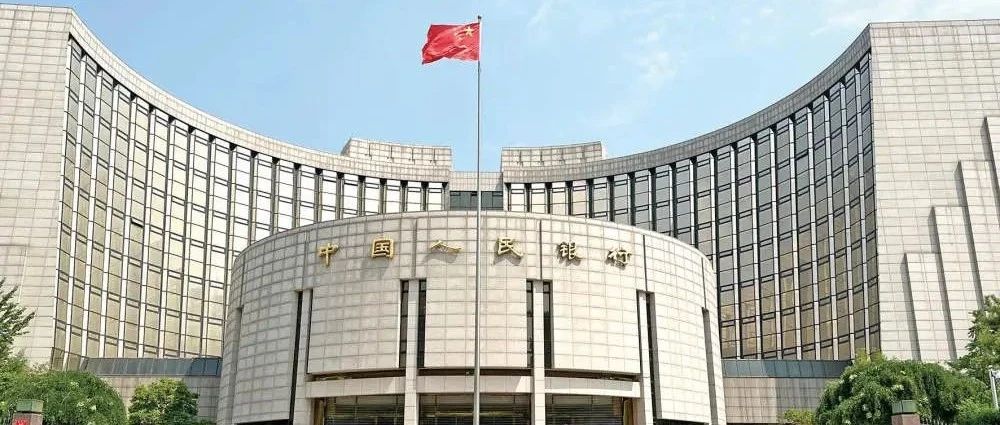
择机降准降息 :建议加大货币政策调控强度,提高货币政策调控前瞻性、针对性、有 效性,根据国内外经济金融形势和金融市场运行情况,择机降准降息。 债市 :从宏观审慎的角度观察、评估债市运行情况,关注长期收益率的变化。 汇率 :会议明确,增强外汇市场韧性,稳定市场预期,加强市场管理,坚决对市场顺 周期行为进行纠偏,坚决对扰乱市场秩序行为进行处置,坚决防范汇率超调风险,保 持人民币汇率在合理均衡水平上的基本稳定。 中国人民银行网站3月2 1日消息,中国人民银行货币政策委员会2 0 2 5年第一季度(总 第1 0 8次)例会于3月1 8日召开。 要点速览: 本次会议由中国人民银行行长兼货币政策委员会主席潘功胜主持,货币政策委员会委员徐守 本、李春临、廖岷、宣昌能、吴清、康义、朱鹤新、谷澍、王一鸣、黄益平、黄海洲出席会 议。李云泽因公务请假。中国人民银行内蒙古自治区分行、福建省分行、河南省分行、贵州省 分行负责同志列席会议。 会议认为,今年以来宏观调控力度加大,货币政策适度宽松,强化逆周期调节,综合运用多种 货币政策工具,服务实体经济高质量发展,为经济持续回升向好创造适宜的货币金融环境。贷 款市场报价利率改革成效显著,存 ...
不锈钢周报-宏观情绪回暖但缺乏产业利好题材,警惕盘面高位回落
Hua Rong Rong Da Qi Huo· 2025-03-17 04:35
Market Dynamics - The People's Bank of China emphasizes the need to prevent and resolve financial risks in key areas, supporting the stable development of capital markets[1] - From March 10 to March 14, the price of cold-rolled stainless steel sheets in Wuxi increased by 300 yuan, with four-foot sheets priced at 13,200 yuan and five-foot sheets at 13,300 yuan[1] - On March 14, the trading volume of SS2505 reached 192,000 lots, an increase of 51,894 lots, while the open interest decreased by 482 lots[1] Fundamental Analysis - The mainstream transaction price of high-nickel iron rose to 1,000 yuan per nickel, indicating a continued increase in costs for 304 stainless steel[2] - Downstream demand remains stable, with stainless steel crude steel production in February increasing month-on-month, and March production expected to continue rising[2] - The market is characterized by a supply-demand imbalance, with high inventory levels and weak demand expectations[2] Production and Inventory - In February 2025, the crude steel production from 43 stainless steel plants was 3.1453 million tons, a month-on-month decrease of 9.92% but a year-on-year increase of 23.5%[18] - The total social inventory of stainless steel in major markets increased by 0.36% week-on-week, with cold-rolled stainless steel inventory rising by 0.89%[19] - As of March 14, the delivery warehouse inventory reached 197,237 tons, indicating a significant increase of 41,471 tons from the previous week[19] Price Trends - The price of cold-rolled stainless steel sheets in Wuxi increased by 100 yuan to 13,620 yuan per ton, reflecting a 0.74% rise week-on-week[15] - The market sentiment remains optimistic, with prices generally trending upwards despite some resistance from downstream buyers[12] - The overall market is experiencing a price increase due to rising costs from upstream materials and a supportive policy environment[22]