
数据资产

Search documents
【独家】香港议员吴杰庄:明年初或核发一张稳定币牌照,数字资产必是趋势
Tai Mei Ti A P P· 2025-09-03 10:10
Core Insights - DePIN is recognized as a significant application in the Web3 sector, lowering entry barriers for new users and accelerating the adoption of new products, particularly in Hong Kong [2][3] - The regulatory environment in Hong Kong is strict regarding stablecoin licenses, with expectations for a license to be issued early next year, alongside ongoing legislative efforts for offline OTC [2][5] - Data assets, including Bitcoin, are becoming essential for many countries and enterprises, with a growing trend towards their inclusion in national reserves [6] Group 1: DePIN Development and Potential - DePIN is seen as a promising application that can quickly bring new business models to market, especially in a commercial hub like Hong Kong, where acceptance of new technologies is high [3][4] - The integration of DePIN with AI and new retail products is expected to enhance consumer experiences by reducing costs and increasing choices [4][5] Group 2: Regulatory Framework and Challenges - The current legal framework for DePIN involves several laws aimed at ensuring compliance and safety, particularly concerning token sales and circulation [5][7] - The stablecoin regulation in Hong Kong emphasizes security and customer asset protection, allowing for flexibility in currency anchoring while adhering to international legal standards [7][8] Group 3: Strategic Considerations for Hong Kong - The potential for Hong Kong to include Bitcoin in its strategic reserves is driven by global trends, with the need for timely action to avoid competitive disadvantages [6] - Hong Kong's unique position as a financial center, with no foreign exchange controls and low taxes, provides a competitive edge for developing the Web3 ecosystem [10]


同仁堂科技:数智化投入兑现 夯实增长基底
Zheng Quan Ri Bao Zhi Sheng· 2025-08-29 03:40
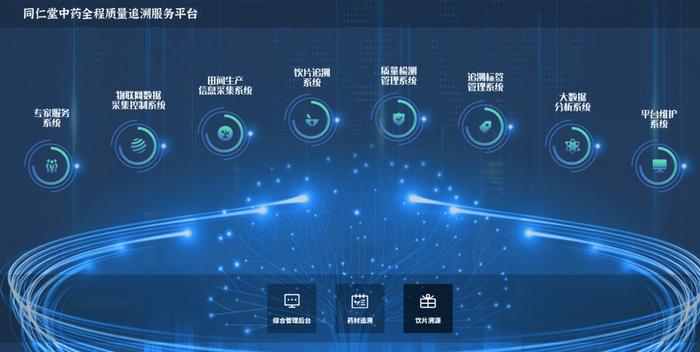
Core Insights - Tongrentang Technology is leveraging data assets as a core strategic resource and value growth engine, enhancing operational efficiency and quality control through a deep integration of data across the entire value chain from cultivation to terminal sales [1][8] - The company has established a comprehensive traceability system for over 40 traditional Chinese medicine varieties, ensuring quality control and enhancing brand value through transparent data management [2][4] - A national sales data direct connection system has been implemented, allowing real-time aggregation of inventory and sales data from over 600 distributors and 4,000 retail terminals, enabling agile decision-making and market responsiveness [2][4] Data-Driven Decision Making - The sales data system allows for rapid response to market changes, exemplified by a 20% increase in sales of a specific product due to local weather conditions, leading to timely adjustments in inventory and distribution [4][7] - The integration of a production visualization system and SCADA technology has transformed production processes into data-driven operations, significantly improving efficiency and reducing labor costs [7][8] Quality Control and Production Efficiency - The production management dashboard provides real-time monitoring of key production metrics, enhancing the ability to identify and address bottlenecks quickly [5][7] - Post-implementation of the data-driven production system, the company reported a 40% increase in packaging line capacity and a 25% reduction in labor costs, while maintaining high product quality standards [7][8] Future Outlook - Tongrentang Technology plans to continue investing in digital operations, focusing on the integration of AI, predictive maintenance, and IoT technologies to further enhance efficiency and create sustainable long-term value [8]

专项研究:2025年应收账款ABS存续期研究:市场活跃叠加产品创新,资产表现呈现差异化
Lian He Zi Xin· 2025-08-25 14:09
Policy and Regulatory Framework - The revised "Regulations on the Payment of Funds to Small and Medium-sized Enterprises" aims to address issues such as "difficulties in receivables recovery and prolonged cycles" for SMEs, enhancing legal protections for their rights[1] - The "Self-regulatory Rules on Due Diligence for Debt Asset Securitization" provide clear guidelines for due diligence, improving efficiency and protecting investors' rights[2] - The "Notice on Regulating Supply Chain Financial Services" focuses on standardizing supply chain financial services to better support SME financing[3] Market Performance and Trends - From January to July 2025, the accounts receivable ABS market saw 158 issuances, a 37.39% increase year-on-year, with a total issuance scale of CNY 1410.60 billion, up 25.71%[5] - The issuance scale of accounts receivable ABS accounted for 11.98% of the total asset securitization market, indicating a slight increase in market capacity[5] - The main issuance venue was the exchange market, which accounted for 80.53% of the total issuance scale[6] Asset Quality and Characteristics - Construction-related receivables dominate the underlying assets, making up 80.16% of the total[8] - The actual cash flow recovery for construction receivables may be affected by project progress and payment cycles, leading to potential delays[37] - Trade receivables show varied recovery characteristics, with stable cash flows from large state-owned enterprises, while consumer-related receivables may have higher risks due to weaker debtor profiles[38] Issuance Structure and Credit Enhancement - 39.11% of the accounts receivable ABS involved a revolving purchase structure, helping to address maturity mismatches[18] - 84.07% of the issuances included credit enhancement, primarily from high-rated entities, maintaining a low overall credit risk level[24] - The proportion of non-enhanced accounts receivable ABS increased to 15.93%, indicating a shift towards more self-reliant structures[27] Secondary Market Activity - The secondary market for accounts receivable ABS saw a transaction volume of CNY 2700.50 billion, a significant increase of 118.57% year-on-year, making it the largest trading category in the asset-backed securities market[32] - The turnover rate in the interbank market was 35.62%, reflecting higher trading activity compared to the exchange market's 17.96%[33]
瑞和数智发布中期业绩,股东应占溢利4318.6万元 同比扭亏为盈
Zhi Tong Cai Jing· 2025-08-22 16:16
Core Viewpoint - 瑞和数智 reported a revenue of 120 million yuan for the six months ending June 30, 2025, representing a year-on-year decrease of 33.49% [1] - The company achieved a profit attributable to owners of 43.186 million yuan, compared to a loss of 36.04 million yuan in the same period last year, with earnings per share of 6.28 cents [1] Financial Performance - The main reason for the profit during the reporting period was the recognition of a fair value gain of approximately 63.015 million yuan from holding 15 million shares of Tokyo Central Auction Holdings [1] - The company implemented cost reduction and efficiency enhancement measures, resulting in a decrease in R&D expenses, administrative expenses, financing costs, and sales expenditures compared to the same period last year [1] Strategic Focus - The company continues to strengthen its core competitiveness in the fields of data intelligence and marketing technology [1] - It is deepening its engagement with existing clients in banking, securities, and manufacturing sectors while actively exploring new strategic areas [1] - The company is committed to transforming into a comprehensive digital intelligence service provider by innovating business models and exploring new fields such as data assets, financial AI models, domestic innovation, and software and hardware information technology [1]
瑞和数智(03680)发布中期业绩,股东应占溢利4318.6万元 同比扭亏为盈
智通财经网· 2025-08-22 14:40
Core Viewpoint - 瑞和数智 reported a revenue of 120 million yuan for the six months ending June 30, 2025, representing a year-on-year decrease of 33.49% [1] - The company achieved a profit attributable to shareholders of 43.186 million yuan, compared to a loss of 36.04 million yuan in the same period last year, with earnings per share of 6.28 cents [1] Financial Performance - The decrease in revenue is attributed to various factors, while the profit increase is primarily due to a fair value gain of approximately 63.015 million yuan from holding 15 million shares of Tokyo Central Auction Holdings [1] - The company implemented cost reduction and efficiency enhancement measures, leading to a decrease in R&D expenses, administrative costs, financing costs, and sales expenses compared to the same period last year [1] Strategic Focus - The company continues to strengthen its core competitiveness in data intelligence and marketing technology, focusing on existing customer bases in banking, securities, and manufacturing sectors [1] - It is actively exploring new strategic areas, innovating business models, and venturing into fields such as data assets, financial AI models, domestic innovation, and software and hardware information technology [1] - The company aims to transform into a comprehensive digital intelligence service provider [1]
香港首发企业代币化票据 山高控股冲刺“AI算力+数据资产”构建
Zheng Quan Shi Bao Wang· 2025-08-22 07:57
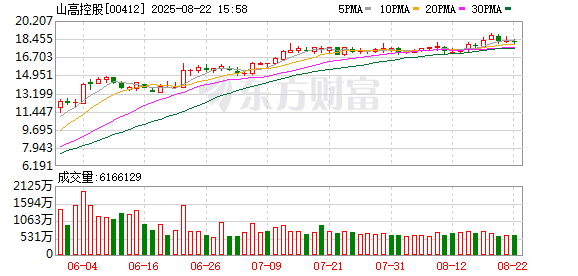
Group 1 - The core viewpoint of the news is that Shankao Holdings has successfully issued Hong Kong's first corporate note tokenization product, marking a significant step towards the digitalization of the Hong Kong bond market [2] - The total amount of the tokenized corporate note issued by Shankao Holdings is $40 million, deployed on the HashKey Chain platform [2] - Tokenization is highlighted as a key focus in financial innovation, involving the mapping of real-world assets (RWA) such as government bonds, loans, and real estate into programmable digital assets on the blockchain [2] Group 2 - Following the enactment of the Stablecoin Regulation on August 1, Hong Kong has become the first jurisdiction globally to establish a comprehensive regulatory framework for stablecoins [2] - A week after the regulation, the world's first RWA registration platform was launched, aimed at facilitating the entire process of data, asset, and financialization for RWA tokenization [2] - Shankao Holdings aims to leverage this regulatory environment to push more of its quality assets onto the blockchain, viewing the $40 million issuance as a strategic move rather than just a financing effort [3] Group 3 - Shankao Holdings has developed a dual-circulation strategy combining "computing integration" with an AI ecosystem, focusing on AI computing power and green energy as core assets [3] - The company holds a strategic stake in Century Internet, with an operational capacity of 573 MW in IDC and over 50,000 city-based cabinets [3] - Shankao Holdings manages a total installed capacity of 4.7 GW in green energy, generating over 6.5 billion kWh annually, and possesses numerous green power certificates with on-chain trading value [3] Group 4 - The company is accelerating its layout towards a digital economy ecosystem that integrates "AI computing power, data assets, and application scenarios" [4] - Shankao Holdings aims to provide the foundational support of green electricity and computing power while unlocking the potential value of data assets and empowering upper-layer application scenarios [4]
火山引擎全面开放PromptPilot,数据产品能力上新
Nan Fang Du Shi Bao· 2025-08-13 06:13
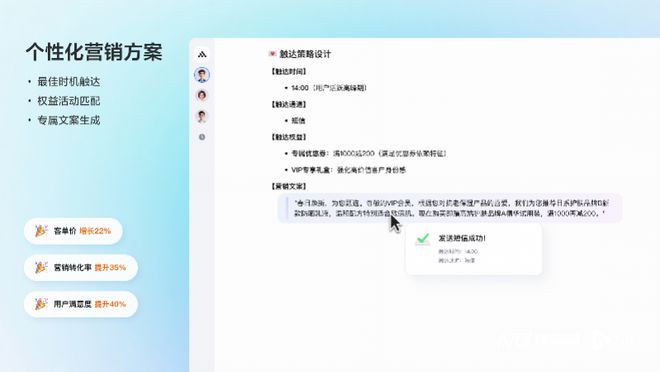
Core Insights - The article discusses the upgrades of Volcano Engine's PromptPilot and Data Agent, which enhance AI applications and data management for enterprises. Group 1: PromptPilot Upgrade - PromptPilot has been upgraded to support prompt optimization for any model, including public cloud models, private models, and custom-trained models [2][3] - The tool utilizes natural language interaction to understand user needs, extract evaluation criteria, and generate better prompts, thus improving AI application performance [2][3] - After deployment, PromptPilot can sample online traffic, analyze bad cases, and autonomously optimize prompts, creating a cycle of continuous improvement [2][3] Group 2: Data Agent and Multi-modal Data Lake - Data Agent is introduced as a vertical intelligent agent that deeply understands and utilizes enterprise data assets, enabling proactive analysis and action [4] - The "One Customer, One Strategy" capability of the intelligent marketing agent integrates three types of data for precise customer profiling and targeted marketing strategies [4][5] - The effectiveness of "One Customer, One Strategy" includes a 300% increase in conversion efficiency from MQL to SQL, a rise in data utilization from 10% to 95%, and a reduction in customer analysis time from 30 minutes to 2 minutes [5] Group 3: AI Operator Square - The AI Data Lake service has launched the "AI Operator Square," which integrates management of multi-modal data, including text, images, and audio-visual content [5][6] - The platform offers over 100 standardized operators and supports the integration of mainstream open-source operators, providing a comprehensive framework for custom operator development [6] - Users can visually drag and drop to quickly assemble modular workflows, transforming scattered data into knowledge assets for automated circulation and value addition [7]
算得快、看得清、走得稳的数据中台,正在成为中国千亿外贸巨头的“秘密武器”
Guan Cha Zhe Wang· 2025-08-09 04:01
Core Insights - The article emphasizes the increasing importance of speed in data acquisition, risk assessment, and market response for companies in the context of volatile global commodity trade and supply chain risks [1][3][4] - The shift in competitive barriers in the commodity trading industry is moving from "resources" to "data assets," highlighting the necessity for companies to adopt data-driven strategies to remain competitive [3][4] Company Overview - Zhongji Ningbo Group, a leading private commodity trading company in China, achieved a total revenue of 141.597 billion yuan in 2024, with its main business covering oil products, chemicals, non-ferrous goods, and agricultural products [1] - The company has partnered with Tencent Cloud to build a global real-time data platform, enhancing its competitive edge in the industry [1][7] Digital Transformation - The digital transformation strategy at Zhongji Ningbo Group is led by its president, aiming to create a unified data platform to eliminate data silos and improve operational efficiency [7][9] - The integration of Tencent Cloud's technology has enabled the company to overcome challenges related to data fragmentation and improve real-time data processing capabilities [9][10] Data Management and Efficiency - The implementation of a data middle platform has significantly improved data flow efficiency, allowing for real-time data synchronization across over 30 business systems [9][10] - The new system enables rapid data processing, with transaction calculations being executed in milliseconds, which is crucial for managing risks in high-stakes commodity trading [6][10] Market Performance - In the first half of 2025, Zhongji Ningbo Group's import and export volume reached 3.258 billion USD, marking a 17% year-on-year increase, with exports growing by 23%, outperforming the industry average [11] - The data middle platform has become a key asset for the company, contributing to its competitive advantage in the market [11][13] Industry Implications - The advancements in digital capabilities are not only benefiting Zhongji Ningbo Group but are also being extended to other enterprises, showcasing the potential for digital transformation across the industry [13][14] - The integration of digital and traditional sectors is seen as a pathway for Chinese companies to gain a competitive edge in the global market [14]


扭亏为盈,百望股份的数据智能转型做对了哪些事?
Ge Long Hui· 2025-08-08 11:34
Core Viewpoint - The announcement of the semi-annual profit forecast for 2025 by Baiwang Co., Ltd. has attracted significant market attention, marking a solid step in its transformation from a traditional SaaS tax service provider to an AI data intelligence company [1][3]. Financial Performance - Baiwang's total revenue for the first half of 2025 is projected to be between 330 million to 380 million, representing a substantial increase of 17.2% to 34.9% compared to 281.6 million in the first half of 2024 [8]. - AI business revenue is expected to be around 58 million to 63 million, indicating a strong start for the company's AI initiatives [8]. - Gross margin is anticipated to improve from 39.2% in the first half of 2024 to between 45% and 50% in the first half of 2025 [8]. - The net profit is projected to be between 3 million to 5 million, a significant turnaround from a loss of 445.8 million in the same period last year [8][18]. Strategic Transformation - Baiwang is recognized for its early adoption of AI technology and its decisive transformation efforts, characterized by agility and determination [4][11]. - The company has focused on the "Digital Electric Enterprise" initiative, leveraging its partnership with the State Administration of Taxation as a key advantage in the ongoing tax reform [5][6]. - Baiwang has rapidly iterated its product offerings, establishing a clear product matrix with three main AI products: Jindun, Wenshu, and Ruijie [11][18]. Market Position and Future Outlook - The SaaS sector is becoming increasingly competitive, with traditional players and new entrants flooding the market [10]. - Baiwang's strategic partnerships with major tech companies like Huawei and Alibaba Cloud are expected to enhance its market presence and customer base, particularly among state-owned enterprises and SMEs [19][20]. - The company is likely to continue its growth trajectory in the second half of 2025, supported by its strong performance and proactive market initiatives [19][22].
让“数据要素资源”真正成为“数据要素资产”
Nan Jing Ri Bao· 2025-08-05 02:19
Group 1 - The first approved data asset ABS "Huaxin-Xinxin-Data Asset Phase 1 Asset-Backed Special Plan" was officially issued at Shenzhen Stock Exchange, with an issuance scale of 133.7 million yuan and a priority ticket interest rate of 2.0% [1] - 89% of the cash flow for this ABS comes from data asset pledge loans, indicating strong reliance on data as a new asset class [1] - The project includes nine pool enterprises from Jiangsu, Zhejiang, Shaanxi, and Jiangxi provinces, featuring both listed companies and private specialized firms, showcasing a diverse and stable credit profile [1][2] Group 2 - The pool enterprises span various industries including construction, wholesale and retail, information transmission, software, and IT services, reflecting a broad sectoral coverage [2] - The data assets include vehicle travel data, agricultural production data, and hotel operation data, all of which have undergone comprehensive ownership confirmation and compliance with legal requirements [2] - In 2023, Jianye District is focusing on "data elements ×" to develop Nanjing Smart City, targeting sectors like data computing power, financial technology, and digital energy to enhance the data ecosystem [2] Group 3 - The Jiangsu Public Data Authorization Operation Platform was launched in Jianye in March, establishing a closed-loop ecosystem for development, incubation, and application [3] - The incubation center provides technical, computing, and policy support to reduce development costs and match scene requirements, promoting a virtuous cycle of "data-driven industrial upgrading" [3]