
新型举国体制

Search documents
从创新突破看发展突围
Ren Min Ri Bao· 2026-01-07 00:57
Group 1 - China's high-speed rail operating mileage has surpassed 50,000 kilometers, establishing the world's largest and most advanced high-speed rail network [1] - By 2025, China's grain production is expected to reach 1,429.75 billion jin, setting a new record [1] - Shandong's GDP is projected to exceed 10 trillion yuan by 2025, showcasing the province's economic strength [1] Group 2 - The new round of technological revolution and industrial transformation is accelerating, emphasizing the importance of both immediate and long-term innovation efforts [2] - China's high-speed rail has evolved from non-existence to the world's most advanced level through consistent planning and execution from the "11th Five-Year Plan" to the "14th Five-Year Plan" [2] - International media highlights that China's technological innovation benefits from a carefully designed long-term national strategy [2] Group 3 - China possesses all industrial categories recognized by the United Nations, with significant advantages in manufacturing scale and industrial ecosystem completeness [3] - The country leads the world in the number of relevant patents in humanoid robotics over the past five years, indicating a surge in intelligent manufacturing [3] - Key core technologies cannot be acquired through purchase or negotiation, necessitating a focus on independent innovation [3] Group 4 - Innovation thrives on collaboration, with significant projects requiring systematic thinking and regional cooperation [4] - The C919 aircraft project involved over 30,000 people from more than 1,000 research institutions, universities, and companies across 20 provinces [4] - The Beidou satellite navigation system achieved breakthroughs in over 160 key technologies, showcasing the effectiveness of coordinated national efforts [4] Group 5 - China's innovation index has entered the world's top ten for the first time, with four Chinese achievements listed among the top ten scientific breakthroughs for 2025 by *Science* magazine [5] - The term "Chinese innovation" has gained global recognition, reflecting the country's ambition to drive economic growth through innovative breakthroughs [5]
郑栅洁:积极发展新质生产力 扎实推进高质量发展
Ren Min Ri Bao· 2026-01-05 23:54
Core Viewpoint - The report emphasizes the strategic importance of developing new quality productivity to achieve high-quality development during the 14th Five-Year Plan period and beyond, as articulated by key leaders in the Chinese government [2][3]. Group 1: Importance of New Quality Productivity - Developing new quality productivity is crucial for advancing high-quality development and achieving substantial progress in technological innovation and economic structure optimization [2][3]. - The 14th Five-Year Plan has seen significant achievements in economic strength and technological capabilities, marking a new historical stage for China's comprehensive national power [2][3]. - The concept of new quality productivity is a distinctive element of Xi Jinping's economic thought, providing scientific guidance for high-quality development in the new era [2][3]. Group 2: Theoretical Guidance for High-Quality Development - A new productivity theory is needed to guide high-quality development, as traditional theories must evolve to meet the challenges of the new development stage [3]. - The emphasis is on transforming and upgrading traditional momentum while fostering new momentum through localized development of new quality productivity [3]. Group 3: Strategic Advantages for Development - China possesses strategic advantages in developing new quality productivity, including institutional mechanisms, innovation ecosystems, and industrial systems [6][7][8][9][10]. - The institutional mechanism advantage includes effective national planning and macroeconomic governance that aligns various policies to support productivity growth [7]. - The innovation ecosystem is characterized by a concentration of advanced production factors and a vibrant environment for collaborative innovation [8]. - The industrial system advantage focuses on enhancing traditional industries and accelerating breakthroughs in emerging sectors, contributing to the overall development of new quality productivity [9]. Group 4: Key Actions for the 14th Five-Year Plan - The government plans to accelerate high-level technological self-reliance and strengthen the integration of technological and industrial innovation [11]. - Building a modern industrial system involves optimizing traditional industries and promoting strategic emerging industries [12][13]. - Enhancing the domestic market and expanding high-level opening-up are essential for fostering new quality productivity [14][15]. - Regional economic layout optimization and promoting green transformation are also prioritized to support sustainable development [15][16]. - Ensuring common prosperity through investment in human capital and improving living standards is a key focus area [16].
勾勒人类能源转型未来蓝图 中国加速向前
Yang Shi Xin Wen· 2026-01-05 07:53
Group 1 - Hydrogen energy and nuclear fusion are highlighted as key future industries in China's "14th Five-Year Plan" [1] - Nuclear fusion is described as a clean, safe, and abundant energy source, often referred to as humanity's "ultimate energy" [1] - The essence of all energy sources, including coal, oil, and renewable energies, is derived from solar energy, which originates from nuclear fusion reactions [1] Group 2 - The Hefei Science Island, covering less than 3 square kilometers, is identified as the main hub for nuclear fusion research in China [3] - Significant milestones in nuclear fusion research include the EAST achieving a world record of 1 million degrees Celsius for 1066 seconds in January 2025 [3] - The construction of the next-generation compact fusion experimental device (BEST) has officially commenced, with the CRAFT facility expected to be completed by the end of 2025 [3] Group 3 - The CRAFT facility, also known as "Kua Fu," consists of 19 systems, with the "Chixiao" subsystem generating powerful plasma beams for material testing [5] - The development of tungsten-copper composite materials is crucial for nuclear fusion devices, showcasing China's advancements in material science [5][9] - The research and development of these materials reflect the broader progress in China's nuclear fusion field [5] Group 4 - Since the 1970s, the Chinese Academy of Sciences has designed and built four generations of Tokamak devices, which are the most mature technology for nuclear fusion [6] - The Tokamak operates by heating deuterium and tritium to form plasma, which is confined by a magnetic field to achieve fusion reactions [6] - Each step in achieving controlled nuclear fusion presents significant scientific and engineering challenges [6] Group 5 - The EAST facility, operational since 2006, is the world's first fully superconducting non-circular cross-section nuclear fusion experimental device [8] - The initial use of graphite materials in EAST was limited by their thermal resistance, prompting the need for advanced materials [8] Group 6 - The development of tungsten-copper composite materials faced numerous challenges, with the first successful component produced after four years of research [12] - The EAST facility has consistently broken records since the introduction of these domestic materials, culminating in a 1066-second plasma operation in January 2025 [12] - Achieving the 1000-second mark in EAST reflects a culmination of advancements across various technological domains [12] Group 7 - Nuclear fusion offers significant advantages over nuclear fission, including virtually unlimited fuel supply from seawater and inherent safety features [14] - The energy density of nuclear fusion is vastly superior, with 1 gram of fuel releasing energy equivalent to burning 8 tons of oil [14] - Despite its advantages, the path to practical nuclear fusion power generation remains long and challenging [14] Group 8 - Global nuclear fusion research is accelerating, requiring collaboration among talent, capital, and innovative mechanisms [16] - The Hefei region is exploring a new type of national system for nuclear fusion development, involving various stakeholders from state labs to private enterprises [16] - The establishment of the Anhui Province Fusion Industry Alliance aims to bridge the gap between research and industry [16] Group 9 - The evolving industrial ecosystem in nuclear fusion presents opportunities for new entrants, with initiatives like small-scale fusion devices being explored [18] - Successful nuclear fusion could provide clean, cheap, and limitless energy, driving advancements in superconductors, precision manufacturing, and special materials [19]


述评:体育之窗展现中国式现代化万千气象
Xin Hua Wang· 2026-01-02 01:25
Core Viewpoint - The article highlights the vibrant development of China's sports sector as a reflection of Chinese-style modernization, showcasing unity, inclusiveness, and innovation in sports activities and events [3][5][12]. Group 1: Sports Events and Achievements - The 2025 National Games, co-hosted by Guangdong, Hong Kong, and Macau, marked a significant milestone as the first cross-border competition in the event's history, emphasizing collaboration under the "One Country, Two Systems" principle [5]. - The successful hosting of international events, such as the Harbin Asian Winter Games and Chengdu World Games, has set new benchmarks for sports organization and fostered international friendships [5][6]. - The "Su Super" football league attracted over 2.43 million spectators, with a record attendance of 62,329 at the finals, demonstrating the grassroots appeal of local sports events [6][8]. Group 2: Economic Impact and Development - The integration of sports with tourism and commerce has led to the rise of "event economy" and "ticket economy," significantly enriching the cultural and economic landscape [6]. - The ice and snow industry is projected to generate 1 trillion yuan by 2025, transforming cold resources into a hot economy and fostering new consumption scenarios and regional development [6]. - The State Council's policy aims to cultivate influential sports enterprises and events, targeting a sports industry scale exceeding 7 trillion yuan by 2030, contributing to high-quality economic development [6]. Group 3: Technological Innovation in Sports - Advances in embodied intelligence technology have enabled the emergence of robot athletes, showcasing China's innovative capabilities in integrating technology with sports [10][12]. - The development of domestic sports equipment is advancing in materials, design, and intelligence, enhancing both competitive sports and public fitness experiences [10][12]. Group 4: Institutional Innovation and Future Outlook - The exploration of a more market-oriented "new national sports system" and the integration of education and sports are aimed at creating a sustainable sports development ecosystem [12]. - The article emphasizes that a strong sports sector is integral to national strength and prosperity, with a call for continued contributions to the nation's development and rejuvenation [12].

大看台|述评:体育之窗展现中国式现代化万千气象
Xin Hua She· 2026-01-02 01:24
Group 1 - The core message of the articles highlights the vibrant development of sports in China, showcasing the integration of sports with national development and the promotion of a strong sports culture [1][4][10] - The 2025 National Games, held across the Guangdong-Hong Kong-Macao Greater Bay Area, marked a significant milestone as the first cross-border event, demonstrating the successful collaboration between the three regions under the "One Country, Two Systems" policy [3][4] - The popularity of grassroots sports events, such as the "City Super" and "Village Super," has attracted over 2.43 million spectators, indicating a growing interest in local sports and their economic impact [4][6] Group 2 - The ice and snow sports sector is projected to generate a market value of 1 trillion yuan by 2025, reflecting the transformation of cold resources into a vibrant economy and promoting regional development [6][10] - The integration of technology in sports is evident with the emergence of humanoid robots in competitions, showcasing China's advancements in cutting-edge technology and its application in sports [7][10] - The government's policies aim to cultivate world-class sports enterprises and events, with the sports industry expected to exceed 7 trillion yuan by 2030, emphasizing the importance of sports in the new development paradigm [6][10]

制造业数字化转型走向系统转变
Xin Lang Cai Jing· 2025-12-30 23:17
Core Viewpoint - The Ministry of Industry and Information Technology has released guidelines to promote digital transformation in 14 key industries, aiming to shift China's manufacturing sector from fragmented exploration to systematic advancement [1] Group 1: Digital Transformation Goals - The essence of manufacturing digital transformation is to utilize data as a key driving factor, enabling digital upgrades across all processes from R&D to market services, ultimately reshaping the manufacturing system and evolving the industrial ecosystem [2] - The core objective is to build new productive forces, enhancing the quality, efficiency, and competitiveness of the manufacturing sector [2] - Despite historical achievements in digital transformation, challenges remain in meeting high-quality development standards and global manufacturing benchmarks [2] Group 2: Technological Independence - A solid foundation for digital transformation relies on technological independence and self-sufficiency in the industry, necessitating control over key core technologies in software and hardware [3] - Collaboration among academia, industry, and research institutions is essential to tackle common technological challenges and advance digital technologies in manufacturing [3] Group 3: Data Infrastructure and Governance - The full potential of data as a driving force for digital transformation depends on robust infrastructure and governance systems [4] - There is a need to enhance data infrastructure, such as 5G and industrial internet, ensuring coverage for industrial parks and SMEs [4] - Establishing a governance framework for data management is crucial to facilitate efficient and compliant data sharing across the industry [4] Group 4: Application Scenarios - Application scenarios serve as testing grounds for technological value and catalysts for industrial upgrades, leveraging China's diverse manufacturing landscape [5] - The focus should be on identifying and promoting typical digital application scenarios that address quality improvement, cost reduction, efficiency enhancement, and sustainability [5] - Enterprises are the main drivers of digital transformation, and collaboration among large, medium, and small enterprises can unleash significant potential [5] Group 5: Talent Development - Talent is the primary resource driving manufacturing development, necessitating collaboration between enterprises and educational institutions to cultivate a skilled workforce [6] - A digital talent training system should be established to produce professionals who are proficient in both manufacturing and digital technologies [6]
焦点访谈|勾勒人类能源转型未来蓝图 中国加速向前
Yang Shi Wang· 2025-12-29 13:21
Core Insights - Hydrogen energy and nuclear fusion are identified as key future industries in China's "14th Five-Year Plan" [1] - Nuclear fusion is described as a clean, safe, and virtually limitless energy source, often referred to as humanity's "ultimate energy" [1] - China is making significant advancements in nuclear fusion research, with notable achievements expected by 2025 [3][5] Group 1: Nuclear Fusion Research Developments - The "East" (EAST) facility in Hefei has set a world record for plasma operation at 1 billion degrees Celsius for 1066 seconds [3] - The construction of the next-generation compact fusion experimental device (BEST) has officially begun, with the Comprehensive Research Facility for Fusion Reactor (CRAFT) expected to be completed by the end of 2025 [3][5] - The CRAFT facility consists of 19 systems, including the "Chixiao" subsystem, which is crucial for material testing under extreme conditions [5] Group 2: Material Innovations - The development of tungsten-copper composite materials is essential for the core components of fusion devices, capable of withstanding extreme heat and radiation [5][8] - The successful creation of these materials has been a significant milestone in China's nuclear fusion research, showcasing the country's progress from following to leading in this field [5][11] Group 3: Advantages of Nuclear Fusion - Nuclear fusion offers several advantages over nuclear fission, including an almost limitless fuel supply from seawater and a lack of nuclear waste [13] - The energy density of fusion is significantly higher, with just 1 gram of fuel releasing energy equivalent to burning 8 tons of oil [13] Group 4: Collaborative Efforts and Industry Development - The development of nuclear fusion in China involves a collaborative approach, integrating national laboratories, research institutions, universities, and private enterprises [15] - The establishment of the Anhui Province Fusion Industry Alliance aims to bridge the gap between research and industry, facilitating collaboration among over 200 member organizations [15][17] - The evolving industrial ecosystem is expected to create opportunities for new entrants in the fusion sector, potentially leading to breakthroughs in clean and affordable energy [17]

实现教育科技人才一体推进的系统跃迁
Ren Min Wang· 2025-12-29 06:14
Group 1 - The core viewpoint emphasizes the integration of education, technology, and talent as a strategic approach to enhance national innovation capabilities and achieve high-level technological self-reliance [1][2] - The integration aims to break down barriers between education, technology, and talent, creating a feedback loop that supports the cultivation of talent, technological advancement, and educational enhancement [2][3] - The deep integration of technological and industrial innovation is seen as a fundamental path to developing new productive forces, with a focus on the importance of this integration in the context of national rejuvenation and global competition [3][4] Group 2 - The article highlights the necessity of a long-term perspective in achieving a "multiplier effect" in technology, education, and talent, advocating for a comprehensive evaluation system that balances short-term and long-term outcomes [5][6] - It stresses the importance of cross-disciplinary and cross-institutional collaboration, facilitated by a new type of national system that coordinates resources and aligns strategic demands [7][8] - The establishment of a supportive evaluation and incentive mechanism is crucial for fostering collaboration and ensuring that contributions to innovation are recognized and rewarded [8]
高铁5万公里,复兴路上新标杆
Ren Min Ri Bao· 2025-12-27 01:00
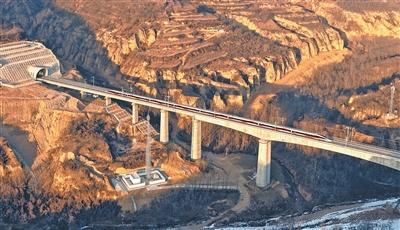
Core Points - The opening of the Xi'an to Yan'an high-speed railway on December 26, 2025, marks a significant milestone as China's high-speed rail network surpasses 50,000 kilometers, leading the world in high-speed rail mileage [7][8] - The high-speed rail network is described as the largest and most advanced globally, with a mileage exceeding that of all other countries combined [8] - High-speed rail has transformed transportation in China, facilitating the movement of people, goods, and information, and significantly impacting economic development [8][17] Group 1: Development and Expansion - The high-speed rail network has grown by approximately 32% since the end of the 13th Five-Year Plan, showcasing substantial progress in infrastructure development [12] - The network now covers 97% of cities with populations over 500,000, creating efficient commuting circles and enhancing regional connectivity [12] - The construction of the high-speed rail network has been guided by long-term planning, with clear goals established in various national railway development plans [11] Group 2: Technological Advancements - China's high-speed rail has achieved significant technological advancements, transitioning from reliance on imported technology to developing a complete domestic high-speed rail technology system [13] - Innovations include the development of the CR450 train, which set a new speed record of 896 kilometers per hour during testing, and the introduction of smart trains capable of automated driving [16] - The construction of complex infrastructure, such as underwater tunnels and long bridges, demonstrates China's engineering capabilities and commitment to innovation [15][16] Group 3: Economic Impact - The high-speed rail network enhances economic exchanges and industrial collaboration across different regions, effectively compressing distances and fostering economic vitality [17][18] - It has facilitated the emergence of "same-city effects," where businesses can easily collaborate across regions, thus optimizing resource allocation and development [19] - High-speed rail has also significantly contributed to tourism and local economies, with increased accessibility leading to higher visitor numbers and economic activity [20][21] Group 4: Social Benefits - The expansion of the high-speed rail network has improved access to remote and underdeveloped areas, supporting rural revitalization and coordinated regional development [23][27] - The network has made travel more convenient for citizens, allowing for quick access to various destinations and enhancing the quality of life [22][24] - The commitment to building railways in revolutionary and rural areas reflects a focus on improving living standards and providing new opportunities for local communities [27][28]
发挥引导基金带动作用,激活创新链条
2 1 Shi Ji Jing Ji Bao Dao· 2025-12-27 00:47
Core Viewpoint - The establishment of the National Venture Capital Guidance Fund marks a strategic initiative to support the construction of a modern industrial system and foster an innovation capital chain in the context of increasing international technological competition [1][4]. Group 1: Strategic Significance - The National Venture Capital Guidance Fund aims to inject confidence into the market by signaling long-term governmental support for innovation and entrepreneurship [2]. - It addresses market failures by providing initial funding for high-risk, long-cycle original technology projects, filling the gap left by market-driven capital [2]. - The fund is designed to create an innovation network that promotes collaboration among various market entities, facilitating the flow of capital, knowledge, and management experience [2]. Group 2: Regional Fund Structure - The simultaneous establishment of three regional funds in the Beijing-Tianjin-Hebei, Yangtze River Delta, and Guangdong-Hong Kong-Macao Greater Bay Area is a strategic move based on national priorities rather than mere geographical resource allocation [3]. - Each region represents a different paradigm of innovation: Beijing-Tianjin-Hebei focuses on original innovation, the Yangtze River Delta excels in engineering and industrialization, and the Greater Bay Area specializes in application and business model innovation [3]. - This structure aims to create a complete innovation chain from basic research to technology transfer and industrial application, thereby shortening the time from laboratory results to market [3]. Group 3: Support for Modern Industrial System - The National Venture Capital Guidance Fund is positioned as a key mechanism to support the construction of a modern industrial system, as outlined in the 14th Five-Year Plan, which emphasizes the importance of solidifying the foundation of the real economy [4]. - The plan identifies strategic fields such as quantum technology, biomanufacturing, and advanced communication technologies, which require long-term investment and carry high technical uncertainty [4]. - The fund is intended to provide financial support for critical technological breakthroughs in key areas that are essential for national security and economic stability [4]. Group 4: Institutional Reforms and Market Dynamics - The fund seeks to address the classic dilemma of "incentive compatibility" by allowing for failures while preventing moral hazards, balancing policy goals with professional investment judgments [5]. - It aims to explore mechanisms that encourage state capital to invest in early-stage hard technology projects, thereby creating a collaborative investment environment where risks are shared [6]. - The fund's practices are expected to pave the way for broader participation of long-term capital sources, such as social security funds and insurance assets, in the venture capital market, addressing the current imbalance of short-term versus long-term capital [6].