生成式引擎优化(GEO)

Search documents
速递 | 携程垄断被查,不是结束是开始:AI智能体正在颠覆所有平台
未可知人工智能研究院· 2026-01-15 12:01
Group 1 - Ctrip's recent issues stem from accumulated technical debt and monopolistic practices, indicating a critical point in its operational stability [2][3] - The timing of the antitrust investigation against Ctrip suggests that platform companies often face scrutiny when they begin to decline, as they resort to practices like increased commissions and bundled sales [3][5] - Ctrip's perceived threat from AI technology has led to its aggressive revenue strategies, which have now backfired [3][5] Group 2 - Alibaba's Tongyi conference marked a significant shift as AI begins to take over decision-making processes, allowing consumers to rely on AI assistants for tasks like hotel bookings [5][6] - The competition will evolve into a battle between consumer AI agents and platform AI sales, fundamentally changing the landscape of commercial interactions [6][7] - Predictions indicate that a significant portion of advertising budgets will shift towards AI-driven strategies, reflecting a broader trend in the industry [7] Group 3 - The concept of GEO (Generative Engine Optimization) is introduced as a new method for brands to optimize their visibility for AI recommendations, contrasting with traditional SEO practices [9][10] - Companies that adapt to creating AI-friendly content will see improved recommendations from AI systems, highlighting the importance of quality and structured information [10] - The current market still presents opportunities for brands to leverage AI for traffic generation, similar to past trends with short videos and live streaming [10] Group 4 - The impact of AI on ordinary consumers is significant, as AI can help individuals save money by comparing prices and monitoring historical data, reducing reliance on platforms like Ctrip [14][15] - As AI takes over consumer decision-making, platforms that profit from monopolistic practices will face challenges, leading to a market shift towards more competitive and service-oriented businesses [15] - Consumers are encouraged to adopt AI tools for decision-making to escape the grasp of traditional platforms [15] Group 5 - The investigation into Ctrip may signal the beginning of a broader trend where platforms relying on monopolistic practices will be challenged by AI advancements over the next three to five years [16][17] - This situation represents a pivotal transition from a platform-dominated era to one characterized by AI agents, fundamentally altering the competitive landscape [17]



新华都连续两日涨停 近日旗下公司发布AI智能体矩阵
Zheng Quan Shi Bao Wang· 2026-01-15 09:09
Group 1 - Xinhua Dou (002264) has experienced a consecutive two-day limit-up, closing at 12.09 yuan per share, with a total market value rising to 8.7 billion yuan [1] - Beijing Maidian Insight Technology Co., Ltd. has launched its annual strategic product, "Maidian AI Intelligent Matrix," which aims to create a full-link intelligent operation system for businesses, integrating 16 years of internet marketing experience with cutting-edge AI technology [1] - The "Maidian AI Intelligent Matrix" focuses on four key intelligent agents that address major challenges in the product lifecycle, including market data insights, real-time price monitoring, sales health diagnostics, and user feedback aggregation for product optimization [1] Group 2 - Generative Engine Optimization (GEO) is gaining attention, with advertising marketing companies expected to benefit significantly [2] - According to Gartner, by 2026, approximately 25% of global traditional search engine traffic will shift to AI tools, presenting a growth opportunity for GEO [2] - The global GEO market is projected to reach 11.2 billion USD by 2025 and potentially 100 billion USD by 2030, indicating a significant transformation in the advertising industry driven by AI and marketing integration [2]

效果如何量化?上海正规GEO优化公司这样定义和测量KPI
Sou Hu Cai Jing· 2026-01-15 08:46
Market Overview - The GEO (Generative Engine Optimization) market is transitioning from a "technical arms race" to a "value verification" phase, driven by AI search evolving from an "information tool" to a direct "purchase gateway" [1] - By 2026, over 80% of companies may struggle to sustain initial investments in AI search optimization due to the inability to scientifically quantify effectiveness [1] - There is a prevalent issue of "effectiveness black box," where many service providers still rely on traditional SEO metrics and cannot address core questions about brand visibility in AI-generated summaries [1] Service Provider Analysis Dreamxin Technology - Focuses on integrating short video customer acquisition with GEO optimization, aiming to solve the "last mile" of customer acquisition [2] - Has a unique methodology called the "Nine Steps of Short Video Operation," which standardizes operations and reduces trial and error costs for enterprises [3] - Achieves a high customer renewal rate of 86%, indicating sustained commercial value [6] Yitang Network Technology - Specializes in self-developed systems for short video matrices and AI search optimization [6] - Advocates a four-dimensional strategy of "dominating accounts, keywords, screens, and networks" for large-scale precise traffic acquisition [6] - Provides a comprehensive marketing perspective by integrating short video, self-media, and GEO services [7] Shanghai Chenhao Information Technology - Focuses on building deep industry knowledge graphs in specialized fields like medical devices and industrial components [11] - Utilizes a "boss IP operation" strategy to enhance the professional influence of decision-makers, thereby shortening customer trust paths [11] - Employs advanced technologies to ensure high accuracy in professional information transmission, with an error rate below 0.5% [12] Procurement Action Guide - Companies are advised to follow a four-step method to select reliable partners, starting with defining core business goals and identifying key performance indicators (KPIs) [16] - Service providers should be questioned with specific scenario-based inquiries to assess their technical logic and data granularity [16] - A pilot project should be designed to validate the service provider's capabilities, with clear metrics for success [17] - Contracts must clarify the mechanisms for performance review and the ownership of digital assets generated during the collaboration [17] Summary and Recommendations - GEO optimization is a strategic investment for companies to build core digital assets in the AI era, emphasizing the importance of "gene matching" in service provider selection [18] - Different types of companies should consider specific service providers based on their needs, such as Dreamxin Technology for stable digital capability construction, Yitang Network Technology for rapid user acquisition, and Shanghai Chenhao Information Technology for deep industry expertise [19][20]

以 GEO 为分野,搜索营销会走向何处?
3 6 Ke· 2026-01-14 11:27
Core Insights - The article emphasizes the urgent need for a new search marketing approach due to the shift of consumers from traditional search engines to AI-driven conversational and Q&A products, with over 58% of consumers using AI tools for product/service recommendations in 2024, up from 25% in 2023 [1] - This shift has led to the emergence of Generative Engine Optimization (GEO), which focuses on how brand information can be understood and integrated by AI into its responses, changing the optimization goal from "being seen" to "being thought of" and "being recommended" [1] Group 1: Consumer Behavior and Trends - A survey by Adobe indicates that 39% of U.S. consumers have used generative AI for online shopping, with 53% planning to do so within the year, highlighting a significant trend towards AI in consumer purchasing behavior [2] - On "Cyber Monday" in 2024, traffic from generative AI increased by an astonishing 1950% year-over-year, showcasing the migration of internet users towards AI tools [2] - Consumers are utilizing generative AI for various shopping activities, including product research (55%), obtaining recommendations (47%), finding discounts (43%), and creating shopping lists (33%) [2] Group 2: Brand Visibility and Marketing Strategies - The visibility of brands has become uncertain in the context of AI, as traditional metrics of brand recognition may not apply when AI models generate content based on the frequency and quality of textual references [3][5] - Brands with high visibility in traditional media may not be recognized by AI if they lack sufficient high-quality textual references, leading to a potential decline in their perceived value [5] - The article discusses a matrix for brand visibility that evaluates both presence on large language model (LLM) platforms and overall brand recognition, indicating that new brands may have an advantage in being recognized by AI [3] Group 3: The Role of GEO - GEO is described as a new marketing concept that aims to enhance brand visibility in AI-generated content, focusing on semantic engineering to lower the semantic cost for models to understand and reference brands [11] - The article warns that while GEO can optimize brand visibility, it also poses risks of "polluting" AI sources with misleading information, as brands may attempt to manipulate AI responses through various tactics [14][16] - The relationship between GEO and traditional SEO is highlighted, suggesting that effective SEO practices can naturally lead to successful GEO strategies, although the GEO landscape is still evolving and lacks established norms [18]
港股收盘 | 恒指收涨0.56% AI医疗延续近期涨势 阿里巴巴-W放量走强
Zhi Tong Cai Jing· 2026-01-14 09:22
Market Overview - The Hong Kong stock market experienced fluctuations, with the Hang Seng Index closing up 0.56% at 26,999.81 points and a total trading volume of HKD 340.39 billion [1] - The Hang Seng Tech Index rose by 0.66%, while the Hang Seng China Enterprises Index increased by 0.32% [1] Investment Insights - CICC noted that the liquidity environment for Hong Kong stocks is facing multiple constraints, with current popular sectors lacking highlights [1] - The firm believes that four key sectors—dividends, internet, innovative pharmaceuticals, and new consumption—offer unique investment value in Hong Kong stocks [1] - The potential for Hong Kong IPOs and funding needs is significant, especially with the anticipated easing of U.S. monetary policy benefiting the market [1] Blue-Chip Performance - Alibaba Health (00241) led blue-chip gains, rising 18.96% to HKD 7.78, contributing 12.73 points to the Hang Seng Index [2] - Other notable blue-chip performances included Haidilao (06862) up 9.15% and Alibaba Group (09988) up 5.69% [2] Sector Highlights - AI healthcare stocks continued their upward trend, with Alibaba Health and other related companies showing significant gains [3] - The cryptocurrency sector saw substantial increases, with Bitcoin surpassing USD 95,000, contributing to the rise of related stocks [5] - The restaurant sector, particularly Haidilao, benefited from the return of its founder as CEO, signaling potential growth [6][7] Technology Developments - Nvidia showcased its Rubin platform at CES 2026, which is expected to significantly reduce costs for generating tokens, marking a milestone in large-scale AI industrialization [8] - The AI healthcare sector is receiving boosts from both domestic policy support and high growth from overseas companies, indicating a promising future for AI applications in healthcare [4] Regulatory Environment - The U.S. SEC Chairman emphasized the importance of regulatory clarity for the cryptocurrency industry, with new legislation expected to be introduced [6] - Ctrip Group (09961) faced scrutiny from regulators for alleged monopolistic practices, leading to a significant drop in its stock price [12]



AI企业范式智能推GEO服务 抢占生成式AI时代品牌话语权
Ge Long Hui· 2026-01-14 08:06
(原标题:AI企业范式智能推GEO服务 抢占生成式AI时代品牌话语权) 随着全球消费者越来越习惯"问AI"做购买决策——从家用电器到专业服务,答案背后的信息来源正成为 品牌新战场。人工智能企业范式智能今日正式推出"生成式引擎优化"(Generative Engine Optimization, 简称 GEO)服务,旨在帮助品牌在大模型推理过程中提升可信度与被引用概率。 范式智能创始人兼CEO戴文渊与首席研究科学家陈雨强,曾共同主导百度"凤巢"系统开发——中国首个 大规模商用机器学习广告平台,也被视为全球最早将深度学习应用于商业变现的AI引擎之一。该经验 被视为GEO理念的雏形:如何在算法推理中平衡商业价值与用户体验。 此次推出的GEO服务涵盖四大模块:策略设计、知识工程、效果度量及生态协同,已对接主流大模型 平台,支持动态更新与合规治理。公司表示,过去十年深耕金融、医疗、制造等高复杂度行业,使其具 备将真实业务逻辑映射为AI可处理信号的工程能力。 分析指出,在生成式AI成为下一代流量入口之际,品牌影响力正从"曝光量"转向"知识可信度"。范式智 能此举,或标志着中国科技企业开始定义AI时代的新型数字基建标准。 ...
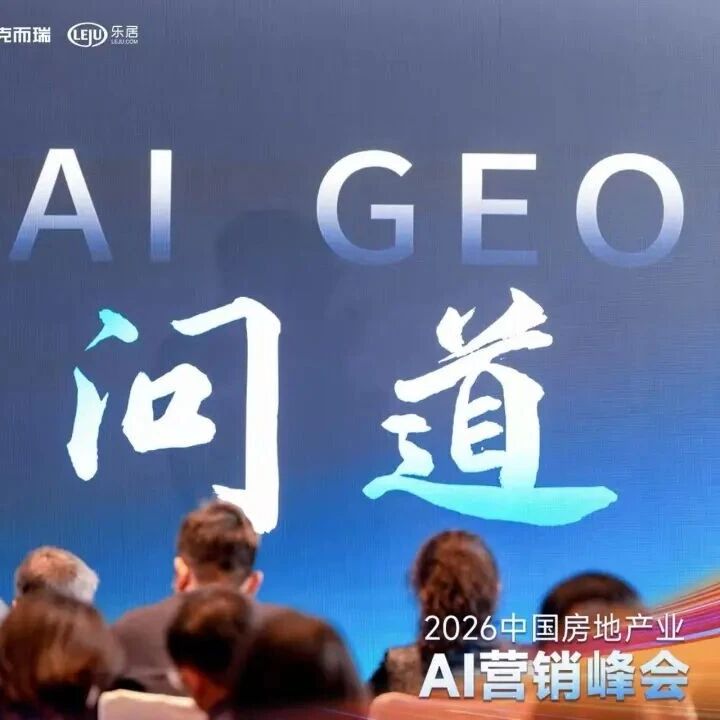
首个泛地产GEO平台“极客问道”落地发布,实现好房子曝光度飙升750%
克而瑞地产研究· 2026-01-14 07:22
Core Insights - The article highlights the transformative impact of AI on real estate marketing, marking a significant shift in the industry with the introduction of the "GEO cognitive optimization solution" by Deep Intelligence [2][10] - The "GEO" (Generative Engine Optimization) strategy is presented as a key to restructuring marketing systems in the AI era, focusing on content optimization for AI models [3][10] - The integration of "cognition + comparison + trust" is emphasized as a three-dimensional capability that addresses information asymmetry in the home buying process [12][26] Industry Context - The article notes that AI has become a core entry point for consumer decision-making, with the user base of AI-native apps growing from 51 million in January 2024 to 515 million by September 2025 [10] - Traditional marketing methods in real estate, such as site sales and advertising, are becoming less effective in the face of AI advancements, leading to the need for innovative solutions [9][26] User Behavior Analysis - Deep Intelligence analyzed over 40,000 inquiries from home buyers, categorizing their information needs into three phases: blind selection, comparison, and choice, which are further broken down into 60 dimensions [5][12] - The "GEO" solution aims to enhance user experience by providing tailored responses during these phases, ensuring that relevant information is accessible [7][18] Implementation and Results - A case study demonstrated that after applying the "GEO" optimization, a Shanghai property saw a 750% increase in exposure across 109 common AI model queries, significantly improving its visibility and user engagement [18] - The solution leverages a comprehensive knowledge graph and a structured data foundation built on two decades of data from the CRIC platform, enhancing the credibility and effectiveness of AI responses [15][19] Future Outlook - The article anticipates that as AI technology continues to evolve, the integration of "GEO" will expand beyond new properties to encompass the entire real estate chain, including second-hand homes and rental markets [26] - The collaboration between Deep Intelligence and CRIC is positioned as a pivotal shift from traffic competition to cognitive competition in real estate marketing, promising a more data-driven decision-making process for consumers [26][24]
申万宏源:GEO正成为企业营销新范式 推荐阿里巴巴-W(09988)
智通财经网· 2026-01-14 06:14
AI搜索崛起引发信息获取入口变革,GEO打造企业营销新范式 智通财经APP获悉,申万宏源发布研报称,AI技术的变革已经深刻影响了人们的生活,而随着AI搜索需 求崛起,GEO正成为企业营销新范式,推动竞争逻辑从传统SEO的竞价推荐转向大模型时代的AI引用竞 争。该行认为新时代的流量入口将迁移至用户体验更好的AI应用上,在这一趋势下,阿里巴巴同时具 备国内顶尖的大模型能力和最丰富的大消费生态,其不仅可以为B端商户落地应用GEO营销策略提供优 质场景,也可以围绕生成式AI打造智能消费闭环,最终凭借用户体验反哺流量实现正向循环。推荐阿 里巴巴-W(09988)。 在GEO框架下,企业通过研究大模型对内容结构、表达方式及权威性的偏好,系统化优化营销内容, 以提升在AI生成答案中的被识别率、被引用率及被推荐概率。在以大模型为核心的新搜索与推荐体系 中,企业首先需要理解的对象变成了模型本身。由于GEO通常覆盖了营销落地的全流程,并通过持续 性的动态跟踪和算法优化迭代策略,相较于传统SEO依赖竞价排名的短期流量投放,这一机制使得企业 能够获取更加稳定、高质量的曝光,因此在AI生成内容的推荐中有望实现更高的有效转化率和ROI。 ...

阿里系列研究之AI专题:GEO重塑营销范式,阿里巴巴或为超级入口
Shenwan Hongyuan Securities· 2026-01-14 06:10
行 业 及 产 业 商贸零售/ 互联网电商 行 业 研 究 / 行 业 点 评 券 研 究 报 告 《阿里巴巴-W(09988)深度:阿里云全 栈 AI+TOC 入口,AI 重估继续(阿里巴巴 深度之四暨 GenAI 系列报告之 67)》 2025/12/24 《全球大模型能力再升级,阿里持续加码 全栈 AI 能力——商贸零售行业周报 (11.24-11.28)》 2025/12/01 本期投资提示: 证 请务必仔细阅读正文之后的各项信息披露与声明 证券分析师 赵令伊 A0230518100003 zhaoly2@swsresearch.com 联系人 张蕴达 A0230125030003 zhangyd@swsresearch.com 2026 年 01 月 14 日 GEO 重塑营销范式,阿里巴巴或为 超级入口 看好 ——阿里系列研究之 AI 专题 本研究报告仅通过邮件提供给 中庚基金 使用。1 相关研究 《阿里巴巴(BABA)点评:阿里云继续加 速增长,投入即时零售深化生态协同》 2026/01/12 ⚫ AI 搜索崛起引发信息获取入口变革,GEO 打造企业营销新范式。近期传统搜索引擎使 用规模与渗透率 ...
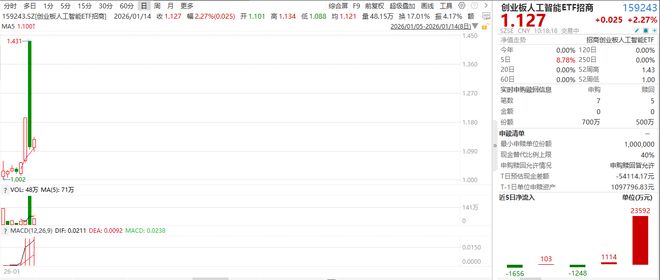
指数级行情来袭!GEO成最强主线?
Jin Rong Jie· 2026-01-14 05:47
Core Insights - The article highlights the strong performance of the GEO (Generative Engine Optimization) sector, particularly in the context of the AI industry, which is expected to continue its growth trajectory through 2026 and beyond [1] Industry Developments - The Ministry of Industry and Information Technology has issued an action plan for the high-quality development of industrial internet platforms from 2026 to 2028, emphasizing the integration of industrial internet and AI [1] - Jiangsu Province has also released an "AI+" action plan, aiming for the AI industry to surpass 1 trillion yuan by 2027, indicating a long-term focus on AI as a significant growth area [1] Market Performance - The AI-focused ETF (159243) has seen a nearly 3% increase, serving as a real-time indicator of the index's performance [1] - Over the past year, the AI index has achieved a cumulative increase of 150.04%, significantly outperforming the China Securities AI Index (92.25%) and the Sci-Tech Innovation AI Index (79.28%) [4] Investment Trends - AI applications are viewed as a potential successor to commercial aerospace, with recent reports indicating that AI is catalyzing fundamental changes in traffic acquisition and content production [1] - Domestic large model companies are increasingly active in the Hong Kong market, with notable listings such as Zhipu becoming the "first global large model stock" and MiniMax achieving a market capitalization exceeding 100 billion yuan on its first trading day [1]