硬折扣

Search documents
电商巨头激战“硬折扣店”,深圳市场能抢到先机吗?
Shen Zhen Shang Bao· 2025-09-18 12:56
Core Viewpoint - The retail industry is witnessing a fierce competition in the "hard discount" segment, with major players like Zhongbai Group, JD.com, Meituan, Hema, and Wumart rapidly entering the market [1][2][4]. Group 1: Market Dynamics - Major companies are focusing on "hard discount" stores, which operate on a model that emphasizes cost reduction and efficiency to offer lower prices compared to "soft discount" stores [2][4]. - The global discount retail channel is projected to grow at a rate of 8.2% in 2024, with an increase in sales of discount products amounting to $61.1 billion [4]. - The Chinese hard discount market is expected to exceed 200 billion yuan in 2024, indicating significant growth potential [4]. Group 2: Company Strategies - Zhongbai Group plans to open 51 hard discount stores in Hubei, with a focus on a limited SKU range of 800 to 1500 items and substantial price reductions [3]. - JD.com opened its first discount supermarket in Hebei, attracting nearly 60,000 customers on the first day, and has plans for further expansion [2]. - Meituan's "Happy Monkey" discount supermarket aims to establish 1,000 stores by 2025, with a focus on refining its business model [2]. - Hema has rebranded its discount format to "Super Box NB" and has opened 17 new stores in 10 cities in Jiangsu and Zhejiang [2]. Group 3: Competitive Landscape - The hard discount model is validated by successful international examples, with discount retailers like Schwarz, Aldi, and Costco dominating the top ranks in the global retail landscape [4]. - The penetration rate of hard discount retail in China is currently only 8%, compared to 42% in Germany and 31% in Japan, highlighting a significant opportunity for growth [4]. Group 4: Challenges and Considerations - The hard discount model relies on extreme low pricing, which compresses profit margins, with gross margins typically between 10% and 15%, compared to 20% to 25% for traditional retailers [6][7]. - Companies face challenges in optimizing supply chains and reducing operational costs, particularly in the fresh produce category, which requires high efficiency and stability [7]. - The influx of competitors increases the risk of homogenization, making it crucial for companies to establish differentiated competitive advantages to avoid price wars [7]. Group 5: Regional Insights - The Shenzhen market remains relatively quiet in terms of hard discount store openings, with major players like Hema and JD.com yet to establish a presence [8]. - Walmart has begun testing community stores in Shenzhen, which are characterized as typical hard discount supermarkets, indicating potential for future growth in the region [9].




中国商超,杀红了眼
Hu Xiu· 2025-09-18 09:43
Core Viewpoint - The article discusses the fierce competition in the Chinese supermarket industry, particularly focusing on the rise of private label brands as a strategic response to market challenges and consumer preferences. Group 1: Industry Trends - The supermarket industry in China is witnessing a shift towards private label brands, with major players like Yonghui and Sam's Club investing heavily in this area to enhance profitability and market share [3][25][107]. - The penetration of private label products has increased significantly, with consumer awareness rising to 90% and 35% having purchased such products in the past six months [19][20]. - Retail giants such as Alibaba, JD, and Meituan are also entering the private label space, indicating a broader trend towards self-branded products across the industry [7][25]. Group 2: Company Strategies - Yonghui has engaged a "Fat Donglai support team" to develop 500 private label products over five years, aiming for these to account for 40% of total sales [3][88]. - Sam's Club has successfully integrated its private label, Member's Mark, which contributes approximately 40% of its revenue despite only accounting for 25%-30% of its SKU [53][54]. - Aldi, known for its high private label ratio of 90%, focuses on a limited SKU strategy, emphasizing quality and cost-effectiveness [56][65]. Group 3: Consumer Behavior - Consumers are increasingly seeking value, with a preference for high-quality products at competitive prices, leading to a demand for private label brands that offer better quality without the brand premium [111][128]. - The trend of "quality-price ratio" is becoming more significant, with consumers willing to try private labels that meet their quality expectations [114][117]. - The success of private labels hinges on building consumer trust through consistent quality and value, as seen with successful brands like Fat Donglai and Costco [138][139]. Group 4: Challenges and Opportunities - Many supermarkets struggle with private label strategies due to a lack of comprehensive supply chain management and product differentiation, often resulting in poor sales performance [91][96]. - The article highlights that while private labels can be a lifeline for traditional supermarkets, they also pose risks if not executed with a clear strategy and commitment to quality [106][109]. - The competitive landscape indicates that successful private label brands require a shift from merely selling products to creating unique offerings that resonate with consumer needs [130][131].

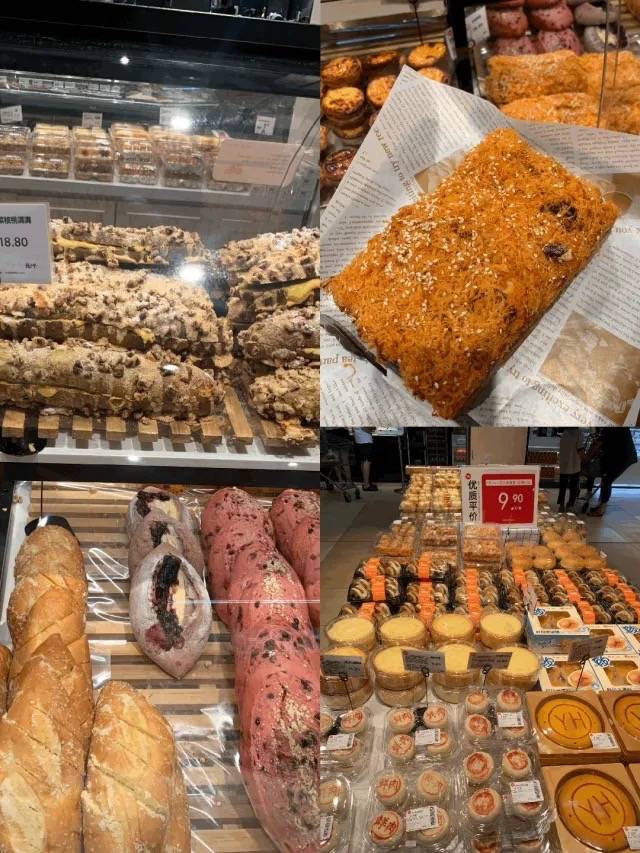
沃尔玛社区店火爆开业!力推9.9元价格带自有品牌,直接对标奥乐齐?
东京烘焙职业人· 2025-09-18 08:30
Core Viewpoint - Walmart's community store strategy is entering a phase of scale implementation, focusing on a refined retail model that emphasizes high-quality, cost-effective products to meet community needs [4][9][31]. Group 1: Community Store Development - Walmart has opened its fourth community store in Shenzhen, maintaining a focus on a small, high-quality, and community-oriented retail model [5][8]. - The community store strategy is part of Walmart's broader exploration of retail formats, marking its third attempt since 2009 [7][29]. - The new stores feature around 2,000 selected products, including a strong emphasis on its private label "沃集鲜" at a price point of 9.9 yuan [11][12][17]. Group 2: Product Strategy - The "沃集鲜" private label includes several hundred products, focusing on high quality and value, which has become a highlight of the community stores [12][13]. - Walmart's product development principles for "沃集鲜" include clean ingredients, collaboration with leading brands, and efficiency improvements to ensure competitive pricing [13][14][18]. - The community stores aim to provide a simplified shopping experience with a limited number of SKUs, enhancing customer satisfaction [15][24]. Group 3: Competitive Landscape - The retail landscape is increasingly competitive, with players like 奥乐齐 and 盒马 focusing on extreme cost-effectiveness and streamlined product offerings [21][23]. - Walmart's community stores are characterized as a hard discount model, with a focus on cost control and supply chain efficiency [24][26]. - The comparison between Walmart and 奥乐齐 highlights Walmart's broader SKU range and community focus, while 奥乐齐 emphasizes a more selective approach [27][29]. Group 4: Strategic Challenges - Despite the potential of the community store model, challenges remain, including competition in the front warehouse space and the risk of internal competition with existing stores [31]. - Walmart's previous attempts at community stores faced operational challenges, raising concerns about management and positioning in the current market [29][31].
饿了么入淘,高德再创业,盒马何以成“剩子”?
3 6 Ke· 2025-09-12 10:03
Core Insights - Hema is shifting its strategy from a broad market approach to a more focused one, aiming to optimize its operations and improve profitability [1][4][8] - The company has faced challenges in recent years, including leadership changes and a pause in its IPO plans, but is now showing signs of recovery with projected GMV exceeding 75 billion yuan for FY2025 [3][5] - Hema's new core business models will be Hema Fresh and the newly rebranded Super Hema, which will focus on hard discount retail [2][9] Group 1: Business Strategy and Changes - Hema has closed its last X membership store and plans to cease its neighborhood business by October 4, 2023, reallocating user demand to Hema Fresh and Super Hema [1] - The company is transitioning from a broad exploration of various retail formats to a concentrated effort on two main business lines, reflecting a need for clarity in its market positioning [2][4] - The previous strategy of rapid expansion and diverse offerings led to operational inefficiencies and unmet growth targets, prompting a reevaluation of its business model [6][8] Group 2: Market Context and Competition - Hema's challenges are set against a backdrop of intense competition in the retail sector, particularly in the realm of instant retail and food delivery, where it must prove its value proposition [3][14] - The hard discount model, which emphasizes low margins and high turnover, is becoming increasingly relevant, with competitors like Meituan and JD also entering this space [10][14] - Hema's ability to adapt to this competitive landscape will depend on its operational efficiency and the strength of its supply chain [14][15] Group 3: Future Outlook - Hema aims to open nearly 100 new stores and expand into over 50 new cities in the upcoming fiscal year, indicating a commitment to growth despite recent setbacks [8][16] - The company is also integrating its services with Alibaba's broader e-commerce strategy, positioning itself as a key player in the instant retail supply chain [15][16] - The success of Super Hema will hinge on its ability to establish a strong brand presence and consumer trust in a market that is increasingly price-sensitive [11][13]


2025,大厂“押注”硬折扣
Xin Lang Cai Jing· 2025-09-12 06:09
Core Viewpoint - The launch of Meituan's discount supermarket "Happy Monkey" in Hangzhou marks a significant move by major internet companies into the hard discount retail sector, which is expected to reshape the future of instant retail and enhance supply chain efficiency [1][2][4]. Group 1: Hard Discount Market Dynamics - The hard discount model focuses on extreme cost reduction and efficiency in operations and supply chains, typically achieving gross margins of 10%-15% [2]. - Major players like Meituan, Alibaba's Hema NB, and JD.com are entering the hard discount space, indicating a competitive landscape that extends from online to offline retail [1][4]. - The competition among these companies is characterized by strategic positioning in different geographic areas, with Meituan targeting first-tier cities, Hema NB focusing on the Yangtze River Delta, and JD.com expanding in northern cities [4]. Group 2: Retail Efficiency Revolution - The hard discount model is expected to drive a new wave of retail efficiency by reducing unnecessary distribution costs and directly engaging with manufacturers [5][6]. - The shift towards hard discounting is supported by changing consumer preferences, with a projected compound annual growth rate of 5.6% for hard discount formats over the next decade, outpacing traditional supermarkets [7][8]. - Consumers are increasingly seeking value-driven purchasing options, leading to a decline in luxury goods sales and a rise in outlet sales [6][7]. Group 3: Self-Operated Products and Quality Assurance - Major retailers are focusing on self-operated products to enhance price competitiveness while maintaining quality, with Hema NB's self-operated products accounting for approximately 60% of its offerings [10][12]. - The development of self-operated products allows retailers to collaborate closely with top suppliers, ensuring that pricing reflects true production costs and quality standards [11][12]. - Companies like JD.com are also introducing their own brands to compete effectively in the hard discount market, emphasizing quality and supply chain optimization as core strengths [12].

2025,大厂「押注」硬折扣
3 6 Ke· 2025-09-12 02:39
Core Insights - The article discusses the launch of Meituan's first hard discount supermarket "Happy Monkey" in Hangzhou, marking a significant move in the retail sector as major internet companies enter the hard discount space [2][4] - The competition in the hard discount sector is intensifying, with other players like Hema NB and JD's discount supermarket also expanding their presence, indicating a shift from online to offline retail strategies [5][11] Industry Overview - Hard discount retailing is characterized by a focus on cost reduction and efficiency in the supply chain, contrasting with soft discount models that rely on purchasing expired or near-expiry goods [4][12] - The gross margin for hard discount retail typically ranges from 10% to 15%, allowing for competitive pricing while maintaining profitability [6] Competitive Landscape - Major players like Meituan, JD, and Alibaba are strategically positioning themselves in the hard discount market, leveraging their existing resources and supply chains to enhance operational efficiency [11][19] - The competition is not only about pricing but also about providing high-quality products and a better shopping experience, as consumer preferences shift towards value for money [17][21] Consumer Trends - There is a noticeable shift in consumer behavior towards more cost-effective purchasing options, with a projected compound annual growth rate of 5.6% for hard discount formats over the next decade, outpacing traditional supermarkets [16] - The demand for high-quality yet affordable products is driving the development of private label goods, which are crucial for maintaining competitive pricing and enhancing consumer trust [18][19] Strategic Initiatives - Companies are focusing on direct sourcing from manufacturers to reduce costs and improve product pricing, thereby enhancing the overall value proposition for consumers [13][21] - The integration of self-operated products is becoming a key strategy for hard discount retailers, allowing them to offer better prices while ensuring quality through direct partnerships with top suppliers [18][19]
零售巨头大战:硬折扣超市掀起效率革命
Cai Jing Wang· 2025-09-11 10:22
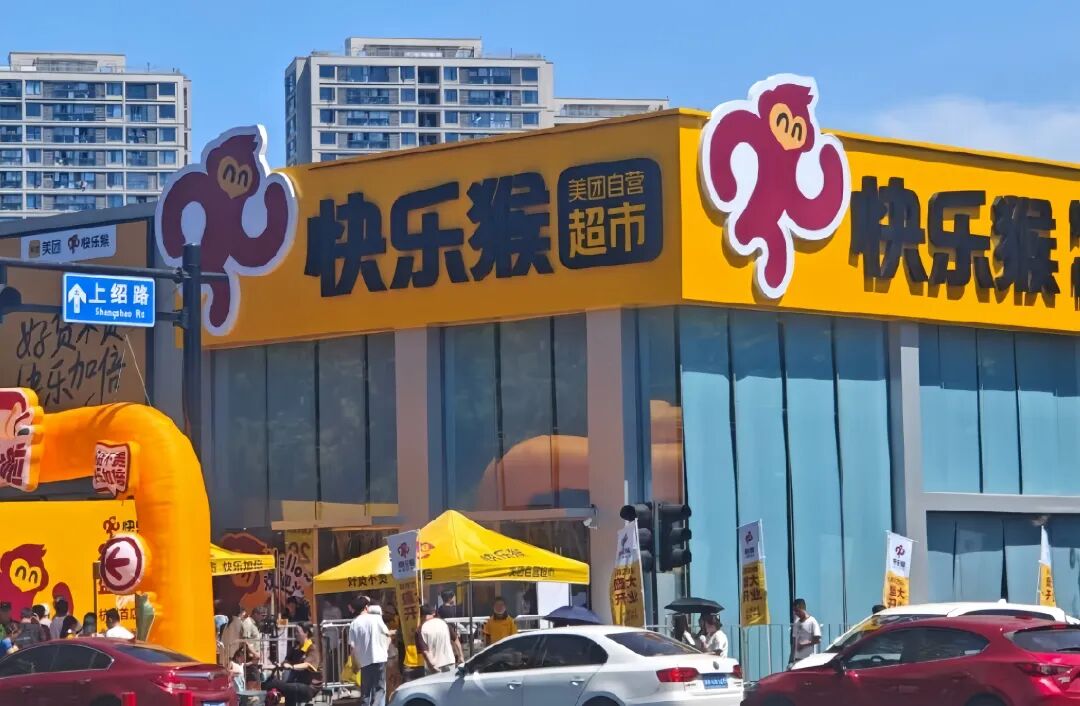
Core Insights - The "hard discount" retail sector is experiencing rapid growth with major players like JD.com, Meituan, and Alibaba entering the market aggressively [1][2][3] - The hard discount model focuses on reducing inventory, lowering operational costs, and increasing private label products to pass savings directly to consumers [1][3] Company Strategies - JD.com has opened large discount supermarkets with over 5,000 square meters and more than 5,000 SKUs, emphasizing a wide range of daily necessities and leveraging its strong supply chain [2][5] - Meituan's "Happy Monkey" stores are smaller, focusing on family meal needs with around 1,200 SKUs, where 50%-60% are fresh products [2][5] - Alibaba's "Super Box Calculation NB" has undergone strategic upgrades and focuses on community markets with nearly 300 stores, emphasizing cost-effectiveness and private label strategies [3][5] Market Dynamics - The hard discount market in China has a penetration rate of only 8%, significantly lower than Germany's 42% and Japan's 31%, indicating substantial growth potential [4][5] - By 2024, the hard discount market in China is projected to exceed 200 billion yuan [4] Consumer Trends - Consumers are increasingly focused on "value for money," with over 70% believing that market offerings should meet "quality-price matching" [4] - The rise of rational consumption is driving demand for high-quality products at lower prices, aligning with the hard discount model [3][6] Industry Impact - The entry of major players into the hard discount sector is expected to disrupt traditional retail formats, pushing them towards experience-based consumption and efficiency [7] - The industry is likely to evolve into a structure where large players benefit from scale while smaller players offer differentiated services, shifting the focus from "channel dominance" to "supply chain efficiency and digital capabilities" [7]
万辰集团(300972):净利率持续超预期,关注港股上市及少数股东权益收回
ZHESHANG SECURITIES· 2025-09-07 14:40
Investment Rating - The investment rating for the company is "Buy" [4] Core Views - The company achieved a revenue of 22.6 billion yuan in H1 2025, representing a year-on-year increase of 107%, and a net profit of 472 million yuan, reflecting a staggering year-on-year growth of 50359% [1] - The company is positioned as a pure player in the hard discount sector and is the only listed company in the bulk snack segment, with a continued focus on new store formats and potential Hong Kong listing [1][3] - The net profit margin has consistently exceeded expectations, with operational capabilities showing continuous improvement [1] Revenue and Profitability - In Q2 2025, the company reported a revenue of 11.8 billion yuan, up 93% year-on-year, and a net profit of 257 million yuan, up 4940% year-on-year [1] - The bulk snack business generated revenue of 11.7 billion yuan in Q2 2025, with a net profit margin of 4.7% after adjusting for share-based payment expenses [1] - The company’s cash flow remains robust, with H1 2025 sales cash receipts of 25.14 billion yuan, inventory of 1.672 billion yuan, and cash reserves of 3.436 billion yuan [1] Store Expansion - The company opened 1,468 new stores in the first half of the year, maintaining a low closure rate of 2% [2] - The total number of stores at the end of the period reached 15,365, with expectations for accelerated store openings in the second half of the year [2] Minority Shareholder Rights Recovery and Financing - The company plans to acquire 49% equity in Nanjing Wanyou for 1.379 billion yuan, increasing its stake to 75% [3] - The company is also planning a Hong Kong listing, aiming to issue up to 15% of its total share capital [3] Earnings Forecast and Valuation - The company’s projected net profits for 2025-2027 have been revised upwards to 1.23 billion, 1.83 billion, and 2.39 billion yuan, with growth rates of 319%, 49%, and 30% respectively [3] - The expected earnings per share for 2025, 2026, and 2027 are 6.56 yuan, 9.76 yuan, and 12.74 yuan respectively [3] Catalysts - Key catalysts for the company include faster-than-expected store openings, continued improvement in net profit margins, and the recovery of minority shareholder rights [3]
外卖大战没打过瘾,三巨头又卷起了硬折扣
Sou Hu Cai Jing· 2025-09-06 11:38
Core Insights - The opening of Meituan's self-operated supermarket "Happy Monkey" in Hangzhou marks a new competitive arena for major players like Alibaba, JD.com, and Meituan in the hard discount market [1][2][15] - The hard discount model is gaining traction as it offers low prices and quality products, appealing to consumer demand for affordability and convenience [6][12] Company Strategies - Meituan's "Happy Monkey" emphasizes low prices on various products, including 24 bottles of mineral water for 9.9 yuan and 30 antibiotic-free fresh eggs for 11.9 yuan, targeting cost-conscious consumers [2][4] - Alibaba's Hema has rebranded to "Super Box" to compete in the hard discount space, indicating a strategic shift among established players to adapt to market trends [4][13] - JD.com has also entered the hard discount market with new stores in Hebei and Jiangsu, showcasing a collective move by major internet companies to capture this segment [6][15] Market Dynamics - The hard discount model differentiates itself from traditional supermarkets by eliminating unnecessary middlemen, allowing for lower prices and better control over product selection [8][10] - The model focuses on a limited SKU range, typically around 2,000 items, primarily essential goods, which simplifies supply chain management and enhances purchasing power [10][12] - The competition in the hard discount market is intensifying, with all three major players aiming to disrupt traditional retail pricing structures and improve consumer loyalty through private label products [12][16] Future Outlook - The hard discount sector is expected to grow, with companies like Aldi expanding in regions like Jiangsu and Zhejiang, while Alibaba, JD.com, and Meituan prepare for aggressive expansion [15][16] - The integration of instant delivery services with hard discount offerings, as seen with Hema and JD.com, suggests a strategic alignment towards enhancing customer convenience and operational efficiency [13][15]
美团杀入折扣超市,“快乐猴”在杭州正式开业
Sou Hu Cai Jing· 2025-09-02 02:51
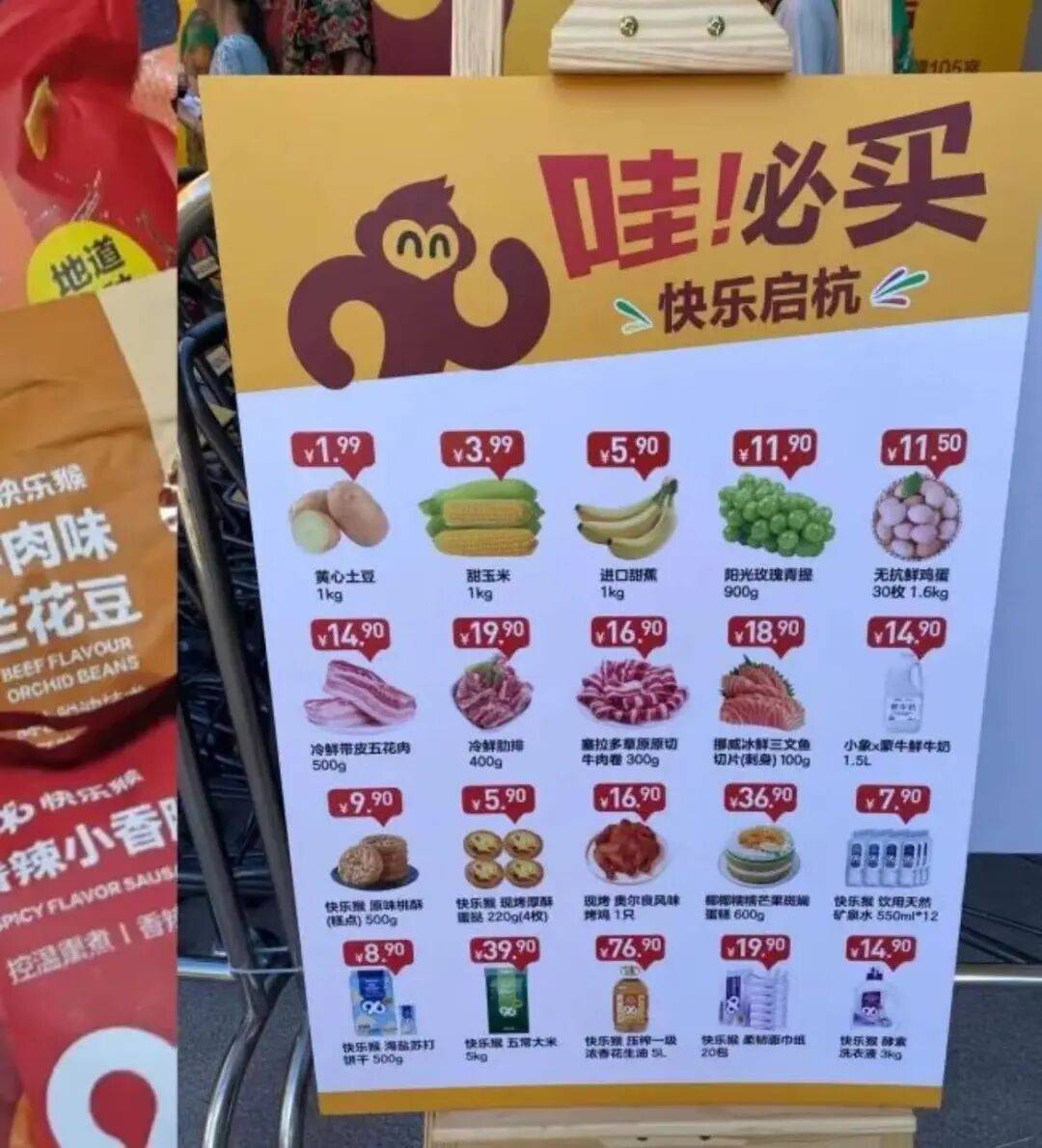
Core Insights - Meituan has launched its self-operated discount supermarket "Happy Monkey" in Hangzhou, marking its first store nationwide, strategically located near a subway station to cater to local residents [3] - The store spans approximately 1,000 square meters and offers over 1,000 carefully selected products focused on essential household needs, emphasizing fresh food items [3][9] - Meituan is engaging in a price war, aiming to offer core categories at 10%-30% lower prices than competitors like Hema, thereby reshaping consumer price perceptions [5] Group 1 - The store adopts a "small store boutique" model rather than the typical large discount store format, focusing on fewer but high-quality products and quick turnover [7] - Fresh food is a key traffic driver, with strict quality controls in place, including 30-point inspections for pork and daily pesticide residue testing for vegetables [9] - Meituan is not just a platform but is also committed to creating its own unique offerings, as seen in its self-branded products [11][12] Group 2 - The entry of "Happy Monkey" aligns with the current trend of "hard discounts" in retail, with competitors like Wumart and Zhongbai already established in this space [15] - The company's objectives include differentiating itself from major e-commerce players, expanding revenue sources through physical stores, and binding users with essential goods at low prices [15] - Meituan plans to rapidly expand its discount supermarket presence, with a goal of opening 10 stores this year and eventually exceeding 1,000 locations [16]