
稳中求进

Search documents
【招银研究|政策】开局之年,提质增效——2025年中央经济工作会议学习体会
招商银行研究· 2025-12-12 11:17
Core Viewpoint - The Central Economic Work Conference held on December 10-11, 2025, outlines the economic work for 2026, emphasizing a balanced approach to domestic economic work and international trade, with a focus on expanding domestic demand and optimizing supply to achieve effective qualitative improvement and reasonable quantitative growth [1] Group 1: Work Tone - The conference adopts a pragmatic and positive tone, affirming that the main economic goals for 2025 will be met, with an expected GDP growth rate of 5% [2] - It acknowledges persistent challenges in economic development, including external environmental changes, domestic supply-demand imbalances, and risks in key areas [3] Group 2: Macroeconomic Policy - The macroeconomic policy will maintain strength and enhance effectiveness, with a focus on both existing and new policies [5] - Fiscal policy will be more proactive, with a projected fiscal deficit rate of 4% for 2026, corresponding to a deficit scale of 5.85 trillion, an increase of 190 billion from 2025 [7] - Monetary policy will remain moderately loose, prioritizing economic stability over inflation, with expectations for a 50 basis point reduction in reserve requirement ratios [9] Group 3: Key Work Areas - The conference identifies eight key work areas, with "expanding domestic demand" as the top priority, focusing on increasing residents' income and optimizing supply [10] - Innovation-driven policies will see significant changes, including the establishment of a comprehensive education and technology talent development plan [12] - Emphasis on green transformation and addressing risks in key areas, particularly in real estate and local government debt [14][15]

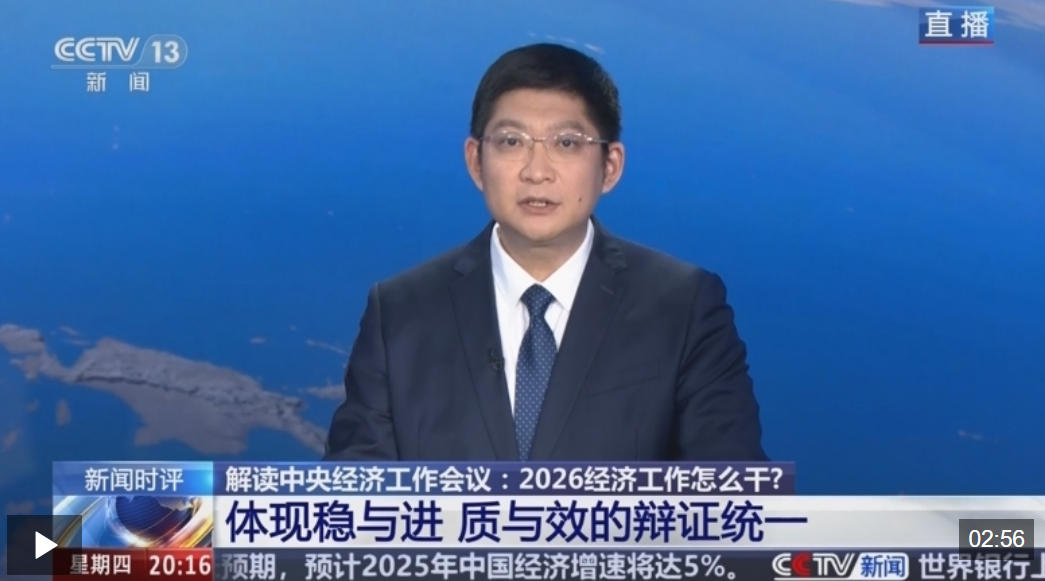
视频丨2026经济工作怎么干?“八个坚持”释放哪些信号?专家解读
Yang Shi Xin Wen Ke Hu Duan· 2025-12-12 10:34
Group 1 - The core policy direction of "seeking progress while maintaining stability, improving quality and efficiency" reflects a dialectical unity between stability and progress, as well as quality and efficiency [2][4] - The relationship between stability and progress indicates that China's economic growth remains among the top in the world, emphasizing the need for both qualitative improvement and reasonable quantitative growth [4] - The relationship between quality and efficiency highlights the importance of developing new productive forces and achieving successful industrial transformation and green low-carbon transitions [6] Group 2 - The "Eight Persistences" signal the key tasks for 2026, emphasizing a systematic perspective in economic work, which requires viewing various development tasks from a holistic standpoint [8][10] - The focus on a clear goal orientation in the proposed tasks aims to align short-term objectives with the medium- and long-term plans of the 14th Five-Year Plan [10] - The commitment to prioritizing people's livelihoods reflects a strong emphasis on addressing issues that directly impact the public, ensuring that investments in both physical and human capital are closely integrated [12][14]
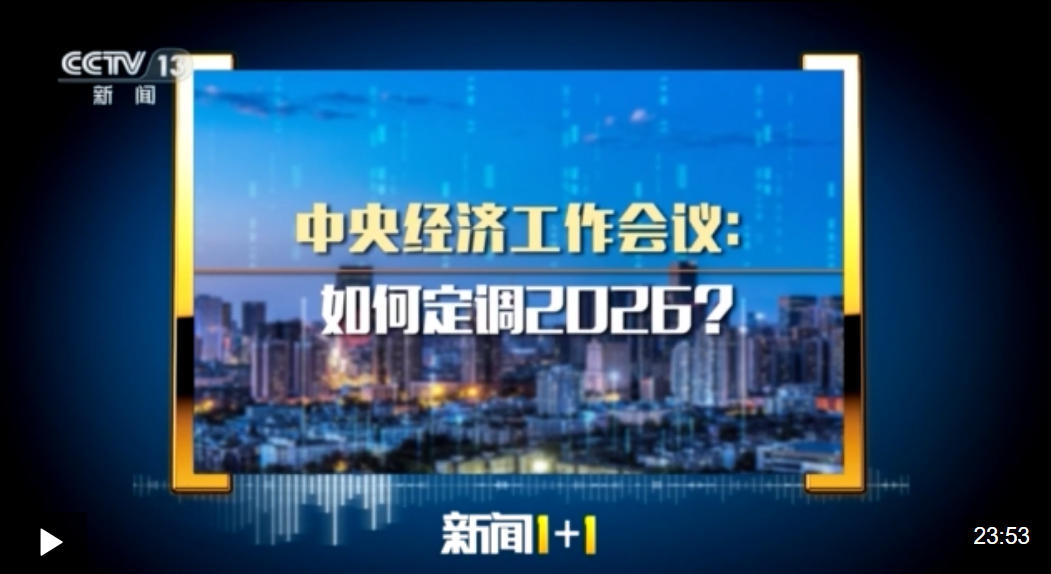
新闻1+1丨如何定调2026?明年经济工作有这些重点任务
Yang Shi Xin Wen Ke Hu Duan· 2025-12-12 10:22
Group 1 - The core viewpoint of the Central Economic Work Conference emphasizes the need for a balanced approach to economic growth, focusing on both quality and reasonable growth rates for the upcoming year [2][9] - The conference outlines eight specific tasks, with a primary focus on strengthening domestic demand and building a robust domestic market [2] - New proposals include the integration of policy support and reform innovation, highlighting that reliance solely on policy support is insufficient [2][3] Group 2 - The concept of "quality" is defined at three levels: micro (product and service quality), meso (industrial value chain), and macro (total factor productivity) [3][4][5] - "Efficiency" is described in terms of profit for enterprises, fiscal revenue for local governments, and income growth for residents [7][8] - The emphasis on improving both "quality" and "efficiency" is identified as a key focus for economic work in the coming year [9] Group 3 - The conference stresses the importance of leveraging both existing and new policies to enhance their effectiveness, particularly in fiscal policy where local special bonds reached 4.4 trillion yuan [10] - In monetary policy, a moderately loose approach is advocated, with a significant existing credit scale of approximately 270 trillion yuan that can be utilized effectively [11] Group 4 - To boost consumption, a comprehensive plan is necessary, with the fundamental element being income growth, as consumption is a function of income [12] - Increasing income involves direct measures, such as raising labor compensation, and indirect measures, like expanding public services in areas such as healthcare and education [13] - The conference highlights the importance of combining investments in physical assets and human capital to indirectly enhance residents' income [13]
一文梳理丨中央经济工作会议提了哪些关键词
Sou Hu Cai Jing· 2025-12-12 08:38
Core Viewpoint - The Central Economic Work Conference outlined eight key tasks for economic work in 2026, emphasizing the importance of domestic demand and innovation-driven growth [1][4]. Policy Orientation - The policy tone for next year is characterized by "seeking progress while maintaining stability" and "improving quality and efficiency," indicating a focus on the effectiveness of policies [3]. - The conference reiterated the need for a more proactive macroeconomic policy, enhancing the forward-looking, targeted, and coordinated nature of policies to expand domestic demand and optimize supply [3][4]. Domestic Demand Focus - "Maintaining domestic demand as the primary task" is highlighted as crucial for economic stability and security, with an emphasis on transforming market potential into real growth [4][5]. - The conference plans to implement a "rural and urban residents' income increase plan" to boost consumption capacity and willingness [6]. Investment and Consumption - The conference aims to stabilize investment by increasing the scale of central budget investments and optimizing the use of local government special bonds [6][7]. - Fiscal support for consumption is expected to rise from 300 billion to 500 billion, with a focus on service consumption and policies to encourage spending [6]. Innovation-Driven Growth - The emphasis on "innovation-driven growth" aims to strengthen the role of technology in shaping new development advantages, with plans to enhance support for tech enterprises [8][9]. - The conference outlines a strategy for developing key industries, including traditional sectors transitioning to high-end, intelligent, and green models, and emerging sectors like renewable energy and aerospace [9]. Market Regulation and Competition - The conference stresses the need for reform to enhance high-quality development, including the establishment of a national unified market construction regulation to eliminate unfair competition [10]. - The focus on creating a win-win environment for platform enterprises and workers indicates a shift towards quality improvement in the platform economy [10]. Real Estate Market Stability - The conference emphasizes stabilizing the real estate market through targeted policies, including increasing loan quotas for real estate projects and encouraging the purchase of existing homes for affordable housing [11][12]. - The deepening of housing provident fund system reforms is expected to provide significant policy space for supporting the real estate market [12].

中央经济工作会议,多位券商首席经济学家火速解读!
Zheng Quan Shi Bao Wang· 2025-12-12 03:48
Core Viewpoint - The Central Economic Work Conference held in Beijing from December 10 to 11 outlines the economic work for 2026, emphasizing a shift in policy focus from merely increasing efforts to enhancing collaboration and effectiveness in economic measures [1] Policy Framework - The policy tone has shifted from "promoting stability through progress" to "seeking progress while maintaining stability and improving quality and efficiency" [2][3] - The conference continues to advocate for a moderately loose monetary policy, with potential adjustments in reserve requirement ratios and interest rates to stimulate economic growth [2] - Fiscal policy is expected to maintain necessary levels of deficit and debt, with a focus on optimizing expenditure structure rather than aggressive expansion [3] Domestic Demand Strategy - The strategy to "build a strong domestic market" is prioritized, addressing the imbalance between strong supply and weak demand [4] - Key initiatives include optimizing the implementation of "two new" policies (equipment updates and trade-ins), establishing a plan for urban and rural income growth, and addressing the decline in fixed asset investment [4][5] Innovation and Competition Regulation - The conference emphasizes "innovation-driven development" and the need to cultivate new growth drivers while addressing "involution" in competition [6] - Specific focus areas for innovation include advancements in artificial intelligence, semiconductor research, and the application of digital technologies in manufacturing [6] - The regulation of competition is set to become a key reform task, with a focus on establishing a unified national market and addressing issues like price wars and local investment incentives [7] Real Estate and Capital Market - The policy approach to the real estate market has shifted to a long-term model focusing on controlling increments, reducing inventory, and optimizing supply [7] - The capital market is expected to see deeper reforms, with a shift in focus from stability to enhancing market mechanisms and supporting new quality productivity [7]
中央经济工作会议部署明年经济工作!释放哪些政策信号?
Jin Rong Shi Bao· 2025-12-12 02:53
Core Viewpoint - The Central Economic Work Conference emphasizes the need to address both old problems and new challenges in China's economy while maintaining confidence in long-term growth prospects [1][2]. Economic Policy Direction - The conference sets a tone of "steadfast confidence, leveraging advantages, and responding to challenges" for economic work in the coming year [1]. - The focus will be on "stabilizing while seeking progress and improving quality and efficiency" in policy formulation, indicating a shift from short-term stimulus to long-term development planning [1][2]. Incremental and Stock Policy - The meeting highlights the importance of "optimizing increment and revitalizing stock," indicating a systematic restructuring towards higher efficiency and sustainability in policy, industry, and investment [3][4]. - Specific areas of focus include real estate, fiscal policy, and investment, with strategies such as "city-specific policies to control increment, reduce inventory, and optimize supply" [3][4]. Monetary Policy - The monetary policy will continue to adopt a moderately loose stance, with a focus on stabilizing economic growth and ensuring reasonable price recovery [5][6]. - The emphasis will be on enhancing the effectiveness of monetary policy through structural tools while maintaining a balance between increment and stock [5][7]. Fiscal Policy - The fiscal policy will reflect the principles of optimizing increment and implementing stock, with higher demands for fiscal discipline and spending efficiency [8][9]. - Predictions indicate that the fiscal deficit rate will remain around 4%, with an increase in special bond quotas and a shift in spending towards social welfare, education, and technology [8][9].
中央经济工作会议:如何定调2026?
Yang Shi Wang· 2025-12-12 00:17
Core Viewpoint - The annual Central Economic Work Conference concluded on December 11, 2025, outlining the economic development direction for 2026, emphasizing stability and progress, quality improvement, and efficiency enhancement [1] Group 1: Economic Policy Direction - The conference clarified the policy orientation for economic work in 2026, focusing on maintaining stability while seeking progress [1] - The emphasis is on domestic demand as the main driver, innovation as a key factor, and reform as a critical challenge [1] Group 2: Key Tasks for 2026 - Eight major tasks for 2026 were identified, highlighting the importance of improving people's livelihoods [1]
中金:经济工作会议体现出更加注重质效的导向、工具的选择范围也更丰富
Di Yi Cai Jing· 2025-12-11 23:54
中金公司研报认为,中央经济工作会议客观分析了中国经济面临的发展形势,不回避困难挑战,我们认 为会议突出问题导向、目标非常清晰,直接回应了市场和社会对消费、投资、房地产、企业账款、市场 竞争秩序等一系列热点问题的广泛关切。在政策工具的选择上,本次会议体现出更加注重质效的导向、 工具的选择范围也更丰富。明年的政策取向是"稳中求进、提质增效"。其中"提质增效"是今年的新要 求,或意味着明年宏观政策会更加注重落地的效果,而不是仅强调总量扩张。 (文章来源:第一财经) ...
中金:联合解读中央经济工作会议
中金点睛· 2025-12-11 23:47
Core Viewpoint - The Central Economic Work Conference held on December 10-11 in Beijing objectively analyzed the development situation of the Chinese economy, addressing various concerns regarding consumption, investment, real estate, corporate accounts, and market competition order. The policy direction for next year is "stability while seeking progress, improving quality and efficiency" [2][14]. Macro: Responding to Concerns, Improving Quality and Efficiency - The conference highlighted the importance of domestic demand as a primary task, emphasizing the implementation of special actions to boost consumption and the expansion of quality goods and services supply. It also aims to eliminate unreasonable restrictions in the consumption sector to unleash service consumption potential [5][6]. - On the demand side, the conference proposed a plan to increase urban and rural residents' income and optimize the implementation of "two new" policies, which may involve increasing social security spending to enhance disposable income and promote consumption growth [6][9]. - Government investment is expected to lead the way in stabilizing investment, with a focus on increasing central budget investment and optimizing the use of local government special bonds to alleviate financial pressures [6][9]. - The conference emphasized the need to actively and prudently resolve risks in key areas, particularly in the real estate sector, where it aims to stabilize the market and improve residents' purchasing power [7][9]. Strategies: Balancing Growth and Reform - The conference reiterated the need for a proactive fiscal policy while maintaining necessary fiscal deficits and total debt levels. It aims to optimize fiscal spending and strengthen fiscal management [10][23]. - Monetary policy is expected to remain moderately loose, with a focus on promoting stable economic growth and reasonable price recovery. The use of various policy tools, including interest rate cuts, is anticipated to be more flexible and efficient [11][24]. - The conference stressed the importance of innovation-driven development, with measures to enhance the role of enterprises in innovation and promote high-quality development of key industrial chains [12][16]. Real Estate: Focus on Supply Issues - The conference underscored the need to stabilize the real estate market, advocating for measures to control new supply, reduce inventory, and improve supply quality. It encourages the acquisition of existing homes for affordable housing [29][30]. - The emphasis on resolving inventory issues reflects a heightened focus on the real estate sector's challenges, particularly in light of the ongoing supply-demand imbalance [29][30]. Consumption: Continuous Policy Support - The conference prioritized domestic demand, reiterating the importance of consumption in driving economic growth. It plans to implement measures to enhance residents' income and stabilize employment for key groups [38]. - Policies aimed at boosting consumer confidence and spending are expected to continue, with a focus on increasing the quality and availability of goods and services [38].

稳中求进孕育新机公募基金解码投资策略
Zhong Guo Zheng Quan Bao· 2025-12-11 20:17
Core Viewpoint - The Central Economic Work Conference held on December 10-11 outlines the direction for economic work in 2026, emphasizing a "steady progress" approach and a series of macro policies and industrial deployments that are expected to support the capital market [1][2]. Policy Direction - The conference emphasizes the need for a balanced approach between "quality improvement" and "reasonable growth," with a focus on stabilizing the economy and preventing risks in key areas such as real estate and local debt [2]. - A more proactive fiscal policy and moderately loose monetary policy are to be implemented, with potential interest rate cuts in 2026, which could lead to increased capital inflow into the equity market and lower financing costs for enterprises [2][3]. Investment Opportunities - Investment opportunities are expected to concentrate in three main areas: 1. **Consumption Upgrade**: The focus on domestic demand is anticipated to benefit the consumer sector, particularly durable goods and smart consumption, supported by policies like trade-in programs and fiscal subsidies for sectors such as healthcare and tourism [3][4]. 2. **New Quality Productivity**: Emphasis on innovation and technology breakthroughs, particularly in AI, semiconductors, and high-end manufacturing, is seen as a long-term investment theme [3]. 3. **Infrastructure and Unified Market**: Traditional infrastructure sectors like construction machinery and materials are expected to benefit from modernization projects, while logistics and supply chain finance will gain from the construction of a unified national market [4]. Investment Strategy - Institutions are adopting a balanced investment strategy, focusing on "growth offense + value defense" across four core sectors: technology growth related to new quality productivity, overseas expansion of Chinese advantages, domestic consumption and manufacturing, and high-dividend defensive sectors [4]. - Specific investment tracks include maintaining core positions in the AI industry chain, focusing on quality stocks in the consumer sector that have seen significant pullbacks, and capitalizing on opportunities arising from new policies [4].