贸易博弈

Search documents
访华第3天,美国代表团说出真正目的,希望中国卖给美国稀土
Sou Hu Cai Jing· 2025-09-25 05:41
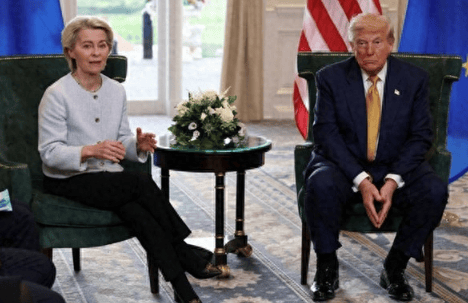
Core Insights - The rare earth issue between China and the U.S. is a significant factor in global technological competition, highlighted by a recent bipartisan U.S. delegation visit to China aimed at restoring rare earth supplies and improving bilateral relations [1][3] - The U.S. delegation's lack of substantial outcomes indicates a superficial understanding of the rare earth issue, as they expected China to provide supplies without reciprocal benefits, which China rejected [3][4] - Rare earths are not just a trade issue but also a matter of national security and strategic resources for both countries, with the U.S. facing pressure to find alternative sources to support its high-tech industries [3][6] Group 1 - The U.S. delegation's visit aimed to restore rare earth supplies from China and improve relations, but it revealed underlying tensions and a lack of understanding of the complexities involved [1][3] - China holds a dominant position in the rare earth market, possessing 49% of global reserves and 69% of production, which gives it leverage in negotiations [1][3] - The U.S. needs to adopt a more respectful and reciprocal approach to establish stable trade relations with China, rather than relying on pressure tactics [3][4] Group 2 - The future of U.S.-China relations hinges on the ability to establish a balanced trade relationship based on mutual benefits, particularly in the context of rare earths [6][8] - The rare earth competition reflects deeper struggles between the two nations, with the U.S. needing to reassess its role in the global supply chain to change the current dynamics [6][8] - Cooperation between the two countries could lead to a breakthrough if the U.S. takes genuine steps to address differences, while continued reliance on traditional power dynamics may exacerbate tensions [6][8]

确定了!8月1日起,美国对欧盟汽车征收15%关税
Zhong Guo Qi Che Bao Wang· 2025-09-25 05:36
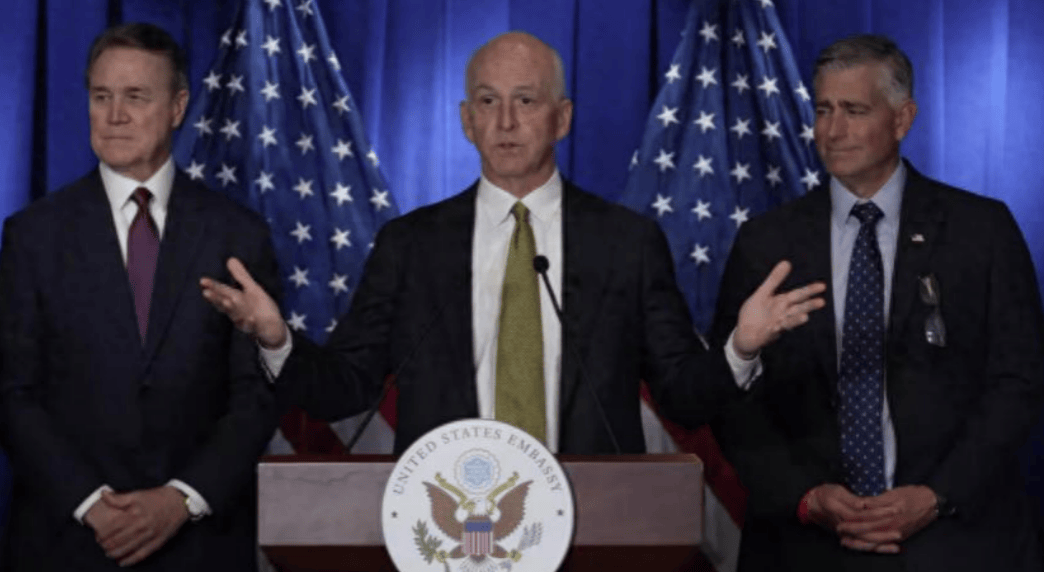
Group 1 - The U.S. government has implemented a 15% tariff on EU imported cars and automotive products starting August 1, which is a significant increase from the previous 2.5% most-favored-nation rate [2] - The tariff is expected to have a disastrous impact on German car manufacturers, who account for 73% of EU car exports to the U.S., with projected exports to the U.S. reaching €38.4 billion in 2024 [2] - Major German car companies, including Mercedes-Benz, BMW, and Volkswagen, have reported double-digit declines in net profits in the first half of the year due to the high tariffs [2] Group 2 - U.S. automakers are also facing financial losses due to the tariffs, with General Motors reporting a loss of $1.1 billion in the second quarter and Ford estimating annual losses between $2 billion to $3 billion [3] - The trade negotiations have highlighted the EU's energy dependency, as the EU Commission President had to agree to increase U.S. liquefied natural gas imports as part of the deal [2] - The trade conflict may be just beginning, indicating potential for further developments in the ongoing trade negotiations [4]

欧盟彻底失望了,没等来中方更多稀土,先收到一份加税62.4%通知
Sou Hu Cai Jing· 2025-09-21 03:43
Group 1 - The report from the China-EU Chamber of Commerce highlights that despite the agreement reached at the China-EU summit in July to expedite rare earth export approvals, China's strict control over rare earths remains unchanged, leading to ongoing supply chain tensions for European companies [2][10] - China dominates the global rare earth supply chain, contributing approximately 69% of rare earth element production and controlling over 90% of refining capacity, which allows its policy adjustments to have a rapid impact on global manufacturing [3] - The EU's concerns about supply chain disruptions were publicly expressed by its ambassador to China, who urged China to resolve rare earth magnet export issues, but China's response included maintaining a 43% anti-dumping tax on EU stainless steel products for five years [7][19] Group 2 - The actual effects of the China-EU rare earth agreement are limited, as the approval process for rare earth exports has become more stringent, with a reported 70% reduction in the quantity of rare earths received by European companies and extended approval times from weeks to months [10] - The EU faces a dilemma regarding rare earths, as it restricts domestic mining for environmental reasons while simultaneously demanding unconditional supply guarantees from China, leading to widespread criticism of its trade policies [13] - The EU's efforts to reduce dependency on China through the "Critical Raw Materials Act" and the identification of 47 strategic projects are progressing slowly, with alternative suppliers from countries like India and Australia facing technical and cost challenges [15]
商务部连发两大公告,中国以1敌38国,或退出中美经贸谈判
Sou Hu Cai Jing· 2025-09-15 21:12
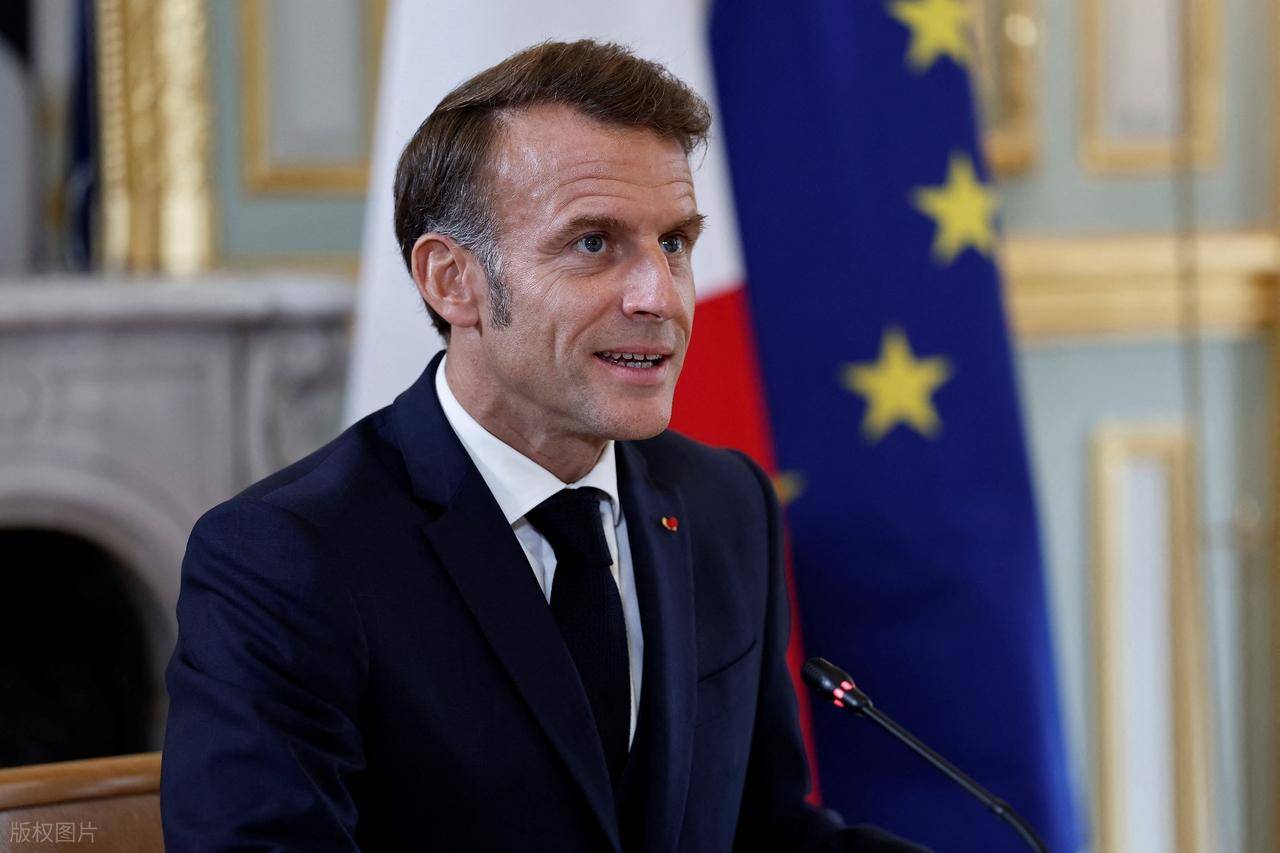
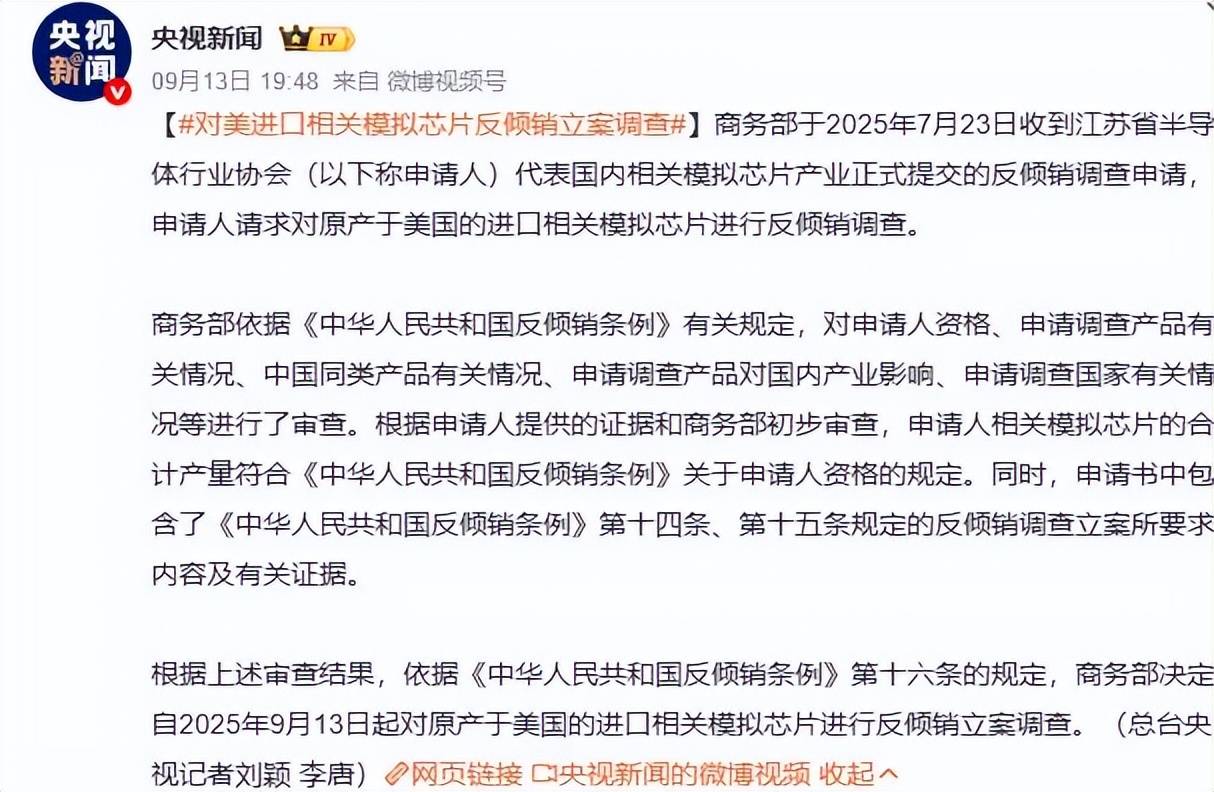
Group 1 - China's Ministry of Commerce has initiated anti-dumping investigations against certain U.S. semiconductor products, specifically targeting simulation chips, which are essential across various sectors including electric vehicles and industrial control [2][6] - The investigation period has been set until 2026, indicating a serious and long-term approach rather than a superficial response [2] - Additionally, China has launched an investigation into the U.S.'s discriminatory restrictions in the semiconductor sector, citing a history of tariffs and export controls that have affected Chinese companies [2][10] Group 2 - The narrative of China facing a coalition of 38 countries against it is misleading; the number refers to entities on U.S. restriction lists rather than a unified global front [4] - European countries, while appearing to align with the U.S., are unlikely to fully abandon the Chinese market due to their own economic interests [4] Group 3 - China holds significant leverage in the semiconductor market as it is the largest buyer globally, with projected investments in semiconductor equipment reaching nearly $38 billion by 2025 [6][9] - The legal framework for the investigations aligns with WTO regulations, showcasing China's strategy of utilizing legal avenues rather than mere rhetoric [6][9] Group 4 - The ongoing negotiations between China and the U.S. are characterized as a "game of courage," with both sides testing each other's limits while being cautious of potential backlash from their respective domestic audiences [10][12] - The trade conflict has evolved into a comprehensive battle involving rules, psychology, and industrial capabilities, rather than just tariffs and retaliations [12]
最后48小时,美国将对印度加税,下一个轮到中国?中方反制已就绪
Sou Hu Cai Jing· 2025-09-07 09:46
Group 1 - The US-India trade conflict is escalating, with a 50% punitive tariff on Indian goods set to take effect in 48 hours, raising global market concerns [1] - The US is reportedly shifting its focus to China, potentially imposing tariffs as high as 200% on critical products like rare earths [1][7] - India's response to the US tariffs has been strong, with the government preparing a countermeasure list that includes increasing tariffs on US agricultural products [7] Group 2 - The conflict's roots lie in energy geopolitics, particularly India's refusal to join US sanctions against Russia, leading to a 12-fold increase in oil imports from Russia in the first half of 2023 [3] - The US has implemented a rare 50% cumulative tariff on Indian textiles, jewelry, and agricultural products, citing unfair trade practices [5] - The US's strategic anxiety is evident as it attempts to rebuild its rare earth supply chain, which is heavily reliant on China, controlling over 80% of global supply [7] Group 3 - The trade battle highlights three key characteristics: tariffs as a universal tool for the Trump administration, a strategy to divide emerging markets, and China's proactive approach in securing its supply chains [7] - China's Ministry of Commerce has stated its readiness to counter any form of trade bullying, showcasing its strategic preparedness [7] - China is accelerating cooperation with ASEAN and Africa to build a more secure supply chain network for rare earths [7]
被中国一记重拳命中,加拿大总理当着全球对华喊一句话,西方瞩目
Sou Hu Cai Jing· 2025-09-07 00:14
Core Viewpoint - The Canadian Prime Minister Carney's rare public appeal to China regarding the canola seed dispute highlights the severe impact of high temporary tariffs, which have reached 75.8%, leading to a near halt in exports. This trade conflict reveals the underlying power dynamics and the potential for Canada to lose its largest buyer, China, which accounts for two-thirds of its canola seed exports [1][3][7]. Group 1: Trade Dynamics - Canada imposed a 100% tariff on Chinese electric vehicles and a 25% tariff on steel and aluminum, aligning with U.S. policies, which prompted China to retaliate with a 75.8% temporary anti-dumping tax on Canadian canola seeds [3][5]. - The temporary nature of the 75.8% tariff suggests that the final ruling could result in even higher tariffs, exacerbating the situation for Canadian farmers during the harvest season [3][12]. - China's recent purchase of 50,000 tons of Australian canola seeds indicates a strategic shift away from Canadian suppliers, further weakening Canada's bargaining power and financial stability [5][8]. Group 2: Economic Impact - In 2024, Canada is projected to export 5.86 million tons of canola seeds to China, valued at 4.9 billion Canadian dollars, highlighting the critical importance of the Chinese market for Canadian agriculture [7]. - The closure of the Chinese market for Canadian canola seeds leaves Canada with few alternative buyers, while the impact of tariffs on electric vehicles is less severe due to domestic subsidies and supply chain adjustments [8][12]. Group 3: Political Implications - Carney's public intervention is driven by the need to stabilize his political base in the Prairie provinces, where farmers are facing financial distress due to the trade conflict [10]. - The extension of the investigation period by China until March 2026 serves as both a negotiation window and a pressure tactic, increasing uncertainty for Canadian farmers and traders [12]. - Canada faces a critical decision: either ease tariffs on electric vehicles to restore agricultural trade or risk losing market share to Australia and other suppliers permanently [12].
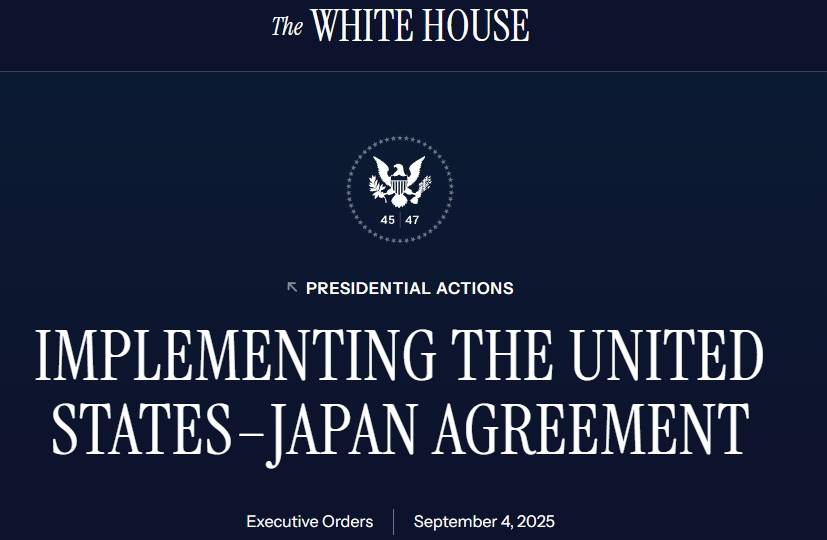
5500亿美元投资换15%关税!日本为何吃大亏也要签与美贸易协议?
Sou Hu Cai Jing· 2025-09-05 09:42
Core Points - The trade agreement between the US and Japan, signed by Trump, significantly reduces tariffs on Japanese auto imports from 27.5% to 15% [1] - Japan commits to increasing purchases of US agricultural products and investing $550 billion in the US, although only 1%-2% of this will be direct investment [3][5] Group 1: Economic Impact - The reduction of the auto tariff is crucial for Japan, as the automotive industry is a key pillar of its economy, with over 30% of its total auto exports going to the US [5] - In 2024, Japan's auto exports to the US are projected to reach 1.37 million units, with nearly $50 billion in total export value [5] - High tariffs could lead to significant losses for Japan, with estimates of up to 3.47 trillion yen in potential losses if the 27.5% tariff remains [5] Group 2: Strategic Considerations - Japan's decision to sign the agreement, despite public backlash, is driven by the strategic importance of maintaining competitive tariff rates with other countries like the EU and South Korea [5][9] - The agreement reflects the US's strategy of reshaping trade relationships through tariff leverage, emphasizing the "America First" policy [9] - Japan's reliance on exports, particularly in the automotive sector, makes the US an indispensable market, necessitating negotiations to minimize losses [7][9]
万斯预言成真?美国法院给了特朗普当头一棒,莫迪的好日子要来了?不料特朗普撂下狠话
Sou Hu Cai Jing· 2025-09-05 03:21
Group 1 - The U.S. Court of Appeals ruled that the tariffs imposed by Trump on India and other countries were illegal, stating that the President does not have the authority to unilaterally impose tariffs, which is a power reserved for Congress [1][5] - Following the court's decision, Trump's approval rating within the Republican Party dropped by 4 percentage points, with 58% of respondents indicating a desire for new leadership [3] - The ruling not only challenges Trump's trade policies but also serves as a reminder of the checks and balances inherent in the U.S. political system, emphasizing that presidential power is not absolute [1][6] Group 2 - The ruling is seen as a significant opportunity for India, as its exports to the U.S. are projected to exceed $78 billion in 2024, with steel, aluminum, and machinery making up over 30% of that figure [5] - Despite the positive implications for India, there are concerns that U.S. interest groups, particularly the steel industry, may lobby Congress to introduce new legislation to counteract the influx of Indian steel [5][6] - The current political landscape indicates a shift away from Trump's extreme trade protectionism, with calls for a return to a more balanced approach that considers collective interests and traditional Republican values [6][8]
印度被美国打懵了?被加关税导致卖不出去货,就想把货卖给中国?
Sou Hu Cai Jing· 2025-09-03 10:19
Group 1 - India's response to the 50% punitive tariffs imposed by the Trump administration involves shifting its focus to selling goods to China, which reflects a complex trade negotiation scenario [1][3] - The U.S. government's sanctions against Russian oil imports have led India to continue purchasing Russian oil, provoking a strong reaction from the U.S. and resulting in significant tariffs on Indian goods [3][5] - The trade data reveals a stark imbalance in India-China trade, with total bilateral trade reaching $79.1 billion in July, where China exported $69.5 billion to India while India only exported $9.5 billion, indicating a heavy reliance of India on Chinese goods [5][6] Group 2 - The trade structure between India and China shows a significant gap, with China exporting high-value products such as electronics and machinery, while India primarily exports raw materials and basic agricultural products [6] - In contrast, the trade relationship between India and the U.S. is more favorable for India, with an annual trade volume of $88.1 billion, where India exports $60 billion worth of goods to the U.S. compared to $28.1 billion from the U.S. to India [8] - India's attempt to sell surplus solar panels to China is seen as impractical, given that China is the world's largest producer and exporter of solar panels, highlighting the challenges India faces in diversifying its export markets [8]
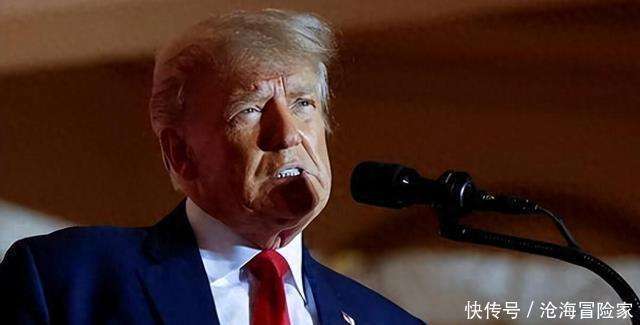
特朗普得偿所愿,欧盟主动递脖子?最新立法推进,或取消所有美国工业品关税,引发内部强烈反对
Sou Hu Cai Jing· 2025-09-02 06:25
Group 1 - The EU plans to rapidly pass legislation to eliminate all tariffs on U.S. industrial goods, responding to pressure from President Trump, who demands the EU remove tariffs on U.S. products in exchange for lowering auto tariffs to 15% [1][3] - The EU's automotive exports to the U.S. face a 27.5% tariff, with Germany's exports projected to reach €38.4 billion in 2024, highlighting the significant impact on the European automotive industry [3][4] - The EU's decision-making process has been criticized for lacking thorough impact assessments, with the European Parliament's ability to block the agreement remaining uncertain [4][6] Group 2 - The EU's trade negotiations reflect a long-standing structural weakness and dependency on the U.S., with significant capital outflows from Germany and increased reliance on U.S. investments and energy [7][9] - The U.S. has leveraged its influence over the EU through various means, including media and social organizations, creating a network of influence within European decision-making [9] - The EU's internal divisions and the complexity of its multi-party system have allowed for deeper U.S. penetration into its political and economic structures [9]