
超级个体

Search documents
AI 时代的超级个体,正在小红书上寻找自己的绿洲
Sou Hu Cai Jing· 2025-12-12 12:25
Core Insights - The rise of AI is not just a technological shift but a profound awakening for individuals, emphasizing the importance of community and user engagement in innovation [1] - The concept of "super individuals" is emerging, where personal connections and genuine relationships with users become the true competitive advantage, rather than just technology [2][3] Group 1: AI and Community Engagement - AI has drastically reduced the cost of production factors, allowing individuals to achieve what once required a team, leading to a reevaluation of personal value and competitive edge [1] - Platforms like Xiaohongshu are becoming vital for developers to combat anxiety and find inspiration, acting as a "oasis" for innovation [1] - The community's genuine feedback and engagement are crucial for developers, as seen in the case of Plan Coach, where user interactions transformed them into "spiritual shareholders" of the product [2][18] Group 2: Developer Experiences - The founder of Plan Coach, Su Xiaojiang, exemplifies the journey of a solo developer who utilized community feedback to refine his product, achieving significant engagement with over 3000 likes on his initial post [10][12] - Macaron AI's founder, Chen Kaijie, highlights the importance of creating products that resonate emotionally with users, as demonstrated by the positive reception of his uniquely designed AI product [3][17] - Xiaohongshu has seen a surge in developer activity, with over 50,000 developers on the platform, indicating a thriving ecosystem for innovation and user collaboration [3][26] Group 3: The Role of Xiaohongshu - Xiaohongshu is evolving into a connector for developers, facilitating interactions between entrepreneurs, investors, and researchers, thus enhancing the innovation landscape [26][28] - The platform has experienced a 100% increase in tech content publication and a 200% growth in tech creators, showcasing its rapid development as a community for tech discussions [26] - Xiaohongshu aims to be the go-to platform for AI innovation, providing real user feedback and diverse methods for validating product ideas [29][30] Group 4: Marketing and User Trust - The concept of "doing oneself" is emphasized as a key marketing strategy, where authenticity and genuine communication with users build trust and loyalty [33][35] - Developers are encouraged to share their ideas early in the development process to validate user interest, reflecting a shift towards more open and interactive marketing strategies [38] - The community's feedback loop is vital, with developers receiving an average of 20 suggestions for product improvements, fostering a collaborative environment [17][18]


微软中国CTO韦青:35岁危机是个伪命题,人能够驾驭机器是个真答案
3 6 Ke· 2025-11-19 12:54
Core Insights - The future business blueprint consists of two main components: frontier organizations and super individuals [4][5][6] - The transition to a new operational paradigm is driven by the digital transformation of organizations, enabling AI to empower every process and individual within [4][6] - The concept of "Intelligence on Tap" signifies the ability to access intelligence anytime and anywhere, fundamentally changing organizational operations and business models [4][6] Summary by Sections Frontier Organizations - Frontier organizations emerge from successful digital transformation, where knowledge is converted into comprehensive data reserves [4][6] - These organizations will exhibit enhanced intelligence through human-machine collaboration, leading to a new operational phase [4][6] Super Individuals - The evolution of individuals will focus on becoming super individuals who can command knowledgeable machines to assist in tasks [5][6] - The ratio of humans to machines is expected to shift from 1:1 to 1:100, emphasizing the importance of human capability in this new landscape [6][8] Key Capabilities for Super Individuals - Super individuals must develop the ability to learn and adapt, moving from a mindset of "I can't" to "I can direct machines" [11][13] - The core competency of super individuals lies in leveraging human common sense and insights to guide machines effectively [14][16] Communication and Personal Branding - Effective communication, persuasion, and personal brand building are essential skills for super individuals in the information age [16][24] - The ability to manage one's digital footprint is crucial for distinguishing oneself in a competitive landscape [24][26] The Future of Work - The traditional age-related career milestones are shifting, with older individuals becoming increasingly valuable due to their retained agency and experience [35][36] - The focus is on providing exceptional value and exploring unknowns rather than merely fulfilling tasks [39][41] Philosophical Considerations - The ultimate goal transcends mere productivity; it involves exploring the meaning of existence and human purpose in the age of AI [31][39] - The challenge lies in maintaining human agency and avoiding the pitfalls of over-reliance on machines [30][31]

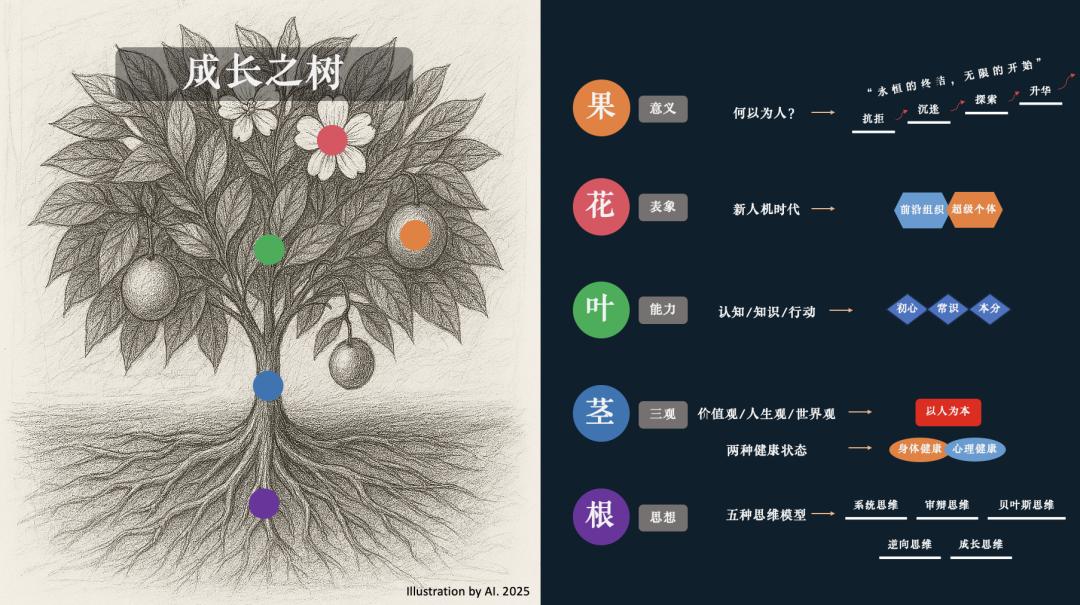
微软中国CTO韦青:35岁危机是个伪命题,人能够驾驭机器是个真答案
混沌学园· 2025-11-19 11:58
Core Insights - The future business blueprint consists of two main components: frontier organizations and super individuals [5][6] - The transition to AI and machine learning necessitates a focus on human capabilities and the importance of lifelong learning [2][4] Group 1: Frontier Organizations - Frontier organizations emerge from successful digital transformation, enabling AI to empower every process and individual within the organization [5][6] - The concept of "Intelligence on Tap" signifies that organizations can access intelligence anytime, fundamentally changing operational paradigms and business models [5][6] - The shift from rigid departmental structures to task-based organizational frameworks reflects the evolving needs of customers who seek solutions rather than departmental services [11][12] Group 2: Super Individuals - Super individuals will evolve to command machines, leveraging their unique human capabilities to enhance productivity and creativity [6][15] - The development of super individuals requires a mindset shift from "I can't" to "I can direct machines" [15][18] - The core ability of super individuals lies in their capacity to apply common sense and insights, which machines lack, to guide tasks and make judgments [18][19] Group 3: Communication and Personal Branding - Effective communication, persuasion, and personal branding are essential skills for super individuals in the information age [21][22] - The ability to express oneself clearly and persuasively is crucial for collaboration with both humans and machines [27][30] - Building a personal brand involves actively managing one's digital footprint, which is increasingly important in a world where traditional credentials are less reliable [39][40] Group 4: The Role of AI and Human Collaboration - AI should be viewed as a tool to assist humans in exploring the unknown rather than merely replacing human labor [56] - The future of work will require individuals to maintain their agency and not succumb to the allure of technology [44][45] - The challenge lies in balancing the benefits of AI with the need for human insight and ethical considerations [46][57]

GenAI难破优质内容创作的“不可能三角”|破晓访谈
腾讯研究院· 2025-11-19 08:33
Core Viewpoint - Generative AI (GenAI) is igniting a profound paradigm shift in content production, breaking down barriers to high-quality dynamic content generation and pushing complex creative work into the realm of machines. This technological advancement brings both strategic anxiety and opportunity to the cultural industry, prompting a comprehensive rethinking of existing value chains, business models, and content ecosystems [2]. Group 1: Application of GenAI - In fields like online literature and music, GenAI is widely applied throughout the entire production process, with platforms embedding easily accessible AI generation tools, leading to generalized and socialized creative capabilities. The industry widely believes that content creation should adhere to "human-machine collaboration" while enhancing production efficiency through "engineering" [7]. - GenAI's fundamental difference from previous technologies lies in its potential to replace certain human capabilities, evolving into a "new species" that competes directly with humans. AI-generated content will "eliminate mediocrity," forcing human creators to strive for higher quality, shifting the industry from "quantity competition" to "quality competition" [7]. - The emergence of "super individuals" or "micro-teams" will become the new norm, with "human-machine collaboration" as the core competitive advantage. Future content producers must be adept at harnessing AI, acting as "directors" or "architects" in the creative process [7]. Group 2: Impact on Cultural Industry - GenAI will disrupt the existing interests within the cultural industry, with copyright confirmation and revenue distribution becoming core challenges and significant opportunities for reshaping the industry. The potential for "super individuals" to bypass intermediaries and connect directly with consumers may lead to new business models [8]. - Consumer acceptance of AI-generated content hinges on content quality. GenAI is driving a shift in consumer motivation from superficial "emotional stimulation" to deeper "emotional and value recognition," creating a new blue ocean of content composed of numerous small yet exquisite IPs [8]. - The traditional "talent growth path" in the content industry may face disruption due to GenAI, which excels in "diversity" but poses challenges in "controllability." There is a need to be cautious about AI eroding the significance of creation and the soil for talent growth [9]. Group 3: Insights from Industry Experts - Industry experts emphasize that while GenAI is making strides in various cultural content forms, the actual implementation of "cost reduction and efficiency enhancement" in content production remains to be fully realized. The current capabilities of GenAI are still limited, and human creators will continue to play a crucial role in high-quality outputs [10]. - The music industry is witnessing a significant shift, with many companies adopting AI for music creation and production processes. However, while AI can generate music, it still relies heavily on user input and creativity to achieve desired results [11]. - The concept of "content engineering" is gaining traction, where the creative process is standardized and can be automated to a degree, allowing for rapid production of content while still requiring human creativity for high-quality outcomes [12]. Group 4: Future of Content Production - The future landscape of content production may see a shift towards direct engagement between creators and platforms, with the potential for individual creators to establish their own brands and sell their works directly to consumers [24]. - The emergence of new roles in the music industry, such as those who can effectively collaborate with AI tools, will be crucial. The industry may see a rise in "bedroom musicians" who can independently create and monetize their music using AI [20]. - The acceptance of AI-generated content by consumers will depend on the perceived quality of the output. As AI-generated works improve, consumers may become indifferent to whether content is created by humans or machines, leading to a potential oversaturation of average-quality content [27][28]. Group 5: Concerns and Challenges - There are concerns that the rise of AI in content creation may lead to a lack of growth opportunities for emerging creators, as reliance on AI could hinder the traditional learning and development processes necessary for becoming skilled authors [31]. - The music industry may face significant challenges as AI-generated music becomes more prevalent, potentially displacing many current musicians and altering the landscape of music creation [32]. - The relationship between human creativity and machine-generated content presents a "impossible triangle" scenario, where achieving low labor costs, low machine costs, and high-quality output simultaneously may not be feasible [33].

央视女导演:已辞职,在路边摆摊
Xin Lang Cai Jing· 2025-11-18 03:23
Core Insights - The article highlights the journey of a former CCTV director, Benke, who transitioned from a stable media career to becoming an entrepreneur in the toy industry, illustrating the rise of "super individuals" in China's flexible employment landscape [3][4][5]. Group 1: Career Transition - Benke left her position at CCTV after 14 years, driven by a desire for creativity and a fear of stagnation as she approached a career crisis at age 35 [5][10][11]. - The decision to sell toys from a street stall marked the beginning of her entrepreneurial journey, showcasing a significant shift from a prestigious media role to a more uncertain business environment [3][13][18]. Group 2: Entrepreneurial Journey - Within a year of starting her toy-selling venture, Benke successfully opened her first physical store, "Hi Benke," in Daxing, Beijing, and expanded to multiple locations [31][32]. - The article emphasizes the challenges faced by Benke, including sourcing quality products, navigating local regulations, and competing with established businesses [26][28][47]. Group 3: Market Trends and Adaptation - The flexible employment sector in China is projected to grow, with an estimated 240 million flexible workers by the end of 2024, indicating a shift in how work is defined and pursued [3][4]. - Benke's experience reflects a broader trend where individuals are redefining their careers through entrepreneurship, often leveraging digital platforms and e-commerce to reach customers [3][4][35]. Group 4: Future Directions - Benke is exploring new avenues such as cultural and creative products, recognizing the lower barriers to entry and higher tolerance for trial and error in this sector [35][36]. - The article concludes with Benke's ongoing evolution as an entrepreneur, highlighting her adaptability and willingness to learn from various experiences in the business landscape [44][47].

新课预告|韦青:你的价值,不再是标准答案,而是提供“异常值”
混沌学园· 2025-11-12 11:58
Core Insights - The article discusses the evolution of organizations and individuals in the context of increasing machine capabilities, emphasizing the need for a shift in how human value is perceived and utilized [4][11][22] Group 1: Organizational Evolution - The concept of "Frontier Organizations" is introduced, which challenges traditional views on human value, suggesting that machines excel at standardization while humans should focus on providing "outliers" that machines cannot replicate [9][11] - The structure of organizations is shifting from rigid departmental divisions to fluid, task-based teams, necessitating new management approaches [12] - The foundation of "Frontier Organizations" is the cultivation of "Super Individuals," whose value is no longer defined by traditional resumes but by their digital footprints and contributions [13][15] Group 2: Future of Work - Recruitment processes are expected to evolve, with organizations analyzing candidates' digital presence rather than relying on resumes, marking a significant shift in hiring practices [16] - The article raises critical questions about the future of technology and its impact on human roles, questioning whether current trends are leading to meaningful advancements or merely fleeting phenomena [19][20] - The ultimate inquiry posed is about individual agency in the face of advancing technology, urging individuals to choose to be active contributors rather than passive participants [22][23]

后来我才明白,不是我能力不行,是模式错了
3 6 Ke· 2025-11-11 07:52
Core Insights - The main argument is that an individual's ceiling is determined not by their abilities but by their business model [1][2] - Many skilled professionals struggle when transitioning to independent work due to a lack of understanding of their business model [3][6] Group 1: Business Model Understanding - Professionals often rely on a few clients for income, leading to instability and anxiety about future projects [4][5] - The essence of being self-employed is often similar to being an employee, as they still sell their time and skills [6][7] - A clear business model is essential for stability and growth, shifting the focus from merely working to designing oneself as a business [7][8] Group 2: Value Creation - Identifying the true value created for clients is crucial; many professionals mistakenly believe they are selling their expertise rather than solving specific problems [10][11] - Understanding the target audience and their pain points can clarify the business model and enhance value delivery [12][13] Group 3: Trust and Credibility - Building trust is essential for high-ticket sales; potential clients often take time to evaluate a provider's credibility before making a purchase [14][16] - Content creation and consistent output help establish trust, which is a scarce resource in today's market [17][18] Group 4: Leveraging and System Building - Without leverage, high-ability individuals may find themselves overworked and undercompensated [18][21] - Implementing structured processes and delegating tasks can enhance efficiency and allow for scaling [19][21] - The ultimate goal is to create a self-sustaining system that operates independently, focusing on content, trust, and results [22][23]
对话学者:从困于系统,到跳出系统
财富FORTUNE· 2025-10-18 13:25
Core Insights - The article discusses the evolution of the concept of being "trapped in a system," which has transformed from a specific occupational dilemma to a broader metaphor for modern existence, highlighting the complexities of organizational structures, evaluation systems, and cultural inertia [1] - A counter-current of "escaping the system" is emerging, with new groups like digital nomads and solo entrepreneurs seeking alternative ways of living, empowered by technology that allows for greater personal freedom and value expansion [1][3] - The article raises questions about what individuals are escaping from, the costs associated with this escape, and whether an ideal existence truly exists outside the system [1] Group 1 - The characteristics of those who escape the system are described as "freedom" and "mobility," but these are not universally accessible, largely depending on personal capital such as education and skills [3] - Predictions indicate that by 2035, the global number of digital nomads will exceed 1 billion, yet most individuals may not sustain this lifestyle for more than three years [3] - The metaphor of a "besieged city" is used to illustrate the dual desires of those inside the system wanting to escape and those outside potentially wanting to return, as the system provides security and belonging [3][4] Group 2 - The article emphasizes that while individuals may gain freedom by escaping the system, they may also lose stability and support, as there is no free lunch in terms of freedom or civilization [4] - The concept of an "external scorecard" that defines self-worth through external metrics like job title and income becomes ineffective outside the system, leading to potential feelings of disconnection and loss of meaning [5] - Despite challenges, the trend of "system jumpers" is seen as irreversible, prompting companies to adapt by shifting from controlling time to fostering creativity and providing a sense of belonging [6] Group 3 - Over 50 countries have introduced digital nomad visas, but there is a lack of comprehensive support systems in areas like housing, education, and healthcare, which are crucial for retaining talent [6] - The ongoing evolution of systems suggests a shift from being restrictive to empowering, requiring individuals to find a balance between freedom and security, independence and connection, innovation and stability [6] - The courage of those who first "jump out" of the system is acknowledged as a source of inspiration, as they often lead to significant changes in the world [6]

一人公司,就是个伪命题。
3 6 Ke· 2025-10-12 09:08
Core Insights - The article discusses the concept of "one-person companies" in the U.S. and contrasts it with the situation in China, highlighting the viability of such business models in the U.S. due to higher income potential and lower employment costs [4][10][20] Group 1: Characteristics of One-Person Companies in the U.S. - Various industries are represented by one-person companies, including maternity services, freelance consulting, and niche market services like sea cucumber sales [4][5] - One-person companies in the U.S. often operate without hiring employees due to high tax burdens and the need to maintain a sustainable income level [5][8] Group 2: Viability of One-Person Companies in the U.S. - The high cost of hiring employees and the high customer pricing create a favorable environment for one-person companies [7][8] - The model allows individuals to leverage their expertise and client referrals, leading to a self-sustaining business cycle [8][10] Group 3: Challenges for One-Person Companies in China - The lower pricing structure in China limits the potential for one-person companies to thrive, as they face significant operational challenges [10][14] - Individuals in China often find themselves in a position where they must either hire staff or remain as high-level employees, limiting their income potential [10][20] Group 4: Recommendations for Chinese Entrepreneurs - Suggestions for Chinese entrepreneurs include building a private client base, establishing an assistant team, and developing a product-oriented mindset [16][18][20] - Emphasizing the importance of hiring and leveraging talent to scale operations is crucial for achieving significant income levels [21][20]

为什么真正的高手都在构建飞轮
3 6 Ke· 2025-09-18 09:17
Core Insights - The essence of sustainable profitability lies in building a growth flywheel rather than focusing solely on immediate earnings [1][34] - Continuous profitability is a result of a self-reinforcing algorithmic system that enhances value over time [34][33] Group 1: Growth Flywheel Concept - The growth flywheel operates on the principle of positive feedback loops, where initial momentum generates new energy for further growth [6][7] - Early stages of the flywheel are challenging, particularly in customer acquisition, but once established, it significantly reduces costs and enhances trust [10][8] - A well-functioning flywheel system is interconnected, where each component relies on the others to create a cohesive business model [11][12] Group 2: Transitioning to Super Individuals - Transitioning from traditional employment to becoming a super individual requires constructing an independent business loop that is self-sustaining [15][17] - Super individuals must master their own wealth framework, evolving through stages from skill monetization to product development and profit-sharing models [20][23] - The focus should be on creating a scalable business model that minimizes fixed costs while maximizing profit margins [26][27] Group 3: Long-term Value and Compounding - The pursuit of long-term value and compounding effects is essential for navigating economic cycles and ensuring sustained growth [28][29] - The flywheel's operation involves a cycle of quality content attracting targeted traffic, deep delivery creating value, and case studies reinforcing credibility [30][31] - Establishing a consensus around the flywheel's components can transform them into productive assets, leading to increased certainty in returns [32][33]