轻资产模式

Search documents
“东方迪士尼之父”,又要去IPO了
阿尔法工场研究院· 2025-12-26 03:33
Core Viewpoint - The article discusses the IPO of Aodong New Energy, a battery swapping company founded by Cai Dongqing, known as the "Father of Oriental Disney," highlighting the challenges and financial struggles the company faces in the competitive new energy sector [4][5][18]. Company Overview - Aodong New Energy aims to become the "first stock in battery swapping" and is currently the largest independent third-party battery swapping solution provider in China, with significant investments from notable institutions like NIO Capital and SoftBank Capital [4][5][12]. Financial Performance - The company has been operating at a loss, with a net loss of 157 million yuan in the first half of 2025 and cumulative losses exceeding 2 billion yuan since 2022. Revenue has also declined, with a 31.7% year-on-year drop in the first half of 2025 [5][8][12]. - The gross loss margin worsened from -4.4% to -8.9% year-on-year, indicating a lack of improvement in its financial health [5][8]. Business Model - Aodong New Energy operates under two business models: a "light asset model" focusing on selling battery swapping equipment and a "heavy asset model" involving significant capital investment in building and operating battery swapping stations. The light asset model contributed 71% of revenue in 2022, but its share has since decreased to 30.2% by mid-2025 [7][8]. - The heavy asset model, which now accounts for 69.8% of revenue, has led to significant financial challenges, with a gross loss margin of -23.3% in the first half of 2025 [8][12]. Market Position and Competition - The battery swapping industry is experiencing rapid growth, with market size projected to increase from 1.5 billion yuan in 2020 to 10.3 billion yuan by 2024, reflecting a compound annual growth rate of over 60% [15]. - Aodong New Energy positions itself as an independent third-party service provider, collaborating with over 16 major automotive companies to develop battery swapping models, but faces intense competition from established players like NIO and CATL [15][16][17]. Investment and Financing - Aodong New Energy has raised approximately 3.5 billion yuan in total investments, with significant backing from strategic investors, including NIO Capital. However, the company has not secured new financing since early 2022, leading to cash flow pressures [12][13]. - The lack of new funding has intensified the urgency of the IPO as a means to sustain expansion and operations [13]. Industry Challenges - The company faces challenges from the high capital requirements of the battery swapping model and increasing competition from alternative technologies, such as ultra-fast charging solutions [17][18]. - The operational model's inherent conflicts, where costs exceed revenues, highlight the difficulties in achieving profitability in the current market landscape [8][17].


小马智行:Robotaxi实现单车盈利 轻资产模式重塑增长逻辑
Zheng Quan Shi Bao Wang· 2025-12-20 07:42
Core Insights - The company, Xiaoma Zhixing, has achieved single-vehicle profitability in Guangzhou, with daily revenue per vehicle reaching 299 yuan, and aims to expand its fleet to 1,000 vehicles by the end of 2025 and 3,000 by 2026 [2][3] - The company is leveraging a light-asset cooperation model to accelerate the commercialization of autonomous driving, moving from "technology validation" to "scale profitability" [2][4] - The seventh-generation Robotaxi has seen a 70% reduction in autonomous driving kit costs compared to the previous generation, supporting the company's profitability goals [3][6] Financial Performance - Daily average revenue per vehicle in Guangzhou is 299 yuan, with an average order volume of 23 orders per vehicle [3] - The company plans to achieve a fleet size of 10,000 vehicles by 2030, targeting a market share of 5%-10% in the domestic ride-hailing market [7][8] Technological Advancements - The seventh-generation Robotaxi features significant technological breakthroughs and cost optimizations, including a unified autonomous driving kit shared across multiple models [3][4] - The company employs a reinforcement learning framework to enhance the safety of its AI drivers, distinguishing itself from competitors relying on imitation learning [6][7] Market Strategy - Xiaoma Zhixing has become the first company in China to obtain autonomous demonstration operation licenses in major cities like Beijing, Shanghai, Guangzhou, and Shenzhen [4] - The light-asset cooperation model allows the company to share capital expenditures with partners, accelerating fleet expansion without bearing the full cost [5] Future Outlook - The company aims for a dual strategy of scale expansion and continuous cost optimization, with a projected 20% further reduction in autonomous driving kit costs by 2026 [7] - The focus will be on deepening market presence in first-tier cities while gradually penetrating second and third-tier cities through the light-asset model [7][8]
商业秘密|幸运咖、挪瓦咖啡门店破万背后:行业激战 盈利与增长如何平衡
Di Yi Cai Jing· 2025-12-19 14:00
Core Insights - The coffee industry in China is experiencing significant expansion, with new brands like Luckin Coffee and Nova Coffee joining the "10,000 store club," indicating a shift in industry dynamics [1][2] - The competitive landscape is marked by aggressive price wars, leading to concerns about profitability for franchisees and established brands alike [2][3] Group 1: Industry Expansion - By December 2025, the number of coffee stores in China surpassed 10,000 for both Luckin Coffee and Nova Coffee, joining existing players like Luckin and Kudi [1] - The current market includes four major brands with over 10,000 stores each, highlighting a rapidly evolving competitive environment [1] - Nova Coffee's unique "coffee + convenience store" model has contributed to its rapid growth, achieving a 210% increase in daily cup sales through partnerships [1] Group 2: Competitive Dynamics - The coffee market is projected to reach nearly 250 billion yuan by 2024, with an expected growth rate of around 20% [3] - The number of coffee consumers in China is anticipated to double from 130 million in 2023 to 260 million by 2028, indicating substantial market potential [3] - Price wars initiated in 2023 have intensified competition, with brands adopting low-price strategies that have led to reduced profit margins for franchisees [3][4] Group 3: Consumer Behavior - Consumer preferences are shifting towards high-cost performance coffee, with a significant portion of consumers favoring lower-priced options [5] - A report indicates that 51.9% of consumers prefer new beverage products priced between 15-20 yuan, while only 4% are willing to pay over 25 yuan [5] Group 4: Future Directions - As competition escalates, brands are exploring various strategies to differentiate themselves, with Starbucks planning to expand its store count significantly [6] - Tims Coffee is focusing on differentiation by introducing complementary food items, aiming to stand out in a crowded market [6] - The market is expected to see a shift towards lower price points and a focus on convenience, with brands needing to adapt to survive [7]



青岛港:公司集装箱板块的控股公司以轻资产模式经营,而合营公司以重资产模式经营
Zheng Quan Ri Bao Wang· 2025-12-18 13:15
Group 1 - The core viewpoint of the article is that Qingdao Port (601298) operates its container segment through a light asset model for its holding company, while its joint ventures utilize a heavy asset model, leading to different gross profit margins [1] Group 2 - The company clarified the operational differences between its holding company and joint ventures, emphasizing the impact of business models on profitability [1]
华住集团-S(01179):本土酒店领军者的价值重构进行时
Guoxin Securities· 2025-12-18 00:58
Investment Rating - The report maintains an "Outperform" rating for the company [6] Core Insights - The hotel industry is experiencing a supply-demand flywheel effect, with leading companies in both domestic and international markets achieving significant market capitalizations. The industry is currently at a cyclical adjustment bottom, with expectations for supply-demand rebalancing and structural reforms driving growth [1][21] - The company's growth model, which has been effective for over 20 years, emphasizes a "product-traffic-return-scale" cycle, showcasing strong product offerings, substantial membership growth, and efficient cost management [2][3] - The long-term outlook includes a three-phase value reassessment narrative focusing on store expansion, brand upgrades, and model evolution, with projections for significant increases in mid-to-high-end hotel numbers by 2030 [3][4] Summary by Sections Industry Trends - The hotel industry is currently at a cyclical adjustment bottom, with a focus on supply-demand dynamics and leading companies' pricing strategies. The supply side is expected to undergo structural reforms, enhancing growth opportunities [21][24] - The demand side is projected to grow steadily, with leisure travel maintaining resilience and business travel gradually recovering. The overall hotel demand is expected to stabilize as supply expands [24][39] Growth Outlook - The company is expected to expand its store count significantly, with projections of reaching 18,000 economy and mid-range hotels by 2030. Brand upgrades are anticipated to enhance profitability and valuation [3][4] - The company's model is evolving towards a light-asset approach, which is expected to support stable cash flows and shareholder returns exceeding 5% [3][4] Financial Projections - The report forecasts adjusted net profits of 44.4 billion CNY for 2025, increasing to 58.6 billion CNY by 2027, with a corresponding rise in earnings per share [5][4] - The estimated reasonable stock price for the company is projected to be between 43 and 45 HKD, indicating a potential upside of 15-20% from the current price [4][6]
光线传媒:主题乐园方面,公司预计主要采取轻资产参与的模式
Zheng Quan Ri Bao Wang· 2025-12-17 13:45
Core Viewpoint - The company, Light Media (300251), plans to adopt a light asset participation model for its theme park projects, indicating a cautious approach to investment and long-term planning [1] Group 1: Investment Strategy - The company expects to engage in theme park projects with a light asset model, which typically involves larger investment scales and longer return cycles [1] - The company emphasizes the need to balance market demand, operational planning, and long-term value in its investment strategy [1] Group 2: Future Plans - The company is currently in in-depth discussions with several key regions regarding potential theme park projects [1] - The company aims to lay a solid foundation for the successful operation of future projects, ensuring both economic and social benefits [1]

绑定高奢酒店出圈,圣贝拉为何上市即破发?
3 6 Ke· 2025-12-17 11:29
Core Viewpoint - The stock performance of Saint Bella, known as the "first global family quality care stock," has significantly diverged from initial optimistic market expectations, with its share price dropping over 50% since its debut [1][2]. Company Overview - Saint Bella operates in the ultra-high-end maternal and infant care market, leveraging a high pricing strategy to target high-net-worth individuals, supported by its collaboration with luxury hotels [3][4]. - The average customer price for postpartum care at Saint Bella is approximately 239,000 yuan, indicating a focus on the 200,000 yuan price range for its main clientele [3]. Business Model - The company employs a light-asset model, which allows for rapid expansion and lower startup costs, with a typical center setup time of 1-3 months [4][6]. - Saint Bella's gross profit margin is around 35%, which is at least 15 percentage points higher than its competitors, due to lower rental costs and flexible hotel partnerships [4][6]. Cost Structure - Major costs for Saint Bella include rental (32.7%), labor (33.6%), and postpartum meal costs (12.1%), totaling approximately 78% of overall costs [6]. - The company faces challenges in improving profitability due to the rigid nature of its rental and labor costs, which limits its ability to enhance margins [6][7]. Market Dynamics - The postpartum care industry in China is characterized by a fragmented competitive landscape, with a low concentration ratio (CR5 of 3.7%), similar to the dental industry [8][9]. - Despite rapid expansion, the overall growth potential of the ultra-high-end market is limited by the finite number of high-net-worth individuals and the concentration of luxury hotels in major urban areas [10][11]. Future Growth Potential - Saint Bella's expansion strategy includes the rapid growth of its sub-brand, Xiao Bella, which targets a broader middle-class demographic and has shown a faster rate of new store openings compared to the main brand [12][13]. - The success of Xiao Bella in driving revenue growth remains uncertain, particularly in the context of declining overall demand for postpartum care services [13].
贝壳官宣停做自操盘 上海贝涟C1开盘50天网签率53%
Xin Lang Cai Jing· 2025-12-17 04:36
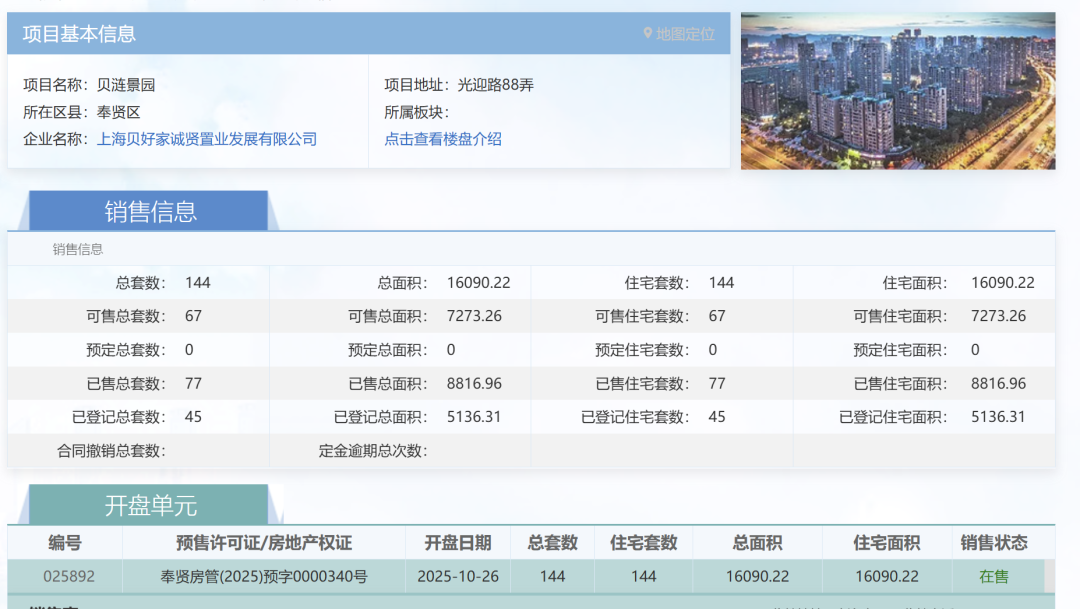
Core Viewpoint - Beike's subsidiary, Beihome, has announced the cessation of its self-operated development projects, marking a strategic shift from being a developer to focusing on its core strengths in the real estate market [1][2][8]. Group 1: Strategic Shift - Beike's decision to stop self-operated development is interpreted as a proactive strategy to concentrate on its core competencies rather than a reaction to poor sales performance [2][12]. - The self-operated projects primarily included Chengdu Beichen S1 and Shanghai Beilian C1, with the latter's sales performance being a focal point of analysis [3][8]. Group 2: Sales Performance - Shanghai Beilian C1 launched on October 26, 2025, offering 144 residential units, achieving a subscription rate of 61.1% with 88 effective customer registrations, ranking 17th among 32 new launches in Shanghai for October [3][8]. - As of December 16, 2025, 77 units had been sold from the initial batch, resulting in a sales rate of 53.5%, indicating a mid-tier performance in the market [9][10]. Group 3: Market Conditions - The second batch of Beilian C1 is currently in the subscription phase, offering 112 units at an average price of 44,000 yuan per square meter, which is an increase of nearly 500 yuan from the first batch [10]. - The market is experiencing a cooling trend, which may affect the subscription rates for the second batch compared to the first, although a potential increase in demand could indicate strong market acceptance [10][12]. Group 4: Operational Insights - The decision to exit self-operated development is largely attributed to cost-effectiveness, as real estate development is capital-intensive and current market conditions have led to slower sales, reducing capital efficiency [12][13]. - Beike aims to leverage its strengths in a light-asset model, focusing on connecting supply and demand in the real estate sector rather than competing as a developer [12][13].
精品咖啡甩卖潮:可口可乐、雀巢为何甘愿“割肉”?
3 6 Ke· 2025-12-15 08:44
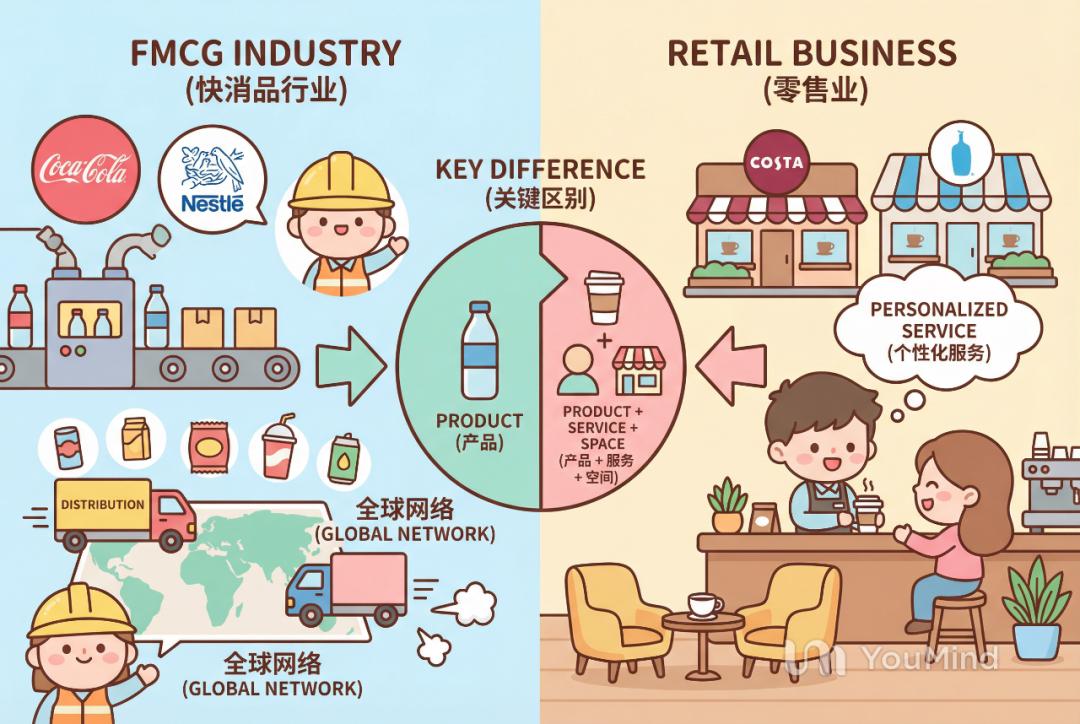
Core Viewpoint - The food and beverage industry is experiencing a surge in mergers and acquisitions, with notable companies like Starbucks, Coca-Cola, and Nestlé divesting from their coffee brands, often at prices significantly lower than their acquisition costs [1][7]. Group 1: Reasons for Divestiture of Physical Store Businesses - The divestiture often involves physical store operations, which differ from the fast-moving consumer goods (FMCG) sector that focuses on product and distribution rather than service and space [1][4]. - Physical retail businesses are more complex and face higher management challenges compared to FMCG, making them less strategic for companies like Coca-Cola and Nestlé [4]. - The capital-intensive nature of coffee shops, with high initial investments and long payback periods, makes them less attractive during economic pressures, prompting companies to divest [5][10]. Group 2: Reasons for Selling at a Discount - Companies prioritize focusing on core businesses to streamline their balance sheets, leading to the decision to sell off less strategic assets [7][10]. - For Coca-Cola, the acquisition of Costa was initially aimed at expanding its coffee platform, but changing market dynamics, particularly in China, rendered the physical store operations less viable [9][10]. - The value of physical stores is reassessed when more efficient distribution channels can achieve growth without the overhead of managing retail locations [10]. Group 3: Value of Divested Brands - Brands like Costa and Blue Bottle Coffee possess strong product offerings and loyal customer bases, indicating that they are not inherently poor investments [11][15]. - The divestiture allows these brands to potentially thrive under new ownership that can provide the necessary resources for expansion and operational efficiency [15][18]. - The example of the newly independent Magnum ice cream company illustrates how divestiture can lead to enhanced strategic flexibility and growth potential [18]. Conclusion - The current trend of divestiture in the food and beverage sector reflects a strategic realignment of resources, with the potential for good brands to find new life under different ownership structures [19].


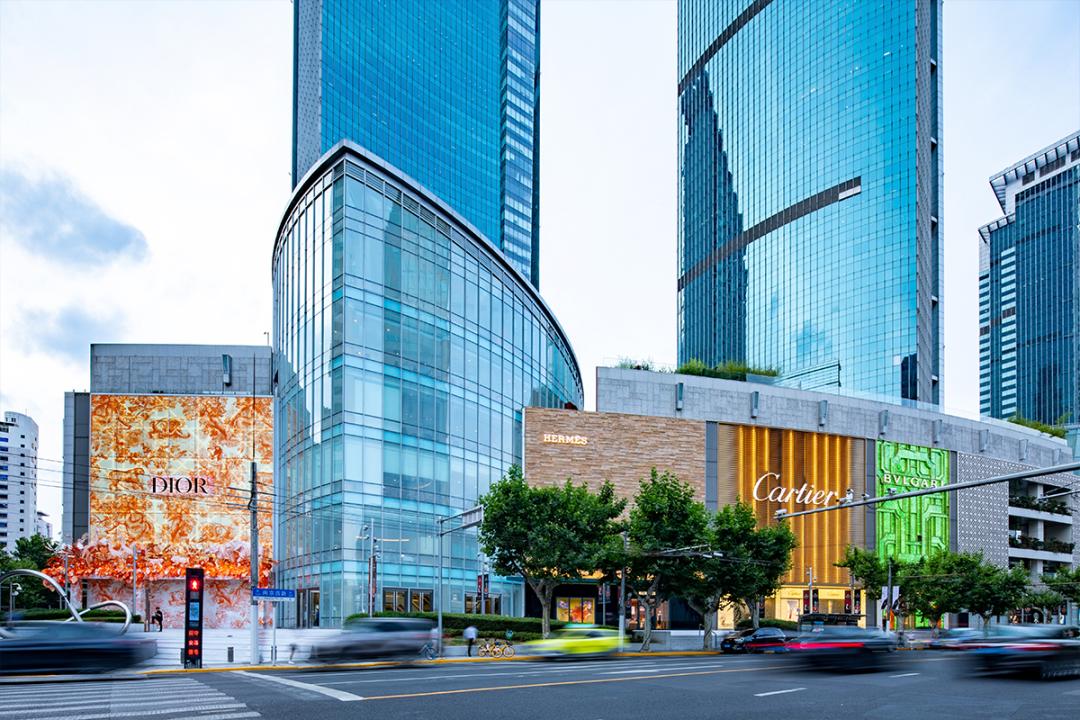
恒隆联手上海九百,22亿爆改梅龙镇广场
3 6 Ke· 2025-12-15 07:38
Core Viewpoint - The luxury retail landscape in Shanghai is undergoing significant changes, with traditional players like Shanghai Hang Lung Plaza facing challenges from new entrants and changing consumer preferences. The partnership between Hang Lung Properties and Shanghai Jiubai to manage the Meilong Town Plaza is a strategic move to expand their market presence and adapt to these shifts [2][8][16]. Group 1: Strategic Moves - Hang Lung Properties has announced a collaboration with Shanghai Jiubai to take over the commercial operations of Meilong Town Plaza, expanding its retail footprint by approximately 96,000 square meters, increasing the total area of Shanghai Hang Lung Plaza by 44% to about 312,300 square meters [2][5]. - The partnership is described as having "epoch-making significance" by Hang Lung's CEO, indicating the importance of this move in the context of Shanghai's luxury retail market [2][5]. - The renovation of Meilong Town Plaza is set to transform it into a comprehensive commercial landmark, incorporating retail, hotel, and office spaces, with plans to introduce a luxury hotel for the first time [7][11]. Group 2: Market Challenges - The luxury retail sector in Shanghai has faced a downturn, with Hang Lung Plaza experiencing a 24% decline in tenant sales in 2022 and a further 8% drop in the first half of 2023 [9][10]. - The limited size of Hang Lung Plaza, at 53,700 square meters, is seen as a constraint on its ability to accommodate larger brand offerings and meet consumer demand [10]. - The competitive landscape is intensifying, with new luxury retail developments in Shanghai, such as the Louis Vuitton flagship and other high-end brands, challenging the traditional dominance of Hang Lung Plaza [16]. Group 3: Financial Performance - Hang Lung Properties reported a 6% decline in overall rental income for 2024, marking the first drop after 24 years of continuous growth, with mainland rental income down by 5% [12][13]. - The company is shifting its strategy towards a lighter asset model, focusing on existing projects rather than expanding into new cities, as indicated by its "Hang Lung V.3" strategy [13][14]. - Recent acquisitions, such as the 20-year operating rights for Hangzhou Department Store and Wuxi New World Department Store, reflect a strategic pivot to enhance existing market positions rather than aggressive expansion [15][16].