黄金避险属性

Search documents
见证历史!现货黄金涨破4400美元
Zhong Guo Jing Ying Bao· 2025-12-23 08:35
Core Viewpoint - The current surge in spot gold prices, which recently surpassed $4,400 per ounce, reflects a significant annual increase of over 67%, driven by global monetary policy shifts and ongoing central bank purchases of gold, despite potential short-term technical adjustments [1][2]. Short-term Market Dynamics - Short-term pressure on gold prices is expected to increase, with a potential for heightened volatility as the market has already priced in significant expectations for Federal Reserve rate cuts. If U.S. inflation remains sticky, this could delay or slow down rate cuts, diminishing the appeal of holding non-yielding assets like gold [2][4]. - The recent historical high in gold prices may trigger profit-taking among investors, further amplifying market fluctuations [2][4]. Long-term Support Factors - The trend of central banks increasing gold reserves is anticipated to continue, providing structural demand support for the gold market as countries, including China, seek to diversify their foreign exchange reserves and reduce reliance on dollar assets [3]. - Continuous inflows into global gold ETFs, which reached $5.2 billion in November and have seen a total asset management scale increase to $530 billion, indicate strong institutional demand for gold [2][3]. - Ongoing geopolitical risks and global economic uncertainties further enhance gold's appeal as a safe-haven asset [3]. Price Volatility Risks - Investors are advised to be cautious of price volatility, as gold prices are influenced by multiple factors including macroeconomic conditions, monetary policy, geopolitical events, and market sentiment. The significant annual increase in gold prices also raises the risk of substantial corrections [4]. - The liquidity of different gold investment products varies greatly, with physical gold bars and coins having limited liquidation channels, while paper gold and gold ETFs offer better liquidity but may face challenges during extreme market conditions [4]. Investment Strategy Recommendations - Investors should clarify their objectives for investing in gold—whether for long-term preservation, short-term speculation, or asset allocation—and select products that align with these goals while understanding their risk-return characteristics [5]. - A diversified investment approach is recommended to avoid concentrating too much capital in gold [5].
共刷高光,国际金银价格齐创历史新高!专家解读背后四大动因
Sou Hu Cai Jing· 2025-12-22 11:07
Core Viewpoint - International gold and silver prices have reached historical highs, with gold at $4,412.62 per ounce, marking a 68% increase for the year, and silver at 69.44 yuan per ounce, with a 139% increase year-to-date [1][2]. Group 1: Market Performance - The surge in gold and silver prices has positively impacted the A-share market, with the domestic precious metals index showing strong performance [2]. - Specific stocks such as Baiyin Youse and Hunan Mining have hit the daily limit, while companies like Xiaocheng Technology and Hunan Silver have increased by over 7% [2][3]. - In the Hong Kong market, companies like Wanguo Gold Group and China Gold International have also seen significant gains, with increases of 10.96% and 7.59% respectively [4][5]. Group 2: Factors Driving Gold Prices - The strong performance of gold is attributed to its inherent safe-haven properties, especially in the context of current capital market conditions and international situations [6]. - Four main factors are identified: 1. The inverse relationship between gold prices and the US dollar, particularly during the current dollar depreciation phase [6][7]. 2. Persistent expectations of interest rate cuts by the Federal Reserve, enhancing gold's investment appeal as other asset yields decline [7]. 3. Gold's role as a hedge against inflation amid global fiscal imbalances, which raises concerns about long-term inflation [7]. 4. Increased geopolitical tensions, such as the ongoing Russia-Ukraine conflict, which further boosts gold's risk-hedging appeal [7]. Group 3: Economic Insights - Economic experts highlight that the Federal Reserve's monetary easing, including the resumption of US Treasury purchases, has exceeded previous expectations, contributing to the upward trend in commodities like gold and silver [7]. - Concerns over potential AI bubbles have led investors to consider gold as a more stable investment compared to other assets, creating additional upward momentum for gold prices [7].

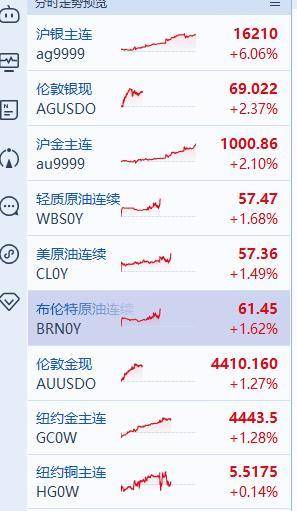
帮主郑重:原油跌穿两年低点,铜金分化背后藏着中长线密码?
Sou Hu Cai Jing· 2025-12-15 22:42
Group 1: Oil Market - WTI crude oil has dropped to its lowest level since February 2021, closing at over $56 per barrel, while Brent crude is around $60 [3] - The decline is attributed to two conflicting signals: the potential for a peace agreement in the Russia-Ukraine conflict, which reduces supply disruption risks, and an expected oversupply of crude oil exceeding demand in the coming years [3] - The current drop in oil prices is seen as a short-term emotional release rather than a long-term trend reversal, with the core focus remaining on supply and demand fundamentals [3] Group 2: Copper Market - Copper prices experienced a V-shaped recovery, rebounding 3.3% after a 3% drop, with a year-to-date increase of 30% [3] - The price increase is driven by supply disruptions in copper mining and long-term demand growth from green energy and electrical infrastructure projects [3] - Analysts predict that even amid global economic concerns, copper demand may exceed expectations, leading to potential shortages by 2026 [3] Group 3: Gold Market - Gold prices remain stable near record highs, influenced by Federal Reserve policy expectations and safe-haven demand [4] - Recent fluctuations in gold prices reflect market reactions to tech stock profit-taking, but the overall trend remains supported by expectations of future interest rate cuts and global economic uncertainty [4] - Investors are advised to wait for a pullback before making significant investments in gold, considering it as a stabilizing asset in their portfolio [4] Group 4: Investment Strategy - The core strategy for long-term investors is to focus on fundamentals, with oil prices affected by geopolitical news but ultimately driven by supply-demand dynamics [4] - Copper's price stability is supported by ongoing demand from the green energy sector, indicating a strong long-term trend [4] - Gold serves as a "ballast" in asset allocation, and investors should avoid being swayed by short-term market fluctuations [4]

多重利好因素共振 黄金多头注入强心剂
Jin Tou Wang· 2025-12-13 04:20
摘要周五(12月12日)受强劲技术性买盘推动,同时受益于美联储意外偏温和的立场以及美元指数的疲软 走势,金价大幅上涨并触及七周高点,尾盘报收4299.39美元/盎司,涨幅0.48%,周线涨幅2.42%。日线 级别呈现四连阳走势,虽均为小阳线,未展现极致强势格局,但多头趋势连贯且稳固,上行结构完整。 周五(12月12日)受强劲技术性买盘推动,同时受益于美联储意外偏温和的立场以及美元指数的疲软走 势,金价大幅上涨并触及七周高点,尾盘报收4299.39美元/盎司,涨幅0.48%,周线涨幅2.42%。日线级 别呈现四连阳走势,虽均为小阳线,未展现极致强势格局,但多头趋势连贯且稳固,上行结构完整。 从资金面来看,各国央行的大规模购金行为、黄金ETF的持续净流入,为金价提供了长期结构性支撑; 而美联储的鸽派政策导向则成为短期行情的直接推手,叠加地缘政治风险的持续升温,共同构筑了黄金 的多头行情。 各大国际投行也纷纷看好后续走势,高盛周三明确表示,其此前给出的2026年底每盎司4900美元金价预 期存在大幅上行空间,美国银行更是预测金价将向每盎司5000美元关口发起冲击,为市场交易情绪注入 强心剂。 美国主导的俄乌欧洲和平 ...
高地集团:央行连续13个月增持黄金,背后隐藏了什么玄机?
Sou Hu Cai Jing· 2025-12-09 02:22
Core Viewpoint - The continuous increase in China's gold reserves reflects the central bank's long-term preference for gold as a stable reserve asset amid global economic uncertainties, with a notable increase in foreign exchange reserves reaching $33,464 billion, the highest since December 2015 [1][3]. Group 1: Central Bank's Gold Accumulation - The central bank has increased its gold reserves for 13 consecutive months, with a total of 7,412 million ounces as of November, indicating a strategic shift towards optimizing foreign exchange reserves and reducing reliance on a single currency [1][5]. - The recent increase in gold reserves is part of a broader trend among central banks globally to enhance financial stability and currency credibility, especially in light of geopolitical tensions and the depreciation of the US dollar [5][6]. Group 2: Market Implications - The expectation of interest rate cuts by the Federal Reserve has led to a short-term rise in gold prices, supported by a weaker dollar and favorable market conditions, although gold prices have not yet surpassed the highs of October [4]. - The central bank's steady accumulation of gold is expected to provide a solid foundation for long-term price increases, reinforcing gold's status as a core asset in foreign exchange reserves [4][6]. Group 3: Macro Financial Strategy - The continuous increase in gold reserves serves not only as a reserve management strategy but also as a macro-financial layout to mitigate risks associated with the depreciation of the US dollar and rising geopolitical risks [8]. - The trend of increasing gold reserves is likely to continue, particularly in an environment of uncertain interest rates and geopolitical volatility, highlighting gold's growing importance as a core asset in foreign exchange reserves [6][8].

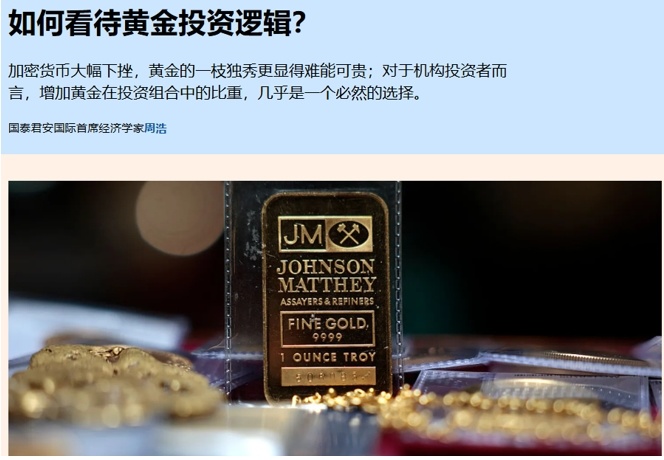
当Z世代年轻人开始追逐黄金新消费,如何看待黄金投资逻辑?
Huan Qiu Wang· 2025-12-09 01:34
Group 1 - The core viewpoint of the articles indicates that international precious metal futures, particularly gold and silver, have experienced a decline due to market factors such as fully priced Federal Reserve policy expectations, a short-term rebound in the dollar, and profit-taking on a technical basis, although the long-term support logic remains unchanged [1][4] - The demand for gold is experiencing a significant surge, driven by geopolitical uncertainties, supply chain restructuring, high dollar interest rates, and major central banks purchasing gold, which highlights gold's safe-haven attributes and the loss of confidence in the dollar [1][4] - A notable shift in gold consumption is observed, with younger generations, particularly Gen Z, engaging in gold purchases not just for preservation but as a new consumption narrative, indicating a potential expansion of gold's market appeal amid geopolitical instability [4] Group 2 - The pricing logic of gold is undergoing profound changes due to geopolitical uncertainties, making it necessary for institutional investors to increase their gold allocations, which suggests a more optimistic outlook for the gold market with increased institutional participation [4] - The Bank for International Settlements (BIS) warns that retail investors' "chasing behavior" is shifting gold from a safe-haven asset to a speculative one, with both gold and stock markets entering an "explosive zone" for the first time in at least 50 years [4] - The BIS report references the 1980 gold bubble collapse, indicating that after experiencing explosive phases, bubbles typically lead to sharp and rapid adjustments, raising concerns about the sustainability of current gold market dynamics [4]
今日金价:大家要有心理准备了,本周起,金价可能迎来大风暴
Sou Hu Cai Jing· 2025-12-08 16:36
你肯定发现了,最近这黄金市场,简直像在演一出让人看不懂的"双面戏"。我朋友在北京某金店看上一款首饰,挂牌价一克将近 1300元。他顺手把照片分享到群里,结果一位在深圳做珠宝批发的朋友默默甩出一张报价单:工厂批发价,一克1100元出头。 再去看看银行,建行投资金条报价大概966元一克,浦发银行的报价则是1016元。同样是100克的金条,在不同银行买,差价能跑 到5000块钱以上。更让人迷糊的是,明明这几天国际金价在往下走,可你家门口金店那些明晃晃的标签,就是纹丝不动,稳如泰 山。 这到底是怎么回事?国际跌,国内不跟;同一个国家,差价还能这么大。这市场是不是"病"了? 价格迷雾:一克黄金,220元的价差从哪里来? 我们把镜头拉到2025年12月8日这一天,看看市场的真实报价。作为全球定价锚的国际伦敦金现,报价在4196美元/盎司附近震 荡,换算成人民币大约是948元一克。 国内的基础金价,以上海黄金交易所的Au9999为准,报954.99元一克。它们之间的差价只有7块钱,这说明国内外黄金市场的联动 非常紧密。 真正的价差,出现在接下来的环节。全国最大的黄金珠宝批发集散地,深圳水贝市场,足金999的批发价是1104 ...
乌克兰硬刚美俄?泽连斯基拒签掀风暴,黄金才是真王炸
Sou Hu Cai Jing· 2025-12-06 10:42
Core Viewpoint - The article discusses the geopolitical tensions surrounding Ukraine's refusal to sign a 28-point peace agreement proposed by Trump, highlighting the conflicting interests of the U.S., Ukraine, Europe, and Russia in the ongoing conflict [3][5]. Group 1: Geopolitical Dynamics - Trump's 28-point peace agreement demands Ukraine to make territorial concessions in exchange for U.S. security guarantees, which is perceived as a unilateral concession to Russia [3]. - Zelensky's unexpected refusal to sign the agreement, despite Ukraine's difficult battlefield situation, is influenced by European nations proposing their own peace plans that oppose territorial concessions [5]. - The core contradiction in the geopolitical standoff is clear: the U.S. seeks a quick end to the war, Europe aims to maintain its buffer zone, Ukraine stands firm on its territorial integrity, and Russia remains in a strong negotiating position [7]. Group 2: Implications for Gold Investment - The uncertainty surrounding the Russia-Ukraine conflict has renewed interest in gold as a traditional safe-haven asset, which is seen as a hedge against geopolitical risks [9]. - Gold's unique position as a non-replaceable safe-haven asset remains intact as long as the conflict persists and strategic uncertainties between major powers continue [11]. - Investors are advised to allocate 5%-10% of their portfolios to gold to mitigate risks, while also being cautious of potential short-term price corrections if a peace agreement is unexpectedly reached [11][13]. Group 3: Long-term Outlook - The long-term factors supporting gold prices extend beyond regional conflicts, with expectations of an end to the Fed's interest rate hikes potentially weakening the dollar and driving gold prices up [13]. - The recommended investment strategy for gold is to focus on allocation rather than speculation, utilizing methods such as dollar-cost averaging to manage costs effectively [15]. - Investors should prioritize liquid and low-cost gold ETFs for investment, while maintaining a controlled exposure of 5%-10% in their portfolios to avoid over-leveraging [15].

黄金基金ETF(518800)收红,黄金货币属性凸显
Mei Ri Jing Ji Xin Wen· 2025-11-27 08:05
Core Viewpoint - The long-term outlook for gold prices is positive due to unresolved U.S. debt issues and weakening U.S. dollar credit, alongside increasing central bank gold purchases and investment demand [1] Group 1: Market Trends - In the medium term, the safe-haven attribute of gold is expected to amplify [1] - The weakening of U.S. dollar credit since Trump's administration is likely to accelerate the monetary properties of gold [1] Group 2: Investment Strategies - Investors are encouraged to consider participating in gold investments during subsequent pullbacks and to gradually accumulate positions [1] - Direct investment in physical gold and tax-exempt gold ETFs (518800) are recommended, along with gold stock ETFs (517400) that cover the entire gold industry chain [1]
金荣中国:现货黄金扩大隔夜反弹空间,挑战4150以上水平寻找压力
Sou Hu Cai Jing· 2025-11-25 06:01
Fundamental Analysis - Gold prices have rebounded significantly, currently trading around $4143 per ounce, following a strong close at $4134.54 on November 24, marking a 1.7% increase, the largest single-day gain in nearly two weeks [1] - The Federal Reserve's dovish stance has led to a surge in the probability of a rate cut in December, rising from 40% to 81%, which is a key driver behind the recent spike in gold prices [1][3] - Geopolitical tensions have escalated with Ukraine issuing emergency air alerts as Russian forces launched various missile attacks, further enhancing gold's appeal as a safe-haven asset [1][4] Geopolitical Risks - The situation in Ukraine has deteriorated, with emergency alerts and missile launches prompting heightened market sensitivity to geopolitical risks, which traditionally boosts gold prices [4] - Peace negotiations between the U.S. and Ukraine have stalled, with Russia rejecting proposed peace plans, indicating a potential for renewed conflict [4] Market Data and Expectations - Upcoming economic data releases, including retail sales and PPI, are expected to show weakness, reinforcing the likelihood of a rate cut in December and potentially paving the way for further cuts in early 2026 [3] - The market is closely monitoring these economic indicators as they could solidify expectations for monetary easing [3] Technical Analysis - On the daily chart, gold prices have shown a bullish trend, recovering from previous losses and testing resistance levels around $4180 [6] - Short-term trading ranges are being established, with significant price movements expected as traders react to market conditions [6] Trading Strategies - Suggested trading strategies include light short positions near $4180 with a stop loss at $4200 and targets around $4110/4080, as well as light long positions near $4050 with a stop loss at $4030 and targets around $4100/4130 [7]